词汇表

英语词汇词典 | 单词含义、定义和示例

adverb
/ˈjuːʒuəli/
通常 (tongchang)

Under normal conditions; most of the time.

"She usually walks to school."

"她通常走路去学校。" (Tā tōngcháng zǒulù qù xuéxiào.)
noun
/ˈjuːzjuːfrʌkt/
使用权 (shiyongquan)

The legal right to use and enjoy the benefits of someone else’s property without owning it.

"The tenant had the usufruct of the land but not its ownership."

"租户有权使用这片土地,但没有所有权。" (Zuhu you quan shiyong zhe pian tudi, dan meiyou suoyouquan.)
adjective
/juːˈʒʊəriəs/
高利贷的 (gaoli dai de)

Charging excessively high interest rates on loans.

"The bank was accused of offering loans at usurious rates."

"该银行被指控以高利贷利率提供贷款。" (Gāi yínháng bèi zhǐkòng yǐ gāo lìdài lìlǜ tígōng dàikuǎn.)
usurp definition card — visual illustration of the meaning
verb
/juːˈzɜːrp/
非法夺取 (fēi fǎ duó qǔ)

To take someone else's position or power illegally or by force.

"He tried to usurp the throne from the rightful king."

"他试图从合法国王手中篡夺王位。" (Tā shìtú cóng héfǎ guówáng shǒuzhōng cuànduó wángwèi.)
noun
/ˌjuːzɜːrˈpeɪʃən/
篡夺 (cuàn duó)

The act of taking someone's power or property illegally or by force.

"The general's usurpation of the presidency led to political unrest."
"将军对总统职位的篡夺导致了政治动荡。" (Jiāngjūn duì zǒngtǒng zhíwèi de cuàn duó dǎozhìle zhèngzhì dòngdàng.)
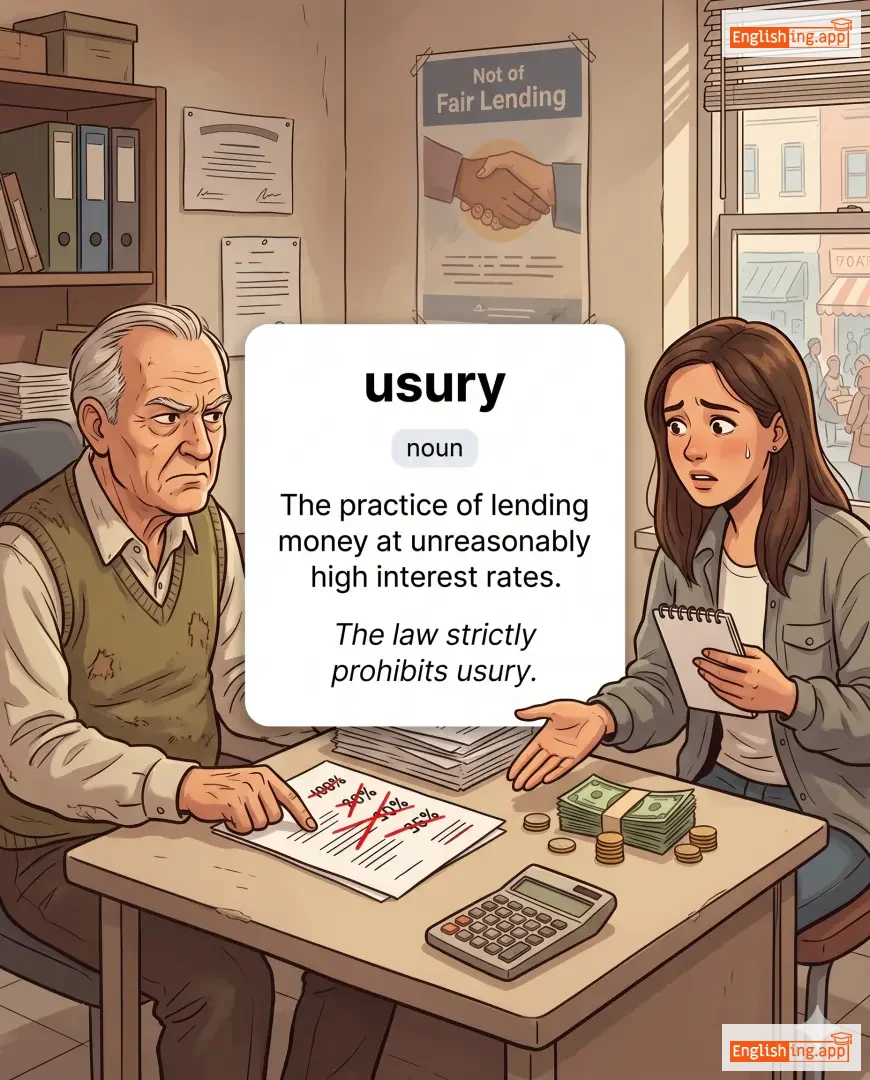
usury definition card — visual illustration of the meaning
noun
/ˈjuːʒəri/
高利贷 (gaolidai)

The practice of lending money at unreasonably high interest rates.

"The law strictly prohibits usury."

"法律严格禁止高利贷。" (Fǎlǜ yángé jìnzhǐ gāo lìdài.)
noun
/juːˈten.səlz/
餐具 (cānjù)

tools or implements used for cooking, eating, or serving food

"Please wash all the cooking utensils after preparing dinner."

"请在准备晚餐后清洗所有的厨房用具。" (Qǐng zài zhǔnbèi wǎncān hòu qīngxǐ suǒyǒu de chúfáng yòngjù.)
adjective
/ˌjuːtɪlɪˈtɛəriən/

Designed to be useful or practical rather than attractive; relating to the doctrine that actions are right if they are useful or for the benefit of a majority.

"The building had a simple utilitarian design."

noun
/juːˌtɪlɪˈtɛəriənɪzəm/
功利主义 (gōnglì zhǔyì)

The ethical theory that actions are right if they are useful or for the benefit of the majority.

"Utilitarianism suggests that we should act to maximize overall happiness."

"功利主义认为我们应该采取行动,以最大化整体幸福。" (Gōnglì zhǔyì rènwéi wǒmen yīnggāi cǎiqǔ xíngdòng, yǐ zuìdà huà zhěngtǐ xìngfú.)
noun
/juːˈtɪləti/
效用 (xiaoyong)

The state of being useful, profitable, or beneficial.

"The utility of smartphones in daily life is undeniable."

"智能手机在日常生活中的效用不可否认。" (Zhineng shouji zai rìcháng shēnghuó zhōng de xiàoyòng bù kě fǒrèn.)
utilization definition card — visual illustration of the meaning
noun
ˌjuːtɪlaɪˈzeɪʃən
利用 (lìyòng)

The action of making practical and effective use of something.

"The efficient utilization of resources is key to success."

"有效利用资源是成功的关键。" (Yǒuxiào lìyòng zīyuán shì chénggōng de guānjiàn.)
verb
/ˈjuːtɪlaɪz/
利用 (lìyòng)

to make practical or effective use of something

"The company aims to utilize solar energy for production."

"公司旨在利用太阳能进行生产。" (Gōngsī zhǐ zài lìyòng tàiyángnéng jìnxíng shēngchǎn.)
adjective
/ˈʌtmoʊst/
幸福 (xìngfú)

Greatest or highest in degree, importance, or extent.

"She showed the utmost respect to her teachers."

"她在获得奖项时无法掩饰自己的幸福。" (Tā zài huòdé jiǎngxiàng shí wúfǎ yǎnshì zìjǐ de xìngfú.)
noun
/juːˈtoʊpiə/
乌托邦 (wū tuō bāng)

An imagined perfect society or place where everything is ideal.

"Many philosophers dreamed of creating a utopia for humanity."

"许多哲学家梦想着为人类创造一个乌托邦。" (xǔ duō zhé xué jiā mèng xiǎng zhe wéi rén lèi chuàng zào yī gè wū tuō bāng.)
Utter definition card — visual illustration of the meaning
verb
/ˈʌtər/
发声 (fā shēng)

To speak or pronounce words aloud.

"He could barely utter a word after the shocking news."

"在震惊的新闻后,他几乎没能说出一个字。" (Zài zhènjīng de xīnwén hòu, tā jīhū méi néng shuō chū yīgè zì.)
adverb
/ˈʌtərli/
完全 (wanquan)

completely or absolutely

"She was utterly surprised by the news."

"她对新闻感到完全惊讶。" (Ta dui xinwen gandao wanquan jingya.)
adjective
/ʌkˈsɔːriəs/
过度宠爱妻子 (guò dù chǒng ài qī zi)

excessively fond of or submissive to one's wife

"He was so uxorious that he agreed with everything his wife said."

"他是如此的宠爱妻子,以至于同意了妻子说的每一件事。" (Tā shì rúcǐ de chǒng'ài qīzi, yǐ zhì yú tóngyìle qīzi shuō de měi yī jiàn shì.)