词汇表

英语词汇词典 | 单词含义、定义和示例

verb
/ʌnˈsɛtl/
扰乱 (rǎo luàn)

To disturb or make someone feel anxious or uneasy.

"The sudden news unsettled the entire community."

"突如其来的消息让整个社区感到不安。" (Tū rú qí lái de xiāo xī ràng zhěng gè shè qū gǎn dào bù ān.)
adjective
/ʌnˈʃeɪkən/
坚定不移; 坚固 (jiān dìng bù yí; jiān gù)

not disturbed or affected; firm and steady; unwavering

"Her faith remained unshaken despite all the challenges."

"尽管面临所有挑战,她的信念依然坚定不移。" (Jǐnguǎn miànlín suǒyǒu tiǎozhàn, tā de xìnniàn yīrán jiāndìng bù yí.)
adjective
/ʌnˈsaɪtli/
难看 (nankan)

Unpleasant to look at; ugly.

"The garbage pile created an unsightly view in the park."

"垃圾堆在公园里创造了一个难看的景象。" (Lājī duī zài gōngyuán lǐ chuàngzào le yīgè nán kàn de jǐngxiàng.)
adjective
/ʌnˈskɪld/
无技能的; 无技术的工人 (wú jìnéng de; wú jìshù de gōngrén)

lacking technical training or ability; not requiring special skills

"Many unskilled workers are looking for training opportunities."

"许多没有技能的工人正在寻找培训机会。" (xǔduō méiyǒu jìnéng de gōngrén zhèngzài xúnzhǎo péixùn jīhuì.)
adjective
/ʌnˈsəʊʃəbl/
不合群的 (bu he qun de)

not enjoying the company of others; avoiding social interaction

"He became unsociable after moving to a new city."

"搬到新城市后,他变得不合群。" (ban dao xin chengshi hou ta bian de bu he qun)
adjective
/ʌnˈsəʊʃəl/
不合群的 (bu he qun de)

not enjoying the company of others; avoiding social interaction; contrary to social norms

"He prefers unsocial hours so he can work alone without interruptions."

"他更喜欢不合群的工作时间来独自工作。" (ta geng xihuan bu he qun de gongzuo shijian lai duzi gongzuo)
adjective
/ʌnˈsoʊld/
未售出的 (wei shou chu de)

not sold; remaining without a buyer

"The unsold goods were returned to the warehouse."

"未售出的商品被退回仓库。" (wei shou chu de shangpin bei tui hui cangku)
adjective
/ˌʌnsəˈfɪstɪˌkeɪtɪd/
不复杂 (bù fù zá)

Lacking worldly experience, refinement, or complexity.

"The villagers led an unsophisticated but happy life."

"村民过着简单而幸福的生活。" (Cūnmín guòzhe jiǎndān ér xìngfú de shēnghuó.)
adjective
/ʌnˈspɛərɪŋ/
无情的 (wu qing de)

Showing no mercy or generosity; harsh or severe.

"The critic was unsparing in his review of the play."

"评论家在他的剧评中毫不留情。" (Pínglùn jiā zài tā de jùpíng zhōng háo bù liúqíng.)
adjective
/ʌnˈspiːkəbl/
难以形容 (nán yǐ xíng róng)

too bad or shocking to be expressed in words

"The survivors endured unspeakable horrors during the war."

"幸存者在战争中忍受了难以形容的恐怖。" (xìng cún zhě zài zhàn zhēng zhōng rěn shòu le nán yǐ xíng róng de kǒng bù.)
adjective
/ʌnˈsteɪbəl/
不稳定 (bù wěn dìng)

likely to change; not steady or secure; unsteady

"The unstable economy made people worried about their jobs."

"不稳定的经济让人们担心他们的工作。" (Bù wěn dìng de jīng jì ràng rén men dān xīn tā men de gōng zuò.)
adjective
/ʌnˈsteɪtɪd/
未声明 (wei shengming)

not expressed directly in words; implied or left unsaid

"The contract included several unstated expectations."

"合同包括了几个未声明的期望。" (Hetong baokuo le jige wei shengming de qiwang.)
adjective
/ʌnˈstɛdi/
不稳定的 (bu wending de)

not firm or stable; likely to change or fail

"She felt unsteady on her feet after the long journey."

"长途旅行后,她感到站立不稳。" (Changtu lüxing hou, ta gandao zhanli bu wen)
adjective
/ʌnˈstɪntɪŋ/
慷慨的 (kangkai de)

given generously without holding back

"She received unstinting support from her family."

"她从家人那里得到了慷慨的支持。" (Ta cong jiaren nali dedaole kangkai de zhichi.)
adjective
/ˌʌnsəkˈsesfl/
失败的; 没有成功的; (shībài de; méiyǒu chénggōng de)

not achieving desired aims or results; failing to accomplish a purpose

"His unsuccessful attempt to climb the mountain left him disappointed."

"他未能成功登上山顶,感到失望。" (Tā wèinéng chénggōng dēng shàng shāndǐng, gǎndào shīwàng.)
adjective
/ʌnˈsuːtəbl/
不适合; 不合适 (bù shìhé; bù héshì)

not fitting or appropriate for a particular purpose or situation

"This formal dress is unsuitable for a casual beach party."

"这件正式的衣服不适合参加随意的海滩派对。" (Zhè jiàn zhèngshì de yīfú bù shìhé cānjiā suíyì de hǎitān pàiduì.)
adjective
/ʌnˈsʌlid/
无暇 (wú xiá)

not spoiled or made impure; perfectly clean or pure

"His reputation remained unsullied despite the accusations."

"尽管有指控,他的声誉仍然无暇。" (Jǐnguǎn yǒu zhǐkòng, tā de shēngyù réngrán wú xiá.)
adjective
/ʌnˈʃʊr/
不确定的 (bu queding de)

not certain or confident; feeling doubt

"She felt unsure about the decision."

"她对这个决定感到不确定。" (ta dui zhege jueding gandao bu queding)
adjective
/ʌnˈtiːtʃəbəl/
不可教的 (bu ke jiao de)

not able or willing to learn; resistant to instruction or guidance

"He was so stubborn that he became almost unteachable."

"他非常固执,几乎变得不可教。" (ta fei chang gu zhi ji hu bian de bu ke jiao)
adjective
/ʌnˈtɛmpərd/
失控的 (shīkòng de)

not moderated or softened; lacking proper balance or control

"The untempered anger of the crowd caused chaos."
"人群的失控愤怒引发了混乱。" (Rénqún de shīkòng fènnù yǐnfāle hùnluàn.)
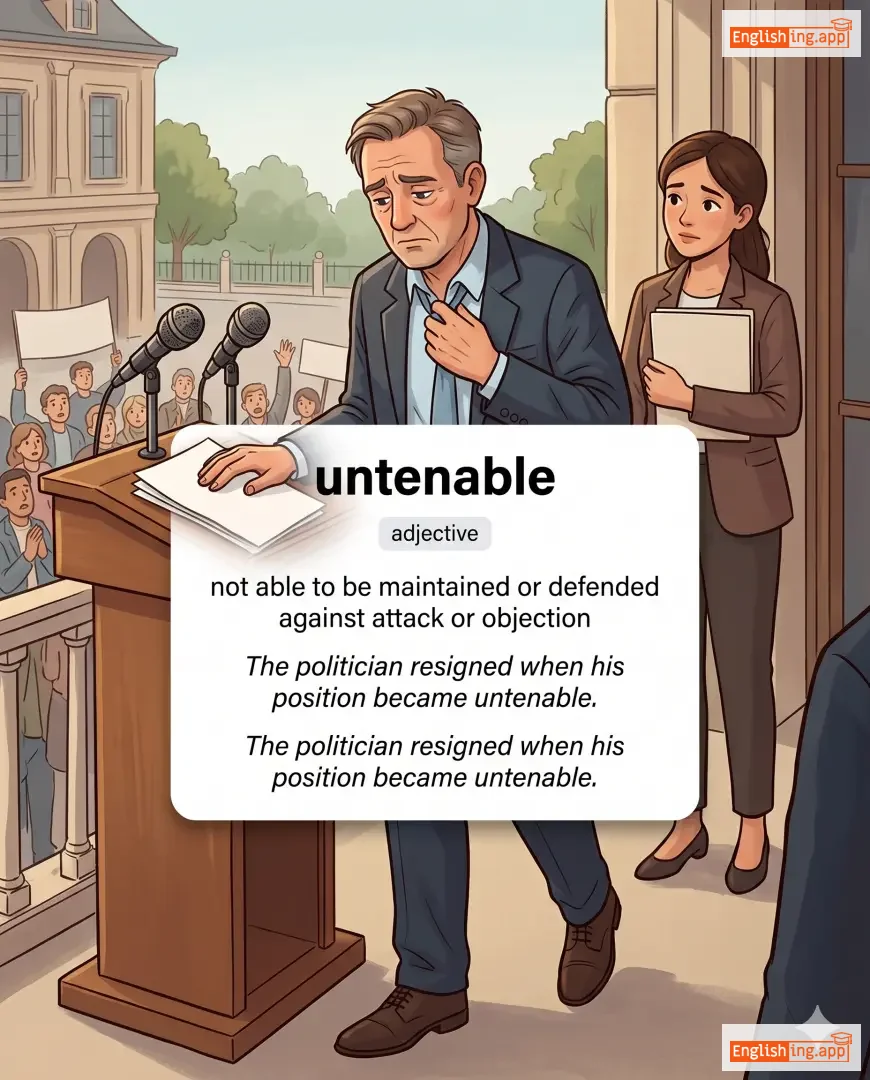
untenable definition card — visual illustration of the meaning
adjective
/ʌnˈtɛnəbl/
无法维持 (wúfǎ wéichí)

not able to be maintained or defended against attack or objection

"The politician resigned when his position became untenable."

"政治家在他的立场变得无法维持时辞职。" (Zhèngzhìjiā zài tā de lìchǎng biàn dé wúfǎ wéichí shí cízhí.)
adjective
/ʌnˈθɪŋkəbl/
难以想象的 (nán yǐ xiǎng xiàng de)

impossible to conceive or imagine; beyond belief or consideration

"It was unthinkable that such a tragedy could happen in our peaceful town."

"在我们和平的小镇上发生这样一场悲剧,简直是难以想象的。" (Zài wǒmen hépíng de xiǎo zhèn shàng fāshēng zhèyàng yī chǎng bēijù, jiǎnzhí shì nán yǐ xiǎngxiàng de.)
adjective
/ʌnˈθɪŋkɪŋ/
欠考虑的 (qian kaolv de)

done without careful thought; automatic or thoughtless

"His unthinking remark hurt her feelings."

"他欠考虑的评论伤害了她的感情。" (ta qian kaolv de pinglun shanghai le ta de ganqing)
adjective
/ʌnˈtaɪdi/
凌乱的; 无序的; (língluàn de)

not neat or orderly; messy and disorganized

"Her untidy room was filled with clothes scattered everywhere."

"她凌乱的房间充满了四处散落的衣服。" (tā língluàn de fángjiān chōngmǎn le sìchù sànluò de yīfú.)
verb
/ʌnˈtaɪ/
解开 (jie kai)

to loosen or remove a knot or binding; to release something that is tied

"She untied the rope to free the boat."

"她解开绳子来释放船只。" (ta jie kai shengzi lai shifang chuan zhi)
preposition/conjunction
/ʌnˈtɪl/
直到 (zhídào)

up to the time of

"I will wait until you come back."

"我会等到你回来。" (Wǒ huì děng dào nǐ huílái.)
adjective
/ʌnˈtaɪmli/
不合时宜 (bù hé shí yí)

Happening or done at an unsuitable or premature time.

"His untimely death shocked the entire community."

"他不合时宜的去世震惊了整个社区。" (Tā bù hé shí yí de qù shì zhèn jīng le zhěng gè shè qū.)
adjective
/ʌnˈtaɪərɪŋ/
不知疲倦的; 坚持不懈的; 永不止步的 (bù zhī pítuì de; jiānchí bùxiè de; yǒng bù zhǐbù de)

continuing without stopping; persistent; tireless

"Her untiring efforts finally led to success."

"她的不知疲倦的努力最终带来了成功。" (Tā de bù zhī pítuì de nǔlì zuìzhōng dàilái le chénggōng.)
adjective
/ʌnˈtoʊld/
不可计数的 (bù kě jì shǔ de)

Too great or numerous to be described or counted.

"The project caused untold stress for everyone involved."

"这个项目给所有参与者带来了不可计数的压力。" (Zhège xiàngmù gěi suǒyǒu cānyù zhě dàilái le bù kě jì shǔ de yālì.)
adjective
/ʌnˈtʌtʃəbəl/
不可触碰的; 无法批评或攻击 (bù kě chù pèng de; wú fǎ pī píng huò gōng jī)

not able to be touched or affected; beyond criticism or attack

"The CEO seemed untouchable despite the scandal."

"即使有丑闻,首席执行官似乎仍然是不可触碰的。" (Jí shǐ yǒu chǒu wén, shǒu xí zhí xíng guān shì hū réng rán shì bù kě chù pèng de.)
adjective
/ˌʌn.təˈwɔːrd/
意外的 (yìwài de)

Unexpected and inappropriate or inconvenient.

"The meeting ended without any untoward incidents."

"会议在没有任何意外事件的情况下结束。" (Huìyì zài méiyǒu rènhé yìwài shìjiàn de qíngkuàng xià jiéshù.)
adjective
/ʌnˈtræməld/
无限自由 (wuxian ziyou)

Not restricted or hampered; free and unrestricted.

"She enjoyed untrammeled freedom in her new life abroad."

"她在国外的新生活中享受着无限自由。" (Ta zai guowai de xin shenghuo zhong xiangshouzhe wuxian ziyou.)
adjective
/ʌnˈtruː/
虚假 (xūjiǎ)

not true; false or incorrect

"The rumor about the company closing was completely untrue."

"关于公司关闭的谣言完全不真实。" (Guānyú gōngsī guānbì de yáoyán wánquán bù zhēnshí.)
adjective
/ʌnˈjuzd/
未使用的; 没有被使用 (wèi shǐ yòng de; méi yǒu bèi shǐ yòng)

not being used; not having been used before

"There are many unused rooms in this old mansion."

"这个古老的豪宅里有许多未使用的房间。" (Zhège gǔlǎo de háozhái lǐ yǒu xǔduō wèi shǐyòng de fángjiān.)
adjective
/ʌnˈjuːʒuəl/
不寻常 (bù xúncháng)

not common or ordinary; remarkable or exceptional

"She has an unusual talent for solving complex problems."

"她有解决复杂问题的非凡才能。" (Tā yǒu jiějué fùzá wèntí de fēifán cáinéng.)
adverb
/ʌnˈjuːʒuəli/
异常地 (yichang de)

in a way that is not typical or expected; to an uncommon degree

"It was unusually cold for this time of year."

"对一年中的这个时候来说,天气异常寒冷。" (Dui yi nian zhong de zhe ge shihou laishuo tianqi yichang hanleng)
adjective
/ʌnˈʌtərəbl/
难以言喻 (nanyi yanyu)

Too great, intense, or awful to be expressed or described in words.

"She was filled with unutterable joy at the news of her success."

"她听到成功的消息时充满了难以形容的喜悦。" (Ta ting dao chenggong de xiaoxi shi chong man le nanyi xing rong de xiyue.)
verb
/ʌnˈveɪl/
揭示 (jiēshì)

to reveal or disclose something, especially in a formal manner

"The company will unveil a new product next week."

"公司将在下周揭示一款新产品。" (Gōngsī jiāng zài xià zhōu jiēshì yī kuǎn xīn chǎnpǐn.)
adjective
/ʌnˈvaɪəbl/
不可行的 (bù kě xíng de)

Not capable of working successfully; not feasible or practical.

"The project was deemed unviable due to high costs."

"由于高昂的成本,该项目被认为不可行。" (Yóuyú gāo'áng de chéngběn, gāi xiàngmù bèi rènwéi bù kě xíng.)
adjective
/ʌnˈvɔɪst/
未表达 (wei biao da)

not expressed in speech; in phonetics, a sound produced without vocal cord vibration

"The student kept her opinion unvoiced during the meeting."

"学生在会议期间保持她的意见未表达。" (Xuesheng zai huiyi qijian baochi ta de yijian wei biaoda.)
adjective
/ʌnˈwɒn.tɪd/
不受欢迎的 (bù shòu huānyíng de)

not desired or welcome; not wanted

"He felt like an unwanted guest at the meeting."

"他在会议上觉得自己像个不受欢迎的客人。" (tā zài huìyì shàng juédé zìjǐ xiàng gè bù shòu huānyíng de kèrén.)
unwarranted definition card — visual illustration of the meaning
adjective
/ʌnˈwɒrəntɪd/
不正当 (bù zhèngdàng)

Not justified or authorized; lacking good reason.

"The employee faced unwarranted criticism from his manager."
"员工遭受了来自经理的不正当批评。" (yuángōng zāoshòule láizì jīnglǐ de bù zhèngdàng pīpíng.)
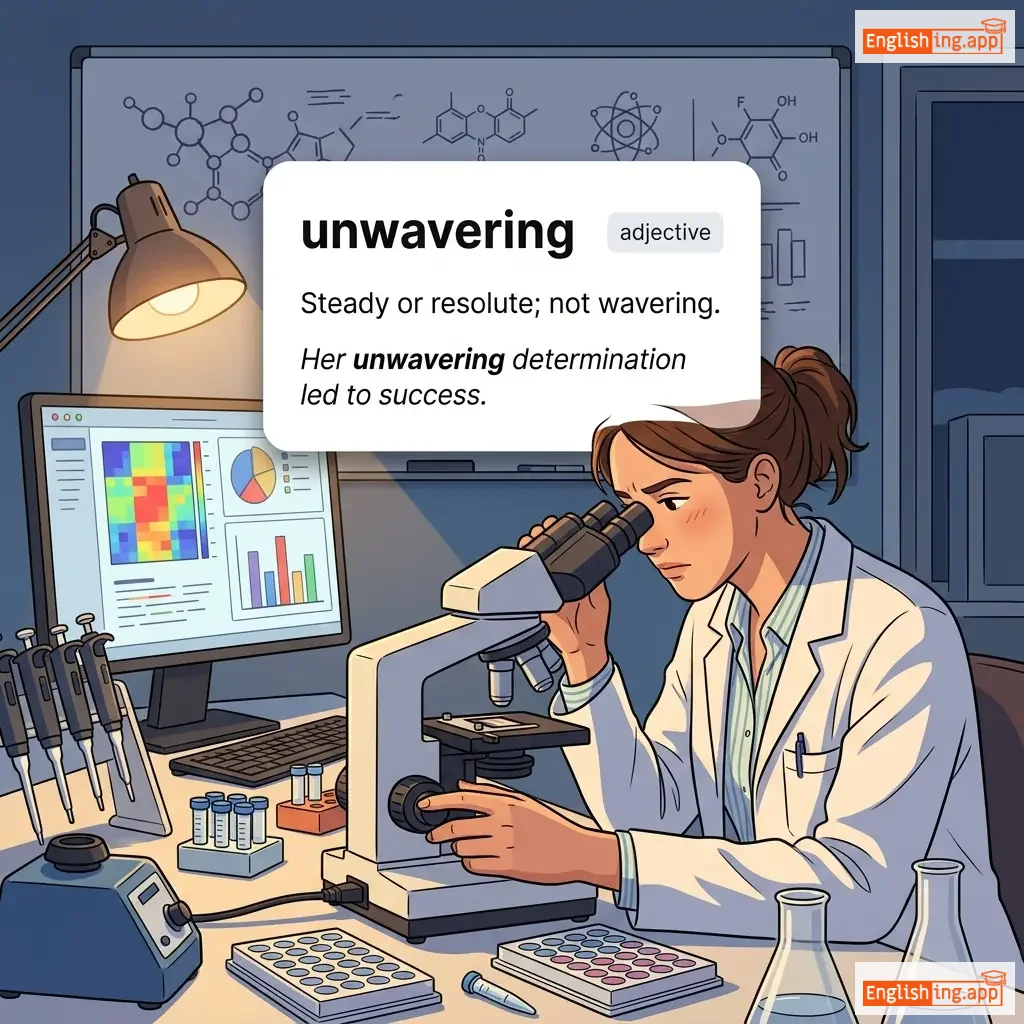
unwavering definition card — visual illustration of the meaning
adjective
/ʌnˈweɪ.vər.ɪŋ/
坚定的,坚决的,不动摇的 (jiāndìng de, jiānjué de, bù dòngyáo de)

Steady or resolute; not wavering.

"Her unwavering determination led to success."

"她坚定不移的决心带来了成功。" (Tā jiāndìng bù yí de juéxīn dài lái le chénggōng.)
adjective
/ʌnˈwel.kəm/
不受欢迎的; 不想要的; 不邀请的 (bù shòu huānyíng de; bù xiǎng yào de; bù yāoqǐng de)

not wanted or accepted; not invited or pleasant

"The unwelcome news ruined their vacation plans."

"不受欢迎的消息破坏了他们的度假计划。" (Bù shòu huānyíng de xiāoxī pòhuài le tāmen de dùjià jìhuà.)
adjective
/ʌnˈwel/
不舒服; 生病 (bù shūfu; shēngbìng)

not in good health; feeling sick or ill

"She has been feeling unwell since yesterday."

"她从昨天开始感到不舒服。" (Tā cóng zuótiān kāishǐ gǎndào bù shūfu.)
adjective
/ʌnˈwiːldi/
笨重 (bènzhòng)

Difficult to carry or move because of its size, shape, or weight.

"The box was too unwieldy to carry up the stairs."

"这个盒子太笨重了,无法把它提上楼梯。" (zhège hézi tài bènzhòng le, wúfǎ bǎ tā tí shàng lóutī.)
adjective
/ʌnˈwɪl.ɪŋ/
不愿意的; 不情愿的; (bù yuànyì de; bù qíngyuàn de)

not ready to do something; reluctant; not wanting to do

"He was unwilling to share his secret with anyone."

"他不愿意与任何人分享他的秘密。" (Tā bù yuànyì yǔ rènhé rén fēnxiǎng tā de mìmì.)
adverb
/ʌnˈwɪlɪŋli/
不情愿地 (bu qingyuan de)

in a way that shows reluctance or lack of desire; not willingly

"She unwillingly agreed to attend the meeting."

"她不情愿地同意参加会议。" (ta bu qingyuan de tongyi canjia huiyi)
adjective
/ʌnˈwaɪz/
不明智 (bù míng zhì)

Showing poor judgment; not sensible or prudent.

"It would be unwise to invest all your money in one company."

"把所有的钱都投入一家公司的做法不明智。" (Bǎ suǒyǒu de qián dōu tóurù yījiā gōngsī de zuòfǎ bù míng zhì.)
adjective
/ʌnˈwɪtɪŋ/
无意的 (wú yì de)

Not aware of what is happening; done without realizing.

"She became an unwitting participant in the scam."

"她成了这场骗局中的一个无意的参与者。" (tā chéngle zhè chǎng piànjú zhōng de yīgè wú yì de cānyù zhě.)