词汇表

英语词汇词典 | 单词含义、定义和示例

verb
/ʌnˈnɜːrv/
失去信心 (shīqù xìnxīn)

to make someone lose confidence, courage, or composure

"The hostile questions began to unnerve the witness."

"敌对问题开始让证人感到不安。" (Díduì wèntí kāishǐ ràng zhèngrén gǎndào bù'ān.)
adjective
/ˌʌnˈnoʊ.tɪst/
未被注意到; 被忽视 (wei bei zhuyi dao; bei hushi)

not seen or observed; ignored

"His hard work went unnoticed by his manager."

"他的辛勤工作没有被经理注意到。" (tade xinqin gongzuo meiyou bei jingli zhuyi dao)
adjective
/ˌʌnəbˈtruːsɪv/
不引人注目 (bù yǐn rén zhùmù)

not attracting attention; blending in without causing notice

"The security cameras are designed to be unobtrusive."

"安全摄像头被设计成不引人注目。" (Ānquán shèxiàngtóu bèi shèjì chéng bù yǐn rén zhùmù.)
adjective
/ˌʌnəˈfɪʃ.əl/
非官方的 (fei guanfang de)

not officially authorized or confirmed; informal

"The unofficial results showed a close race."

"非官方的结果显示出一场激烈的比赛。" (fēi guānfāng de jiéguǒ xiǎnshì chū yī chǎng jīliè de bǐsài.)
verb
/ʌnˈpæk/
拆开 (chai kai)

to remove items from a container; to explain or analyze something in detail

"After arriving home, she began to unpack her suitcase."

"到家后,她开始拆开自己的行李箱。" (Dao jia hou, ta kaishi chai kai ziji de xinglixiang)
adjective
/ˌʌnˈpeɪd/
未支付的; 无薪的 (wei zhi fu de; wu xin de)

not paid for; without payment or salary

"She worked as an unpaid intern for six months."
"她作为一名无薪实习生工作了六个月。" (ta zuo wei yi ming wu xin shi xi sheng gong zuo le liu ge yue)
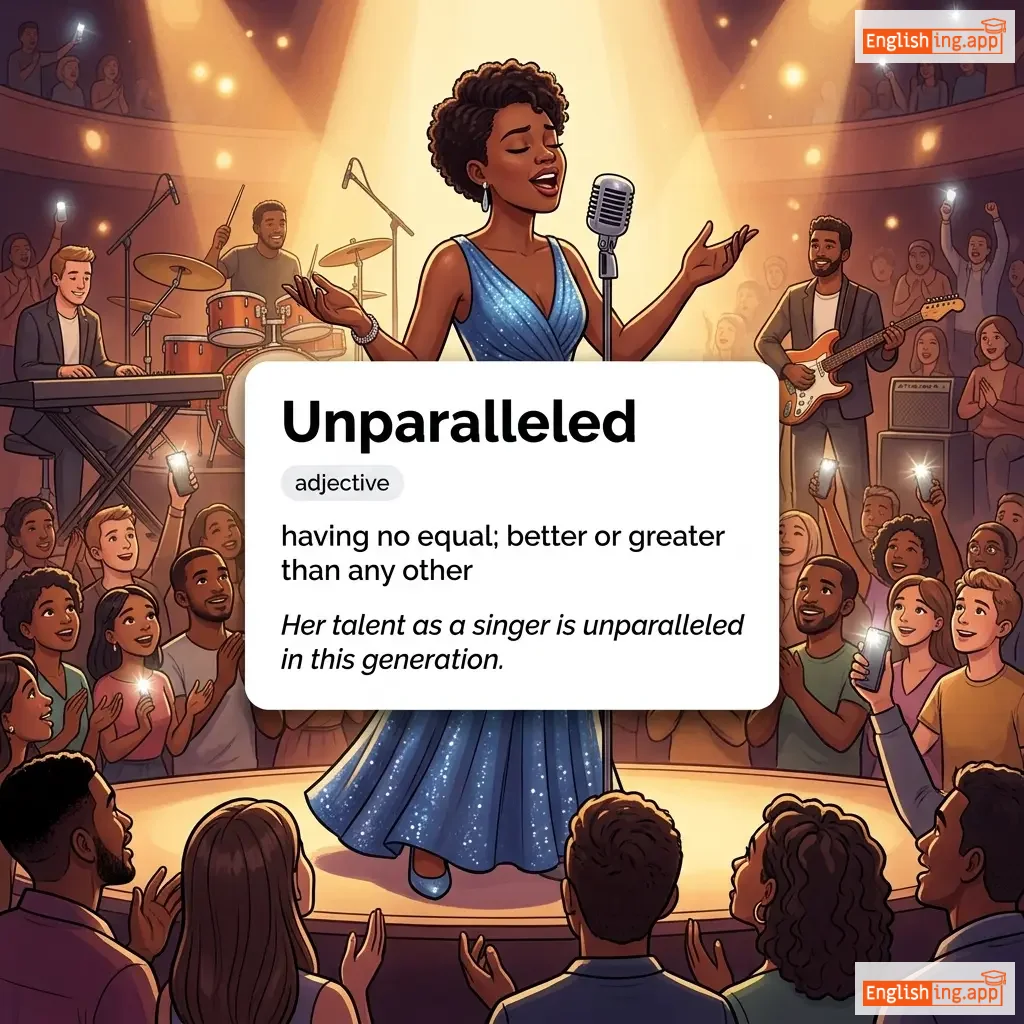
Unparalleled definition card — visual illustration of the meaning
adjective
/ˌʌnˈpær.ə.leld/
无与伦比; 独一无二; 无敌 (wuyu lunbi; duyi wuyi; wudi)

having no equal; better or greater than any other

"Her talent as a singer is unparalleled in this generation."

"她作为歌手的才华在这一代人中是无可比拟的。" (Ta zuowei geshou de caihua zai zhe yi dai ren zhong shi wu ke bini de.)
adjective
/ˌʌnˈpɑr.də.nə.bəl/
不可宽恕的 (bù kě kuān shù de)

too bad to be forgiven; inexcusable

"His betrayal of trust was an unpardonable offense."
"他的背叛是不可原谅的罪行。" (tā de bèi pàn shì bù kě yuán liàng de zuì xíng)
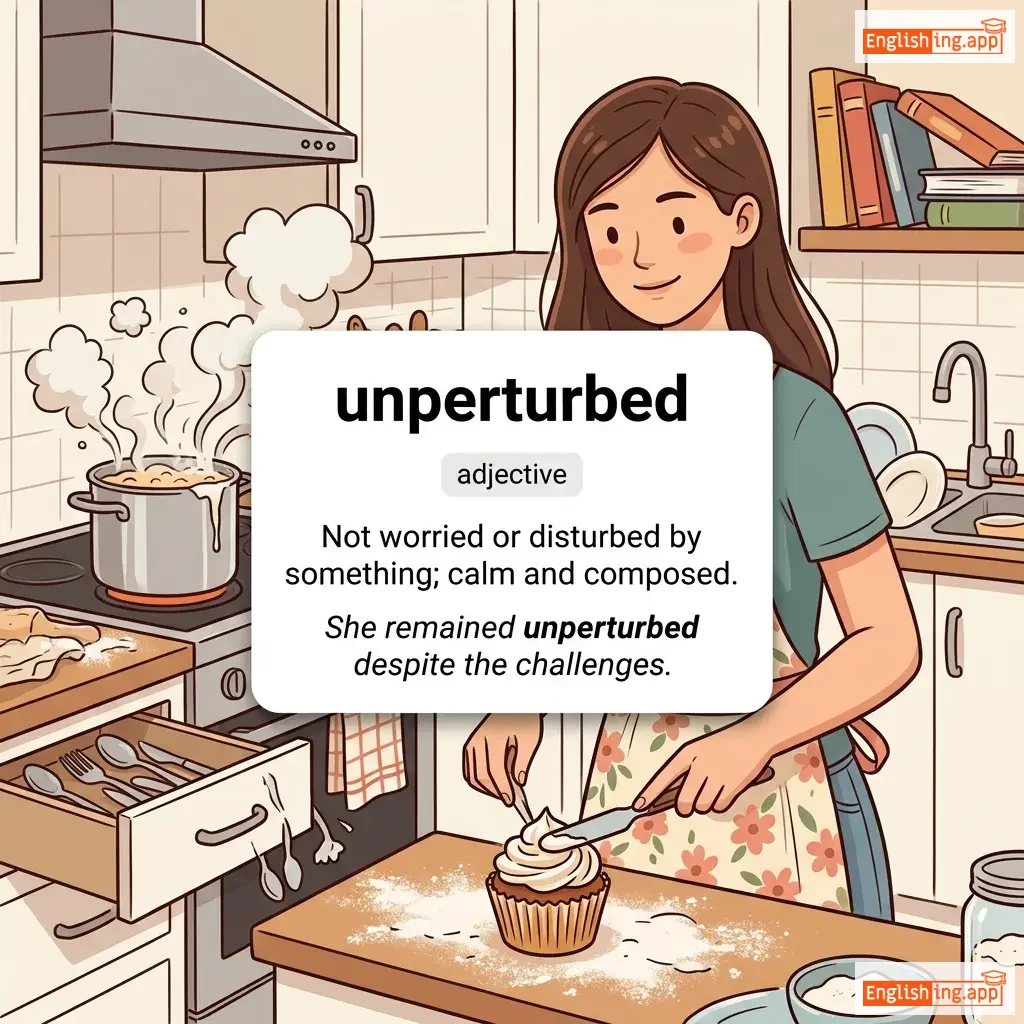
unperturbed definition card — visual illustration of the meaning
adjective
ˌʌn.pəˈtɜːbd
不为某事烦恼或困扰;冷静且镇定 (bù wéi mǒu shì fán nǎo huò kùn rǎo; lěng jìng qiě zhèn dìng)

Not worried or disturbed by something; calm and composed.

"She remained unperturbed despite the challenges."
"尽管有挑战,她依然保持冷静。" (Jǐnguǎn yǒu tiǎozhàn, tā yīrán bǎochí lěngjìng.)
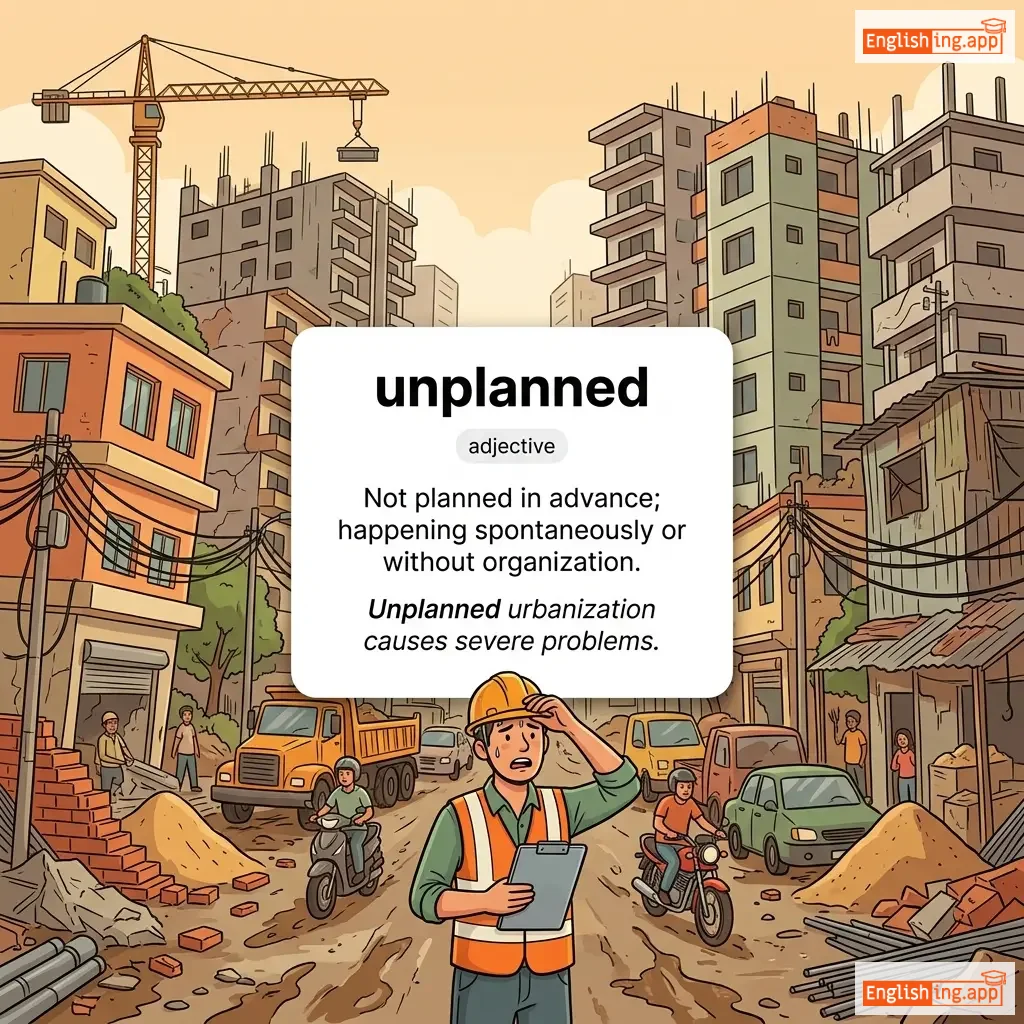
unplanned definition card — visual illustration of the meaning
adjective
ʌnˈplænd
未计划的 (wei jihua de)

Not planned in advance; happening spontaneously or without organization.

"Unplanned urbanization causes severe problems."

"无计划的城市化造成严重的问题。" (Wu jihua de chengshihua zaocheng yanzhong de wenti.)
adjective
/ʌnˈplɛz.ənt/
令人不悦的 (lìng rén bù yuè de)

not giving or causing pleasure; disagreeable

"The medicine had an unpleasant taste."

"药物有一种令人不悦的味道。" (Yàowù yǒu yī zhǒng lìng rén bù yuè de wèi dào.)
adverb
/ʌnˈplɛzəntli/
令人不快地 (ling ren bu kuai de)

in a way that causes discomfort, annoyance, or displeasure; in an unfriendly or disagreeable manner

"The room was unpleasantly hot during the afternoon."

"下午房间里热得令人不快。" (xiawu fangjian li re de ling ren bu kuai)
adjective
/ʌnˈpɒpjʊlə/
不受欢迎的 (bu shou huanying de)

not liked or supported by many people

"The decision was unpopular with the public."
"这个决定在公众中不受欢迎。" (zhege jueding zai gongzhong zhong bu shou huanying)
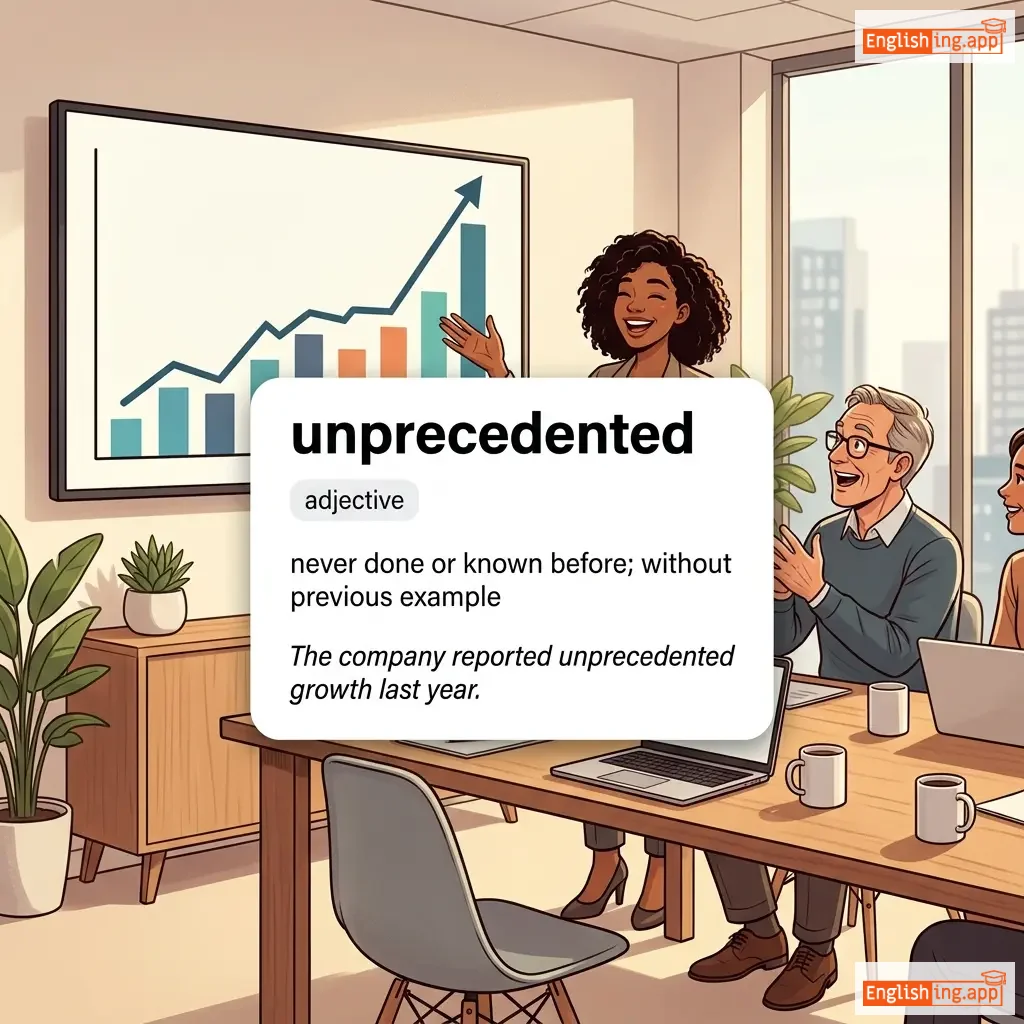
unprecedented definition card — visual illustration of the meaning
adjective
/ʌnˈprɛsɪˌdɛntɪd/
前所未有 (qián suǒ wèi yǒu)

never done or known before; without previous example

"The company reported unprecedented growth last year."
"公司报告了去年前所未有的增长。" (gōngsī bàogào le qùnián qián suǒ wèi yǒu de zēngzhǎng.)
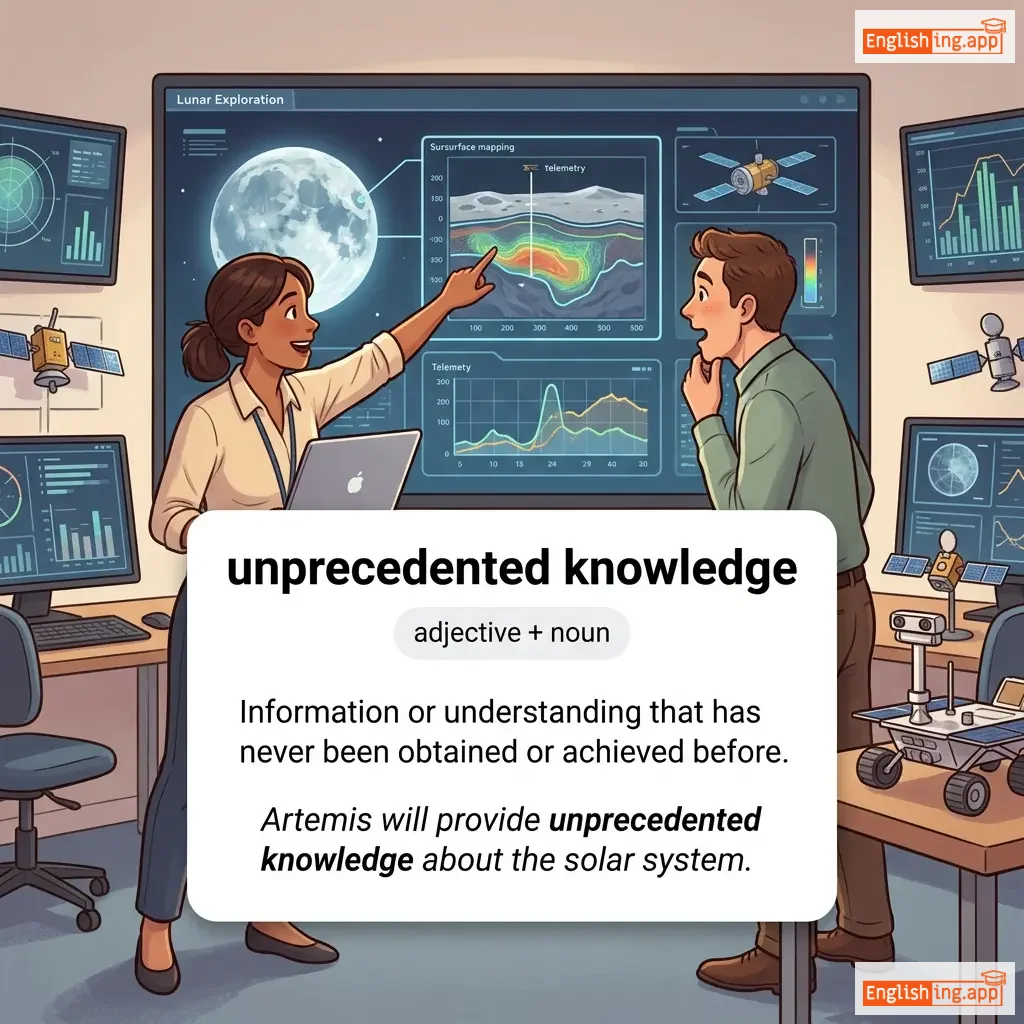
unprecedented knowledge definition card — visual illustration of the meaning
adjective + noun
ʌnˈpresɪdentɪd ˈnɒlɪdʒ
前所未有的知识 (qian suo wei you de zhi shi)

Information or understanding that has never been obtained or achieved before.

"Artemis will provide unprecedented knowledge about the solar system."
"阿尔忏将提供关于太阳系的前所未有的知识。" (A'erchan jiang tigong guanyu taiyangxi de qian suo wei you de zhishi.)
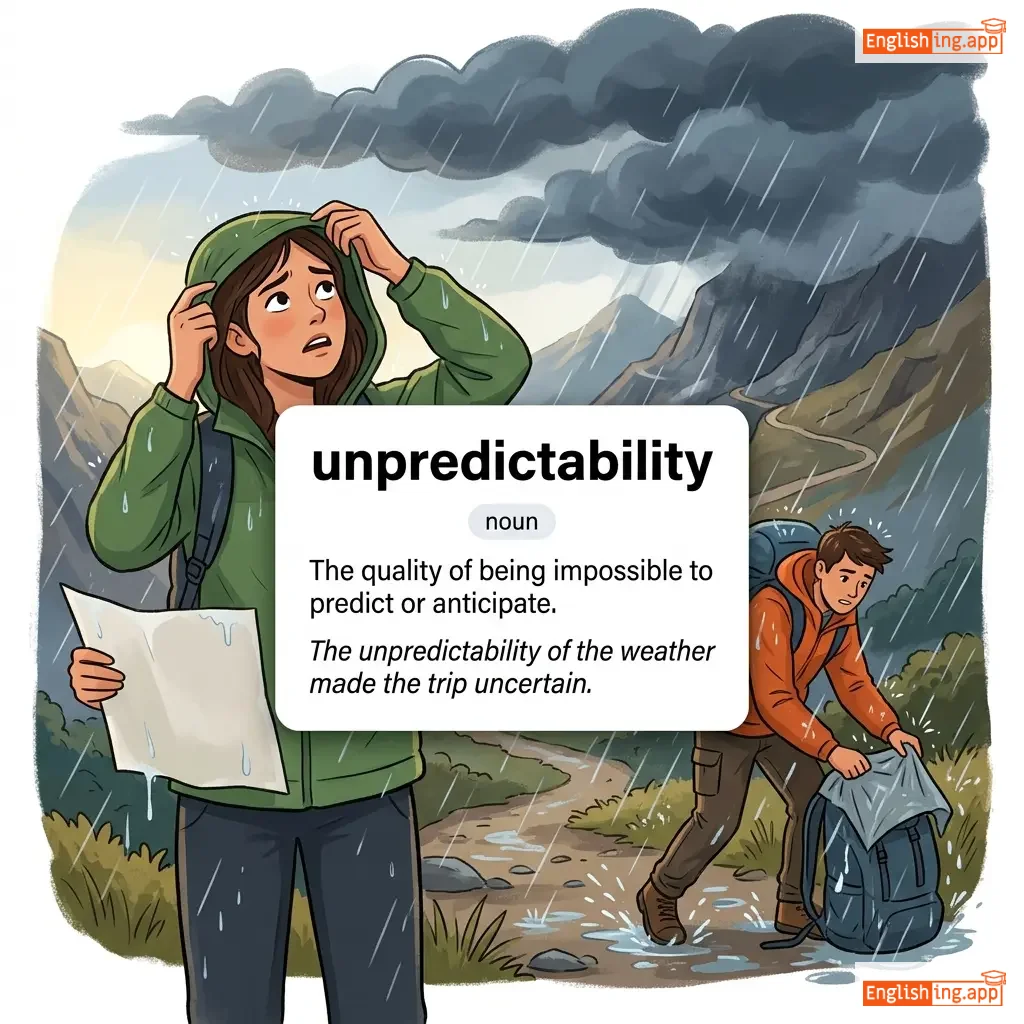
unpredictability definition card — visual illustration of the meaning
noun
/ˌʌnprɪˈdɪktəˌbɪləti/
不可预测性 (bù kě yù cè xìng)

The quality of being impossible to predict or anticipate.

"The unpredictability of the weather made the trip uncertain."

"天气的不可预测性使得旅行充满不确定性。" (Tiānqì de bù kě yù cè xìng shǐdé lǚxíng chōngmǎn bù quèdìngxìng.)
adjective
/ˌʌnprɪˈdɪktəbəl/
不可预测的 (buke yuce de)

not able to be predicted; changing suddenly and unexpectedly

"The weather in this region is highly unpredictable."

"这个地区的天气非常不可预测。" (zhege diqu de tianqi feichang buke yuce de)
adjective
/ʌnprɪˈpɛrd/
未准备好 (wei zhunbei hao)

not ready or able to deal with something

"He was unprepared for the difficult exam."

"他对困难的考试毫无准备。" (Ta dui kunnan de kao shi hao wu zhunbei)
adjective
/ˌʌnpriːpəˈzɛsɪŋ/
不吸引人 (bù xīyǐn rén)

not attractive or appealing in appearance

"Despite his unprepossessing looks, he was very kind and intelligent."

"尽管他的外貌不吸引人,他还是非常友善和聪明。" (Jǐnguǎn tā de wàibiǎo bù xīyǐn rén, tā hái shì fēicháng yǒushàn hé cōngmíng.)
adjective
/ˌʌnprɪˈtɛnʃəs/
谦虚的 (qianxu de)

modest; not attempting to impress others with appearance or importance

"She lives in an unpretentious home but is very happy."

"她住在一个谦虚的家里,但非常快乐。" (Ta zhu zai yi ge qianxu de jia li, dan feichang kuaile.)
adjective
/ˌʌnprəˈdʌktɪv/
无效的 (wúxiào de)

Not producing or achieving much; not effective or useful.

"The meeting was unproductive and wasted everyone's time."

"会议没有成效,浪费了大家的时间。" (Huìyì méiyǒu chéngxiào, làngfèi le dàjiā de shíjiān.)
adjective
/ʌnprəˈfɛʃ.ən.əl/
不专业 (bù zhuānyè)

not conforming to the standards expected in a particular profession

"His unprofessional behavior led to his dismissal from the company."

"他的不专业行为导致他被公司解雇。" (Tā de bù zhuānyè xíngwéi dǎozhì tā bèi gōngsī jiěgù.)
adjective
/ʌnˈprɒf.ɪ.tə.bl̩/
无利可图 (wú lì kě tú)

not yielding profit or gain; not producing financial benefit

"The unprofitable business was forced to close down after three years."

"这个无利可图的生意在三年后被迫关闭。" (Zhè ge wú lì kě tú de shēng yì zài sān nián hòu bèi pò guān bì.)
adjective
/ˌʌnprəˈpɪʃəs/
不利 (bùlì)

Not giving or indicating a good chance of success; unfavorable.

"The team began their journey under unpropitious weather conditions."

"团队在不利的天气条件下开始了他们的旅程。" (Tuánduì zài bùlì de tiānqì tiáojiàn xià kāishǐle tāmen de lǚchéng.)
adjective
/ʌnˈkwɒl.ɪ.faɪd/
不合格的; 无资格的; (bù hé gé de; wú zī gé de)

not having the necessary skills or qualifications; complete or absolute

"He was unqualified for the engineering position due to lack of experience."

"他因缺乏经验而不适合这个工程职位。" (Tā yīn quēfá jīngyàn ér bù shìhé zhège gōngchéng zhíwèi.)
adjective
/ʌnˈkwes.tʃən.ə.bl̩/
无可争议的; 确定的 (wú kě zhēng yì de; què dìng de)

not able to be disputed or doubted; certain and beyond doubt

"Her honesty and integrity are unquestionable qualities."

"她的诚实和正直是无可争议的品质。" (tā de chéngshí hé zhèngzhí shì wú kě zhēng yì de pǐnzhì.)
adjective
/ʌnˈkwaɪ.ət/
不安的; 焦虑的; 激动的 (bu'an de; jiaolü de; jīdòng de)

restless; unable to remain still or quiet; anxious or troubled

"She spent an unquiet night worrying about the exam results."

"她度过了一个不安的夜晚,担心考试结果。" (Tā dùguòle yīgè bù'ān de yèwǎn, dānxīn kǎoshì jiéguǒ.)
verb
/ʌnˈrævəl/

To undo twisted or knitted threads; to solve or explain something complicated.

"The detective worked hard to unravel the mystery."

adjective
/ʌnˈriːdəbl/
难以辨认的 (nanyi bianren de)

not able to be read or understood clearly; illegible

"The doctor’s handwriting was completely unreadable."

"医生的字迹完全难以辨认。" (Yisheng de ziji wanquan nanyi bianren)
adjective
/ʌnˈrɪəl/
不真实的 (bu zhenshi de)

not real or not based on reality; exaggerated or imaginary

"The experience felt unreal after the sudden news."

"突如其来的消息后,这种经历感觉不真实。" (Tu ru qi lai de xiaoxi hou, zhe zhong jingli ganjue bu zhenshi)
noun
/ˌʌnriˈælɪti/
非现实 (fei xianshi)

the state or quality of being unreal; lack of reality or truth

"The dreamlike setting gave the story a sense of unreality."

"这种梦幻的场景让故事充满了非现实感。" (Zhe zhong menghuan de changjing rang gushi chongman le fei xianshi gan)
adjective
/ʌnˈriːzənəbəl/
不合理的 (bu heli de)

not guided by reason or fairness; excessive or extreme beyond what is acceptable

"The manager made an unreasonable demand that no one could realistically meet."

"经理提出了一个不合理的要求。" (jingli tichu le yige bu heli de yaoqiu)
adjective
/ˌʌnrɪˈfaɪnd/
未精炼的 (wei jinglian de)

not processed or purified; lacking polish or sophistication

"The unrefined oil must be processed before it can be used as fuel."

"未精炼的石油在用作燃料之前必须进行加工。" (wei jinglian de shiyou zai yongzuo ranliao zhiqian bixu jinxing jiagong)
adjective
/ˌʌn.rɪˈdʒɛn.ər.ət/
顽固 (wángù)

Not reformed or showing no signs of change; stubbornly refusing to reform or repent.

"He remained an unregenerate opponent of progress."

"他仍然是进步的顽固反对者。" (Tā réngrán shì jìnbù de wángù fǎnduìzhě.)
adjective
/ʌn.rɪˈleɪ.tɪd/
无关的; 不相关 (wúguān de; bù xiāngguān)

having no connection or relationship; not connected by family ties

"The two incidents were completely unrelated to each other."

"这两个事件完全无关。" (Zhè liǎng gè shìjiàn wánquán wúguān.)
adjective
/ˌʌnrɪˈlaɪəbl/
不可靠的; 不能被信任或依赖 (bù kěkào de; bù néng bèi xìnrèn huò yīlài)

not dependable; not able to be trusted or relied upon

"The old car is unreliable and breaks down frequently."

"这辆老车不可靠,常常坏掉。" (Zhè liàng lǎo chē bù kěkào, chángcháng huài diào.)
adjective
/ˌʌnrɪˈmɪtɪŋ/
不断的 (buduan de)

Never relaxing or stopping; persistent.

"Her unremitting efforts finally paid off."

"她不懈的努力终于得到了回报。" (Tā bùxiè de nǔlì zhōngyú dédàole huíbào.)
adjective
/ˌʌnrɪˈkwaɪtɪd/

Not returned or reciprocated, especially in the context of love or affection.

"He suffered from unrequited love for years."

adjective
/ˌʌnrɪˈzɒlvd/
未解决的 (wei jiejue de)

not solved or settled; remaining undecided or unclear

"The dispute remains unresolved despite several meetings."

"尽管开了几次会议,这个争议仍未解决。" (jinguan kailiao jici huiyi zhege zhengyi reng wei jiejue)
noun
/ʌnˈrest/
不安;动荡;社会或政治动乱 (bù'ān; dòngdàng; shèhuì huò zhèngzhì dòngluàn)

a state of dissatisfaction and disturbance; social or political disorder

"The economic crisis led to widespread social unrest."

"经济危机导致了广泛的社会不安。" (Jīngjì wēijī dǎozhì le guǎngfàn de shèhuì bù'ān.)
adjective
/ʌnˈraɪp/
未成熟的 (wèi chéngzhí de)

not fully developed or matured; not ready to be eaten

"The unripe bananas will turn yellow in a few days."

"未成熟的香蕉几天后会变黄。" (Wèi chéngzhí de xiāngjiāo jǐ tiān hòu huì biàn huáng.)
verb
/ʌnˈroʊl/
展开 (zhankai)

to open something that is rolled up; to spread out gradually

"She unrolled the map on the table to find the route."

"她把地图在桌子上展开来寻找路线。" (ta ba ditu zai zhuozi shang zhankai lai xunzhao luxian)
adjective
/ʌnˈruːli/
不听话 (bù tīnghuà)

Disorderly, disruptive, or difficult to control.

"The teacher struggled to calm the unruly students."

"老师努力平静那些不听话的学生。" (Lǎoshī nǔlì píngjìng nàxiē bù tīnghuà de xuéshēng.)
adjective
/ʌnˈseɪf/
不安全; 危险的; (bù ānquán, wēixiǎn de)

involving or causing danger or risk; not protected from harm

"It is unsafe to walk alone in this neighborhood at night."

"晚上在这个社区独自行走是不安全的。" (Wǎnshàng zài zhège shèqū dúzì xíngzǒu shì bù ānquán de.)
adjective
/ʌnˈseɪvəri/
令人不快 (lìng rén bù kuài)

Disagreeable, unpleasant, or morally offensive.

"The politician was linked to an unsavory scandal."

"那位政治家与一宗令人不快的丑闻有关。" (Nà wèi zhèngzhìjiā yǔ yī zōng lìng rén bù kuài de chǒuwén yǒuguān.)
adjective
/ʌnˈskeɪðd/
毫发无损 (háo fà wú sǔn)

Without suffering any injury, damage, or harm.

"She escaped from the accident unscathed."
"她毫发无损地逃离了事故。" (Tā háo fà wú sǔn de táo líle shìgù.)
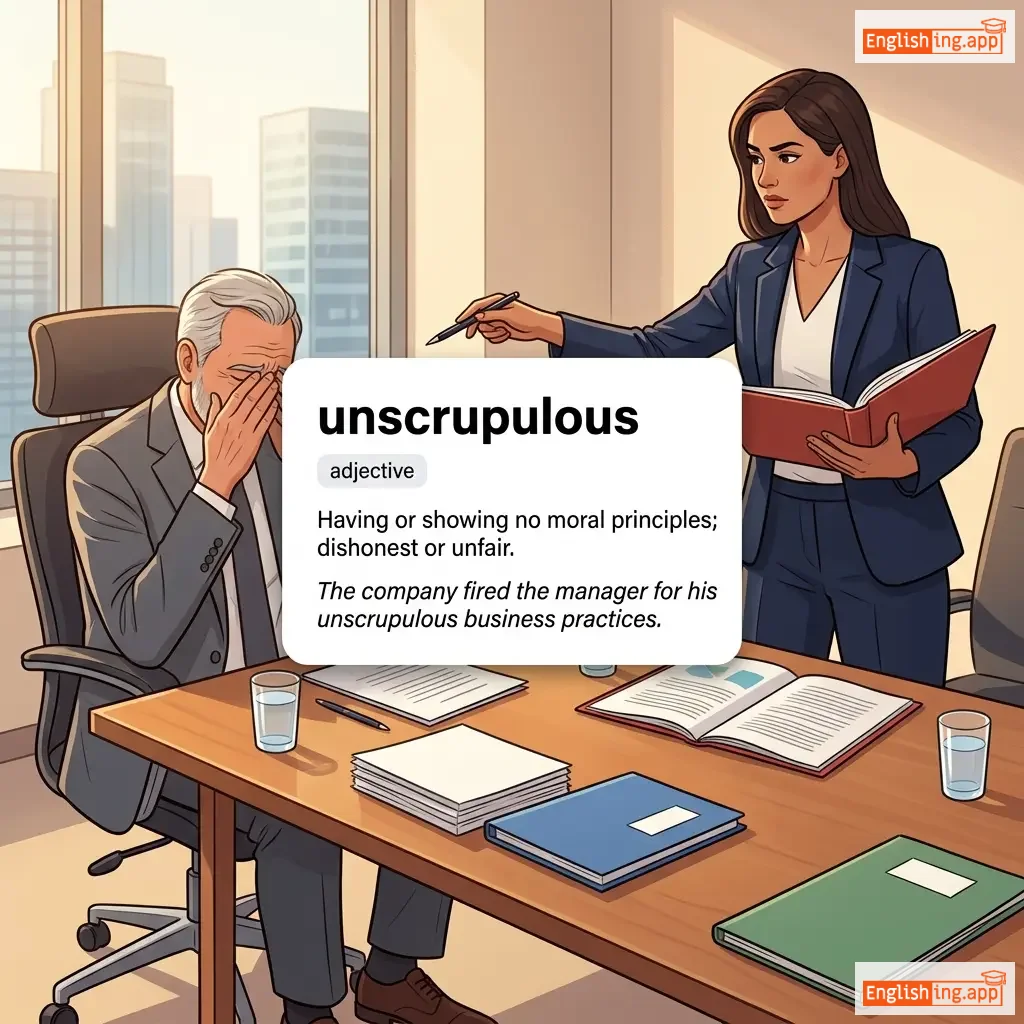
unscrupulous definition card — visual illustration of the meaning
adjective
/ʌnˈskruːpjələs/
不择手段 (bùzé shǒuduàn)

Having or showing no moral principles; dishonest or unfair.

"The company fired the manager for his unscrupulous business practices."

"公司因其不择手段的商业行为解雇了经理。" (Gōngsī yīn qí bùzé shǒuduàn de shāngyè xíngwéi jiěgù le jīnglǐ.)
adjective
/ʌnˈsiːmli/
不得体 (bùdétǐ)

Not proper or appropriate in behavior or appearance; unbecoming.

"His unseemly remarks embarrassed everyone at the dinner table."

"他不得体的言论让晚餐桌上的每个人都感到尴尬。" (Tā bùdétǐ de yánlùn ràng wǎncān zhuō shàng de měi gèrén dōu gǎndào gāngà.)
👁️‍🗨️

Unseen (ʌnˈsiːn)

adjective
/ʌnˈsiːn/
看不见的;未曾看到或注意到的 (kan bu jian de; wei ceng kan dao huo zhu yi dao de)

not previously seen or noticed; invisible; hidden

"The unseen forces of nature can be very powerful."

"自然界的看不见的力量可能非常强大。" (ziran jie de kan bu jian de li liang ke neng fei chang qiang da.)
adjective
/ʌnˈsɜːrvɪsəbəl/
无法使用的; 有缺陷的 (wúfǎ shǐyòng de; yǒu quēxiàn de)

not in working order; unable to be used; defective

"The old computer became unserviceable after the system crash."

"那台旧电脑在系统崩溃后变得无法使用。" (Nà tái jiù diànnǎo zài xìtǒng bēngkuì hòu biàn dé wúfǎ shǐyòng.)