词汇表

英语词汇词典 | 单词含义、定义和示例

adjective
/ˌjuːnɪˈlætərəl/
单边 (danbian)

Involving or affecting only one side or party without the agreement of others.

"The country took unilateral action without consulting its allies."

"该国在未咨询其盟友的情况下采取了单边行动。" (Gai guo zai wei zixun qi mengyou de qingkuang xingdong le danbian xingdong.)
adjective
/ˌʌnɪˈmædʒənəbəl/
难以想象的 (nán yǐ xiǎng xiàng de)

impossible to conceive; beyond imagination

"The scale of destruction was unimaginable until we saw it firsthand."

"毁灭的规模是难以想象的,直到我们亲眼看到。" (Huǐmiè de guīmó shì nán yǐ xiǎng xiàng de, zhídào wǒmen qīnyǎn kàn dào.)
adjective
/ˌʌnɪmˈpiːtʃəbl/
无可指摘 (wú kě zhǐ zhāi)

Not able to be doubted, questioned, or criticized; completely trustworthy.

"She is known for her unimpeachable honesty."

"她因其无可指摘的诚实而闻名。" (tā yīn qí wú kě zhǐ zhāi de chéng shí ér wén míng.)
noun
/ʌnɪmˈpɔːrtəns/
不重要 (bu zhongyao)

the state or quality of being insignificant or not important

"He dismissed the issue with a sense of unimportance."

"他以無關緊要的態度忽略了這個問題。" (Ta yi wu guan jinyao de taidu hule zhe ge wenti)
adjective
/ˌʌnɪmˈpɔːrtənt/
不重要的 (bu zhongyao de)

not having much value, significance, or influence

"The detail seemed unimportant compared to the main issue."

"与主要问题相比,这个细节显得不重要。" (Yu zhuyao wenti xiangbi zhege xijie xiande bu zhongyao)
adjective
/ˌʌnɪnˈfɔːrmd/
不了解情况的 (bu liaojie qingkuang de)

lacking knowledge or awareness about a particular subject; not educated or informed

"The decision was made by an uninformed committee."
"这个决定是由一个不了解情况的委员会做出的。" (zhege jueding shi you yi ge bu liaojie qingkuang de weiyuanhui zuochu de)
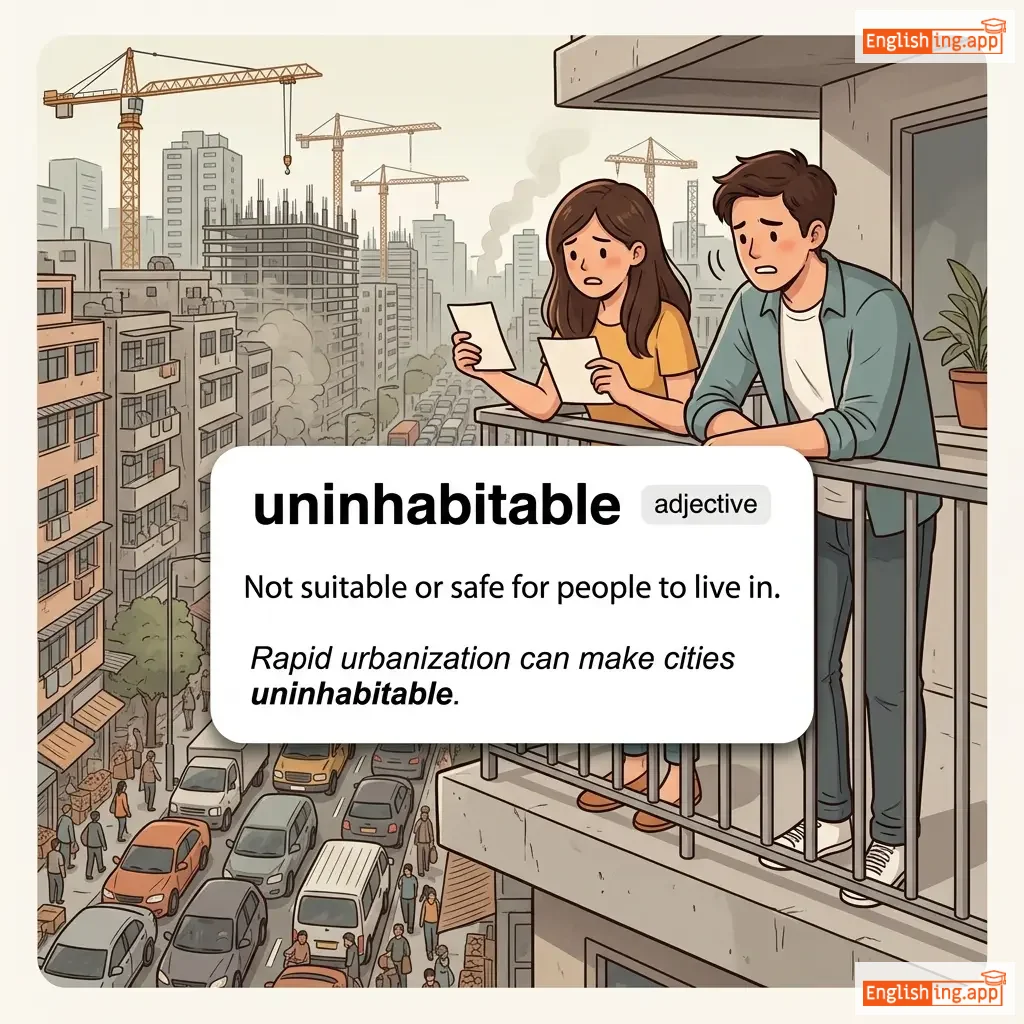
uninhabitable definition card — visual illustration of the meaning
adjective
ʌnɪnˈhæbɪtəbəl
不可居住 (bù kě jū zhù)

Not suitable or safe for people to live in.

"Rapid urbanization can make cities uninhabitable."

"快速城市化可能使城市变得无法居住。" (Kuài sù chéng shì huà kě néng shǐ chéng shì biàn dé wú fǎ jū zhù.)
adjective
/ˌʌnɪnˈhɪbɪtɪd/
不受抑制的 (bù shòu yìzhì de)

Not restrained or restricted; free in behavior or expression.

"She gave an uninhibited laugh at the joke."

"她在笑话中放声大笑。" (Tā zài xiàohuà zhōng fàngshēng dà xiào.)
adjective
/ʌnˈɪndʒərd/
未受伤 (wei shou shang)

Without injury; not physically harmed.

"All the passengers were rescued uninjured."

"所有乘客都没有受伤并被救援。" (Suǒyǐ chéngkè dōu méi yǒu shòudào shānghài bìng bèi jiùyuán.)
adjective
/ˌʌnɪnˈtenʃənəl/
非故意的;意外的 (fēi gùyì de; yìwài de)

not done on purpose; accidental

"The damage to the car was unintentional."

"车的损坏是非故意的。" (chē de sǔnhuài shì fēi gùyì de.)
adjective
/ˌʌnˈɪntrəstɪŋ/
无趣的 (wuqu de)

not holding attention or curiosity; boring

"The lecture was uninteresting and difficult to stay focused on."

"这次讲座很无趣,很难集中注意力。" (Zhe ci jiangzuo hen wuqu, hen nan jizhong zhuyi li)
adjective
/ˌʌnˈɪntɪmeɪtɪŋ/
没有暗示 (méiyǒu ànshì)

Not giving a hint or suggestion; not indicating.

"His unintimating tone gave no clue of his true feelings."

"他的没有暗示的语气没有透露他真正的感受。" (Tā de méiyǒu ànshì de yǔqì méiyǒu tòulù tā zhēnzhèng de gǎnshòu.)
noun
/ˈjuːnɪən/
联盟 (lianmeng)

the action or fact of joining or being joined with others, especially to form a single unit

"The union of the two companies created a global leader."

"两家公司合并创造了一个全球领导者。" (Liang jia gongsi hebing chuangzao le yige quanqiu lingdaozhe.)
adjective
/juːˈniːk/
独特的 (dútè de)

Being the only one of its kind; unlike anything else.

"Her dress was unique and caught everyone's attention."

"她的裙子是独特的,吸引了所有人的注意。" (Tā de qúnzi shì dútè de, xīyǐnle suǒyǒu rén de zhùyì.)
noun
/ˈjuːnɪsən/
齐声 (qí shēng)

Simultaneous performance or utterance of action or speech.

"The choir sang in unison."

"合唱团齐声唱歌。" (Héchàngtuán qí shēng chànggē.)
adjective
/juːˈnɪsənənt/
和谐的 (héxié de)

Sounding together or in harmony.

"The unisonant voices created a powerful effect."

"和谐的声音创造了强大的效果。" (Héxié de shēngyīn chuàngzàole qiángdà de xiàoguǒ.)
noun
/ˈjuːnɪt/
单元 (dānyuán)

an individual thing or person regarded as a single and complete entity

"Each unit in the production line is carefully tested."

"生产线上的每个单元都经过仔细测试。" (Shēngchǎn xiàn shàng de měi gè dānyuán dōu jīngguò zǐxì cèshì.)
noun
/ˌjuːnɪˈtɛəriən/
一神论者 (yīshénlùnzhě)

A person who believes that God exists as one entity rather than as a Trinity; a member of a religious denomination that emphasizes individual freedom of belief.

"The Unitarian church is known for its inclusive and open-minded approach."
"一神论教会以其包容和开放的思想方式而闻名。" (Yīshénlùn jiàohuì yǐ qí bāoróng hé kāifàng de sīxiǎng fāngshì ér wénmíng.)
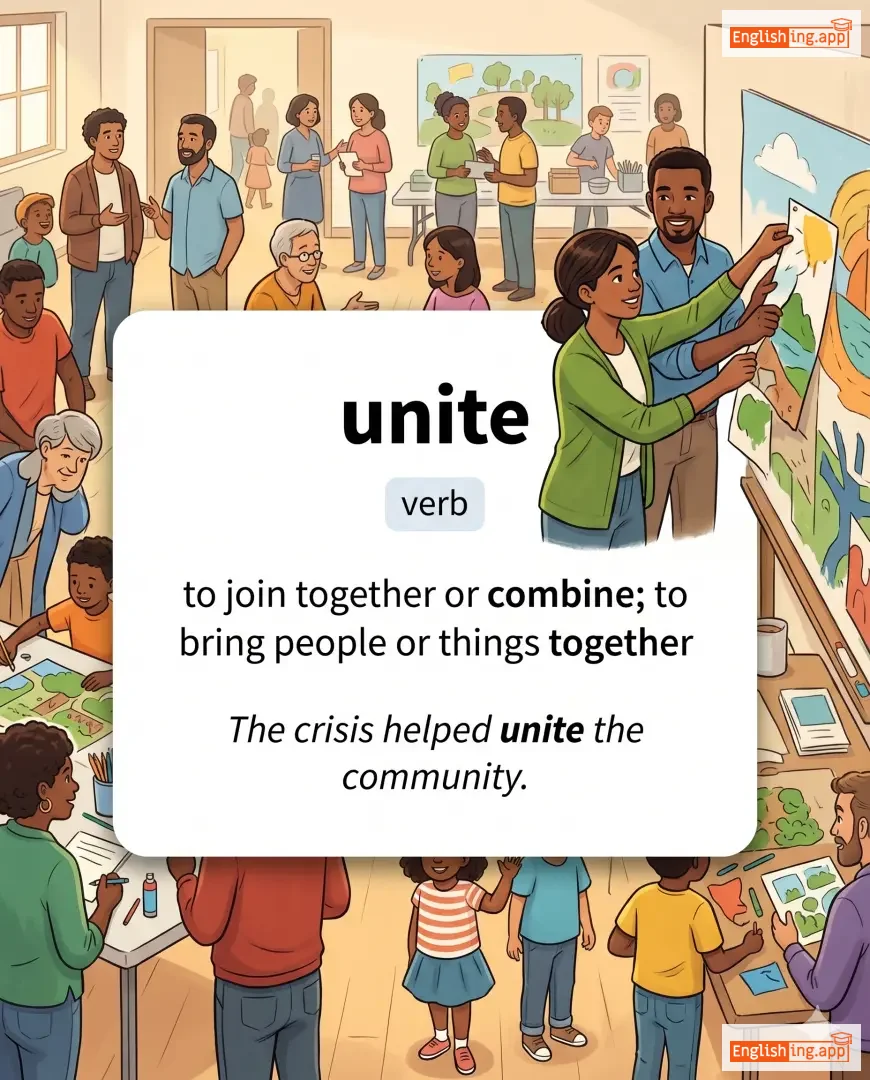
unite definition card — visual illustration of the meaning
verb
/juˈnaɪt/
联合 (lianhe)

to join together or combine; to bring people or things together

"The crisis helped unite the community."

"危机帮助了团结社区。" (Weiji bangzhu le tuanjie shequ.)
adjective
/juˈnaɪtɪd/
联合 (liánhé)

joined together or combined as one

"The united team won the championship."
"联合的队伍赢得了冠军。" (Liánhé de duìwǔ yíngdéle guànjūn.)
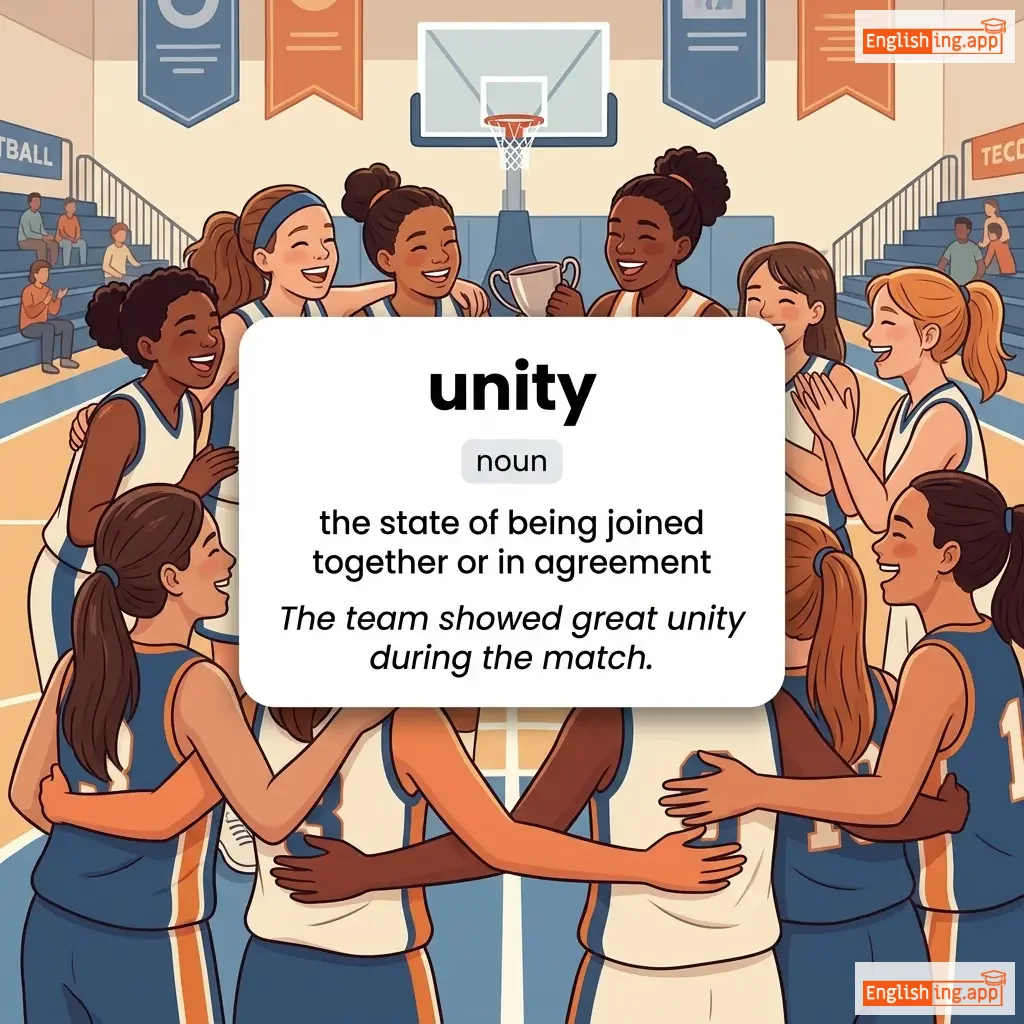
unity definition card — visual illustration of the meaning
🫱🏻‍🫲🏽

unity (yùnìtí)

noun
/ˈjuːnɪti/
团结 (tuánjié)

the state of being joined together or in agreement

"The team showed great unity during the match."

"球队在比赛中展示了伟大的团结。" (qiúduì zài bǐsài zhōng zhǎnshì le wěidà de tuánjié.)
noun
/ˈjuːnɪvəˌlɛns/
单价性 (dānjiàxìng)

The state of having a single valence or combining power, especially in chemistry.

"Hydrogen is characterized by its univalence in chemical reactions."

"氢气在化学反应中以其单价性为特点。" (Qīngqì zài huàxué fǎnyìng zhōng yǐ qí dānjiàxìng wéi tèdiǎn.)
adjective
/ˌjuːnɪˈvɜːsəl/
普遍的 (pǔbiàn de)

Relating to or done by all people or things in the world; applicable everywhere or in all cases.

"There is a universal need for love and acceptance."

"爱情和接纳是普遍的需求。" (Àiqíng hé jiēnà shì pǔbiàn de xūqiú.)
noun
/ˈjuːnɪvɜːrs/
宇宙 (yuzhou)

the totality of known or supposed objects and phenomena throughout space; the cosmos

"The universe is vast and full of mysteries."

"宇宙广阔,充满了神秘。" (Yuzhou guangkuo, chongman le shenmi.)
noun
/ˌjuːnɪˈvɜːrsɪti/
大学 (daxue)

an institution of higher education and research, which grants academic degrees

"She is studying law at the university."

"她在大学学习法律。" (Ta zai daxue xuexi falu.)
adjective
/ʌnˈdʒʌst/
不公正的; 错误的 (bù gōngzhèng de; cuòwù de)

not fair or right; morally wrong

"The punishment was unjust for such a minor offense."

"这个惩罚对于如此轻微的罪行来说是不公正的。" (zhège chéngfá duìyú rúcǐ qīngwēi de zuìxíng lái shuō shì bù gōngzhèng de.)
adjective
/ʌnˈkɛmpt/
邋遢 (lātā)

Having an untidy or disheveled appearance.

"He looked unkempt after sleeping outdoors all night."

"他睡了一整晚露天后,看起来邋遢。" (Tā shuìle yī zhěng wǎn lùtiān hòu, kàn qǐlái lātā.)
adjective
/ʌnˈkaɪnd/
残忍; 不友好 (cánrěn; bù yǒuhǎo)

cruel; not nice or caring toward others

"It was unkind of him to make fun of her appearance."

"他取笑她的外貌,真是太不友善了。" (Tā qǔxiào tā de wàimào, zhēn shì tài bù yǒushàn le.)
adverb
/ʌnˈkaɪndli/
残忍地 (canrendi)

in a cruel, harsh, or unsympathetic manner

"She spoke unkindly about her colleague during the meeting."

"她在会议期间残忍地谈论了她的同事。" (ta zai huiyi qijian canrendi tanlun le ta de tongshi)
noun
/ʌnˈkaɪndnəs/
不友善 (bu youshan)

lack of kindness; cruel or inconsiderate behavior

"His unkindness hurt her feelings deeply."

"他的不友善深深伤害了她的感情。" (Ta de bu youshan shenshen shanghai le ta de ganqing)
adjective
/ʌnˈnoʊn/
未知 (weizhi)

not known or familiar

"The origin of the disease remains unknown."

"疾病的来源仍然未知。" (Jibing de laiyuan rengran weizhi.)
adjective
/ʌnˈlɔːfəl/
非法 (feifa)

Not conforming to or permitted by law; illegal.

"The police arrested him for unlawful possession of weapons."

"警方因非法持有武器而逮捕了他。" (Jingfang yin feifa chiyou wuqi er daibu le ta.)
conjunction
/ʌnˈlɛs/
除非 (chúfēi)

except if

"We won't go unless it stops raining."

"除非雨停了,否则我们不去。" (Chúfēi yǔ tíngle, fǒuzé wǒmen bù qù.)
adjective
/ʌnˈlɛtəd/
文盲 (wénmáng)

lacking education or the ability to read and write; illiterate

"The unlettered villagers relied on oral traditions to preserve their history."

"那些文盲村民依赖口头传统来保存他们的历史。" (Nàxiē wénmáng cūnmín yīlài kǒutóu chuántǒng lái bǎocún tāmen de lìshǐ.)
preposition/adjective
/ʌnˈlaɪk/
不同 (bùtóng)

differing from or not similar to

"Unlike his brother, he enjoys playing soccer."

"与他的兄弟不同,他喜欢踢足球。" (Yǔ tā de xiōngdì bùtóng, tā xǐhuān tī zúqiú.)
adjective
/ʌnˈlaɪkli/
不太可能 (butai keneng)

not likely to happen or be true

"It is unlikely that he will arrive on time."

"他不太可能准时到达。" (Ta butai keneng zhunshi daoda.)
adjective
/ʌnˈlɪmɪtɪd/
无限 (wuxian)

without any limits or restrictions

"The internet plan offers unlimited data for the whole month."

"该互联网计划提供整个一个月的无限数据。" (Gai hùliánwǎng jìhuà tígōng zhěnggè yīgè yuè de wúxiàn shùjù.)
verb
/ʌnˈlɒk/
解锁 (jiesuo)

to open something that is locked; to make something accessible or available

"She used the key to unlock the door."

"她用钥匙解锁了门。" (ta yong yaoshi jiesuo le men)
adjective
/ʌnˈlʌki/
倒霉; 不幸运 (dàoméi; bù xìngyùn)

having bad luck; unfortunate

"He was unlucky to miss the winning shot."

"他很倒霉错过了获胜的投篮。" (Tā hěn dàoméi cuòguòle huòshèng de tóulán.)
adjective
/ʌnˈmænɪdʒəbəl/
无法控制的; 失控 (wúfǎ kòngzhì de; shī kòng)

difficult or impossible to control or handle

"The large class became unmanageable without proper supervision."

"没有适当的监督,班级变得无法控制。" (méiyǒu shìdàng de jiāndū, bānjí biàndé wúfǎ kòngzhì.)
adjective
/ʌnˈmærid/
未婚 (weihun)

Not married; single.

"He is thirty-five and still unmarried."

"他三十五岁,仍然未婚。" (Ta sanshiwu sui, rengran weihun.)
verb
/ʌnˈmɑːsk/
揭露;暴露真相 (jielu; baolu zhenxiang)

to remove a mask or covering; to reveal the true identity, nature, or intentions of someone or something

"The investigation helped unmask the real culprit behind the crime."
"调查帮助揭露了犯罪背后的真正罪犯。" (Diaocha bangzhu jielu le fanzui beihou de zhenzheng zuifan)
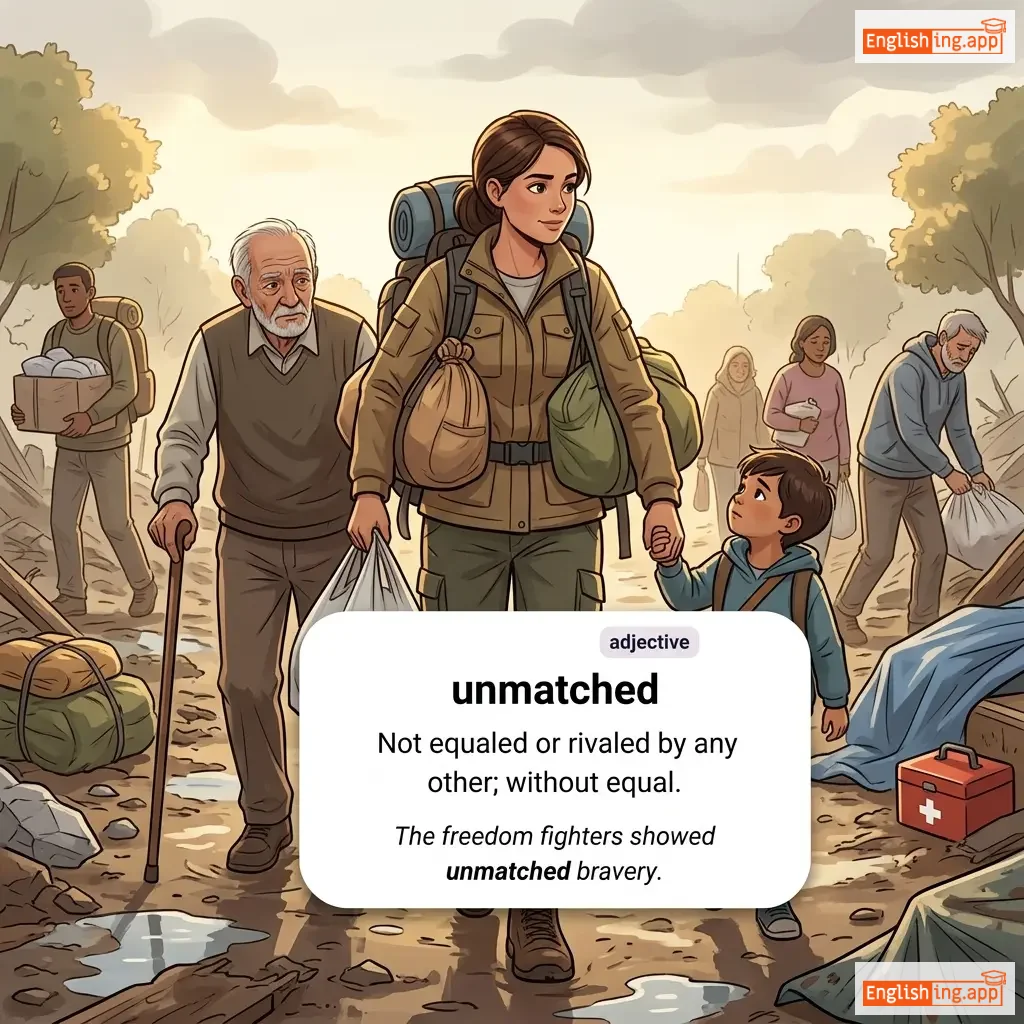
unmatched definition card — visual illustration of the meaning
adjective
ʌnˈmætʃt
无与伦比 (wú yǔ lún bǐ)

Not equaled or rivaled by any other; without equal.

"The freedom fighters showed unmatched bravery."

"自由战士们展示了无与伦比的勇气。" (Zìyóu zhànshìmen zhǎnshìle wú yǔ lún bǐ de yǒngqì.)
adjective
/ʌnˈmaɪndfəl/
不留心的; 疏忽的; (bù liúxīn de; shūhu de)

not paying attention; careless; heedless

"She was unmindful of the danger around her."

"她没有注意到周围的危险。" (Tā méiyǒu zhùyì dào zhōuwéi de wēixiǎn.)
adjective
/ʌnˈmɪtɪɡeɪtɪd/
完全 (wanquan)

absolute; not lessened or moderated

"The meeting was an unmitigated disaster."

"会议是一次完全的灾难。" (Huiyi shi yici wanquan de zainan.)
adjective
/ʌnˈmɒdɪfaɪd/
未修改的 (wei xiugai de)

not changed from its original form or state

"The data was used in its unmodified form for analysis."

"这些数据以未修改的形式用于分析。" (zhexie shuju yi wei xiugai de xingshi yongyu fenxi)
adjective
/ʌnˈnætʃrəl/
不自然 (bù zìrán)

contrary to the usual course of nature; artificial or abnormal

"The bright green color of the drink looked unnatural."

"这款饮料的亮绿色看起来不自然。" (Zhè kuǎn yǐnliào de liàng lǜsè kàn qǐlái bù zìrán.)
adverb
/ʌnˈnætʃrəli/
不自然地 (bu ziran de)

in a way that is not natural or normal; excessively or strangely

"He smiled unnaturally, making everyone feel uncomfortable."

"他不自然地笑了,让每个人都感到不舒服。" (Ta bu ziran de xiao le, rang mei ge ren dou gan dao bu shufu)
adverb
/ʌnˈnesəserəli/
不必要地 (bù bì yào de)

to a greater extent than is needed; without necessity

"Don't worry unnecessarily about the exam."

"不要为考试不必要地担心。" (bù yào wèi kǎo shì bù bì yào de dān xīn.)
adjective
/ʌnˈnɛsəsɛri/
不必要 (bù bì yào)

not needed or required

"The manager cut all unnecessary expenses to save costs."

"经理削减了所有不必要的开支以节省成本。" (Jīnglǐ xuējiǎnle suǒyǒu bù bì yào de kāizhī yǐ jiéshěng chéngběn.)