词汇表

英语词汇词典 | 单词含义、定义和示例

adjective
/ʌnˈedjʊkeɪtɪd/
未受教育的; 文盲 (wèi shòu jiàoyù de; wénmáng)

lacking education; not having received formal schooling or training

"Many uneducated workers struggle to find well-paying jobs."

"许多未受教育的工人很难找到薪水高的工作。" (xǔduō wèi shòu jiàoyù de gōngrén hěn nán zhǎodào xīnshuǐ gāo de gōngzuò)
adjective
/ˌʌnɪmˈplɔɪəbəl/
不适合就业 (bu shihe jiuye)

Not able to be employed; lacking the skills or qualities necessary for employment

"Due to his criminal record, he was considered unemployable in most companies."

"由于他的犯罪记录,他在大多数公司被认为是不适合就业。" (Youyu ta de fanzui jilu, ta zai da duoshu gongsi bei renwei shi bu shihe jiuye.)
adjective
/ʌnɪmˈplɔɪd/
失业 (shīyè)

without a job; not having paid work

"He has been unemployed for six months now."

"他已经失业六个月了。" (Tā yǐjīng shīyè liù gè yuè le.)
noun
/ˌʌnɪmˈplɔɪmənt/
失业 (shiye)

the state of not having a paid job despite being able and willing to work

"High unemployment is a major issue in the country."

"高失业率是该国的一个主要问题。" (Gao shiye lv shi gai guo de yi ge zhuyao wenti.)
adjective
/ʌnˈendɪŋ/
无尽的 (wujinde)

continuing forever; without end

"The unending rain made the day feel gloomy."

"无尽的雨让这一天显得阴沉。" (wujinde yu rang zhe yi tian xiande yinchen)
adjective
/ʌnˈiːkwəl/
不平等; 不公正; (bùpíngděng; bù gōngzhèng)

not the same in quantity, size, or value; not fair or just

"The distribution of wealth is unequal in many countries."

"财富的分配在许多国家是不平等的。" (Cáifù de fēnpèi zài xǔduō guójiā shì bù píngděng de.)
adjective
/ˌʌnɪˈkwɪvəkəl/
明确 (mingque)

Leaving no doubt; clear and unambiguous

"She gave an unequivocal answer to the question."

"她对问题给出了明确的回答。" (Ta dui wenti gei chulai mingque de huida.)
adverb
/ʌnˈɜːrɪŋli/
毫无错误 (háo wú cuò wù)

Without making any mistakes; always accurate

"The archer aimed unerringly at the target."

"弓箭手毫无错误地瞄准了目标。" (Gōngjiàn shǒu háo wú cuò wù de miáo zhǔnle mùbiāo.)
adjective
/ʌnˈiːvən/
不平; 粗糙 (bùpíng; cūcāo)

not level or smooth; not regular or consistent

"The road was uneven and full of potholes."

"那条路不平,充满了坑洞。" (Nà tiáo lù bù píng, chōngmǎnle kēngdòng.)
adjective
/ˌʌnɪkˈsɛpʃənəbl/
无可指摘 (wú kě zhǐ zhāi)

Not open to objection; acceptable and unobjectionable

"His behavior was unexceptionable throughout the event."

"他的行为在整个事件中都是无可指摘的。" (Tā de xíngwéi zài zhěnggè shìjiàn zhōng dōu shì wú kě zhǐ zhāi de.)
adjective
/ˌʌnɪkˈspɛktɪd/
出乎意料 (chūhū yìliào)

not anticipated or predicted; surprising

"We had an unexpected visitor last night."

"我们昨晚有一个出乎意料的访客。" (Wǒmen zuó wǎn yǒu yīgè chūhū yìliào de fǎngkè.)
adjective
/ʌnˈfɛər/
不公平 (bukongping)

not based on or behaving according to the principles of equality or justice

"It’s unfair to blame her for the team’s failure."

"将团队的失败归咎于她是不公平的。" (Jiang tuandui de shibai guijiu yu ta shi bu gongping de.)
adverb
/ʌnˈfɛərli/
不公平地 (bu gong ping de)

In a manner that is not just, reasonable, or impartial

"He was treated unfairly by the committee."

"他被委员会不公平地对待。" (Ta bei weiyuanhui bu gongping de duidai.)
adjective
/ʌnˈfeɪθ.fəl/
不忠诚 (bù zhōngchéng)

not loyal or true to a spouse, partner, or commitment

"He was unfaithful to his wife for many years."

"他对妻子不忠诚多年。" (Tā duì qīzi bù zhōngchéng duōnián.)
noun
/ʌnˈfeɪθfʊlnəs/
不忠 (buzhong)

the quality of being disloyal or not faithful; breach of trust or fidelity

"His unfaithfulness led to the end of their marriage."

"他的不忠导致了他们婚姻的结束。" (Ta de buzhong daozhi le tamen hunyin de jieshu.)
adjective
/ʌnˈfɔːltərɪŋ/
坚定不移 (jiāndìng bù yí)

Steady and resolute; not weakening or hesitating

"She continued with unfaltering determination."

"她以坚定不移的决心继续前进。" (Tā yǐ jiāndìng bù yí de juéxīn jìxù qiánjìn.)
adjective
/ʌnfəˈmɪl.jər/
不熟悉的; 陌生的 (bù shúxī de; mòshēng de)

not known or recognized; strange

"The city was unfamiliar to me since I had never been there before."

"这座城市对我来说很陌生,因为我以前从未去过那里。" (Zhè zuò chéngshì duì wǒ lái shuō hěn mòshēng, yīnwèi wǒ yǐqián cóng wèi qùguò nàlǐ.)
adjective
/ʌnˈfeɪv(ə)rəbəl/
不利 (bùlì)

not beneficial or advantageous; showing disapproval or opposition

"The proposal received an unfavorable response from the committee."

"提案收到了委员会的负面回应。" (Tí'àn shōudàole wěiyuánhuì de fùmiàn huíyīng.)
adjective
/ʌnˈfeɪ.vər.ə.bəl/
不利的; 逆境的 (buli de; nìjìng de)

not helpful or advantageous; adverse

"The weather conditions were unfavourable for our outdoor event."
"恶劣的天气条件不利于我们的户外活动。" (èliè de tiānqì tiáojiàn bùlì yú wǒmen de hùwài huódòng.)
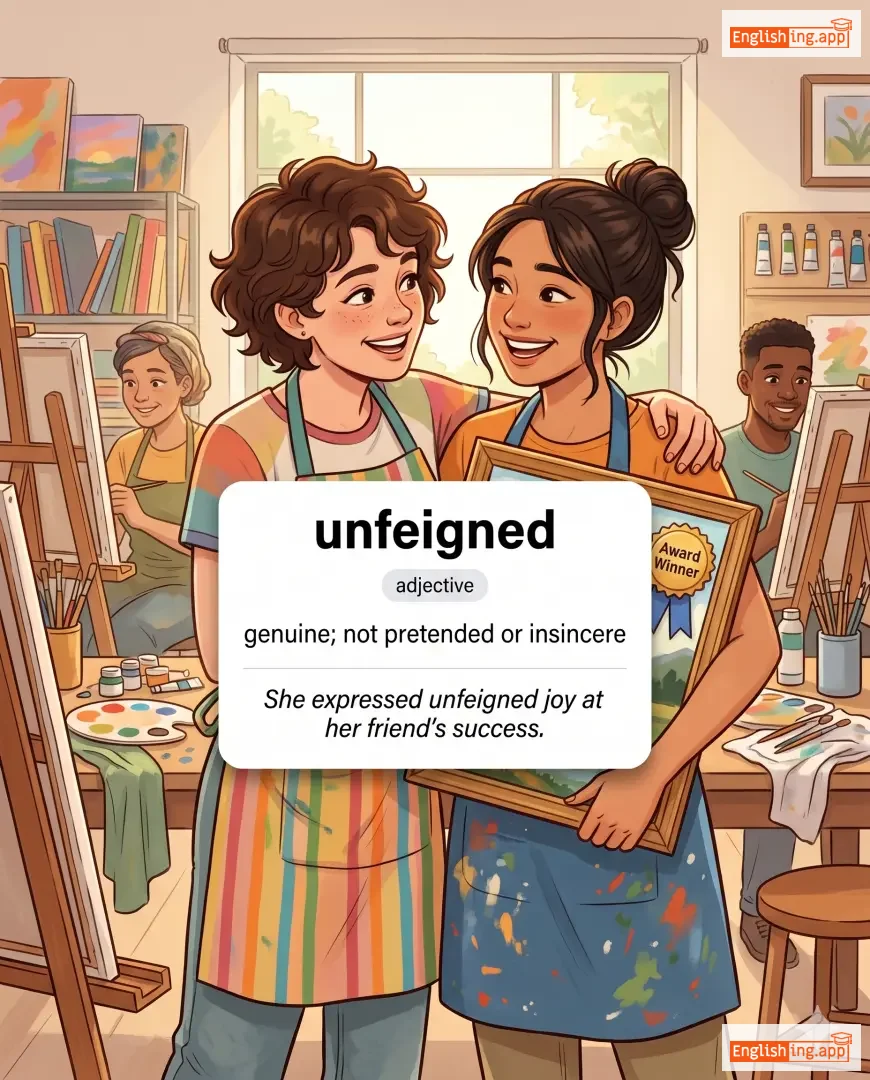
unfeigned definition card — visual illustration of the meaning
adjective
/ʌnˈfeɪnd/
真诚 (zhēnchéng)

genuine; not pretended or insincere

"She expressed unfeigned joy at her friend's success."

"她在朋友的成功上表达了真诚的喜悦。" (Tā zài péngyǒu de chénggōng shàng biǎodá le zhēnchéng de xǐyuè.)
verb
/ʌnˈfɛtər/
解开束缚 (jiě kāi shù fù)

to release from restraint or restriction; to free

"The new law will unfetter small businesses from excessive regulations."

"新法律将使小企业免于过多的规定。" (Xīn fǎlǜ jiāng shǐ xiǎo qǐyè miǎn yú guò duō de guīdìng.)
adjective
/ʌnˈfɛtərd/
不受限制的 (bù shòu xiànzhì de)

not restricted or confined; free

"The artist enjoyed unfettered freedom of expression."

"艺术家享受了无限制的表达自由。" (Yìshùjiā xiǎngshòule wúxiànzhì de biǎodá zìyóu.)
adjective
/ʌnˈfɪt/
不适合; 不适当; (bù shìhé; bù shìdàng)

not in good physical condition; unsuitable or inappropriate

"He was declared unfit for military service due to his poor health."

"由于健康状况差,他被宣判不适合军事服务。" (Yóuyú jiànkāng zhuàngkuàng chà, tā bèi xuānpàn bù shìhé jūnshì fúwù.)
adjective
/ʌnˈflæpəbəl/
冷静沉着 (lěngjìng chénzhuó)

calm and composed, especially in difficult situations

"Despite the crisis, he remained unflappable and confident."

"尽管面临危机,他依然保持冷静沉着,充满自信。" (Jǐnguǎn miànlín wēijī, tā yīrán bǎochí lěngjìng chénzhuó, chōngmǎn zìxìn.)
adjective
/ʌnˈflɛdʒd/
未经训练的 (wei jing xunlian de)

Inexperienced, immature, or not fully developed.

"The unfledged writer struggled to complete his first novel."

"这个未经训练的作家难以完成他的第一本小说。" (Zhe ge wei jing xunlian de zuojia nanyi wancheng tade di yi ben xiaoshuo.)
verb
/ʌnˈfəʊld/
展开或打开 (zhǎn kāi huò dǎ kāi)

to open or spread out something that was folded; to gradually reveal or develop

"She unfolded the letter carefully."

"她小心地展开了信件。" (Tā xiǎoxīn de zhǎn kāi le xìn jiàn.)
adjective
/ˌʌnfɔːrˈsiːn/

Not anticipated or predicted; unexpected.

"The project faced unforeseen challenges that delayed its completion."

adjective
/ˌʌnfɔːrθˈkʌmɪŋ/
不合作的 (bù hézuò de)

Not willing to talk or provide information; uncooperative.

"The witness was unforthcoming about what he had seen."

"证人对于他所见的情况不合作。" (Zhèngrén duìyú tā suǒ jiàn de qíngkuàng bù hézuò.)
adjective
/ʌnˈfɔːrtʃənət/
不幸 (buxing)

Having or marked by bad luck; unlucky.

"It was unfortunate that the meeting was canceled at the last minute."

"很不幸,会议在最后一分钟被取消了。" (Hen buxing, huiyi zai zuihou yifen zhong bei quxiao le.)
adverb
/ʌnˈfɔːtʃənətli/
不幸的是 (bù xìng de shì)

used to express regret or disappointment about something that has happened or is going to happen

"Unfortunately, the event was canceled due to the rain."

"不幸的是,由于下雨,活动被取消了。" (Bù xìng de shì, yóu yú xià yǔ, huódòng bèi qǔxiāo le.)
adjective
/ʌnˈfrɛndli/
不友好的 (bu youhao de)

not kind or welcoming; hostile or cold in behavior or attitude

"The shop owner seemed unfriendly to new customers."

"店主对新顾客显得不友好。" (Dianzhu dui xin guke xiande bu youhao)
verb
/ʌnˈfrɒk/
剥夺神职 (bōduó shénzhí)

To remove a priest from his position or deprive someone of a rank.

"The corrupt priest was unfrocked after the investigation."

"腐败的牧师在调查后被解除职务。" (fǔbài de mùshī zài diàochá hòu bèi jiěchú zhíwù.)
adjective
/ʌnˈɡeɪnli/
笨拙 (bènzhuō)

Awkward, clumsy, or lacking grace in movement or appearance.

"The tall boy moved in an ungainly manner."

"那个高个男孩以笨拙的方式走动。" (Nàgè gāo gè nán hái yǐ bènzhuō de fāngshì zǒudòng.)
adjective
/ʌnˈɡreɪt.fəl/
忘恩负义 (wàng ēn fù yì)

not feeling or showing thanks for something done or given; not appreciating kindness

"She felt he was ungrateful for all the help she had given him."

"她觉得他对她给予的所有帮助都忘恩负义。" (Tā juéde tā duì tā jǐyǔ de suǒyǒu bāngzhù dōu wàng ēn fù yì.)
adjective
/ʌnˈɡɑː.dɪd/
不设防的 (unguarded)

not protected or defended; careless about revealing private thoughts or information

"In an unguarded moment, she revealed her true feelings about the project."

"在一个不设防的时刻,她揭示了她对这个项目的真实感受。" (zai yi ge bu she fang de shi ke, ta jie shi le ta dui zhe ge xiang mu de zhen shi gan jue)
noun
/ˈʌŋɡwənt/
药膏 (yàogāo)

A soothing or healing ointment applied to the skin.

"The doctor applied an unguent to heal the burn."

"医生涂抹了药膏来治愈烧伤。" (Yīshēng túmǒ le yàogāo lái zhìyù shāoshāng.)
noun
/ʌnˈhæp.i.nəs/
不快乐 (bukuaile)

the state of being unhappy; sadness or dissatisfaction

"Her constant unhappiness affected everyone around her."

"她持续的不快乐影响了周围的每一个人。" (Ta chixu de bukuaile yingxiang le zhouwei de mei yi ge ren.)
adjective
/ʌnˈhæpi/
不开心或悲伤 (bù kāixīn huò bēishāng)

not happy; sad, disappointed, or dissatisfied

"He was unhappy with the final decision."

"他对最终决定感到不开心。" (tā duì zuìzhōng juédìng gǎndào bù kāixīn.)
adjective
/ʌnˈhel.θi/
不健康的; 有害的 (bù jiàn kāng de, yǒu hài de)

harmful to health; not in good health; detrimental to well-being

"Eating too much fast food is unhealthy for your body."

"吃太多快餐对你的身体不健康。" (Chī tài duō kuài cān duì nǐ de shēn tǐ bù jiàn kāng.)
adjective
/ʌnˈhɜːd/
未听到的; 未知的 (wei tingdao de; weizhi de)

not heard or listened to; not given a hearing; unknown or unfamiliar

"His complaints went unheard by the management."

"他的投诉没有被管理层听到。" (Tā de tóusù méiyǒu bèi guǎnlǐ céng tīngdào.)
adjective
/ʌnˈhɛlpfəl/
没有帮助的 (meiyou bangzhu de)

not providing help or support; making a situation harder rather than easier

"His unhelpful attitude slowed down the entire project."

"他没有帮助的态度拖慢了整个项目。" (ta meiyou bangzhu de taidu tuo man le zhengge xiangmu)
adjective
/ʌnˈhoʊli/
亵渎的; 罪恶的; 亵渎的 (xièdú de; zuì'è de; xièdú de)

wicked; sinful; profane

"The unholy alliance between the two companies caused public outrage."

"这两家公司之间的不圣洁联盟引发了公众愤怒。" (Zhè liǎng jiā gōngsī zhī jiān de bù shèngjié liánméng yǐn fàle gōngzhòng fènnù.)
adjective
/ʌnˈɒnəd/
未受尊敬的 (wei shou zun jing de)

not respected or given the recognition that is deserved; treated without honor

"He felt unhonoured after his years of service were ignored."

"他的多年服务被忽视后,他感到自己未受尊敬。" (Tade duonian fuwu bei hushi hou ta gandao ziji wei shou zun jing)
adjective
/ʌnˈhɜːrt/
毫发无损 (háo fà wú sǔn)

Not injured or harmed.

"She walked away from the accident unhurt."

"她在事故中毫发无损。" (Tā zài shìgù zhōng háo fà wú sǔn.)
adjective
/ʌnhaɪˈdʒiːnɪk/
不卫生的;缺乏适当的卫生 (bù wèi shēng de; quē fá shì dàng de wèi shēng)

not clean; lacking proper sanitation

"The restaurant was closed due to unhygienic conditions in the kitchen."

"由于厨房不卫生的条件,餐厅被关闭。" (Yóu yú chú fáng bù wèi shēng de tiáo jiàn, cān tīng bèi guān bì.)
adjective
/ˌjuːnɪˈsɛljʊlər/
单细胞 (dan xibao)

Consisting of a single cell.

"Amoebas are unicellular organisms."

"变形虫是单细胞生物。" (Bianxingchong shi dan xibao shengwu.)
unified definition card — visual illustration of the meaning
adjective
/ˈjuː.nɪ.faɪd/
统一 (tongyi)

Made into a whole or joined together.

"A unified approach fosters better outcomes."

"统一的方法促进了更好的结果。" (Tongyi de fangfa cujin le geng hao de jieguo.)
adjective
/ˈjuːnɪfɔːm/
制服 (zhì fú)

consistent or the same in form, manner, or degree

"The students were required to wear a uniform to school."

"学生们必须穿制服上学。" (Xuéshēngmen bìxū chuān zhìfú shàngxué.)
noun
/ˌjuːnɪˈfɔːrmɪti/
统一性 (tongyixing)

The quality or state of being the same, consistent, or without variation.

"The teacher insisted on uniformity in the students' dress code."

"老师坚持要求学生的着装保持统一性。" (Laoshi jiānchí yāoqiú xuéshēng de zhuózhuāng bǎochí tǒngyīxìng.)
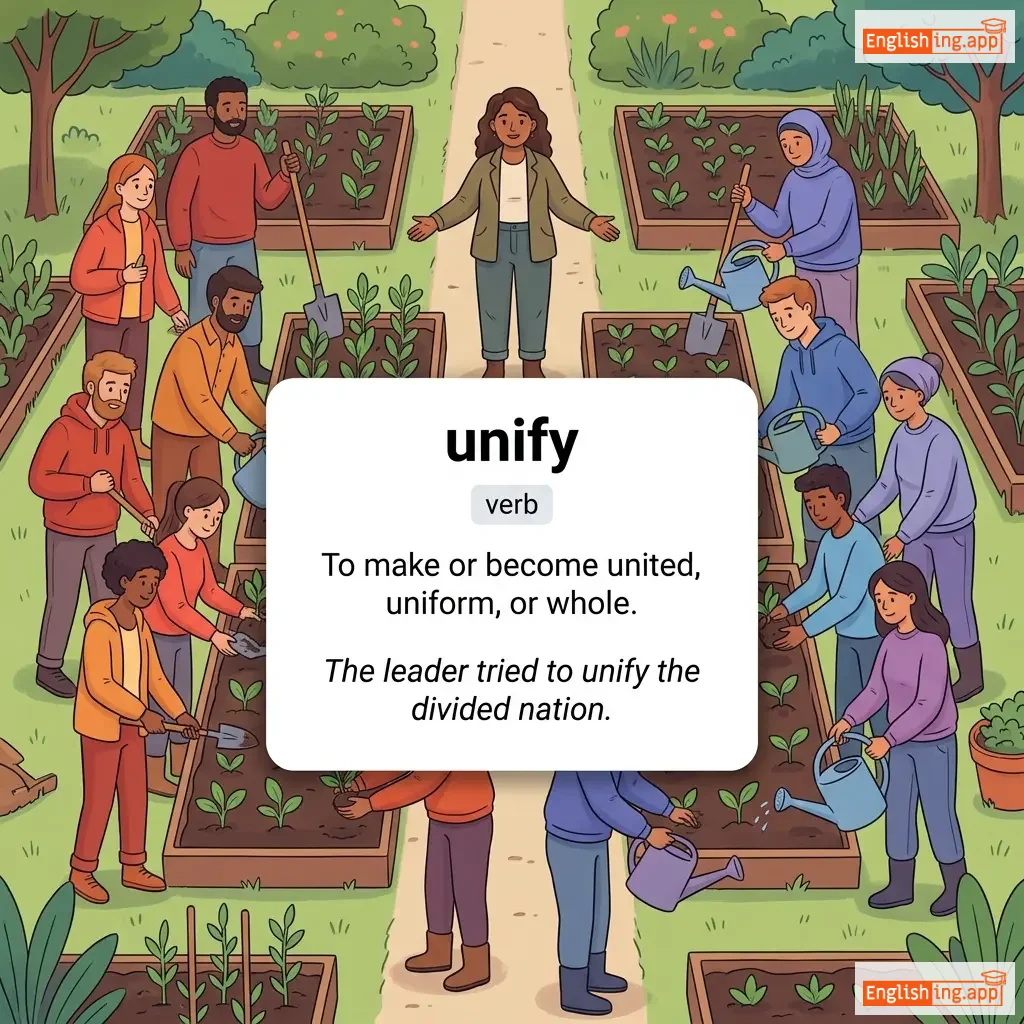
unify definition card — visual illustration of the meaning
🤝

unify

verb
/ˈjuːnɪfaɪ/

To make or become united, uniform, or whole.

"The leader tried to unify the divided nation."