词汇表

英语词汇词典 | 单词含义、定义和示例

noun
/ˈʌndərwɛr/
内衣 (nèi yī)

clothing worn under other clothes, next to the skin

"She bought new underwear from the department store."

"她在百货商店买了新的内衣。" (Tā zài bǎihuò shāngdiàn mǎile xīn de nèi yī.)
verb
/ˌʌn.dəˈtʃɑːrdʒ/
收取较少费用 (shōuqǔ jiàoshǎo fèiyòng)

To charge less than the correct or fair amount.

"The shopkeeper accidentally undercharged me for the groceries."

"店主不小心少收了我购买食品的钱。" (Diànzhǔ bù xiǎoxīn shǎo shōule wǒ gòumǎi shípǐn de qián.)
noun
/ˈʌndərkləʊðz/
内衣 (neiyi)

Clothing worn beneath outer clothes, such as underwear or lingerie

"He folded his underclothes neatly before packing them."

"他在打包前把内衣叠得整整齐齐。" (Ta zai dabo qian ba neiyi die de zhengzhengqiqi)
✂️

undercut

verb
/ˈʌndərkʌt/

to sell at a lower price than a competitor; to weaken or undermine something

"The company tried to undercut its rivals by offering lower prices."

noun
/ˈʌndərdɒɡ/
逆袭者 (nì xí zhě)

a competitor thought to have little chance of winning; a weaker party in a contest

"The underdog team surprised everyone by winning the championship."

"逆袭者队伍通过赢得锦标赛让所有人都惊讶。" (Nì xí zhě duì wǔ tōngguò yíng dé jǐn biāo sài ràng suǒ yǒu rén dōu jīng yà.)
verb
/ˌʌndərˈɛstɪmeɪt/
低估 (dī gū)

To judge something as less important or smaller than it really is.

"Never underestimate the power of teamwork."

"永远不要低估团队合作的力量。" (Yǒngyuǎn bùyào dīgū tuánduì hézuò de lìliàng.)
adjective
/ˌʌndərɪkˈspoʊzd/
曝光不足,忽视的 (pùguāng bùzú, hūshì de)

insufficiently exposed to light (in photography) or not given enough attention

"The photo was underexposed and looked too dark."

"照片曝光不足,看起来太暗了。" (Zhàopiàn pùguāng bùzú, kàn qǐlái tài ànle.)
noun
/ˈʌndərˌɡɑːrmənt/
内衣 (neiyi)

a piece of clothing worn under outer clothes, usually next to the skin

"He bought new undergarments for the wedding."

"他为婚礼买了新的内衣。" (Tā wèi hūnlǐ mǎile xīn de nèiyī.)
verb
/ˌʌndərˈɡɜːrd/
支持,强化 (zhīchí, qiánghuà)

to provide support or foundation for; to strengthen

"Strong values undergird a healthy society."

"强大的价值观支撑着一个健康的社会。" (Qiángdà de jiàzhíguān zhīchēngzhe yīgè jiànkāng de shèhuì.)
verb
/ˌʌndərˈɡoʊ/
经历 (jingli)

to go through something, especially something unpleasant or difficult

"She had to undergo surgery to recover."

"她不得不接受手术以恢复。" (Ta bude bu jie shou shoushu yi huifu.)
noun
/ˌʌndəˈɡrædʒuət/
本科生 (benke sheng)

a student who has not yet earned a bachelor's degree

"She is an undergraduate studying computer science."

"她是一个学习计算机科学的本科生。" (Ta shi yige xuexi jisuanji kexue de benke sheng)
adjective
/ˈʌndərhænd/
阴险 (yīnxiǎn)

done secretly and dishonestly; deceitful

"The politician was accused of using underhand tactics to win the election."

"那位政治家被指控使用阴险的手段赢得选举。" (Nà wèi zhèngzhìjiā bèi zhǐkòng shǐyòng yīnxiǎn de shǒuduàn yíngdé xuǎnjǔ.)
adjective
/ˌʌndərˈhændɪd/
阴险 (yīnxiǎn)

acting or done in a dishonest or secret way

"They exposed the company's underhanded dealings with its suppliers."

"他们揭露了公司与供应商之间的隐秘交易。" (Tāmen jiēlùle gōngsī yǔ gōngyìngshāng zhī jiān de yǐnmì jiāoyì.)
verb
/ˌʌndərˈlaɪ/
位于...之下 (weiyu...zhixia)

to be the hidden cause or basis of something

"Strong cultural traditions underlie the community's practices."

"强大的文化传统是社区实践的基础。" (Qiángdà de wénhuà chuántǒng shì shèqū shíjiàn de jīchǔ.)
noun
/ˈʌndərlɪŋ/
下属 (xiàshǔ)

a person of low rank or importance; a subordinate

"The manager ordered his underlings to finish the task quickly."

"经理命令他的下属快速完成任务。" (Jīnglǐ mìnglìng tā de xiàshǔ kuàisù wánchéng rènwù.)
adjective
/ˌʌndərˈlaɪɪŋ/
基本的 (jīběn de)

basic or hidden but important; forming the foundation of something

"The underlying reason for the conflict was never addressed."

"冲突的根本原因从未得到解决。" (Chōngtú de gēnběn yuányīn cóng wèi dédào jiějué.)
verb
/ˈʌndərˌmæn/
人员不足 (renyuan buzu)

to supply with fewer workers or personnel than needed

"The hospital was undermanned during the flu outbreak."

"医院在流感爆发期间人手不足。" (Yiyuan zai liugan baofa qijian renshou buzu.)
verb
/ˌʌndərˈmaɪn/
削弱 (xue ruo)

to gradually weaken or damage something or someone

"Constant criticism can undermine a child's confidence."

"持续的批评可能会削弱孩子的自信心。" (chixu de piping keneng hui xue ruo haizi de zixin xin)
preposition, adverb, adjective
/ˌʌndərˈniːθ/
在……下面 (zai... xiamian)

Located directly below or beneath something

"The keys were hidden underneath the pile of papers."

"钥匙被隐藏在那堆文件下面。" (Yaoshi bei yincang zai na dui wenjian xiamian)
underprivileged groups definition card — visual illustration of the meaning
noun
ˌʌndərˈprɪvəlɪdʒd ɡruːps
贫困群体 (pínkùn qúntǐ)

Groups of people who lack basic necessities or advantages that are available to other members of society.

"Underprivileged groups benefit from social initiatives."

"贫困群体从社会倡议中受益。" (Pínkùn qúntǐ cóng shèhuì chàngyì zhōng shòuyì.)
verb
/ˌʌndəˈreɪt/
低估 (dī gū)

to fail to recognize the full value or importance of something or someone

"Many people underrate the benefits of regular exercise."

"许多人低估了规律锻炼的好处。" (Xǔduō rén dīgūle guīlǜ duànliàn de hǎochù.)
verb
/ˌʌndərˈskɔːr/
强调 (qiángdiào)

to emphasize or highlight something

"The incident underscored the need for better safety measures."

"这起事件突显了更好安全措施的必要性。" (Zhè qǐ shìjiàn túxiǎnle gèng hǎo ānquán cuòshī de bìyàoxìng.)
verb
/ˌʌndərˈsɛl/

to sell something at a lower price than competitors or to downplay the value of something

"The shop undersold its rivals by offering huge discounts."

adjective
/ˌʌndərˈsaɪzd/
尺寸过小 (chicun guo xiao)

Smaller than the usual or expected size.

"The undersized puppy struggled to keep up with its siblings."
"这只尺寸过小的小狗很难跟上它的兄弟姐妹。" (Zhe zhi chicun guo xiao de xiao gou hen nan gen shang ta de xiongdi jiemei.)
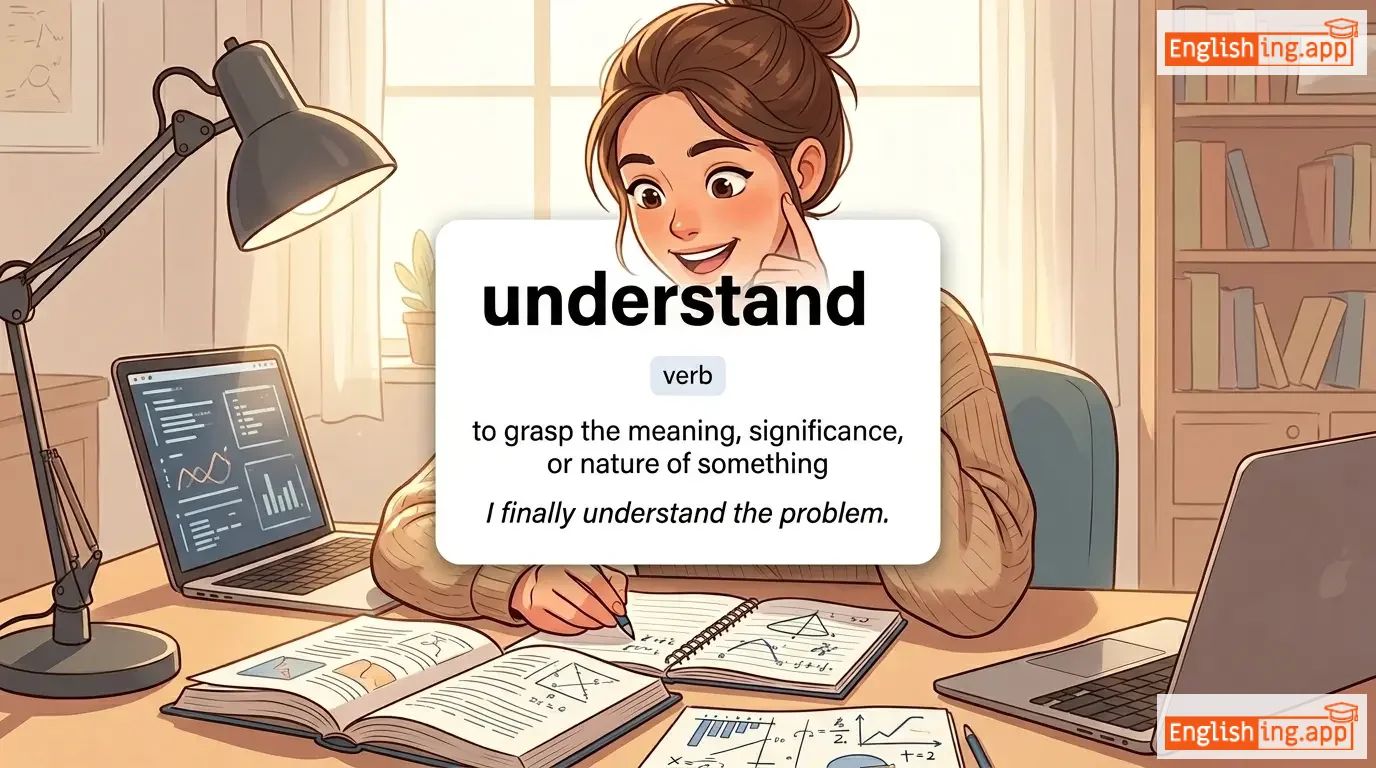
understand definition card — visual illustration of the meaning
verb
/ˌʌndərˈstænd/
理解 (lǐjiě)

to grasp the meaning, significance, or nature of something

"I finally understand the problem."

"我终于理解了这个问题。" (Wǒ zhōngyú lǐjiěle zhège wèntí.)
adjective
/ˌʌndərˈstændəbl/
可以理解的 (kěyǐ lǐjiě de)

Able to be understood; reasonable or justifiable.

"Her reaction was understandable given the situation."

"考虑到情况,她的反应是可以理解的。" (Kǎolǜ dào qíngkuàng, tā de fǎnyìng shì kěyǐ lǐjiě de.)
noun
/ˌʌndərˈstændɪŋ/
理解 (lǐjiě)

the ability to grasp the meaning, significance, or nature of something

"Her understanding of the issue was impressive."

"她对这个问题的理解令人印象深刻。" (Tā duì zhège wèntí de lǐjiě lìng rén yìnxiàng shēnkè.)
verb
/ˌʌndərˈsteɪt/
低估 (dīgu)

To describe something as being less important or serious than it really is.

"He tends to understate his achievements."

"他倾向于低估自己的成就。" (Tā qīngxiàng yú dīgū zìjǐ de chéngjiù.)
adjective
/ˌʌndərˈsteɪtɪd/
低调的 (dī diào de)

Presented in a subtle and restrained way.

"She wore an elegant but understated dress."
"她穿了一件优雅但低调的裙子。" (Tā chuānle yī jiàn yōu yǎ dàn dī diào de qún zi.)
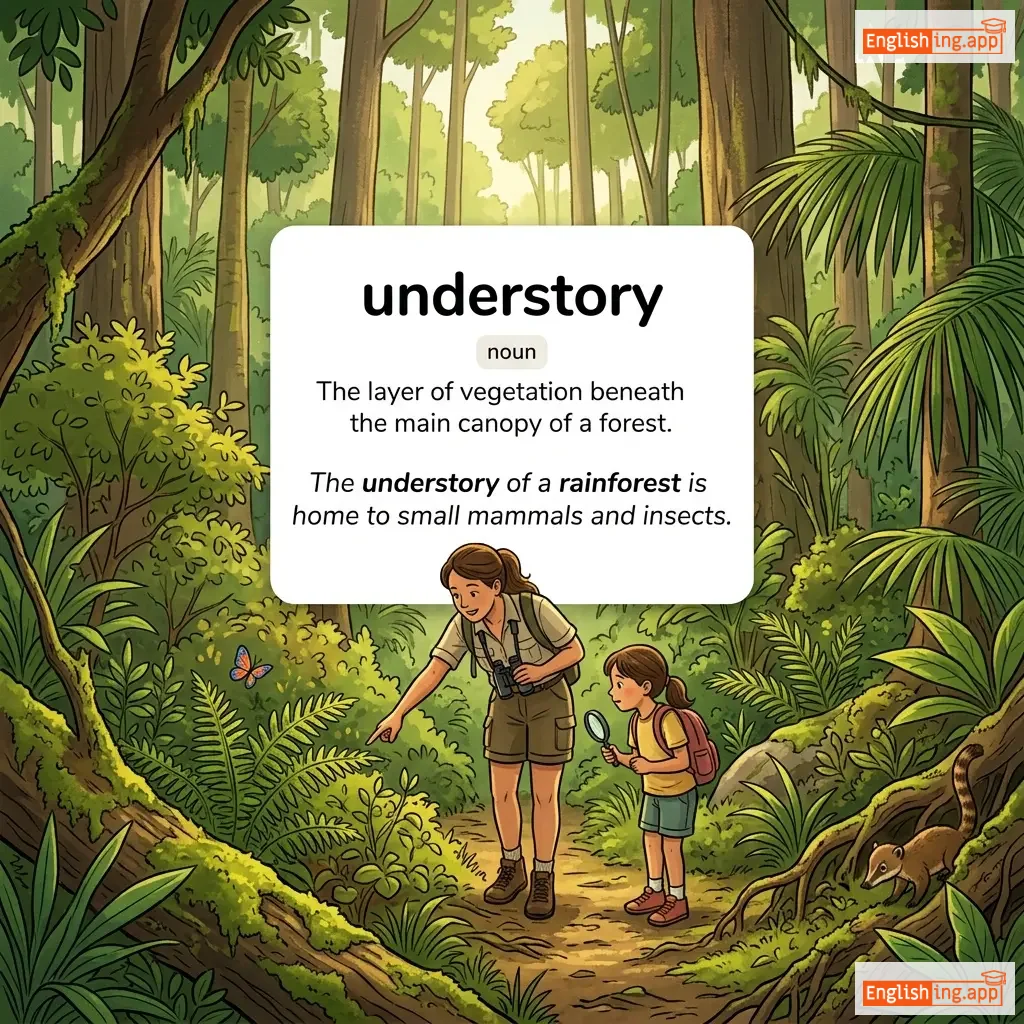
understory definition card — visual illustration of the meaning
noun
/ˈʌn.dɚˌstɔː.ri/
下层植被 (xiaceng zhipei)

The layer of vegetation beneath the main canopy of a forest.

"The understory of a rainforest is home to small mammals and insects."

"雨林的下层植被是小型哺乳动物和昆虫的家园。" (Yulin de xiaceng zhipei shi xiaoxing buru dongwu he kunchong de jiayuan.)
noun
/ˈʌndərˌstʌdi/
替身演员 (tìshēn yǎnyuán)

An actor who learns another's role to act as a replacement if needed.

"The understudy performed when the lead actor fell ill."

"当主角生病时,替身演员上场表演。" (Dāng zhǔjiǎo shēngbìng shí, tìshēn yǎnyuán shàngchǎng biǎoyǎn.)
undertake definition card — visual illustration of the meaning
verb
/ˌʌndərˈteɪk/
承担 (chengdan)

To agree to do or begin to do something important or difficult.

"She undertook the responsibility of organizing the event."

"她承担了组织活动的责任。" (Ta chengdanle zuzhi huodong de zeren.)
noun
/ˈʌndərˌteɪkər/
殡葬员 (bìnzàng yuán)

A person whose job is to prepare the dead for burial and arrange funerals.

"The undertaker prepared the body for the funeral service."

"殡葬员为葬礼服务准备了尸体。" (Bìnzàng yuán wèi zànglǐ fúwù zhǔnbèi le shītǐ.)
noun
/ˈʌndərˌteɪkɪŋ/
事业 (shìyè)

A task, project, or responsibility that someone agrees to do.

"Starting a new company is a difficult undertaking."

"创办新公司是一项艰巨的事业。" (Chuàngbàn xīn gōngsī shì yī xiàng jiānjù de shìyè.)
verb
/ˌʌndərˈvæljuː/
低估 (dīgu)

To assign too low a value or importance to something or someone.

"She felt that her boss consistently undervalued her contributions."

"她感觉到她的老板总是低估她的贡献。" (Tā gǎnjué dào tā de lǎobǎn zǒng shì dīgū tā de gòngxiàn.)
noun
/ˈʌndərweər/
内衣 (neiyi)

Clothing worn beneath outer clothes, typically next to the skin.

"He bought new underwear for the trip."

"他为旅行买了新的内衣。" (Ta wei lvxing maile xin de neiyi.)
noun
/ˈʌndərˌwɜːrld/
地下世界 (dixiashijie)

The criminal world of organized crime or the mythical world of the dead.

"The detective spent years studying the secrets of the underworld."

"侦探花了很多年研究地下世界的秘密。" (Zhentan hua le henduo nian yanjiu dixia shijie de mimi.)
verb
/ˈʌndərˌraɪt/

To guarantee financial support, especially by agreeing to cover losses or risks; in insurance, to assess and accept risks.

"The bank agreed to underwrite the company's new bond issue."

adjective
/ˌʌndɪˈzaɪərəbl/
不受欢迎的; 有害的; 令人不快的 (bù shòu huānyíng de; yǒuhài de; lìng rén bù kuài de)

not wanted or wished for; harmful or unpleasant

"The new policy had several undesirable consequences."

"新政策带来了几个不受欢迎的后果。" (Xīn zhèngcè dàilái le jǐ gè bù shòu huānyíng de hòuguǒ.)
adjective
/ˌʌndɪˈveləpt/
未开发的; 未成熟的; 原始的 (wèikāifā de; wèi chéngshú de; yuánshǐ de)

not yet developed; immature or primitive

"The undeveloped land was later turned into a park."

"未开发的土地后来被改建成了一个公园。" (Wèikāifā de tǔdì hòulái bèi gǎijiàn chéngle yīgè gōngyuán.)
adjective
/ˌʌndɪˈstɜːrbd/
未打扰 (wèi dǎrǎo)

not interrupted or interfered with; calm and peaceful

"She slept undisturbed for eight hours."

"她睡了八个小时没有打扰。" (Tā shuìle bā gè xiǎoshí méiyǒu dǎrǎo.)
adjective
/ʌnˈdɪvaɪdɪd/
完整的; 完全的; 不分开或不分裂 (wánzhěng de; wánquán de; bù fēnkāi huò bù fēnliè)

whole; complete; not separated or split

"The team showed undivided attention to the coach's instructions."

"团队对教练的指示表现出了完整的注意力。" (Tuánduì duì jiàoliàn de zhǐshì biǎoxiàn chūle wánzhěng de zhùyìlì.)
adverb
/ʌnˈdaʊtɪdli/
毫无疑问 (háo wú yí wèn)

without a doubt, certainly

"He is undoubtedly the best player on the team."

"他毫无疑问是队里最好的球员。" (Tā háo wú yí wèn shì duì lǐ zuì hǎo de qiúyuán.)
adjective
/ʌnˈdjuː/
过度的 (guòdù de)

More than is reasonable, excessive, or inappropriate.

"He placed undue pressure on his employees to meet the deadline."

"他对员工施加了过大的压力,以赶上最后期限。" (Tā duì yuángōng shījiāle guòdà de yālì, yǐ gǎnshàng zuìhòu qīxiàn.)
verb
/ˈʌndjʊleɪt/
波动 (bō dòng)

To move with a smooth, wave-like motion.

"The snake undulated across the sand."
"蛇在沙滩上蜿蜒前行。" (Shé zài shātān shàng wān yán qián xíng.)
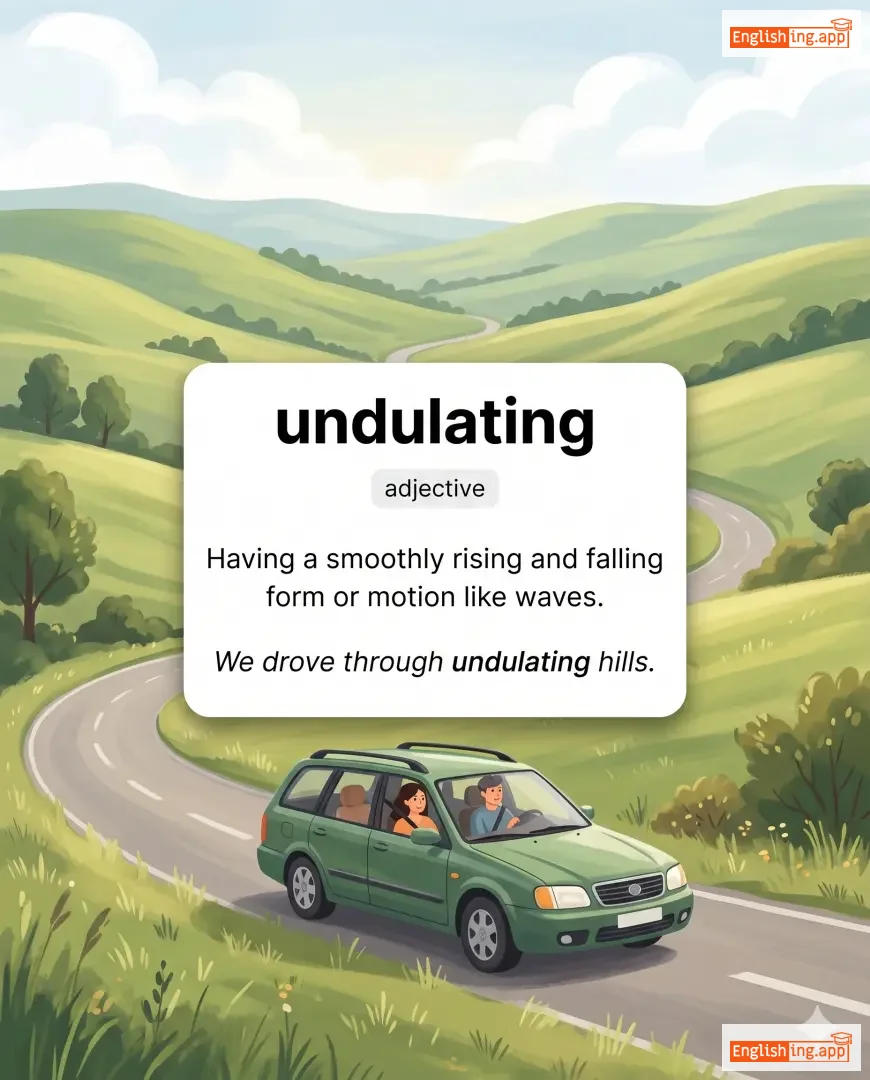
undulating definition card — visual illustration of the meaning
adjective
/ˈʌndjʊleɪtɪŋ/
波动的 (bōdòng de)

Having a smoothly rising and falling form or motion like waves.

"We drove through undulating hills."

"我们驱车穿过起伏的山丘。" (Wǒmen qūchē chuānguò qǐfú de shānqiū.)
adjective
/ˈʌndjʊləs/
波浪形的 (bōlàng xíng de)

Having a wavy surface or form.

"The artist painted the undulous sea at sunset."

"艺术家在日落时画了波浪形的海洋。" (Yìshùjiā zài rìluò shí huàle bōlàng xíng de hǎiyáng.)
verb
/ʌnˈɜːθ/
发掘 (fājué)

To dig up from the ground or to discover something hidden.

"Archaeologists unearthed ancient artifacts at the site."

"考古学家在遗址发掘了古代文物。" (Kǎogǔ xuéjiā zài yízhǐ fājuéle gǔdài wénwù.)
adjective
/ʌnˈɜːrθli/
超自然的 (chaonaturande)

Strange or unnatural in a way that seems not of this world

"The forest was filled with an unearthly glow."

"森林中充满了超自然的光辉。" (Senlin zhong chongman le chaonaturande guanghui.)
adjective
/ʌnˈiːzi/
不安的; 焦虑的; 不舒服的 (bu'an de; jiaolv de; bu shufu de)

worried; anxious; uncomfortable; restless

"She felt uneasy about walking alone at night."

"她在夜晚独自行走时感到不安。" (Tā zài yèwǎn dúzì xíngzǒu shí gǎndào bù'ān.)