词汇表

英语词汇词典 | 单词含义、定义和示例

adjective
/ʌnˈbreɪkəbəl/
不能被打破或损坏;非常强大和耐用 (bùnéng bèi dǎpò huò sǔnhuài; fēicháng qiángdà hé nàiyòng)

not able to be broken or damaged; very strong and durable

"Their friendship formed an unbreakable bond."

"他们的友谊形成了一个坚不可摧的纽带。" (tāmen de yǒuyì xíngchéngle yīgè jiānbùkěcuī de niǔdài.)
adjective
/ʌnˈbraɪdld/
无法控制的 (wúfǎ kòngzhì de)

Uncontrolled and unrestrained.

"The protesters showed unbridled enthusiasm for change."
"抗议者展示了对改变的无法抑制的热情。" (Kangyizhe zhanshile dui gaibian de wufa yizhi de reqing.)
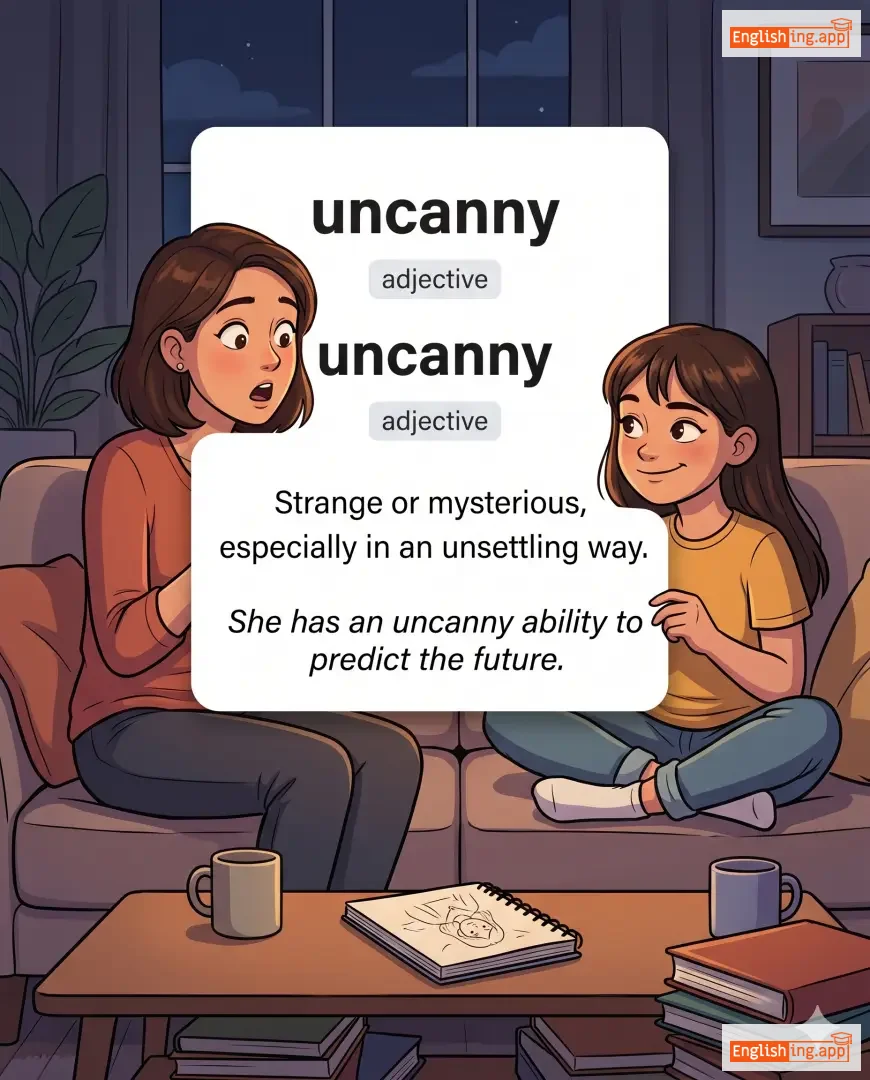
uncanny definition card — visual illustration of the meaning
adjective
/ʌnˈkæni/
不可思议 (bù kě sī yì)

Strange or mysterious, especially in an unsettling way.

"She has an uncanny ability to predict the future."

"她有一种不可思议的能力来预测未来。" (tā yǒu yī zhǒng bù kě sī yì de néng lì lái yù cè wèi lái.)
adjective
/ˌʌnsɛrəˈmoʊniəs/
不拘礼节/粗鲁 (bù jū lǐ jié/cū lǔ)

Done without formality or courtesy; abrupt or rude.

"He made an unceremonious exit from the party."

"他从派对上不拘礼节地离开。" (Tā cóng pàiduì shàng bù jū lǐjié de líkāi.)
adjective
/ʌnˈsɜːtən/
不确定 (bù què dìng)

not sure or confident about something; not clearly known or decided

"She felt uncertain about her future after graduation."

"毕业后,她对自己的未来感到不确定。" (bì yè hòu, tā duì zì jǐ de wèi lái gǎn dào bù què dìng.)
adverb
/ʌnˈsɜːrtənli/
不确定地 (bu que ding de)

in a way that shows doubt or lack of certainty

"She glanced uncertainly at the complicated instructions."

"她不确定地看着复杂的说明。" (Ta bu que ding de kan zhe fuza de shuoming.)
noun
/ʌnˈsɜːtənti/
不确定性 (bù què dìng xìng)

the state of being unsure or not knowing what will happen

"Economic uncertainty affects business investments."

"经济不确定性影响着商业投资。" (Jīngjì bù què dìng xìng yǐng xiǎng zhe shāng yè tóu zī.)
adjective
/ʌnˈtʃælɪndʒd/
无可争议的; 被接受的没有反对; 没有对手 (wú kě zhēngyì de; bèi jiēshòu de méiyǒu fǎnduì; méiyǒu duìshǒu)

not disputed or questioned; accepted without opposition; having no rival

"He remained the unchallenged champion for five years."

"他五年保持不败的冠军。" (Tā wǔ nián bǎochí bùbài de guànjūn.)
adjective
/ʌnˈtʃeɪndʒəbəl/
不可改变的; 固定的; (bùkě gǎibiàn de; gùdìng de;)

not able to be changed or altered; fixed and permanent

"The laws of physics are unchangeable principles that govern the universe."

"物理法则是不变的原则,支配着宇宙。" (wùlǐ fǎzé shì bùbiàn de yuánzé, zhīpèizhe yǔzhòu.)
adjective
/ʌnˈtʃeɪndʒɪŋ/
不变的 (bubian de)

remaining the same over time; not changing

"Her love for her family was unchanging throughout the years."
"她对家人的爱多年来始终不变。" (Ta dui jiaren de ai duonian lai shizhong bubian.)
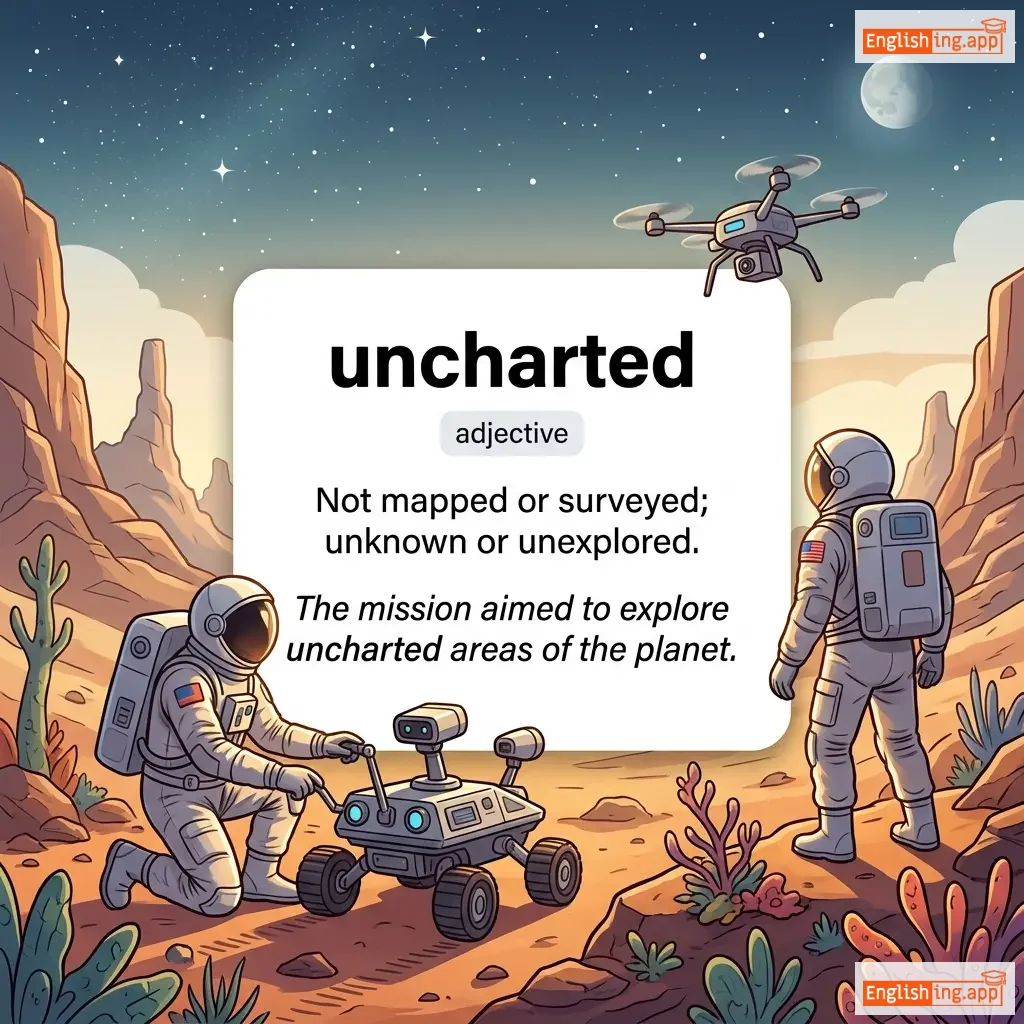
uncharted definition card — visual illustration of the meaning
adjective
ʌnˈtʃɑːtɪd
未标记 (wèi biāo jì)

Not mapped or surveyed; unknown or unexplored.

"The mission aimed to explore uncharted areas of the planet."

"该任务旨在探索星球上未标记的区域。" (Gāi rènwu zhǐ zài tàn suǒ xīng qiú shàng wèi biāo jì de qū yù.)
adjective
/ʌnˈtʃeɪst/
不道德的; 不纯洁的; (bù dàodé de; bù chúnjié de;)

not celibate; having engaged in sexual relations; lacking moral purity

"The conservative society considered her behavior unchaste and improper."

"保守的社会认为她的行为不道德和不合适。" (Bǎoshǒu de shèhuì rènwéi tā de xíngwéi bù dàodé hé bù héshì.)
adjective
/ʌnˈsɪvəl/
不文明的; 粗鲁的; (bù wénmíng de; cū lǔ de)

not polite or courteous; rude and discourteous in behavior

"His uncivil remarks during the meeting offended everyone present."

"他在会议上的不文明言论冒犯了在场的每一个人。" (Tā zài huìyì shàng de bù wénmíng yánlùn màofàn le zài chǎng de měi yīgè rén.)
adjective
/ʌnˈsɪvəlaɪzd/
未开化的; 野蛮的; (wèikāihuà de; yěmán de;)

not developed in terms of civilization; lacking social organization and culture; barbarous

"The explorers encountered an uncivilized tribe deep in the Amazon rainforest."

"探险者在亚马逊雨林深处遇到一个未开化的部落。" (Tànxiǎn zhě zài Yàmǎxùn yǔlín shēnchù yùdào yīgè wèikāihuà de bùluò.)
adjective
/ʌnˈkleɪmd/
未认领的; 未要求的; 被遗弃或无主的 (wei renling de; wei yaoqiu de; bei yiqu de huo wu zhu de)

not claimed by anyone; not demanded or requested; abandoned or ownerless

"The unclaimed luggage was stored in the airport's lost property department."

"未认领的行李被存放在机场的失物招领处。" (Wei renling de xingli bei cunfang zai jichang de shiwu zhaoling chu.)
noun
/ˈʌŋkəl/
叔叔/舅舅 (shūshu/jiùjiu)

the brother of one's father or mother

"My uncle is visiting us next week."

"我的叔叔下周会来看我们。" (Wǒ de shūshu xià zhōu huì lái kàn wǒmen.)
adjective
/ʌnˈklɪər/
不清楚 (bu qingchu)

not easy to understand; vague or ambiguous

"The instructions were unclear, so I asked for clarification."

"说明不清楚,所以我要求澄清。" (Shuoming bu qingchu, suoyi wo yaoqiu chengqing)
verb
/ʌnˈkloʊð/
脱衣; 脱掉衣服 (tuoyi; tuo diao yifu)

to remove clothing from someone or something

"The nurse helped unclothe the patient for the examination."

"护士帮助病人脱衣进行检查。" (hushi bangzhu bingren tuoyi jinxing jiancha)
noun
/ʌnˈkloʊðɪŋ/
脱衣 (tuoyi)

the act or process of removing clothing

"The child quickly ran inside for unclothing after playing in the mud."

"孩子在泥地玩耍后迅速跑进去脱衣。" (haizi zai nidi wanshua hou xunsu pao jinqu tuoyi)
adjective
/ʌnˈkʌmfətəbl/
不舒服 (bù shūfu)

causing or feeling physical or emotional discomfort

"He felt uncomfortable during the long meeting."

"在长时间的会议中,他感到不舒服。" (Zài cháng shíjiān de huìyì zhōng, tā gǎndào bù shūfu.)
adjective
/ʌnˈkɒmən/
不常见 (buchangjian)

rare, unusual, or remarkable

"It is uncommon to see snow in this region."

"在这个地区看到雪是不常见的。" (Zai zhege diqu kandao xue shi buchangjian de.)
adjective
/ʌnˈkɒmprəmaɪzɪŋ/
坚定 (jianding)

not willing to make concessions; firm and resolute

"She remained uncompromising in her principles."

"她在原则上坚持不懈。" (Ta zai yuanze shang jianchi buxie.)
noun
/ʌnkənˈsɜːrn/
漠不关心 (mò bù guān xīn)

lack of worry or interest; indifference

"She showed complete unconcern about the criticism."

"她对批评表现出了完全的漠不关心。" (Tā duì pīpíng biǎoxiàn chūle wánquán de mò bù guān xīn.)
adjective
/ʌnˌkənˈdɪʃ.ən.əl/
无条件的 (wú tiáojiàn de)

not subject to any conditions; complete and absolute

"She offered her unconditional support to her friend in need."

"她在朋友需要时提供了无条件的支持。" (Tā zài péngyǒu xūyào shí tígōngle wú tiáojiàn de zhīchí.)
adjective
/ʌnˌkənˈfɜːmd/
未确认; 未验证; (wei que ren, wei yan zheng)

not confirmed as true or definite; not verified or substantiated

"The report remains unconfirmed until we receive official verification."

"报告在我们收到官方验证之前保持未确认状态。" (Baogao zai women shoudao guanfang yanzheng zhiqian baochi wei queren zhuangtai.)
adjective
/ʌnˈkɒnʃənəbl/
不合理的 (bù hélǐ de)

shockingly unfair or unreasonable

"The company made unconscionable profits from the crisis."

"公司从危机中获得了不合理的利润。" (Gōngsī cóng wēijī zhōng huò déle bù hélǐ de lìrùn.)
adjective
/ʌnˈkɒnʃəs/
无意识的 (wú yìshí de)

not awake and aware of surroundings

"He was knocked unconscious by the fall."

"他在摔倒后失去意识。" (Tā zài shuāi dǎo hòu shīqù yìshí.)
adverb
/ʌnˈkɒnʃəsli/
无意识地 (wu yishi de)

without being aware of one's actions or surroundings

"She unconsciously tapped her foot to the rhythm of the music."

"她无意识地跟着音乐的节奏轻轻跺脚。" (ta wu yishi de genzhe yinyue de jiezou qingqing duojiao)
noun
/ʌnˈkɒnʃəsnəs/
无意识 (wu yishi)

the state of being unaware of and unable to respond to one's surroundings

"After the accident, he was in a state of unconsciousness for several hours."

"事故后,他昏迷了几个小时。" (Shigu hou, ta hunmi le jige xiaoshi.)
adjective
/ˌʌnkənˈstɪtjuːʃənl/
违宪的 (wéixiàn de)

not in accordance with a political constitution

"The court ruled that the law was unconstitutional."

"法院裁定该法律违宪。" (Fǎyuàn cáidìng gāi fǎlǜ wéixiàn.)
adjective
/ˌʌnkənˈtroʊld/
无法控制的 (wufa kongzhi de)

not restrained or managed; lacking control

"The wildfire spread in an uncontrolled manner, causing widespread damage."

"野火以无法控制的方式蔓延,造成广泛破坏。" (Yehuo yi wufa kongzhi de fangshi manyan, zaocheng guangfan pohuai)
adjective
/ˌʌnkənˈvɛnʃənl/
非传统的 (fei chuantong de)

not based on or conforming to what is generally done or believed

"Her unconventional approach to teaching inspired her students to think creatively."

"她非传统的教学方法激发了学生的创造性思维。" (ta fei chuantong de jiaoxue fangfa jifa le xuesheng de chuangzaoxing siwei)
adverb
/ˌʌnkənˈvɛnʃənəli/
非传统地 (fei chuantong de)

in a way that is not based on or conforming to accepted standards or norms

"She dresses unconventionally, mixing bold colors and patterns that surprise everyone."

"她穿着非传统地,混搭大胆的颜色和图案,让每个人都感到惊讶。" (Ta chuanzhe fei chuantong de, hunda da dan de yanse he tuan, rang mei geren dou gandao jingya.)
adjective
/ˌʌnkənˈvɪnsɪŋ/
不可信 (bù kě xìn)

failing to persuade or impress; not believable or credible

"His excuse for being late was completely unconvincing."

"他因迟到而给出的借口完全不可信。" (Tā yīn chídào ér gěi chū de jièkǒu wánquán bù kěxìn.)
adjective
/ʌnˈkʊkt/
生的 (sheng de)

Not cooked; in a raw state.

"Eating uncooked meat can be dangerous."

"吃生肉可能是危险的。" (Chī shēng ròu kěnéng shì wēixiǎn de.)
adjective
/ˌʌn.kəʊˈɒp.ər.ə.tɪv/
不合作的 (bu hezuo de)

not willing to help or work with others; unhelpful

"The witness was uncooperative and refused to answer questions."

"证人不合作,拒绝回答问题。" (Zhengren bu hezuo, jujue huida wenti.)
adjective
/ˌʌnˈkɔːrdɪneɪtɪd/
不协调; 笨拙 (bu xietiao; benzhuo)

lacking coordination, not well-organized or clumsy in movement

"His movements were uncoordinated, making him prone to accidents."

"他的动作不协调,使他容易发生意外。" (ta de dongzuo bu xietiao, shi ta rongyi fasheng yiwai.)
verb
/ʌnˈkɔrk/
开瓶 (kaiping)

To remove the cork from a bottle; to open a bottle, especially of wine

"He uncorked the wine and poured a glass for everyone."

"他开了葡萄酒,并为每个人倒了一杯。" (Ta kai le putaojiu, bing wei mei ge ren dao le yi bei.)
verb
/ʌnˈkaʊtʃ/
从沙发上移开(罕见用法) (cóng shāfā shàng yí kāi)

to remove from a couch or to release from being laid down (rare/archaic usage)

"The surgeon attempted to uncouch the cataract."

"外科医生试图去除白内障。" (Wàikē yīshēng shìtú qùchú báinèizhàng.)
adjective
/ʌnˈkaʊntəbəl/
无法计数的; 无穷的 (wúfǎ jìshù de; wúqióng de)

too many to be counted; innumerable; infinite in quantity

"There are uncountable stars in the night sky."

"夜空中有无数的星星。" (yè kōng zhōng yǒu wúshù de xīngxīng)
adjective
/ʌnˈkuːθ/
粗鲁 (culu)

Lacking good manners, refinement, or grace; awkward or rough.

"His uncouth behavior shocked the guests at the party."

"他粗鲁的行为让聚会上的客人感到震惊。" (Ta culu de xingwei rang juhui shang de keren gandao zhenjing.)
verb
/ʌnˈkʌvə(r)/
揭示 (jie-shi)

to reveal something that was hidden or secret

"The investigation uncovered new evidence."

"调查揭示了新的证据。" (Diao-cha jie-shi le xin de zheng-ju.)
noun
/ˈʌŋkʃən/
涂抹 (tumo)

The act of anointing as part of a religious or ceremonial ritual; excessive or insincere flattery.

"The priest performed the holy unction with solemnity."

"牧师庄重地进行了神圣的涂抹仪式。" (Mùshī zhuāngzhòng de jìnxíngle shénshèng de túmǒ yíshì.)
adjective
/ˈʌŋk.tʃu.əs/
阿谀奉承 (āyú fèngchéng)

Excessively flattering or ingratiating; oily in texture.

"His unctuous tone made everyone uncomfortable."

"他那种阿谀奉承的语气让每个人都感到不舒服。" (Tā nà zhǒng āyú fèngchéng de yǔqì ràng měi gèrén dōu gǎndào bù shūfú.)
adjective
/ʌnˈkʌltʃəd/
不文明的; 无文化的 (bù wénmíng de; wú wénhuà de)

lacking good manners, refinement, or education; uncivilized

"His uncultured behavior embarrassed everyone at the dinner party."

"他在晚宴上的不文明行为让所有人感到尴尬。" (Tā zài wǎnyàn shàng de bù wénmíng xíngwéi ràng suǒyǒu rén gǎndào gāngà.)
adjective
/ʌnˈdɔːntɪd/
无畏的; 勇敢的; 不屈的; (wuwei de)

not intimidated or discouraged by difficulty, danger, or disappointment

"Despite the setbacks, she remained undaunted in pursuing her goals."

"尽管遇到挫折,她在追求目标时依然无畏。" (Jingguan yudao cuozhe, ta zai zhuixiu mubiao shi yiran wuwei.)
verb
/ˌʌn.dɪˈsiːv/
解惑 (jiě huò)

To free someone from a misconception or false belief.

"She tried to undeceive him about the false rumors."

"她试图让他摆脱这些错误的谣言。" (tā shì tú ràng tā bǎi tuō zhèxiē cuò wù de yáo yán.)
adjective
/ˌʌndɪˈsaɪdɪd/
未决定的; 不确定的 (weijuedide; buquedingde)

not having made a decision; uncertain

"She was undecided about which college to attend."

"她对于选择哪个大学感到未决定。" (Ta dui yu xuanze na ge daxue gandao weijuedi.)
adjective
/ˌʌndɪˈnaɪəbl/
不可否认 (bù kě fǒu rèn)

Impossible to deny; clearly true or real.

"Her talent is undeniable."

"她的才华不可否认。" (Tā de cáihuá bù kě fǒu rèn.)
preposition
/ˈʌndər/
(xia)

in or to a lower position than something

"The cat is under the table."

"猫在桌子下面。" (Māo zài zhuōzi xiàmiàn.)