词汇表

英语词汇词典 | 单词含义、定义和示例

noun
/ˈtoʊstər/
烤面包机 (kao mian bao ji)

an electric appliance used for toasting bread slices

"I put two slices of bread in the toaster for breakfast."

"我把两片面包放进烤面包机里做早餐。" (wo ba liang pian mian bao fang jin kao mian bao ji li zuo zao can)
noun
/təˈbækoʊ/
烟草 (yāncǎo)

a plant grown for its leaves, which are used in making cigarettes and cigars

"He stopped smoking tobacco after his health scare."

"在健康问题之后,他停止吸烟草。" (Zài jiànkāng wèntí zhīhòu, tā tíngzhǐ xī yāncǎo.)
noun
/ˈtɒksɪn/
警报钟 (jingbao zhong)

an alarm bell or signal; a warning that something bad is about to happen

"The data breach sounded a tocsin for stricter security."

"数据泄露响起了警报钟,警示着需要更严格的安全措施。" (Shuju xielu xiangqi le jingbao zhong, jingshi zhe xuyao geng yange de anquan cuoshi.)
noun, adverb
/təˈdeɪ/
今天 (jin tian)

on this present day

"She has a meeting today."

"她今天有一个会议。" (Ta jin tian you yi ge hui yi.)
noun
/toʊ/
脚趾 (jiao zhi)

any of the five digits at the end of the human foot

"He injured his toe while playing football."

"他在踢足球时伤到了脚趾。" (Ta zai ti zuqiu shi shang dao le jiao zhi.)
noun
/ˈtoʊɡə/
托加 (tuōjiā)

A loose outer garment worn in ancient Rome, typically draped over the shoulders and body.

"The senator wore a white toga during the ceremony."

"参议员在仪式期间穿着白色的托加。" (Cānyìyuán zài yíshì qījiān chuānzhuó báisè de tuōjiā.)
adverb
/təˈɡɛðər/
一起 (yiqi)

with each other; in a group or combined form

"They worked together to solve the problem."

"他们一起合作解决问题。" (Tāmen yīqǐ hézuò jiějué wèntí.)
Toil definition card — visual illustration of the meaning
verb
/tɔɪl/
辛苦工作 (xīn kǔ gōng zuò)

To work extremely hard and continuously, often with difficulty.

"He had to toil for years to achieve success."

"他为了成功辛苦工作了多年。" (Tā wèile chénggōng xīnkǔ gōngzuò le duō nián.)
noun
/ˈtɔɪlət/
厕所 (cesuo)

a fixture used for the disposal of human waste

"The public toilet was clean and well maintained."

"公共厕所干净且维护得很好。" (Gonggong cesuo ganjing qie weihu de hen hao.)
adjective
/ˈtɔɪl.səm/
辛苦的 (xīn kǔ de)

Involving hard or exhausting work; laborious.

"The workers had a toilsome day in the hot sun."

"工人在炎热的阳光下度过了辛苦的一天。" (Gōngrén zài yánrè de yángguāng xià dùguòle xīnkǔ de yītiān.)
noun
/ˈtoʊ.kən/
象征 / 代币 (xiangzheng / daibi)

A symbol or object that represents something, often given as a sign of appreciation or as a substitute for money.

"She gave him a small gift as a token of gratitude."
"她给了他一份小礼物,作为感谢的象征。" (Ta geile ta yi fen xiao liwu, zuo wei ganxie de xiangzheng.)
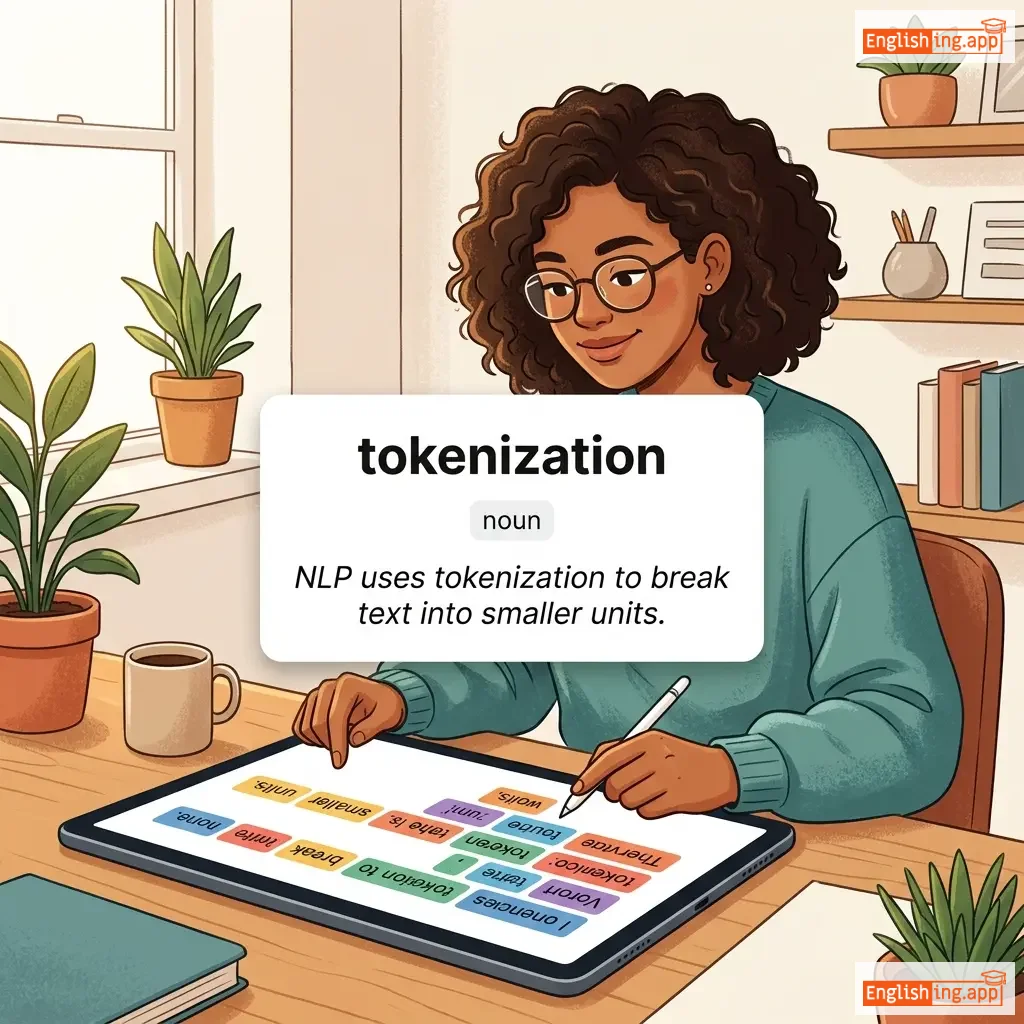
tokenization definition card — visual illustration of the meaning
noun
ˌtoʊ.kə.nɪˈzeɪ.ʃən
将文本分解为较小的单位,如单词、短语或符号进行分析的过程。 (tokenization)

The process of breaking text into smaller units like words, phrases, or symbols for analysis.

"NLP uses tokenization to break text into smaller units."

"NLP使用分词法将文本分解为更小的单位。" (NLP shǐyòng fēn cí fǎ jiāng wénběn fēnjiě wéi gèng xiǎo de dānwèi.)
adjective
/ˈtɒl.ər.ə.bəl/
可容忍 (ke rong ren)

Able to be endured or put up with; fairly acceptable.

"The pain was tolerable after the medicine."

"药物后,疼痛是可以忍受的。" (Yao wu hou, teng tong shi ke yi ren shou de.)
noun
/ˈtɒlərəns/
宽容 (kuanrong)

The ability or willingness to accept or endure differences, behaviors, or opinions without hostility.

"Her tolerance for different cultures impressed everyone."

"她对不同文化的宽容给每个人留下了深刻印象。" (Ta dui butong wenhua de kuanrong gei meige ren liuxiala shenke yinxiang.)
adjective
/ˈtɒlərənt/
宽容 (kuanrong)

Showing willingness to allow the existence of opinions or behaviors that one dislikes or disagrees with.

"He is very tolerant of other people's beliefs."
"他对其他人的信仰非常宽容。" (Ta dui qita ren de xinyang feichang kuanrong.)
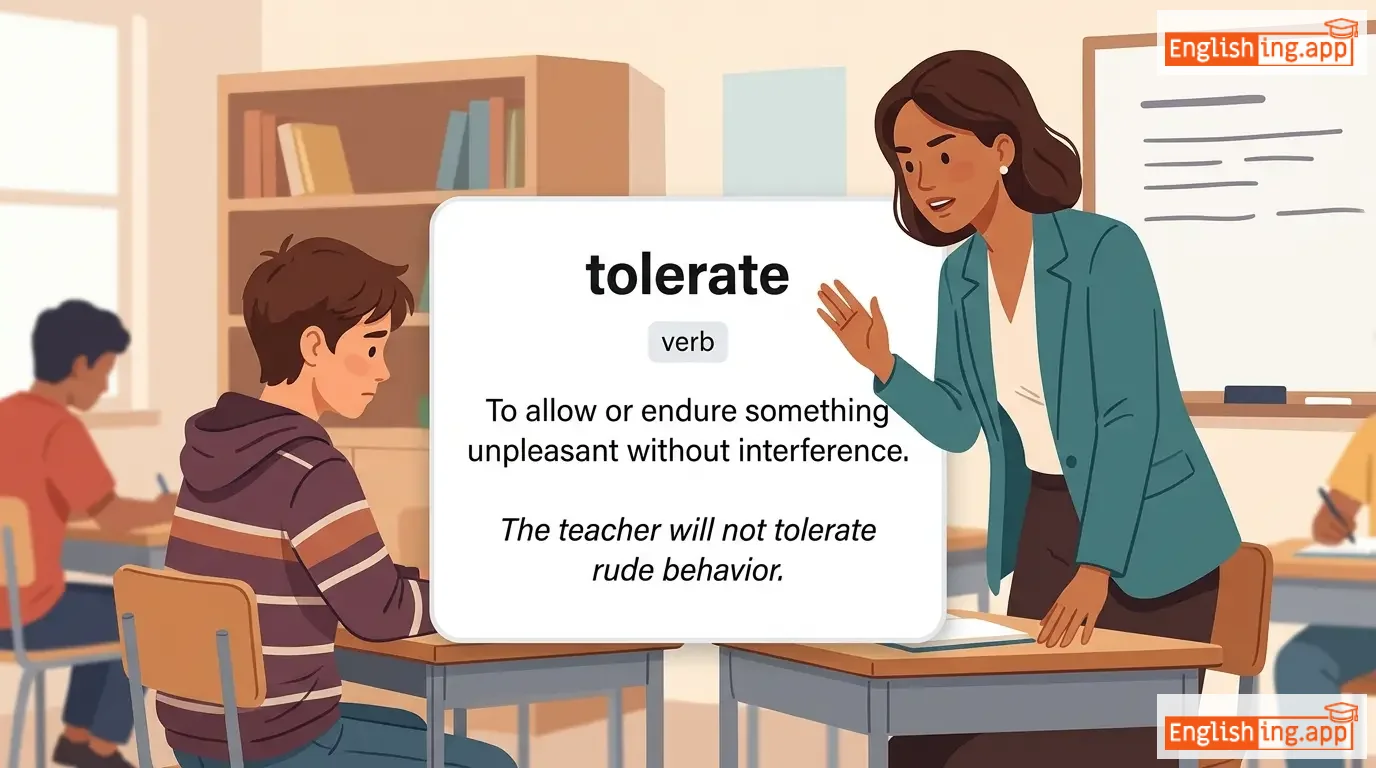
tolerate definition card — visual illustration of the meaning
verb
/ˈtɒləreɪt/
容忍 (róngrěn)

To allow or endure something unpleasant without interference.

"The teacher will not tolerate rude behavior."

"老师不会容忍粗鲁的行为。" (lǎoshī bù huì róngrěn cūlǔ de xíngwéi.)
noun
/ˌtɒləˈreɪʃən/
宽容 (kuan rong)

The practice of allowing something that one does not necessarily agree with.

"The government promoted religious toleration."

"政府促进了宗教宽容。" (Zhèngfǔ cùjìnle zōngjiào kuānróng.)
noun
/toʊl/
过路费 / 损失 (guòlùfèi / sǔnshī)

A charge payable for using a road or bridge; also the extent of damage or suffering caused by something.

"The flood took a heavy toll on the village."

"洪水对村庄造成了巨大的损失。" (hóngshuǐ duì cūnzhuāng zàochéngle jùdà de sǔnshī.)
noun
/təˈmeɪtoʊ/
番茄 (fānqié)

a red or yellowish fruit that is typically eaten as a vegetable

"I added some tomato to the salad."

"我在沙拉里加了一些番茄。" (Wǒ zài shālā lǐ jiāle yīxiē fānqié.)
tome definition card — visual illustration of the meaning
noun
/toʊm/
厚书 (hou shu)

a large, heavy book, often scholarly or serious in nature

"She spent the afternoon reading an old tome on medieval history."

"她花了整个下午阅读一本关于中世纪历史的厚书。" (Tā huāle zhěnggè xiàwǔ yuèdú yī běn guānyú zhōng shìjì lìshǐ de hòu shū.)
noun, adverb
/təˈmɒroʊ/
明天 (mingtian)

the day after today

"We are meeting tomorrow for the project discussion."

"我们明天会见面讨论项目。" (Women mingtian hui jianmian taolun xiangmu.)
noun
/tʌn/
(dun)

A unit of weight equal to 2,000 pounds (US) or 1,000 kilograms (metric); a large amount of something

"The truck carried a ton of apples to the market."

"卡车运送了一吨苹果到市场。" (Kache yun song le yi dun pingguo dao shichang.)
noun, verb
/toʊn/
音调 (yīndiào)

the general character or attitude of a place, piece of writing, situation, etc.

"The tone of the letter was very formal."

"这封信的音调非常正式。" (Zhè fēng xìn de yīndiào fēicháng zhèngshì.)
noun
/tɒŋ/
夹子 (jiazi)

a tool with two movable arms used to pick up and hold objects

"He used the tong to pick up the hot coal."

"他用夹子拿起了热煤。" (Ta yong jiazi naqi le re mei.)
noun
/tɒŋz/
夹子 (jiāzi)

a tool consisting of two movable arms that are joined at one end, used for picking up and holding things

"Use the tongs to pick up the hot pieces of meat from the grill."

"使用夹子从烤架上取下热肉块。" (Shǐyòng jiāzi cóng kǎojià shàng qǔ xià rè ròu kuài.)
noun
/tʌŋ/
舌头 (shétou)

a fleshy muscular organ in the mouth used for tasting, swallowing, and speaking

"She stuck out her tongue playfully."

"她顽皮地伸出了舌头。" (Tā wánpí de shēn chūle shétou.)
noun
/ˈtɒnɪk/
补药 (buyao)

a medicine or drink that restores or refreshes health and energy

"A glass of lemonade was the perfect tonic on a hot day."

"在炎热的日子里,一杯柠檬水是完美的补药。" (Zai yanre de rizi li, yi bei ningmeng shui shi wanmei de buyao.)
adverb, noun
/təˈnaɪt/
今晚 (jin wan)

on or during the night of the current day

"We're going to the party tonight."

"我们今晚去派对。" (Wo men jin wan qu pai dui.)
adjective
/tɒnˈsɔːriəl/
与理发师有关 (yu lǐ fà shī yǒu guān)

relating to barbers or hairdressing

"The town's new barber offered a wide range of tonsorial services."

"这座城市的新理发师提供了广泛的理发服务。" (Zhè zuò chéngshì de xīn lǐ fà shī tígōngle guǎngfàn de lǐ fà fúwù.)
noun
/ˈtɒnʃər/
剃发 (tifa)

the practice of shaving or cutting the hair on the scalp, especially in a religious context

"The monk received his tonsure as part of his religious initiation."

"僧侣在其宗教启蒙过程中接受了剃发。" (Senglü zai qi zongjiao qimeng guocheng zhong jieshou le tifa.)
adverb
/tuː/
太多 (tai duo)

to a higher degree than is desirable, permissible, or possible

"She is too tired to continue working."

"她太累了,无法继续工作。" (Ta tai lei le, wu fa jixu gongzuo.)
noun
/tuːl/
工具 (gongju)

a device or implement used to carry out a particular function

"He used a hammer as a tool to fix the chair."
"他用锤子作为工具来修理椅子。" (Ta yong chuizi zuowei gongju lai xiuli yizi.)
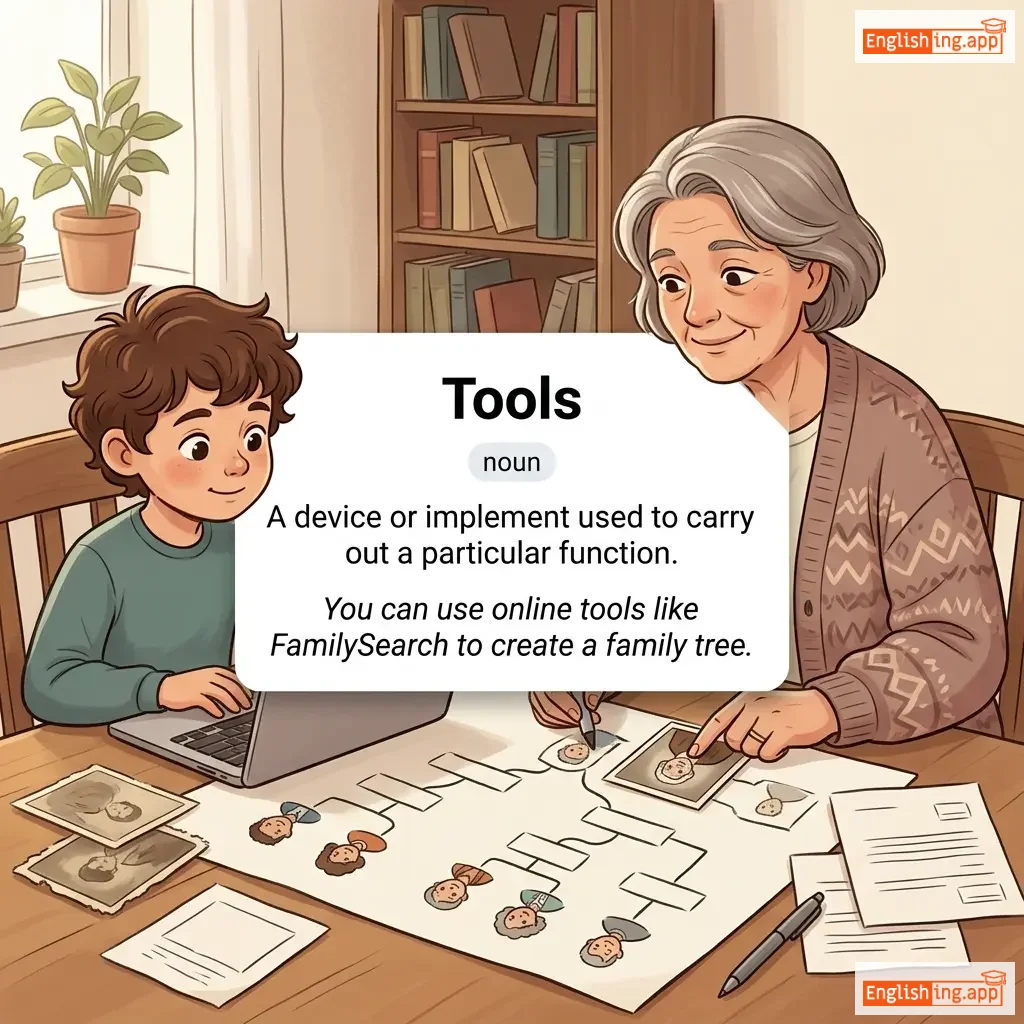
Tools definition card — visual illustration of the meaning
noun
tuːlz
工具 (gongju)

A device or implement used to carry out a particular function.

"You can use online tools like FamilySearch to create a family tree."

"您可以使用像FamilySearch这样的在线工具来创建家谱树。" (Nín kěyǐ shǐyòng xiàng FamilySearch zhèyàng de zàixiàn gōngjù lái chuàngjiàn jiāpǔ shù.)
noun
/tuːθ/
牙齿 (yáchǐ)

each of the hard, pointed structures in the mouth used for biting and chewing food

"He has a toothache and needs to see the dentist."

"他牙疼,需要看牙医。" (Tā yáténg, xūyào kàn yáyī.)
noun
/tɒp/
顶端 (dingduan)

the highest or uppermost point, part, or surface of something

"The book is on the top shelf."

"书本在顶层书架上。" (Shuben zai dingceng shujia shang.)
noun
/ˈtoʊ.pæz/
托帕石 (tuōpàshí)

a precious stone, typically colorless, yellow, or blue, used in jewelry

"The queen's crown was adorned with a magnificent blue topaz."

"女王的王冠装饰着一颗美丽的蓝色托帕石。" (nǚwáng de wángguān zhuāngshì zhe yī kē měilì de lánsè tuōpàshí.)
noun
/ˈtɒpɪk/
主题 (zhuti)

a subject of conversation, discussion, or writing

"The topic of the meeting was company expansion."

"会议的主题是公司扩展。" (Huiyi de zhuti shi gongsi kuozhan.)
adjective
/ˈtɒp.məʊst/
最上; 顶端 (zui shang; dingduan)

highest in position or rank

"The flag was placed on the topmost branch of the tree."

"旗帜被放置在树的最高分支上。" (qizhi bei fangzhi zai shu de zuishang fenzhi shang.)
noun
/təˈpɒɡrəfi/
地形 (dixing)

the arrangement of the natural and artificial physical features of an area

"The topography of the region made construction very challenging."

"该地区的地形使得施工非常具有挑战性。" (Gai diqu de dixing shidede shigong feichang juyou tiaozhanxing.)
verb
/ˈtɒpl/
倒塌 (dǎotā)

to fall or cause to fall over; to overthrow

"The earthquake caused the old building to topple."

"地震导致了旧建筑的倒塌。" (Dìzhèn dǎozhìle jiù jiànzhú de dǎotā.)
noun
/ˈtɒpˌsɔɪl/
表土 (biaotu)

the top layer of soil, which is rich in organic matter and nutrients

"Farmers rely on healthy topsoil for good crop yields."

"农民依赖健康的表土来获得丰收。" (Nóngmín yīlài jiànkāng de biǎotǔ lái huòqǔ fēngshōu.)
adjective
/ˌtɒpsi ˈtɜːvi/
混乱的 (hùnluàn de)

in a state of confusion, disorder, or upside down

"The sudden announcement left the office in a topsy-turvy state."

"突如其来的公告让办公室陷入了完全混乱的状态。" (Tū rú qí lái de gōnggào ràng bàngōngshì xiànrùle wánquán hùnluàn de zhuàngtài.)
noun
/tɔːrtʃ/
手电筒 / 火炬 (tuoqi)

a portable electric lamp powered by batteries; a flaming stick used for light

"Use the torch to find your way in the dark."

"在黑暗中用手电筒来照路。" (zaiheianzhongyongshoudiantonglaizhaolu)
noun, verb
/ˈtɔːr.ment/
折磨 (zhémó)

severe physical or mental suffering; to cause extreme suffering

"The prisoner was in constant torment."

"囚犯正在承受着持续的痛苦。" (Qiúfàn zhèngzài chéngshòu zhe chíxù de tòngkǔ.)
noun
/tɔːrˈneɪdoʊ/
龙卷风 (long juan feng)

a rapidly rotating column of air in contact with the ground and clouds, often destructive

"The tornado destroyed several houses in the village."

"龙卷风摧毁了村子里的几座房子" (Long juan feng cui huai le cun zi li de ji zuo fang zi)
noun/verb
/tɔːrˈpiːdoʊ/
鱼雷 (yulei)

A self-propelled underwater missile; to attack or destroy something suddenly and forcefully.

"The submarine launched a torpedo at the enemy ship."

"潜艇向敌舰发射了鱼雷。" (Qian ting xiang di jian fa she le yulei.)
adjective
/ˈtɔːrpɪd/
迟缓 (torpid)

Mentally or physically inactive; sluggish or lethargic.

"After the long hike, he felt torpid and unmotivated."
"长时间徒步后,他感到迟缓且缺乏动力。" (Chang shijian tubu hou, ta gandao chi huan qie quefa dongli.)
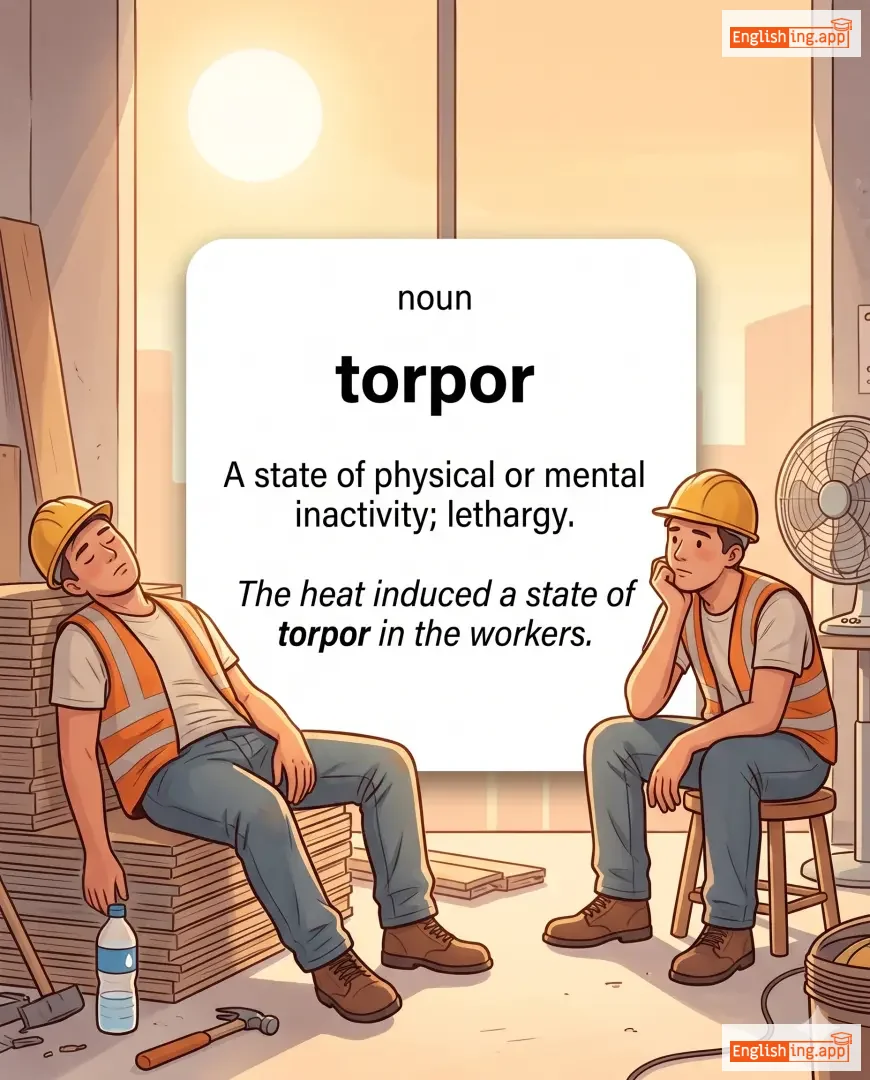
torpor definition card — visual illustration of the meaning
noun
/ˈtɔːrpər/
昏睡 (torpor)

A state of physical or mental inactivity; lethargy.

"The heat induced a state of torpor in the workers."

"高温使工人们陷入了昏睡状态。" (Gaowen shi gongrenmen xianru le hunshui zhuangtai.)
torque definition card — visual illustration of the meaning
noun
/tɔːrk/

A twisting force that causes rotation.

"The mechanic measured the torque of the engine."

noun
/ˈtɔːrənt/
洪流 (hongliu)

A strong and fast-moving stream of water; a sudden, violent outpouring of something.

"A torrent of rain flooded the streets."

"一阵暴雨的洪流淹没了街道。" (yī zhèn bàoyǔ de hóngliú yānmò le jiēdào.)