词汇表

英语词汇词典 | 单词含义、定义和示例

noun
/ˈtɛmpoʊ/
节奏, 速度 (jie2zou4, su4du4)

The speed or pace at which a piece of music or activity is performed.

"The band played the song at a faster tempo than usual."

"乐队以比平常更快的节奏演奏了这首歌。" (Yue dui yi bi ping chang geng kuai de jie zou yan zou le zhe shou ge.)
adjective
/ˈtɛmpərəl/
世俗的,时间的 (shìsú de, shíjiān de)

Relating to worldly affairs or to time rather than spiritual matters.

"The monk gave up his temporal possessions to live a simple life."

"僧侣放弃了他的世俗财产,选择过简单的生活。" (sēnglǚ fàngqìle tā de shìsú cáichǎn, xuǎnzé guò jiǎndān de shēnghuó.)
adverb
/ˈtɛmpərɛrɪli/
临时地 (linshi de)

for a limited time; not permanently

"The road is closed temporarily for repairs."

"道路因维修而暂时关闭。" (Dàolù yīn wéixiū ér zhànshí guānbì.)
adjective
/ˈtɛmpərɛri/
临时 (linshi)

Lasting for only a limited period of time; not permanent.

"She found a temporary job during the summer break."
"她在暑假期间找到了临时工作。" (Tā zài shǔjià qījiān zhǎodàole línshí gōngzuò.)
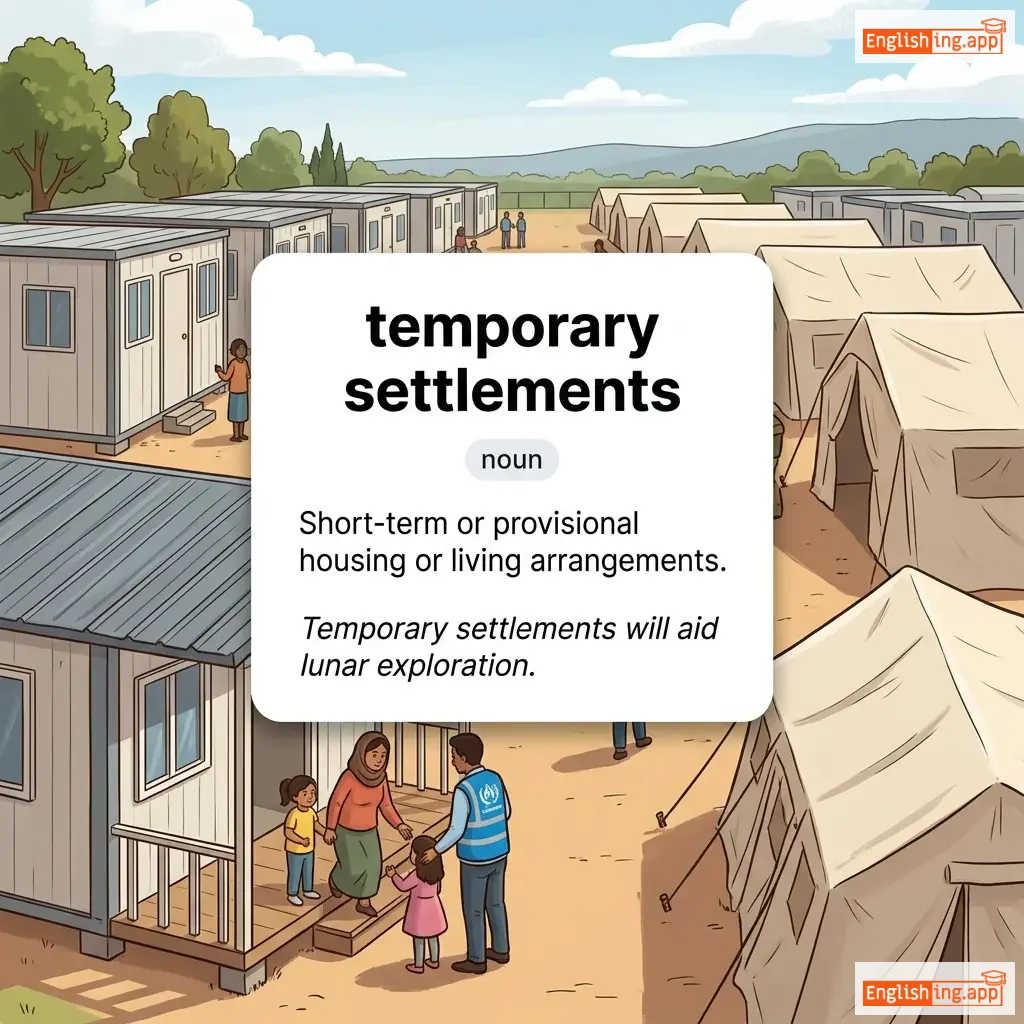
temporary settlements definition card — visual illustration of the meaning
noun
ˈtempəreri ˈsetlmənts
临时定居点 (linshi dingjudian)

Short-term or provisional housing or living arrangements.

"Temporary settlements will aid lunar exploration."

"临时定居点将有助于月球探索。" (Linshi dingjudian jiang youzhu yuèqiú tànsuǒ.)
verb
/ˈtɛmpəˌraɪz/
拖延 (tuōyán)

To delay making a decision or taking action in order to gain time.

"The politician temporized when asked about the controversial issue."

"政治家在被问及争议问题时拖延了决策。" (Zhèngzhìjiā zài bèi wènjí zhēngyì wèntí shí tuōyánle juédìng.)
verb
/tɛmpt/
诱惑 (yòuhuò)

to entice or attract someone to do something, often something wrong or unwise

"The smell of fresh bread tempted him to enter the bakery."

"新鲜面包的味道引诱他走进了面包店。" (xīnxiān miànbāo de wèidào yǐn yuè tā zǒu jìn le miànbāo diàn.)
noun
/temp.ˈteɪ.ʃən/
诱惑 (yòuhuò)

the desire to do something wrong or unwise; an urge to have or do something

"He resisted the temptation to eat the entire chocolate cake."

"他抵抗了吃掉整块巧克力蛋糕的诱惑。" (Tā dǐkàngle chī diào zhěng kuài qiǎokèlì dàngāo de yòuhuò.)
noun
/ˈtɛmptər/
引诱者 (yǐn yòu zhě)

a person or thing that entices someone into doing something wrong

"The tempter whispered false promises into his ear."

"引诱者在他耳边低声许下虚假的承诺。" (Yǐn yòu zhě zài tā ěr biān dī shēng xǔ xià xū jiǎ de chéng nuò.)
adjective
/ˈtemptɪŋ/
诱人的 (yòu rén de)

appealing to or attracting someone, even if wrong or inadvisable; alluring

"The chocolate cake looked very tempting in the bakery window."

"在面包店的橱窗里,巧克力蛋糕看起来非常诱人。" (zài miànbāo diàn de chúchuāng lǐ, qiǎokèlì dàngāo kàn qǐlái fēicháng yòu rén.)
noun
/tɛn/
(shi)

the number following nine and preceding eleven

"I have ten apples in the basket."

"我篮子里有十个苹果。" (Wǒ lánzi lǐ yǒu shí gè píngguǒ.)
adjective
/ˈtɛnəbl/
可防御的 (kě fángyù de)

able to be defended or maintained against attack or objection

"His argument was strong and tenable in court."

"他的论点在法庭上既强大又可防守。" (Tā de lùndiǎn zài fǎtíng shàng jì qiángdà yòu kě fángshǒu.)
tenacious definition card — visual illustration of the meaning
adjective
/təˈneɪʃəs/
顽强 (wanqiang)

holding firmly to something; persistent and determined

"She was tenacious in pursuing her goals."

"她在追求目标时非常顽强。" (Ta zai zhuiqiu mubiao shi feichang wanqiang.)
tenacity definition card — visual illustration of the meaning
noun
/təˈnæsəti/
韧性 (renxing)

the quality of being persistent, determined, and not easily giving up

"His tenacity helped him succeed despite many failures."

"他的韧性帮助他在多次失败后成功了。" (Tā de rènxìng bāngzhù tā zài duō cì shībài hòu chénggōngle.)
noun
/ˈtɛnənsi/
租约 (zūyuē)

The possession or occupation of land or property as a tenant.

"The tenancy agreement was signed for two years."

"租赁协议已签署为期两年。" (Zūlìn xiéyì yǐ qiānshǔ wéiqī liǎng nián.)
noun
/ˈtɛnənt/
租户 (zū hù)

A person who occupies land or property rented from a landlord.

"The tenant paid the rent on time every month."

"租户每月按时支付租金" (zū hù měi yuè àn shí zhī fù zū jīn)
verb
/tɛnd/
倾向/照顾 (qīngxiàng/zhàogù)

To regularly behave in a particular way or to take care of something.

"She tends to wake up early in the morning."

"她倾向于早上早起。" (Tā qīngxiàng yú zǎoshang zǎo qǐ.)
noun
/ˈtɛndənsi/
趋势 (qushi)

An inclination or likelihood to behave in a certain way.

"He has a tendency to forget small details."

"他有忘记小细节的倾向。" (Tā yǒu wàngjì xiǎo xìjié de qīngxiàng.)
adjective
/tɛnˈdɛnʃəs/
偏见的 (pianjian de)

Expressing or promoting a particular cause or point of view, often biased.

"The article was criticized for its tendentious tone."

"这篇文章因其偏见的语气而受到批评。" (Zhe pian wenzhang yin qi pianjian de yuqi er shoudao piping.)
verb, noun, adjective
/ˈtɛndər/
提议 / 温柔 (tíyì / wēnróu)

to offer formally; soft and delicate in texture or character; a formal offer or proposal

"The company tendered its resignation to the board."

"公司向董事会提出了辞职申请。" (Gōngsī xiàng dǒngshìhuì tíchūle cízhí shēnqǐng.)
noun
/ˈten.dər.nəs/
温柔 (wēnróu)

gentleness and kindness; the quality of being easily hurt or damaged

"The mother showed great tenderness while caring for her sick child."

"母亲在照顾生病的孩子时表现出了极大的温柔。" (Mǔqīn zài zhàogù shēngbìng de háizi shí biǎoxiàn chūle jí dà de wēnróu.)
adjective
/ˈtɛnɪbrəs/
昏暗的 (hun'an de)

dark, shadowy, or obscure

"The cave was damp and tenebrous, filled with eerie sounds."

"洞穴潮湿而昏暗,充满了怪异的声音。" (Dongxue chaoshi er hun'an, chongman le guaiyi de shengyin.)
noun
/ˈtɛnəmənt/
廉租房 (liánzūfáng)

a large building divided into separate apartments, often in poor condition

"The family lived in a crowded tenement in the city."

"这个家庭住在城市里一个拥挤的廉租房里。" (Zhège jiātíng zhù zài chéngshì lǐ yīgè yōngjǐ de liánzūfáng lǐ.)
tenet definition card — visual illustration of the meaning
noun
/ˈtɛnɪt/
原则 (yuánzé)

a principle, belief, or doctrine held to be true

"Honesty is a central tenet of their philosophy."

"诚实是他们哲学的核心原则。" (Chéngshí shì tāmen zhéxué de héxīn yuánzé.)
noun
/ˈtɛnɪs/
网球 (wǎngqiú)

a sport played with rackets and a ball on a rectangular court

"He enjoys playing tennis with his friends on the weekends."

"他喜欢周末和朋友们一起打网球。" (Tā xǐhuān zhōumò hé péngyǒu men yīqǐ dǎ wǎngqiú.)
noun
/ˈtɛnər/
男高音 / 一般基调 (nán gāo yīn / yī bān jī diào)

the general meaning, drift, or character of something; a male singing voice between baritone and alto

"The overall tenor of his speech was hopeful and reassuring."

"他演讲的总体基调是充满希望和安慰的。" (Tā yǎnjiǎng de zǒngtǐ jīdiào shì chōngmǎn xīwàng hé ānwèi de.)
noun, adjective, verb
/tɛns/
紧张 / 语法时态 (jin zhang / yu fa shi tai)

a grammatical category showing time reference; stretched tight or anxious

"She felt tense before the interview."
"她在面试前感到紧张。" (Ta zai mianshi qian gandao jinzhang.)
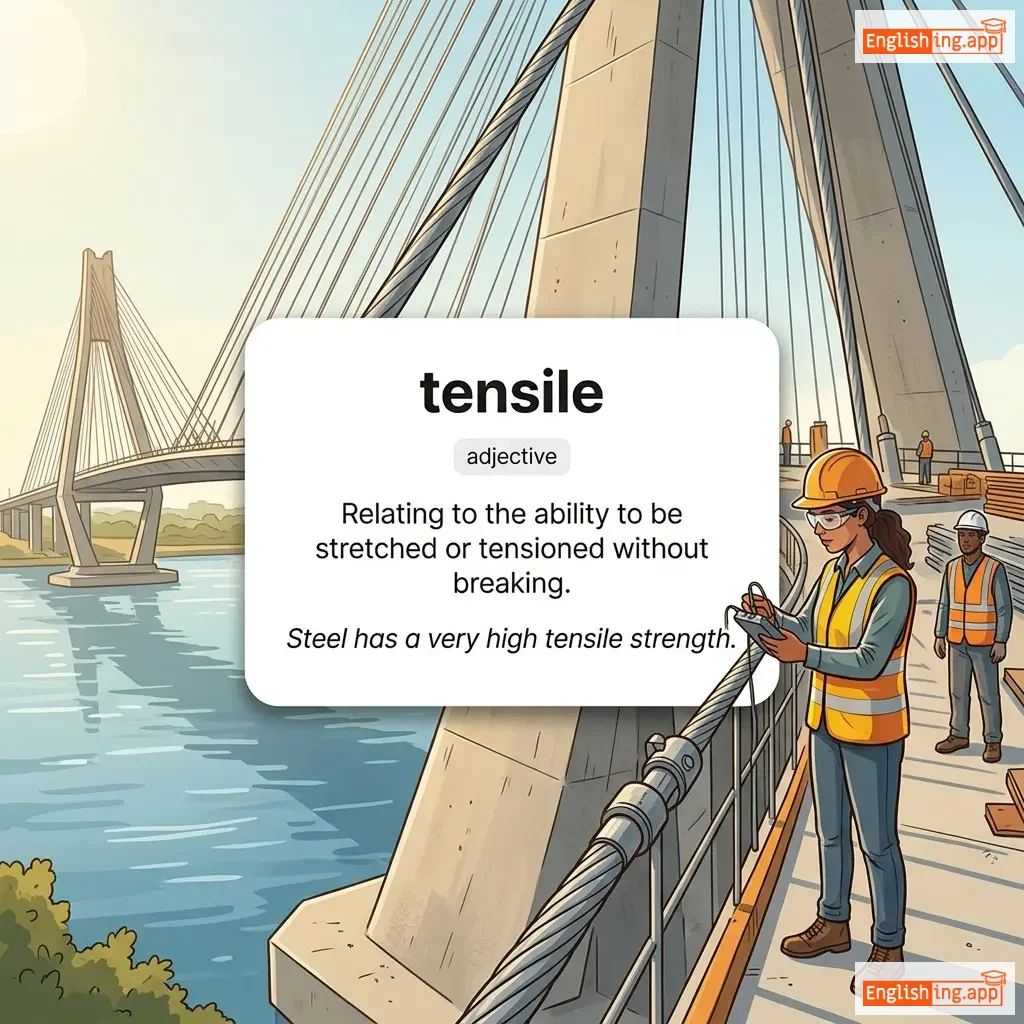
tensile definition card — visual illustration of the meaning
adjective
/ˈtɛn.saɪl/
可伸展的 (kě shēnzhǎn de)

Relating to the ability to be stretched or tensioned without breaking.

"Steel has a very high tensile strength."

"钢铁具有非常高的可伸展强度。" (gāngtiě jùyǒu fēicháng gāo de kě shēnzhǎn qiángdù.)
noun
/ˈtɛn.ʃən/
紧张 (jin zhang)

A state of being stretched tight; mental or emotional strain.

"There was a lot of tension in the room before the exam results were announced."

"考试结果公布前,房间里充满了紧张气氛。" (Kaoshi jieguo gongbu qian, fangjian li chongman le jinzhang qifen.)
noun
/tɛnt/
帐篷 (zhàngpéng)

a portable shelter made of fabric, supported by poles and ropes

"We set up a tent for the camping trip."

"我们为露营旅行搭建了一个帐篷。" (Wǒmen wèi lùyíng lǚxíng dājiànle yīgè zhàngpéng.)
adjective
/ˈtɛn.tə.tɪv/
试探性的 (shì tàn xìng de)

Not certain or fixed; done without confidence.

"She gave a tentative smile before agreeing."

"她在同意之前露出了试探性的微笑。" (Tā zài tóngyì zhīqián lùchūle shì tàn xìng de wēixiào.)
tenuous definition card — visual illustration of the meaning
adjective
/ˈtɛn.ju.əs/
薄弱 / 稀薄 (bó ruò / xī bó)

Very weak, thin, or slight; lacking a strong basis.

"The evidence against him is quite tenuous."

"对他不利的证据相当薄弱。" (Duì tā bù lì de zhèngjù xiāngdāng bó ruò.)
noun
/ˈtɛnjər/
任期 (renqi)

The period of time during which someone holds a position, office, or land.

"His tenure as president lasted for five years."

"他作为总统的任期持续了五年。" (Tā zuòwéi zǒngtǒng de rènqī chíxù le wǔ nián.)
adjective
/ˈtɛpɪd/
温热, 不热衷 (wēn rè, bù rèzhōng)

Lukewarm; showing little enthusiasm or force.

"His speech received only a tepid response from the audience."

"他的演讲只收到听众的温热反应。" (Tā de yǎnjiǎng zhǐ shōu dào tīngzhòng de wēn rè fǎnyìng.)
noun
/ˌtɜːsənˈtɛnəri/
三百周年纪念 (san bai zhou nian ji nian)

The 300th anniversary of an event.

"The city celebrated its tercentenary with a grand festival."

"这座城市以盛大的节日庆祝了它的三百年纪念日。" (Zhe zuo chengshi yi shengda de jieri qingzhu le ta de san bai nian jinian ri.)
noun
/ˌtɜːdʒɪvərˈseɪʃən/
回避, 背离 (huí bì, bèi lí)

Evasion of straightforward action or speech; changing sides or being inconsistent.

"The politician’s tergiversation frustrated his supporters."

"政治家的回避行为让他的支持者感到沮丧。" (Zhèngzhìjiā de huíbì xíngwéi ràng tā de zhīchí zhě gǎndào jǔsàng.)
noun
/tɜːm/
术语 (shùyǔ)

a word or phrase used to describe a thing or to express a concept

"The term 'machine learning' is commonly used in technology."

"‘机器学习’这一术语在技术领域中广泛使用。" (‘Jīqì xuéxí’ zhè yī shùyǔ zài jìshù lǐngyù zhōng guǎngfàn shǐyòng.)
noun
/ˈtɜːrməɡənt/
专横且脾气暴躁的女性 (zhuānhèng qiě píqì bàozào de nǚxìng)

A harsh-tempered or overbearing woman.

"The character was portrayed as a loud and domineering termagant."

"这个角色被描绘成一个大声且专横的特尔玛甘特女性。" (Zhège juésè bèi miáohuì chéng yīgè dàshēng qiě zhuānhèng de tè'ěrmágāntè nǚxìng.)
noun/adjective
/ˈtɜːrmɪnəl/
终点站,最终,绝症 (zhōngdiǎn zhàn, zuìzhōng, juézhèng)

As a noun: A place where transport routes begin or end. As an adjective: Relating to the end or final stage of something, often an illness.

"He waited for the bus at the central terminal."

"他在中央终点站等公交车。" (tā zài zhōngyāng zhōngdiǎn zhàn děng gōngjiāo chē.)
verb
/ˈtɜːrmɪˌneɪt/
终止 (zhongzhi)

to bring something to an end or to stop something from continuing

"The company decided to terminate his contract."

"公司决定终止他的合同。" (Gōngsī juédìng zhōngzhǐ tā de hétong.)
noun
/ˌtɜːrmɪˈneɪʃən/
终止 (zhongzhi)

the act of ending something or the state of being ended

"The termination of the contract caused financial loss."

"合同的终止导致了财务损失。" (Hetong de zhongzhi daozhi le caiwu sunshi.)
noun
/ˌtɜːrməˈnɑːlədʒi/
术语 (shùyǔ)

the set of technical or special words used in a particular subject

"Medical terminology can be difficult for new students to understand."

"医学术语可能对新学生来说很难理解。" (Yīxué shùyǔ kěnéng duì xīn xuéshēng lái shuō hěn nán lǐjiě.)
noun
/ˈtɜːrmɪnəs/
终点站 (zhong dian zhan)

the final point or end of something, especially the final station on a railway line

"The train finally arrived at the terminus after a long journey."

"火车经过长时间的旅行后,终于到达了终点站。" (Huoche jingguo chang shijian de lvxing hou, zhongyu daoda le zhongdian zhan.)
noun
/tɜːmz/
条款 (tiaokuan)

plural of term; conditions or rules in a contract or agreement

"The terms of the agreement are clearly outlined in the contract."

"协议条款在合同中明确列出。" (Xieyi tiaokuan zai hetong zhong mingque liechu.)
noun
/təˈreɪn/
地形 (dixing)

a stretch of land, especially with regard to its physical features

"The soldiers had to cross rough terrain during the mission."

"士兵们必须在任务期间穿越艰难的地形。" (Shibing men bixu zai renwu qi jian chuanyue jiannan de dixing.)
noun
/ˈterəpɪn/
一种小型淡水龟 (yī zhǒng xiǎo xíng dàn shuǐ guī)

a small freshwater turtle, especially one found in North America

"The terrapin slowly crawled into the pond."
"特拉品慢慢爬进了池塘。" (Tèlā pǐn màn man pá jìn le chítáng.)
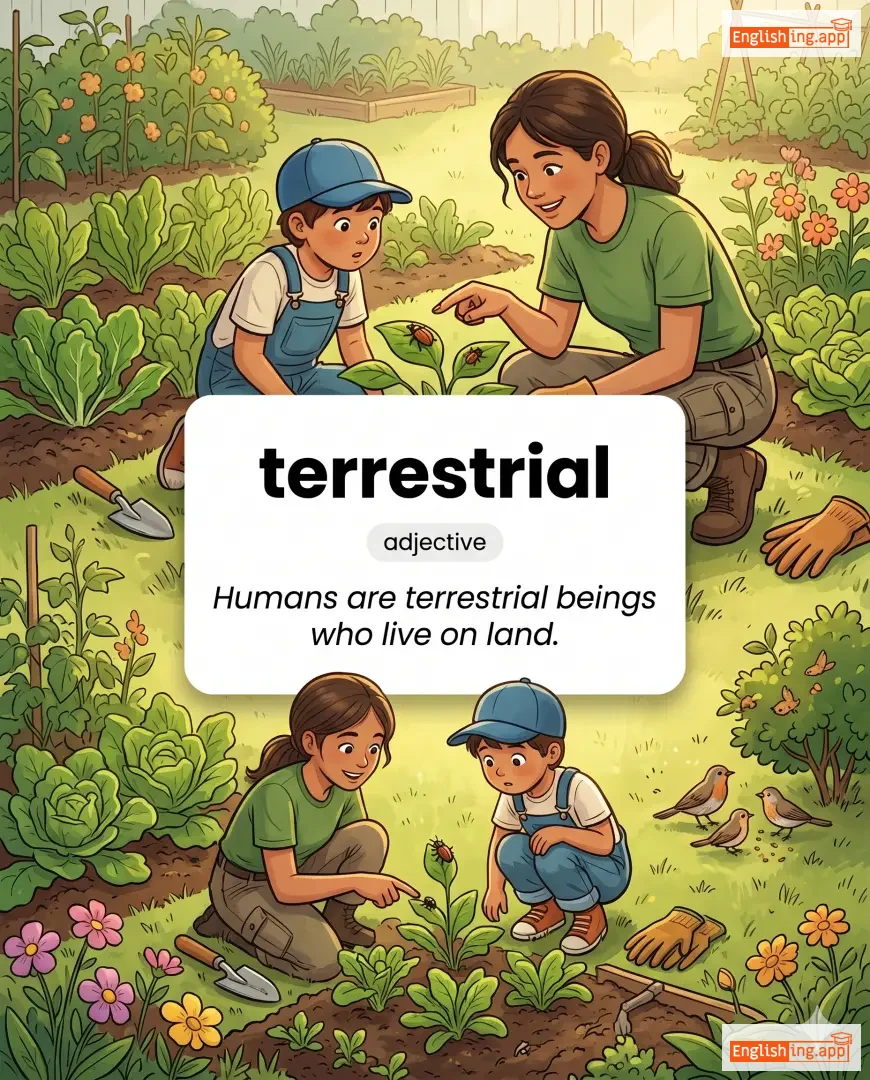
terrestrial definition card — visual illustration of the meaning
adjective
/təˈrɛstriəl/
陆生 (lù shēng)

Relating to the Earth or land as opposed to the sea or air; living or growing on land.

"Humans are terrestrial beings who live on land."

"人类是生活在陆地上的陆生生物。" (Rénlèi shì shēnghuó zài lùdì shàng de lùshēng shēngwù.)
adjective
/ˈtɛrɪbəl/

extremely bad or unpleasant

"The food at that restaurant was terrible."

adverb
/ˈtɛrəbli/
可怕地 (kěpà de)

to a very great or extreme degree; very badly or unpleasantly

"He felt terribly sad after hearing the news."

"听到消息后,他感到可怕地悲伤。" (Tīng dào xiāoxī hòu, tā gǎndào kěpà de bēishāng.)
adjective
/təˈrɪfɪk/
了不起 (liaobuqi)

extremely good or excellent; very great or intense

"The concert last night was absolutely terrific."

"昨晚的音乐会真是太棒了。" (Zuó wǎn de yīnyuè huì zhēn shì tài bàngle.)