词汇表

英语词汇词典 | 单词含义、定义和示例

noun
/ˈtiːtʃər/
教师 (jiaoshi)

a person who teaches, especially in a school

"Mr. Smith is the teacher of the math class."

"史密斯先生是数学课的教师。" (Shǐmìsī xiānshēng shì shùxué kè de jiàoshī.)
noun
/ˈtiːtʃɪŋ/
教学 (jiaoxue)

the profession or practice of teaching

"Teaching is a noble profession."

"教学是一项高尚的职业。" (Jiaoxue shi yi xiang gaoshang de zhiye.)
noun
/tiːm/
团队 (tuánduì)

a group of people working together towards a common goal

"Our team won the match after a great effort."

"我们的团队在一次巨大努力后赢得了比赛。" (Wǒmen de tuánduì zài yīcì jùdà nǔlì hòu yíngdéle bǐsài.)
noun
/ˈtiːmmeɪt/
队友 (duìyǒu)

a member of the same team

"He congratulated his teammate after scoring the goal."

"他在进球后祝贺了他的队友。" (Tā zài jìnqiú hòu zhùhè le tā de duìyǒu.)
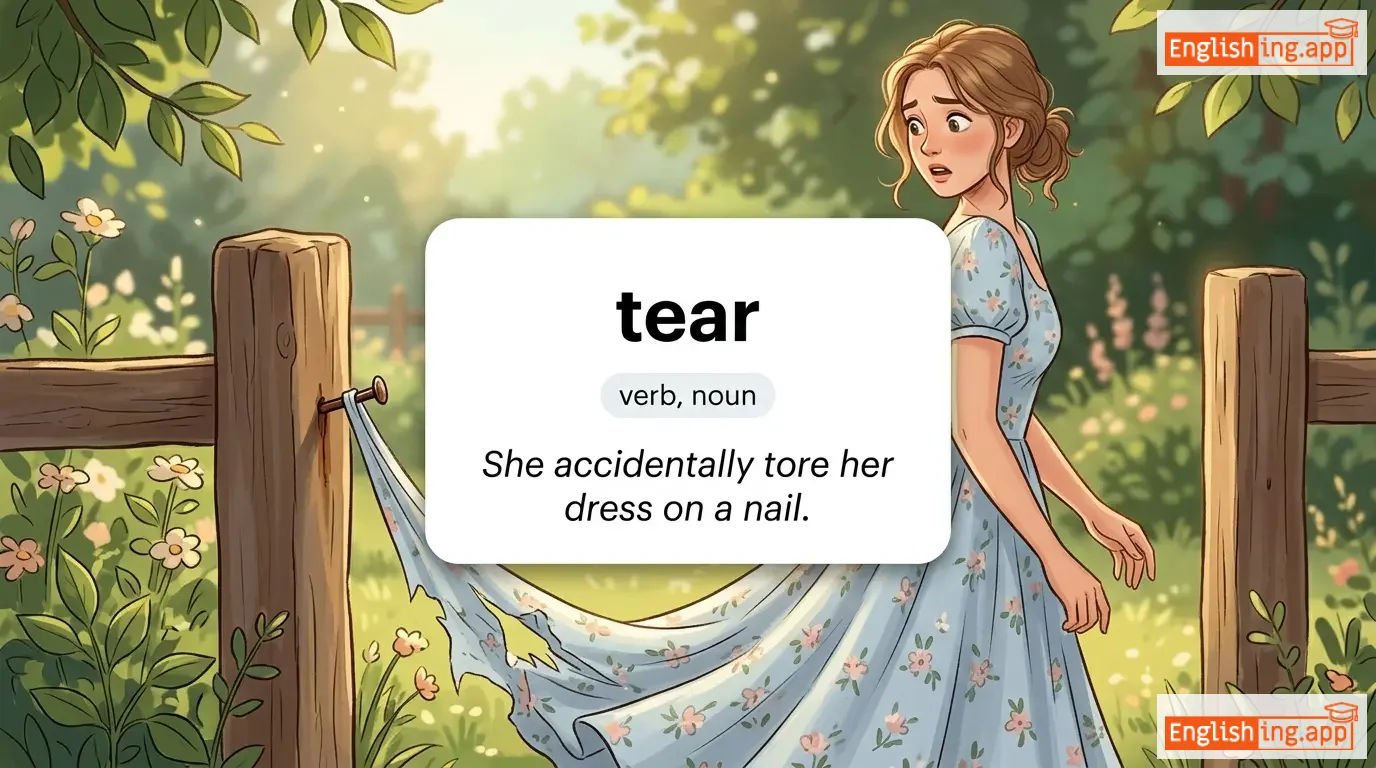
tear definition card — visual illustration of the meaning
💧

tear

verb, noun
/tɪər/ (noun: liquid) /tɛər/ (verb: rip)

As a verb: to pull apart or rip something. As a noun: a drop of clear salty liquid produced by glands in your eyes.

"She accidentally tore her dress on a nail."

adjective
/ˈtɪərfəl/
泪流满面; 易哭的 (lèi liú mǎn miàn; yì kū de)

expressing or showing sadness and sorrow; inclined to weep

"She gave a tearful goodbye to her friends at the airport."

"她在机场向朋友们告别时泪流满面。" (Tā zài jīchǎng xiàng péngyǒu men gàobié shí lèi liú mǎn miàn.)
verb
/tiːz/
取笑 (qǔxiào)

to make fun of someone in a playful or unkind way

"Children often tease their younger siblings playfully."

"孩子们经常嬉戏地取笑他们的弟弟妹妹。" (Háizimen jīngcháng xīxì de qǔxiào tāmen de dìdì mèimei.)
noun
/ˈtiːspuːn/
幸福 (xìngfú)

a small spoon used for stirring drinks or eating soft foods, or for measuring small amounts of ingredients.

"Add a teaspoon of sugar to the tea."
"她在收到奖项时无法掩饰自己的幸福。" (Tā zài shōu dào jiǎngxiàng shí wúfǎ yǎnshì zìjǐ de xìngfú.)
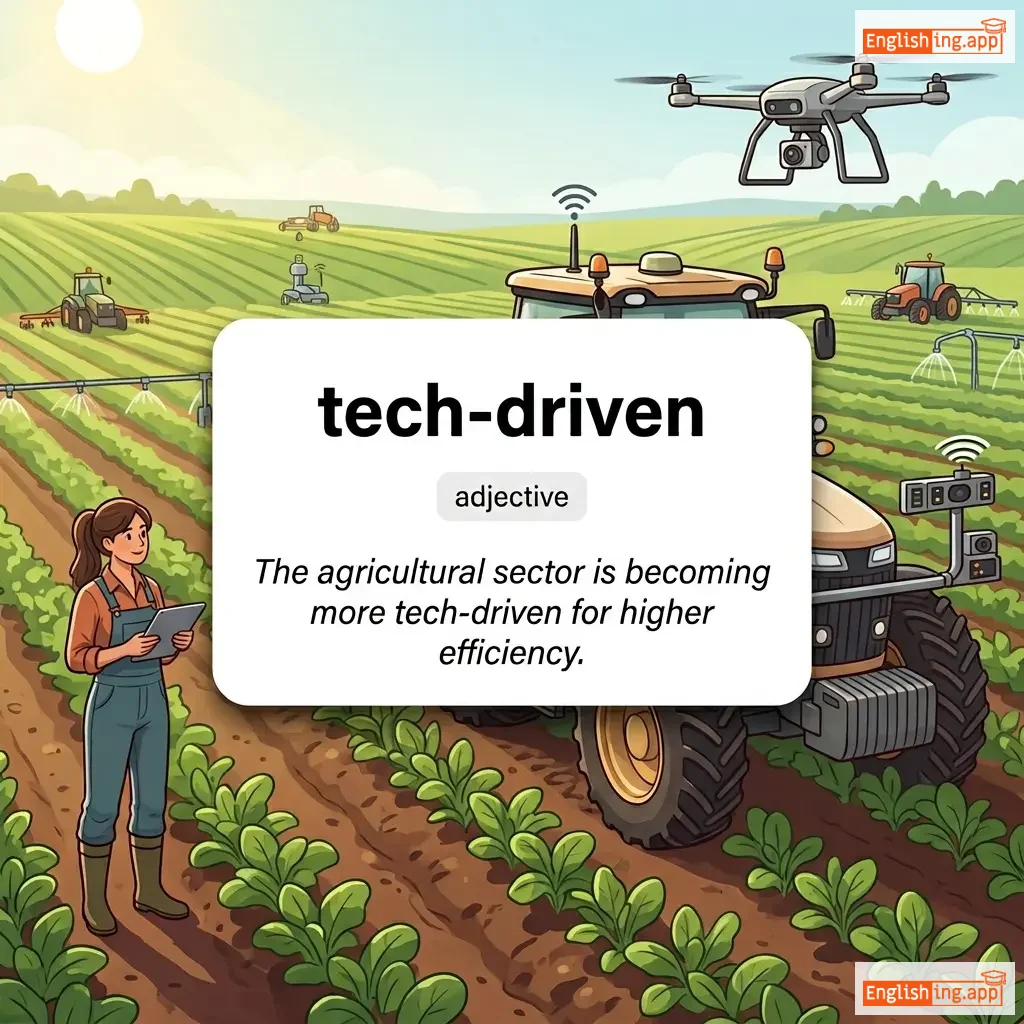
tech-driven definition card — visual illustration of the meaning
adjective
/tɛk ˈdrɪv.ən/
技术驱动 (jishu qudong)

Powered or guided by technology; dependent on technological advancement for operation.

"The agricultural sector is becoming more tech-driven for higher efficiency."

"农业部门越来越依赖技术以提高效率。" (Nongye bubmen yue lai yilai jishu yi tigao xiaolv.)
noun
/ˈtɛknɪk/
技巧 (jiqiao)

A method, skill, or art in a particular field, especially in the arts or sciences.

"The artist’s technic in watercolor impressed the judges."

"艺术家的水彩画技法给评委留下了深刻印象。" (Yishujia de shuicaihua ji fa gei pingwei liuxia le shenke yinxiang.)
adjective
/ˈtɛknɪkəl/
技术 (jishu)

relating to a specific subject, art, or craft, or its techniques.

"He has a technical background in engineering."

"他在工程学方面有技术背景。" (Ta zai gongchengxue fangmian you jishu beijing.)
noun
/ˌtɛknɪˈkæləti/
技术性问题 (jishu xing wenti)

A small detail of law, rule, or procedure; a minor point that affects an outcome.

"The case was dismissed on a technicality."

"案件因技术性问题被驳回。" (Anjian yin jishu xing wenti bei bohui.)
noun
/tɛkˈnɪʃən/
技术员 (jìshùyuán)

a person skilled in the practical aspects of a particular science, art, or job

"The technician repaired the computer within an hour."

"技术员在一个小时内修好了电脑。" (Jìshùyuán zài yī gè xiǎoshí nèi xiū hǎo le diànnǎo.)
noun
/tɛkˈniːk/
技巧 (jiqiao)

A particular way of carrying out a task, especially with skill.

"She learned a new breathing technique in yoga class."

"她在瑜伽课上学会了一种新的呼吸技巧。" (Tā zài yújiā kè shàng xuéhuìle yī zhǒng xīn de hūxī jìqiǎo.)
noun
/tɛkˈnɒɡrəfi/
技术学 (jishu xue)

the descriptive study or writing about the practical arts, technologies, or technical methods of a society

"The anthropologist specialized in technography to understand indigenous tool-making traditions."
"人类学家专门研究技术学,以了解土著工具制作的传统。" (Renleixuejia zhuanmen yanjiu jishuxue, yi liaojie tuzhu gongju zhizao de chuantong.)
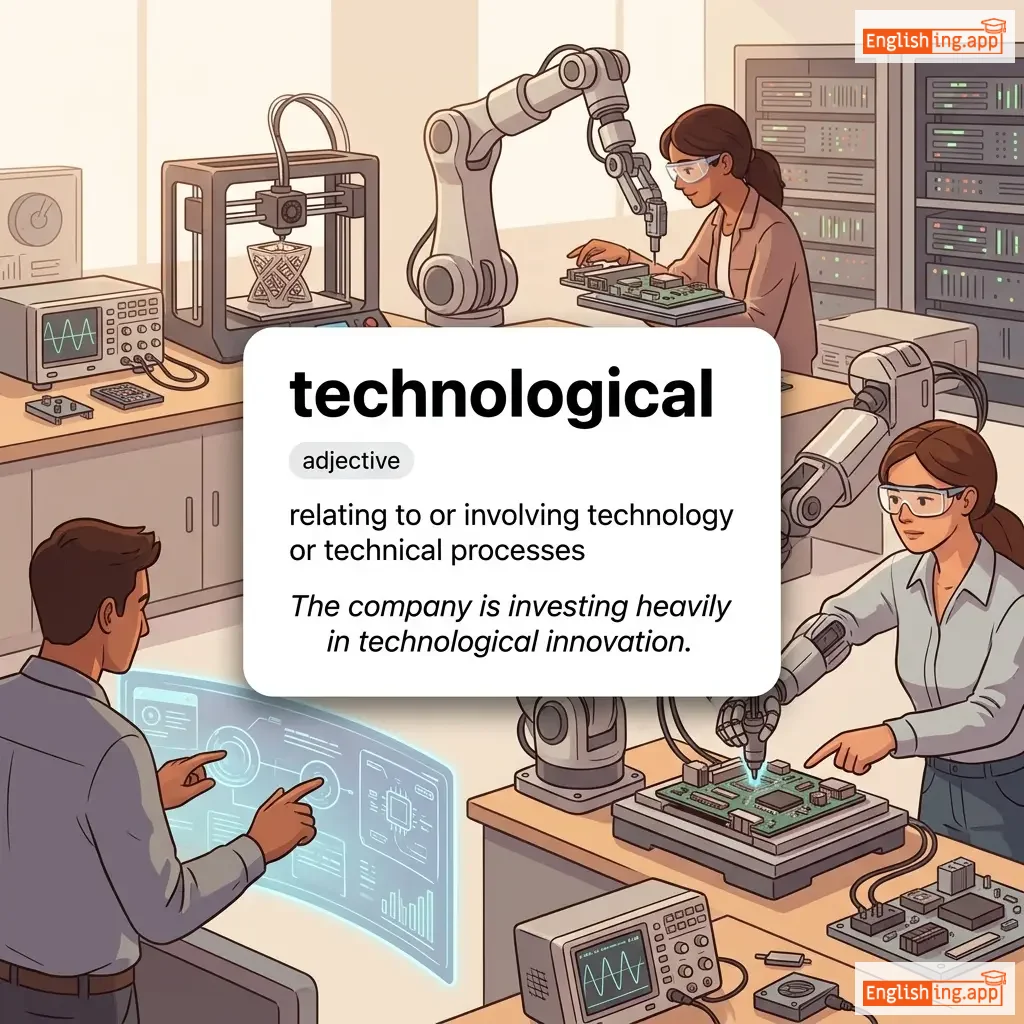
technological definition card — visual illustration of the meaning
adjective
/ˌteknəˈlɒdʒɪkəl/

relating to or involving technology or technical processes

"The company is investing heavily in technological innovation."

technological advancement definition card — visual illustration of the meaning
noun
/tekˈnɒl.ə.dʒɪ.kəl ədˈvɑːns.mənt/
技术进步 (jishu jinbu)

Progress or improvement in technology that leads to better solutions or capabilities.

"Technological advancement is revolutionizing healthcare."
"技术进步正在革命化医疗保健。" (Jishu jinbu zhengzai geminghua yiliaobaojian.)
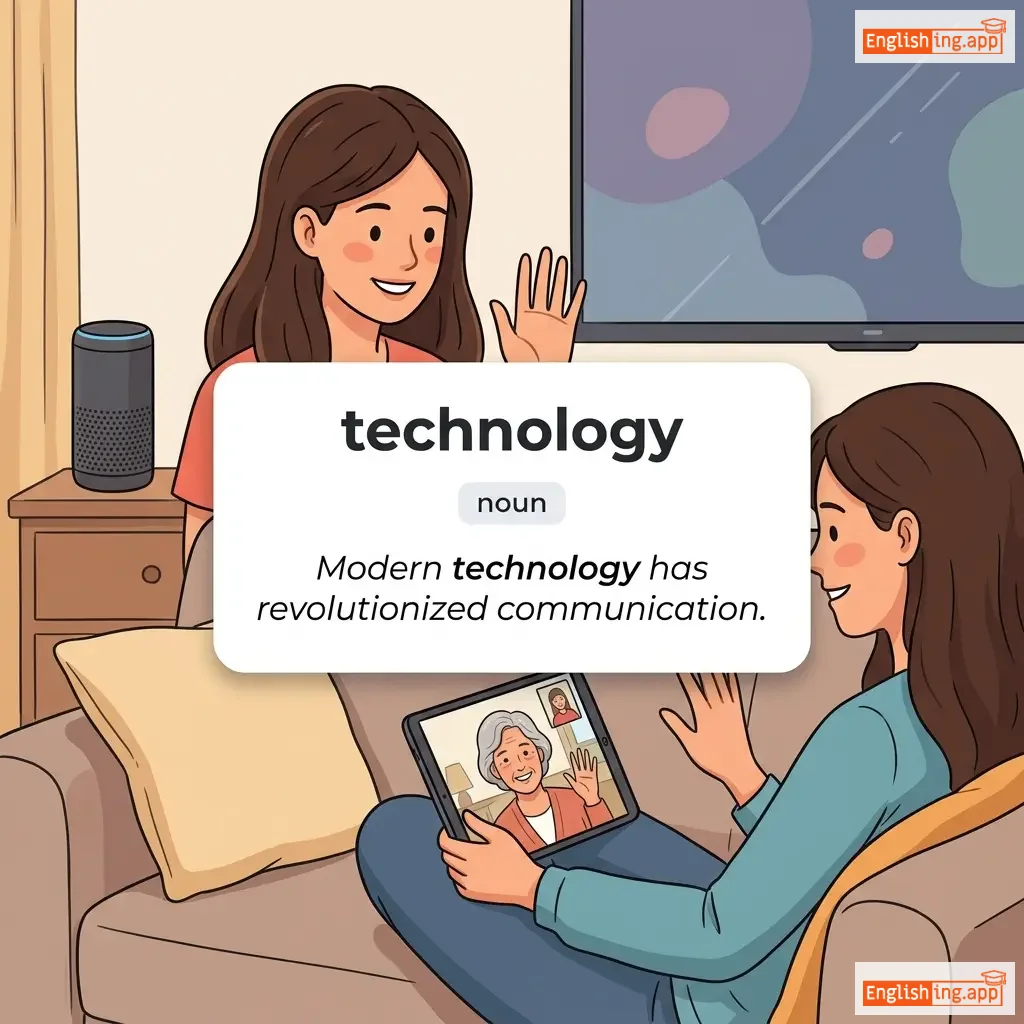
technology definition card — visual illustration of the meaning
noun
/tɛkˈnɒlədʒi/
技术 (jishu)

the application of scientific knowledge for practical purposes, especially in industry

"Modern technology has revolutionized communication."
"现代技术已经彻底改变了通讯。" (Xiandai jishu yijing chedi gaibian le tongxun.)
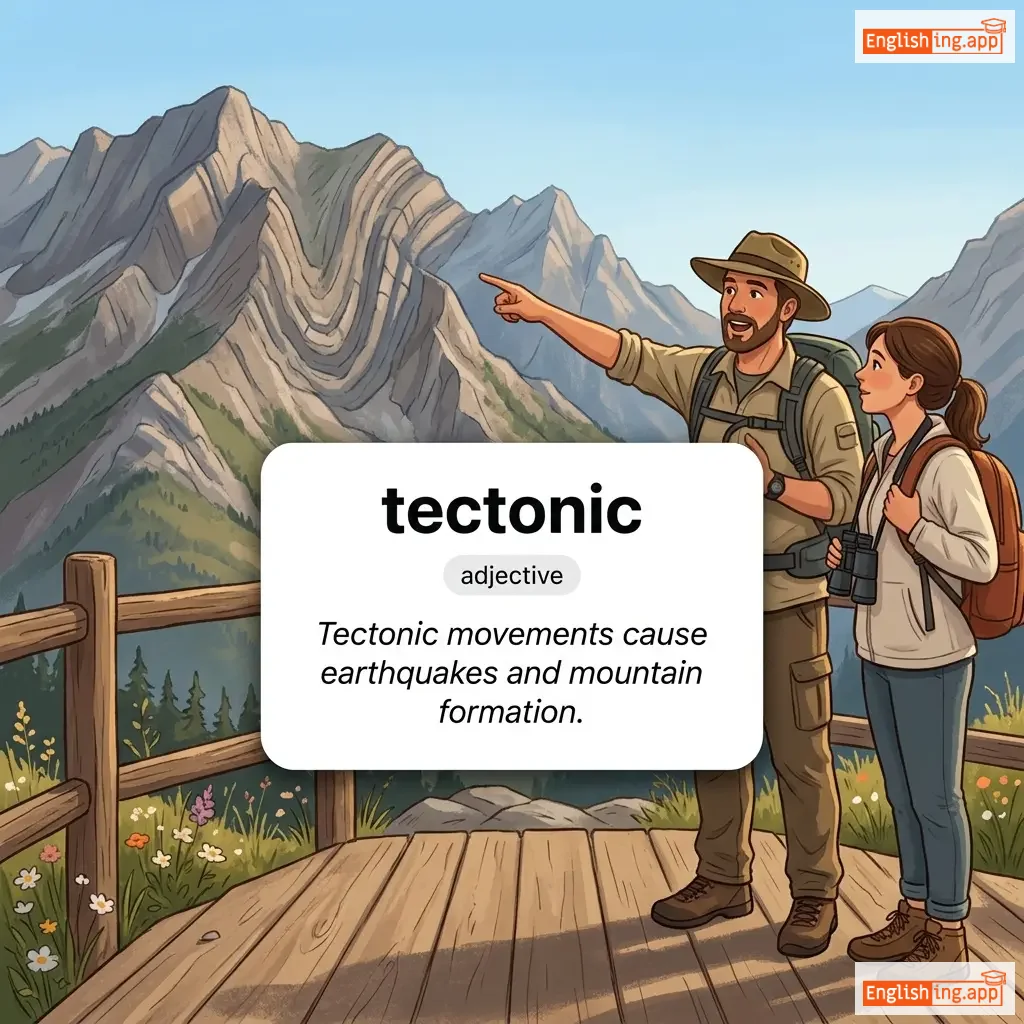
tectonic definition card — visual illustration of the meaning
adjective
/tɛkˈtɑː.nɪk/
构造的 (gòu zào de)

Relating to the structure of the earth's crust and the large-scale processes that take place within it.

"Tectonic movements cause earthquakes and mountain formation."

"构造运动引起地震和山脉形成。" (Gouzao yundong yinqi dizhen he shanmai xingcheng.)
adjective
/ˈtiːdiəs/
乏味 (fáwèi)

too long, slow, or dull; tiresome or monotonous

"Filling out endless forms can be a tedious task."

"填写无尽的表格可能是一个乏味的任务。" (Tiánxiě wújìn de biǎogé kěnéng shì yīgè fáwèi de rènwù.)
noun
/ˈtiːdiəm/
沉闷 (chenmen)

the state of being tedious; monotony or boredom

"The tedium of long meetings often drains motivation."

"长时间会议的沉闷常常消耗动力。" (Chang shijian huiyi de chenmen changchang xiaohua dongli.)
verb
/tiːm/
充满 (chōngmǎn)

to be full of or swarming with

"The forest teems with wildlife."

"森林里充满了野生动物。" (Sēnlín lǐ chōngmǎn le yěshēng dòngwù.)
adjective
/ˈtiːmɪŋ/
充满 (chōngmǎn)

full of or swarming with things or people

"The market was teeming with shoppers."

"市场充满了购物者。" (Shìchǎng chōngmǎnle gòuwù zhě.)
🧑‍🦱

teen (青少年)

noun
/tiːn/
青少年 (qing shaonian)

a person aged between 13 and 19 years.

"He's a teenager who loves sports."

"他是一个喜欢运动的青少年。" (Ta shi yi ge xihuan yundong de qing shaonian.)
adjective
/ˈtiːnˌeɪdʒ/
青少年 (qīngshàonián)

relating to or characteristic of people aged between 13 and 19 years old

"She spent her teenage years in a small town."

"她在一个小镇度过了她的青少年岁月。" (Tā zài yīgè xiǎo zhèn dùguòle tā de qīngshàonián suìyuè.)
noun
/ˈtiːneɪdʒər/
青少年 (qīng shàonián)

a person aged between 13 and 19 years.

"Teenagers often enjoy hanging out with friends."

"青少年常常喜欢和朋友一起度过时光。" (Qīng shàonián chángcháng xǐhuān hé péngyǒu yīqǐ dùguò shíguāng.)
verb
/ˈtiːtər/
摇晃 (yaohuang)

to move or balance unsteadily; to wobble

"The glass began to teeter on the edge of the table."

"玻璃开始在桌子的边缘摇摇欲坠。" (Boli kaishi zai zhuozi de bianyuan yaoyao yujui.)
noun
/tiːˈtoʊtəlɪzəm/
完全戒酒的做法 (wánquán jièjiǔ de zuòfǎ)

the practice or principle of abstaining completely from alcoholic drinks

"He practiced teetotalism throughout his life."
"他一生都践行着提托塔利主义。" (Tā yīshēng dōu jiànxíngzhe tí tuō tǎ lì zhǔyì.)
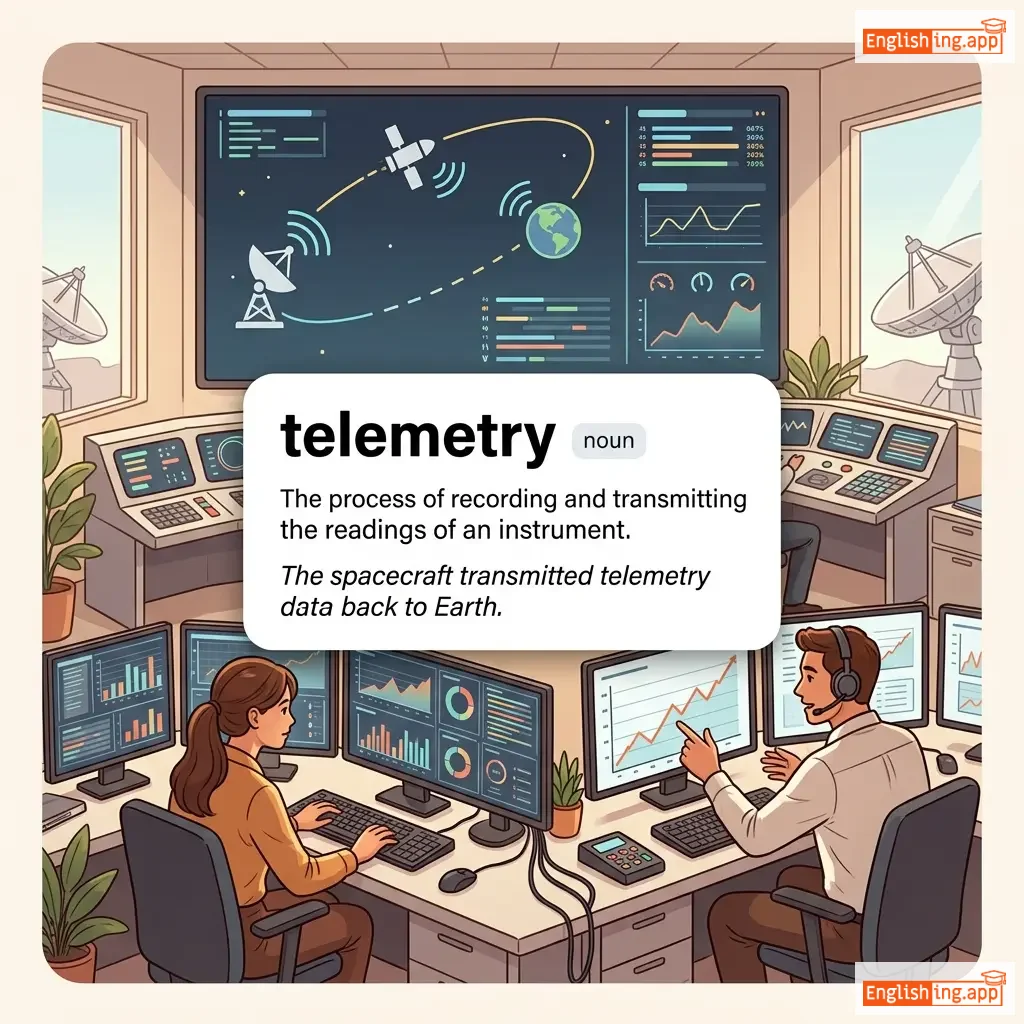
telemetry definition card — visual illustration of the meaning
noun
ˈtɛlɪˌmɛtri
遥测 (yaoce)

The process of recording and transmitting the readings of an instrument.

"The spacecraft transmitted telemetry data back to Earth."

"航天器将遥测数据传回地球。" (Hangtianqi jiang yaoce shuju chuan hui diqiu.)
noun
/ˌtɛliˈɒlədʒi/
目的论 (mùdì lùn)

the explanation of phenomena by the purpose they serve rather than by cause

"Aristotle is often associated with the concept of teleology in philosophy."

"亚里士多德常与哲学中的目的论概念相关联。" (Yà lǐ shì duō dé cháng yǔ zhéxué zhōng de mùdì lùn gàiniàn xiāngguān lián.)
noun
/təˈlɛpəθi/

the supposed communication of thoughts or ideas by means other than the known senses

"The twins claimed to share telepathy with each other."

noun
/ˈtɛlɪfəʊn/
电话 (dianhua)

a system for transmitting voices over a distance using wire or radio, typically for communication.

"I need to make a telephone call to my friend."

"我需要给我的朋友打一个电话。" (Wo xuyao gei wo de pengyou da yige dianhua.)
noun
/təˈlɛfəni/
电话系统 (dianhua xitong)

the technology and systems for transmitting voice over distances by telephone

"Modern telephony has evolved to include internet-based calls."

"现代的电话技术已经发展到包括基于互联网的通话。" (Xiandai de dianhua jishu yijing fazhan dao baokuo jiyu huliwang de tonghua.)
noun
/ˈtɛlɪˌskoʊp/
望远镜 (wangyuanjing)

An optical instrument used to make distant objects appear closer and larger by collecting and focusing light.

"The astronomer used a telescope to observe the distant planets."

"天文学家使用望远镜观察遥远的行星。" (Tianwenxuejia shiyong wangyuanjing guancha yaoyuan de xingxing.)
noun
/ˈtɛlɪˌvɪʒən/

a device that receives television signals and displays them on a screen

"I like to watch the news on television."

tell definition card — visual illustration of the meaning
verb
/tɛl/
告诉 (gaosu)

to communicate information, give an account of something, or instruct someone to do something

"She asked him to tell the truth."

"她让他告诉真相。" (Ta rang ta gaosu zhenxiang.)
noun
/ˈtɛl.ər/
出纳员; 讲述者 (chunayuan; jiangshuzhe)

A person who counts and manages money at a bank; a person who tells or relates something

"The bank teller counted the cash carefully before handing it over."

"银行出纳在交付现金前仔细点算了金额。" (Yinhang chunayuan zai jiaofu xianjin qian zixi diansuan le jine.)
adjective
/ˈtɛlɪŋ/
具有启发性 (jùyǒu qǐfāxìng)

Revealing something significant or giving important information.

"Her silence was more telling than words."

"她的沉默比语言更具启发性。" (Tā de chénmò bǐ yǔyán gèng jùyǒu qǐfāxìng.)
adjective
/ˈtɛlˌteɪl/
揭示性 (jie shì xìng)

Revealing something that is usually hidden; giving away a secret or clue.

"The telltale signs of fatigue were visible on his face."

"疲劳的揭示性迹象在他脸上显而易见。" (Píláo de jiēshìxìng jìxiàng zài tā liǎn shàng xiǎn ér yì jiàn.)
adjective
/ˌtɛmɪˈrɛəriəs/
鲁莽 (lumang)

Reckless or rash; showing a lack of caution.

"It was a temerarious decision to cross the river during the storm."

"在暴风雨中横渡河流是一个鲁莽的决定。" (Zài bàofēngyǔ zhōng héngdù héliú shì yīgè lùmáng de juédìng.)
noun
/təˈmɛrɪti/
鲁莽 (lumang)

Excessive confidence or boldness; audacity.

"He had the temerity to challenge the professor’s argument."

"他居然有胆量挑战教授的论点。" (Ta juran you danliang tiaozhan jiaoshou de lundian.)
verb
/ˈtɛmpər/
调和 (tiaohe)

to moderate, soften, or tone down something; also to strengthen by heat treatment (as in metal).

"She tried to temper her criticism with kindness."

"她试图用善意来缓和她的批评。" (Ta shitu yong shanyi lai huanhe ta de piping.)
noun
/ˈtɛmpərəmənt/
气质 (qìzhì)

a person's characteristic mood, disposition, or nature.

"He has a calm temperament that makes him a good leader."
"他有着平和的性格,这使他成为一个优秀的领导者。" (Tā yǒu zhe pínghé de xìnggé, zhè shǐ tā chéngwéi yī gè yōuxiù de lǐngdǎo zhě.)
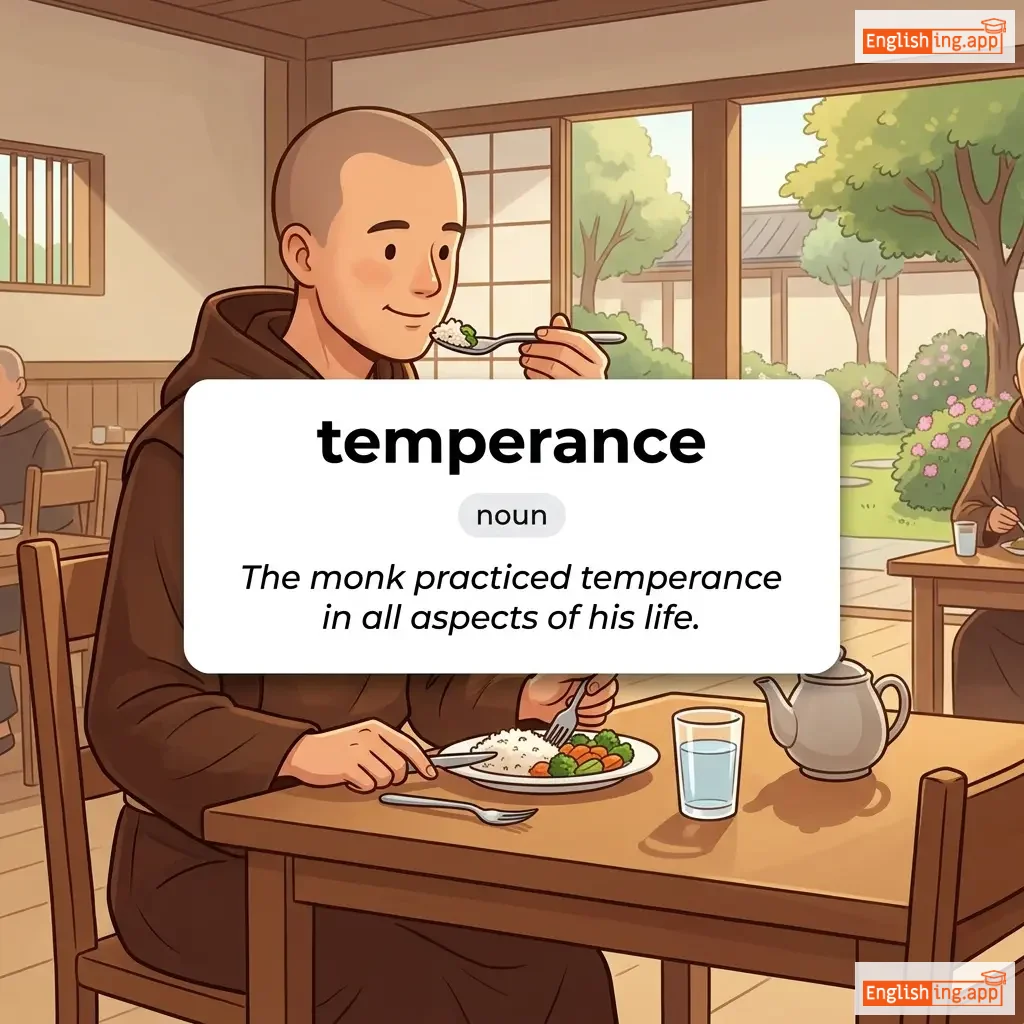
temperance definition card — visual illustration of the meaning
noun
/ˈtɛmpərəns/
节制 (jie zhi)

moderation in action, thought, or feeling; restraint, especially regarding alcohol.

"The monk practiced temperance in all aspects of his life."

"那位僧侣在生活的各个方面都实践节制。" (Na wei seng lü zai sheng huo de ge ge fang mian dou shi xian jie zhi.)
adjective
/ˈtɛmpərət/
温和的 (wenhe de)

showing moderation or self-restraint; also describing mild climate.

"He is known for his temperate behavior even in stressful situations."
"即使在压力大的情况下,他也以温和的行为而闻名。" (Jishi zai yali da de qingkuang xia, ta ye yi wenhe de xingwei er wenming.)
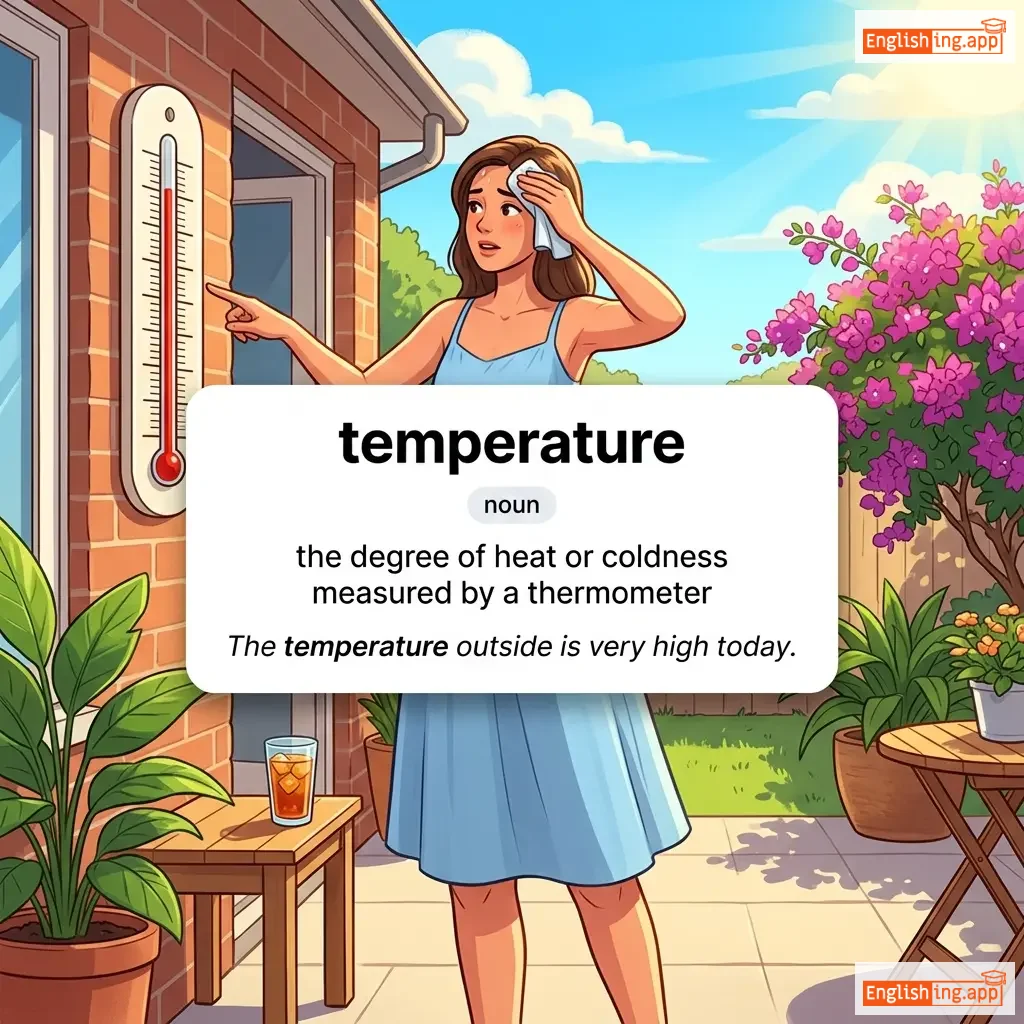
temperature definition card — visual illustration of the meaning
noun
/ˈtɛmpərətʃər/
温度 (wēndù)

the degree of heat or coldness measured by a thermometer

"The temperature outside is very high today."

"今天外面的温度非常高。" (Jīntiān wàimiàn de wēndù fēicháng gāo.)
adjective
/ˈtɛmpərd/
调和 (tiaohe)

having a specified temper or disposition; strengthened or moderated.

"She gave a tempered response to the criticism."

"她对批评做出了调和的回应。" (Tā duì pīpíng zuòchūle tiáohé de huíyìng.)
noun
/ˈtem.pɪst/
暴风雨 (baofengyu)

a violent storm with strong winds; a state of great disturbance or tumult

"The sailors struggled to navigate through the fierce tempest."

"水手们努力在猛烈的暴风雨中航行。" (Shuǐshǒumen nǔlì zài měngliè de bào fēngyǔ zhōng hángxíng.)
adjective
/tɛmˈpɛstjuəs/

Characterized by strong and turbulent emotions or stormy conditions.

"Their tempestuous relationship often swung between love and anger."

noun
/ˈtɛmpəl/
寺庙 (sìmiào)

a building used for the worship of a god or gods

"They visited an ancient temple during their trip to India."

"他们在印度旅行时参观了一个古老的寺庙。" (Tāmen zài Yìndù lǚxíng shí cānguānle yīgè gǔlǎo de sìmiào.)