词汇表

英语词汇词典 | 单词含义、定义和示例

noun
/ˈtwaɪ.laɪt/
暮光 (muguang)

the soft glowing light from the sky when the sun is below the horizon; a period of decline

"We walked along the beach at twilight."

"我们在暮光下沿着海滩散步。" (Women zai muguang xia yanzhe haitan sanbu.)
👯‍♂️

twin (双胞胎)

noun
/twɪn/
双胞胎 (shuāngbāotāi)

either of two children born at the same time to the same mother

"They have twin girls."

"他们有一对双胞胎女孩。" (Tāmen yǒu yī duì shuāngbāotāi nǚhái.)
noun
/twɪndʒ/
剧烈的痛苦 (julie de tongku)

a sudden, sharp pain or an emotional pang

"He felt a twinge of guilt after lying to his friend."

"他在对朋友撒谎后感到一阵罪恶感的剧烈痛苦。" (Tā zài duì péngyǒu sāhuǎng hòu gǎndào yī zhèn zuì'è gǎn de jùliè tòngkǔ.)
verb
/twɪst/
扭曲, 旋转 (niǔqū, xuánzhuǎn)

to bend or turn something into a coil or spiral shape; to distort.

"He twisted the rope tightly around the pole."

"他把绳子紧紧地缠绕在杆子上。" (Tā bǎ shéngzi jǐn jǐn de chánrào zài gǎnzi shàng.)
noun
/ˈtwɪstər/
龙卷风 (longjuanfeng)

A tornado or something that twists; also refers to a challenging tongue twister.

"The twister destroyed several houses in the village."

"龙卷风摧毁了村庄里的几栋房子。" (Longjuanfeng cuihui le cunzhuang li de ji dong fangzi.)
noun
/twɪt/
傻瓜; 嘲笑 (shǎguā; cháoxiào)

a silly or foolish person; to tease or make fun of someone

"Don't be such a twit and listen carefully."

"不要做傻瓜,仔细听。" (Bùyào zuò shǎguā, zǐxì tīng.)
2️⃣

two (tū)

noun
/tuː/
(èr)

the number following one

"She has two children."

"她有两个孩子。" (Tā yǒu liǎng gè háizi.)
noun
/tuː θɜːrdz/
三分之二 (san fen zhi er)

a fraction equal to two parts of three; 2/3.

"Two-thirds of the students passed the exam."

"三分之二的学生通过了考试。" (San fen zhi er de xuesheng tongguo le kaoshi.)
noun
/ˈtuːsəm/
一对 (yī duì)

A pair of people considered together, often in a romantic or competitive context.

"They entered the dance competition as a twosome."

"他们作为一对参加了舞蹈比赛。" (Tāmen zuòwéi yī duì cānjiāle wǔdǎo bǐsài.)
noun
/taɪˈkuːn/
富豪 (fù háo)

a wealthy, powerful businessperson

"The real estate tycoon invested in several skyscrapers."

"房地产富豪投资了多座摩天大楼。" (Fáng dìchǎn fù háo tóuzī le duō zuò mótiān dàlóu.)
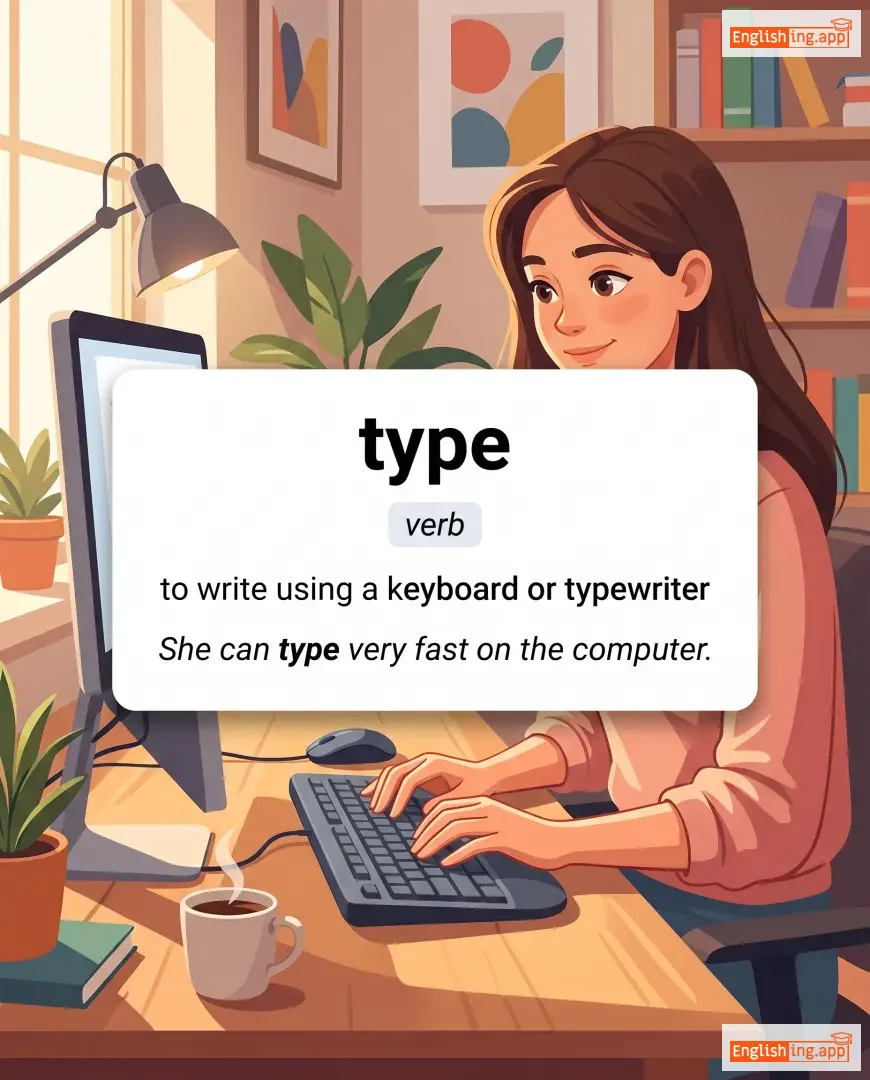
type definition card — visual illustration of the meaning
noun
/taɪp/
类型 (lèixíng)

a category of people or things having common characteristics

"What type of music do you like?"

"你喜欢什么类型的音乐?" (Nǐ xǐhuān shénme lèixíng de yīnyuè?)
noun
/taɪˈfuːn/
台风 (taifeng)

a tropical storm in the region of the Indian or western Pacific oceans

"The typhoon caused severe flooding in the coastal areas."

"台风在沿海地区造成了严重的洪水。" (Taifeng zai yanhai diqu zaochengle yanzhong de hongshui.)
adjective
/ˈtɪpɪkəl/
具有某一特定类型的人或事物的常见特征 (jùyǒu mǒu yī tèdìng lèixíng de rén huò shìwù de chángjiàn tèzhēng)

having the usual qualities of a particular type of person or thing

"It was a typical summer day, hot and humid."

"这是一个典型的夏日炎热而潮湿的日子。" (Zhè shì yīgè diǎnxíng de xiàrì yánrè ér cháoshī de rìzi.)
adverb
/ˈtɪpɪkli/
通常 (tōngcháng)

in a way that is typical of a particular person, thing, or group

"She typically arrives at work at 9 AM."

"她通常在早上9点到达工作。" (Tā tōngcháng zài zǎoshang 9 diǎn dào dá gōngzuò.)
verb
/ˈtɪpɪfaɪ/
代表 (dàibiǎo)

to represent or be a typical example of something

"His leadership style typifies the new corporate culture."

"他的领导风格体现了新的企业文化。" (Tā de lǐngdǎo fēnggé tǐxiànle xīn de qǐyè wénhuà.)
noun
/ˈtaɪpoʊ/
打字错误 (da zi cuo wu)

a mistake made in typing

"The report was full of typos."

"报告中充满了打字错误。" (baogao zhong chongmanle dazi cuowu.)
adjective
/ˌtaɪpəˈɡræfɪkəl/
印刷错误 (yinshua cuowu)

relating to the style, arrangement, or appearance of printed text

"There was a typographical error in the book."

"书中有一个印刷错误。" (Shū zhōng yǒu yīgè yìnshuā cuòwù.)
noun
/taɪˈpɒɡrəfi/
排版 (paiban)

the art and technique of arranging type to make written language legible and visually appealing

"Good typography improves the readability of a website."

"良好的排版提高了网站的可读性。" (Lianghao de paiban tigao le wangzhan de kexuduxing.)
adjective
/tɪˈrænɪkəl/
暴虐 (bàonuè)

exercising power in a cruel or arbitrary way

"The tyrannical ruler silenced all opposition."

"暴虐的统治者让所有的反对派都沉默了。" (Bàonuè de tǒngzhì zhě ràng suǒyǒu de fǎnduì pài dōu chénmòle.)
noun
/ˈtɪrəni/
暴政 (baozheng)

Cruel and oppressive government or rule by a tyrant.

"The people revolted against the tyranny of their ruler."

"人民反抗他们统治者的暴政。" (Rénmín fǎnkàng tāmen tǒngzhì zhě de bàozhèng.)
noun
/ˈtaɪ.rənt/
暴君 (baojun)

a cruel and oppressive ruler; a person who exercises power in a harsh manner

"The people rebelled against the cruel tyrant."

"人民反抗了残忍的暴君。" (rénmín fǎnkàngle cánrěn de bàojūn)
noun
/ˈtaɪroʊ/
新手 (xinshou)

A beginner or novice in a field or activity.

"As a tyro in programming, she needed constant guidance."

"作为编程的新手,她需要不断的指导。" (Zuòwéi biānchéng de xīnshǒu, tā xūyào bùduàn de zhǐdǎo.)