词汇表

英语词汇词典 | 单词含义、定义和示例

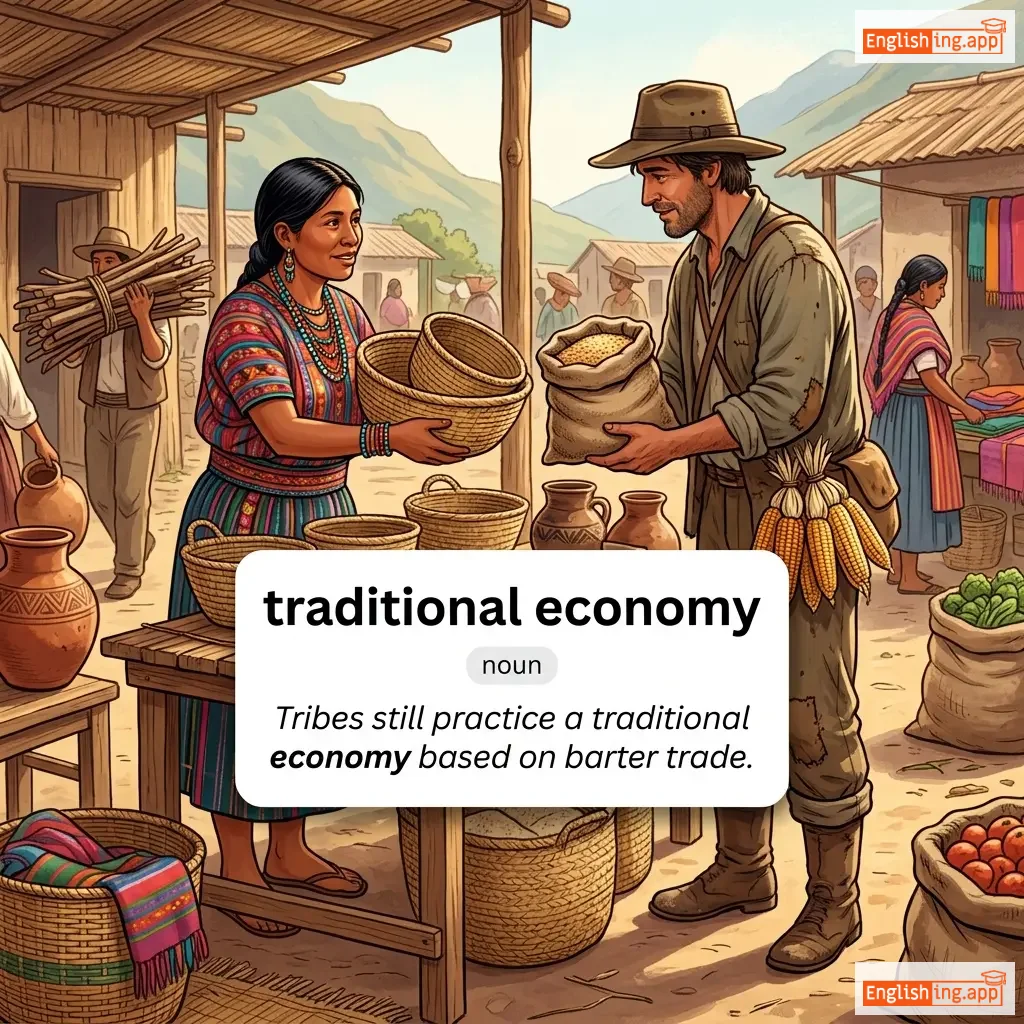
traditional economy definition card — visual illustration of the meaning
noun
/trəˈdɪʃ.ən.əl ɪˈkɒn.ə.mi/
传统经济 (chuántǒng jīngjì)

An economic system based on customs and traditions, often involving barter trade.

"Tribes still practice a traditional economy based on barter trade."

"部落仍然实践着基于物物交换的传统经济。" (Bùluò réngrán shíjiànzhe jīyú wù wù jiāohuàn de chuántǒng jīngjì.)
adverb
/trəˈdɪʃənəli/
传统上 (chuántǒng shàng)

according to custom or long-established practice

"Bangladesh is traditionally known for its hospitality."

"孟加拉国传统上以其热情好客而闻名。" (Mèngjiālāguó chuántǒng shàng yǐ qí rèqíng hǎokè ér wénmíng.)
verb
/trəˈdjuːs/
诽谤 (fěibàng)

To speak badly of someone or tell lies to damage their reputation.

"He was furious when he found out that his rivals had traduced him."

"他发现他的对手诽谤他时非常生气。" (Tā fāxiàn tā de duìshǒu fěibàng tā shí fēicháng shēngqì.)
noun
/ˈtræfɪk/
交通 (jiaotong)

movement of vehicles, goods, or people

"There was heavy traffic on the highway this morning."

"今天早上高速公路上交通繁忙。" (Jīntiān zǎoshang gāosù gōnglù shàng jiāotōng fánmáng.)
noun
/ˈtrædʒədi/
悲剧 (bēijù)

an event causing great suffering or distress

"The earthquake was a tragedy for the entire country."

"地震对整个国家来说是一场悲剧。" (Dìzhèn duì zhěnggè guójiā lái shuō shì yī chǎng bēijù.)
adjective
/ˈtrædʒɪk/
悲剧的 (beijude)

causing great sadness or suffering; very unfortunate

"The news of the accident was truly tragic."

"事故的消息真是悲剧的。" (Shigu de xiaoxi zhenshi beijude de.)
noun
/treɪl/
小道 (xiaodao)

a path or track left by something that has passed

"The hikers followed the trail through the forest."

"远足者沿着森林中的小道走。" (Yuanzuzhe yanzhe senlin zhong de xiaodao zou.)
noun
/ˈtreɪlər/
预告片 / 拖车 (yùgàopiàn / tuōchē)

a preview of a movie or a vehicle used for transporting goods

"The movie trailer was released last week."

"电影预告片上周发布了。" (Diànyǐng yùgàopiàn shàng zhōu fābùle.)
Train definition card — visual illustration of the meaning
noun
/treɪn/
火车 (huǒchē)

a series of connected vehicles that run on tracks and are used for transporting people or goods

"The train departed from the station on time."

"火车准时从车站出发。" (Huǒchē zhǔnshí cóng chēzhàn chūfā.)
noun
/treɪˈniː/
实习生; 学徒 (trainee)

a person undergoing training for a particular job or profession; a novice learner

"The medical trainee worked long hours to gain practical experience."

"医学实习生工作了很长时间,以获得实践经验。" (yīxué shíxíshēng gōngzuò le hěn cháng shíjiān, yǐ huòdé shíjiàn jīngyàn.)
noun
/ˈtreɪnər/
教练 (jiao lian)

a person who teaches skills or gives training

"The fitness trainer helped me improve my posture."

"健身教练帮助我改善了姿势。" (Jianshen jiaolian bangzhu wo gaishan le zishi.)
noun
/ˈtreɪnɪŋ/
培训 (peixun)

the process of teaching or learning a particular skill or type of behavior

"She completed her training as a nurse last year."

"她去年完成了作为护士的培训。" (Ta qunian wancheng le zuowei hushi de peixun.)
noun
/treɪt/
特征 (tezheng)

A distinguishing quality or characteristic, typically belonging to a person.

"Honesty is considered an admirable trait in a leader."

"诚实被认为是领导者的一个可敬的特征。" (Chengshi bei renwei shi lingdao zhe de yi ge kejing de tezheng.)
noun
/ˈtreɪtər/
叛徒 (pàntú)

A person who betrays their country, friends, or a cause by acting against them.

"The soldier was labeled a traitor for giving secrets to the enemy."

"这名士兵因为向敌人提供机密信息而被贴上了叛徒的标签。" (Zhè míng shìbīng yīnwèi xiàng dírén tígōng jīmì xìnxī ér bèi tiē shàngle pàntú de biāoqiān.)
trajectory definition card — visual illustration of the meaning
noun
/trəˈdʒɛktəri/
轨迹 (guiji)

The path followed by a moving object under the influence of forces like gravity.

"The scientist calculated the rocket's trajectory."

"科学家计算了火箭的轨迹。" (Kēxuéjiā jìsuànle huǒjiàn de guiji.)
noun
/træm kɑːr/
有轨电车 (you gui dian che)

An electric vehicle that runs on rails along the street

"The tram car stopped at every station in the city center."

"有轨电车在市中心的每个车站停靠。" (You gui dian che zai shi zhongxin de mei ge chezhan tingkao.)
noun, verb
/ˈtræməl/
限制 (xianzhi)

A restriction or impediment to freedom of action; to restrict.

"The strict rules trammel the creativity of the students."

"严格的规则限制了学生的创造力。" (Yángé de guīzé xiànzhìle xuéshēng de chuàngzàolì.)
verb, noun
/træmp/
流浪者 / 沉重地走 (liulangzhe / chenzhong de zou)

to walk heavily or noisily; a person who travels from place to place on foot, often homeless

"They tramped through the forest in heavy boots."

"他们穿着厚重的靴子在森林中走。" (Tamen chuanzhuo houzhong de xuezi zai senlin zhong zou.)
verb
/ˈtræmpəl/

to tread heavily on something and cause damage or injury

"The crowd trampled the flowers in the park."

noun
/træns/
恍惚 (huǎnghū)

a half-conscious state like dreaming, often with loss of awareness of surroundings

"She stared out of the window as if in a trance."
"她盯着窗外,好像处于恍惚状态。" (Tā dīngzhe chuāng wài, hǎoxiàng chǔyú huǎnghū zhuàngtài.)
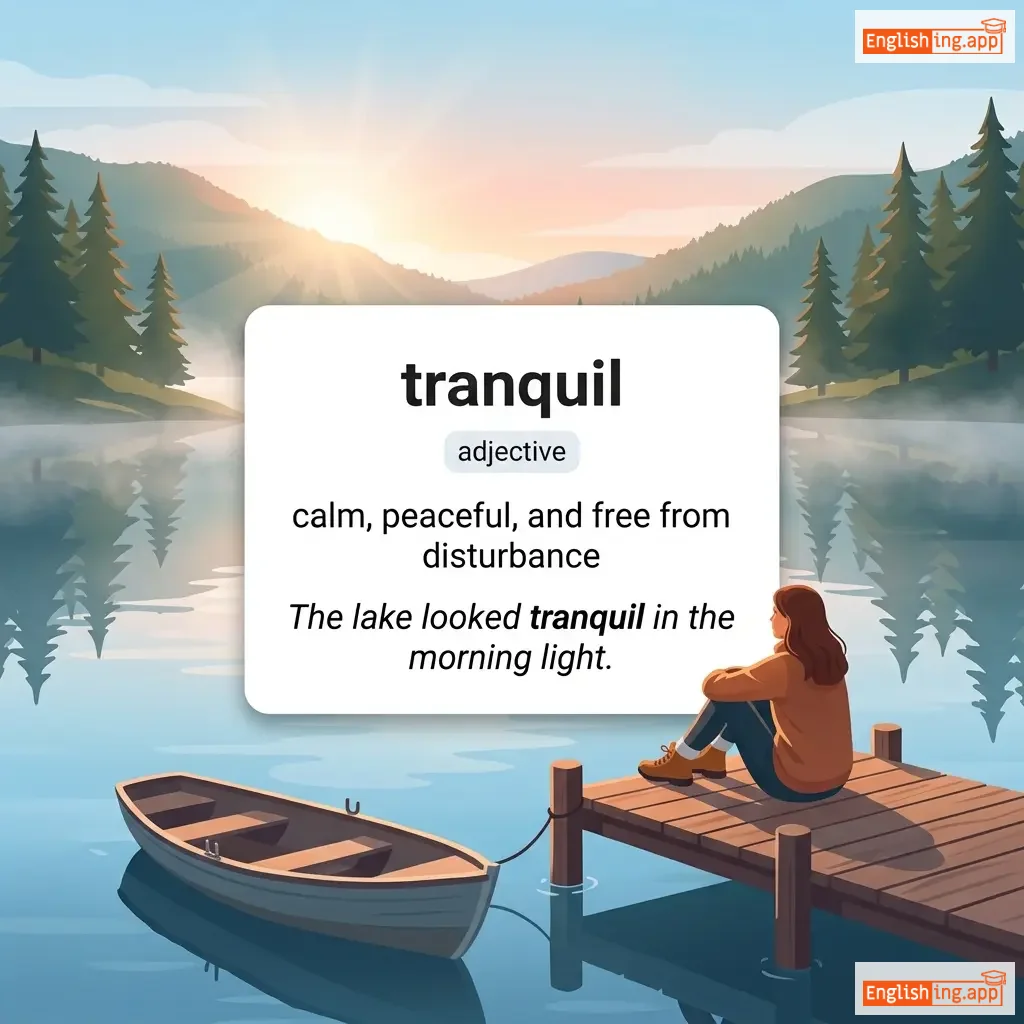
tranquil definition card — visual illustration of the meaning
adjective
/ˈtræŋkwɪl/
平静的 (pingjing de)

calm, peaceful, and free from disturbance

"The lake looked tranquil in the morning light."

"湖面在晨光下显得平静。" (Humiàn zài chéngguāng xià xiǎndé píngjìng.)
noun
/træŋˈkwɪləti/
宁静 (ningjing)

the quality or state of being calm and peaceful

"He enjoyed the tranquility of the countryside."

"他享受着乡村的宁静。" (Ta xiangshou zhe xiangcun de ningjing.)
verb
/ˈtræŋ.kwɪ.laɪz/
镇静 (zhenjing)

to make someone or something calm or less anxious, often by using drugs

"The veterinarian had to tranquilize the tiger before moving it."

"兽医必须在移动老虎之前使其镇静。" (Shòuyī bìxū zài yídòng lǎohǔ zhīqián shǐqí zhènjìng.)
noun
/træŋˈkwɪl.ɪ.ti/
宁静 (ningjing)

the state of being calm, peaceful, and free from disturbance

"She enjoyed the tranquillity of the countryside after years in the city."

"她在城市中待了多年后,享受乡村的宁静。" (Ta zai chengshi zhong dailiao duonian hou, xiangshou xiangcun de ningjing.)
verb
/trænˈzækt/
进行交易 (jixing jiaoyi)

to conduct or carry out business, a deal, or activity

"Customers can transact their banking online."

"客户可以在线进行银行交易。" (Kehu keyi zai xian jixing yinhang jiaoyi.)
noun
/trænˈzækʃən/
交易 (jiaoyi)

an instance of buying or selling something; a business deal or exchange

"Every online transaction is recorded for security purposes."

"每一笔在线交易都会为了安全目的而被记录。" (mei yi bi zaixian jiaoyi dou hui weile anquan mudi er bei jilu.)
adjective
/trænzˈæl.paɪn/
阿尔卑斯山以外 (A'erbei si shan yiwai)

situated beyond or across the Alps, especially from the viewpoint of Italy

"The Romans referred to France as Transalpine Gaul."

"罗马人将法国称为越阿尔卑斯的高卢。" (Luoma ren jiang Faguo cheng wei yue A'erbei si de Gaolu.)
adjective
/ˌtræn.zətˈlæn.tɪk/
跨越大西洋 (kuayue daxiyang)

crossing or spanning the Atlantic Ocean

"They took a transatlantic flight from New York to London."

"他们乘坐了一班从纽约到伦敦的跨大西洋航班。" (Tamen chengzuo le yiban cong Niuyue dao Lundun de kua daxiyang hangban.)
transcend definition card — visual illustration of the meaning
verb
/trænˈsɛnd/
超越 (chaoyue)

to go beyond the limits of something; to surpass or exceed

"Her art transcends traditional boundaries."
"她的艺术超越了传统的界限。" (Ta de yishu chaoyue le chuantong de jiexian.)
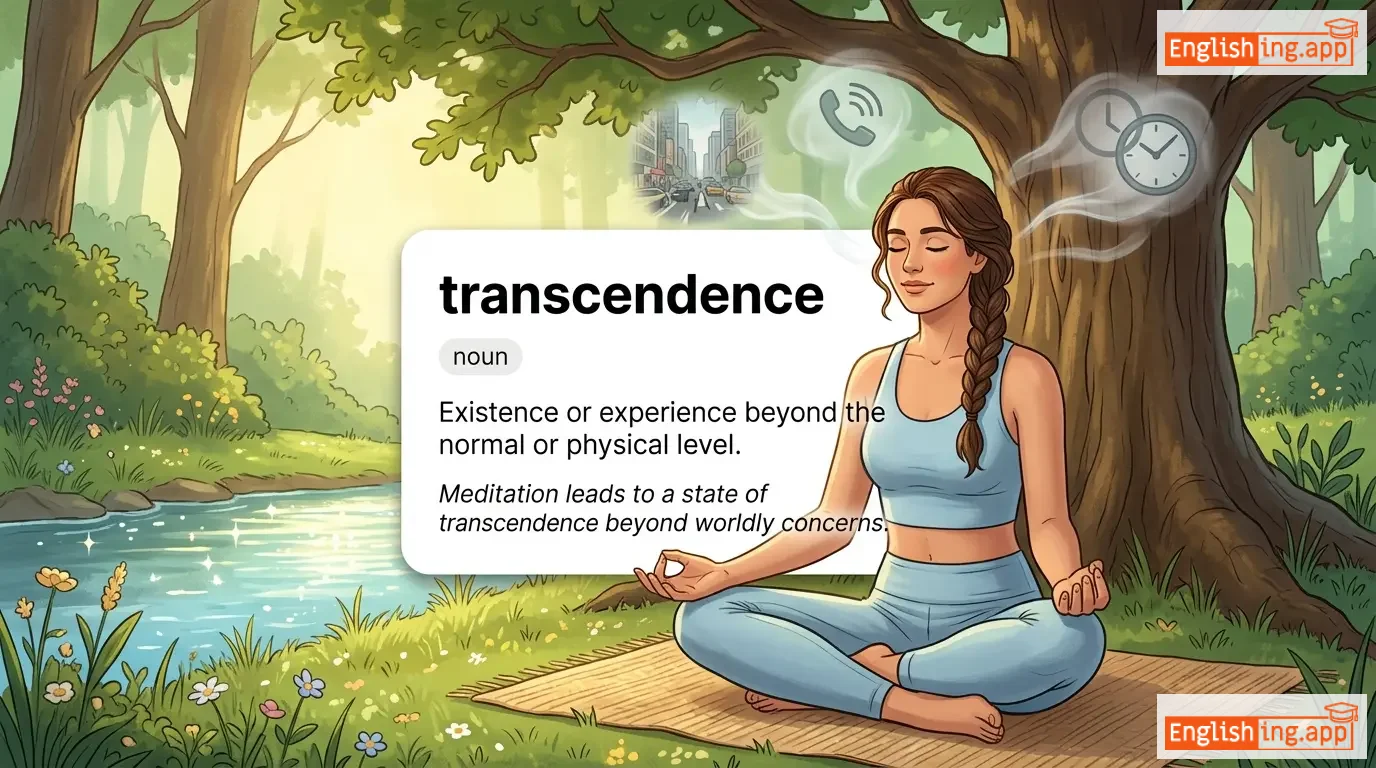
transcendence definition card — visual illustration of the meaning
noun
/trænˈsɛnd.əns/
超越或经验超出常规或物理层面 (chaoyue huo jingyan chaodu changgui huo wulichengmian)

Existence or experience beyond the normal or physical level.

"Meditation leads to a state of transcendence beyond worldly concerns."
"冥想引导人们进入超越尘世烦恼的状态。" (Mingxiang yindaorenmen jinru chaoyue chenshi fannao de zhuangtai.)
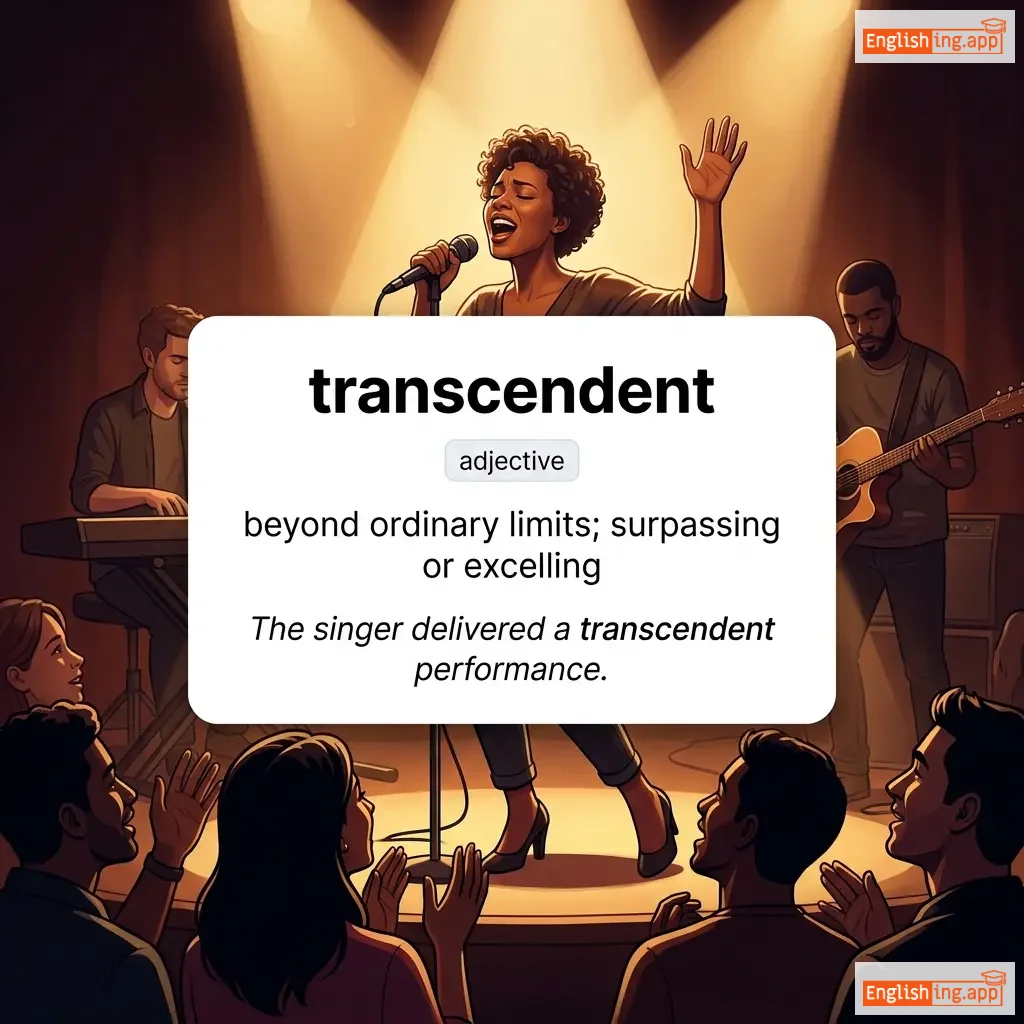
transcendent definition card — visual illustration of the meaning
adjective
/trænˈsɛndənt/
超越的 (chaoyue de)

beyond ordinary limits; surpassing or excelling

"The singer delivered a transcendent performance."

"歌手表演了超越常规的表演。" (Gēshǒu biǎoyǎnle chāoyuè chángguī de biǎoyǎn.)
adjective
/ˌtræn.senˈdɛn.təl/
超越的 (chaoyue de)

relating to the spiritual or non-physical realm; surpassing ordinary experience

"Meditation can lead to transcendental experiences."

"冥想可以引领到超越的体验。" (Míngxiǎng kěyǐ yǐnlǐng dào chāoyuè de tǐyàn.)
verb
/trænˈskraɪb/

to make a written copy of spoken words or notes

"The secretary transcribed the meeting minutes."

noun
/ˈtrænskrɪpt/
转录本 (zhuǎnlùběn)

a written or printed version of material originally presented in another medium

"The professor asked for a transcript of the meeting."

"教授要求提供会议的转录本。" (Jiàoshòu yāoqiú tígōng huìyì de zhuǎnlùběn.)
transfer definition card — visual illustration of the meaning
verb
/ˈtrænsfɜːr/
幸福 (xìngfú)

to move something or someone from one place to another

"He transferred money to his friend's account."

"她无法掩饰自己获得奖项时的幸福。" (Tā wúfǎ yǎnshì zìjǐ huòdé jiǎngxiàng shí de xìngfú.)
adjective
/ˈtrænsfərəbl/
可转让的 (ke zhuanrang de)

Able to be moved, passed, or changed from one person, place, or situation to another.

"The ticket is transferable to another passenger."

"这张票可以转让给另一个乘客。" (Zhe zhang piao keyi zhuanrang gei lingyige chengke.)
noun
/ˌtrænsfəˈriː/
受让人 (shòuràngrén)

A person to whom a right, property, or responsibility is transferred.

"The transferee must sign the contract before taking ownership."

"受让人必须在获得所有权之前签署合同。" (Shòuràngrén bìxū zài huòdé suǒyǒuquán zhīqián qiānshǔ hétóng.)
noun
/ˈtrænsfərəns/
转移 (zhuǎn yí)

The act of moving something from one place, person, or situation to another.

"The transference of knowledge is essential in education."

"知识的转移在教育中至关重要。" (Zhīshì de zhuǎn yí zài jiàoyù zhōng zhìguān zhòngyào.)
noun
/trænsˈfɜːrər/
转让人 (zhuanrangren)

A person who transfers something, such as property, rights, or responsibilities, to another.

"The transferrer is responsible for ensuring the property is legally passed on."

"转让人负责确保财产依法转移。" (Zhuanrangren fuzeren quebao caichan yifa zhuanyi.)
verb
/trænsˈfɪɡjʊər/
转变 (zhuǎnbiàn)

To transform the outward appearance or form, often in a way that elevates or glorifies.

"The artist managed to transfigure simple clay into a beautiful sculpture."

"艺术家成功地将简单的粘土转变成美丽的雕塑。" (Yìshùjiā chénggōng de jiāng jiǎndān de niántǔ zhuǎnbiàn chéng měilì de diāosù.)
transform definition card — visual illustration of the meaning
verb
/trænsˈfɔːrm/
转变 (zhuǎnbiàn)

To change something completely in form, appearance, or character.

"The new policy will transform the healthcare system."
"新政策将转变医疗保健系统。" (Xīn zhèngcè jiāng zhuǎnbiàn yīliáo bǎojiàn xìtǒng.)
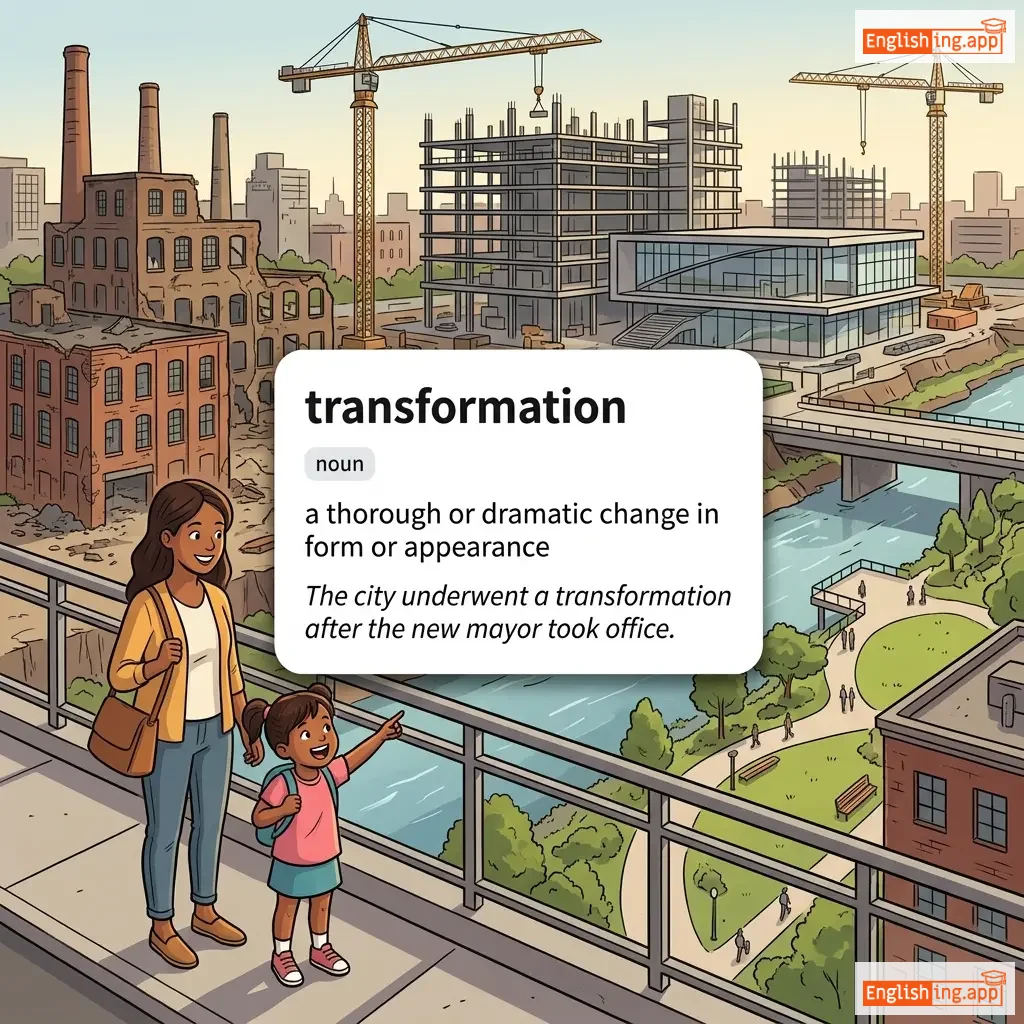
transformation definition card — visual illustration of the meaning
noun
/ˌtrænsfərˈmeɪʃən/
转变 (zhuǎnbiàn)

a thorough or dramatic change in form or appearance

"The city underwent a transformation after the new mayor took office."
"城市在新市长上任后经历了转变。" (Chéngshì zài xīn shìzhǎng shàngrèn hòu jīnglìle zhuǎnbiàn.)
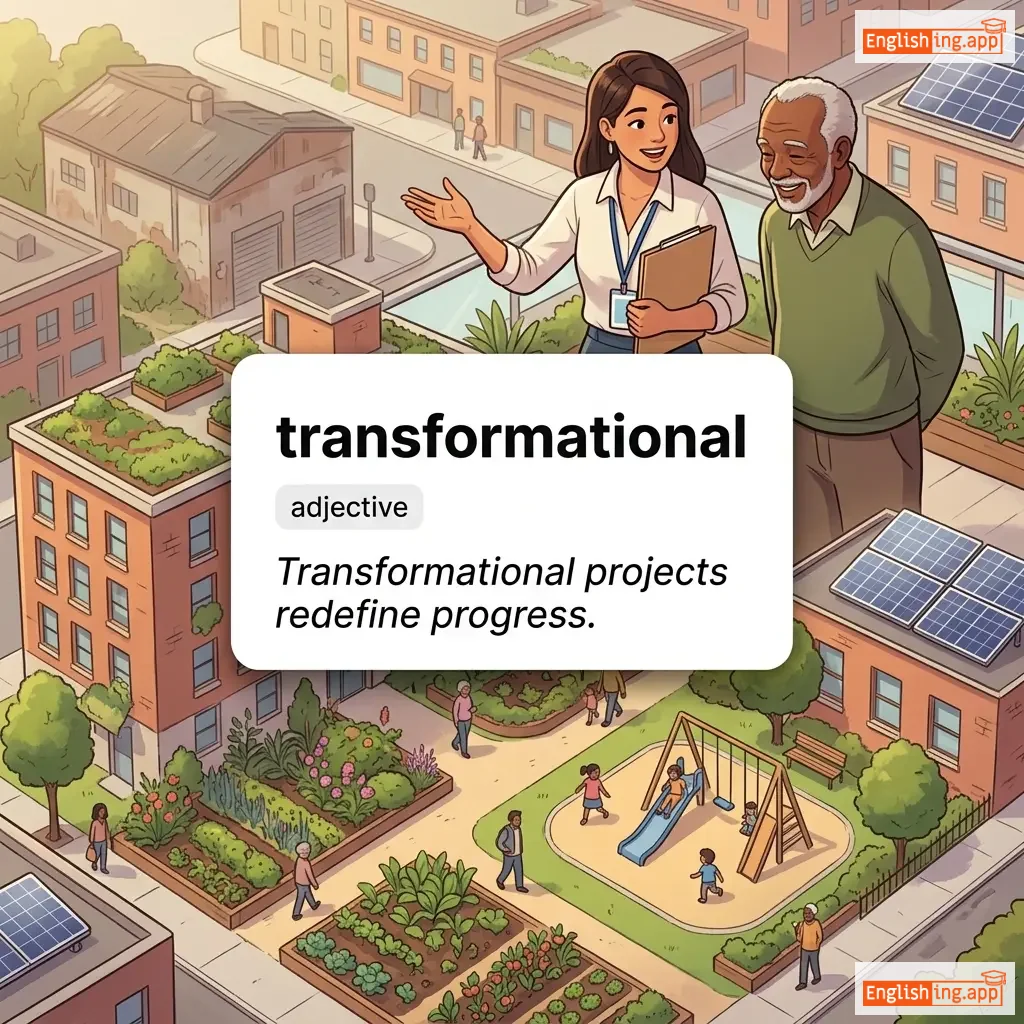
transformational definition card — visual illustration of the meaning
adjective
ˌtræns.fəˈmeɪ.ʃən.əl
变革性 (biàngéxìng)

Causing or able to cause an important and lasting change in someone or something.

"Transformational projects redefine progress."

"变革性项目重新定义了进步。" (Biàngéxìng xiàngmù chóngxīn dìngyìle jìnbù.)
transformative definition card — visual illustration of the meaning
adjective
/trænsˈfɔː.mə.tɪv/
变革性 (biàngéxìng)

Causing a marked change in someone or something.

"His transformative ideas changed the direction of the company."

"他的变革性思想改变了公司的方向。" (Tā de biàngéxìng sīxiǎng gǎibiànle gōngsī de fāngxiàng.)
verb
/trænsˈfjuːz/

to transfer blood or another fluid into a vein or body part; to instill a quality or idea into someone or something

"The doctor had to transfuse blood into the patient after the surgery."

adjective
/trænsˈfjuːzəbl̩/
可输血的 (ke shu xue de)

capable of being transfused, especially referring to blood or fluids

"Only transfusible blood types are used in the hospital."

"只有可输血的血型才会在医院使用。" (Zhi you ke shuxue de xuexing cai hui zai yiyuan shiyong.)
noun
/trænsˈfjuːʒən/
输血 (shuxue)

the process of transferring blood or another fluid into a person's vein

"The patient received a blood transfusion after the accident."

"事故后病人接受了输血。" (Shigu hou bingren jieshou le shuxue.)
verb
/trænsˈɡrɛs/

to go beyond the limits of a moral law, command, or boundary; to sin

"He apologized after realizing he had transgressed the community's rules."
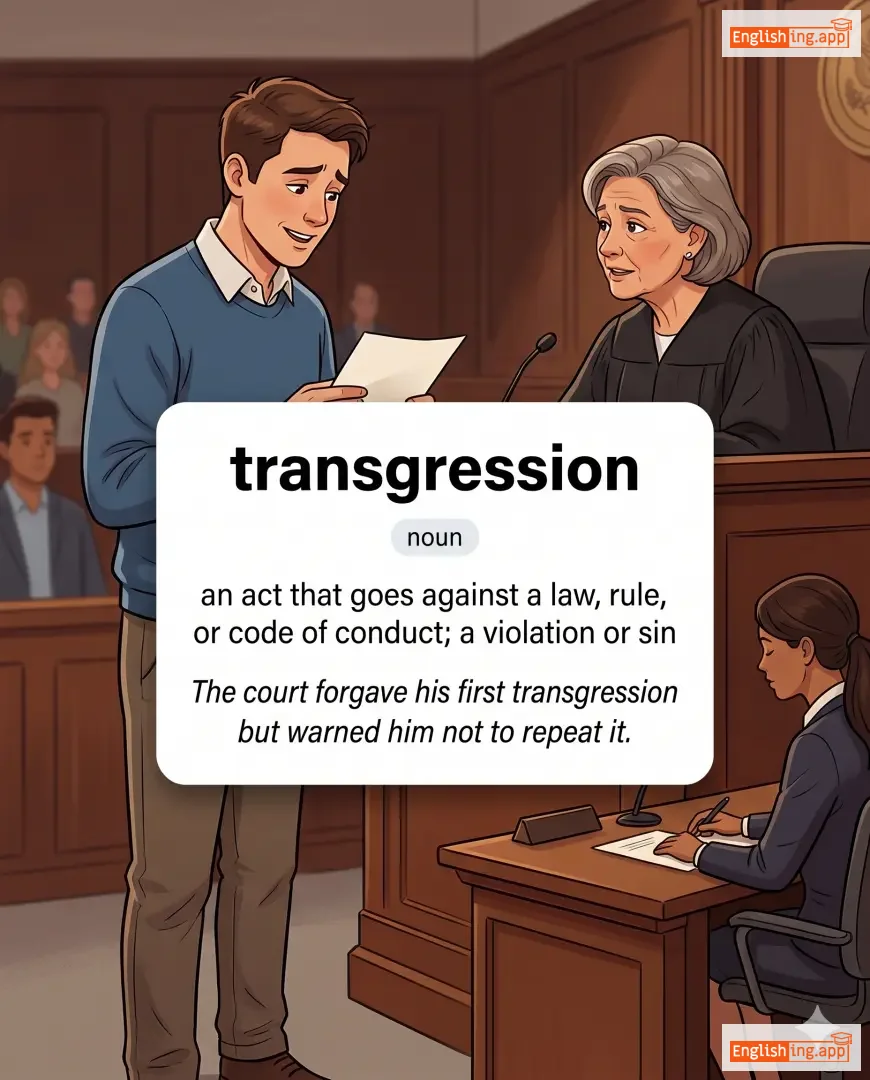
transgression definition card — visual illustration of the meaning
noun
/trænsˈɡrɛʃən/
违反, 罪行 (wei fan, zui xing)

an act that goes against a law, rule, or code of conduct; a violation or sin

"The court forgave his first transgression but warned him not to repeat it."
"法院原谅了他的第一次违反行为,但警告他不要重复。" (Fa yuan yuan liang le ta de di yi ci wei fan xing wei, dan jing gao ta bu yao chong fu.)
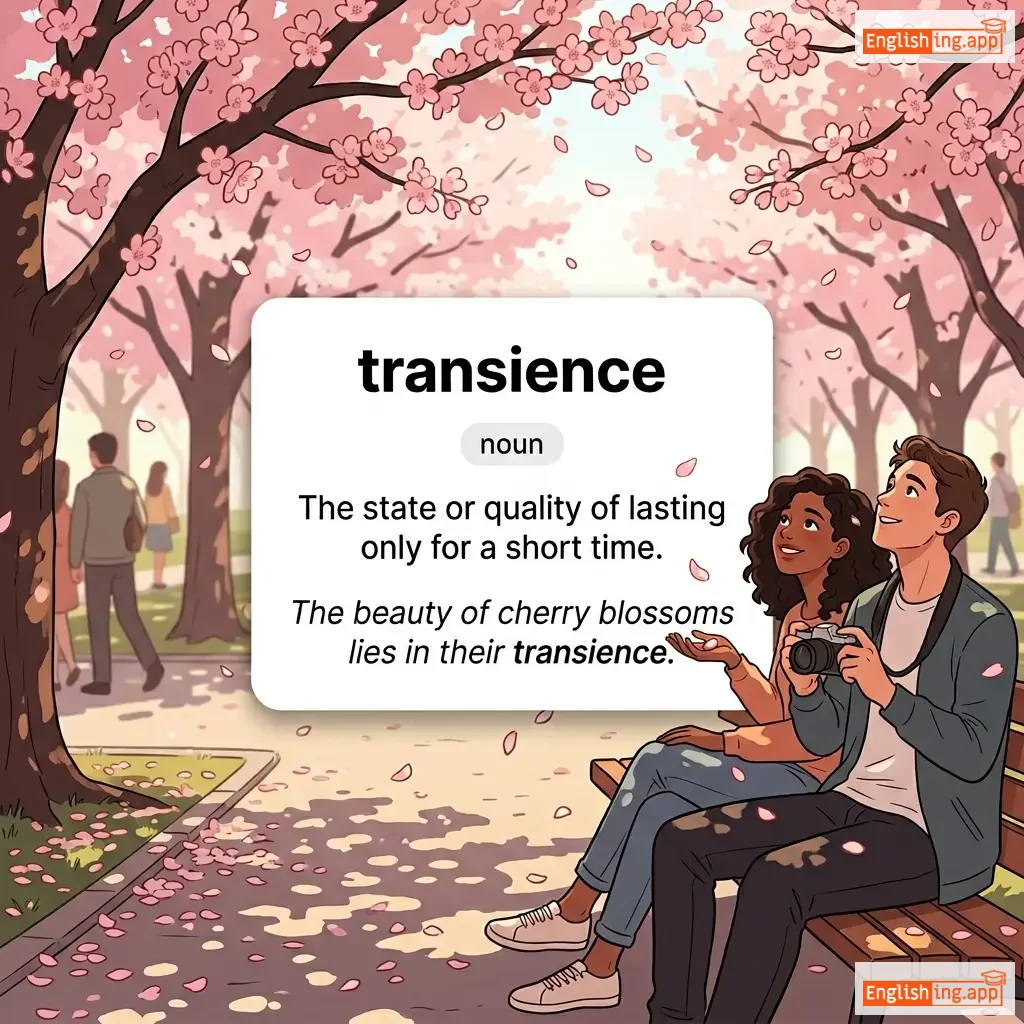
transience definition card — visual illustration of the meaning
noun
/ˈtrænziəns/
短暂 (duǎnzàn)

The state or quality of lasting only for a short time.

"The beauty of cherry blossoms lies in their transience."

"樱花的美丽在于它们的短暂。" (Yīnghuā de měilì zàiyú tāmen de duǎnzàn.)