英语词汇词典 | 单词含义、定义和示例
Showing the weaknesses of old age, especially mental decline.
"The old man became senile and forgot familiar faces."
The state of being old and showing the weaknesses of age, especially mental decline.
"His forgetfulness was attributed to senility."
having a higher rank or status; older or more experienced
"He is the senior manager in the department."
A physical feeling or a strong reaction of excitement and interest.
"The singer became a sensation overnight."
Causing great public interest and excitement; outstanding or impressive.
"The team had a sensational victory in the finals."
A faculty by which the body perceives external stimuli; or to perceive something without being told.
"She had a strong sense of responsibility."
The ability to appreciate and respond to complex emotional or aesthetic influences; sensitivity.
"Her artistic sensibility impressed everyone."
having or showing good sense; practical and reasonable
"It would be sensible to take an umbrella because it might rain."
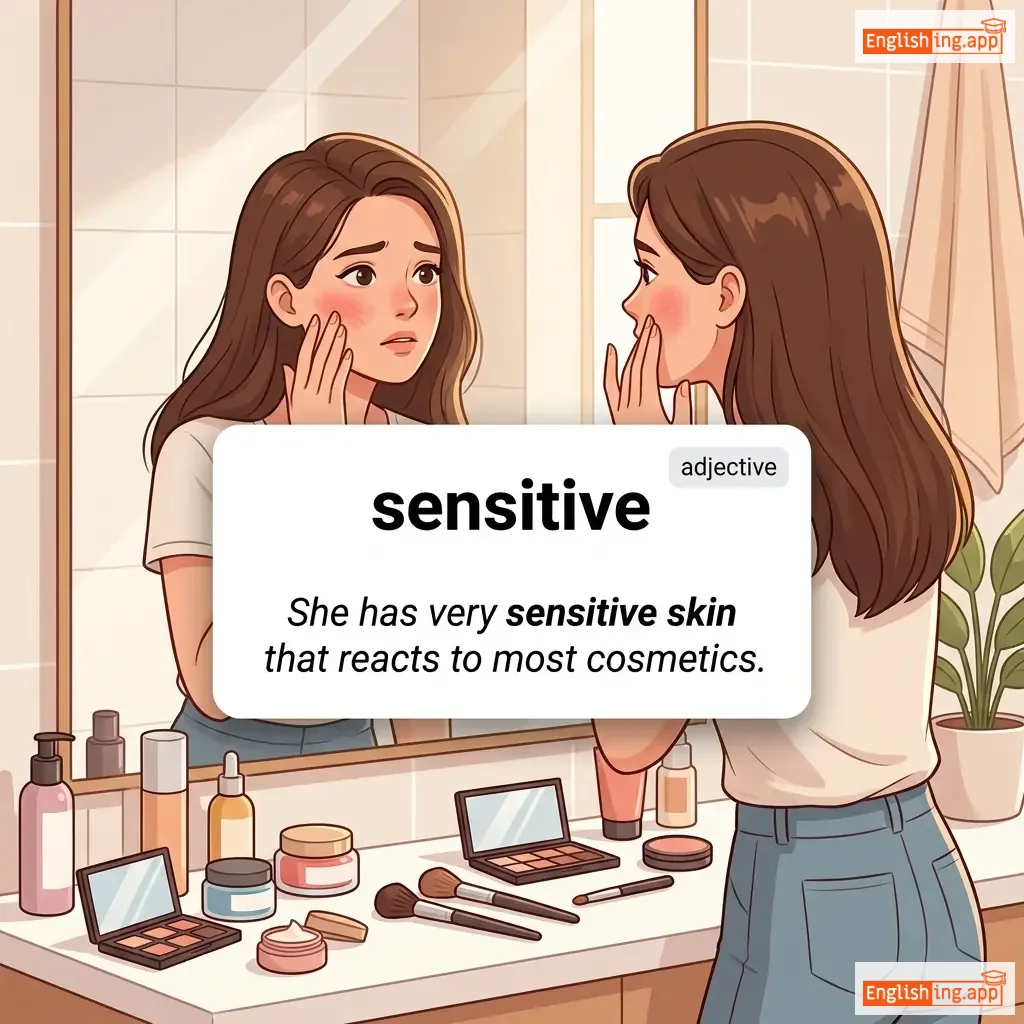
Quick to detect or respond to slight changes, signals, or influences; easily affected emotionally or physically.
"She has very sensitive skin that reacts to most cosmetics."
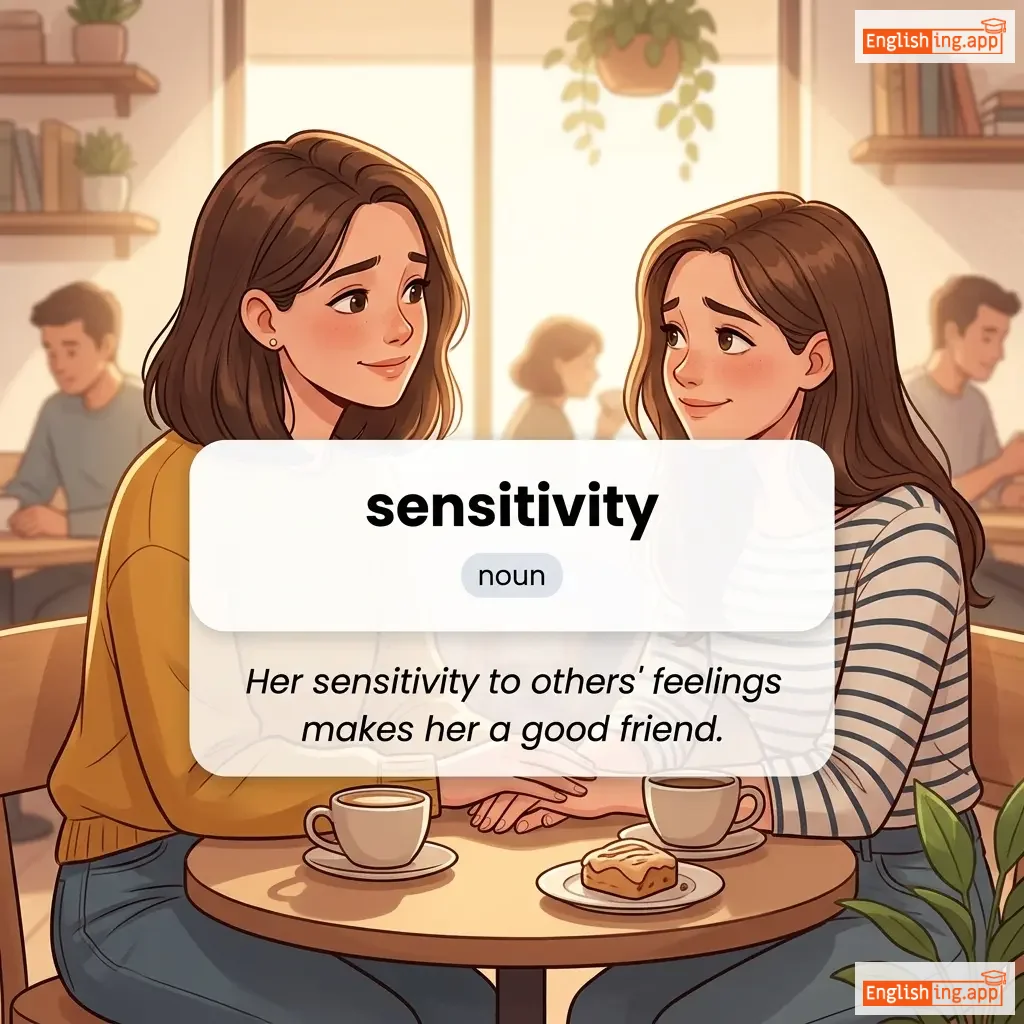
the quality of being sensitive; ability to detect or respond to slight changes or emotions
"Her sensitivity to others' feelings makes her a good friend."
The process of becoming sensitive to a substance, situation, or influence.
"The doctor warned about the sensitization caused by repeated exposure to chemicals."
a device that detects or measures a physical property and records, indicates, or responds to it
"The motion sensor turned on the light automatically."
The part of the brain or mind concerned with the reception and interpretation of sensory stimuli.
"The patient’s sensorium was clouded after the accident."

Related to the five human senses (sight, hearing, taste, touch, smell).
"Sensory feedback enhances the VR experience."
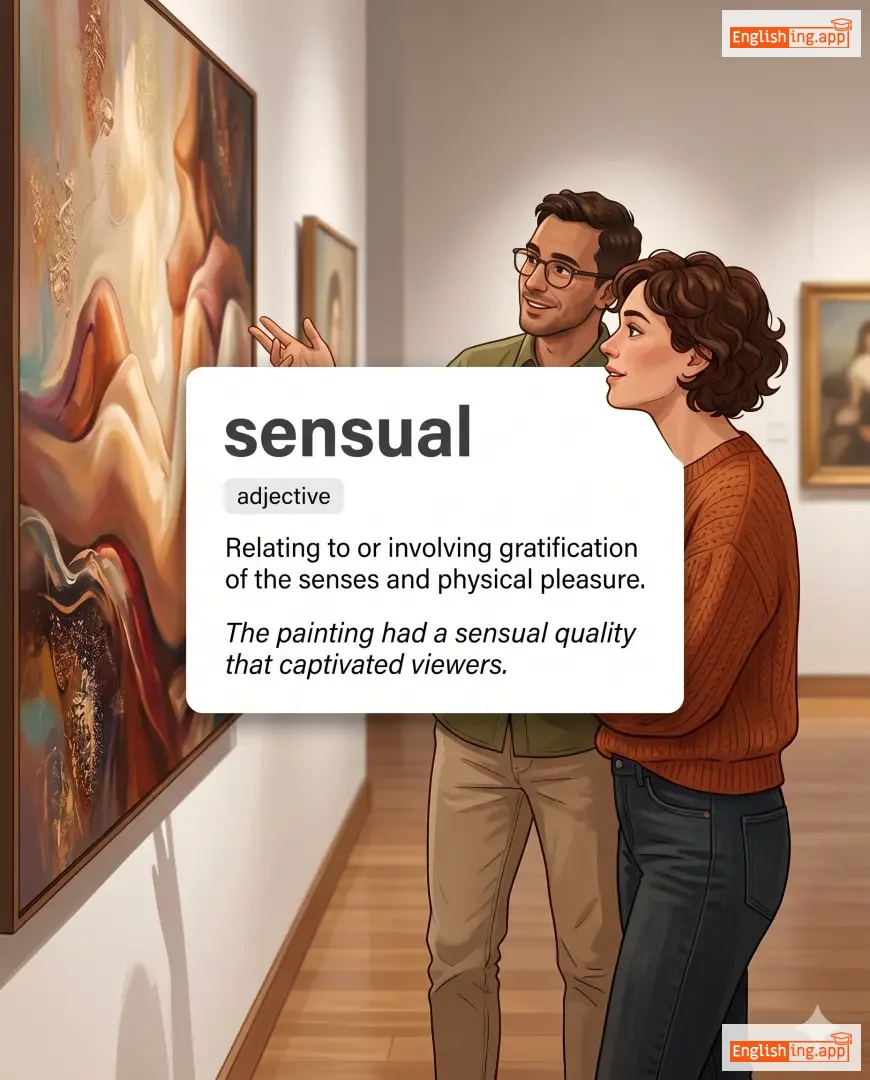
Relating to or involving gratification of the senses and physical pleasure.
"The painting had a sensual quality that captivated viewers."
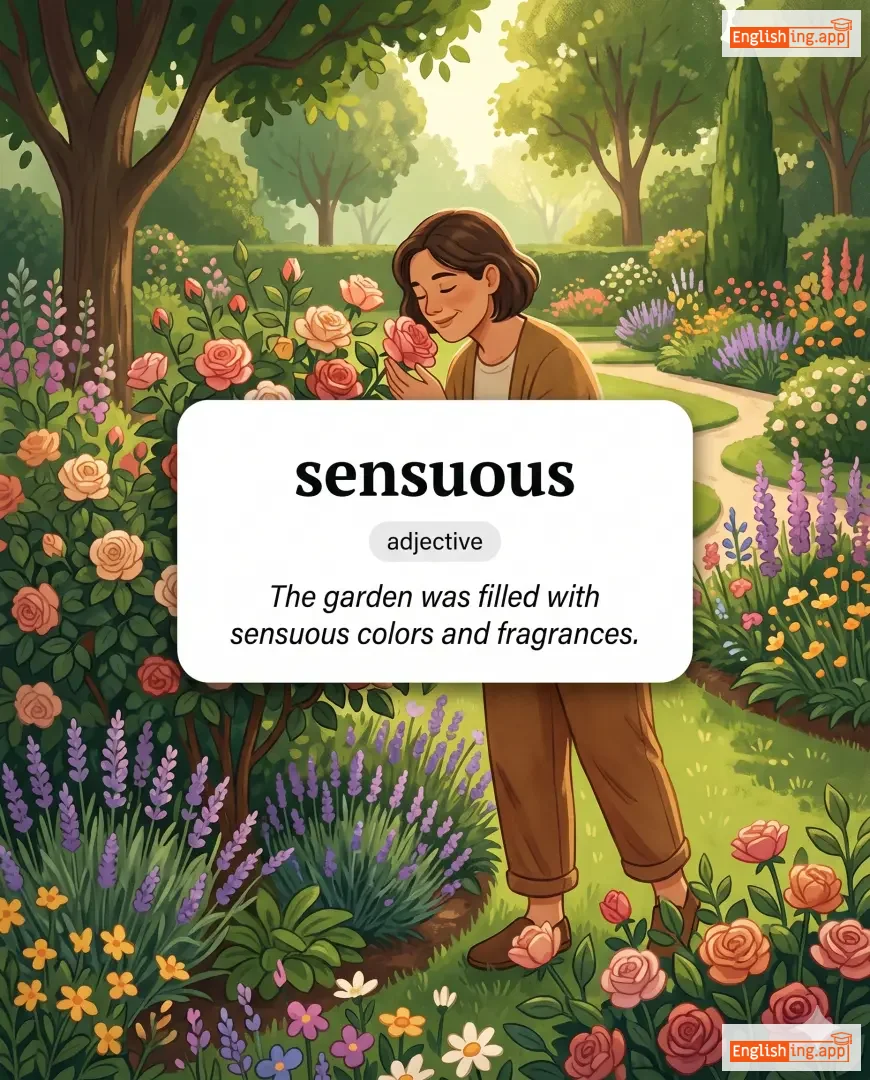
Relating to or affecting the senses rather than the intellect; pleasing to the senses.
"The garden was filled with sensuous colors and fragrances."
A set of words that expresses a complete thought; or a punishment given by a court of law.
"The judge gave him a five-year prison sentence."
Given to moralizing in a pompous or affected manner.
"His sententious remarks annoyed the audience."
The capacity to feel, perceive, or experience subjectively.
"Many argue that animals possess sentience."
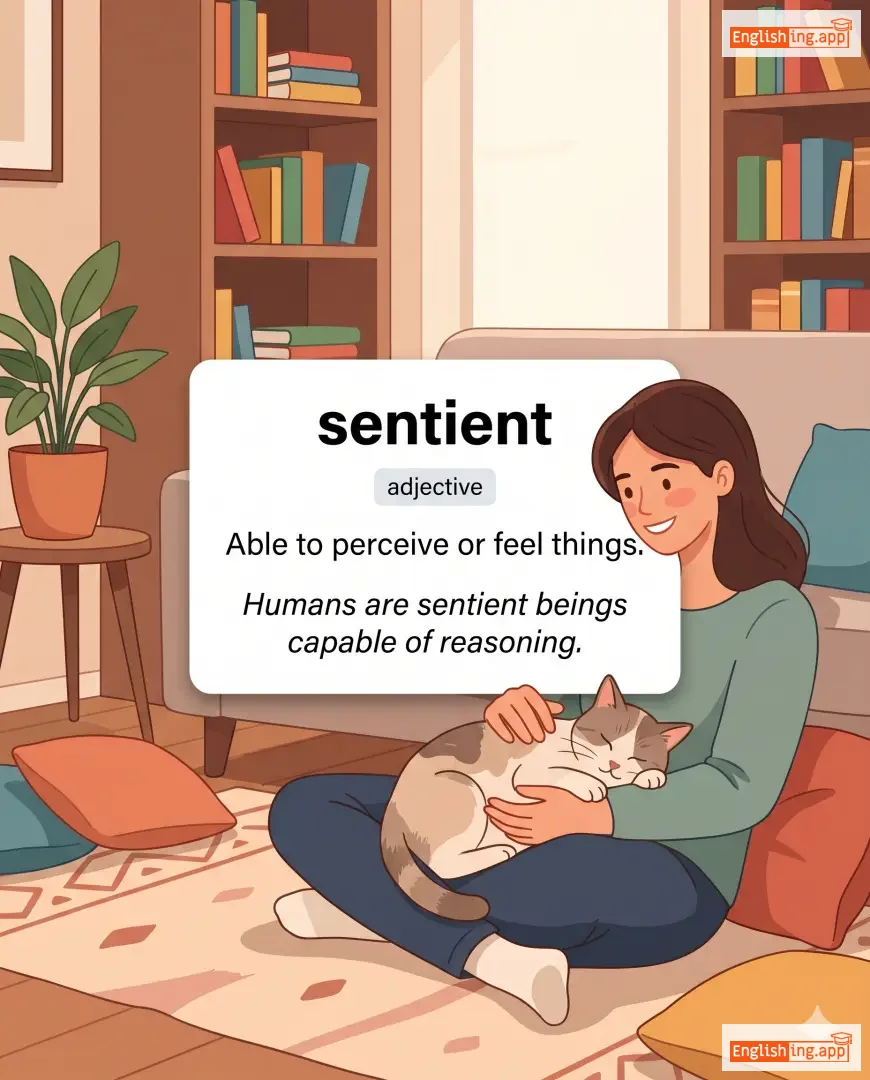
Able to perceive or feel things.
"Humans are sentient beings capable of reasoning."
a view or opinion that is based on emotion rather than reason
"Public sentiment was against the new law."
Having or showing tender, emotional feelings, often excessively.
"She kept the old letters for sentimental reasons."
A soldier or guard whose job is to stand and keep watch.
"A sentinel stood at the entrance of the camp."
Capable of being separated or divided.
"The two issues are separable and should be discussed independently."
To cause to move or be apart; to divide into distinct elements.
"The teacher separated the students into groups."
divided or disconnected from something else; not together
"They have been living in separated houses since the divorce."
in a way that is apart or individually; not together
"They decided to travel separately to the conference."
the act of moving or being moved apart; a division or disconnection
"The separation of the two friends was difficult for both of them."
A person who supports the separation of a group from a larger body, often for political or cultural independence.
"The separatist group demanded independence from the central government."
The ninth month of the year in the Gregorian calendar
"My birthday is in September, and I always celebrate it with friends."
Occurring every seven years.
"The festival is a septennial tradition in the village."
Infected with harmful bacteria; relating to or causing infection.
"The doctor treated the patient's septic wound immediately."
A small room or monument, cut in rock or built of stone, in which a dead person is buried.
"The ancient king was laid to rest in a grand sepulcher."
Relating to a tomb or burial; gloomy, dismal.
"The abandoned house had a sepulchral silence about it."
the act of burying a dead body; burial; a grave or tomb
"The ancient king's sepulture was discovered by archaeologists."
Lacking independence of thought; blindly following.
"The sequacious students never questioned their teacher's opinions."
A published, broadcast, or recorded work that continues the story or develops the theme of an earlier one.
"The movie's sequel was even more successful than the original."
A condition that is the consequence of a previous disease or injury.
"Lung scarring can be a sequela of severe pneumonia."
A particular order in which related things follow each other.
"The magician asked us to remember the sequence of cards."
Following in order or as a result.
"The sequent events changed the course of history."

To isolate or hide away; to take possession of assets until a debt has been paid.
"The jury was sequestered during the high-profile trial."
To take legal possession of assets until a debt is paid or disputes are resolved.
"The court decided to sequestrate the company's property."
An angelic being associated with light and purity, often depicted as a high-ranking angel in Christian theology.
"The stained-glass window depicted a seraph with outstretched wings."
Of or like a seraph; angelic, pure, and blissful.
"She gave him a seraphic smile that calmed his fears."
Occurring or discovered by chance in a happy or beneficial way.
"Their meeting at the café was purely serendipitous."
The occurrence of events by chance in a happy or beneficial way.
"Finding that old photo album was pure serendipity."
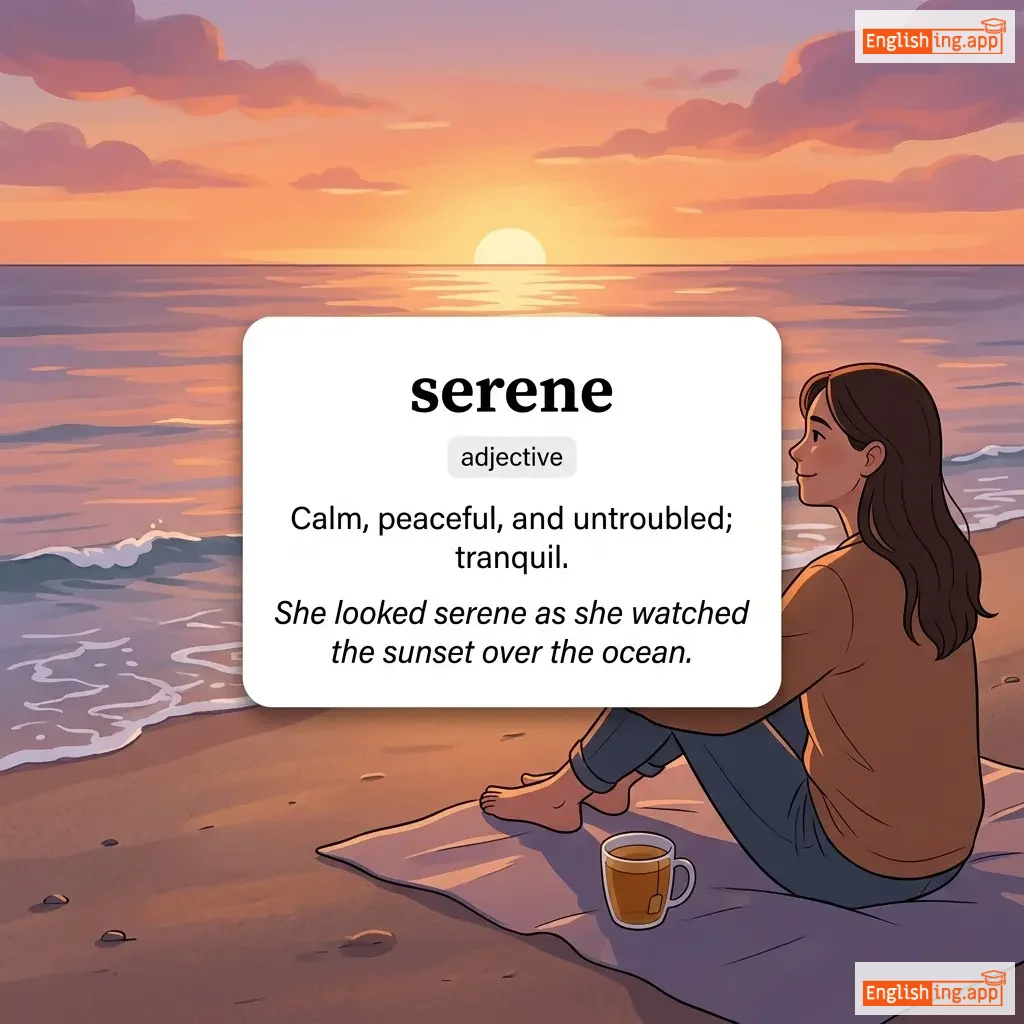
Calm, peaceful, and untroubled; tranquil.
"She looked serene as she watched the sunset over the ocean."
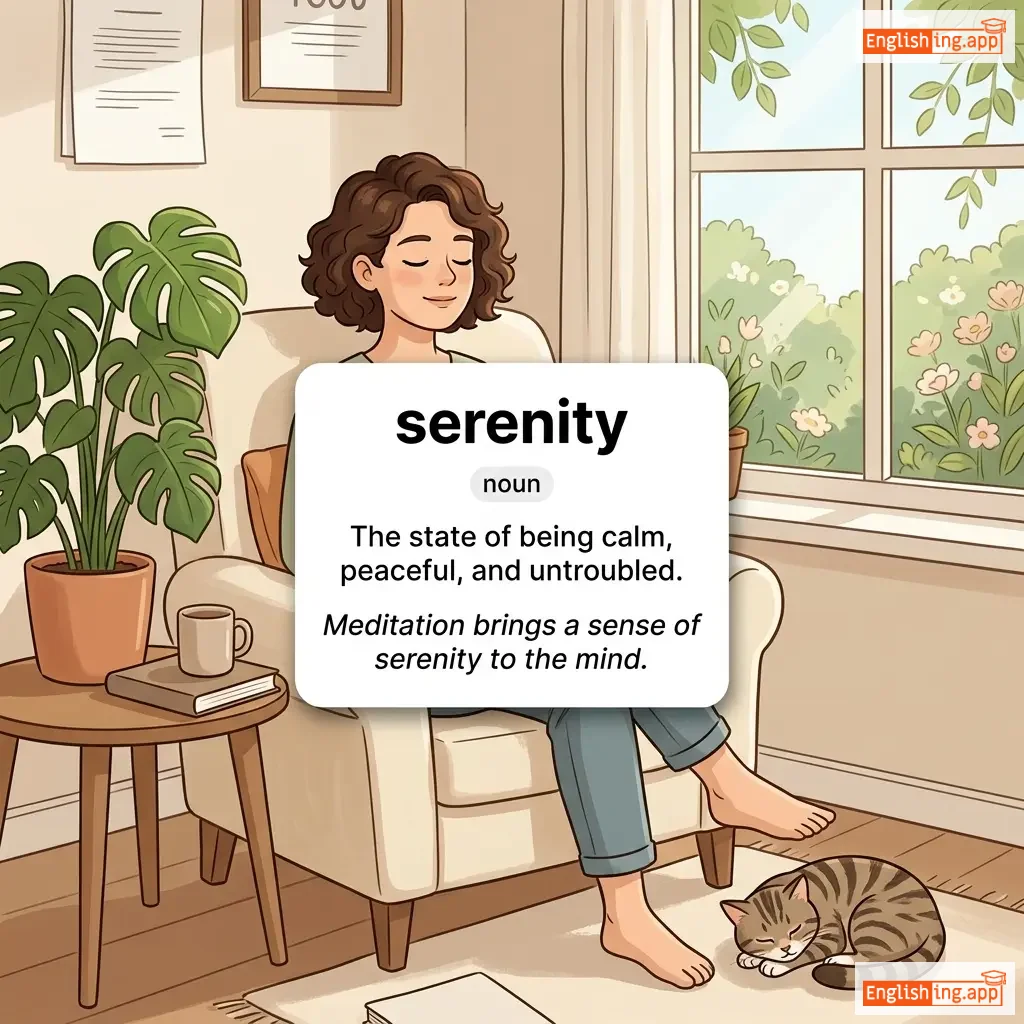
The state of being calm, peaceful, and untroubled.
"Meditation brings a sense of serenity to the mind."
The status or condition of being a serf, bound to work for a lord.
"Many peasants in medieval Europe lived under serfdom."

