词汇表

英语词汇词典 | 单词含义、定义和示例

verb/noun
/skaʊl/
皱眉 (zhòu méi)

To frown in an angry or bad-tempered way.

"She scowled when she heard the unfair remark."

"她听到不公正的评论时,皱起了眉头。" (Tā tīng dào bù gōng zhèng de píng lùn shí, zhòu qǐ le méi tóu.)
verb
/ˈskræmbəl/

to move or climb quickly using hands and feet; to mix or arrange in a hurried way

"The kids scrambled up the hill to catch the kite."

noun/verb
/skræp/
碎片 / 丢弃 (suìpiàn / diūqì)

A small piece of something; to discard or get rid of something.

"He used a scrap of paper to jot down the number."

"他用一小片纸写下了那个号码。" (Tā yòng yī xiǎo piàn zhǐ xiě xiàle nàgè hàomǎ.)
verb
/skreɪp/
擦, 刮 (ca, gua)

to remove or damage the surface of something by rubbing or scratching; to collect something by effort

"He scraped his knee while playing football."

"他在踢足球时擦伤了膝盖。" (Ta zai ti zuqiu shi ca shang le xigai.)
adjective
/ˈskræpi/
好斗 / 杂乱 (hǎo dòu / zá luàn)

Determined and willing to fight or argue; also messy or disorganized.

"Despite being small, he was a scrappy fighter."

"尽管身材小,他却是一个好斗的战士。" (Jǐnguǎn shēncái xiǎo, tā què shì yīgè hǎo dòu de zhànshì.)
noun (plural)
/skræps/
剩菜 (shèng cài)

Small pieces left over from something; also small fights or quarrels.

"The dog ate the scraps from the table."

"狗吃了桌子上的剩菜。" (Gǒu chīle zhuōzi shàng de shèng cài.)
verb
/skrætʃ/
幸福 (xìng fú)

to rub a surface or skin with something sharp or rough, often to relieve itching

"The cat scratched the door to be let in."

"当她收到奖项时,她无法掩饰自己的幸福。" (dāng tā shōu dào jiǎng xiàng shí, tā wú fǎ yǎn shì zì jǐ de xìng fú.)
verb
/skrɔːl/
匆忙地写 (cong mang de xie)

to write or draw something quickly and carelessly, making it hard to read

"He scrawled his signature at the bottom of the page."

"他在页面底部匆忙签上了自己的名字。" (Ta zai ye mian di bu cong mang qian shang le zi ji de ming zi.)
adjective
/ˈskrɔːni/
瘦弱 (shòuruò)

very thin and bony, often looking unhealthy

"The scrawny boy could barely lift the heavy bag."

"那个瘦弱的男孩几乎无法提起沉重的包。" (Nàgè shòuruò de nánhái jīhū wúfǎ tíqǐ chénzhòng de bāo.)
verb
/skriːm/
尖叫 (jian jiao)

to make a loud, high-pitched sound, usually because of fear, pain, or excitement

"She screamed when she saw the spider."

"她看到蜘蛛时尖叫了。" (Ta kan dao zhi zhu shi jian jiao le.)
verb
/skriːtʃ/
发出尖锐的声音 (fāchū jiānruì de shēngyīn)

to make a loud, high-pitched and unpleasant sound

"The car screeched to a halt."

"那辆车发出了刺耳的声音并猛地停下。" (Nà liàng chē fāchū le cì ěr de shēngyīn bìng měng de tíng xià.)
noun
/skriːd/
冗长而乏味的文章 (rǒngcháng ér fáwèi de wénzhāng)

a long, tedious piece of writing or speech; also a layer of material like cement spread on a surface

"He delivered a long screed against corruption."

"他发表了长篇的关于腐败的演讲。" (Tā fābiǎo le chángpiān de guānyú fǔbài de yǎnjiǎng.)
noun
/skriːn/
屏幕 (pingmu)

a flat surface on which images or data are displayed

"The movie was displayed on a large screen."

"电影在大屏幕上放映。" (Dianying zai da pingmu shang fangying.)
noun
/ˈskriːnɪŋ/
筛查或放映 (shaicha huo fangying)

the act of examining or testing people to detect disease or evaluate suitability; a showing of a movie or program

"The hospital offered free health screening for all employees."

"医院为所有员工提供了免费的健康筛查。" (Yīyuàn wèi suǒyǒu yuángōng tígōngle miǎnfèi de jiànkāng shāichá.)
noun, verb
/skruː/
带螺旋的金属紧固件;用螺丝把东西固定或拧紧 (dai luoxuan de jinshu jingu jian; yong luosi ba dongxi guding huo ningjin)

a metal fastener with a helical ridge; to fasten or tighten something with a screw

"He screwed the shelf to the wall tightly."

"他把架子牢牢地固定在墙上。" (Ta ba jiazi laolao de guding zai qiang shang.)
verb
/ˈskrɪbəl/
乱涂乱画 (luàn tú luàn huà)

to write or draw carelessly or quickly

"The child scribbled all over the wall."

"孩子在墙上乱涂乱画。" (Háizi zài qiáng shàng luàn tú luàn huà.)
noun
/skraɪb/
抄写员 (chāo xiě yuán)

a person who writes documents, especially in ancient times; a professional copyist

"In ancient Egypt, scribes recorded important events."

"在古埃及,抄写员记录了重要的事件。" (Zài gǔ āijí, chāo xiě yuán jìlùle zhòngyào de shìjiàn.)
noun
/ˈskrɪmɪdʒ/
练习赛 (liànxí sài)

A practice game or informal match, often in sports, especially football.

"The team had a scrimmage before the official season started."

"在正式赛季开始之前,球队进行了一场练习赛。" (Zài zhèngshì sàijì kāishǐ zhīqián, qiúduì jìnxíngle yī chǎng liànxí sài.)
noun
/skrɪpt/
剧本 (juben)

The written text of a play, film, or broadcast; handwriting style.

"The actor memorized his lines from the script."

"演员从剧本中背诵了台词。" (Yanyuan cong juben zhong beisong le taici.)
adjective
/ˈskrɪptʃərəl/
圣经的 (shèngjīng de)

Relating to or contained in the scriptures or holy writings.

"The priest gave a scriptural reference during the sermon."
"牧师在布道中引用了圣经的参考。" (Mùshī zài bùdào zhōng yǐnyòngle shèngjīng de cānkǎo.)
scrolling definition card — visual illustration of the meaning
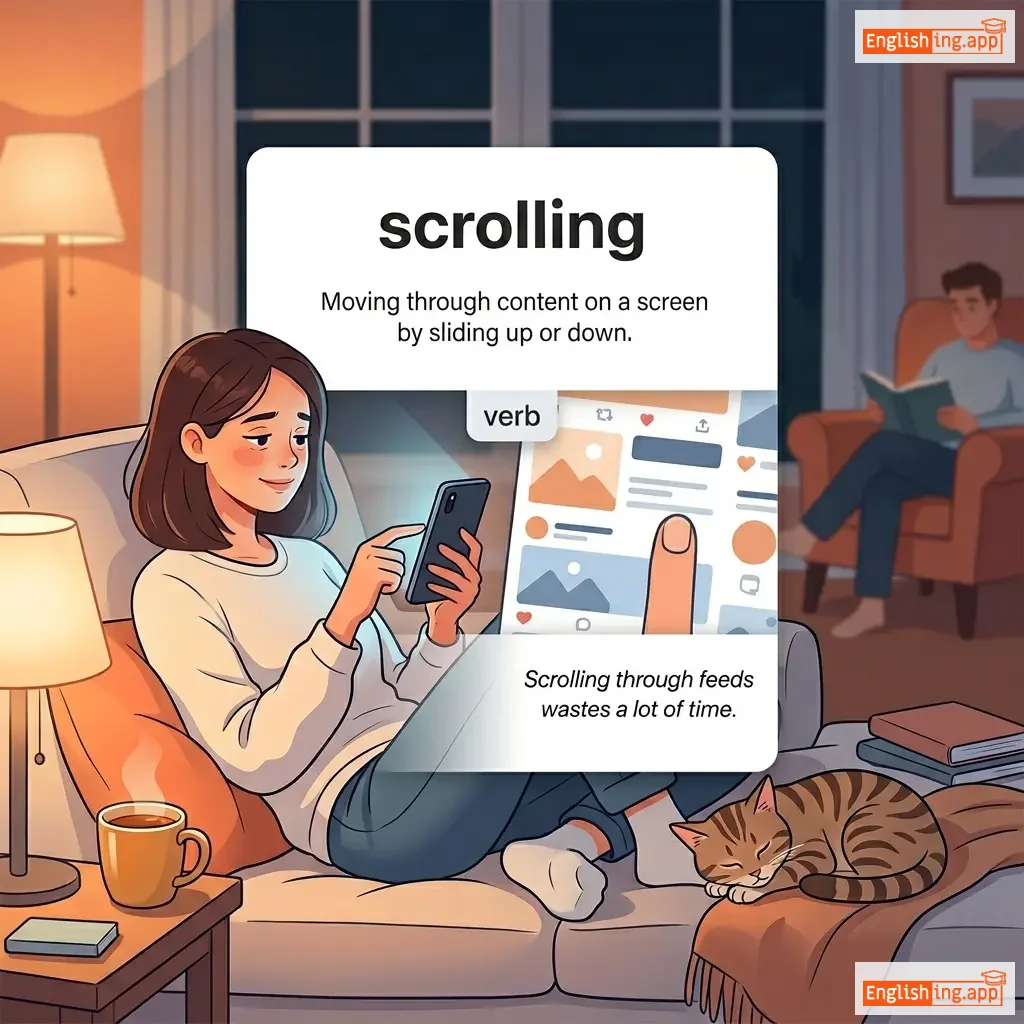
verb
ˈskroʊlɪŋ
滚动 (gundong)

Moving text or graphics up or down on a computer screen to view different parts of them; continuously browsing through content.

"Scrolling through feeds wastes a lot of time."

"在信息流中滚动浪费了很多时间。" (Zai xinxi liu zhong gundong langfei le henduo shijian.)
scrolling addiction definition card — visual illustration of the meaning
noun
স্ক্রোলিং অ্যাডিকশন
滚动成瘾 (gǔn dòng chéng yǐn)

A compulsive need to continuously scroll through content on digital devices, particularly smartphones and social media platforms.

"Scrolling addiction is a growing concern among smartphone users."
"滚动成瘾在智能手机用户中是一个日益严重的问题。" (Gǔn dòng chéng yǐn zài zhìnéng shǒujī yònghù zhōng shì yīgè rìyì yánzhòng de wèntí.)
scrub definition card — visual illustration of the meaning
verb
/skrʌb/
擦拭 (ca shi)

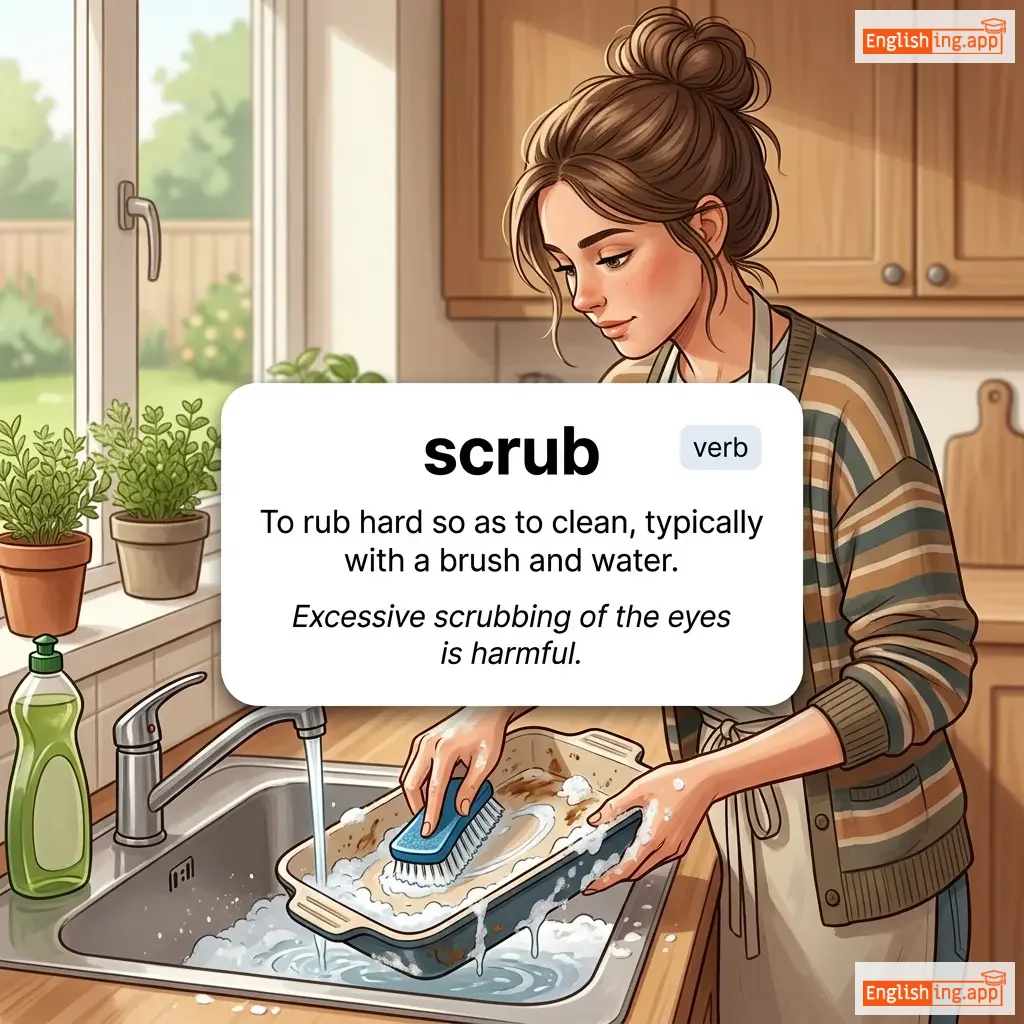
To rub hard so as to clean, typically with a brush and water.

"Excessive scrubbing of the eyes is harmful."

"过度擦眼睛对身体有害。" (Guoduo ca yanjing dui shenti youhai.)
adjective
/ˈskrʌfi/
邋遢的或不整洁的外观;脏的和磨损的 (lātā de huò bù zhěngjié de wàiguān; zāng de hé móshā de)

untidy or unkempt in appearance; shabby and worn

"The scruffy old dog wandered through the streets looking for food."

"那只邋遢的老狗在街上徘徊,寻找食物。" (Nà zhī lātā de lǎo gǒu zài jiē shàng pái huí, xún zhǎo shí wù.)
adjective
/ˈskrʌmpʃəs/
美味的 (meiwei de)

extremely tasty or delicious

"She baked a scrumptious chocolate cake for the party."

"她为派对烤了一个美味的巧克力蛋糕。" (Ta wei paidui kaole yige meiwei de qiaokeli dangao.)
noun
/ˈskruːpəl/
顾忌 (gùjì)

A moral or ethical consideration that restrains actions.

"He had no scruples about lying to get ahead."
"他在为了进步而撒谎时没有任何顾忌。" (Tā zài wèile jìnbù ér sāhuǎng shí méiyǒu rènhé gùjì.)
scrupulous definition card — visual illustration of the meaning
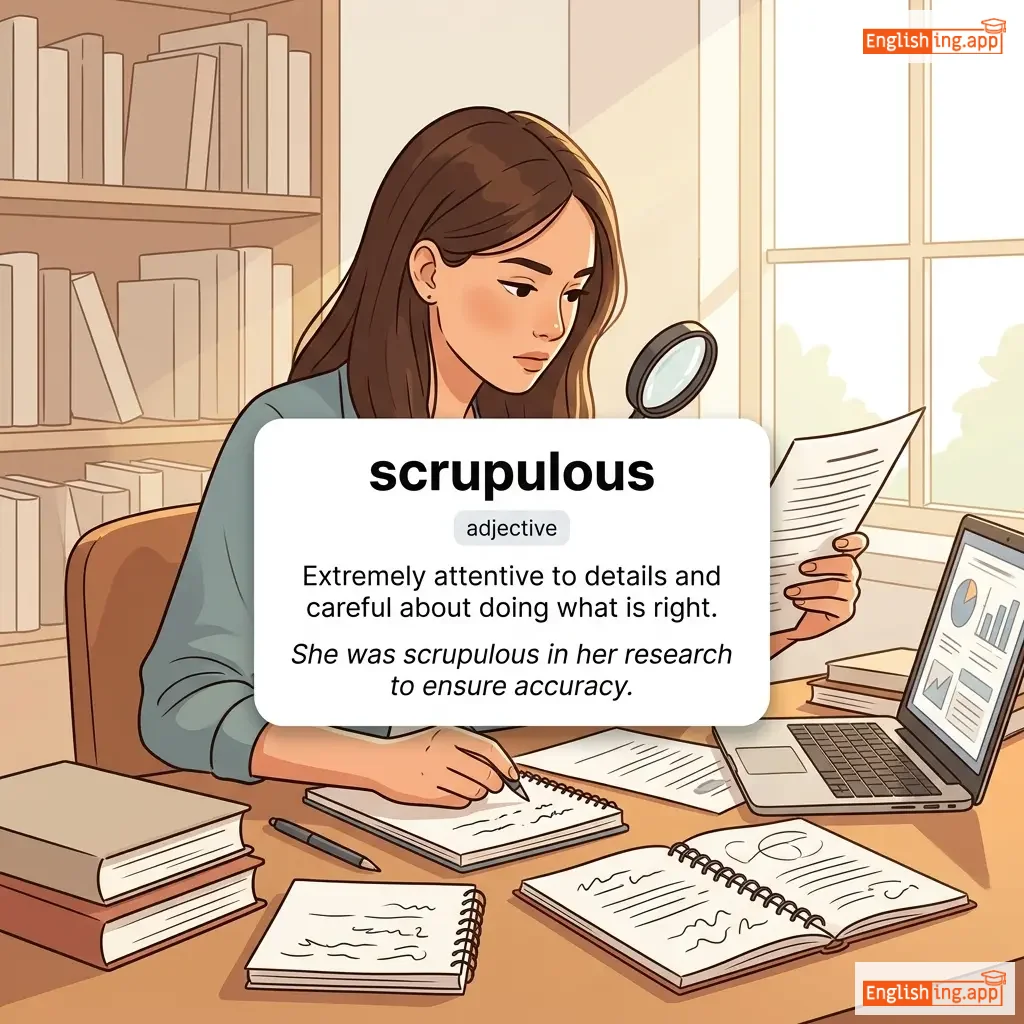
adjective
/ˈskruːpjələs/
一丝不苟 (yī sī bù gǒu)

Extremely attentive to details and careful about doing what is right.

"She was scrupulous in her research to ensure accuracy."
"她在研究中一丝不苟,以确保准确性。" (Ta zai yanjiu zhong yī sī bù gǒu, yǐ quèbǎo zhǔnquè xìng.)
scrutinize definition card — visual illustration of the meaning
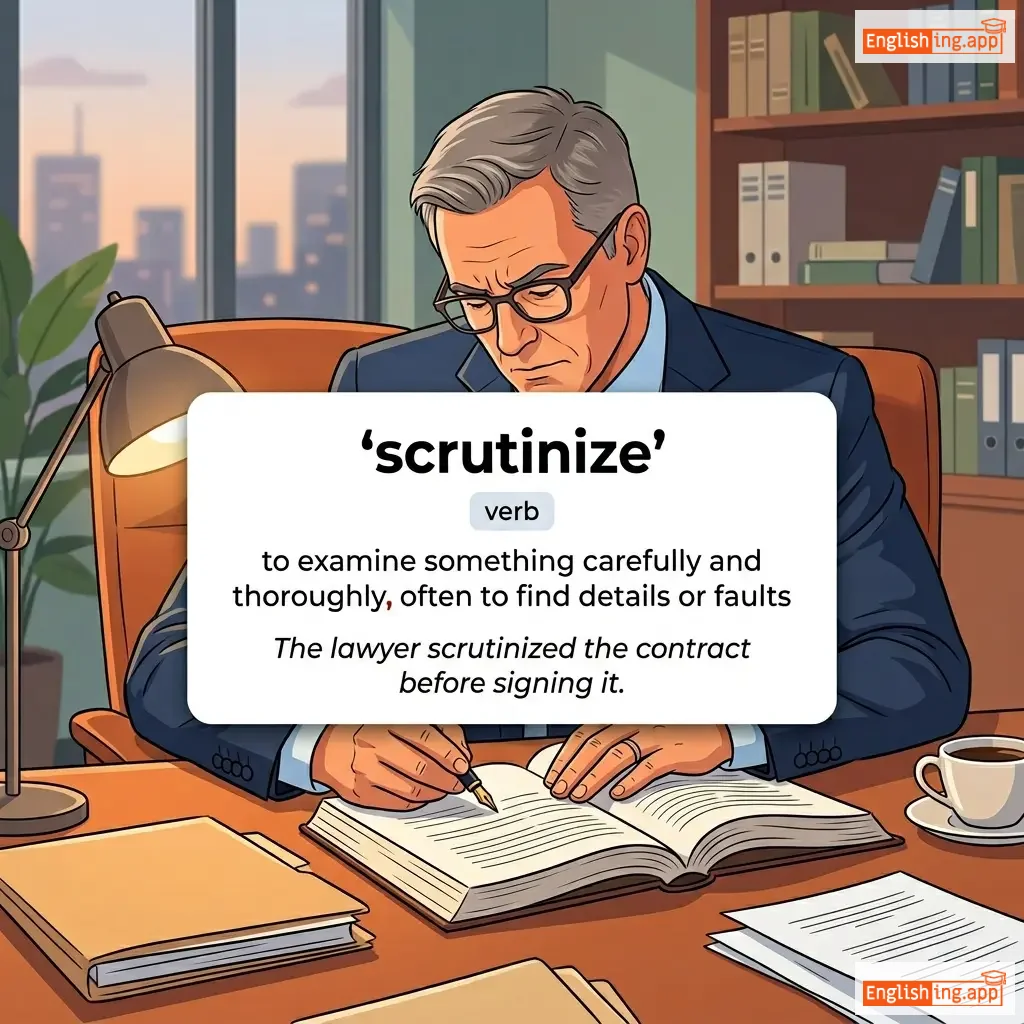
verb
/ˈskruː.tɪ.naɪz/

to examine something carefully and thoroughly, often to find details or faults

"The lawyer scrutinized the contract before signing it."
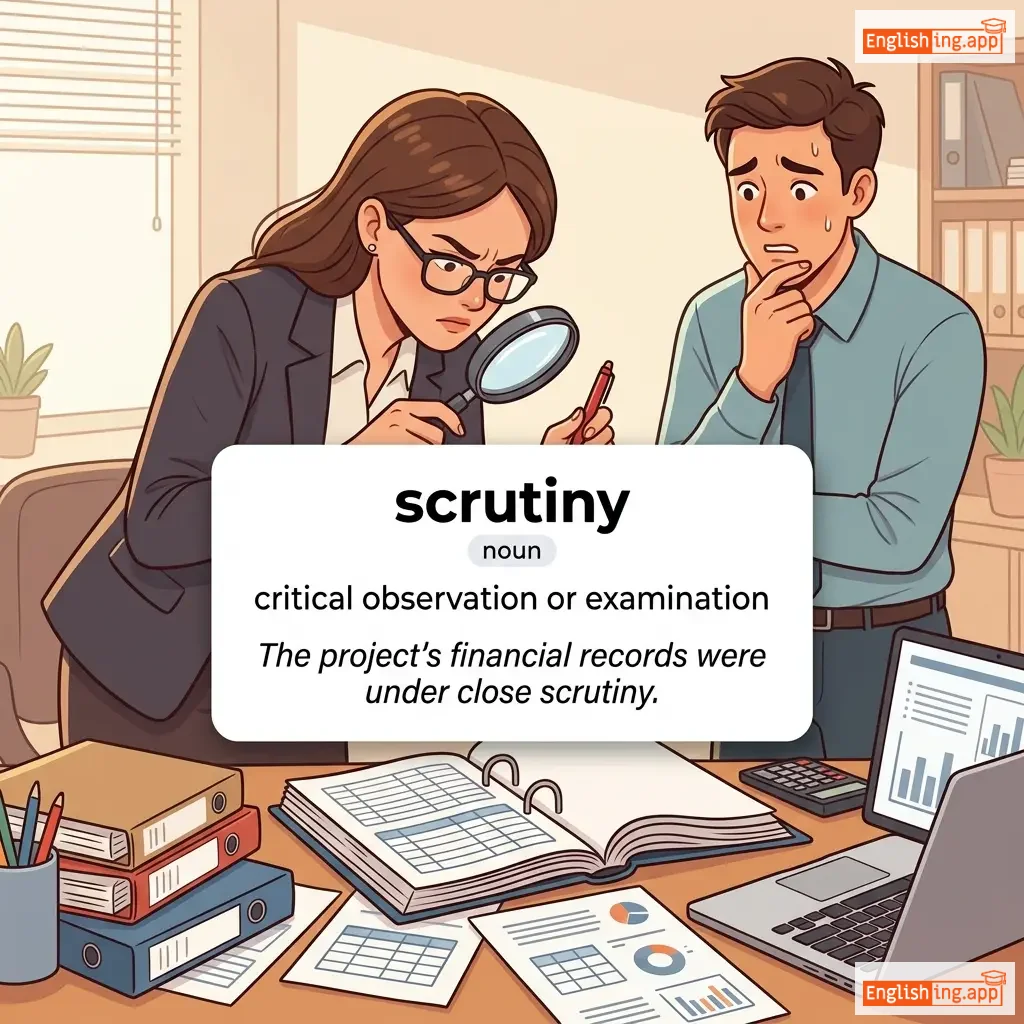
scrutiny definition card — visual illustration of the meaning
noun
/ˈskruːtɪni/
审查 (shencha)

critical observation or examination

"The project's financial records were under close scrutiny."

"该项目的财务记录正在接受严格审查。" (Gāi xiàngmù de cáiwù jìlù zhèngzài jiēshòu yángé shěnchá.)
verb
/skʌf/
擦伤 (ca shang)

to mark or scratch the surface of something by rubbing

"He scuffed his shoes on the pavement."

"他在人行道上擦伤了他的鞋子。" (Ta zai renxingdao shang ca shang le ta de xiezi.)
noun, verb
/ˈskʌf.əl/
冲突 (chongtu)

a short, confused fight or struggle; to engage in such a fight

"Two players scuffled on the field after the foul."

"两名球员在犯规后在场上发生了冲突。" (Liang ming qiuyuan zai fanguihou zai changshang fashengle chongtu.)
noun
/ˈskʌl.i.ən/
厨房仆人 (chúfáng púrén)

a servant assigned the most menial kitchen tasks

"In medieval times, a scullion was responsible for cleaning pots and pans."

"在中世纪,厨房仆人负责清洁锅碗和煎锅。" (zài zhōngshìjì, chúfáng púrén fùzé qīngjié guō wǎn hé jiānguō.)
verb
/skʌlpt/
幸福 (xìng fú)

to create or shape something by carving or molding

"The artist sculpted a beautiful statue from marble."

"她在获得奖项时无法掩饰自己的幸福。" (Tā zài huòdé jiǎngxiàng shí wúfǎ yǎnshì zìjǐ de xìngfú.)
noun
/ˈskʌlp.tər/
雕塑家 (diāo sù jiā)

an artist who creates sculptures by carving, modeling, or shaping materials

"The sculptor spent months creating a beautiful marble statue."

"雕塑家花了几个月时间制作一座美丽的大理石雕像。" (Diāo sù jiā huāle jǐ gè yuè shíjiān zhìzuò yī zuò měilì de dàlǐshí diāoxiàng.)
noun
/ˈskʌlp.tʃər/
雕塑 (diaosu)

the art of making two- or three-dimensional representative or abstract forms, especially by carving stone or wood or by casting metal or plaster

"The museum has a beautiful marble sculpture of a woman."

"博物馆里有一件美丽的大理石雕塑。" (Bowuguan li you yi jian mei li de dalishi diaosu.)
adjective
/ˈskʌr.ɪ.ləs/
恶意中伤的 (èyì zhōngshāng de)

Using or expressed in coarse, abusive, or slanderous language.

"The politician faced criticism for his scurrilous remarks about his opponent."

"那位政治家因其对对手的恶意中伤言论而面临批评。" (Nà wèi zhèngzhìjiā yīn qí duì duìshǒu de èyì zhōngshāng yánlùn ér miànlín pīpíng.)
verb
/ˈskʌr.i/
快速跑 (kuài sù pǎo)

To move quickly with short, hurried steps.

"The mice scurried across the kitchen floor when the lights turned on."

"老鼠在灯光打开时快速穿过厨房的地板。" (Lǎo shǔ zài dēng guāng dǎ kāi shí kuài sù chuān guò chú fáng de dì bǎn.)
noun
/ˈskɜː.vi/
坏血病 (Huài xuè bìng)

A disease caused by a deficiency of vitamin C, leading to weakness, gum disease, and bleeding.

"Sailors often suffered from scurvy during long sea voyages without fresh fruits."

"在没有新鲜水果的长时间海上航行中,水手们经常患上坏血病。" (Zài méiyǒu xīnxiān shuǐguǒ de cháng shíjiān hǎi shàng hángxíng zhōng, shuǐshǒu men jīngcháng huàn shàng huài xuè bìng.)
verb
/ˈskʌt.əl/
幸福 (xingfu)

To run hurriedly with short, quick steps; or to deliberately sink a ship.

"The children scuttled back to their seats when the teacher entered."

"她在收到奖项时无法掩饰她的幸福感。" (Tā zài shōu dào jiǎng xiàng shí wúfǎ yǎnshì tā de xìngfú gǎn.)
noun
/saɪð/
镰刀 (liándāo)

A tool with a long curved blade used for cutting grass or grain.

"The farmer sharpened his scythe before harvesting the wheat."

"农民在收割小麦之前磨利了他的镰刀。" (Nóngmín zài shōu gē xiǎomài zhīqián mó lìle tā de liándāo.)
noun
/siː/
海洋 (haiyang)

the large body of saltwater that covers most of the earth's surface

"We spent the day at the sea, enjoying the waves."

"我们在海洋度过了一天,享受着波浪。" (Wǒmen zài hǎiyáng dùguòle yītiān, xiǎngshòu zhe bōlàng.)
noun
/ˈsiː.hɔːrs/
海马 (hai ma)

a small marine fish with segmented bony armor, an upright posture, and a curled prehensile tail

"The seahorse gracefully floated among the coral reefs."
"海马在珊瑚礁间优雅地漂浮。" (Hai ma zai shan hu jiao jian you ya di piao fu.)
verb
/siːl/
封闭,密封 (fēngbì, mìfēng)

to close or secure something tightly or officially confirm something

"He sealed the envelope before sending the letter."

"他在寄信之前封住了信封。" (Tā zài jìxìn zhīqián fēngzhùle xìnfēng.)
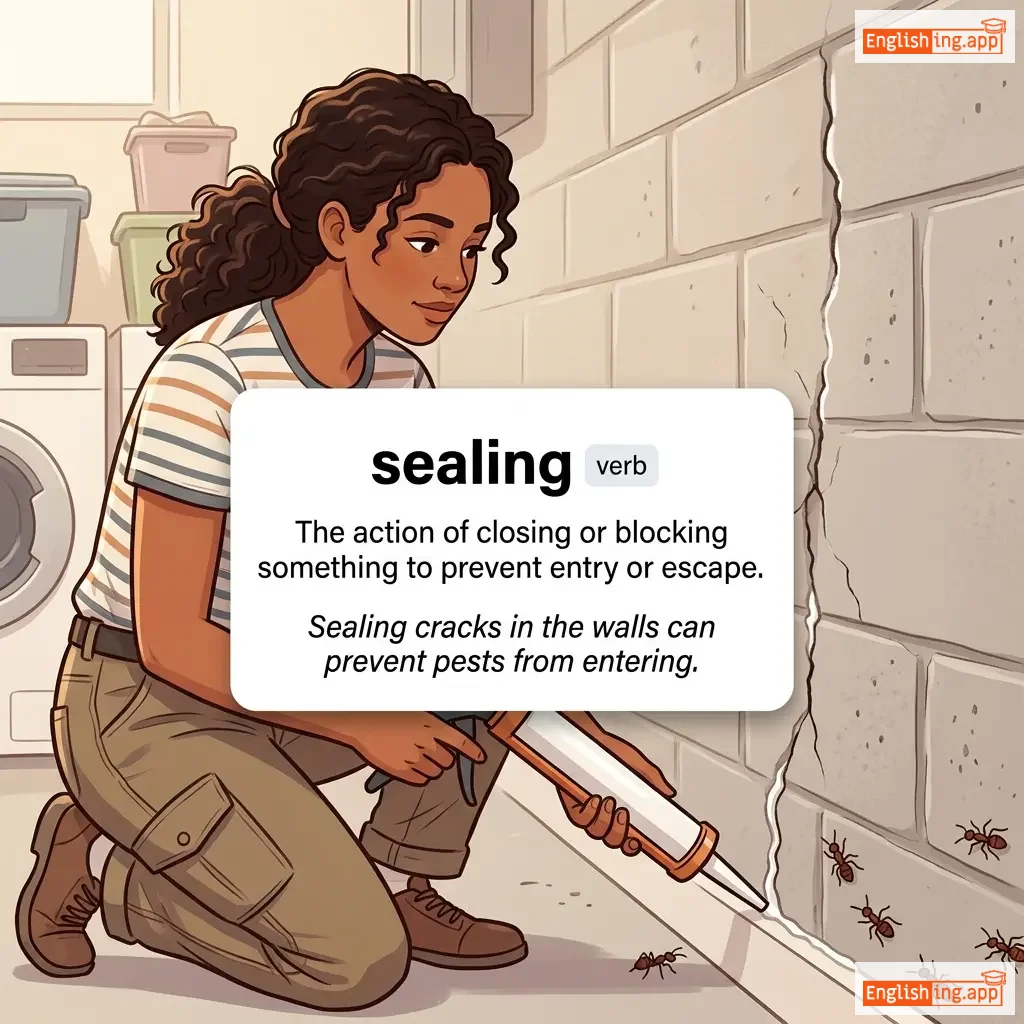
sealing definition card — visual illustration of the meaning
verb
ˈsiːlɪŋ
封闭,密封 (fēngbì, mìfēng)

The action of closing or blocking something to prevent entry or escape.

"Sealing cracks in the walls can prevent pests from entering."

"密封墙壁上的裂缝可以防止害虫进入。" (Mìfēng qiángbì shàng de lièfèng kěyǐ fángzhǐ hàichóng jìnrù.)
noun
/ˈsiː.mən/
海员 (hǎi yuán)

a person who works on a ship; sailor

"The experienced seaman navigated the ship through the storm."

"经验丰富的海员在风暴中导航。" (jīngyàn fēngfù de hǎiyuán zài fēngbào zhōng dǎoháng.)
seamless definition card — visual illustration of the meaning
adjective
/ˈsiːmləs/
无缝的 (wú fèng de)

Smooth and continuous, with no apparent gaps or spaces between one part and the next.

"The seamless integration of the two systems improved efficiency and reduced errors."

"两个系统的无缝集成提高了效率并减少了错误。" (Liǎng gè xìtǒng de wú fèng jíchéng tígāo le xiàolǜ bìng jiǎnshǎo le cuòwù.)
adjective
/ˈsiːmi/
堕落的,肮脏的 (duòluò de, āngzāng de)

Morally degraded, unpleasant, or sordid.

"The novel reveals the seamy side of city life."

"这本小说揭示了城市生活的肮脏一面。" (Zhè běn xiǎoshuō jiēshìle chéngshì shēnghuó de āngzāng yīmiàn.)
noun
/ˈseɪɑːns/
灵媒会议 (língméi huìyì)

A meeting where people attempt to communicate with the spirits of the dead.

"They held a seance to contact their late grandmother."

"他们举行了灵媒会议,以联系已故的祖母。" (Tāmen jǔxíngle língméi huìyì, yǐ liánxì yǐgù de zǔmǔ.)
verb
/sɪr/
煎制 (jian zhi)

To burn or scorch the surface of something with intense heat.

"The chef seared the steak to lock in the flavor."

"厨师将牛排煎制,以锁住味道。" (Chushi jiang niupai jianzhi, yi suozhu weidao.)
search definition card — visual illustration of the meaning
verb
/sɜːrtʃ/
搜索 (sousuo)

to look carefully for something

"The police searched the house for evidence."

"警察搜查了房子以寻找证据。" (Jingcha soushao le fangzi yi xunzhao zhengju.)