词汇表

英语词汇词典 | 单词含义、定义和示例

noun
/ˈswɪmɪŋ/
游泳 (you yong)

the activity or sport of moving through water using the limbs

"Swimming is a great way to stay fit and healthy."

"游泳是保持健康和身体健康的好方法。" (You yong shi bao chi jiankang he shenti jiankang de hao fangfa.)
verb
/ˈswɪndl/
欺骗 (qīpiàn)

to cheat someone out of money or possessions by deceit

"The con artist tried to swindle the old man out of his savings."

"骗子试图骗取老人的储蓄。" (Piànzi shìtú piànqǔ lǎorén de chǔxù.)
noun
/ˈswɪndlɚ/
骗子 (pianzi)

a person who cheats or deceives others for money or gain

"The police finally caught the notorious swindler."
"警察终于抓到了臭名昭著的骗子。" (Jingcha zhongyu zhua dao le chouming zhaozhu de pianzi.)
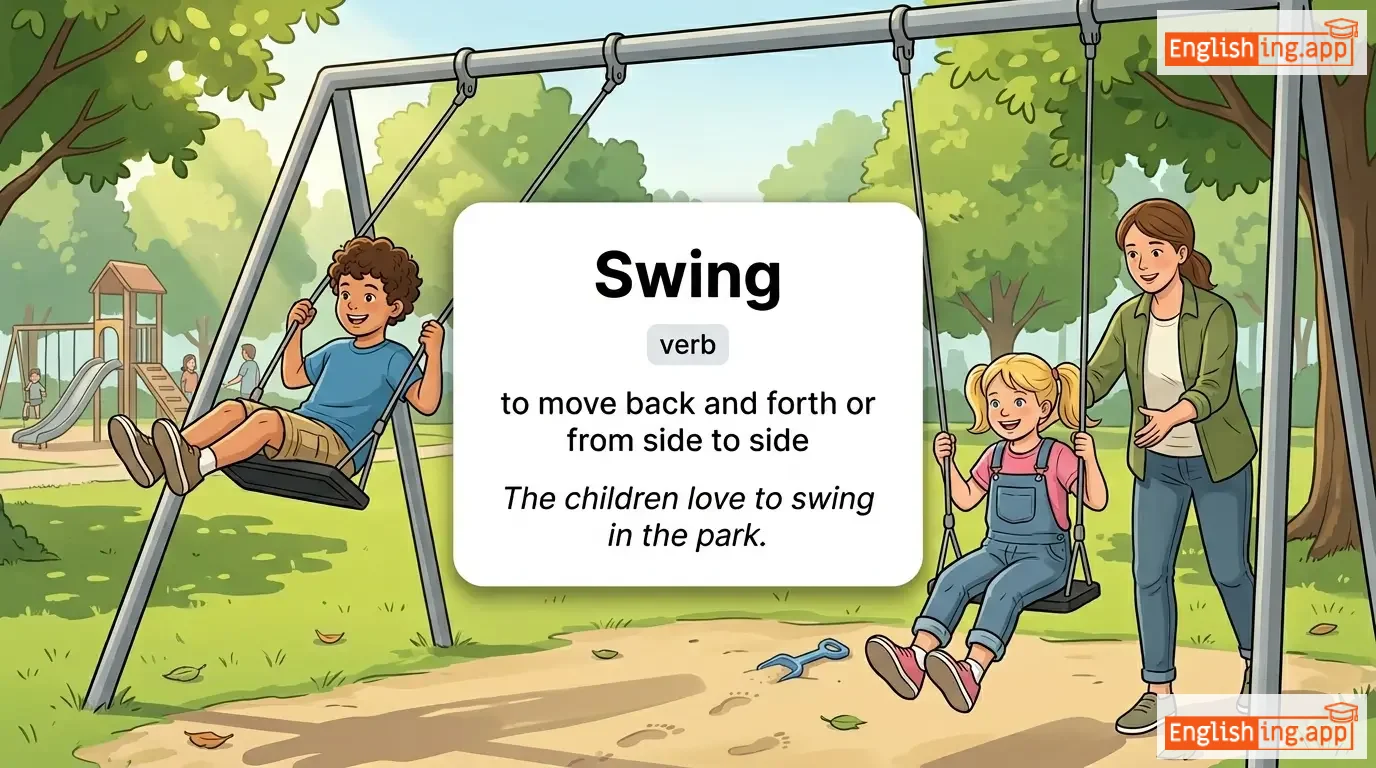
Swing definition card — visual illustration of the meaning
verb
/swɪŋ/
荡秋千 (dàng qiū qiān)

to move back and forth or from side to side

"The children love to swing in the park."

"孩子们喜欢在公园里荡秋千。" (Háizimen xǐhuān zài gōngyuán lǐ dàng qiū qiān.)
verb
/swaɪp/
滑动 (huá dòng)

to move your finger across a touch screen or to hit with a sweeping motion

"He swiped left on the photo."
"他在照片上向左滑动。" (Tā zài zhàopiàn shàng xiàng zuǒ huádòng.)
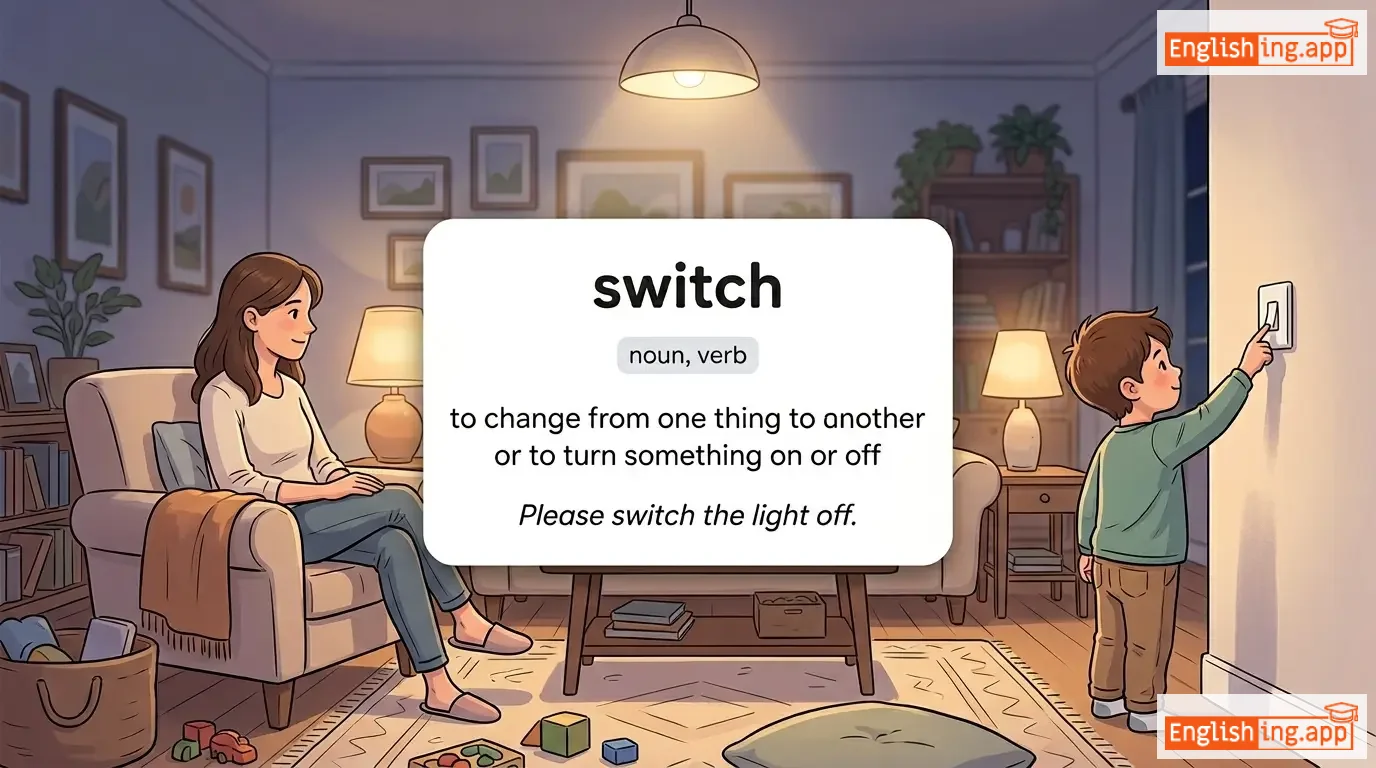
switch definition card — visual illustration of the meaning
noun, verb
/swɪtʃ/
开关 (kaiguan)

to change from one thing to another or to turn something on or off

"Please switch the light off."

"请关闭灯光。" (Qǐng guān bì dēngguāng.)
adjective
/ˈswoʊlən/
肿胀的 (zhongzhang de)

Enlarged or puffed up, usually due to injury, inflammation, or fluid accumulation

"Her ankle was swollen after she twisted it during the hike."

"她在徒步旅行时扭伤了脚踝,脚踝肿了。" (Ta zai tubu luyou shi niushang le jiaohui, jiaohui zhong le.)
noun
/sɔːrd/
(jian)

a weapon with a long metal blade used for fighting

"The knight drew his sword to defend the castle."

"骑士拔出他的剑来保卫城堡。" (qíshì bá chū tā de jiàn lái bǎowèi chéngbǎo.)
noun
/sɔːd fɪʃ/
剑鱼 (jian yu)

A large marine fish with an elongated bill resembling a sword

"The swordfish can swim at speeds up to 60 mph."

"剑鱼的游泳速度可达每小时60英里。" (jian yu de you yong su du ke da mei xiao shi 60 ying li)
noun
/ˈsɪbəraɪt/
奢侈者 (shēchǐ zhě)

a person who loves luxury and pleasure

"The millionaire was a true sybarite who lived only for comfort and enjoyment."

"那位百万富翁是真正的奢侈者,他只为舒适和享乐而活。" (nà wèi bǎi wàn fù wēng shì zhēnzhèng de shēchǐ zhě, tā zhǐ wèi shūshì hé xiǎnglè ér huó.)
noun
/ˈsɪkəfənt/
阿谀奉承者 (āyú fèngchéng zhě)

A person who acts obsequiously toward someone important in order to gain advantage.

"The manager was surrounded by sycophants who agreed with everything he said."

"经理被一群拍马屁的人包围,他们同意他说的每一件事。" (Jīnglǐ bèi yīqún pāi mǎ pì de rén bāowéi, tāmen tóngyì tā shuō de měi yī jiàn shì.)
adjective
/ˌsɪkəˈfæntɪk/
拍马屁 (pai ma pi)

Behaving in a way that is excessively obedient or servile to gain favor.

"His sycophantic behavior annoyed his colleagues."

"他的拍马屁行为让同事们感到厌烦。" (Tā de pāimǎpì xíngwéi ràng tóngshìmen gǎndào yànfán.)
adjective
/sɪˈlæbɪk/
音节的 (yīnjié de)

Relating to or based on syllables.

"The teacher explained the syllabic structure of the word."

"老师解释了这个词的音节结构。" (Lǎoshī jiěshì le zhège cí de yīnjié jiégòu.)
noun
/ˌsɪləbɪˈkeɪʃən/
音节划分 (yinjie huafen)

The division of words into syllables.

"Proper syllabication helps in correct pronunciation."

"正确的音节划分有助于正确发音。" (Zhengque de yinjie huafen youzhu yu zhengque fayin.)
noun
/ˈsɪləbəl/
音节 (yin jie)

A unit of pronunciation having one vowel sound, with or without surrounding consonants, forming the whole or part of a word.

"The word 'computer' has three syllables."

"‘计算机’这个词有三个音节。" ('Jisuanji' zhege ci you san ge yin jie.)
noun
/ˈsɪləbəs/
教学大纲 (jiao xu da gang)

An outline or summary of topics to be covered in a course of study.

"The professor handed out the syllabus on the first day of class."
"教授在第一天的课上发放了教学大纲。" (Jiao shou zai di yi tian de ke shang fa fang le jiao xu da gang.)
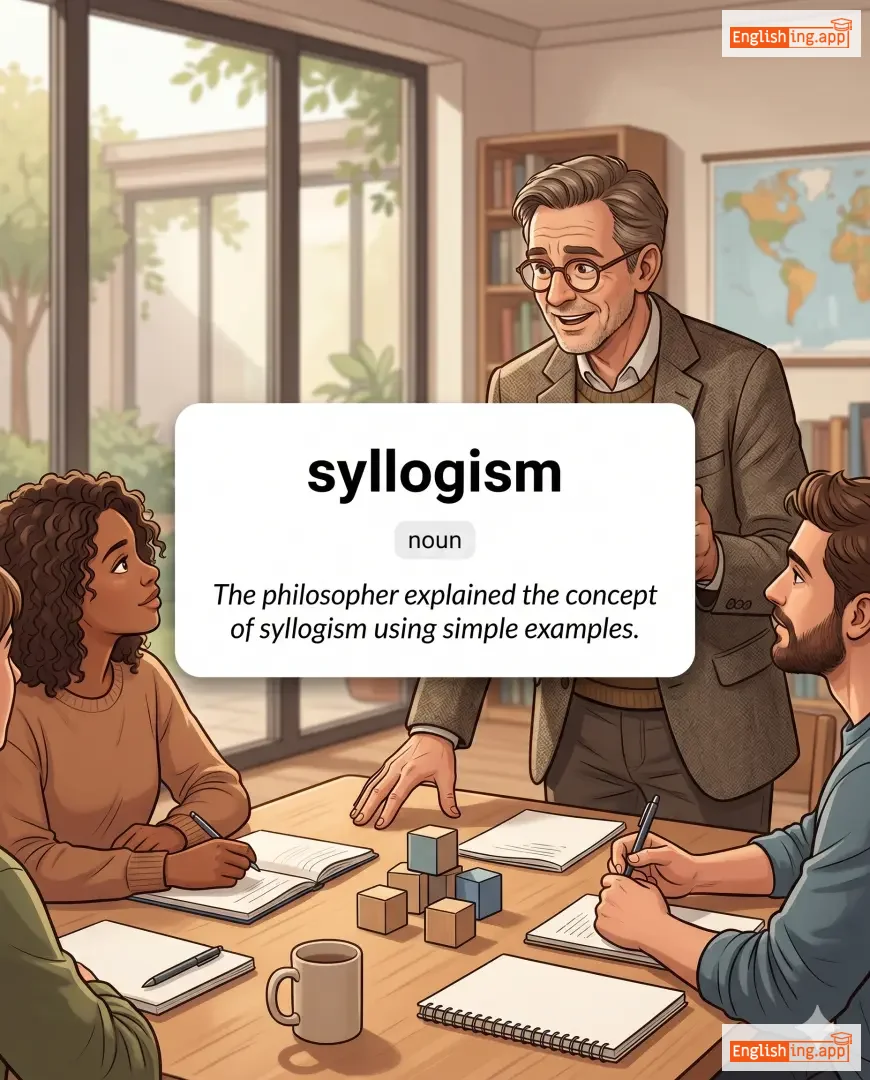
syllogism definition card — visual illustration of the meaning
noun
/ˈsɪlədʒɪzəm/
三段论 (sanduanlun)

A form of reasoning in which a conclusion is drawn from two given or assumed premises.

"The philosopher explained the concept of syllogism using simple examples."

"哲学家用简单的例子解释了三段论的概念。" (Zhéxuéjiā yòng jiǎndān de lìzi jiěshìle sānduànlùn de gàiniàn.)
noun
/sɪlf/
空灵精灵 (kōng líng jīng líng)

A mythical spirit of the air; also refers to a slender, graceful woman.

"She moved across the stage like a sylph, light and graceful."

"她像一个空灵精灵一样轻盈而优雅地在舞台上移动。" (Tā xiàng yī gè kōng líng jīng líng yī yàng qīng yíng ér yōu yǎ de zài wǔ tái shàng yí dòng.)
sylvan definition card — visual illustration of the meaning
adjective
/ˈsɪlvən/
林地的 (lindi de)

Relating to or characteristic of the woods or forest.

"The cottage was set in a sylvan landscape full of tall trees."
"这座小屋位于一个林地的景观中,充满了高大的树木。" (Zhe zuo xiaowu weiyu yige lindi de jingguan zhong, chongman le gaoda de shumu.)
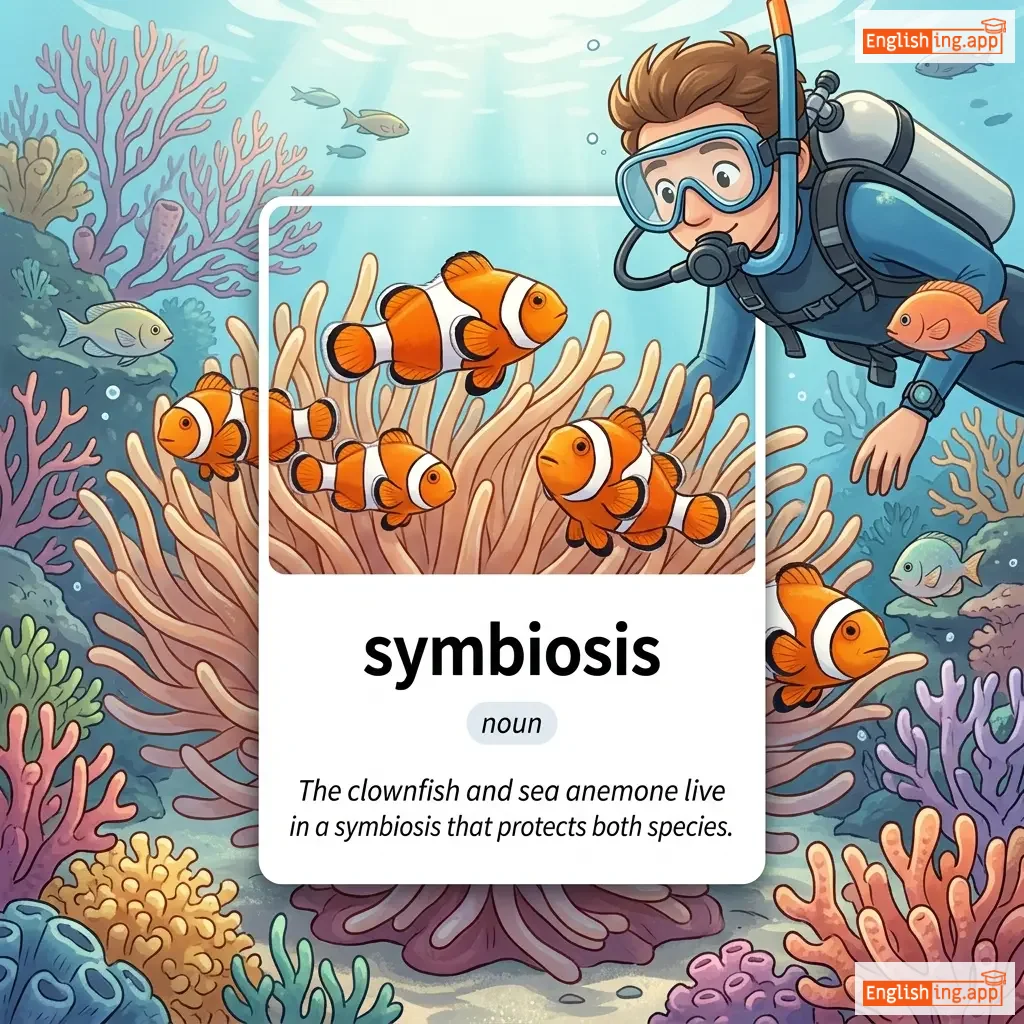
symbiosis definition card — visual illustration of the meaning
noun
/ˌsɪmbaɪˈoʊsɪs/
共生 (gongsheng)

A close and often long-term interaction between two different species that benefits both.

"The clownfish and sea anemone live in a symbiosis that protects both species."
"小丑鱼和海葵生活在一种共生关系中,保护了这两种物种。" (Xiaochou yu he hai kui shenghuo zai yizhong gongsheng guanxi zhong, baohu le zhe liang zhong wuzhong.)
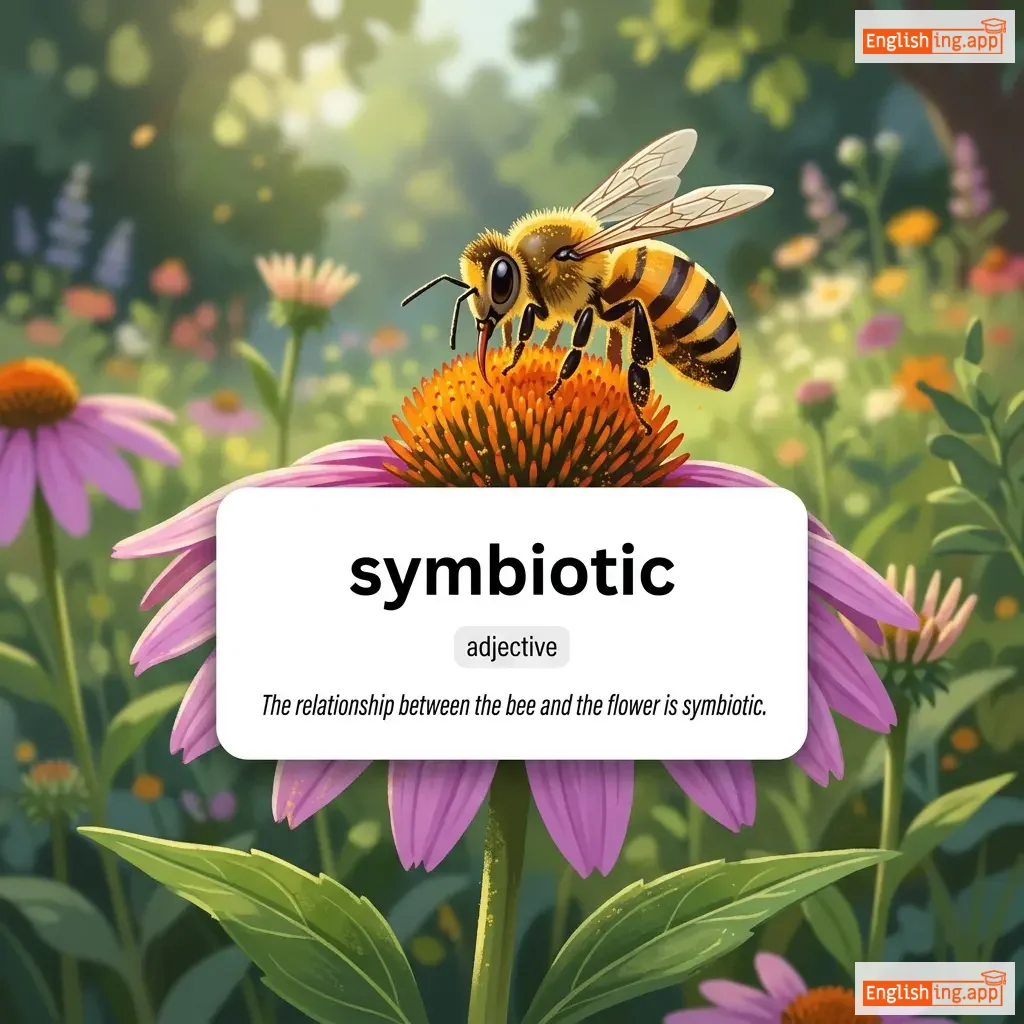
symbiotic definition card — visual illustration of the meaning
adjective
ˌsɪmbɪˈɒtɪk
共生的 (gòngshēng de)

Involving interaction between two different organisms living in close physical association.

"The relationship between the bee and the flower is symbiotic."

"蜜蜂和花朵之间的关系是共生的。" (Mìfēng hé huāduǒ zhī jiān de guānxì shì gòngshēng de.)
noun
/ˈsɪmbəl/
符号 (fúhào)

a mark, sign, or object that represents something else

"The heart is a symbol of love."

"心脏是爱的一种象征。" (Xīnzhàng shì ài de yī zhǒng xiàngzhēng.)
adjective
/sɪmˈbɒlɪk/
象征性的 (xiàngzhēng xìng de)

serving as a symbol or representing something else

"The dove is symbolic of peace and freedom."
"鸽子是和平与自由的象征。" (Gēzi shì hépíng yǔ zìyóu de xiàngzhēng.)
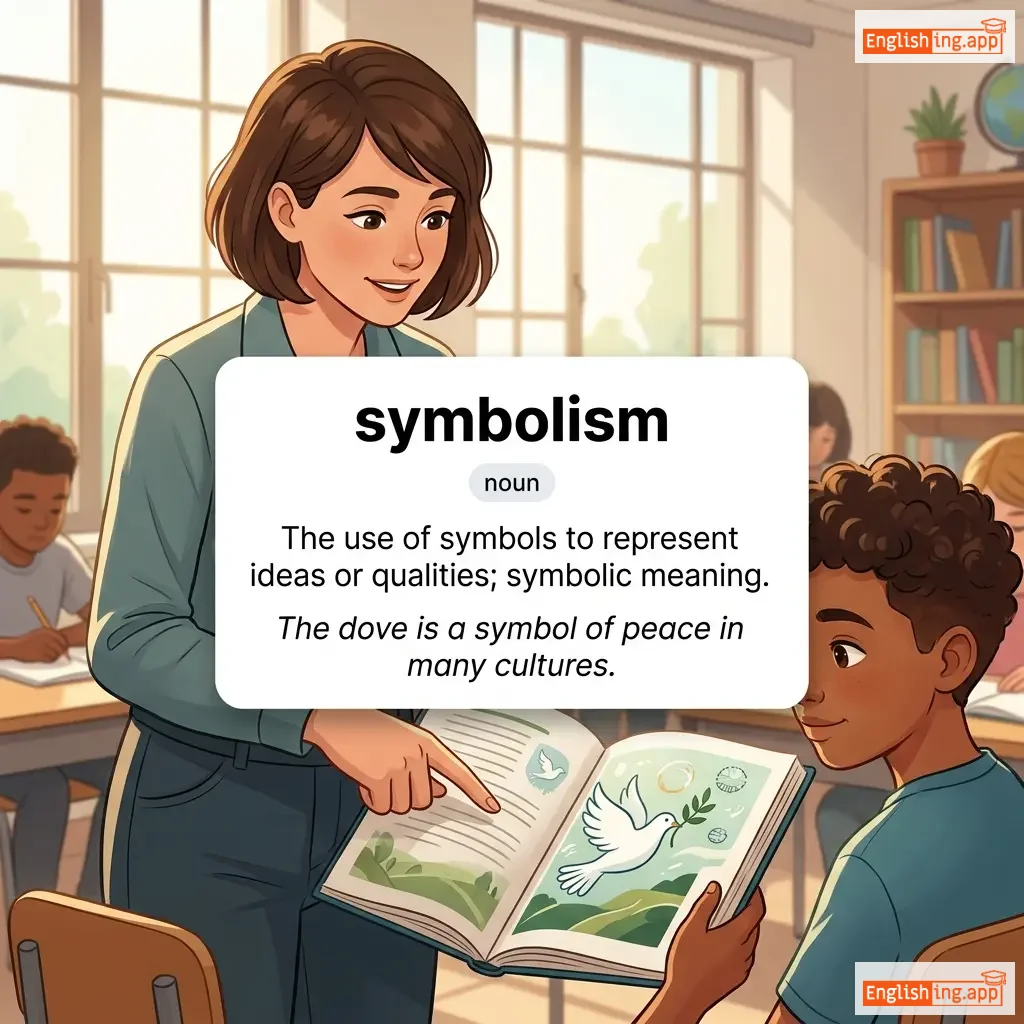
symbolism definition card — visual illustration of the meaning
noun
ˈsɪmbəlɪzəm
象征主义 (xiàngzhēng zhǔyì)

The use of symbols to represent ideas or qualities; symbolic meaning.

"The dove is a symbol of peace in many cultures."

"鸽子是许多文化中的和平象征。" (Gēzi shì xǔduō wénhuà zhōng de hépíng xiàngzhēng.)
verb
/ˈsɪmbəlaɪz/
象征 (xiangzheng)

to represent or stand for something else

"The dove symbolizes peace across cultures."

"鸽子在不同文化中象征着和平。" (Gezi zai butong wenhua zhong xiangzheng zhe heping.)
adjective
/sɪˈmɛtrɪkəl/
对称的 (duìchèn de)

having parts on either side that match or are the same in shape, size, or arrangement

"The artist designed a symmetrical pattern on the floor."

"艺术家在地板上设计了一个对称的图案。" (Yìshùjiā zài dìbǎn shàng shèjìle yīgè duìchèn de tú'àn.)
noun
/ˈsɪmətri/
对称 (duìchèn)

the quality of having balanced proportions or identical parts facing each other

"The building’s symmetry impressed the visitors."

"建筑的对称性给游客留下了深刻的印象。" (Jiànzhú de duìchènxìng gěi yóukè liú xiàle shēnkè de yìnxiàng.)
adjective
/ˌsɪmpəˈθɛtɪk/
同情的 (tóngqíng de)

showing understanding or compassion for someone’s feelings or situation

"She was very sympathetic when he lost his job."

"当他失去工作时,她表现得非常同情。" (Dāng tā shīqù gōngzuò shí, tā biǎoxiàn dé fēicháng tóngqíng.)
sympathize definition card — visual illustration of the meaning
verb
/ˈsɪmpəˌθaɪz/

to feel or express compassion or pity for someone else’s situation

"I sympathize with you on the loss of your pet."

noun
/ˈsɪmpəθi/
同情 (tóngqíng)

feelings of pity and compassion for someone else's suffering

"She expressed her sympathy for the grieving family."

"她向悲伤的家庭表达了同情。" (Tā xiàng bēishāng de jiātíng biǎodále tóngqíng.)
adjective
/sɪmˈfɒnɪk/
交响乐的 (jiaoxiangyue de)

relating to or having the character of a symphony or symphony orchestra

"The concert featured a symphonic masterpiece."

"音乐会展示了一部交响乐的杰作。" (Yinyuehui zhanshi le yibu jiaoxiangyue de jiezuo.)
adjective
/sɪmˈfoʊniəs/

Harmonious; producing a pleasant sound or agreement of sound.

"The choir's voices were symphonious and filled the hall with beauty."

noun
/ˈsɪmfəni/
交响乐,一种复杂的音乐作品 (jiaoxiangyue, yizhong fuzadu de yinyue zuopin)

An elaborate musical composition for a full orchestra, typically in four movements.

"Beethoven's Fifth Symphony is one of the most famous works in classical music."

"贝多芬的第五交响曲是古典音乐中最著名的作品之一。" (Beiduofen de diwu jiaoxiangqu shi gudian yinyue zhong zui zhuming de zuopin zhi yi.)
noun
/ˈsɪmptəm/
症状 (zhèngzhuàng)

a sign or indication of something, especially of an illness

"Fever is a common symptom of the flu."

"发烧是流感的常见症状。" (Fāshāo shì liúgǎn de chángjiàn zhèngzhuàng.)
noun
/ˈsɪmp.təmz/
症状 (zhèngzhuàng)

signs or indications of a disease or condition

"Fever and cough are common symptoms of the flu."
"发烧和咳嗽是流感的常见症状。" (Fāshāo hé késou shì liúgǎn de chángjiàn zhèngzhuàng.)
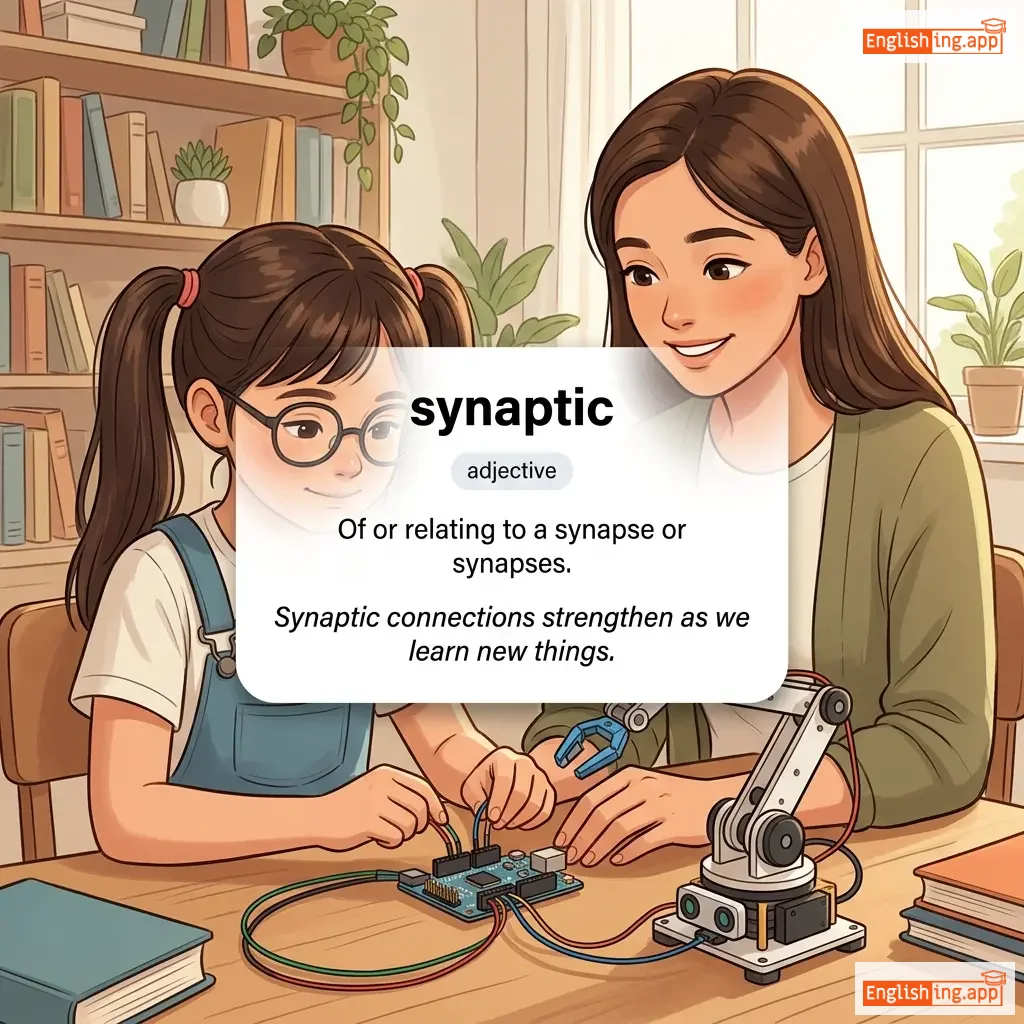
synaptic definition card — visual illustration of the meaning
adjective
sɪˈnæp.tɪk
与突触或突触有关的 (tuchu de)

Of or relating to a synapse or synapses.

"Synaptic connections strengthen as we learn new things."
"突触连接随着我们学习新事物而变得更强。" (Tuchu lianjie suizhe women xuexi xin shiwuer biande geng qiang.)
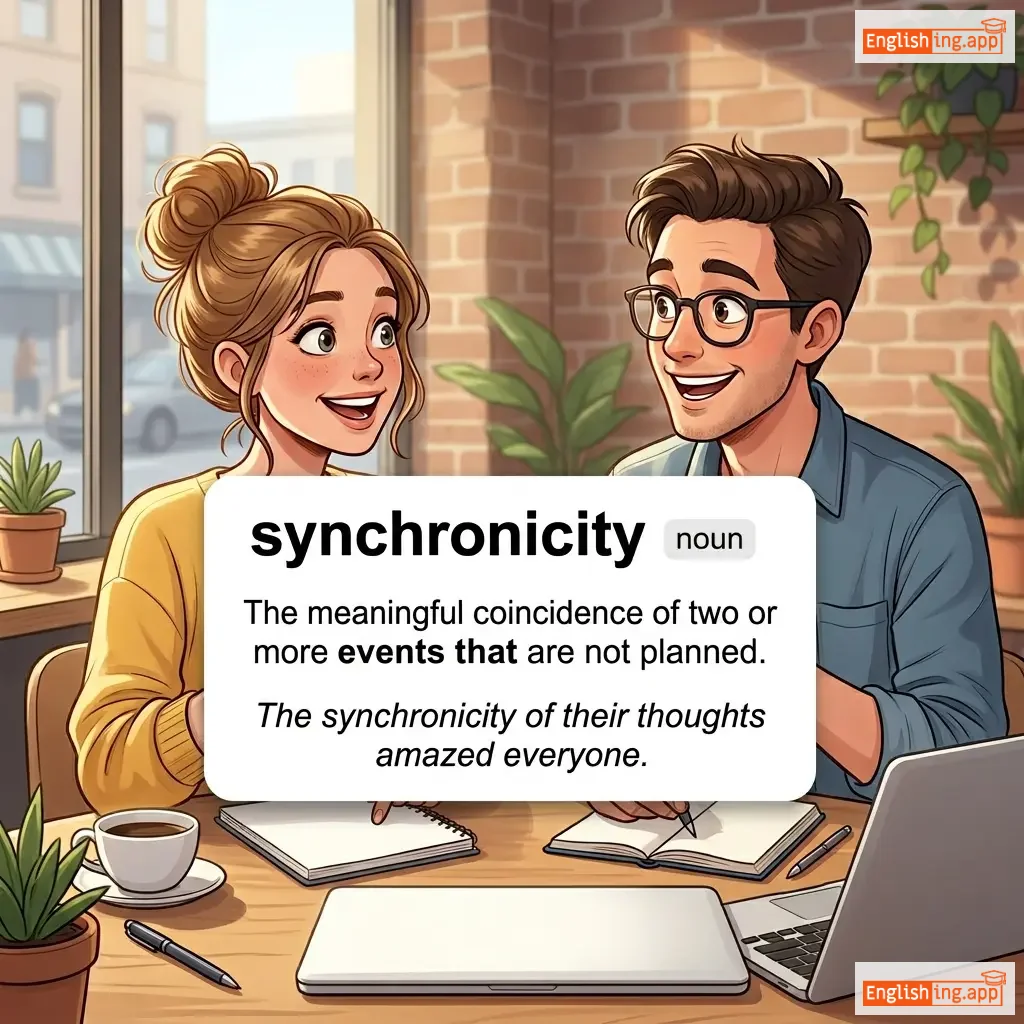
synchronicity definition card — visual illustration of the meaning
noun
/ˌsɪŋ.krəˈnɪs.ɪ.ti/
同步性 (tóng bù xìng)

The meaningful coincidence of two or more events that are not planned.

"The synchronicity of their thoughts amazed everyone."

"他们思想的同步性让所有人都感到惊讶。" (Tāmen sīxiǎng de tóngbùxìng ràng suǒyǒu rén dōu gǎndào jīngyà.)
noun
/ˈsɪŋkrəˌnɪzəm/
同步 (tongbu)

The simultaneous occurrence of events or actions.

"The synchronism of the dancers' movements amazed the audience."
"舞者动作的同步让观众感到惊讶。" (Wǔzhě dòngzuò de tóngbù ràng guānzhòng gǎndào jīngyà.)
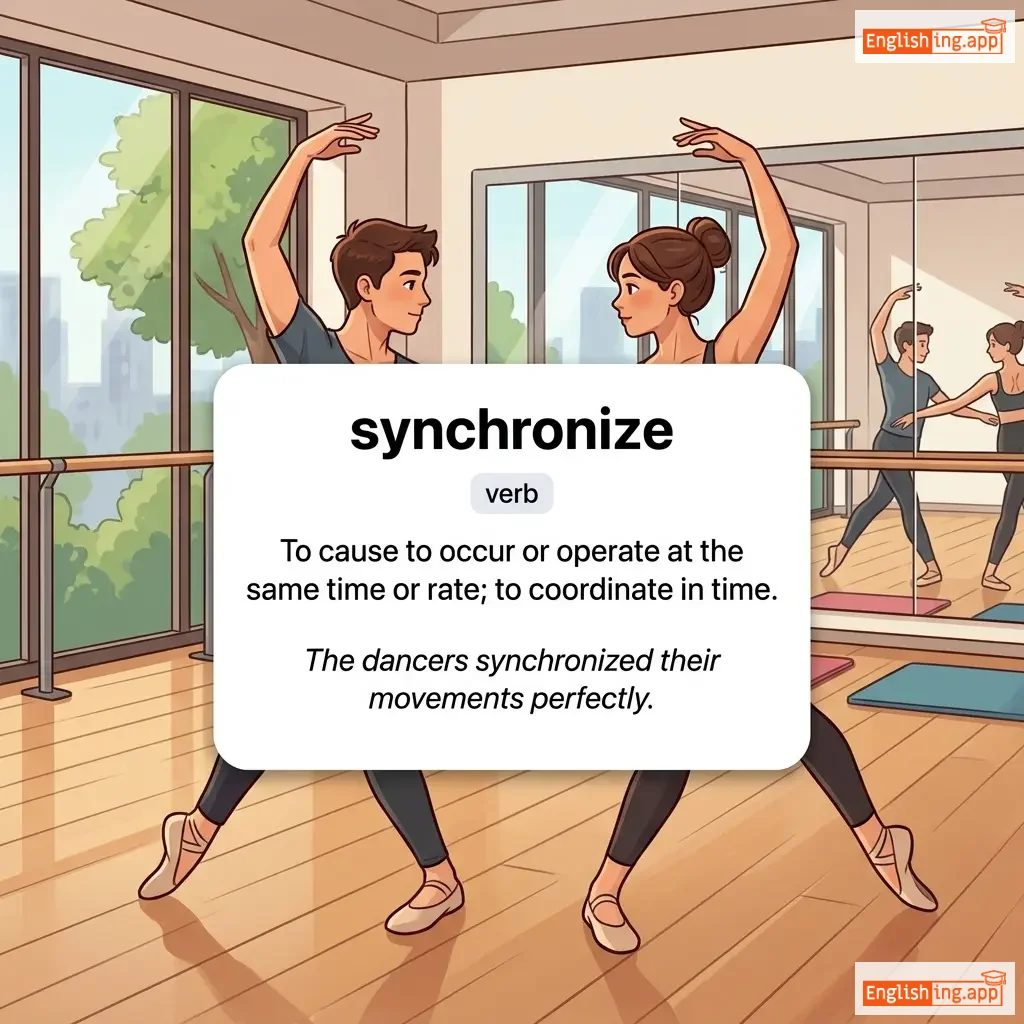
synchronize definition card — visual illustration of the meaning
verb
/ˈsɪŋ.krə.naɪz/
同步 (tóngbù)

To cause to occur or operate at the same time or rate; to coordinate in time.

"The dancers synchronized their movements perfectly."
"舞者们完美地同步了他们的动作。" (Wǔzhěmen wánměi de tóngbù le tāmen de dòngzuò.)
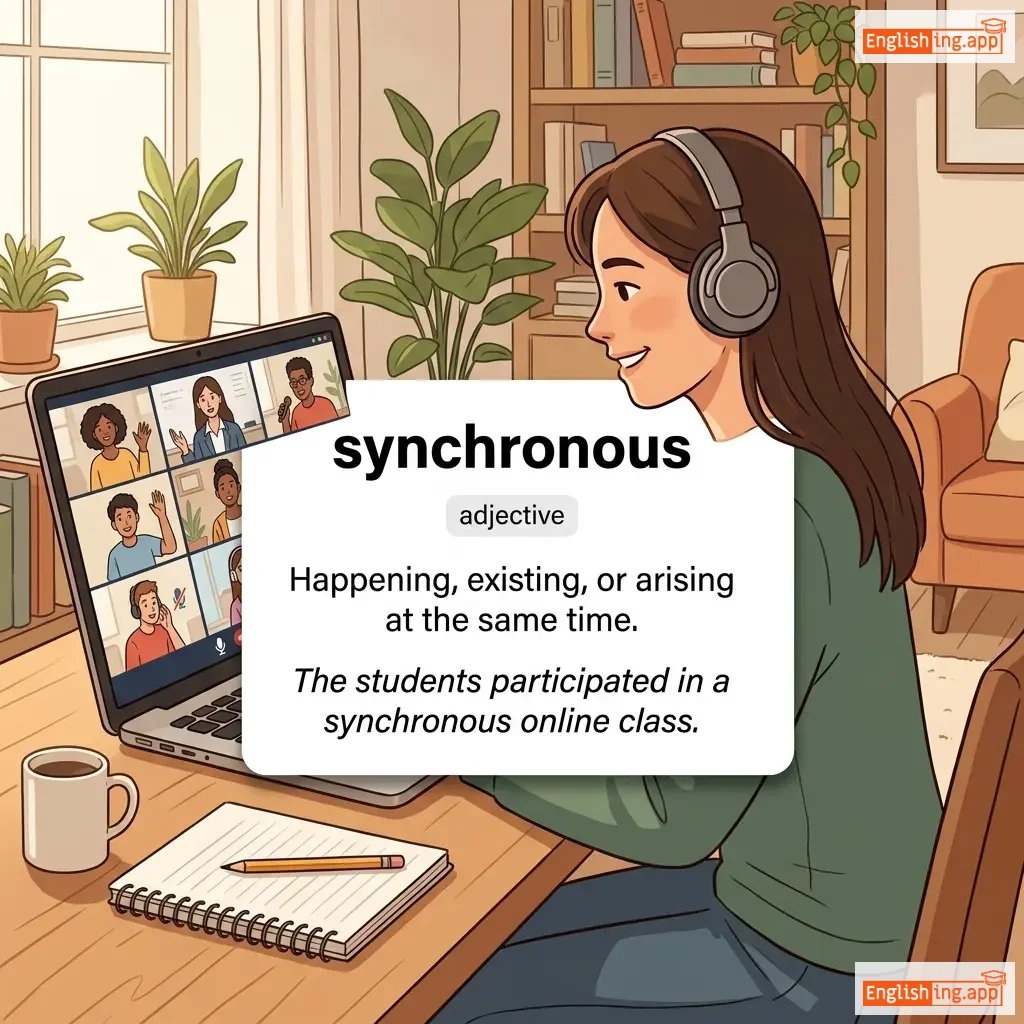
synchronous definition card — visual illustration of the meaning
adjective
/ˈsɪŋkrənəs/
同步的 (tóngbù de)

Happening, existing, or arising at the same time.

"The students participated in a synchronous online class."
"学生们参加了一个同步的在线课程。" (Xuéshēngmen cānjiāle yīgè tóngbù de zàixiàn kèchéng.)
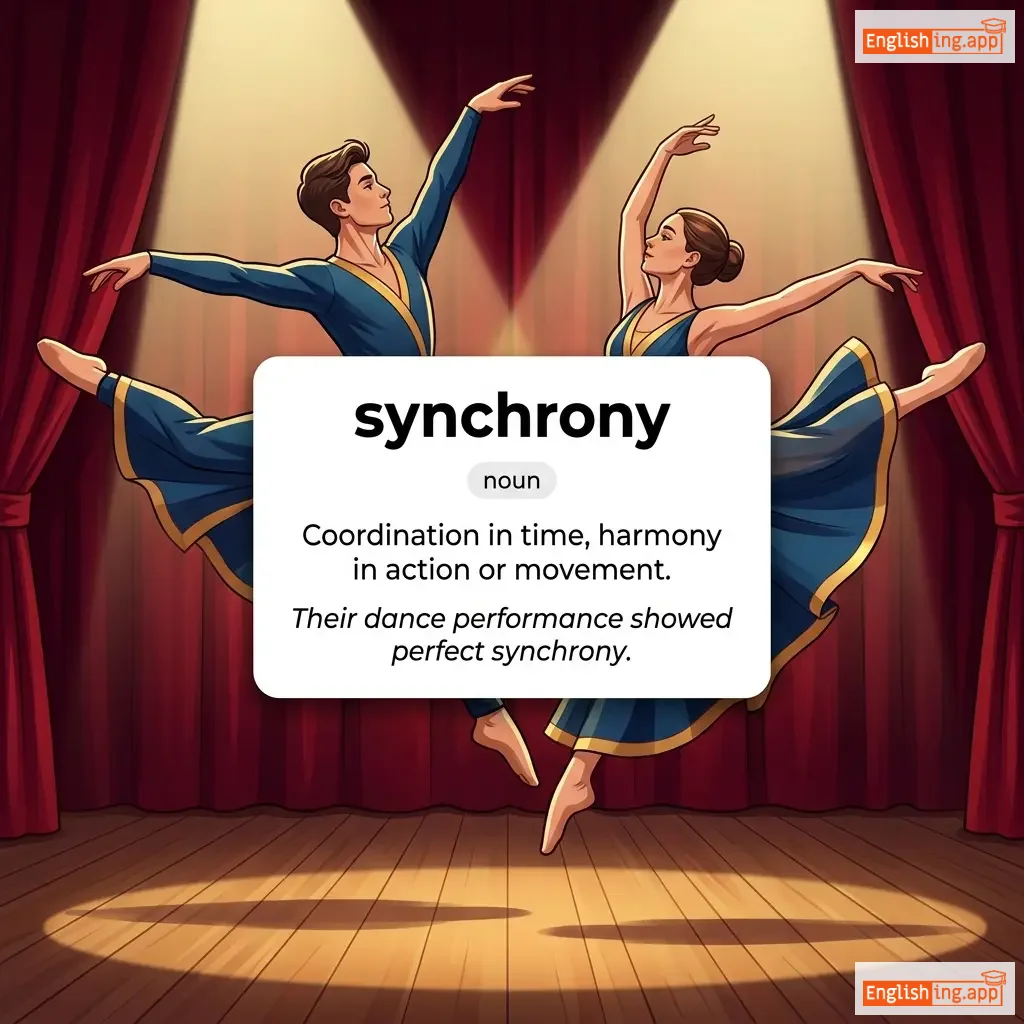
synchrony definition card — visual illustration of the meaning
noun
/ˈsɪŋ.krə.ni/
同步性 (tóng bù xìng)

Coordination in time, harmony in action or movement.

"Their dance performance showed perfect synchrony."

"他们的舞蹈表演展示了完美的同步性。" (Tāmen de wǔdǎo biǎoyǎn zhǎnshìle wánměi de tóng bù xìng.)
adjective
/ˈsɪŋkəˌpeɪtɪd/
切分节奏 (qiēfēn jiézòu)

Characterized by displaced beats or rhythms, especially in music.

"The jazz piece had a syncopated rhythm that energized the crowd."

"这段爵士乐有一个切分节奏,激励了人群。" (Zhè duàn juéshì yuè yǒu yīgè qiēfēn jiézòu, jīlìle rénqún.)
noun
/ˈsɪndɪkət/
辛迪加 (xīndíjiā)

A group of individuals or organizations combined to promote a common interest or carry out a business venture.

"A syndicate of investors bought the struggling company."

"一个投资者辛迪加买下了这家困难的公司。" (Yī gè tóuzī zhě xīndíjiā mǎi xià le zhè jiā kùnnán de gōngsī.)
noun
/ˈsɪnˌdroʊm/
综合症 (zonghezheng)

a group of symptoms that occur together and characterize a condition or disease

"Down syndrome affects a person's physical and mental development."

"唐氏综合症影响一个人的身体和智力发展。" (Tangshi zonghezheng yingxiang yige ren de shenti he zhili fazhan.)
noun
/sɪˈnɛrəsɪs/
协同作用 (xie tong zuo yong)

The contraction of two adjacent vowels into a single syllable or the separation of liquid from a gel.

"The yogurt showed syneresis when liquid separated on top."

"当液体在上面分离时,酸奶表现出协同作用。" (Dang ye ti zai shangmian fenli shi, suannai biaoxian chu xietong zuoyong.)
adjective
/sɪˈnɜːrdʒɪk/
协同的 (xie tong de)

Working together in a cooperative and effective manner.

"The two departments have a synergic relationship that boosts productivity."

"两个部门有着协同关系,促进了生产力的提高。" (Liang ge bumen youzhe xietong guanxi, cujinle shengchanli de tigao.)
synergistic definition card — visual illustration of the meaning
adjective
ˌsɪn.əˈdʒɪs.tɪk
协同的 (xiétóng de)

Relating to the interaction of elements that when combined produce a greater effect than the sum of their individual effects.

"A synergistic effect occurs when nutrients work together."

"协同效应发生在营养素共同作用时。" (Xiétóng xiàoyìng fāshēng zài yíngyǎngsù gòngtóng zuòyòng shí.)
synergize definition card — visual illustration of the meaning
verb
ˈsɪnərdʒaɪz
协同合作, 合作 (xiétóng hézuò, hézuò)

To combine in such a way that the total effect is greater than the sum of the individual effects; to work together cooperatively.

"The two companies plan to synergize their efforts for greater success."
"这两家公司计划协同合作,以取得更大的成功。" (Zhè liǎng jiā gōngsī jìhuà xiétóng hézuò, yǐ qǔdé gèng dà de chénggōng.)
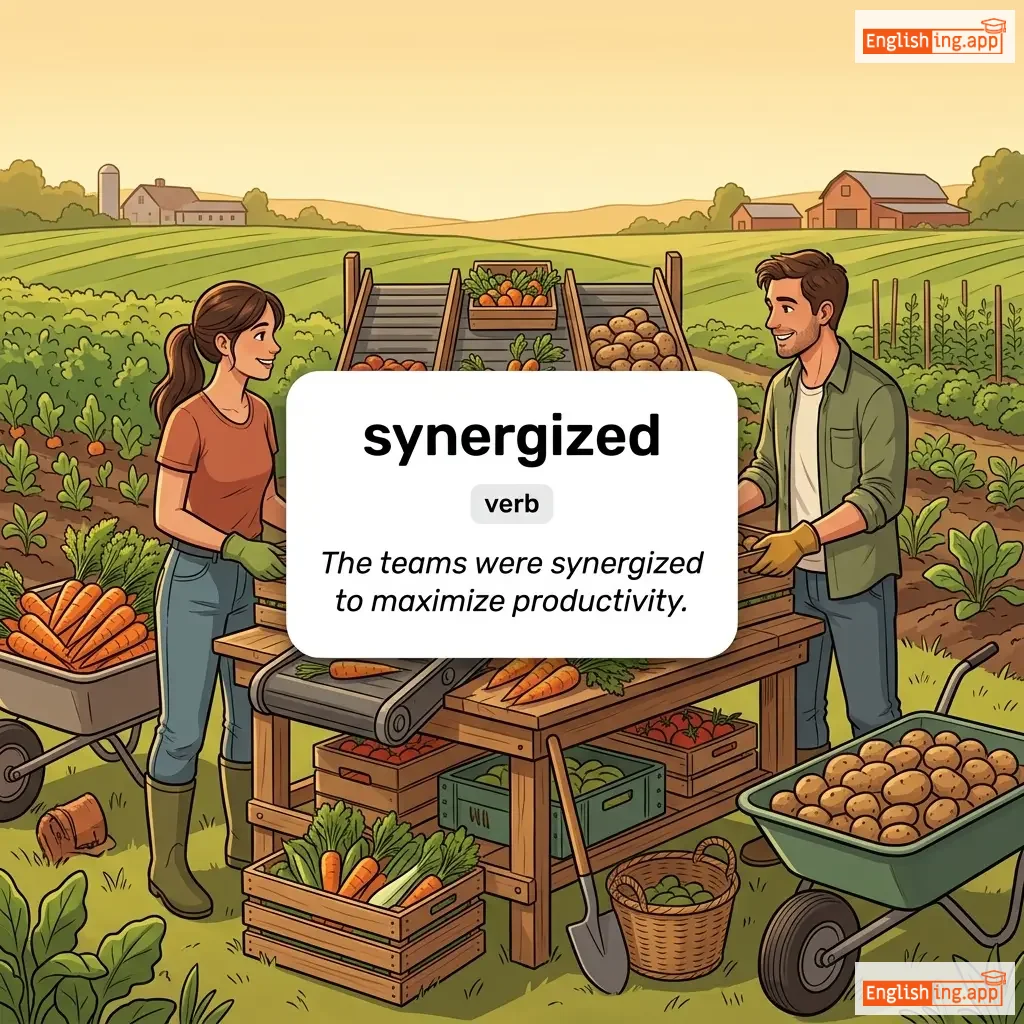
synergized definition card — visual illustration of the meaning
verb
/ˈsɪnɚdʒaɪzd/
协同, 协调, 合作 (xiétóng, xiétiáo, hézuò)

Combine in such a way that the total effect is greater than the sum of the individual effects.

"The teams were synergized to maximize productivity."

"团队被协同工作以最大化生产力。" (Tuánduì bèi xiétóng gōngzuò yǐ zuìdà huà shēngchǎnlì.)
synergy definition card — visual illustration of the meaning
noun
/ˈsɪnərdʒi/
协同作用 (xiétóng zuòyòng)

The increased effectiveness that results when two or more people or organizations work together.

"The merger created synergy between the two companies."

"合并创造了两家公司之间的协同作用。" (Hébìng chuàngzàole liǎng jiā gōngsī zhījiān de xiétóng zuòyòng.)