词汇表

英语词汇词典 | 单词含义、定义和示例

noun
/səˈplaɪə(r)/
供应商 (gongyingshang)

a person or company that provides goods or services

"The supplier delivered the products on time."

"供应商按时交付了产品。" (Gongyingshang anshi jiaofu le chanpin.)
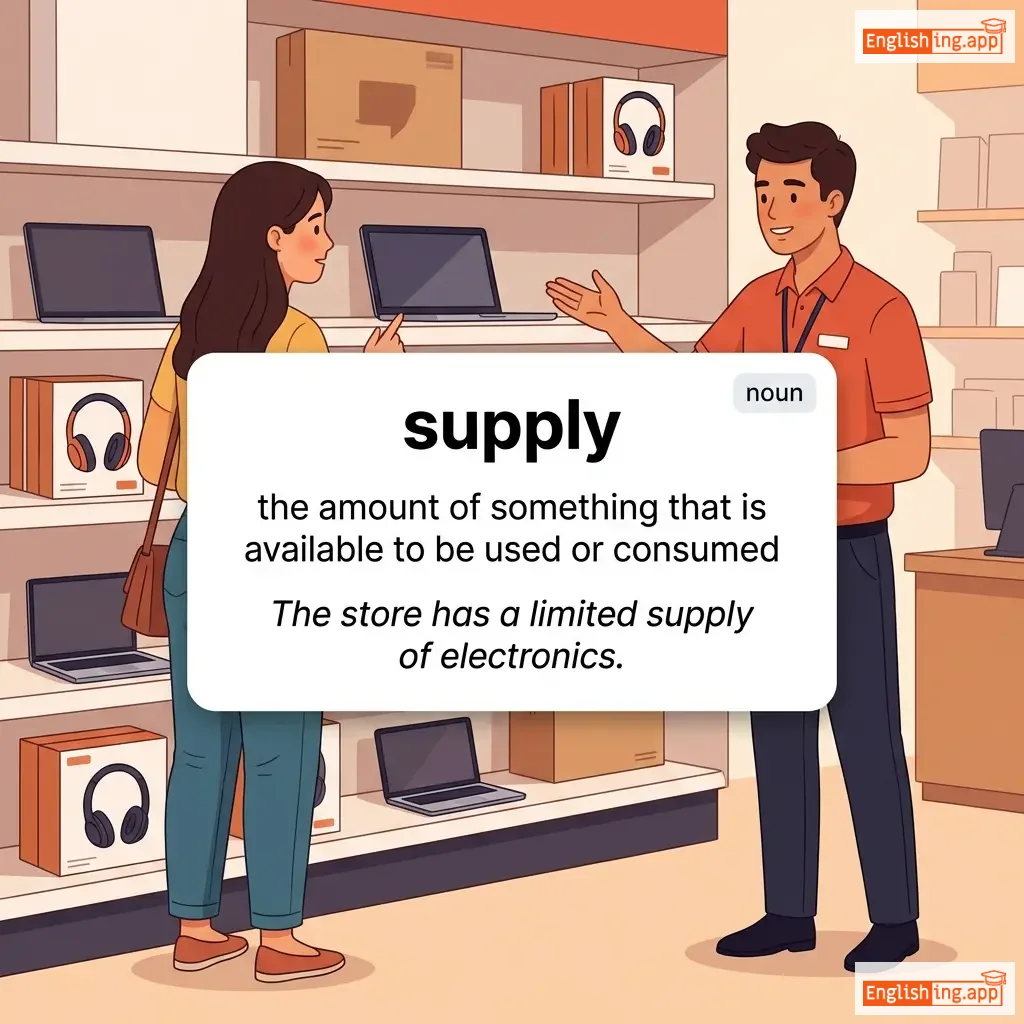
supply definition card — visual illustration of the meaning
noun
/səˈplaɪ/

the amount of something that is available to be used or consumed

"The store has a limited supply of electronics."

support definition card — visual illustration of the meaning
verb
/səˈpɔːrt/
支持 (zhīchí)

to give assistance or help to someone or something

"They always support each other during difficult times."

"他们总是在困难时互相支持。" (Tāmen zǒng shì zài kùnnán shí hùxiāng zhīchí.)
noun
/səˈpɔːtər/
支持者 (zhīchí zhě)

a person who supports someone or something

"She is a strong supporter of the local animal shelter."
"她是当地动物收容所的强大支持者。" (Tā shì dāngdì dòngwù shōuróngsuǒ de qiángdà zhīchí zhě.)
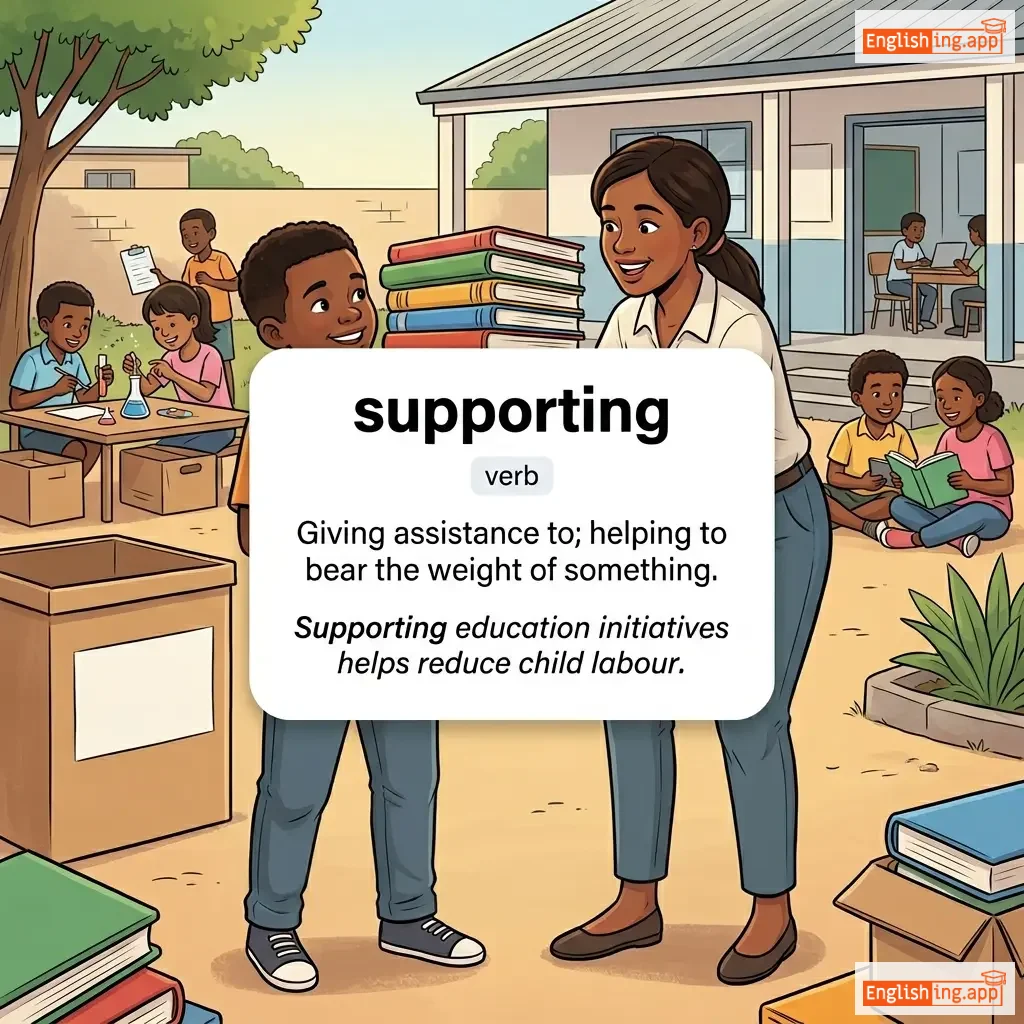
supporting definition card — visual illustration of the meaning
verb
səˈpɔːrtɪŋ
支持 (zhīchí)

Giving assistance to; helping to bear the weight of something.

"Supporting education initiatives helps reduce child labour."

"支持教育倡议有助于减少童工。" (Zhīchí jiàoyù chàngyì yǒu zhù yú jiǎnshǎo tónggōng.)
adjective
/səˈpɔːtɪv/
支持的 (zhīchí de)

providing encouragement or emotional help to someone

"She was very supportive during my difficult times."

"在我困难的时刻,她非常支持我。" (Zài wǒ kùnnán de shíkè, tā fēicháng zhīchí wǒ.)
verb
/səˈpəʊz/
假设 (jiǎshè)

to assume or believe something is true without proof

"I suppose she will be here soon."

"我猜你很快会到这里。" (Wǒ cāi nǐ hěn kuài huì dào zhèlǐ.)
adjective
/səˈpəʊzd/
假定的 (jiading de)

generally believed or assumed, but not necessarily true

"This is the supposed solution to the problem."

"这是问题的假定解决方案。" (Zhe shi wenti de jiading jiejue fang'an.)
adverb
/səˈpəʊzɪdli/
据说 (jùshuō)

used to show that something is believed or claimed to be true, though it may not be

"He is supposedly the best player on the team."
"据说他是队里最好的球员。" (Jùshuō tā shì duì lǐ zuì hǎo de qiúyuán.)
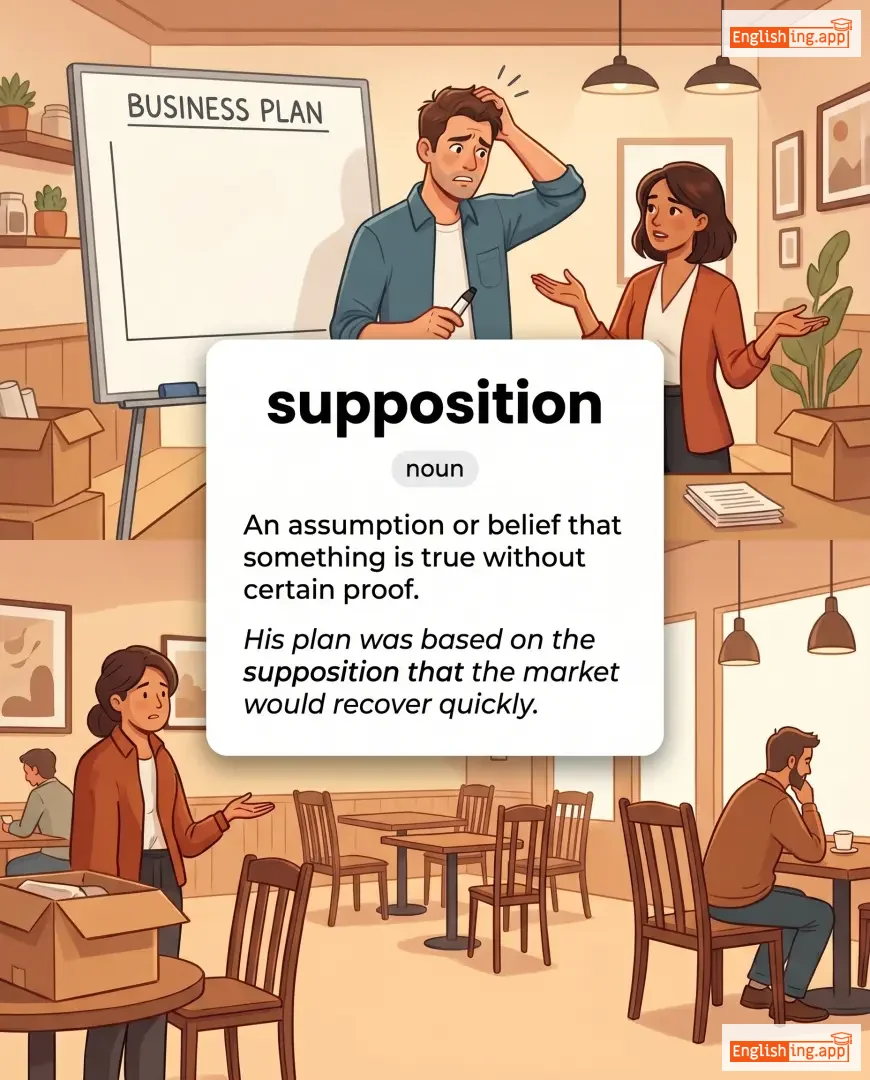
supposition definition card — visual illustration of the meaning
noun
/ˌsʌpəˈzɪʃən/
假设 (jiǎshè)

An assumption or belief that something is true without certain proof.

"His plan was based on the supposition that the market would recover quickly."

"他的计划是基于市场将迅速恢复的假设。" (tā de jìhuà shì jīyú shìchǎng jiāng xùnsù huīfù de jiǎshè.)
adjective
/ˌsʌpəzɪˈtɪʃəs/
假设的 (jiǎshè de)

Based on assumption rather than fact; not genuine or authentic.

"The story turned out to be supposititious, with no evidence to support it."
"这个故事证明是假的,没有证据支持它。" (Zhège gùshì zhèngmíng shì jiǎ de, méiyǒu zhèngjù zhīchí tā.)
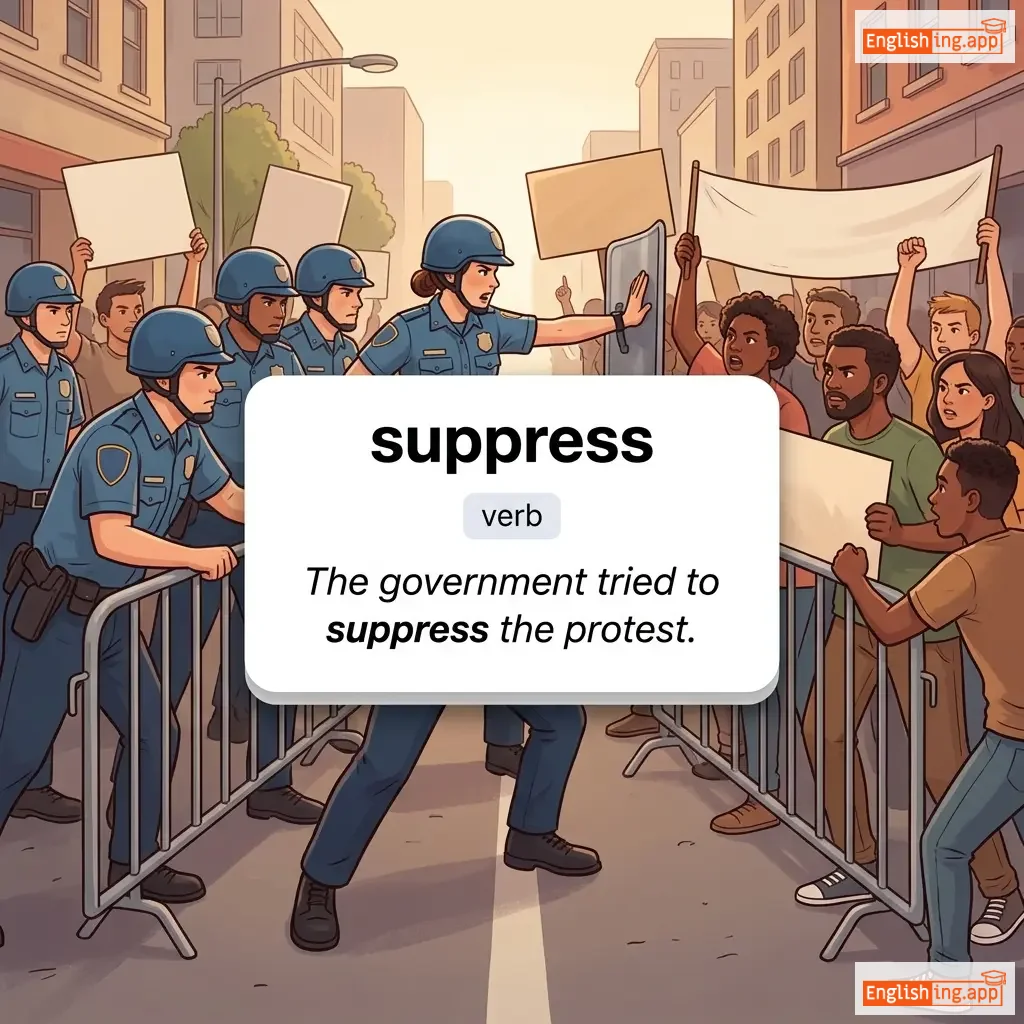
suppress definition card — visual illustration of the meaning
verb
/səˈprɛs/
压制 (yāzhì)

to forcibly put an end to something; to restrain or hold back an action, feeling, or development

"The government tried to suppress the protest."

"政府试图压制抗议。" (Zhèngfǔ shìtú yāzhì kàngyì.)
adjective
/səˈprɛsəbl̩/
可抑制的 (ke yizhi de)

capable of being restrained, controlled, or prevented

"The symptoms of the disease are suppressible with medication."

"疾病的症状可以通过药物抑制。" (Jíbìng de zhèngzhuàng kěyǐ tōngguò yàowù yìzhì.)
noun
/səˈprɛʃən/
压制 (yāzhì)

the act of forcibly stopping something or holding back feelings or actions

"The suppression of free speech led to protests."

"言论自由的压制导致了抗议。" (Yánlùn zìyóu de yāzhì dǎozhìle kàngyì.)
verb
/ˈsʌpjʊˌreɪt/
化脓 (huà nóng)

to form or discharge pus, usually as a result of infection

"The wound began to suppurate after a few days."

"伤口在几天后开始脓液化。" (Shāngkǒu zài jǐ tiān hòu kāishǐ nóng yè huà.)
adjective
/ˌsuːprəˈmʌndeɪn/
超世俗 (chāo shìsú)

beyond the physical or ordinary world; transcendent

"The monk spoke of supramundane peace beyond material life."

"和尚讲述了超越物质生活的超世俗的平静。" (Héshàng jiǎngshùle chāoyuè wùzhì shēnghuó de chāo shìsú de píngjìng.)
noun
/suˈpriː.mə.si/
至高无上;最高权力或权威 (zhì gāo wú shàng)

the state of being supreme; highest authority or power

"The country established naval supremacy in the region."

"该国在该地区建立了海军至高无上的地位。" (Gāi guó zài gāi dìqū jiànlìle hǎijūn zhìgāo wú shàng de dìwèi.)
adjective
/suˈpriːm/
至高无上 (zhì gāo wú shàng)

highest in rank or authority

"He is the supreme leader of the country."

"他是这个国家的最高领导人。" (Tā shì zhège guójiā de zuìgāo lǐngdǎo rén.)
noun
/sɜːrˈsiːs/
停止 (tingzhi)

a temporary or final ending or stopping of something

"The noise finally came to a surcease after midnight."

"噪音在午夜后终于停止了。" (Zaoyin zai wuyan hou zhongyu tingzhile.)
noun
/ˈsɜːrtʃɑːrdʒ/
附加费 (fùjiā fèi)

an additional charge or payment added to the usual cost

"The airline ticket had a fuel surcharge added to it."

"机票上加收了燃油附加费。" (Jīpiào shàng jiā shōu le rányóu fùjiā fèi.)
adjective
/ʃʊər/ or /ʃɔːr/
确定 (queding)

Confident about something; without doubt.

"I am sure that he will succeed."

"我确定他会成功。" (Wo queding ta hui chenggong.)
adverb
/ˈʃʊəli/
肯定 (kěndìng)

used to emphasize that something is definitely true or certain

"Surely, he must know about the meeting."

"肯定他一定知道关于会议的事情。" (Kěndìng tā yīdìng zhīdào guānyú huìyì de shìqíng.)
noun
/ˈʃʊərəti/
担保人 (danbaoren)

a person who takes responsibility for another's performance of an undertaking, such as appearing in court or paying a debt

"The landlord required a surety before renting the apartment."

"房东在出租公寓之前要求提供保证人。" (Fangdong zai chuzu gongyu zhiqian yaoqiu tigong baozhengren.)
noun
/ˈsɜːfɪs/
表面 (biaomian)

the outermost layer or boundary of something

"The surface of the water was calm."

"水的表面很平静。" (Shui de biaomian hen pingjing.)
noun
/ˈsɜːrfɪt/
过量 (guòliàng)

an excessive amount of something

"There was a surfeit of food at the festival."

"节日上食物过量。" (Jiérì shàng shíwù guòliàng.)
verb
/sɜːrdʒ/
激增 (jizeng)

to move suddenly and powerfully forward or upward

"The crowd surged forward when the gates opened."

"当大门打开时,人群向前涌动。" (Dang damen dakaishi, renqun xiang qian yongdong.)
noun
/ˈsɜːdʒən/
外科医生 (waike yisheng)

a doctor who performs medical operations

"The surgeon performed a complex heart operation."

"外科医生进行了复杂的心脏手术。" (Waike yisheng jinxing le fuza de xinzang shoushu.)
noun
/ˈsɜːdʒəri/

a medical procedure involving the cutting of the body to treat a condition

"She underwent surgery to remove the tumor."

adjective
/ˈsɜːdʒɪkəl/
与外科手术相关 (yu wàikē shǒushù xiāngguān)

relating to or involving surgery

"She underwent surgical treatment to repair the damage."

"她接受了外科治疗来修复损伤。" (Tā jiēshòu le wàikē zhìliáo lái xiūfù sǔnshāng.)
adjective
/ˈsɜːrli/
脾气暴躁 (píqì bàozào)

bad-tempered and unfriendly

"The waiter gave us a surly look when we asked for more water."

"当我们要求更多的水时,服务员用脾气暴躁的目光看着我们。" (Dāng wǒmen yāoqiú gèng duō de shuǐ shí, fúwùyuán yòng píqì bàozào de mùguāng kànzhe wǒmen.)
noun
/ˈsʊrmə fɪʃ/
苏尔马鱼 (su er ma yu)

a freshwater fish species found in the Surma river system of Bangladesh and northeastern India

"Surma fish is native to the rivers of Sylhet region."

"苏尔马鱼是西莱特地区河流的本土鱼类。" (su er ma yu shi xi lai te di qu he liu de ben tu yu lei)
verb
/sərˈmaɪz/
推测 (tuīcè)

to suppose something is true without having evidence

"She surmised that he was not coming to the meeting."

"她推测他不会来参加会议。" (Tā tuīcè tā bù huì lái cānjiā huìyì.)
verb
/sərˈmaʊnt/
克服 (kèfú)

to overcome a difficulty or obstacle

"He surmounted all the challenges to achieve his dream."

"他克服了所有的挑战,实现了自己的梦想。" (Tā kèfúle suǒyǒu de tiǎozhàn, shíxiànle zìjǐ de mèngxiǎng.)
noun
/ˈsɜr.neɪm/
姓氏 (xìngshì)

a hereditary name common to all members of a family; family name

"Please write your first name and surname on the form."

"请在表格上写下您的名字和姓氏。" (qǐng zài biǎogé shàng xiěxià nín de míngzì hé xìngshì.)
verb
/sərˈpæs/
超越 (chaoyue)

to exceed or go beyond

"Her performance surpassed all expectations."

"她的表现超出了所有预期。" (Ta de biaoxian chaoyu le suoyou yuqi.)
adjective
/sər'pæs.ɪŋ/
卓越; 超过; 非凡 (zhuóyuè, chāoguò, fēifán)

exceeding; going beyond; outstanding

"Her surpassing beauty made everyone stop and stare."

"她超凡的美丽让每个人都停下来盯着她看。" (Tā chāofán de měilì ràng měi gèrén dōu tíng xiàlái dīngzhe tā kàn.)
noun
/ˈsɜːr.plʌs/
盈余 (yingyu)

An amount that is more than what is needed.

"The country has a surplus of food this year."

"今年该国的食品盈余。" (Jin nian gai guo de shi pin ying yu.)
noun
/səˈpraɪz/
惊讶 (jingya)

a sudden and unexpected event or situation

"His arrival was a pleasant surprise."

"他的到来是一个愉快的惊讶。" (tā de dào lái shì yīgè yúkuài de jīngyà.)
adjective
/səˈpraɪzd/
惊讶 (jīngyà)

feeling or showing astonishment or shock

"She was surprised by the news."

"她被这个消息惊讶了。" (Tā bèi zhège xiāoxī jīngyà le.)
adjective
/səˈpraɪzɪŋ/
令人吃惊的 (lìng rén chī jīng de)

causing surprise or astonishment

"The sudden storm was surprising."

"突如其来的暴风雨令人吃惊。" (Tū rú qí lái de bào fēng yǔ lìng rén chī jīng.)
adverb
/səˈpraɪzɪŋli/
令人惊讶地 (ling ren jing ya di)

in a way that causes surprise or amazement

"Surprisingly, she finished the entire project in just one day."

"令人惊讶的是,她在一天之内完成了整个项目。" (Ling ren jing ya de, ta zai yi tian zhi nei wan cheng le zheng ge xiang mu.)
verb
/səˈrɛndər/
投降 (tóuxiáng)

to give up or yield to an opponent or authority

"The army finally surrendered after weeks of fighting."
"在几周的战斗后,军队终于投降了。" (Zài jǐ zhōu de zhàndòu hòu, jūnduì zhōngyú tóuxiáng le.)
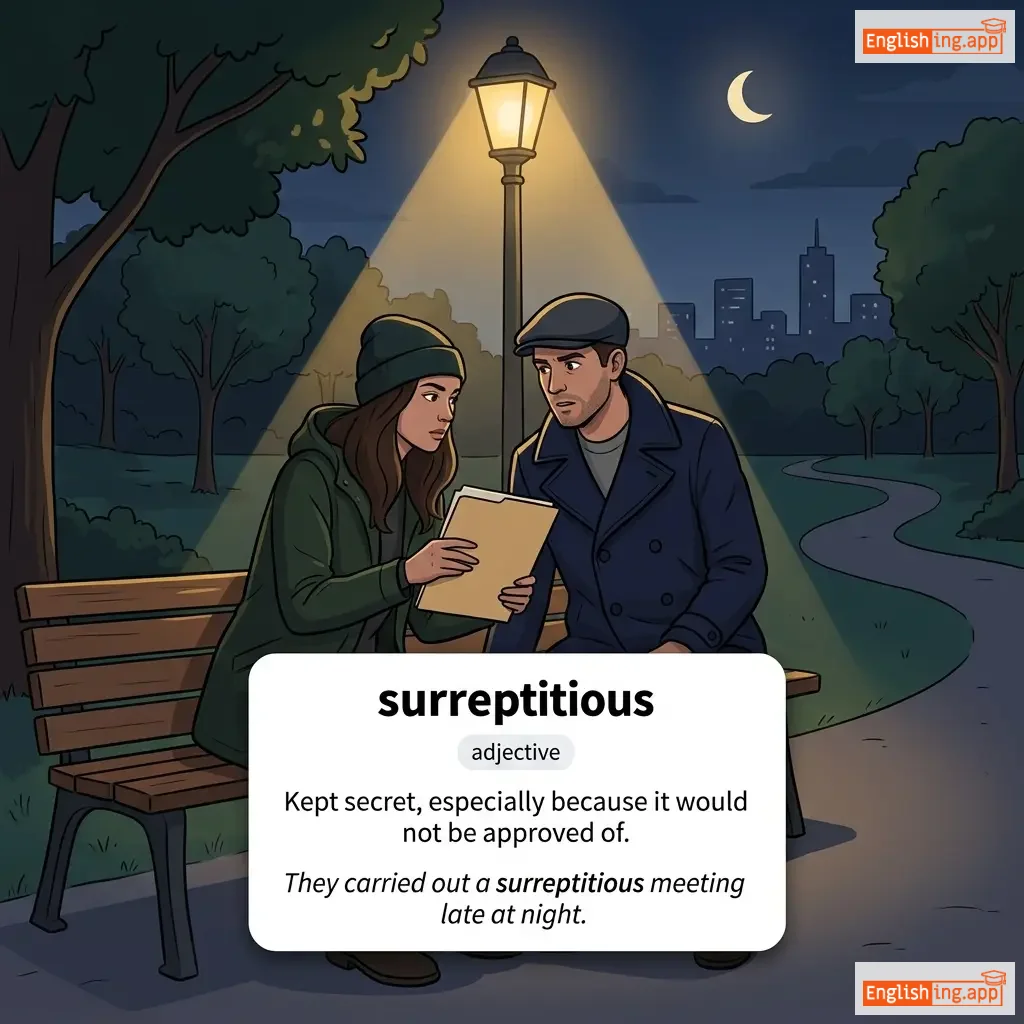
surreptitious definition card — visual illustration of the meaning
adjective
/ˌsʌrəpˈtɪʃəs/
秘密 (mimi)

Kept secret, especially because it would not be approved of.

"They carried out a surreptitious meeting late at night."
"他们在深夜举行了一次秘密会议。" (tamen zai shenye juxing le yici mimi huiyi.)
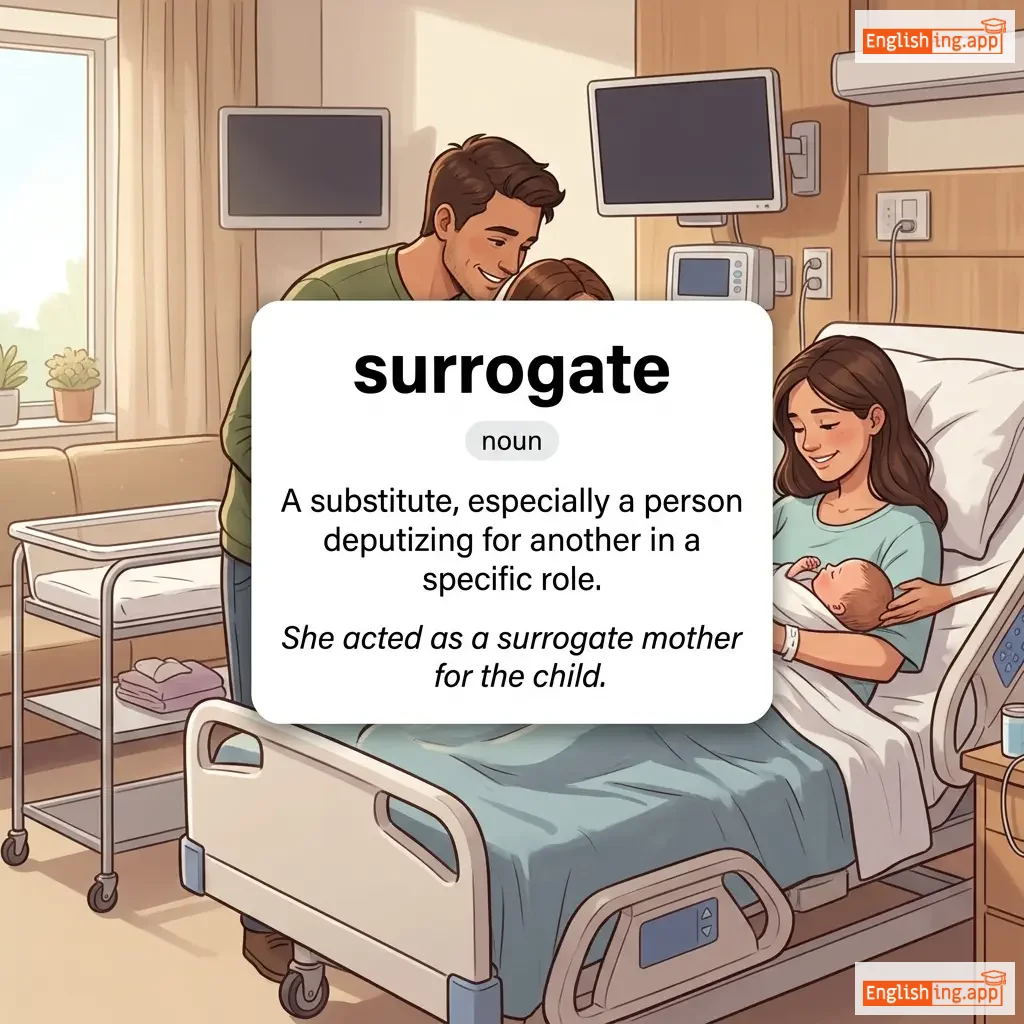
surrogate definition card — visual illustration of the meaning
noun
/ˈsʌrəɡət/
代理 (daili)

A substitute, especially a person deputizing for another in a specific role.

"She acted as a surrogate mother for the child."

"她为这个孩子充当了代孕母亲。" (Tā wèi zhège háizi chōngdāngle dàiyùn mǔqīn.)
verb
/səˈraʊnd/
围绕 (wéiráo)

To be all around someone or something.

"Mountains surround the small village."

"山脉围绕着小村庄。" (Shānmài wéirào zhe xiǎo cūnzhuāng.)
adjective
/səˈraʊndɪŋ/
周围的 (zhōuwéi de)

located all around a particular place or thing; nearby

"The surrounding hills were covered in mist."

"周围的山丘被雾气覆盖。" (Zhōuwéi de shānqiū bèi wùqì fùgài.)
noun
/səˈraʊn.dɪŋz/
周围环境 (zhou wei huan jing)

The area around a person, place, or thing.

"She quickly adapted to her new surroundings."
"她迅速适应了她的新环境。" (Ta xunsu shiying le ta de xin huanjing.)
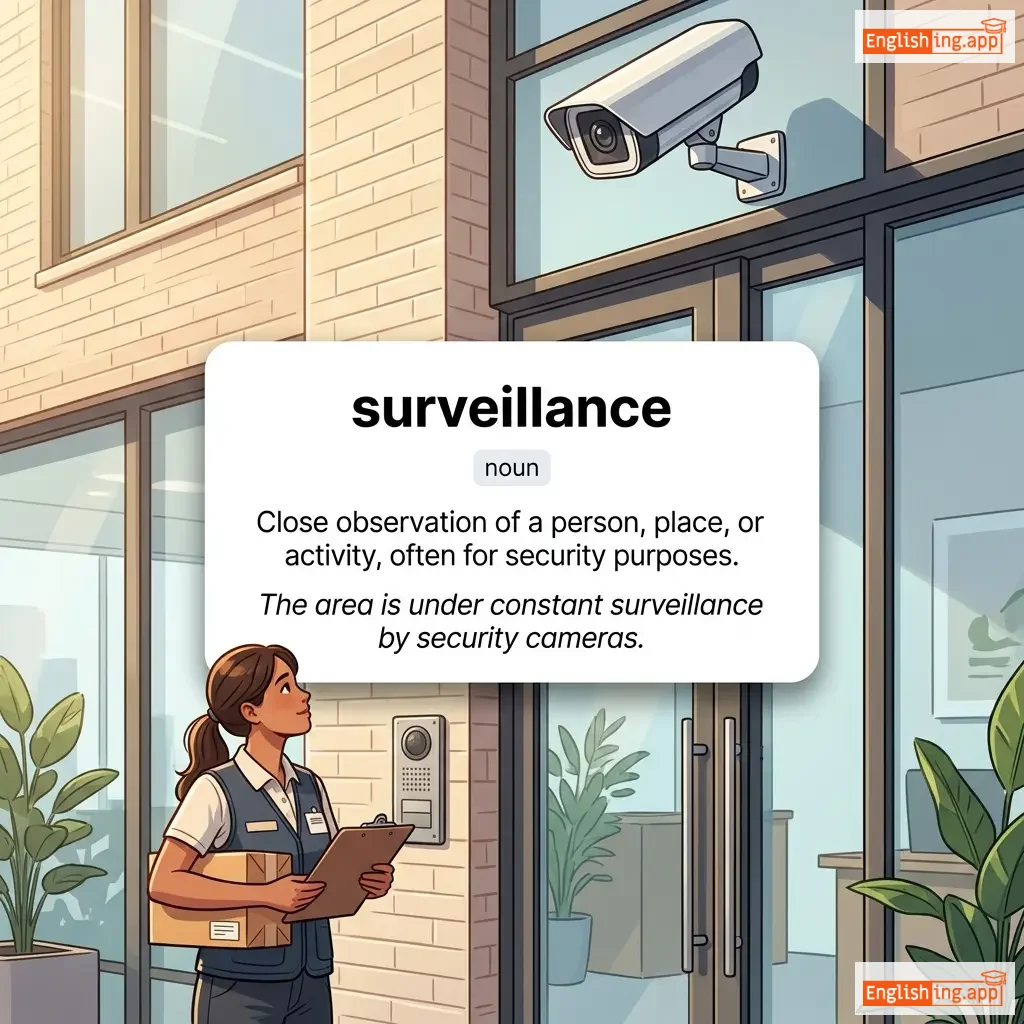
surveillance definition card — visual illustration of the meaning
noun
/sɜːrˈveɪləns/
监控 (jiānkòng)

Close observation of a person, place, or activity, often for security purposes.

"The area is under constant surveillance by security cameras."

"该区域正受到安全摄像头的持续监控。" (Gāi qūyù zhèng shòudào ānquán shèxiàngtóu de chíxù jiānkòng.)
noun/verb
/ˈsɜːveɪ/
调查,问卷调查 (diàochá, wènjuàn diàochá)

noun: an examination or inspection; verb: to examine or measure (an area or subject)

"They conducted a survey to understand customer preferences."

"他们进行了一项调查,以了解客户的偏好。" (Tāmen jìnxíngle yī xiàng diàochá, yǐ liǎojiě kèhù de piānhào.)
noun
/sərˈveɪər/
测量员 (cè liàng yuán)

A person who measures and maps land, buildings, or other features.

"The surveyor measured the land for construction."

"测量员为建设测量了土地。" (Cè liàng yuán wèi jiàn shè cè liàng le tǔ dì.)