词汇表

英语词汇词典 | 单词含义、定义和示例

noun
/ˌsætɪsˈfækʃən/
满足 (manzu)

the feeling of being pleased or content with something

"Her satisfaction with the results was evident."

"她对结果的满足是显而易见的。" (Ta dui jieguo de manzu shi xian'eryijian de.)
adjective
/ˈsæt.ɪs.fæk.tər.i/
令人满意的 (lìng rén mǎn yì de)

acceptable; meeting requirements; adequate

"The test results were satisfactory."

"测试结果令人满意。" (cèshì jiéguǒ shì mǎnzú de.)
adjective
/ˈsætɪsfaɪd/
满意 (mǎnyì)

Pleased or content with what has been achieved or received.

"He felt satisfied after finishing his project."

"完成项目后,他感到满意。" (Wánchéng xiàngmù hòu, tā gǎndào mǎnyì.)
satisfy definition card — visual illustration of the meaning
verb
/ˈsætɪsfaɪ/
满足 (manzu)

to meet the expectations, needs, or desires of someone

"The manager's explanation satisfied all of our concerns."

"经理的解释满足了我们所有的顾虑。" (Jingli de jieshi manzu le women suoyou de gulü.)
noun
/ˈsætræp/
总督 (zǒngdū)

a governor of a province in ancient Persia; also used figuratively for a subordinate ruler

"The king appointed a satrap to oversee the distant province."
"国王任命了一个总督来管理遥远的省份。" (Guówáng rènmìngle yīgè zǒngdū lái guǎnlǐ yáoyuǎn de shěngfèn.)
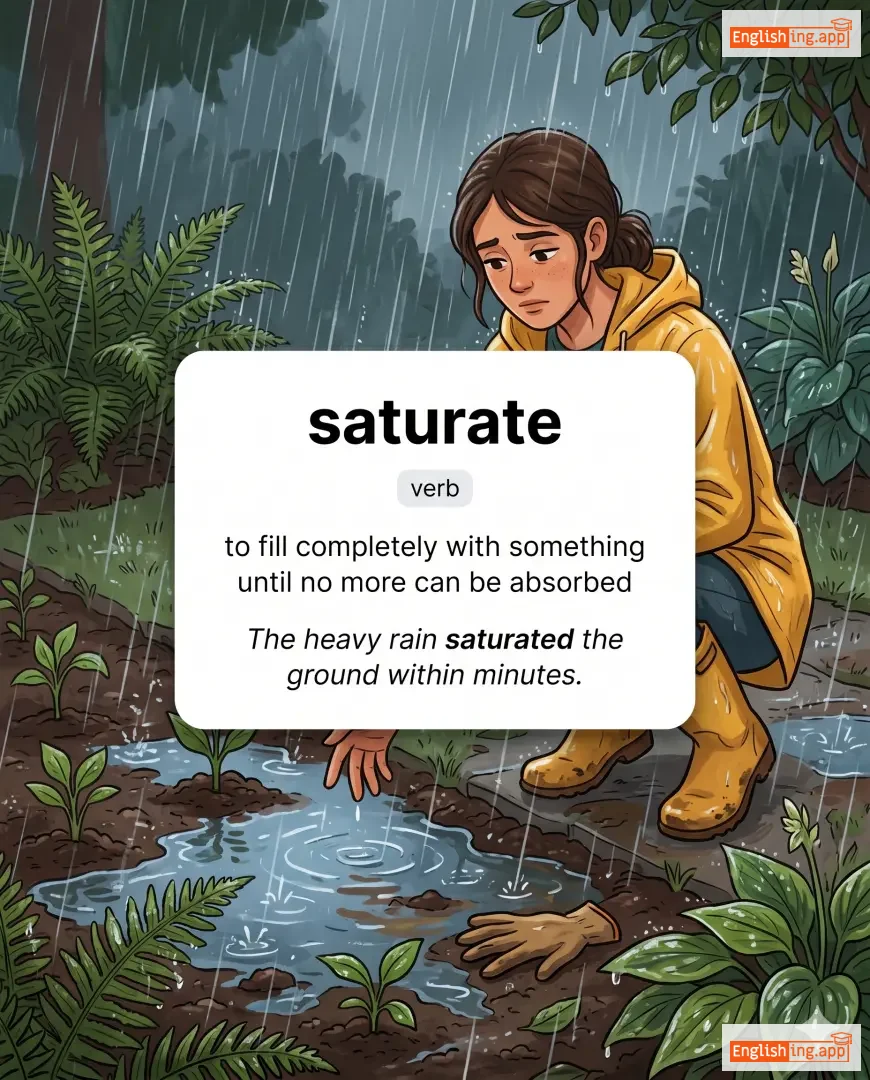
saturate definition card — visual illustration of the meaning
verb
/ˈsætʃəˌreɪt/

to fill completely with something until no more can be absorbed

"The heavy rain saturated the ground within minutes."

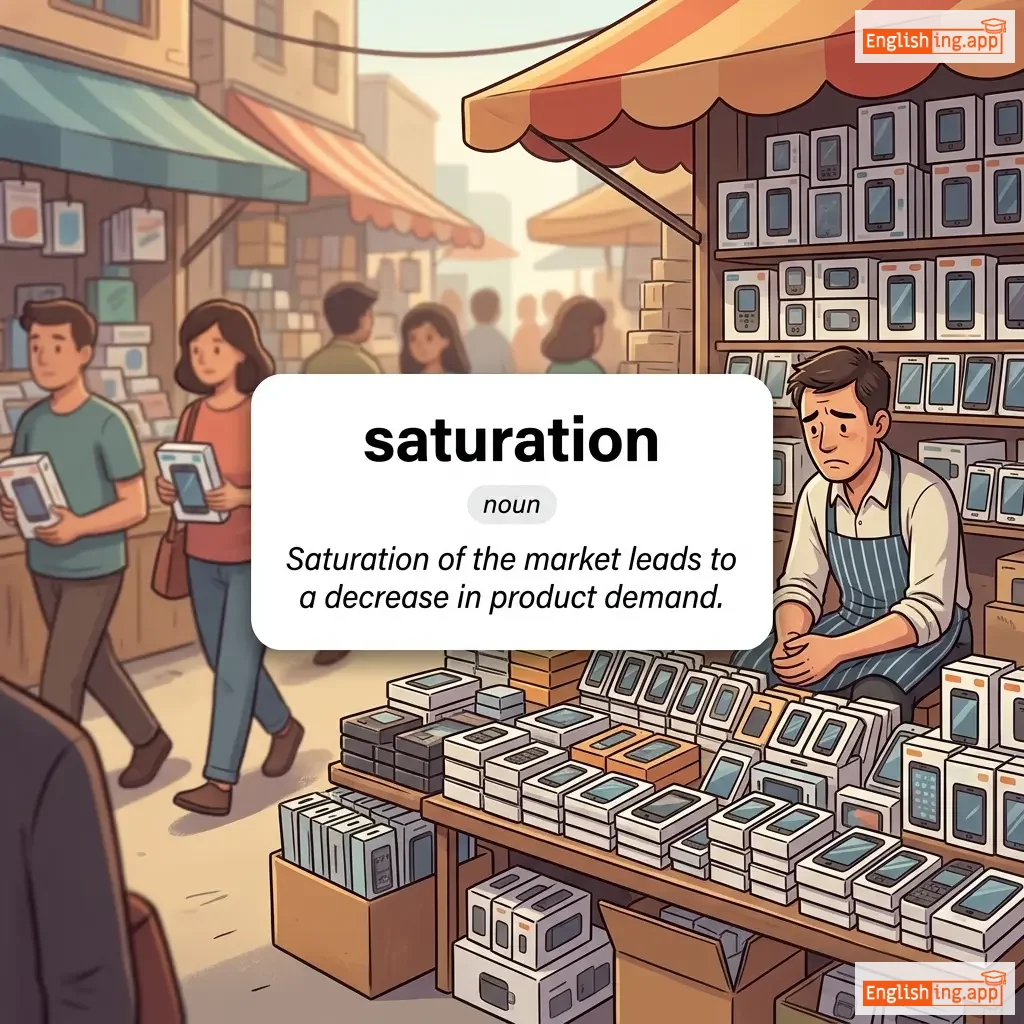
saturation definition card — visual illustration of the meaning
noun
/ˌsætʃəˈreɪʃən/
饱和 (baohua)

The state or process that occurs when no more of something can be absorbed, combined with, or added.

"Saturation of the market leads to a decrease in product demand."

"市场的饱和导致了产品需求的下降。" (Shichang de baohua daozhi le chanpin xuqiu de xiajiang.)
noun
/ˈsætərdeɪ/
星期六 (xingqi liu)

The day of the week between Friday and Sunday; traditionally the sixth day of the week

"We are going to the beach on Saturday."

"我们星期六去海滩。" (Wo men xingqi liu qu haitan.)
saturnine definition card — visual illustration of the meaning
adjective
/ˈsætərˌnaɪn/
忧郁的 (yōuyù de)

slow and gloomy in mood

"His saturnine expression made everyone in the room uncomfortable."
"他的忧郁表情让房间里的人都感到不舒服。" (Tā de yōuyù biǎoqíng ràng fángjiān lǐ de rén dōu gǎndào bù shūfú.)
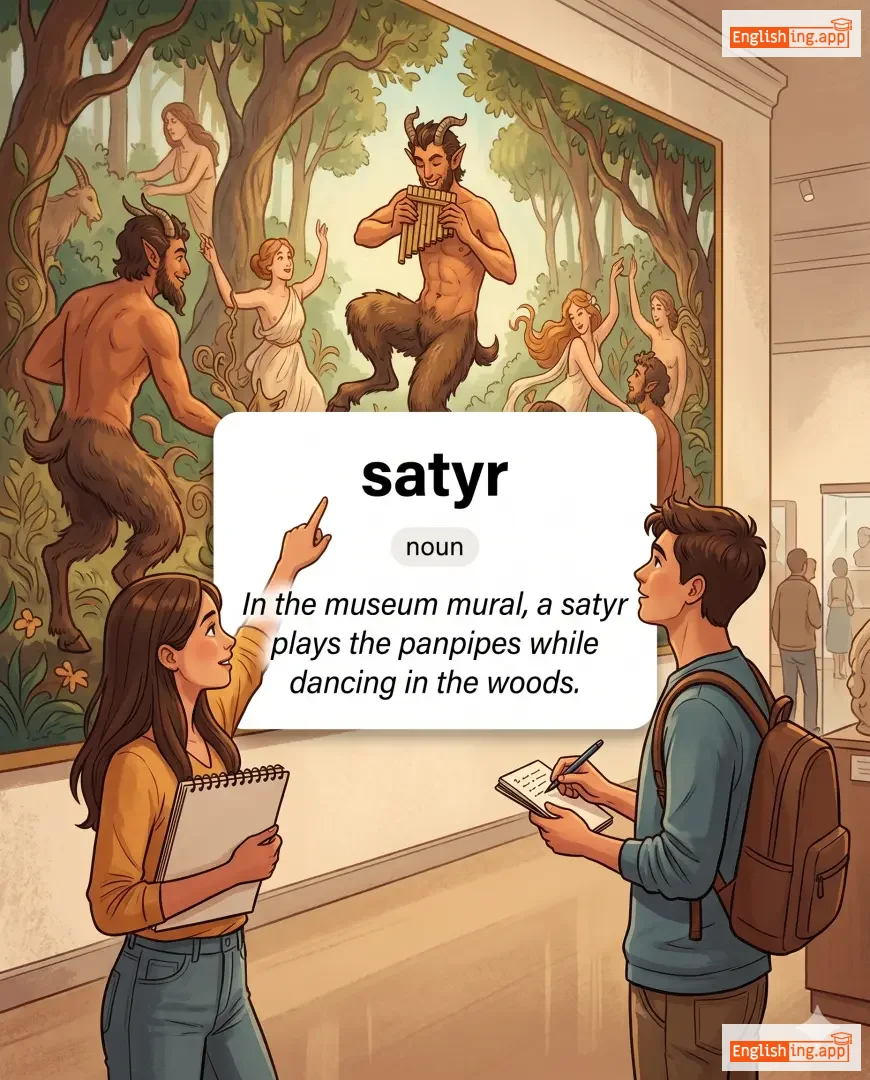
satyr definition card — visual illustration of the meaning
noun
/ˈsætər/
幸福 (xingfu)

a creature from Greek mythology depicted as a lustful being, often half-man and half-goat; by extension, a lecherous man

"In the museum mural, a satyr plays the panpipes while dancing in the woods."

"当她获得奖项时,她无法掩饰自己的幸福。" (Dang ta huode jiangxiang shi, ta wufa yanshi ziji de xingfu.)
noun
/sɔːs/
酱汁 (jiangzhi)

a liquid or semi-liquid substance used to add flavor to food

"She added some tomato sauce to the pasta."

"她在意大利面中加了一些番茄酱。" (Ta zai yidali mian zhong jia le yixie fanqie jiang.)
adjective
/ˈsɔːsi/
大胆的 (dàdǎn de)

Boldly rude, cheeky, or playfully disrespectful.

"The child gave a saucy reply to his teacher."

"那个孩子给老师一个大胆的回答。" (Nàgè háizi gěi lǎoshī yīgè dàdǎn de huídá.)
verb
/ˈsɔːntər/

to walk in a slow, relaxed manner without hurry or effort

"We sauntered along the riverside, stopping now and then to watch the boats."

adjective
/ˈsævɪdʒ/
野蛮; 残忍 (yěmán; cánrěn)

fierce, violent, or uncontrolled; cruel or brutal

"The storm brought savage winds that tore branches from the trees."

"暴风雨带来了野性的风,将树枝从树上刮下来。" (Bàofēngyǔ dàilái le yěmáng de fēng, jiāng shùzhī cóng shù shàng guā xiàlái.)
noun
/səˈvænə/
草原(散布着树木) (cǎoyuán (sàn bù zhe shùmù))

a grassy plain with scattered trees, typical of tropical and subtropical regions

"Giraffes browsed on acacia trees across the wide savanna."

"长颈鹿在广阔的萨凡纳上吃着金合欢树的叶子。" (Chángjǐnglù zài guǎngkuò de sàfánnà shàng chī zhe jīn héhuān shù de yèzi.)
noun
/səˈvɑːnt/

a learned person, especially a distinguished scientist or scholar; sometimes used in the phrase ‘savant syndrome’ for someone with exceptional abilities alongside developmental differences

"The conference keynote was delivered by a linguistic savant who studies endangered languages."

save definition card — visual illustration of the meaning
verb
/seɪv/
拯救 / 存储 (zhěngjiù / cúnchú)

To keep safe, to rescue, or to store for future use.

"She managed to save enough money for a new bike."

"她成功地为一辆新自行车存够了钱。" (Tā chénggōng de wèi yī liàng xīn zìxíngchē cún gòu le qián.)
saving definition card — visual illustration of the meaning
noun
/ˈseɪvɪŋ/
储蓄 (chǔxù)

the process of saving money or resources for future use

"Her saving habits helped her afford the new car."

"她的储蓄习惯帮助她买到了新车。" (Ta de chuxu xiguan bangzhu ta maidaole xinn che.)
savings definition card — visual illustration of the meaning
noun
ˈseɪ.vɪŋz
储蓄 (chǔxù)

Money that is kept for future use or investment.

"Many people invest their savings in real estate."

"很多人将他们的储蓄投资于房地产。" (Hěn duō rén jiāng tāmen de chǔxù tóuzī yú fángdìchǎn.)
noun
/ˌsæv.wɑːr ˈfeər/
社交技巧 (shèjiāo jìqiǎo)

The ability to act or speak appropriately in social situations; polished social skills.

"She handled the delicate situation with remarkable savoir-faire."

"她以卓越的社交技巧处理了这一棘手的情况。" (Tā yǐ zhuóyuè de shèjiāo jìqiǎo chǔlǐle zhè yī jíshǒu de qíngkuàng.)
savor definition card — visual illustration of the meaning
verb
/ˈseɪ.vər/
尽情享受 (jìnqíng xiǎngshòu)

To enjoy something completely, especially by dwelling on it.

"He savored every bite of the delicious cake."

"他细细品味着美味的蛋糕。" (Tā xìxì pǐnwèi zhe měiwèi de dàngāo.)
adjective
/ˈseɪ.vər.i/
美味的(咸的或辣的) (měiwèi de (xián de huò là de))

Having a pleasant salty or spicy taste; morally acceptable.

"The restaurant serves a variety of savory dishes."

"这家餐厅提供各种美味的菜肴。" (Zhè jiā cāntīng tígōng gèzhǒng měiwèi de cài yáo.)
adjective
/ˈsæv.i/
聪明, 精明 (cōngmíng, jīngmíng)

Having practical knowledge and the ability to make good judgments.

"She is a tech-savvy entrepreneur."

"她是一位技术精通的企业家。" (Tā shì yī wèi jìshù jīngtōng de qǐyèjiā.)
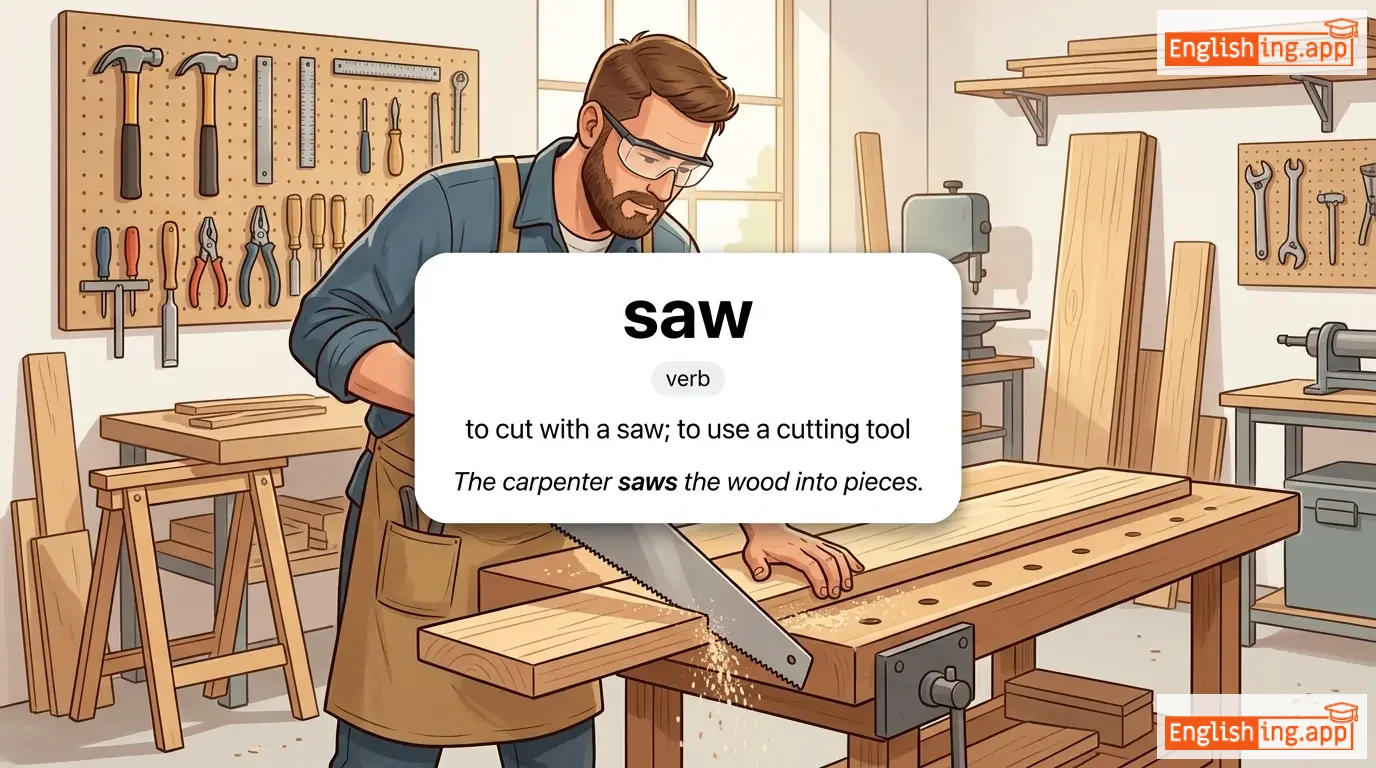
saw definition card — visual illustration of the meaning
noun
/sɔː/
锯子 (jùzi)

a tool with a sharp blade used for cutting wood or other materials

"He used a saw to cut the wooden plank."

"他用锯子切割木板。" (Tā yòng jùzi qiēgē mùbǎn.)
noun
/ˈsɔː.dər/
奉承; 奉承的话 (fèngchéng; fèngchéng de huà)

flattering or wheedling talk; soft soap

"His sawder couldn't convince anyone of his sincerity."

"他的奉承无法说服任何人相信他的真诚。" (Tā de fèngchéng wúfǎ shuōfú rènhé rén xiāngxìn tā de zhēnchéng.)
noun
/ˈsɔː.dʌst/
锯末 (jùmò)

The tiny particles of wood produced by sawing or sanding.

"The floor was covered with sawdust from the carpentry work."

"地板上覆盖着来自木工工作的锯末。" (Dìbǎn shàng fùgàizhe láizì mùgōng gōngzuò de jùmò.)
noun
/ˈsɔːjər/
锯木工 (jù mù gōng)

a person who saws wood, especially as an occupation

"The skilled sawyer cut the logs into planks."

"熟练的锯木工将原木锯成木板。" (Shúliàn de jù mù gōng jiāng yuán mù jù chéng mù bǎn)
noun
/ˈsæksəfoʊn/
萨克斯风 (sàkèsī fēng)

a wind musical instrument with a curved metal body and a single reed mouthpiece

"The jazz musician played a beautiful solo on his saxophone."

"爵士乐手在他的萨克斯风上演奏了一首美妙的独奏。" (juéshì yuèshǒu zài tā de sàkèsī fēng shàng yǎnzòu le yī shǒu měimiào de dúzòu.)
say definition card — visual illustration of the meaning
🗣️

say (sāi)

verb
/seɪ/
(shuo)

to speak words or express thoughts aloud

"She asked him to say hello to her parents."

"她让他对她的父母说你好。" (Tā ràng tā duì tā de fùmǔ shuō nǐ hǎo.)
noun
/ˈseɪ.ɪŋ/
谚语 (yànyǔ)

a well-known phrase that expresses something true about life; a proverb

"There's an old saying that practice makes perfect."

"有一句老话说,实践出真知。" (Yǒu yī jù lǎo huà shuō, shíjiàn chū zhēnzhī.)
noun
/ˈskæb.ərd/
剑鞘 (jianqiao)

A sheath for the blade of a sword or dagger, typically made of leather or metal.

"The knight drew his sword from the scabbard."

"骑士从剑鞘中拔出了剑。" (Qíshì cóng jiànqiào zhōng bá chūle jiàn.)
noun
/ˈskeɪ.biːz/
疥疮 (jiechuang)

a contagious skin disease caused by mites that causes intense itching

"The doctor diagnosed him with scabies after examining the rash."

"医生在检查了皮疹后诊断他为疥疮。" (Yīshēng zài jiǎnchá le pízhěn hòu zhěnduàn tā wèi jiè chuāng.)
noun
/skæd/
斯卡德鱼 (Sikade yu)

A type of fish of the jack family; also informally means a large number or quantity.

"The fisherman caught a scad in the net."

"渔夫在网中抓住了一条斯卡德。" (Yufu zai wang zhong zhuazhu le yitiao sikade.)
noun (plural, informal)
/skædz/
一大堆 (yi da dui)

A large number or quantity of something (informal).

"She has scads of friends in the city."

"她在城市里有一大堆朋友。" (Tā zài chéngshì lǐ yǒu yī dà duī péngyǒu.)
noun
/ˈskæf.əʊld/
脚手架 (jiaoshoujia)

A temporary platform used to support workers and materials during the construction or repair of a building.

"The workers stood on the scaffold to paint the building."

"工人们站在脚手架上涂漆。" (Gōngrénmen zhàn zài jiǎoshǒujià shàng túqī.)
scalability definition card — visual illustration of the meaning
noun
/ˌskeɪ.ləˈbɪl.ə.ti/
可扩展性 (ke kuozhansheng)

The ability to expand to larger scales while maintaining efficiency

"The startup focused on scalability to handle future growth."

"创业公司专注于可扩展性以应对未来的增长。" (Chuangye gongsi zhuanzhu yu ke kuozhansheng yi yingdui weilai de zengzhang.)
noun/verb
/skeɪl/
刻度 / 调整大小 (kèdù / tiáozhěng dàxiǎo)

A system of ordered marks used for measurement; also means to climb or to adjust in size.

"The company plans to scale its operations globally."

"公司计划全球扩展其业务。" (Gōngsī jìhuà quánqiú kuòzhǎn qí yèwù.)
noun
/ˈskælpəl/
手术刀 (shǒu shù dāo)

A small and extremely sharp bladed instrument used for surgery and dissection.

"The surgeon carefully used a scalpel to make the first incision."

"外科医生小心地使用手术刀进行第一次切割。" (Wàikē yīshēng xiǎoxīn de shǐyòng shǒushù dāo jìnxíng dì yī cì qiēgē.)
adjective
/ˈskeɪ.li/
鳞片状的 (lin-pian zhuang de)

covered with scales; having a rough surface like scales

"The fish has scaly skin."

"那条鱼有鳞片的皮肤。" (Nà tiáo yú yǒu línpiàn de pífū.)
verb
/skæn/
幸福 (xìngfú)

To look at something carefully or quickly; to digitally copy or capture an image or document.

"She scanned the document before sending it by email."

"她收到奖项时无法隐藏自己的幸福。" (Tā shōudào jiǎngxiàng shí wúfǎ yǐncáng zìjǐ de xìngfú.)
noun
/ˈskændəl/
丑闻 (chou wen)

an event or action that causes public outrage or damage to one's reputation

"The politician's affair became a public scandal."

"那位政治家的私 affair 成为了公共丑闻。" (Na wei zhengzhi jia de si affair cheng wei le gong gong chou wen.)
adjective
/skænt/
稀缺的 (xiquede)

Barely sufficient or inadequate in amount, degree, or quantity.

"There was scant evidence to support the claim."

"几乎没有证据支持该声明。" (Jihu meiyou zhengju zhichi gai shengming.)
adjective
/ˈskænti/
稀缺 (xique)

Small in quantity; insufficient or meager.

"The refugees survived on scanty food supplies."

"难民们靠着稀缺的食物存活。" (Nanmin men kao zhe xique de shiwul cunhuo.)
noun
/ˈskeɪpˌɡoʊt/
替罪羊 (tìzuìyáng)

A person who is unfairly blamed for problems, mistakes, or faults of others.

"He became the scapegoat for the company’s financial troubles."

"他成了公司财务问题的替罪羊。" (Tā chéngle gōngsī cáiwù wèntí de tìzuìyáng.)
noun
/skɑːr/
疤痕 (bāhén)

a mark left on the skin after a wound has healed; lasting emotional damage

"The accident left a permanent scar on his forehead."

"事故在他额头上留下了永久的伤疤。" (Shìgù zài tā é tóu shàng liúxià le yǒngjiǔ de shāngbā.)
adjective
/skɛərs/
稀缺 (xique)

insufficient in quantity; hard to find

"Water was scarce during the long drought."

"在长时间的干旱期间,水资源稀缺。" (Zai chang shijian de ganhan qi jian, shui ziyuan xique.)
adverb
/ˈskeəs.li/
几乎; 几乎不; 仅仅 (jihu; jihu bu; jinjin)

hardly; barely; only just

"I could scarcely believe my eyes."
"我几乎不敢相信自己的眼睛。" (Wo jihu bu gan xinxiang ziji de yanjing.)
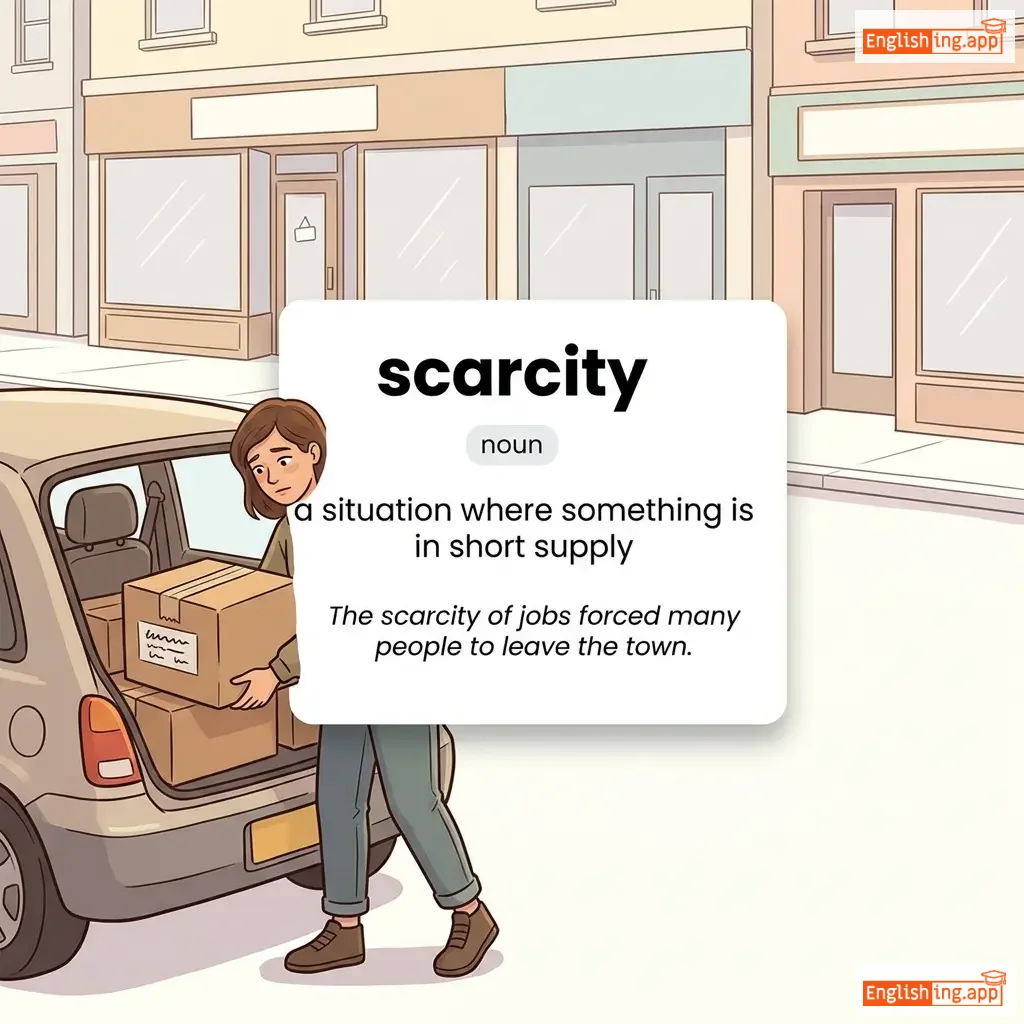
scarcity definition card — visual illustration of the meaning
noun
/ˈskɛərsəti/
稀缺 (xique)

a situation where something is in short supply

"The scarcity of jobs forced many people to leave the town."

"工作稀缺迫使许多人离开了这个城市。" (Gongzuo xique poshi xueren likai le zhege chengshi.)
verb
/skeər/
恐吓 (kǒnghè)

to frighten someone or make them feel afraid

"The loud noise scared the baby."

"大声的噪音把婴儿吓坏了。" (dà shēng de zàoyīn bǎ yīng'ér xiàhuài le.)
adjective
/skɛrd/
害怕的 (haipa de)

feeling afraid or worried

"She was scared of the dark."

"她害怕黑暗。" (Tā hàipà hēi'àn.)