词汇表

英语词汇词典 | 单词含义、定义和示例

adjective/noun
/ˈsʌkjələnt/
多汁的 (duō zhī de)

Juicy or full of juice; also refers to a plant with thick, fleshy leaves adapted to storing water.

"The steak was so succulent that everyone enjoyed it."

"这块牛排多汁到每个人都喜欢。" (Zhè kuài niúpái duō zhī dào měi gè rén dōu xǐhuān.)
⚰️

succumb

verb
/səˈkʌm/

To give in to pressure, temptation, or illness; to yield or fail to resist.

"He finally succumbed to his illness after a long struggle."

determiner
/sʌtʃ/
这样的 (zhè yàng de)

of the type previously mentioned or specified

"I have never seen such a beautiful painting."

"我从未见过这样的美丽画作。" (Wǒ cóng wèi jiànguò zhèyàng de měilì huàzuò.)
verb
/sʌk/
(xī)

to draw something into the mouth by using the lips and tongue

"The baby began to suck her thumb."

"婴儿开始吸吮她的拇指。" (Yīng'ér kāishǐ xīshuǐ tā de mǔzhǐ.)
verb
/ˈsʌkɪŋ/
吮吸 (shunxi)

Drawing in a liquid, air, or other substance through the mouth or a tube by creating a vacuum; also used figuratively for something unpleasant or ineffective

"The baby is sucking on a pacifier."

"婴儿正在吮吸安抚奶嘴。" (Yinger zhengzai shunxi anfu naizui.)
verb
/ˈsʌk.əl/
哺乳 (bǔrǔ)

to feed a baby or young animal with milk from the breast or udder

"The mother cat suckled her kittens in the basket."

"母猫在篮子里哺乳她的小猫。" (Mǔ māo zài lánzi lǐ bǔrǔ tā de xiǎo māo.)
adjective
/ˈsʌdən/
突然 (tūrán)

occurring or done quickly and unexpectedly

"The sudden change in the weather surprised everyone."

"天气的突然变化让所有人都很吃惊。" (Tiānqì de tūrán biànhuà ràng suǒyǒu rén dōu hěn chījīng.)
adverb
/ˈsʌdənli/
突然 (turan)

in a way that happens quickly and unexpectedly

"The lights suddenly went out during the meeting."

"会议期间灯光突然熄灭。" (Huiyi qijian dengguang turan ximie.)
adjective
/ˌsuːdəˈrɪfɪk/
促汗的 (cù hàn de)

causing or increasing sweating

"The doctor prescribed a sudorific drug to help reduce the fever."

"医生开了一种促进出汗的药物来帮助减少发热。" (Yīshēng kāile yī zhǒng cù hàn de yàowù lái bāngzhù jiǎnshǎo fārè.)
verb
/suː/
起诉 (qǐsù)

to bring a lawsuit against someone in a court of law

"She decided to sue the company for damages."

"她决定起诉公司要求赔偿。" (Tā juédìng qǐsù gōngsī yāoqiú péicháng.)
verb
/ˈsʌfər/
遭受 (zaoshou)

to experience pain, distress, or hardship

"She suffered from a severe headache all day."

"她整天忍受剧烈的头痛。" (Ta zheng tian renshou juelie de toutong.)
noun
/ˈsʌfərəns/
宽容 (kuanrong)

patient endurance of pain, hardship, or delay; passive consent or tolerance

"He lived in poverty with quiet sufferance."

"他在贫困中默默忍受着。" (Ta zai pinkun zhong momo renshouzhe.)
noun
/ˈsʌfərɪŋ/
痛苦 (tòngkǔ)

the state of undergoing pain, distress, or hardship

"They tried to relieve his suffering with medicine."
"他们试图用药物减轻他的痛苦。" (Tāmen shìtú yòng yàowù jiǎnqīng tā de tòngkǔ.)
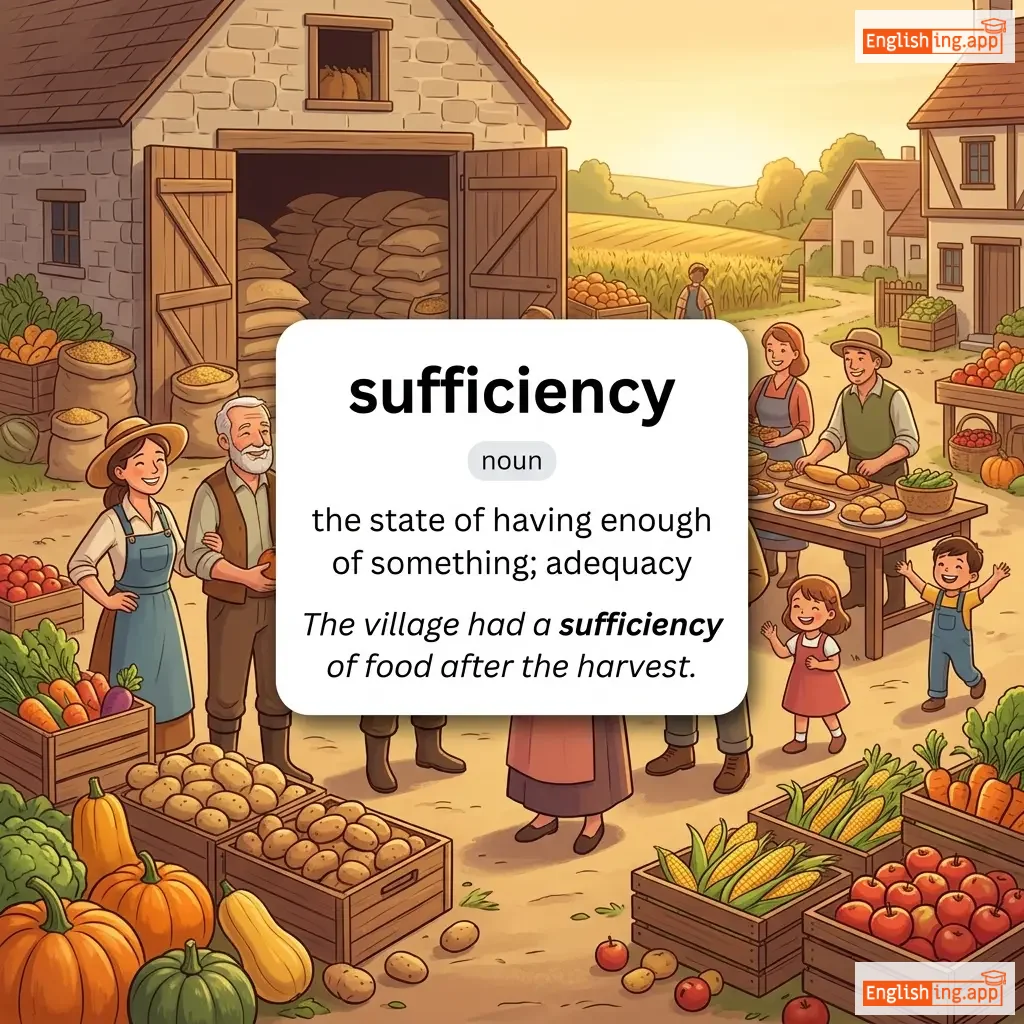
sufficiency definition card — visual illustration of the meaning
noun
/səˈfɪʃənsi/
充足 (chōngzú)

the state of having enough of something; adequacy

"The village had a sufficiency of food after the harvest."

"收获后,村子里有足够的食物。" (Shōuhuò hòu, cūnzi lǐ yǒu zúgòu de shíwù.)
adjective
/səˈfɪʃənt/
足够的 (zúgòu de)

enough; adequate for a purpose

"She had sufficient money to buy the dress."

"她有足够的钱买这件裙子。" (Tā yǒu zúgòu de qián mǎi zhè jiàn qúnzi.)
adverb
/səˈfɪʃəntli/
充分 (chōngfèn)

to an adequate degree or extent

"She studied sufficiently to pass the exam."
"她足够努力地学习,才能通过考试。" (Tā zúgòu nǔlì de xuéxí, cáinéng tōngguò kǎoshì.)
😮‍💨

suffocate

verb
/ˈsʌfəkeɪt/

to cause someone to die or have difficulty breathing by depriving them of air

"The child nearly suffocated when trapped in the locked room."

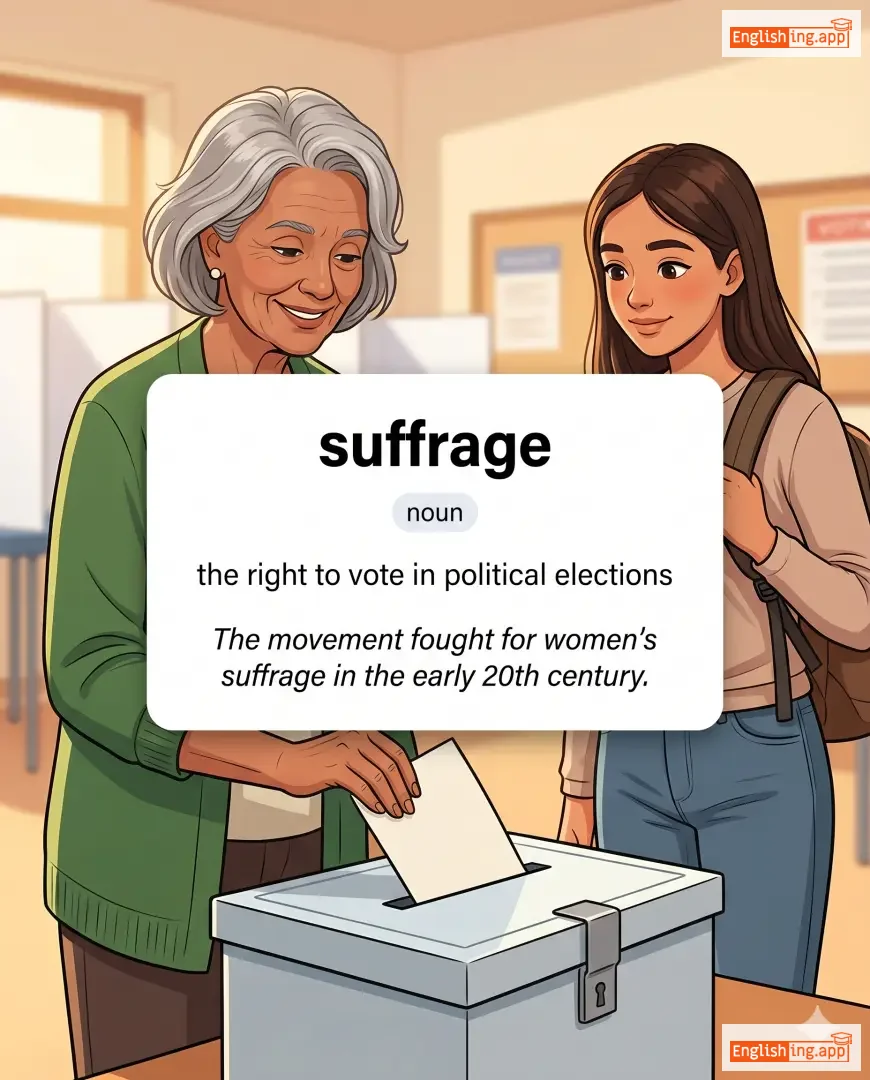
suffrage definition card — visual illustration of the meaning
noun
/ˈsʌfrɪdʒ/
选举权 (xuanju quan)

the right to vote in political elections

"The movement fought for women’s suffrage in the early 20th century."

"该运动在20世纪初为女性争取选举权。" (gai yundong zai ershi shiji chu wei nvxing zhengqu xuanju quan.)
noun
/ˈsʌfrədʒɪst/
妇女参政权运动者 (fùnǚ cān zhèngquán yùndòng zhě)

a person advocating the extension of suffrage, especially to women

"The suffragists organized rallies to demand voting rights for women."

"妇女参政权运动者组织了集会,要求为女性争取投票权。" (Fùnǚ cān zhèngquán yùndòng zhě zǔzhīle jíhuì, yāoqiú wèi nǚxìng zhēngqǔ tóupiào quán.)
verb
/səˈfjuːz/
弥漫 (mímàn)

to gradually spread through or over something

"A warm glow suffused her face as she smiled."

"当她微笑时,一种温暖的光辉弥漫到她的脸上。" (Dāng tā wēixiào shí, yī zhǒng wēnnuǎn de guānghuī mímàn dào tā de liǎn shàng.)
noun
/ˈʃʊɡər/
(tang)

a sweet substance made from plants or produced synthetically

"She added two spoons of sugar to her tea."

"她在茶里加了两勺糖。" (Tā zài chá lǐ jiāle liǎng sháo táng.)
noun
/ˈʃʊɡ.ər ˈkæn.di/
糖果 (tángguǒ)

crystallized sugar formed into small pieces; rock candy made from sugar syrup

"The children enjoyed eating colorful sugar candy at the festival."

"孩子们在节日上享受吃彩色的糖果。" (Háizimen zài jiérì shàng xiǎngshòu chī cǎisè de tángguǒ)
verb
/səˈdʒɛst/
建议 (jianyi)

to put forward an idea, plan, or recommendation for consideration

"He suggested going to the new restaurant for dinner."

"他建议去新餐馆吃晚餐。" (Tā jiànyì qù xīn cānguǎn chī wǎncān.)
adjective
/səˈdʒɛstəbəl/
易受影响的 (yì shòu yǐngxiǎng de)

easily influenced by the suggestions of others

"Children are highly suggestible and may believe what they are told."

"孩子们很容易受到影响,可能会相信他们被告知的事情。" (Háizimen hěn róngyì shòu dào yǐngxiǎng, kěnéng huì xiāngxìn tāmen bèi gàozhī de shìqíng.)
noun
/səˈdʒɛstʃən/
建议 (jianyi)

an idea or plan put forward for consideration or action

"She gave a suggestion for improving the project."

"她给出了改善项目的建议。" (Tā gěi chūle gǎishàn xiàngmù de jiànyì.)
adjective
/səˈdʒɛstɪv/
暗示的 (anshi de)

tending to suggest ideas or images; sometimes implies something sexual or provocative

"The painting was highly suggestive and sparked much debate."

"这幅画非常暗示,并引发了许多争论。" (Zhe fu hua feichang anshi, bing yinfale xu duo zhenglun.)
adjective
/ˌsuːɪˈsaɪdəl/
自杀的 (zìshā de)

relating to or having thoughts of killing oneself; extremely dangerous or harmful

"The reckless driving was suicidal behavior."

"鲁莽的驾驶是一种自杀行为。" (Lǔmǎng de jiàshǐ shì yī zhǒng zìshā xíngwéi.)
noun
/ˈsuːɪˌsaɪd/
自杀 (zisha)

the act of intentionally taking one's own life

"The article discusses the rising rates of suicide in young people."

"文章讨论了年轻人自杀率的上升。" (Wenzhang taolunle nianqingren zishali de shangsheng.)
noun
/suːt/
西装 (xī zhuāng)

a set of clothes made of the same fabric, usually consisting of trousers and a jacket

"He wore a black suit to the wedding."

"他穿着黑色西装参加婚礼。" (Tā chuānzhuó hēisè xīzhuāng cānjiā hūnlǐ.)
adjective
/ˈsuːtəbl/
合适 (heshi)

appropriate or right for a particular person, purpose, or situation

"This dress is suitable for the wedding."

"这件裙子适合婚礼。" (Zhè jiàn qúnzi shìhé hūnlǐ.)
noun
/ˈsuːt.keɪs/
行李箱 (xinglixiang)

A portable rectangular container for carrying clothes and personal items when traveling

"She packed her clothes into a suitcase for the trip."

"她把衣服打包到旅行用的行李箱里。" (Ta ba yifu dabo dao lvxing yong de xinglixiang li.)
noun
/swiːt/
套房 (tao fang)

a set of rooms designated for one person's or family's use or for a particular purpose

"They stayed in the presidential suite at the hotel."

"他们住在酒店的总统套房里。" (Tāmen zhù zài jiǔdiàn de zǒngtǒng tàofáng lǐ.)
noun
/ˈsuːtər/
追求者 (zhuiqiuzhe)

a man who pursues a relationship with a woman, often with the intent to marry

"She had many suitors vying for her attention."

"她有许多追求者争夺她的注意力。" (ta you xuduo zhuiqiuzhe zhengduo ta de zhuyili)
sulk definition card — visual illustration of the meaning
verb
/sʌlk/
生闷气 (sheng men qi)

to be silently resentful or moody

"He went to his room to sulk after the argument."

"他在争吵后走到他的房间去生闷气。" (Ta zai zhengchao hou zou dao ta de fangjian qu sheng men qi.)
adjective
/ˈsʌl.ki/
脾气坏且沉默; 易怒 (píqì huài qiě chénmò; yì nù)

bad-tempered and sullen; moody

"The child became sulky when he couldn't get his favorite toy."

"孩子变得脾气坏,因为他无法得到自己最喜欢的玩具。" (Háizi biàn dé píqì huài, yīnwèi tā wúfǎ dédào zìjǐ zuì xǐhuān de wánjù.)
adjective
/ˈsʌlən/
闷闷不乐 (mèn mèn bù lè)

bad-tempered and gloomy; silently resentful

"She gave him a sullen look and walked away."

"她给了他一个闷闷不乐的眼神,然后走开了。" (Tā gěile tā yīgè mèn mèn bù lè de yǎnshén, ránhòu zǒu kāile.)
verb
/ˈsʌli/
玷污 (diànwū)

to damage the purity, integrity, or reputation of something

"The scandal sullied the politician’s reputation."

"丑闻玷污了政治家的声誉。" (Chǒuwén diànwūle zhèngzhìjiā de shēngyù.)
adjective
/ˈsʌltri/
酷热潮湿,迷人 (kùrè cháoshī, mírén)

Uncomfortably hot and humid; also describes someone attractive in a passionate or sensual way.

"The sultry weather made it hard to focus on work."

"酷热潮湿的天气使得集中精力工作变得困难。" (Kùrè cháoshī de tiānqì shǐdé jízhōng jīnglì gōngzuò biàn dé kùnnán.)
noun
/sʌm/
(he)

the total amount resulting from the addition of two or more numbers or items

"The sum of 8 and 12 is 20."

"8和12的和是20。" (8 he 12 de he shi 20.)
verb
/ˈsʌməraɪz/
总结 (zongjie)

To give a brief statement of the main points of something

"She summarized the report in just a few minutes."

"她在几分钟内总结了报告。" (Ta zai ji fenzhong nei zongjie le baogao)
noun
/ˈsʌməri/
总结 (zongjie)

A brief statement of the main points of something.

"She wrote a summary of the book for her class."

"她为她的课堂写了一份书籍总结。" (Ta wei ta de ketiang xie le yi fen shujii zongjie.)
noun
/sʌˈmeɪʃən/
总和, 摘要 (zonghe, zhaiyao)

The process of adding things together; a summary of points.

"The lawyer gave a powerful summation of the case."

"律师对案件进行了有力的总结。" (Lüshi dui anjian jinxing le youli de zongjie.)
noun
/ˈsʌmər/
夏天 (xia tian)

the warmest season of the year, between spring and autumn

"We love going to the beach during summer."

"我们喜欢在夏天去海滩。" (Wo men xi huan zai xia tian qu hai tan.)
summit definition card — visual illustration of the meaning
noun
/ˈsʌmɪt/
顶峰, 峰会 (dingfeng, fenghui)

The highest point of a hill or mountain; a meeting between heads of state or leaders.

"The leaders met at the summit to discuss global issues."

"领导人在峰会上会面,讨论全球问题。" (Lǐngdǎo rén zài fēnghuì shàng huìmiàn, tǎolùn quánqiú wèntí.)
Summit of the Future definition card — visual illustration of the meaning
noun
/ˈsʌm.ɪt əv ðə ˈfjuː.tʃər/
未来峰会 (wèilái fēnghuì)

A high-level conference focused on addressing future challenges and opportunities.

"The Summit of the Future addressed global challenges."

"未来峰会解决了全球性挑战。" (Wèilái fēnghuì jiějuéle quánqiúxìng tiǎozhàn.)
verb
/ˈsʌmən/

To order someone to come or to gather courage or strength.

"The king summoned his advisors to the court."

adjective
/ˈsʌmp.tʃuˌɛr.i/
与限制个人奢侈品支出的法律或规定相关 (yu xianzhi geren shechipin zhichu de falü huo guiding xiangguan)

Relating to laws or regulations intended to limit personal spending on luxury goods.

"In medieval Europe, sumptuary laws restricted the wearing of expensive fabrics to the nobility."

"在中世纪欧洲,奢侈品法限制了只有贵族才能穿戴昂贵的面料。" (Zài zhōng shìjì Ōuzhōu, shēchǐpǐn fǎ xiànzhìle zhǐyǒu guìzú cáinéng chuāndài ángguì de miànliào.)
adjective
/ˈsʌmp.tʃu.əs/
奢华的 (shē huá de)

Splendid and expensive-looking; luxurious.

"The guests were treated to a sumptuous banquet."

"客人们被招待了一场奢华的宴会。" (Kèrén men bèi zhāodài le yī chǎng shēhuá de yànhuì.)
noun
/sʌn/
太阳 (taiyang)

the star that provides light and heat to the Earth

"The sun rises in the east and sets in the west."

"太阳从东方升起,西方落下。" (Taiyang cong dongfang shengqi, xifang luoxia.)
noun
/ˈsʌn.flaʊər/
向日葵 (xiangrikui)

a large yellow flower that turns to face the sun

"The sunflower field looked amazing in the bright sunlight."

"向日葵田在明亮的阳光下看起来很美。" (xiangrikui tian zai mingliang de yangguang xia kan qilai hen mei)