词汇表

英语词汇词典 | 单词含义、定义和示例

noun
/stʌf/
东西 (dongxi)

a collection of things or materials, typically unspecified or uncountable

"She packed all her stuff into the suitcase."

"她把所有的东西都装进了行李箱。" (Ta ba suoyou de dongxi dou zhuang jin le xingli xiang.)
adjective
/ˈstʌf.i/
缺乏新鲜空气; 通风不良; 态度正式和保守 (quēfá xīnxiān kōngqì; tōngfēng bùliáng; tàidù zhèngshì hé bǎoshǒu)

lacking fresh air; poorly ventilated; formal and conservative in attitude

"The room was stuffy and needed fresh air."

"房间里缺乏新鲜空气,需要新鲜空气。" (fángjiān lǐ quēfá xīnxiān kōngqì, xūyào xīnxiān kōngqì.)
verb
/ˈstʌltɪfaɪ/
使某人或某物显得愚蠢,或阻碍效率和热情 (shǐ mǒu rén huò mǒu wù xiǎn dé yú chǔn, huò zǔ ài xiào lǜ hé rè qíng)

to make someone or something appear foolish, or to hinder effectiveness and enthusiasm

"The repetitive tasks seemed to stultify the workers' creativity."

"重复的任务似乎使工人的创造力变得迟钝。" (Chóng fù de rèn wu shì hū shǐ gōng rén de chuàng zào lì biàn dé chí dùn.)
verb
/ˈstʌmbəl/
绊倒 (bàndǎo)

to trip or lose balance while walking or running; to make a mistake or falter

"He stumbled on the uneven pavement."

"他在人行道上绊倒了。" (Tā zài rénxíngdào shàng bàndǎo le.)
noun/verb
/stʌmp/
树桩,困惑 (shù zhuāng, kùnhuò)

the base of a tree left after the trunk is cut down; to puzzle or confuse

"The question completely stumped the students."

"这个问题完全困扰了学生。" (zhège wèntí wánquán kùnrǎo le xuéshēng.)
adjective
/ˈstʌm.pi/
矮胖 (ǎi pàng)

short and thick; having a short, thick appearance

"The stumpy little dog wagged its tail enthusiastically."

"那只矮胖的小狗兴奋地摇着尾巴。" (Nà zhī ǎi pàng de xiǎo gǒu xīngfèn de yáo zhe wěibā.)
verb
/stʌn/
震惊, 使昏迷 (zhenjing, shi hunmi)

to shock or surprise someone greatly; to knock someone unconscious or dazed

"The news of her sudden resignation stunned everyone."

"她突然辞职的消息让大家都震惊了。" (Tā túrán cízhí de xiāoxī ràng dàjiā dōu zhènjīng le.)
adjective
/ˈstʌnɪŋ/
令人惊叹 (ling ren jing tan)

extremely impressive or attractive

"The view from the top of the mountain was absolutely stunning."

"从山顶看到的景色简直令人惊叹。" (Cong shanding kan dao de jingse jianzhi ling ren jing tan.)
🤸

stunt

noun/verb
/stʌnt/

a daring or unusual action performed for entertainment or publicity; to hinder growth or development

"The actor performed a dangerous stunt in the movie."

verb
/ˈstjuːpɪˌfaɪ/
使惊讶 (shi jingya)

to make someone unable to think clearly, usually because of surprise or shock

"The magician's tricks stupefied the audience."

"魔术师的把戏让观众惊呆了。" (Moshushi de baxi rang guanzhong jingdai le.)
adjective
/stjuːˈpɛndəs/
惊人的 (jing ren de)

extremely impressive; amazing in size, degree, or excellence

"The magician’s performance was simply stupendous."

"魔术师的表演简直是惊人的。" (Móshù shī de biǎoyǎn jiǎnzhí shì jīngrén de.)
adjective
/ˈstjuːpɪd/

lacking intelligence or common sense

"It was a stupid mistake to leave the keys inside the car."

noun
/stjuːˈpɪdəti/
愚蠢 (yuchun)

lack of intelligence or common sense

"His stupidity caused a lot of problems for the team."

"他的愚蠢给团队带来了很多问题。" (tade yuchun gei tuandui daila le henduo wenti)
noun
/ˈstjuːpər/
昏迷 (hunmi)

a state of near-unconsciousness or insensibility

"He remained in a stupor after hearing the shocking news."

"他在听到令人震惊的消息后陷入昏迷。" (Ta zai tingdao lingren zhenjing de xiaoxi hou xianru hunmi.)
adjective
/ˈstɜːrdi/
坚固 (jiāngù)

strongly and solidly built; not easily weakened

"The carpenter made a sturdy wooden table."
"木匠做了一张坚固的木桌。" (Mùjiàng zuòle yī zhāng jiāngù de mù zhuō.)
stygian definition card — visual illustration of the meaning
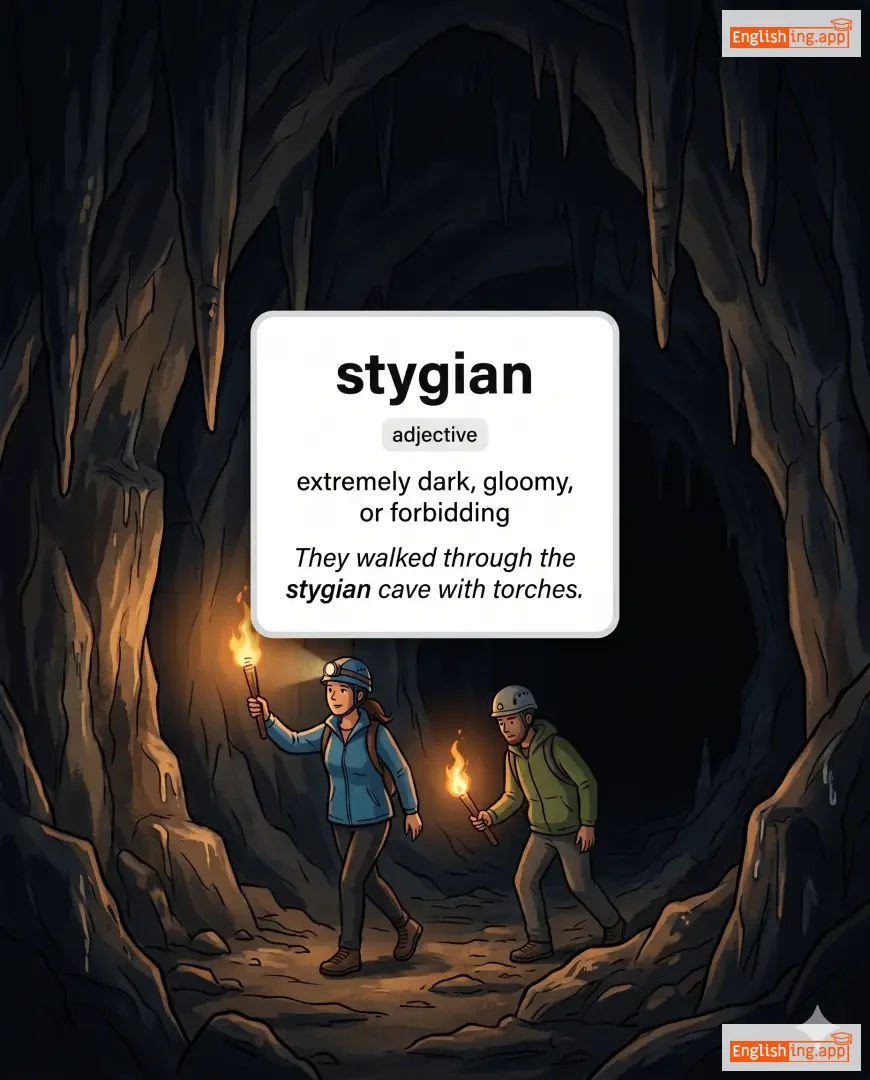
adjective
/ˈstɪdʒiən/
阴暗 (yīn'àn)

extremely dark, gloomy, or forbidding

"They walked through the stygian cave with torches."

"他们拿着火把走过了阴暗的洞。" (Tāmen názhe huǒbǎ zǒuguòle yīn'àn de dòng.)
noun
/staɪl/
风格 (fengge)

a particular way of doing or presenting something, often reflecting individual preferences or trends

"Her style of dress is both elegant and modern."

"她的穿衣风格既优雅又现代。" (Tā de chuānyī fēnggé jì yōuyǎ yòu xiàndài.)
adjective
/ˈstaɪ.lɪʃ/
时尚和有吸引力;在外观上有优雅或品味 (shíshàng hé yǒu xīyǐn lì; zài wàiguān shàng yǒu yōuyǎ huò pǐnwèi)

fashionable and attractive; having elegance or taste in appearance

"She wore a stylish dress to the party."

"她穿着一件时尚的裙子参加派对。" (Tā chuānzhuó yī jiàn shíshàng de qúnzi cānjiā pàiduì.)
noun
/ˈstaɪləs/
触控笔 (chùkòng bǐ)

a small tool used for writing, drawing, or touching screens

"She used a stylus to draw on her tablet."

"她使用触控笔在平板电脑上绘画。" (Tā shǐyòng chùkòng bǐ zài píngbǎn diànnǎo shàng huìhuà.)
verb
/ˈstaɪmi/
妨碍 (fáng'ài)

to prevent or hinder the progress of something

"The new regulations could stymie small businesses."

"新规章可能会阻碍小型企业的发展。" (Xīn guīzhāng kěnéng huì zǔ'ài xiǎoxíng qǐyè de fāzhǎn.)
noun
/ˈsweɪʒən/
劝说 (quanshuo)

the act of persuading or influencing someone

"The leader used gentle suasion to win support for the plan."

"领导者使用温和的劝说来赢得对计划的支持。" (Lǐngdǎo zhě shǐyòng wēnhé de quànshuō lái yíngdé duì jìhuà de zhīchí.)
adjective
/swɑːv/
迷人且优雅 (mírén qiě yōuyǎ)

charming, confident, and elegant, often in a smooth or polished way

"He was a suave gentleman who impressed everyone at the party."

"他是一个优雅的绅士,在派对上给大家留下了深刻的印象。" (Tā shì yīgè yōuyǎ de shēnshì, zài pàiduì shàng gěi dàjiā liúxiàle shēnkè de yìnxiàng.)
noun
/ˈswɑːvɪti/
优雅与魅力 (yōuyǎ yǔ mèilì)

smoothness and charm in manner

"His suavity made him popular in social gatherings."

"他的优雅与魅力使他在社交聚会中很受欢迎。" (Tā de yōuyǎ yǔ mèilì shǐ tā zài shèjiāo jùhuì zhōng hěn shòu huānyíng.)
adverb
/ˌsʌb ˈroʊzə/
秘密地 (mìmì de)

secretly, in confidence, or in private

"The deal was made sub rosa to avoid public scrutiny."

"交易是在秘密地进行的,以避免公众审查。" (Jiāoyì shì zài mìmì de jìnxíng de, yǐ bìmiǎn gōngzhòng shěnchá.)
noun
/ˈsʌb.mə.riːn/
潜艇 (qiántǐng)

a warship with a streamlined hull designed to operate completely submerged in the sea

"The submarine dived deep into the ocean to avoid detection."

"潜水艇潜入海洋深处以避免被发现。" (Qiánshuǐtǐng qián rù hǎiyáng shēnchù yǐ bìmiǎn bèi fāxiàn.)
adjective
/ˈsʌb.æs.ɪd/
轻微酸 (qingwei suan)

Slightly sour or acidic in taste or nature.

"The fruit had a subacid flavor that was refreshing on a hot day."

"这种水果有一种轻微酸的味道,在炎热的日子里非常清爽。" (Zhezhong shuiguo you yizhong qingwei suan de weidao, zai yanre de rizi li feichang qingshuang.)
noun
/sʌbˈɔːl.tən/
处于下级职位的人;在军队中,初级军官 (xià jí jūn guān)

A person holding a subordinate position; in the military, a junior officer.

"The subaltern was responsible for leading a small platoon of soldiers."

"下级军官负责指挥一个小型士兵排。" (Xià jí jūn guān fùzé zhǐhuī yīgè xiǎoxíng shìbīng pái.)
adjective
/ˌsʌb.əˈkwɒt.ɪk/
水下的 (shuǐ xià de)

Existing, living, or located under water.

"Divers explored the subaquatic cave system filled with rare fish."
"潜水员探索了充满稀有鱼类的水下洞穴系统。" (Qiánshuǐyuán tàn suǒ le chōngmǎn xīyǒu yúlèi de shuǐ xià dòngxué xìtǒng.)
subconscious definition card — visual illustration of the meaning
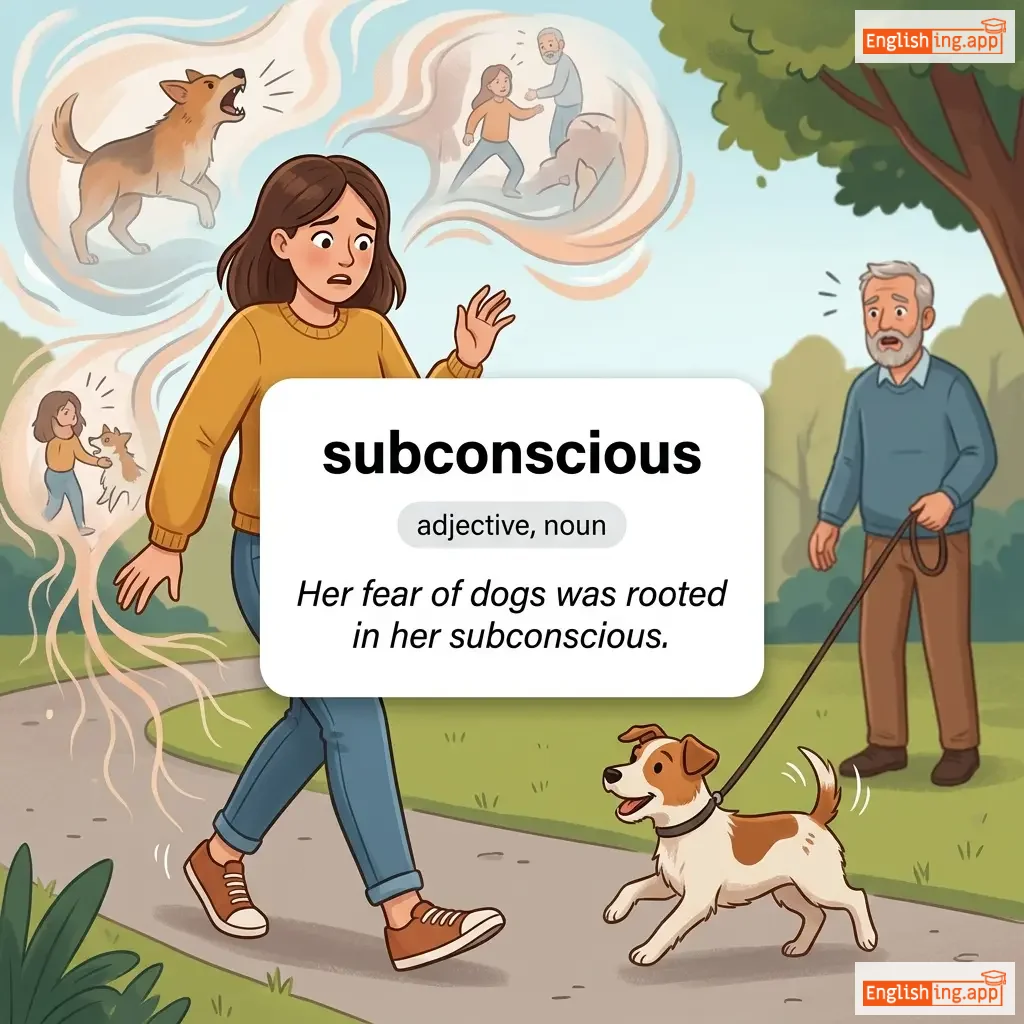
adjective, noun
/ˌsʌbˈkɒn.ʃəs/
潜意识 (qian yishi)

Relating to the part of the mind that influences thoughts and actions without full awareness.

"Her fear of dogs was rooted in her subconscious."
"她对狗的恐惧根植于她的潜意识。" (Ta dui gou de kongju genzhi yu ta de qian yishi.)
subduction definition card — visual illustration of the meaning
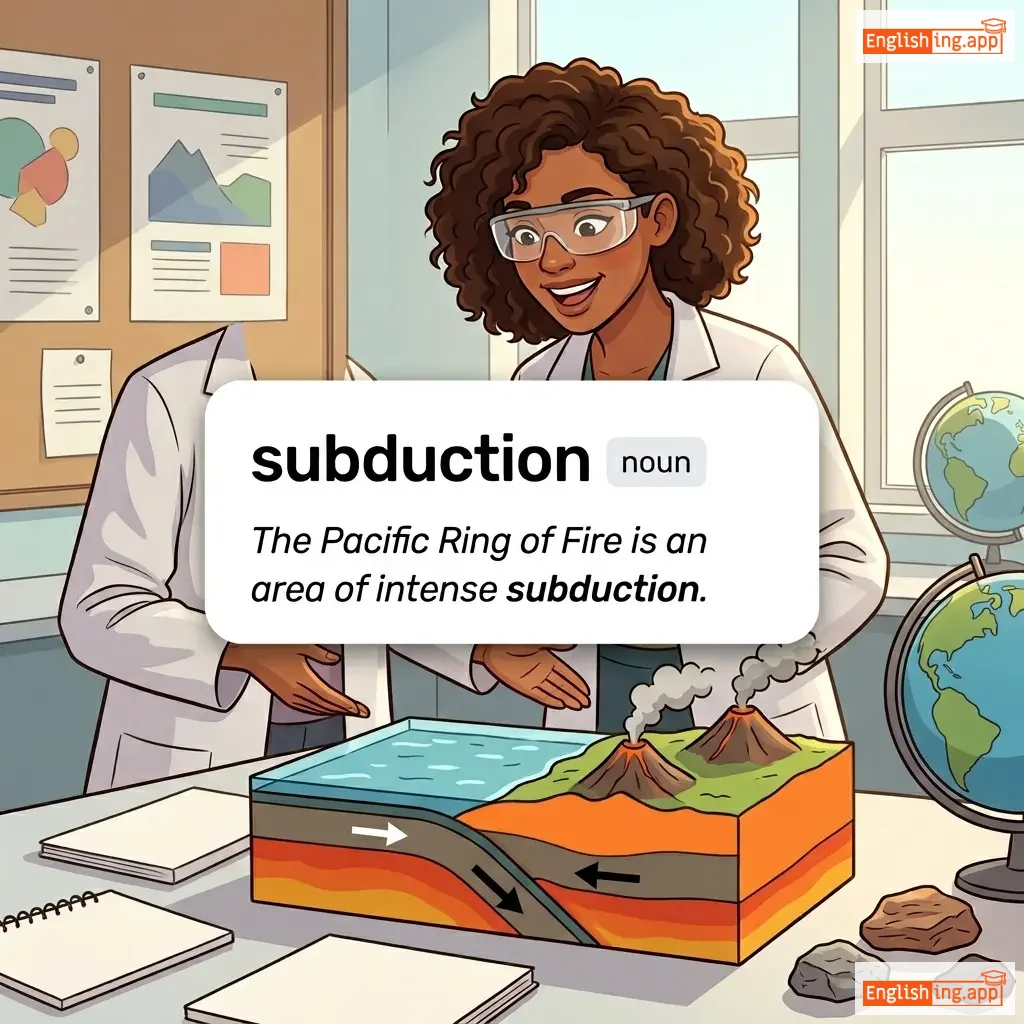
noun
/səbˈdʌk.ʃən/
地壳的一个层次向下移动,进入下方的地幔。 (Dìqiào de yīgè céngcì xiàng xià yídòng, jìnrù xiàfāng de dìmàn.)

The lateral and downward movement of the edge of a plate of the earth's crust into the mantle beneath another plate.

"The Pacific Ring of Fire is an area of intense subduction."

"太平洋火环是一个强烈的俯冲区域。" (Tàipíngyáng huǒ huán shì yīgè qiángliè de fǔchōng qūyù.)
⚔️

subdue

verb
/səbˈdjuː/

To bring under control, especially by force; to overcome or quiet.

"The army was able to subdue the rebellion quickly."

adjective
/sʌbˈdʒeɪsənt/
下层的 (xià céng de)

lying immediately beneath; underlying

"The geological survey revealed subjacent layers of rock."

"地质调查揭示了下层的岩层。" (Dìzhì diàochá jiēshìle xià céng de yáncéng.)
noun/verb/adjective
/ˈsʌbdʒɪkt/ (noun), /səbˈdʒɛkt/ (verb)
主题 (zhuti)

noun: a topic or theme; verb: to cause to undergo; adjective: dependent or under authority

"The teacher introduced a new subject in class."

"老师在课堂上介绍了一个新主题。" (Lǎoshī zài kètáng shàng jièshào le yīgè xīn zhǔtí.)
noun
/səbˈdʒɛkʃən/
征服 (zhēngfú)

the act of bringing someone or something under control or domination

"The people suffered under the subjection of a cruel ruler."

"人民在一个残暴统治者的征服下受苦。" (Rénmín zài yīgè cánbào tǒngzhì zhě de zhēngfú xià shòukǔ.)
adjective
/səbˈdʒɛktɪv/
主观的 (zhǔguān de)

based on personal feelings, tastes, or opinions rather than facts

"Beauty is often considered a subjective concept."
"美丽通常被视为一个主观的概念。" (Měilì tōngcháng bèi shì wéi yīgè zhǔguān de gàiniàn.)
subjugate definition card — visual illustration of the meaning
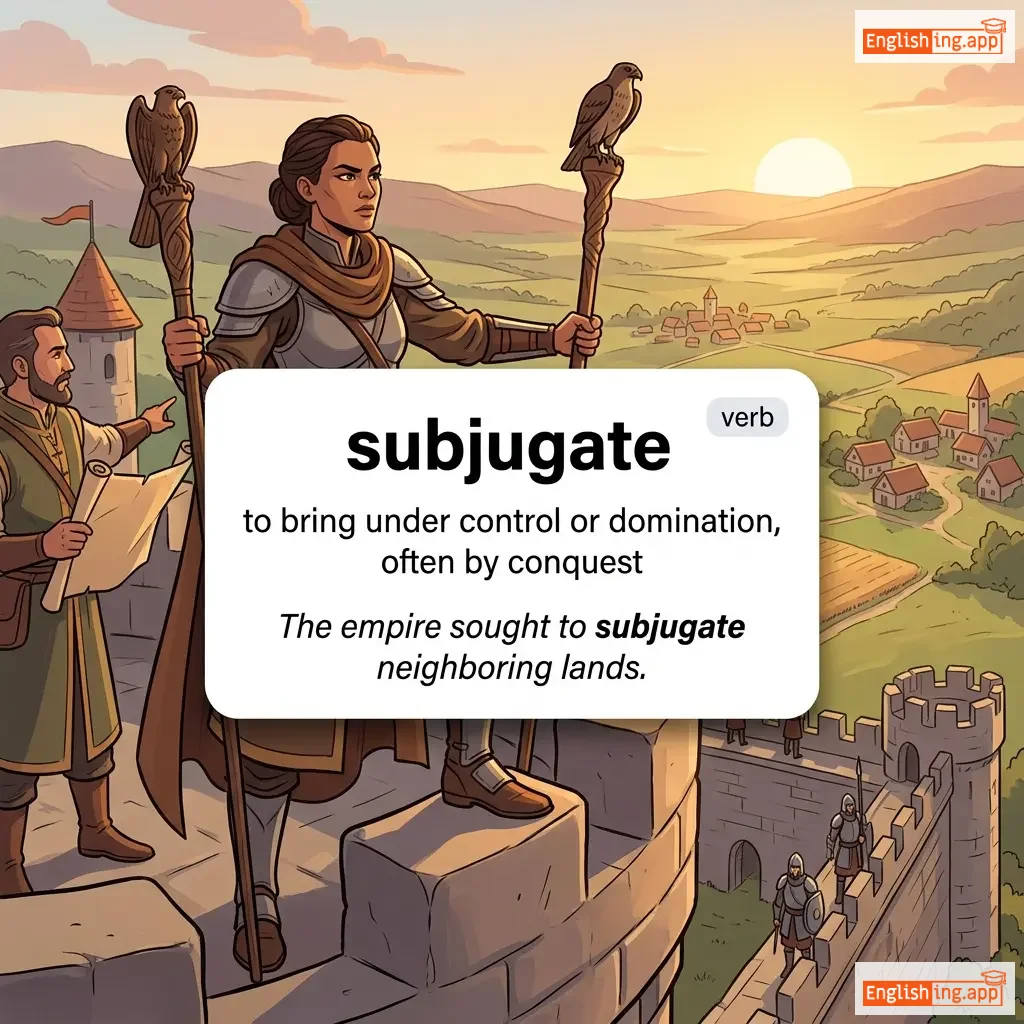
verb
/ˈsʌbdʒʊˌɡeɪt/
征服 (zhēngfú)

to bring under control or domination, often by conquest

"The empire sought to subjugate neighboring lands."
"帝国试图征服邻近的土地。" (Dìguó shìtú zhēngfú línjìn de tǔdì.)
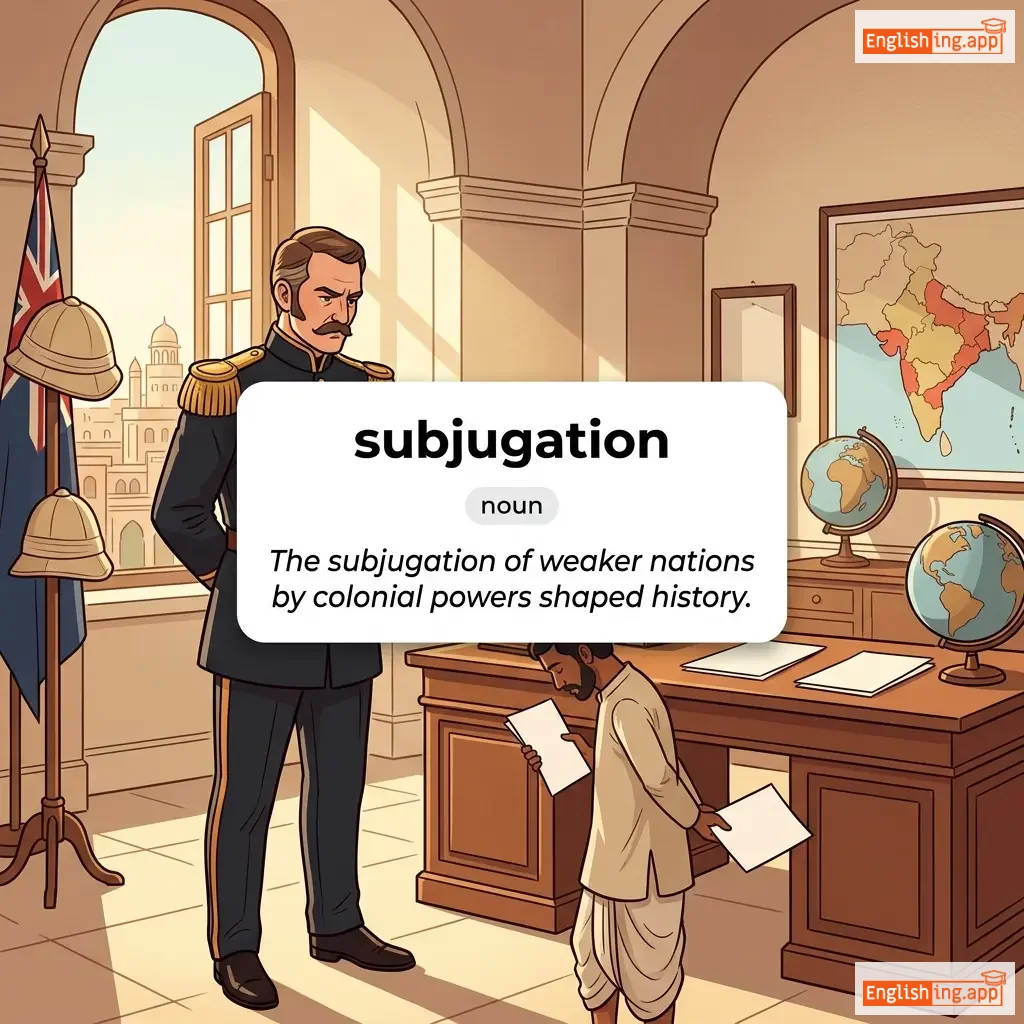
subjugation definition card — visual illustration of the meaning
noun
ˌsʌb.dʒʊˈɡeɪ.ʃən
征服或支配 (zhēngfú huò zhīpèi)

The action of bringing someone or something under domination or control, especially by force.

"The subjugation of weaker nations by colonial powers shaped history."

"殖民大国对较弱国家的征服塑造了历史。" (Zhímín dàguó duì jiào ruò guójiā de zhēngfú sùzào le lìshǐ.)
verb
/ˈsʌblɪmeɪt/
转化为更高的活动 (zhuǎnhuà wéi gèng gāo de huódòng)

to redirect strong emotions or desires into socially acceptable activities or channels

"She sublimated her anger into painting beautiful landscapes."
"她将愤怒转化为美丽的风景画。" (Tā jiāng fènnù zhuǎnhuà wéi měilì de fēngjǐng huà.)
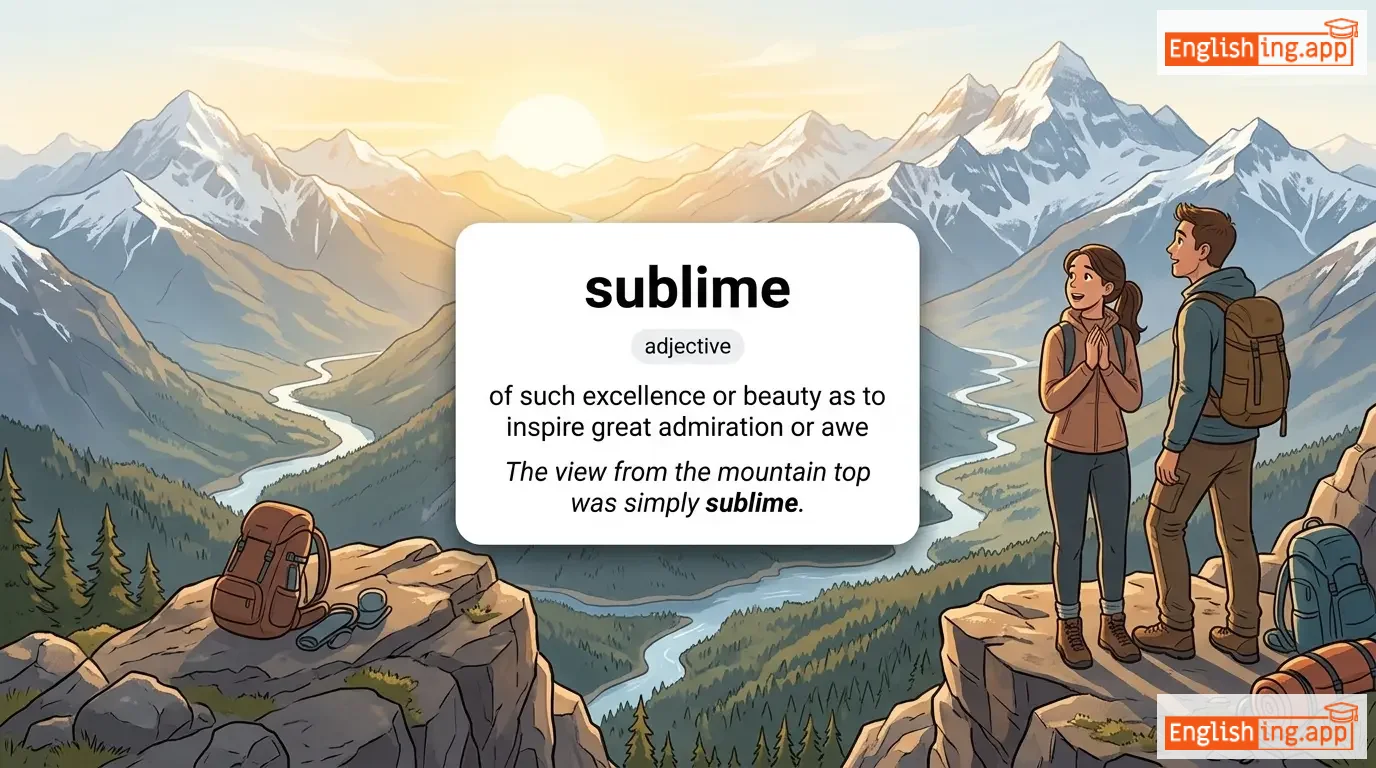
sublime definition card — visual illustration of the meaning
adjective
/səˈblaɪm/
崇高 (chónggāo)

of such excellence or beauty as to inspire great admiration or awe

"The view from the mountain top was simply sublime."

"从山顶看到的景色简直是崇高的。" (Cóng shāndǐng kàn dào de jǐngsè jiǎnzhí shì chónggāo de.)
subliminal definition card — visual illustration of the meaning
adjective
/sʌbˈlɪmɪnəl/
潜意识 (qiǎn yì shí)

below the threshold of conscious perception but still influencing behavior or feelings

"The advertisement contained subliminal messages to influence consumers."

"广告包含了潜在的信息来影响消费者。" (Guǎng gào bāo hán le qián yì shí de xìn xī lái yǐng xiǎng xiāo fèi zhě.)
adjective
/sʌbˈlɪŋɡwəl/
舌下 (shéxià)

situated or applied under the tongue

"The doctor prescribed a sublingual tablet for faster absorption."
"医生为更快的吸收开了舌下药片。" (Yīshēng wèi gèng kuài de xīshōu kāile shéxià yàopiàn.)
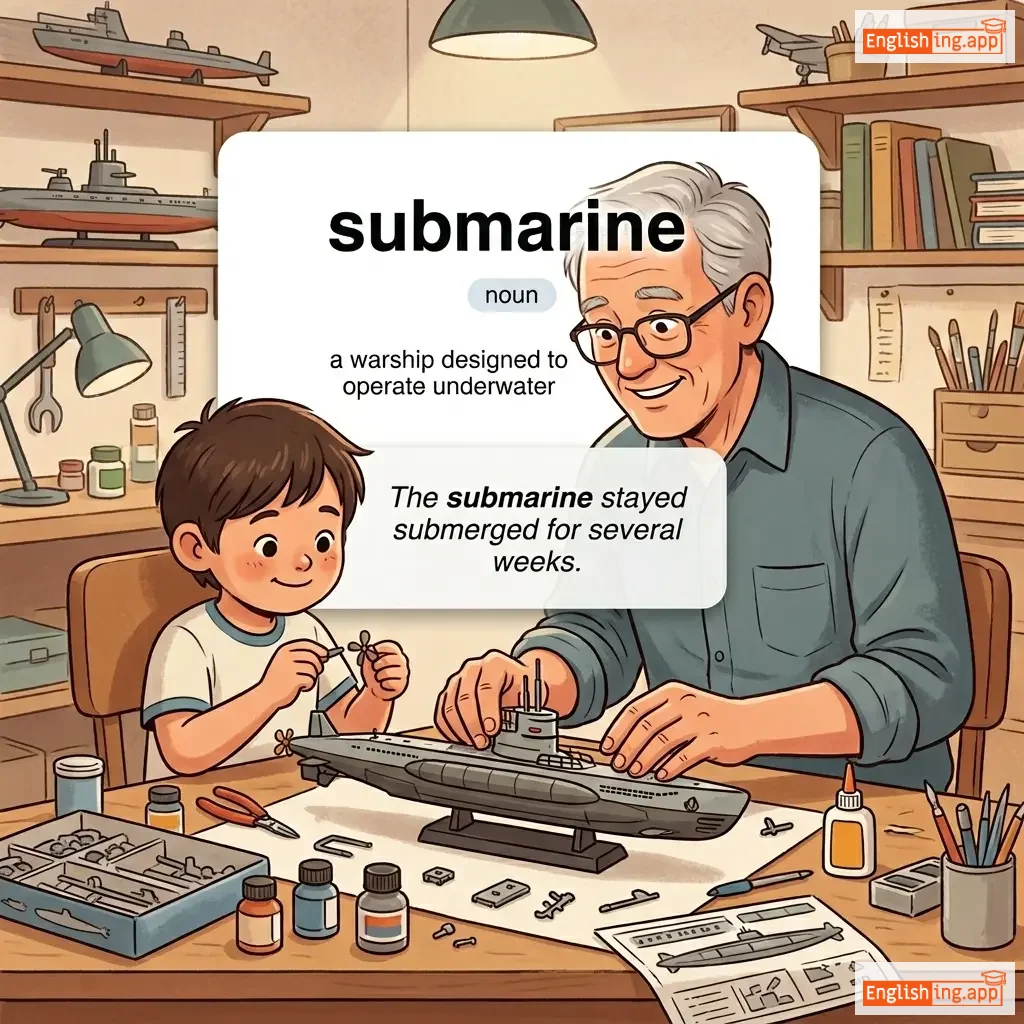
submarine definition card — visual illustration of the meaning
noun
/ˈsʌbməriːn/
潜水艇 (qián shuǐ tǐng)

a warship designed to operate underwater

"The submarine stayed submerged for several weeks."

"潜水艇在水下停留了好几周。" (qián shuǐ tǐng zài shuǐ xià tíng liú le hǎo jǐ zhōu)
verb
/səbˈmɜːrdʒ/
淹没 (yānmò)

to put under water or cover with liquid

"The floodwaters threatened to submerge the village."

"洪水威胁要淹没整个村庄。" (hóng shuǐ wēixié yào yānmò zhěnggè cūnzhuāng.)
noun
/səbˈmɜːrdʒəns/
沉没 (chenmo)

the act or process of being submerged or going underwater

"The submergence of coastal areas is a major concern due to rising sea levels."

"由于海平面上升,沿海地区的沉没成为一个重大问题。" (Yinyu haipingmian shangsheng, yanhai diqu de chenmo chengwei yi ge zhongda wenti.)
adjective, noun
/səbˈmɜːrsəbl/
潜水器 (qiánshuǐ qì)

capable of being submerged; a small underwater craft

"The scientists explored the deep ocean using a submersible."

"科学家们使用潜水器探索了深海。" (kēxuéjiāmen shǐyòng qiánshuǐ qì tànsuǒle shēnhǎi.)
noun
/səbˈmɜːrʒən/
沉没 (chenmo)

the state of being under water

"The submersion of the fields lasted for several days after the heavy rain."

"在大雨之后,田地的沉没持续了几天。" (Zài dàyǔ zhīhòu, tiándì de chénmò chíxùle jǐ tiān.)
noun
/səbˈmɪʃən/
提交, 顺从 (tiji, shuncong)

the act of yielding to authority or presenting something for consideration

"Her submission of the report was appreciated by the manager."

"她提交的报告受到了经理的赞赏。" (Tā tiji de bàogào shòudàole jīnglǐ de zànshǎng.)
adjective
/səbˈmɪsɪv/
顺从的 (shùncóng de)

ready to conform to the authority or will of others; meekly obedient or passive

"She was too submissive to challenge her boss's unfair decision."

"她太顺从了,无法挑战老板的不公决策。" (Tā tài shùncóng le, wúfǎ tiǎozhàn lǎobǎn de bùgōng juécè.)
submit definition card — visual illustration of the meaning
verb
/səbˈmɪt/
提交 (tíjiāo)

to present or deliver something formally or for approval

"Please submit your report by the end of the day."

"请在当天结束前提交报告。" (Qing zai dangtian jieshu qian tijiāo bàogào.)
noun
/səbˈmɪtəl/
提交 (tijiāo)

the act of submitting something, especially a document for consideration or approval

"The contractor sent the submittal to the client for approval."

"承包商将提交给客户以供批准。" (Chéngbāo shāng jiāng tijiāo gěi kèhù yǐ gōng pīzhǔn.)