词汇表

英语词汇词典 | 单词含义、定义和示例

verb
/ˈstɪp.əl/
用小点覆盖 (yòng xiǎo diǎn fùgài)

to cover a surface with numerous small dots or specks, often in drawing or painting

"The artist stippled the canvas to create a textured effect."

"艺术家在画布上用小点覆盖,创造了一个纹理效果。" (Yìshùjiā zài huàbù shàng yòng xiǎo diǎn fùgài, chuàngzàole yīgè wénlǐ xiàoguǒ.)
stipulate definition card — visual illustration of the meaning
verb
/ˈstɪp.jʊ.leɪt/
规定 (guīdìng)

to demand or specify a condition in an agreement or contract

"The contract stipulates that payment must be made within 30 days."

"合同规定付款必须在30天内完成。" (Hetong guīdìng fùkuǎn bìxū zài 30 tiān nèi wánchéng.)
verb
/stɜːr/
搅拌 (jiaoban)

to mix or move something in a circular motion, especially in liquid

"She stirred the soup to make sure it didn't burn."

"她搅拌汤,以确保它不会烧焦。" (Ta jiaoban tang, yi quebao ta buhui shaojiao.)
stitch definition card — visual illustration of the meaning
noun, verb
/stɪtʃ/

to sew fabric together using a needle and thread; also a single loop of thread in sewing

"She stitched the torn dress carefully."

noun, verb
/stɒk/
库存 (kù cún)

a supply of goods kept for sale or use; to keep or fill with goods

"The shop stocks a wide variety of products."

"商店储存大量的商品。" (Shāng diàn chǔ cún dà liàng de shāng pǐn.)
noun
/stɒˈkeɪd/
木栅栏 (mù zhàlán)

a defensive barrier made of strong posts or timbers, often around a fort or prison

"The prisoners were kept inside the wooden stockade."

"囚犯被关在木栅栏内。" (Qiúfàn bèi guān zài mù zhàlán nèi.)
adjective
/ˈstɒdʒi/
沉闷的,老式的 (chénmèn de, lǎoshì de)

Dull, uninspired, or old-fashioned; also heavy and hard to digest when referring to food.

"The lecture was so stodgy that many students struggled to stay awake."

"讲座太沉闷了,以至于许多学生难以保持清醒。" (Jiǎngzuò tài chénmèn le, yǐzhì yú xǔduō xuéshēng nán yǐ bǎochí qīngxǐng.)
adjective
/ˈstoʊɪk/
冷静的, 无动于衷的 (lěngjìng de, wú dòng yú zhōng de)

Showing little or no emotion, even in difficult situations.

"She remained stoic during the crisis, never showing fear or panic."

"她在危机中保持冷静,毫无恐惧或恐慌。" (Tā zài wēijī zhōng bǎochí lěngjìng, háo wú kǒngjù huò kǒnghuāng.)
stoicism definition card — visual illustration of the meaning
noun
/ˈstoʊɪˌsɪzəm/
坚忍主义 (jiānrěn zhǔyì)

The endurance of pain or hardship without showing feelings or complaining.

"He faced the loss of his job with remarkable stoicism."
"他以非凡的坚忍主义面对失业的痛苦。" (Tā yǐ fēifán de jiānrěn zhǔyì miànduì shīyè de tòngkǔ.)
🔥

stoke

verb
/stoʊk/

To add fuel to a fire; to encourage or increase a strong feeling or activity.

"The politician’s speech stoked anger among the crowd."

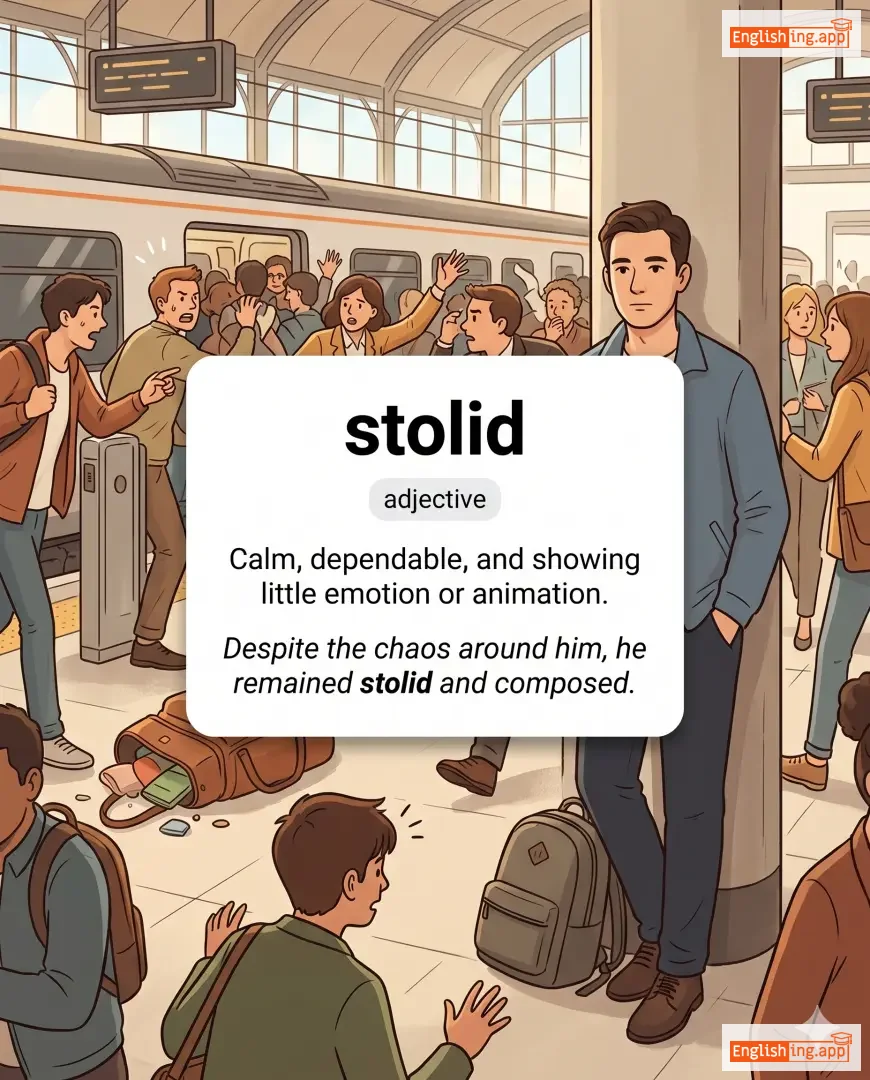
stolid definition card — visual illustration of the meaning
adjective
/ˈstɒlɪd/
冷静的,沉默的 (lěngjìng de, chénmò de)

Calm, dependable, and showing little emotion or animation.

"Despite the chaos around him, he remained stolid and composed."

"尽管周围混乱,他依然冷静沉着。" (Jǐnguǎn zhōuwéi hùnluàn, tā yīrán lěngjìng chénzhuó.)
noun/verb
/ˈstʌmək/
胃 / 忍耐 (wèi / rěnnài)

The internal organ in which food is digested; also to tolerate or endure something

"She couldn’t stomach the sight of violence."

"她无法忍受暴力的场景。" (Tā wúfǎ rěnshòu bàolì de chǎngjǐng.)
noun
/ˈstʌmək eɪk/
胃痛 (weitong)

Pain in the stomach or abdominal area

"I have a stomach ache after eating too much."

"我吃得太多后感到胃痛。" (Wo chi de tai duo hou gandao weitong)
noun
/stoʊn/
石头 (shítou)

a hard, naturally occurring mineral material found in the earth

"He threw a stone into the lake."

"他把一块石头扔进湖里。" (Tā bǎ yī kuài shítou rēng jìn hú lǐ.)
verb
/ˈstoʊnwɔːl/
阻挡 (zudang)

To delay or block progress by refusing to cooperate or answer

"The witness tried to stonewall during the investigation."

"证人试图在调查期间做stonewall。" (Zhèngrén shìtú zài diàochá qījiān zuò stonewall.)
verb/noun
/stuːp/
幸福 (xingfu)

To bend one's body forward and downward; also a small porch or staircase at the entrance of a house

"He had to stoop to pick up the coin."

"当她收到奖项时,她无法隐藏自己的幸福。" (Dāng tā shōu dào jiǎngxiàng shí, tā wúfǎ yǐncáng zìjǐ de xìngfú.)
verb
/stɑːp/
停止 (tingzhi)

to bring to an end or cause to cease

"Please stop talking while I’m working."

"请在我工作时停止讲话。" (Qing zai wo gongzuo shi tingzhi jianghua.)
noun
/ˈstɒpɪdʒ/
停顿; 停止 (tingdun; tingzhi)

The act of stopping or ceasing; a halt in operation or activity

"The sudden stoppage of the train caused delays for all passengers."
"火车的突然停运导致所有乘客延误。" (Huoche de turan tingyun daozhi suoyou chengke yanwu.)
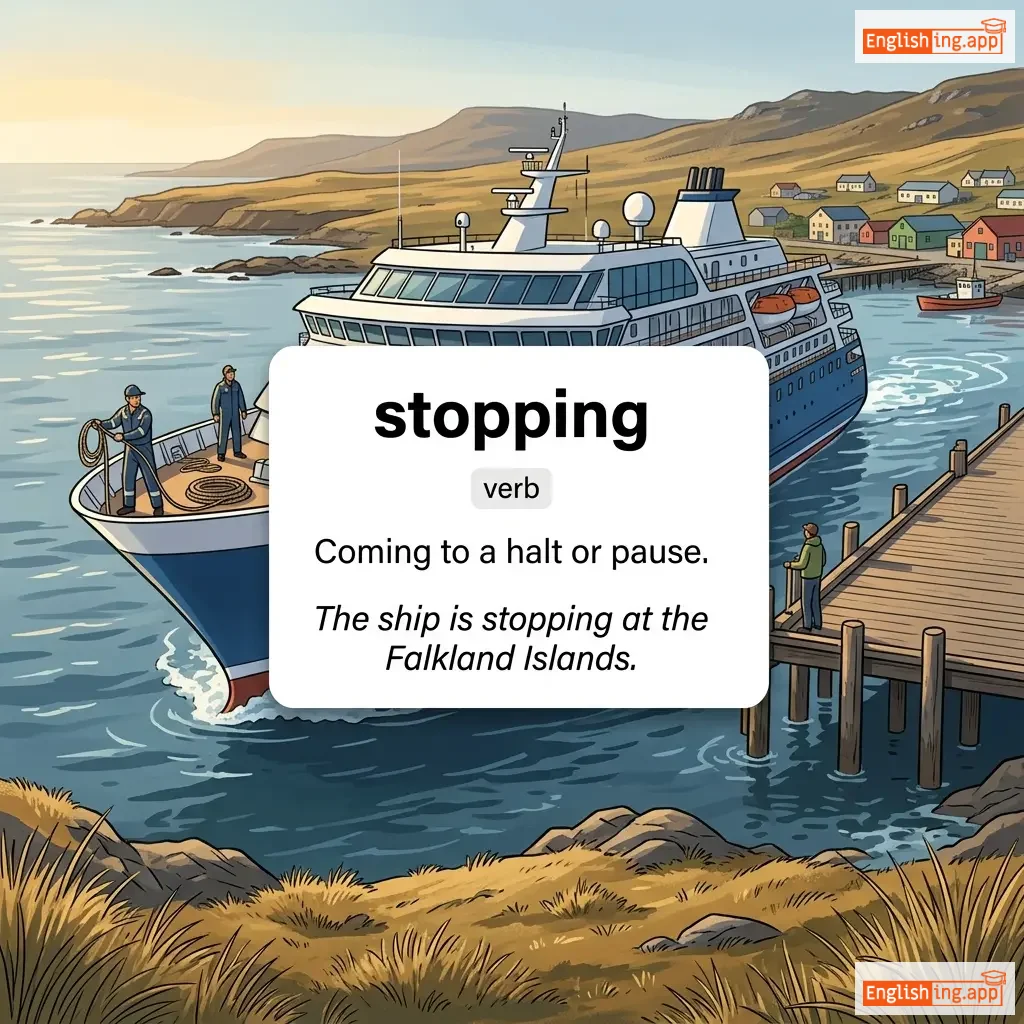
stopping definition card — visual illustration of the meaning
verb
/ˈstɒpɪŋ/
停止 (tingzhi)

Coming to a halt or pause.

"The ship is stopping at the Falkland Islands."

"船只正在福克兰群岛停靠。" (Chuán zhī zhèngzài Fú kè lán qún dǎo tíngkào.)
noun
/ˈstɔːrɪdʒ/
存储 (cunchu)

the action or method of storing something for future use

"The warehouse offers plenty of storage space."
"仓库提供了大量的存储空间。" (Cāngkù tígōngle dàliàng de cúnchú kōngjiān.)
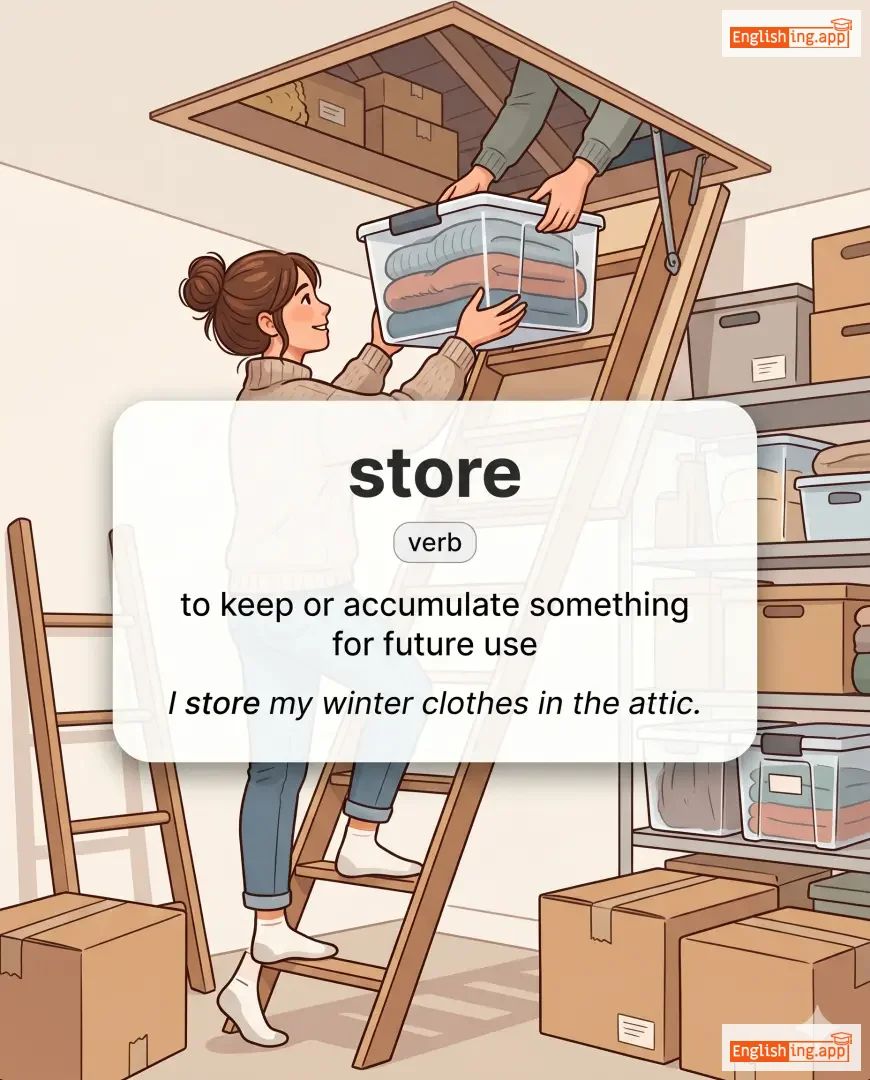
store definition card — visual illustration of the meaning
verb
/stɔːr/
存储 (cunchu)

to keep or accumulate something for future use

"I store my winter clothes in the attic."

"我把冬季衣物存放在阁楼里。" (Wo ba dongji yiwu cunfang zai gelou li.)
noun
/ˈstɔːrhaʊs/
仓库 (cangku)

A place where goods, supplies, or valuables are stored; a repository

"The warehouse acted as a storehouse for all the imported goods."

"这个仓库作为所有进口商品的storehouse。" (Zhege cangku zuowo suo you jinkou shangpin de storehouse.)
noun
/stɔːrk/
(guàn)

large wading bird with long legs and a long neck

"The stork built its nest on top of the tall chimney."

"鹳在高烟囱上建造了它的巢。" (Guàn zài gāo yān cōng shàng jiànzào le tā de cháo.)
noun
/stɔːrm/
风暴 (fengbao)

a violent disturbance of the atmosphere with strong winds, rain, and often thunder

"The storm caused major flooding in the area."
"风暴导致该地区发生了严重的洪水。" (Fengbao daozhi gai diqu fashengle yanzhong de hongshui.)
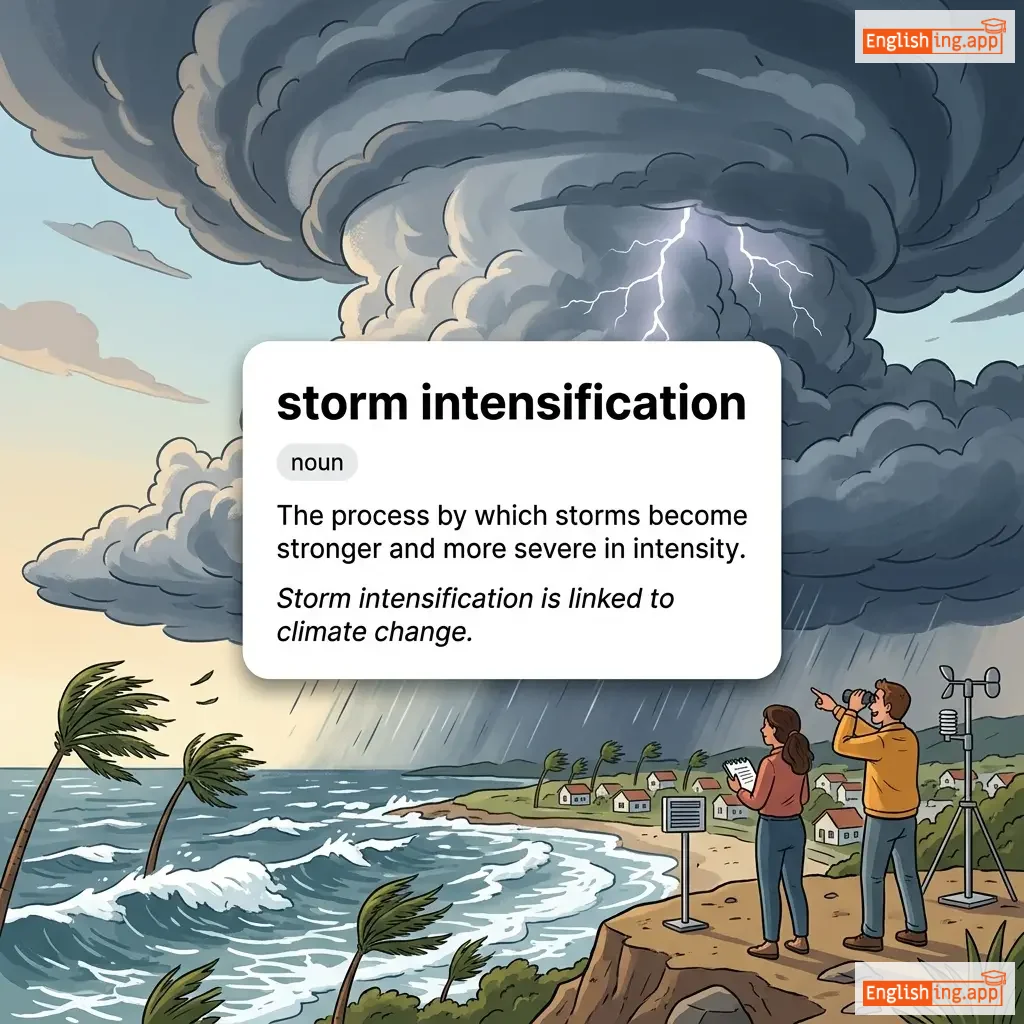
storm intensification definition card — visual illustration of the meaning
noun
stɔːrm ɪnˌtensɪfɪˈkeɪʃən
风暴加强 (fēngbào jiāqiáng)

The process by which storms become stronger and more severe in intensity.

"Storm intensification is linked to climate change."

"风暴加强与气候变化有关。" (Fēngbào jiāqiáng yǔ qìhòu biànhuà yǒuguān.)
noun
/ˈstɔːri/
故事 (gùshì)

a narrative of real or imaginary events

"She told a fascinating story about her travels."

"她讲述了一个关于旅行的迷人故事。" (Tā jiǎngshùle yīgè guānyú lǚxíng de mírén gùshì.)
adjective/noun
/staʊt/
强壮 / 粗壮 (qiángzhuàng / cūzhuàng)

Strong, thick, or heavily built; also a kind of dark beer

"The stout man lifted the heavy box with ease."

"这个强壮的男人轻松地举起了沉重的箱子。" (Zhège qiángzhuàng de nánrén qīngsōng de jǔqǐle chénzhòng de xiāngzi.)
adjective
/ˌstaʊtˈhɑːrtɪd/
勇敢 (yǒnggǎn)

Brave, determined, and courageous

"The stouthearted soldier never gave up."

"勇敢的士兵从不放弃。" (Yǒnggǎn de shìbīng cóng bù fàngqì.)
noun
/stoʊv/
炉子 (luzi)

a device that produces heat for cooking or heating

"She cooked rice on the gas stove."

"她在燃气炉上做了米饭。" (Tā zài ránqì lú shàng zuòle mǐfàn.)
noun
/ˈstoʊəˌweɪ/
偷渡者 (tōudù zhě)

A person who hides on a ship, plane, or other vehicle in order to travel secretly without paying.

"The crew discovered a stowaway hiding in the cargo hold."

"船员发现一个藏在货舱里的偷渡者。" (chuányuán fāxiàn yīgè cáng zài huò cāng lǐ de tōudù zhě.)
verb
/ˈstræɡəl/
不规则地移动 (bù guī zé de yídòng)

To move or spread in an irregular, scattered, or untidy way.

"The children began to straggle behind on the long hike."

"孩子们开始在漫长的徒步旅行中掉队。" (Háizimen kāishǐ zài màncháng de túbù lǚxíng zhōng diàoduì.)
adjective, adverb
/streɪt/
(zhi)

Extending or moving uniformly in one direction only; not curved or bent.

"He walked straight to the door without stopping."

"他直接走向门,没有停下来。" (Tā zhíjiē zǒu xiàng mén, méiyǒu tíng xiàlái.)
adjective
/ˌstreɪt ˈfɔːr.wərd/
诚实直率; 不复杂; 容易理解 (chéngshí zhíshuài; bù fùzá; róngyì lǐjiě)

honest and open; not complicated; easy to understand

"His explanation was very straightforward and easy to follow."

"他的解释非常直白,并且易于理解。" (Tā de jiěshì fēicháng zhíjiē ér qiě róngyì lǐjiě.)
verb
/ˈstreɪtən/
整理 (zhěnglǐ)

to make something straight or tidy; to correct or organize

"She straightened her hair before the meeting."

"她在会议前整理了头发。" (Tā zài huìyì qián zhěnglǐle tóufǎ.)
adjective
/ˌstreɪtˈfɔːwəd/
直接 (zhijie)

easy to understand or do; simple

"Her explanation was straightforward and clear."

"她的解释简洁明了。" (Ta de jieshi jianjie mingliao.)
noun, verb
/streɪn/
压力 / 拉伤 (yālì / lāshāng)

To force something beyond its normal limits; to injure by overexertion; or a type or variety of something.

"He strained his back while lifting the heavy box."

"他在举重物时拉伤了背部。" (Tā zài jǔ zhòngwù shí lāshāngle bèibù.)
noun
/ˈstreɪnər/
筛子 (shaizi)

a device having holes punched in it or made of crossed wires for separating solid matter from a liquid

"Use a strainer to drain the pasta water."

"使用筛子把意大利面水倒掉。" (shǐ yòng shāi zi bǎ yì dà lì miàn shuǐ dào diào.)
noun
/streɪt/
海峡 (haixia)

A narrow passage of water connecting two seas or two large areas of water.

"The Strait of Gibraltar connects the Atlantic Ocean and the Mediterranean Sea."

"直布罗陀海峡连接大西洋和地中海。" (Zhibuluotuo haixia lianjie Daxi yang he Dizhonghai.)
noun
/strəˈmoʊ.ni.əm ˌflaʊ.ər/
颠茄花 (diānqiá huā)

A trumpet-shaped white or purple flower from the jimsonweed plant, known for its toxic properties

"The stramonium flower blooms at night with a sweet fragrance."

"颠茄花在晚上盛开,散发出甜美的香气。" (diānqiá huā zài wǎnshàng shèngkāi, sànfā chū tiánměi de xiāngqì)
noun, verb
/strænd/
线 / 搁浅 (xiàn / géqiǎn)

Noun: A single thin length of thread, wire, or similar. Verb: To leave someone or something without a way of moving or leaving.

"The storm stranded many tourists on the island."

"暴风雨让许多游客滞留在岛上。" (Bàofēngyǔ ràng xǔduō yóukè zhìliú zài dǎo shàng.)
adjective
/streɪndʒ/
奇怪 (qiguai)

unusual or not normal

"It was strange to see him at the party after so long."

"在这么久之后在派对上看到他真奇怪。" (Zài zhème jiǔ zhīhòu zài pàiduì shàng kàn dào tā zhēn qíguài.)
noun
/ˈstreɪndʒər/
陌生人 (mòshēngrén)

A person whom one does not know.

"A stranger knocked on the door at midnight."

"一个陌生人在午夜敲门。" (Yīgè mòshēngrén zài wǔyè qiāo mén.)
verb
/ˈstræŋɡəl/

to kill or stop someone or something by squeezing the throat or restricting flow

"The villain tried to strangle his opponent in the dark alley."

noun
/ˈstrætədʒəm/
计策 (jìcè)

a plan or scheme designed to achieve a particular goal, often by trickery

"The general devised a clever stratagem to outwit the enemy."

"将军设计了一个巧妙的计策来智胜敌人。" (Jiāngjūn shèjìle yīgè qiǎomiào de jìcè lái zhìshèng dírén.)
strategic definition card — visual illustration of the meaning
adjective
/strəˈtiːdʒɪk/
战略的 (zhànlüè de)

relating to the identification of long-term or overall aims and interests and the means of achieving them

"His strategic thinking helped the company grow."

"他的战略性思维帮助公司成长。" (Tā de zhànlüè xìng sīwéi bāngzhù gōngsī chéngzhǎng.)
strategic insights definition card — visual illustration of the meaning
noun
/strəˈtiː.dʒɪk ˈɪn.saɪts/
战略洞察力 (zhànlüè dòngchá lì)

Deep understanding and wisdom gained through careful analysis for planning purposes.

"Strategic insights guide policymaking."

"战略洞察力引导政策制定。" (Zhànlüè dòngchá lì yǐndǎo zhèngcè zhìdìng.)
strategies definition card — visual illustration of the meaning
noun
ˈstræt.ə.dʒiz
策略 (cèlüè)

A plan of action designed to achieve a long-term or overall aim.

"Effective strategies ensure success."

"有效的策略确保成功。" (Yǒuxiào de cèlüè quèbǎo chénggōng.)
strategy definition card — visual illustration of the meaning
noun
/ˈstrætədʒi/
策略 (celue)

a plan of action designed to achieve a long-term or overall aim

"They developed a new strategy to increase sales."
"他们制定了一个新的策略来增加销售。" (Tāmen zhìdìngle yīgè xīn de cèlüè lái zēngjiā xiāoshòu.)
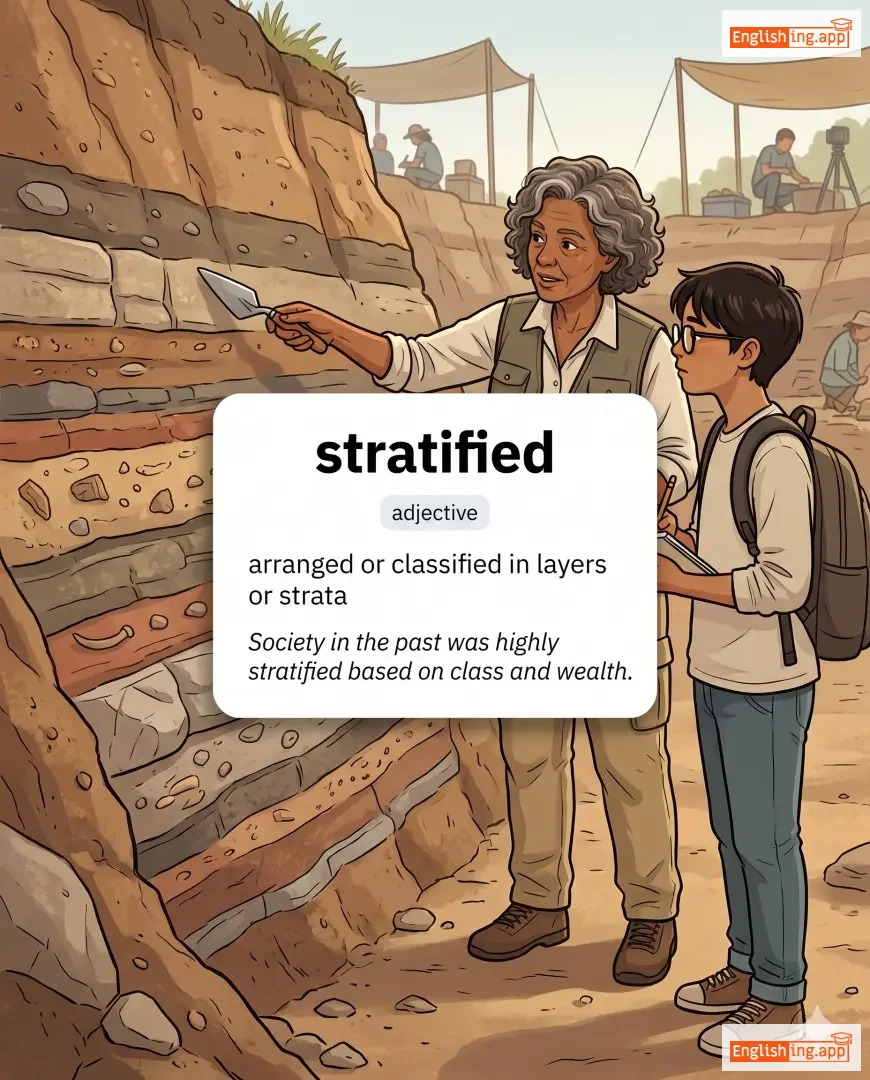
stratified definition card — visual illustration of the meaning
adjective
/ˈstrætɪfaɪd/

arranged or classified in layers or strata

"Society in the past was highly stratified based on class and wealth."

verb
/ˈstrætɪfaɪ/
分层 (fēn céng)

to arrange or divide into layers, classes, or categories

"The researchers plan to stratify the data based on age groups."

"研究人员计划根据年龄组对数据进行分层。" (Yánjiū rényuán jìhuà gēnjù niánlíng zǔ duì shùjù jìnxíng fēn céng.)