词汇表

英语词汇词典 | 单词含义、定义和示例

noun
/steɪk/
牛排 (niúpái)

a thick slice of meat, typically beef, cooked by grilling or frying

"He ordered a grilled steak with vegetables."

"他点了一块配蔬菜的烤牛排。" (Tā diǎnle yī kuài pèi shūcài de kǎo niúpái.)
steal definition card — visual illustration of the meaning
🕵️‍♂️

steal (斯蒂尔)

verb
/stiːl/
偷窃 (touqie)

to take something without permission or right

"He tried to steal my wallet while I wasn't looking."

"他试图在我不看时偷走我的钱包。" (Ta shitu zai wo bu kan shi touzou wode qianbao.)
noun
/stɛlθ/
隐秘, 安静地移动 (yǐnmì, ānjìng de yídòng)

The act of moving, doing, or achieving something quietly and secretly.

"The cat moved with stealth towards its prey."

"猫悄悄地向它的猎物走去。" (Māo qiāoqiāo de xiàng tā de lièwù zǒu qù.)
noun, verb
/stiːm/
蒸汽 (zhengqi)

the vapor into which water is converted when heated; to emit or treat with steam

"The kettle was steaming on the stove."

"茶壶在炉子上冒蒸汽。" (Chahu zai luzi shang mao zhengqi.)
noun
/ˈstiː.mər/
蒸汽船 (zhēngqì chuán)

a ship or boat powered by steam engines

"The old steamer crossed the river slowly."

"老蒸汽船慢慢地渡过了河。" (Lǎo zhēngqì chuán mànmàn de dùguò le hé.)
noun
/stiːl/
钢铁 (gangtie)

a strong, hard metal made of iron and carbon

"The building was made from steel to ensure its durability."

"建筑物是用钢铁建造的,以确保其耐久性。" (Jianzhuwu shi yong gangtie jianzhao de, yi quebao qi naijiuxing.)
adjective
/stiːp/
陡峭, 过高 (dǒu qiào, guò gāo)

Having a sharp inclination or high slope; also can mean excessive (as in price).

"The hikers climbed a steep mountain trail."

"登山者攀登了一个陡峭的山道。" (Dēng shān zhě pān dēng le yī gè dǒu qiào de shān dào.)
adjective
/stiːpt/
浸透 (jinto)

Completely surrounded by or filled with a particular quality, influence, or experience.

"The town is steeped in history and tradition."

"这座城市充满了历史和传统。" (Zhè zuò chéngshì chōngmǎnle lìshǐ hé chuántǒng.)
verb
/stɪə(r)/
操控 (caokong)

to guide or control the movement of a vehicle, vessel, or person

"He steered the car carefully through the narrow street."

"他小心地把车开过狭窄的街道。" (Ta xiaoxin de ba che kaiguo xiazai de jiedao.)
noun
/staɪn/
啤酒杯 (píjiǔ bēi)

A large beer mug, typically made of glass or stoneware.

"He raised his stein to toast his friends."

"他举起了他的啤酒杯,为他的朋友们祝酒。" (Tā jǔ qǐle tā de píjiǔ bēi, wèi tā de péngyǒu men zhù jiǔ.)
adjective
/ˈstɛlər/
卓越 (zhuoyue)

Relating to stars; outstanding or excellent.

"She gave a stellar performance in the play."

"她在话剧中的表现非常卓越。" (Ta zai huajv zhong de biaoxian feichang zhuoyue.)
noun, verb
/stɛm/
茎 / 遏制 (jing / e zhi)

Noun: The main stalk of a plant. Verb: To stop or restrict the flow or development of something.

"The gardener cut the stem of the rose; New policies aim to stem the flow of pollution."

"园丁剪下了玫瑰的茎;新政策旨在遏制污染的流动。" (Yuan ding jian xia le mei gui de jing; xin zheng ce zhi zai e zhi wu ran de liu dong.)
noun
/stɛntʃ/
臭味 (chòuwèi)

A very strong and unpleasant smell.

"The stench of garbage filled the alley."

"垃圾的臭味充满了小巷。" (Lājī de chòuwèi chōngmǎnle xiǎo xiàng.)
noun
/ˈstɛnsəl/
模板 (muban)

A thin sheet of material with a design cut out, used to produce the design on the surface below by applying paint or ink through the cut-out holes.

"The artist used a stencil to paint identical stars on the wall."
"艺术家使用模板在墙上画出相同的星星。" (Yishujia shiyong muban zai qiang shang huachu xiangtong de xingxing.)
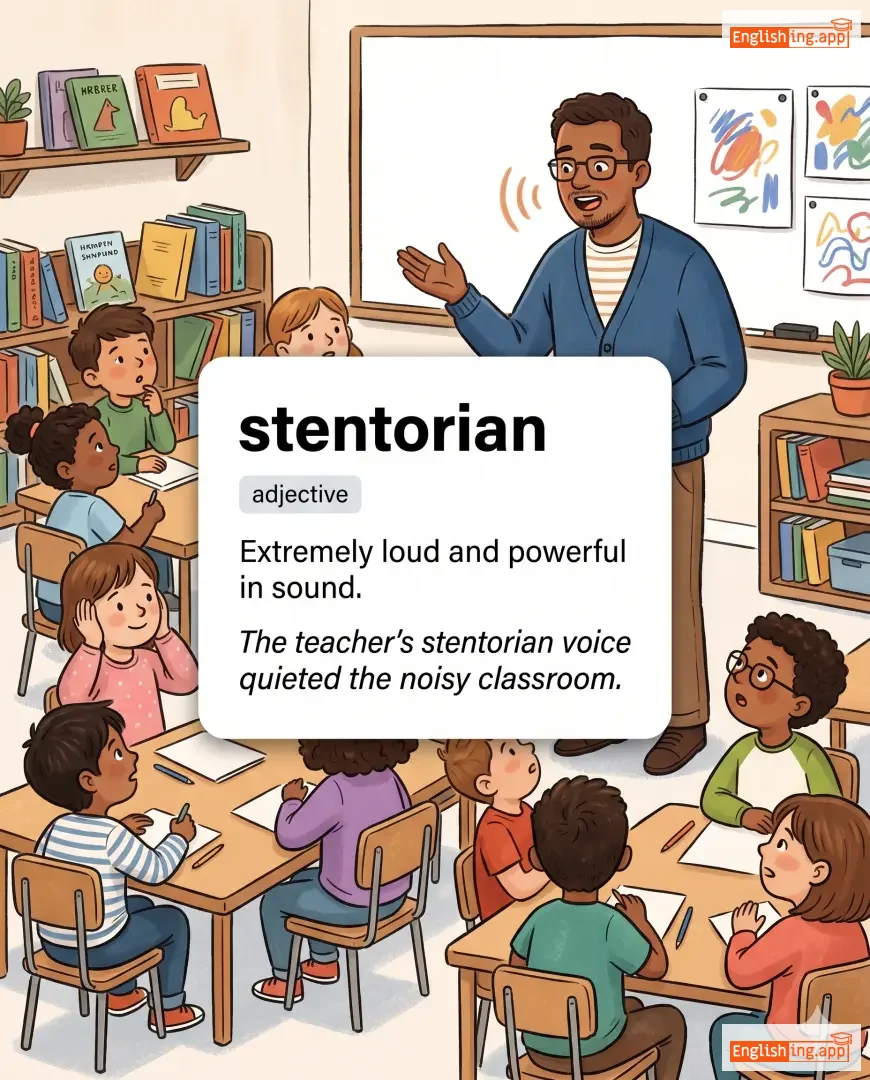
stentorian definition card — visual illustration of the meaning
adjective
/stɛnˈtɔːriən/
震耳欲聋 (zhèn ěr yù lóng)

Extremely loud and powerful in sound.

"The teacher’s stentorian voice quieted the noisy classroom."
"老师那震耳欲聋的声音让嘈杂的教室安静了下来。" (Lǎoshī nà zhèn ěr yù lóng de shēngyīn ràng cáozá de jiàoshì ānjìngle xiàlái.)
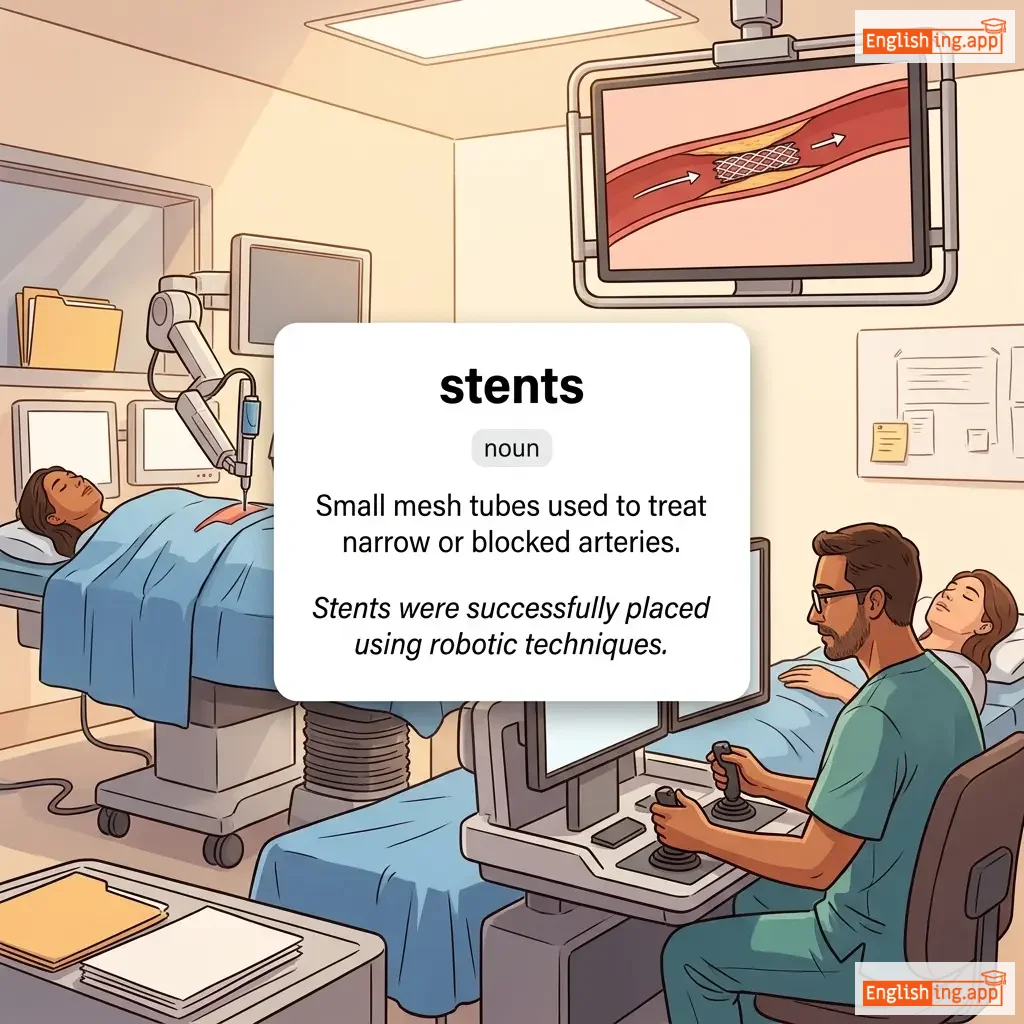
stents definition card — visual illustration of the meaning
noun
/stents/
支架 (zhī jià)

Small mesh tubes used to treat narrow or blocked arteries.

"Stents were successfully placed using robotic techniques."

"支架通过机器人技术成功放置。" (Zhī jià tōngguò jīqìrén jìshù chénggōng fàngzhì.)
👣

step

noun
/stɛp/

a movement made by lifting one foot and putting it down in a new position

"She took a step towards the door."

noun
/stɛp/
草原 (caoyuan)

A large flat area of unforested grassland, especially in southeastern Europe or Siberia.

"The nomads traveled across the vast steppe with their herds."

"游牧民族带着他们的牲畜穿越辽阔的草原。" (Yóumù mínzú dàizhe tāmen de shēngchù chuānyuè liáokuò de cǎoyuán.)
steps definition card — visual illustration of the meaning
noun
/stɛps/
步骤 (bùzhòu)

A measure or action, especially one of a series taken in order to deal with or achieve a particular thing.

"Taking small steps reduces overwhelm."

"采取小步骤减少了过度压力。" (Cǎiqǔ xiǎo bùzhòu jiǎnshǎo le guòdù yālì.)
noun
/ˈstɛriəˌtaɪp/
刻板印象 (kèbǎn yìnxiàng)

A widely held but oversimplified and fixed idea of a particular type of person or thing.

"It is a stereotype that all gamers are antisocial."

"所有玩家都是反社会的,这是一种刻板印象。" (Suǒyǒu wánjiā dōu shì fǎn shèhuì de, zhè shì yī zhǒng kèbǎn yìnxiàng.)
adjective
/ˈstɛriəˌtaɪpt/
刻板的 (kebande)

Conforming to a fixed or oversimplified idea of what someone or something is like.

"His stereotyped jokes failed to impress the audience."
"他的刻板笑话未能给观众留下深刻印象。" (tade keban xiaohua weineng gei guanzhong liuxia shenke yinxiang.)
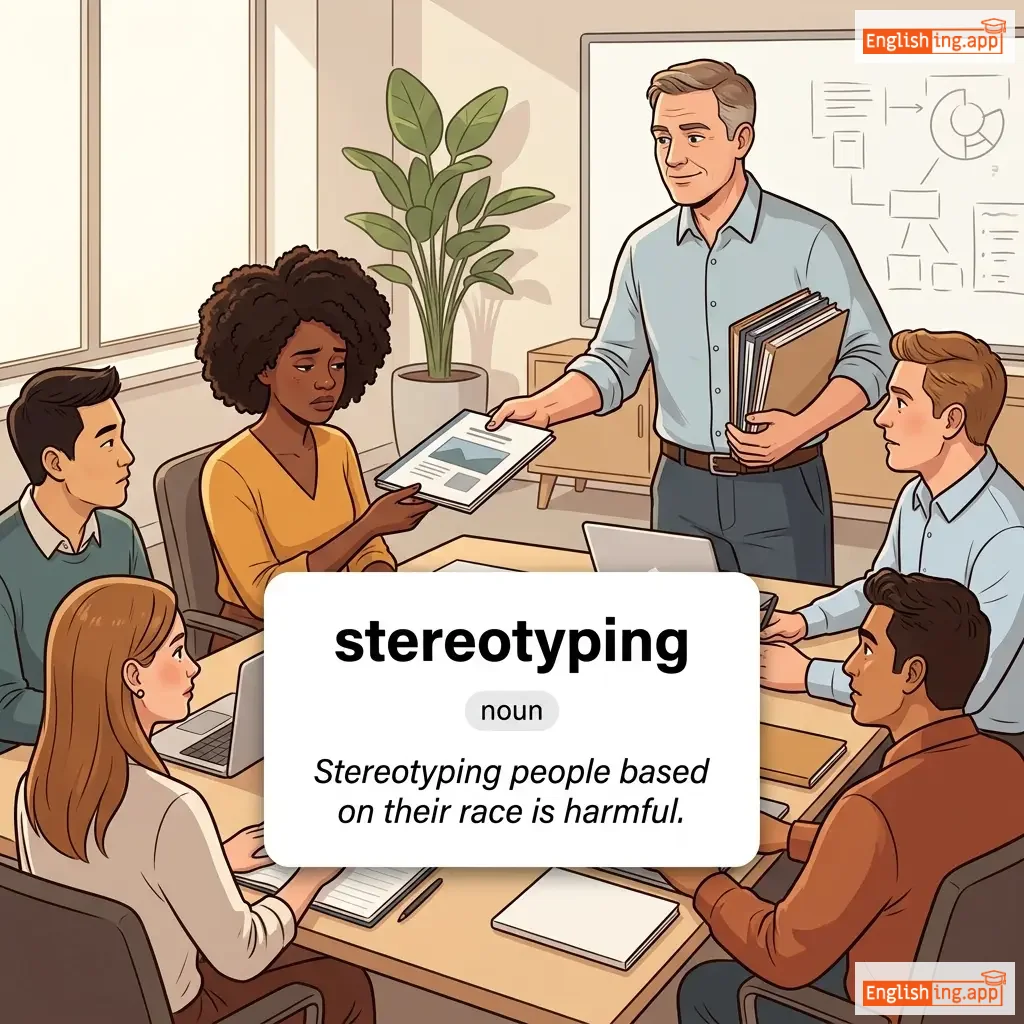
stereotyping definition card — visual illustration of the meaning
noun
/ˈstɛə.rɪ.əʊˌtaɪ.pɪŋ/
刻板印象 (kèbǎn yìnxiàng)

A widely held but fixed and oversimplified image or idea of a particular type of person or thing.

"Stereotyping people based on their race is harmful."

"基于种族的刻板印象是有害的。" (Jīyú zhǒngzú de kèbǎn yìnxiàng shì yǒuhài de.)
adjective
/ˈstɛr.aɪl/
无菌 (wújùn)

Free from bacteria or other living microorganisms; incapable of producing offspring.

"The surgeon worked in a sterile environment to avoid infection."

"外科医生在无菌环境下工作以避免感染。" (wàikē yīshēng zài wújùn huánjìng xià gōngzuò yǐ bìmiǎn gǎnrǎn.)
noun/adjective
/ˈstɜː.lɪŋ/
英国货币 / 优秀 (yīngguó huòbì / yōuxiù)

British money, especially pounds; of excellent quality.

"She was praised for her sterling work on the project."

"她因在项目中的出色工作而受到表扬。" (Tā yīn zài xiàngmù zhōng de chū sè gōngzuò ér shòudào biǎoyáng.)
adjective/noun
/stɜːrn/
严厉的 / 船的后部 (yanli de / chuan de houbu)

Serious and strict in manner or attitude; the back part of a ship.

"The teacher gave the students a stern warning before the exam."

"老师在考试前给学生们一个严厉的警告。" (Lǎoshī zài kǎoshì qián gěi xuéshēngmen yīgè yánlì de jǐnggào.)
adjective
/ˈstɜːr.tər.əs/
重呼吸声 (zhong huxi sheng)

Characterized by heavy snoring or breathing.

"The patient’s stertorous breathing alarmed the nurses."

"病人的重呼吸声让护士们感到惊讶。" (Bingren de zhong huxi sheng rang hushi men gandao jingya.)
noun
/ˈstiː.vəˌdɔːr/
装卸工 (zhuangxiegong)

A person employed to load and unload cargo from ships.

"The stevedores worked tirelessly to unload the cargo before dawn."

"装卸工们不知疲倦地工作,直到黎明前卸下货物。" (Zhuangxiegong men buzhi pijuande gongzuo, zhidao liming qian xiexia huowu.)
abbreviation (noun/pronoun)
/ˈsʌmθɪŋ/
某事 (mǒu shì)

abbreviation for 'something'

"Can you give me sth. to write with?"

"你能给我写字的东西吗?" (Nǐ néng gěi wǒ xiě zì de dōngxi ma?)
verb
/stɪk/
粘贴 (zhantui)

to adhere or attach something to a surface

"The glue will stick to the paper."

"胶水会粘在纸上。" (Jiaoshui hui zhan zai zhi shang.)
noun
/ˈstɪklər/
对规则严格的人 (duì guīzé yángé de rén)

a person who insists on a certain quality or standard of behavior

"He is a stickler for punctuality and never tolerates delays."

"他非常严格地要求准时,从不容忍迟到。" (Tā fēicháng yángé de yāoqiú zhǔnshí, cóng bù róngrěn chídào.)
adjective
/ˈstɪki/
粘的 (zhan de)

having the quality of adhering or clinging; difficult to remove or deal with

"The candy is too sticky to eat with your hands."

"糖果太粘了,不能用手吃。" (tang guo tai nian le, bu neng yong shou chi.)
adjective
/stɪf/
僵硬 (jiang ying)

rigid, difficult to bend or move

"After the long run, his legs felt very stiff."

"长跑后,他的腿感觉非常僵硬。" (Chang pao hou, ta de tui gan jue fei chang jiang ying.)
verb
/ˈstaɪfl/
抑制 (yìzhì)

to prevent or restrain an action, idea, or emotion; to suffocate

"She tried to stifle a laugh during the serious meeting."

"她试图在严肃的会议中抑制笑声。" (Tā shìtú zài yánsù de huìyì zhōng yìzhì xiàoshēng.)
verb
/ˈstaɪfəld/
压制 (yazhì)

to suppress, hold back, or prevent something from happening

"He stifled a laugh during the serious meeting."

"他在严肃的会议中压制了笑声。" (Tā zài yánsù de huìyì zhōng yāzhìle xiàoshēng.)
stigma definition card — visual illustration of the meaning
noun
/ˈstɪɡmə/
污名 (wūmíng)

a mark of shame or disgrace associated with a particular circumstance or quality

"There is still a stigma around mental health issues in many societies."

"许多社会中,心理健康问题仍然存在污名化现象。" (Xǔduō shèhuì zhōng, xīnlǐ jiànkāng wèntí réngrán cúnzài wūmínghuà xiànxiàng.)
verb
/ˈstɪɡmətaɪz/
污名化 (wūmíng huà)

to describe or regard someone as worthy of disgrace or disapproval

"People with certain illnesses are often unfairly stigmatized."

"患有某些疾病的人常常被不公正地污名化。" (Huàn yǒu mǒu xiē jíbìng de rén chángcháng bèi bù gōngzhèng de wūmíng huà.)
noun
/stɪˈlɛtoʊ/
细高跟鞋 / 匕首 (xì gāo gēn xié / bǐ shǒu)

A small, thin, high-heeled shoe or a dagger with a slender blade.

"She wore elegant stiletto heels to the party."

"她穿着优雅的细高跟鞋去参加派对。" (Tā chuānzhuó yōuyǎ de xì gāo gēn xié qù cānjiā pàiduì.)
adjective
/stɪl/
静止 (jingzhi)

not moving or making a sound

"The water was still, reflecting the sky."

"水面静止,反射着天空。" (Shuǐmiàn jìngzhǐ, fǎnshè zhe tiānkōng.)
adjective
/ˈstɪltɪd/
做作的, 不自然的 (zuòzuò de, bù zìrán de)

Speech or writing that is stiff, unnatural, or overly formal.

"His speech sounded stilted and rehearsed."

"他的演讲听起来做作且预先排练过。" (Tā de yǎnjiǎng tīng qǐlái zuòzuò qiě yùxiān páiliàn guò.)
noun
/ˈstɪmjʊlənt/
兴奋剂 (xīngfèn jì)

A substance that raises levels of physiological or nervous activity in the body.

"Coffee is a common stimulant that helps people stay awake."
"咖啡是一种常见的兴奋剂,帮助人们保持清醒" (Kāfēi shì yī zhǒng chángjiàn de xīngfèn jì, bāngzhù rénmen bǎochí qīngxǐng)
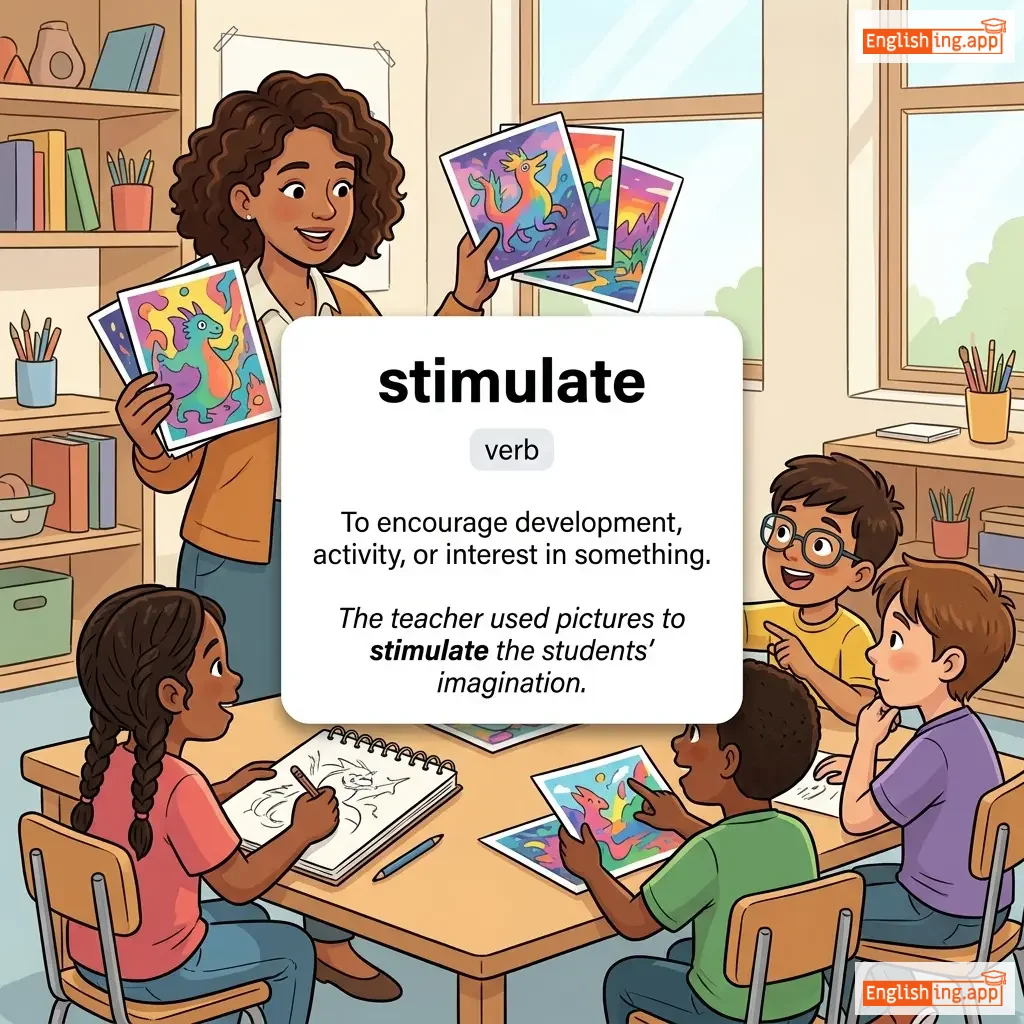
stimulate definition card — visual illustration of the meaning
verb
/ˈstɪmjʊˌleɪt/
刺激, 激励 (cìjī, jīlì)

To encourage development, activity, or interest in something.

"The teacher used pictures to stimulate the students' imagination."
"老师用图片刺激了学生的想象力。" (Lǎoshī yòng túpiàn cìjīle xuéshēng de xiǎngxiànglì.)
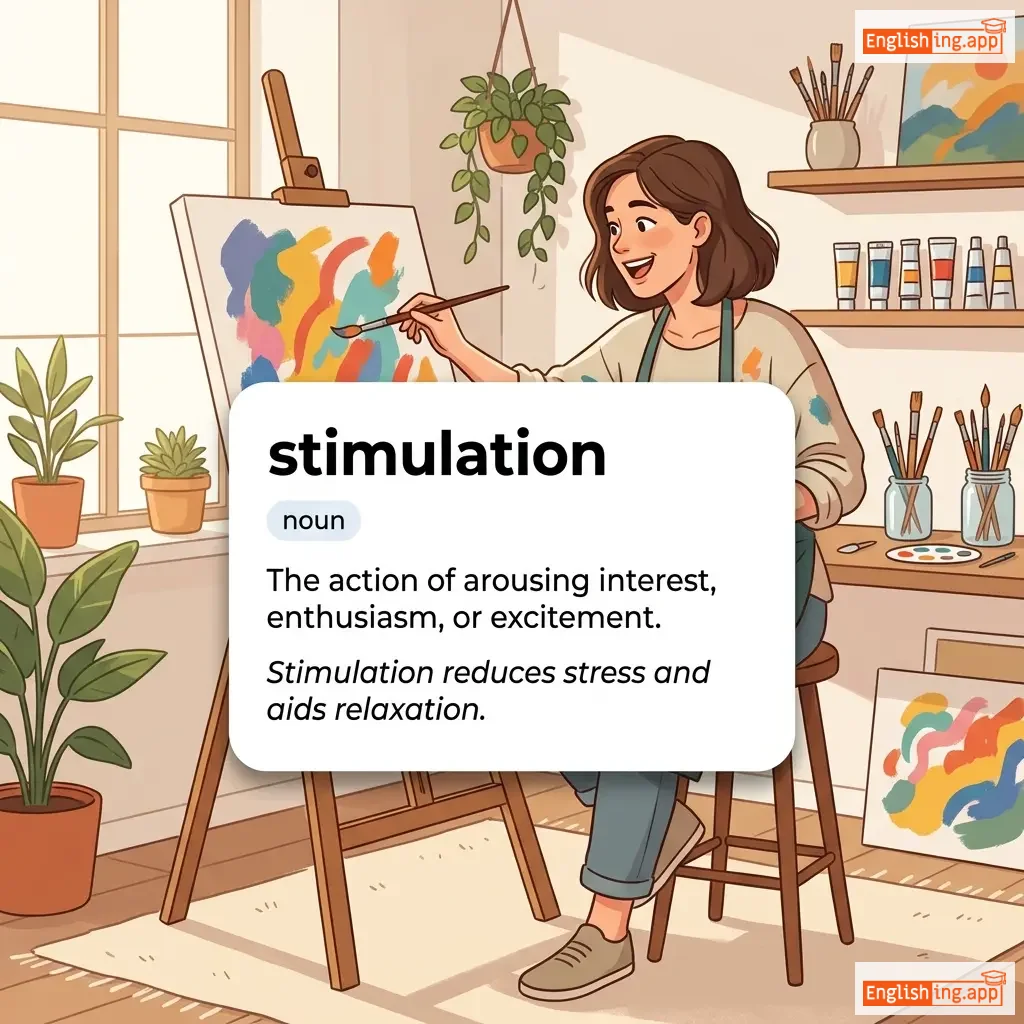
stimulation definition card — visual illustration of the meaning
noun
/ˌstɪm.jəˈleɪ.ʃən/
刺激 (cìjī)

The action of arousing interest, enthusiasm, or excitement.

"Stimulation reduces stress and aids relaxation."
"刺激减少压力并有助于放松。" (Cìjī jiǎnshǎo yālì bìng yǒuzhù yú fàngsōng.)
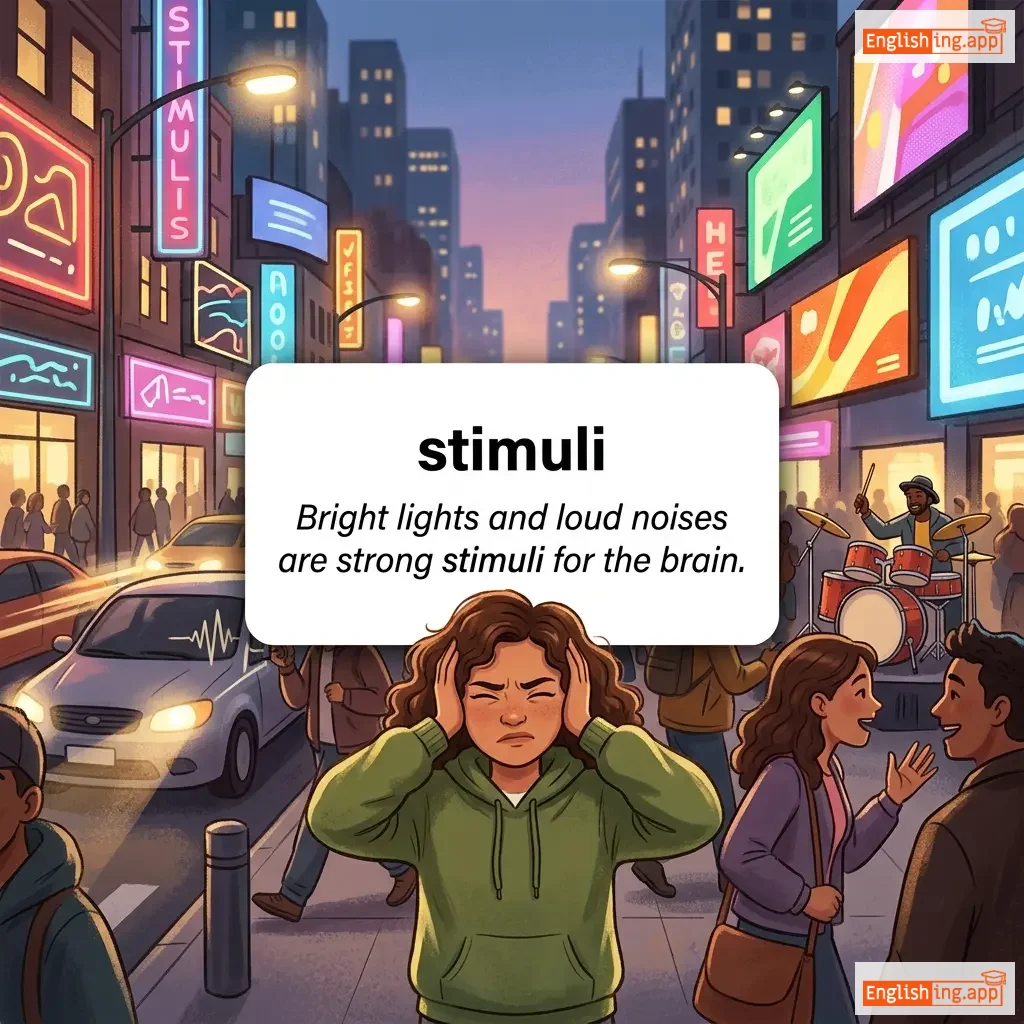
stimuli definition card — visual illustration of the meaning
noun (plural of stimulus)
/ˈstɪm.jʊ.laɪ/
刺激 (cìjī)

Things or events that evoke a specific functional reaction in an organ or tissue.

"Bright lights and loud noises are strong stimuli for the brain."
"明亮的光线和响亮的噪音是对大脑的强烈刺激。" (Míngliàng de guāngxiàn hé xiǎngliàng de zàoyīn shì duì dànǎo de qiángliè cìjī.)
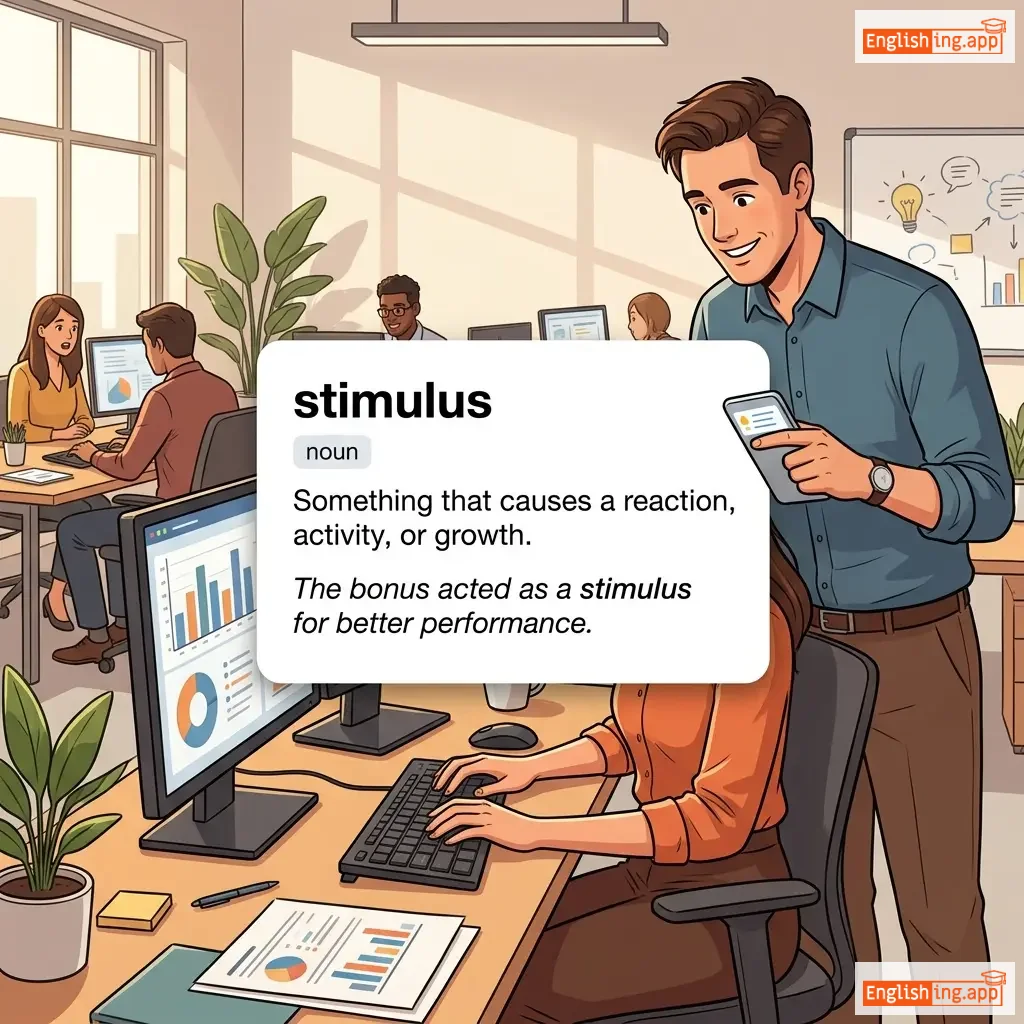
stimulus definition card — visual illustration of the meaning
noun
/ˈstɪmjʊləs/
引起反应、活动或增长的事物,刺激 (yǐnqǐ fǎnyìng, huódòng huò zēngzhǎng de shìwù, cìjī)

Something that causes a reaction, activity, or growth.

"The bonus acted as a stimulus for better performance."
"奖金成为了促进更好表现的刺激。" (Jiǎngjīn chéngwéi le cùjìn gèng hǎo biǎoxiàn de cìjī.)
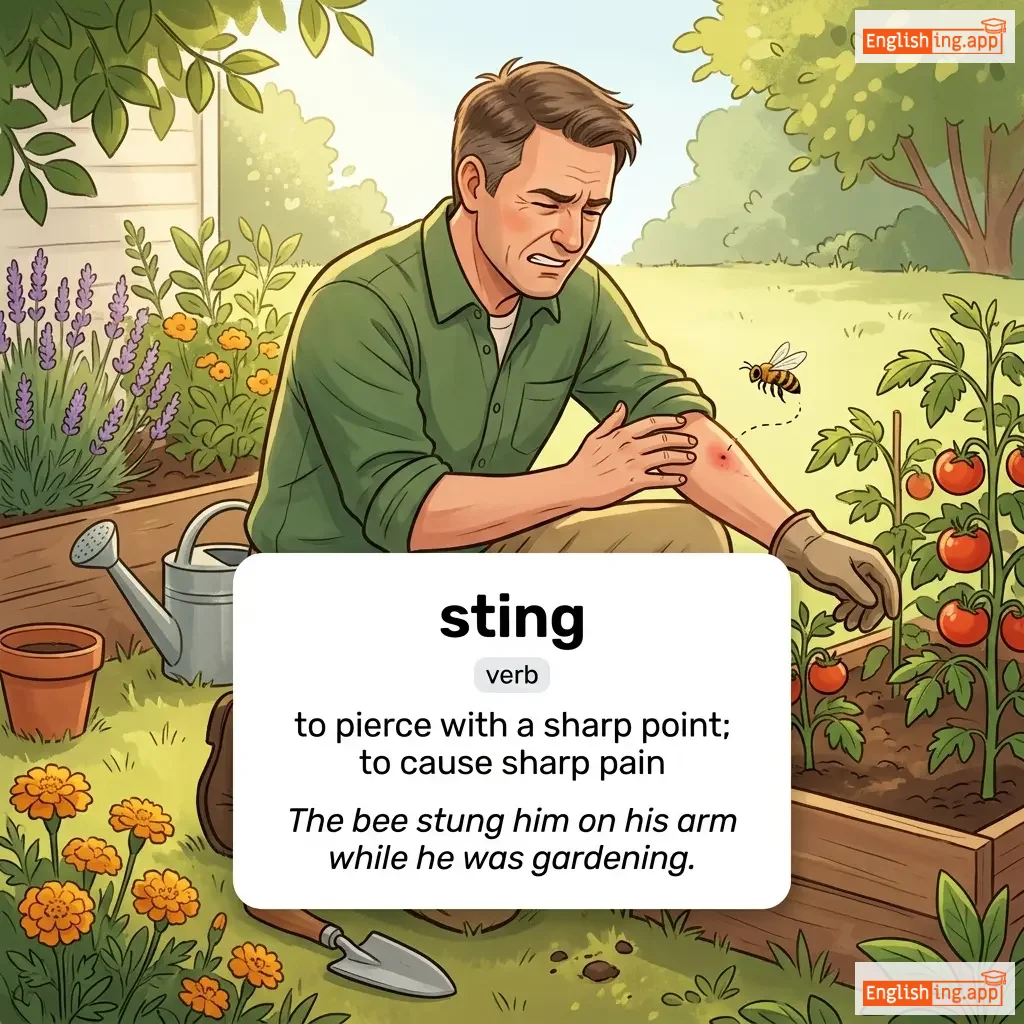
sting definition card — visual illustration of the meaning
verb
/stɪŋ/
刺痛 (cì tòng)

to pierce with a sharp point; to cause sharp pain

"The bee stung him on his arm while he was gardening."

"蜜蜂在他园艺时刺伤了他的手臂。" (Mìfēng zài tā yuányì shí cì shāng le tā de shǒubì)
adjective
/ˈstɪndʒi/
吝啬 (lìn sè)

unwilling to spend or give; miserly

"He is too stingy to buy a gift for his friend."

"他太吝啬了,连给朋友买礼物都不愿意。" (Tā tài lìnsè le, lián gěi péngyǒu mǎi lǐwù dōu bù yuànyì.)
verb
/stɪŋk/
发臭 (fa chou)

to smell very unpleasant

"The garbage bin stinks in the hot sun."
"垃圾桶在烈日下发臭。" (La ji tong zai lie ri xia fa chou.)
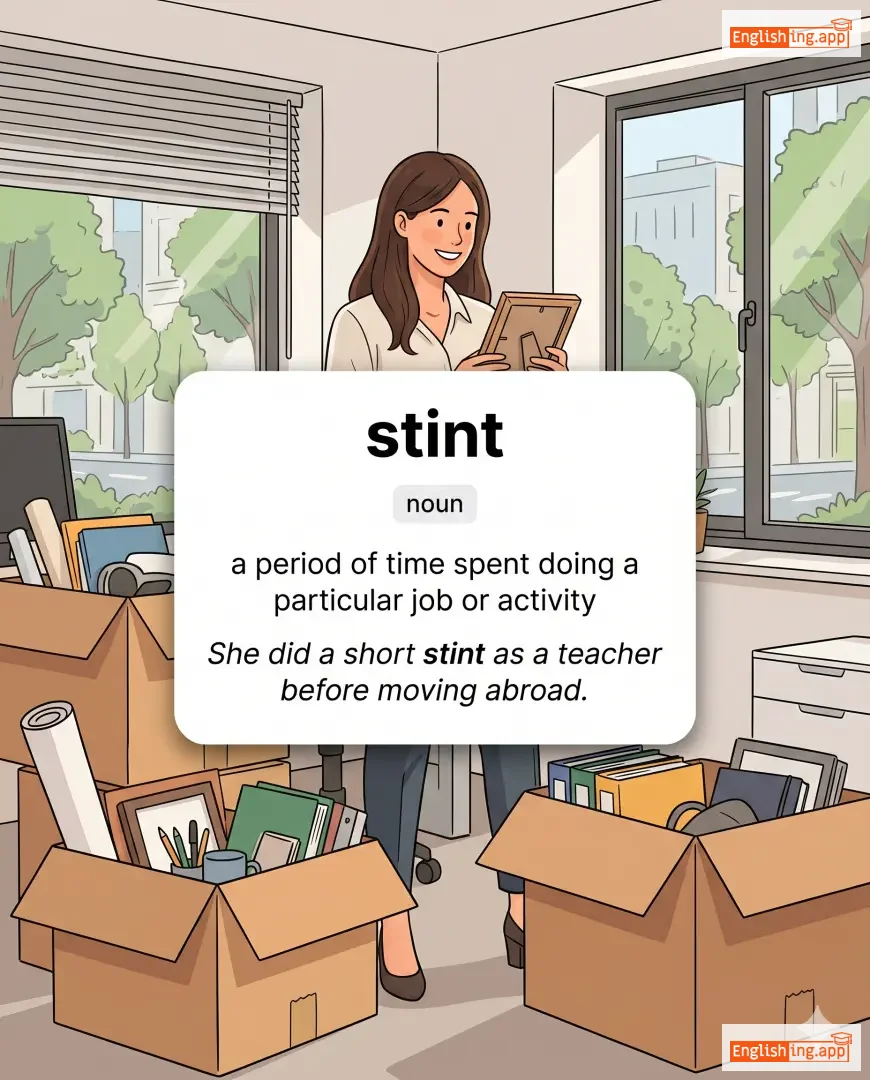
stint definition card — visual illustration of the meaning
noun
/stɪnt/
短期工作 (duǎnqī gōngzuò)

a period of time spent doing a particular job or activity

"She did a short stint as a teacher before moving abroad."

"她在搬到国外之前做了一段短时间的教师工作。" (Tā zài bān dào guówài zhīqián zuòle yī duàn duǎn shíjiān de jiàoshī gōngzuò.)
verb
/ˈstɪntɪŋ/
吝啬地给 (lìn sè de gěi)

to supply sparingly or with restrictions

"He never stinting his efforts to help the poor."

"他从不吝啬自己的努力来帮助穷人。" (Tā cóng bù lìnsè zìjǐ de nǔlì lái bāngzhù qióngrén.)
noun
/ˈstaɪpɛnd/
津贴 (jintie)

a fixed regular payment, usually for services or to cover living expenses

"The university provides a monthly stipend to its research students."

"大学为其研究生提供每月津贴。" (Dàxué wèi qí yánjiūshēng tígōng měi yuè jīntiē.)