词汇表

英语词汇词典 | 单词含义、定义和示例

adjective
/spraɪ/
灵活 (linghuo)

active and lively, especially in old age

"The spry grandmother surprised everyone with her quick dance steps."

"灵活的奶奶用快速的舞步让所有人都惊讶不已。" (Linghuo de nainai yong kuai su de wubu rang suoyou ren dou jingya bu yi.)
noun
/spjuːm/
泡沫 (paomo)

Froth or foam, especially found on waves or liquids.

"The waves crashed against the rocks, leaving spume in the air."

"波浪撞击岩石,空气中留下泡沫。" (Bolang zhuangji yanshi, kongqi zhong liuxia paomo.)
verb
/spɜːr/
激励 / 鼓励 (jili / guli)

To encourage or motivate someone to take action.

"The teacher's praise spurred him to study harder."

"教师的表扬激励他更加努力学习。" (Jiàoshī de biǎoyáng jīlì tā gèngjiā nǔlì xuéxí.)
adjective
/ˈspjʊəriəs/
虚假的 / 假冒的 (xūjiǎ de / jiǎmào de)

Not genuine, authentic, or true; false or fake.

"The report was based on spurious claims."

"报告基于虚假的声明。" (Bàogào jīyú xūjiǎ de shēngmíng.)
verb
/spɜːrn/
蔑视地拒绝 (mièshì de jùjué)

To reject something or someone with disdain or contempt.

"She spurned his offer of help."

"她以蔑视的态度拒绝了他的帮助提议。" (Tā yǐ mièshì de tàidu jùjuéle tā de bāngzhù tíyì.)
🕵️‍♂️

spy (sī pāi)

verb
/spaɪ/
间谍 (jiandie)

to secretly collect information about a person, group, or country

"He was caught spying on his neighbor through the window."

"他在窗户旁边偷偷地监视邻居时被抓住了。" (Tā zài chuānghù pángbiān tōutōu de jiānshì línjū shí bèi zhuā zhù le.)
verb
/ˈskwɒbəl/
为琐事争吵 (wèi suǒ shì zhēngchǎo)

To argue noisily over something small or unimportant.

"The children squabbled over the last piece of cake."

"孩子们争论最后一块蛋糕。" (Háizimen zhēnglùn zuìhòu yī kuài dàngāo.)
noun
/skwɒd/
小队 (xiaodui)

a small group of people organized for a specific purpose or task, often in the military or sports

"The football squad trained hard before the championship match."

"足球队在冠军赛前进行了艰苦训练。" (Zuqiudui zai guanjunsai qian jinxingle jianku xunlian.)
adjective
/ˈskwɒlɪd/
极其脏乱 (jíqí zāngluàn)

extremely dirty and unpleasant, often due to poverty or neglect

"He lived in a squalid room with broken furniture."

"他住在一个脏乱的房间里,里面有坏掉的家具。" (Tā zhù zài yīgè zāngluàn de fángjiān lǐ, lǐmiàn yǒu huài diào de jiājù.)
noun
/skwɔːl/
暴风骤雨 (baofeng zhouyu)

a sudden violent gust of wind, often accompanied by rain, snow, or sleet

"A sudden squall caught the sailors off guard."
"一阵突如其来的暴风骤雨让水手们措手不及。" (Yi zhen tu ru qi lai de baofeng zhouyu rang shuishou men cuoshou buji.)
squalor definition card — visual illustration of the meaning
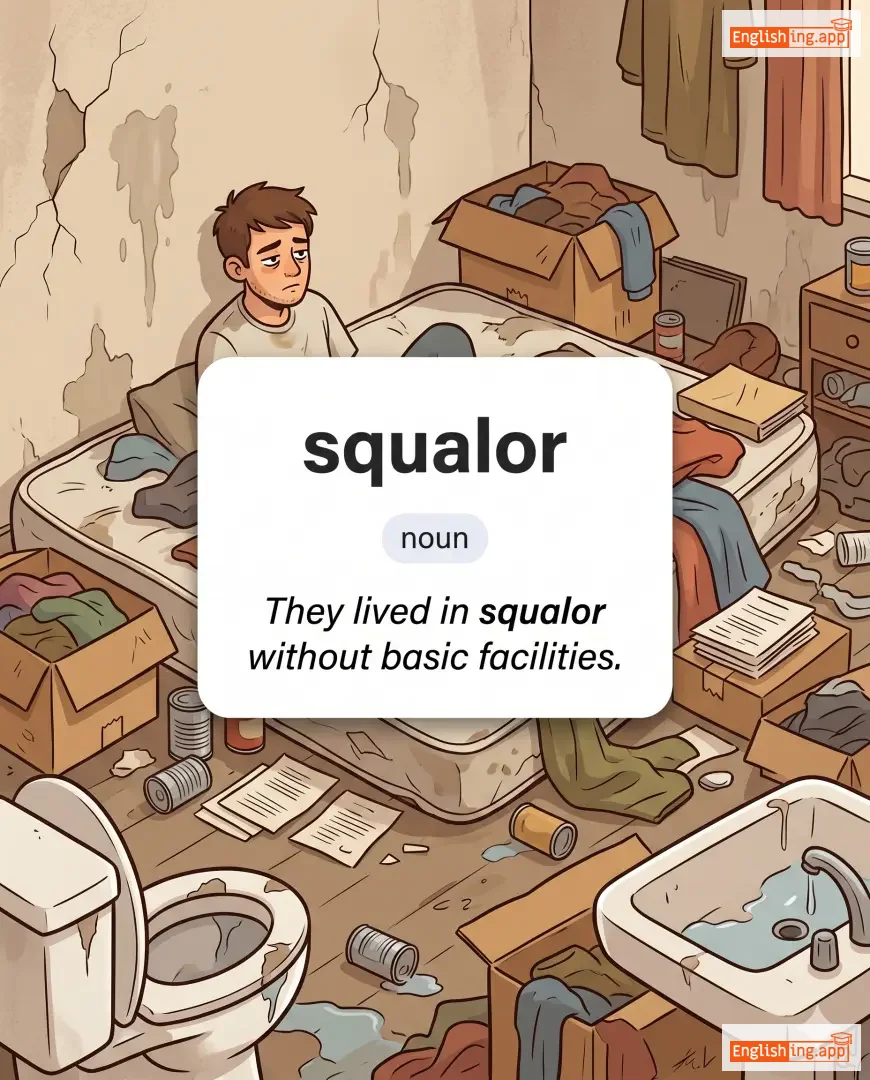
noun
/ˈskwɒlər/
贫困 (pínkùn)

the state of being extremely dirty and unpleasant, especially due to poverty or neglect

"They lived in squalor without basic facilities."

"他们在没有基本设施的贫困中生活。" (Tāmen zài méiyǒu jīběn shèshī de pínkùn zhōng shēnghuó.)
squander definition card — visual illustration of the meaning
verb
/ˈskwɒndər/
浪费 (làng fèi)

to waste something, especially money or time, in a reckless or foolish manner

"He squandered all his savings on gambling."

"他把所有的积蓄都浪费在了赌博上。" (Tā bǎ suǒyǒu de jīxù dōu làng fèi zài le dǔbó shàng.)
noun
/skwɛə(r)/
正方形 (zhèngfāngxíng)

a shape with four equal straight sides and four right angles

"The table has a square shape."

"桌子是正方形的。" (Zhuōzi shì zhèngfāngxíng de.)
verb
/skwɒʃ/
压扁 (yābiǎn)

to crush or squeeze something with force so that it becomes flat or broken

"She accidentally squashed the bug with her shoe."

"她不小心用鞋子压死了虫子。" (Tā bù xiǎoxīn yòng xiézi yā sǐ le huǐzi.)
/skwɒt/
蹲下 (dun xia)

to crouch or sit with knees bent and body close to the ground

"He squatted down to tie his shoes."

"他蹲下来系鞋带。" (Ta dun xia lai xi xie dai.)
noun
/ˈskwɒtər/
非法占领者 (fēi fǎ zhàn lǐng zhě)

a person who unlawfully occupies an uninhabited building or unused land

"The police removed the squatters from the abandoned house."
"警方将非法占领者从废弃的房屋中驱逐了出去。" (jǐngfāng jiāng fēifǎ zhànlǐng zhě cóng fèiqì de fángwū zhōng qūzhú le chūqù.)
squeal definition card — visual illustration of the meaning
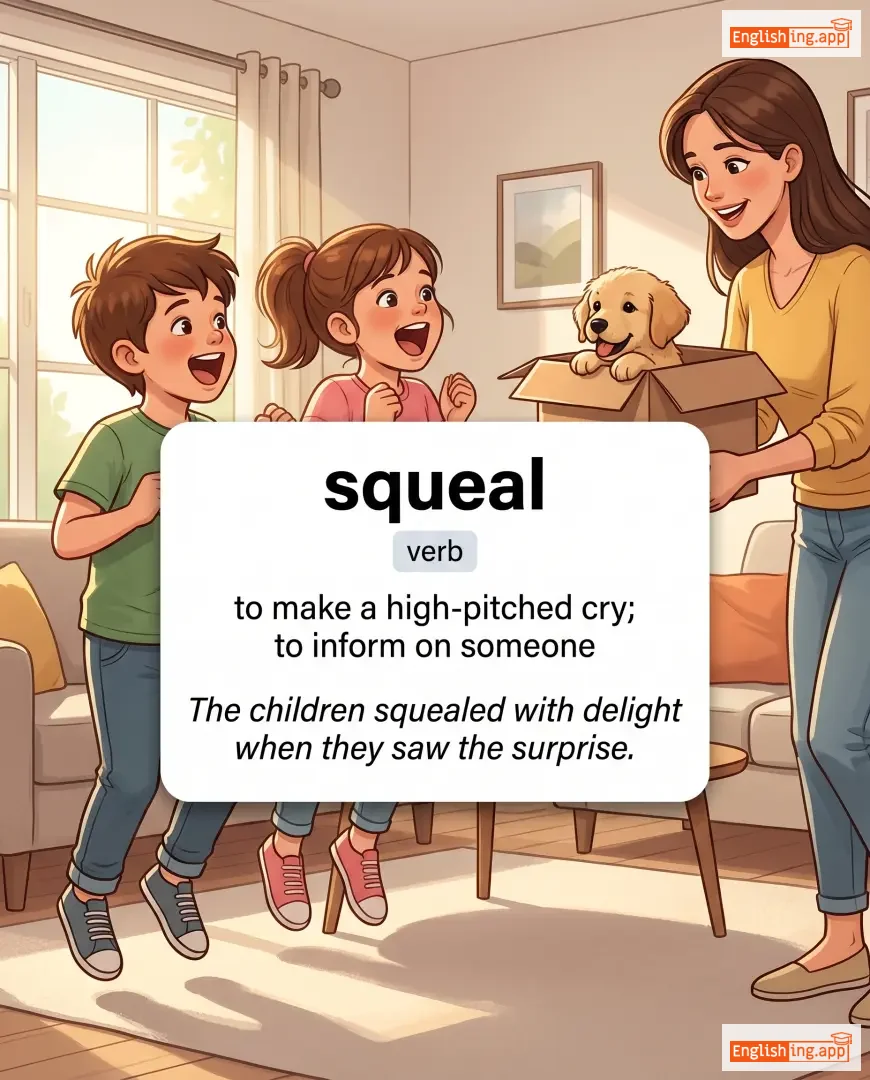
verb
/skwiːl/
尖叫 (jiān jiào)

to make a high-pitched cry; to inform on someone

"The children squealed with delight when they saw the surprise."

"孩子们看到惊喜时高兴地尖叫。" (Háizimen kàn dào jīngxǐ shí gāoxìng de jiānjiào.)
adjective
/ˈskwiːmɪʃ/
容易感到恶心、头晕或反感 (róngyì gǎndào ěxīn, tóuyūn huò fǎngǎn)

easily made to feel sick, faint, or disgusted

"She felt squeamish at the sight of blood."

"她看到血时感到恶心。" (Tā kàn dào xuè shí gǎndào ěxīn.)
verb
/skwiːz/
挤压 (jīyā)

to press something firmly, especially from all sides in order to extract or compress it

"She squeezed the toothpaste to get the last bit."

"她挤压牙膏管,想把最后一点挤出来。" (Tā jīyā yágāo guǎn, xiǎng bǎ zuìhòu yīdiǎn jī chūlái.)
🌧️

squelch

verb
/skwɛltʃ/

to make a soft sucking sound, such as when walking on mud; to suppress or silence

"His boots squelched in the wet ground."

verb
/skwɪnt/
眯眼看 (mī yǎn kàn)

to look with partly closed eyes

"She squinted at the bright sunlight."

"她因强烈的阳光而眯着眼睛。" (Tā yīn qiángliè de yángguāng ér mīzhe yǎnjīng.)
noun
/ˈskwɪr.əl/
松鼠 (songshu)

a small agile tree-dwelling rodent with a long bushy tail

"The squirrel gathered nuts for winter."

"松鼠为冬天收集坚果。" (Songshu wei dongtian shouji jianguo.)
verb, noun
/stæb/
刺伤 (cì shāng)

to pierce or wound with a pointed weapon or object

"He was stabbed in the back during the altercation."
"他在争执中背部被刺伤。" (Tā zài zhēng zhí zhōng bèi bù bèi cì shāng.)
noun
/stəˈbɪləti/

the quality of being steady and unchanging over time

"The stability of the economy is crucial for growth."

stabilization definition card — visual illustration of the meaning
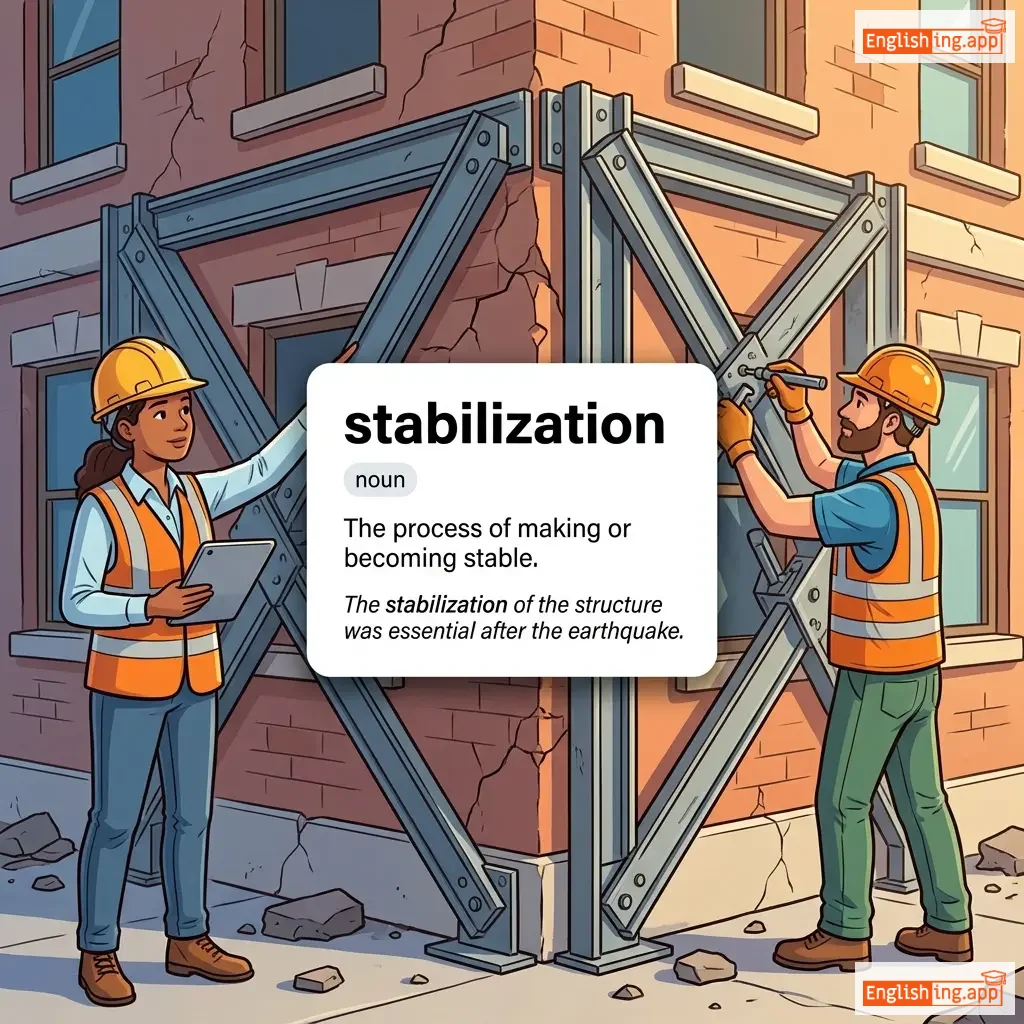
noun
ˌsteɪbəlaɪˈzeɪʃən
稳定化 (wendinghua)

The process of making or becoming stable.

"The stabilization of the structure was essential after the earthquake."

"地震后,结构的稳定化至关重要。" (Dizhen hou, jiegou de wendinghua zhiguang zhongyao.)
verb
/ˈsteɪ.bə.laɪz/
稳定 (wending)

to make something steady, secure, or unlikely to change suddenly

"The government took measures to stabilize the economy."
"政府采取措施以稳定经济。" (zhèngfǔ cǎiqǔ cuòshī yǐ wending jīngjì.)
stable definition card — visual illustration of the meaning
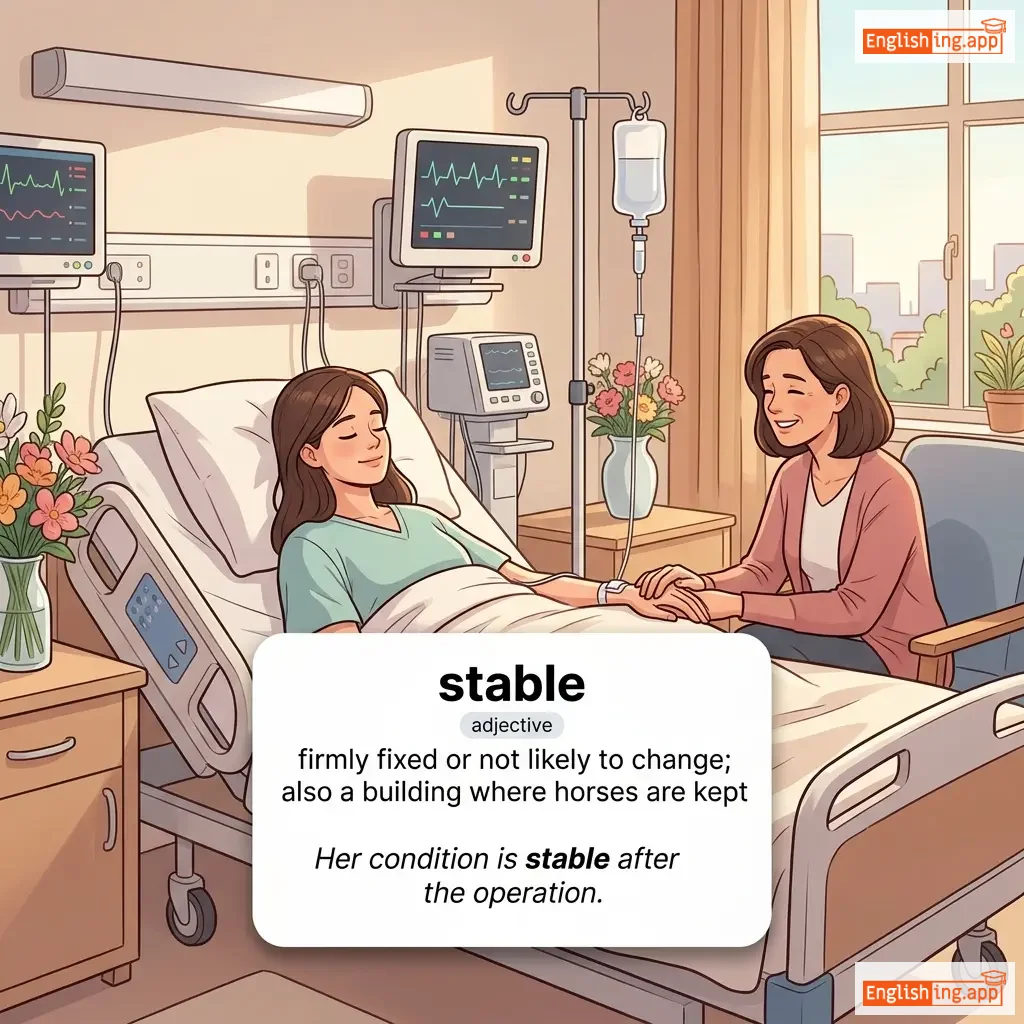
adjective
/ˈsteɪ.bəl/
稳定 / 马厩 (wěndìng / mǎ jiù)

firmly fixed or not likely to change; also a building where horses are kept

"Her condition is stable after the operation."
"手术后她的情况稳定。" (Shǒushù hòu tā de qíngkuàng wěndìng.)
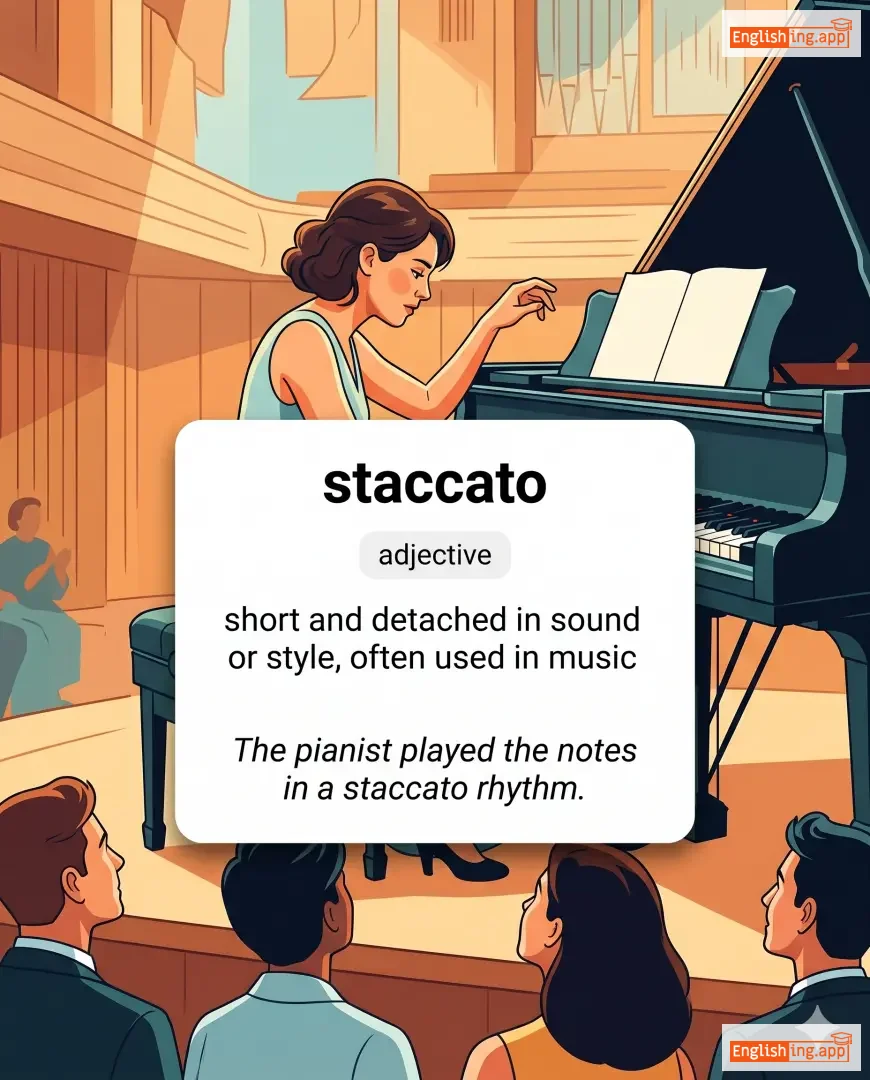
staccato definition card — visual illustration of the meaning
adjective
/stəˈkɑː.təʊ/
断奏 (duànzòu)

short and detached in sound or style, often used in music

"The pianist played the notes in a staccato rhythm."

"钢琴家以断奏的节奏弹奏音符。" (Gāngqínjiā yǐ duànzòu de jiézòu tánzòu yīnfú.)
📚

stack

verb
/stæk/

to arrange things in a neat pile or one on top of another

"He stacked the books neatly on the shelf."

🏟️

stadium

noun
/ˈsteɪdiəm/

a large structure with seating for sports, concerts, or other events

"Thousands of fans filled the stadium to watch the final match."

👩‍💼

staff (staff)

noun
/stæf/
员工 (yuángōng)

a group of employees working together in an organization

"The staff at the hospital are very helpful."

"医院的员工非常有帮助。" (Yīyuàn de yuángōng fēicháng yǒu bāngzhù.)
noun
/steɪdʒ/
舞台 (wutai)

a raised platform or area for performances or presentations

"The actor stepped onto the stage to deliver his speech."

"演员登上舞台,发表他的演讲。" (Yǎnyuán dēng shàng wǔtái, fābiǎo tā de yǎnjiǎng.)
adjective
/ˈstæɡ.nənt/
停滯 (tíngzhì)

not moving, changing, or developing; inactive

"The company’s growth remained stagnant for several years."

"公司增長多年來停滯不前。" (Gōngsī zēngzhǎng duō nián lái tíngzhì bù qián.)
verb
/ˈstæɡ.neɪt/
停滞 (tíngzhì)

to stop developing, progressing, or moving

"Without innovation, the business will stagnate."
"没有创新,生意将会停滞不前。" (méiyǒu chuàngxīn, shēngyì jiāng huì tíngzhì bùqián.)
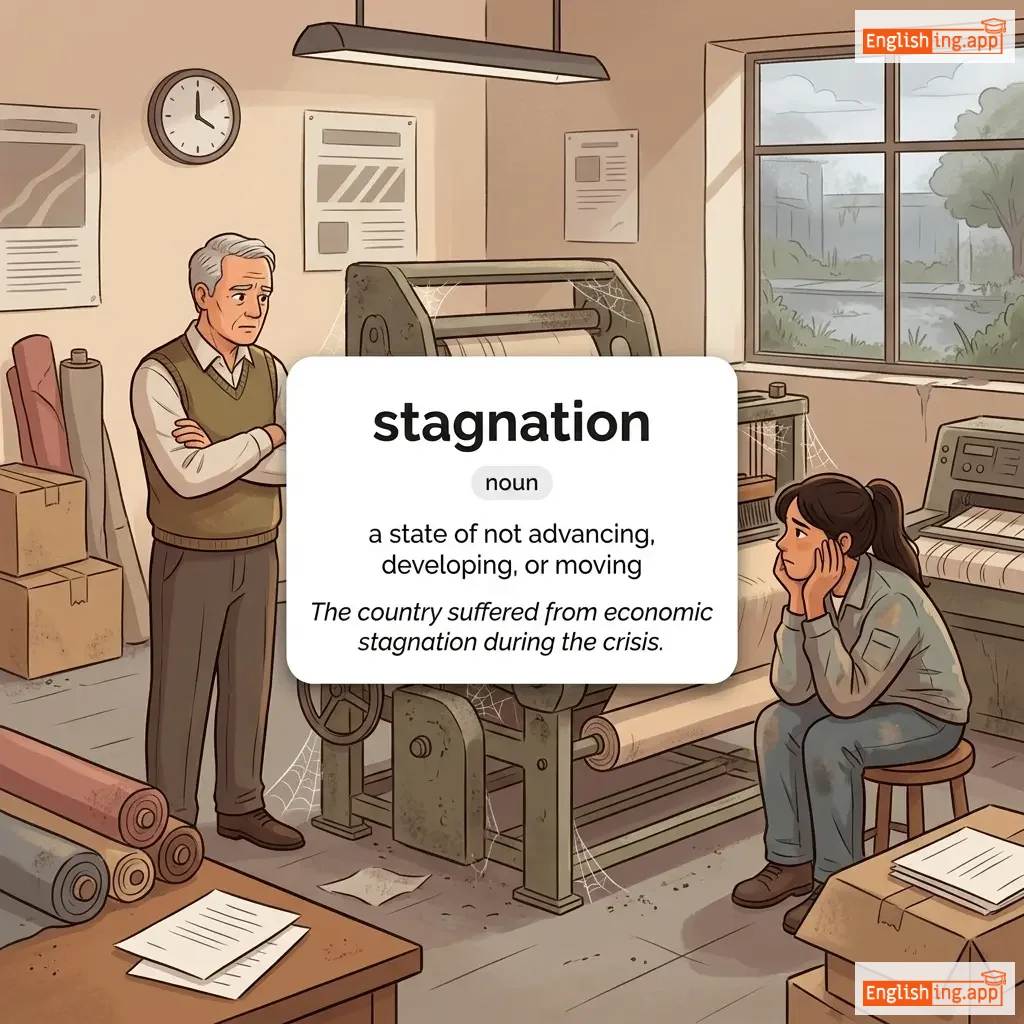
stagnation definition card — visual illustration of the meaning
noun
/stæɡˈneɪ.ʃən/
停滯 (tingzhi)

a state of not advancing, developing, or moving

"The country suffered from economic stagnation during the crisis."

"该国在危机期间遭受了经济停滯。" (Gai guo zai weiji qi jian zao shou le jingji tingzhi.)
adjective
/ˈsteɪ.dʒi/
过于戏剧化 (guo yu xi ju hua)

Overly theatrical, artificial, or exaggerated in manner or style.

"Her performance felt stagy and unnatural."

"她的表演显得过于戏剧化和不自然。" (Ta de biao yan xian de guo yu xi ju hua he bu zi ran.)
adjective
/steɪd/
严肃,受尊敬的 (yánsù, shòu zūnjìng de)

Serious, respectable, and unadventurous.

"He came from a staid family background."

"他来自一个严肃的家庭。" (Tā láizì yīgè yánsù de jiātíng.)
🩸

Stain

verb
/steɪn/

to mark or discolor something permanently; a spot or mark left behind

"The coffee spilled and stained the tablecloth."

noun
/stɛə/
楼梯 (louti)

a step or set of steps leading from one level to another

"He tripped on the stair and fell down."

"他在楼梯上绊倒摔了下来。" (Ta zai louti shang bandao shuai le xiala.)
noun, verb
/steɪk/
股份, 风险 (gǔ fèn, fēng xiǎn)

A share or interest in a business or venture; to risk or support something of value.

"He has a major stake in the new company."
"他在新公司拥有重大股份。" (Tā zài xīn gōng sī yǒng yǒu zhòng dà gǔ fèn.)
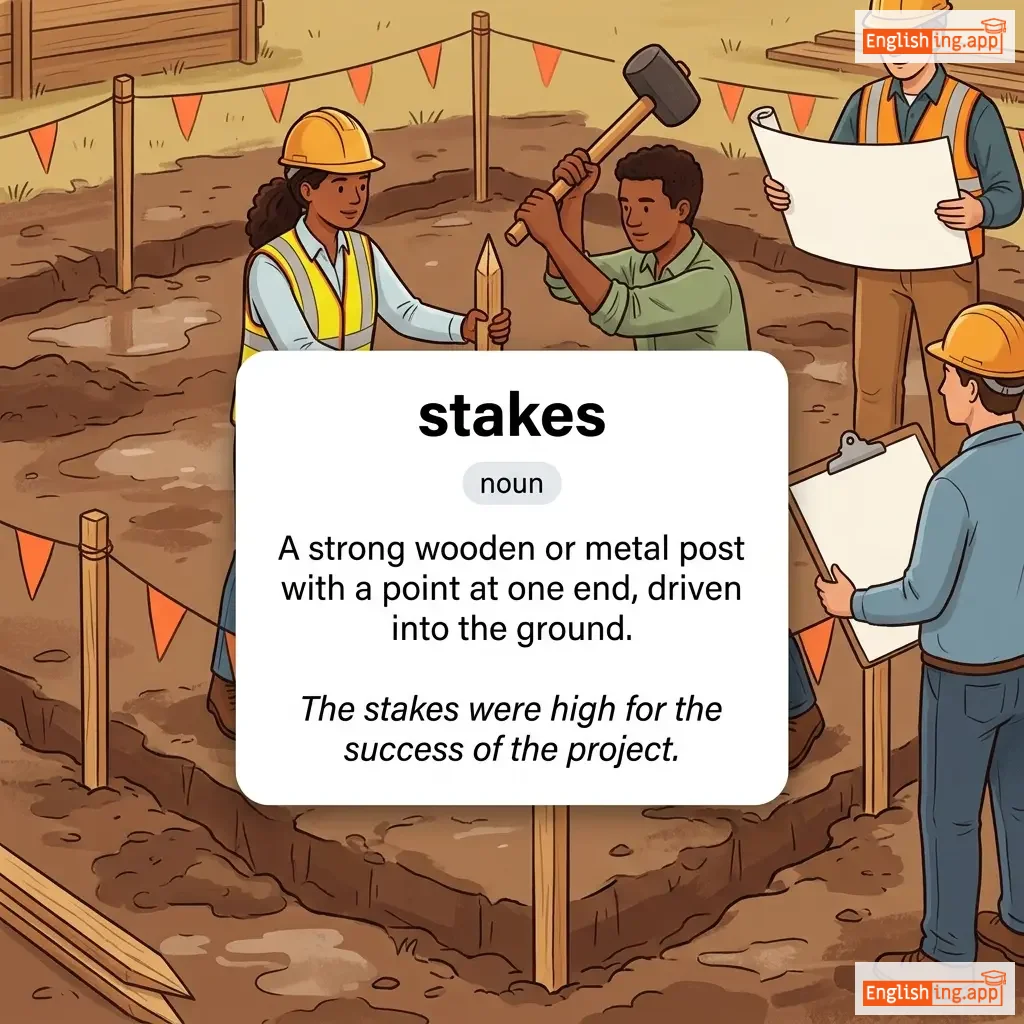
stakes definition card — visual illustration of the meaning
noun
steɪks
赌注 (dǔ zhù)

A strong wooden or metal post with a point at one end, driven into the ground.

"The stakes were high for the success of the project."

"赌注对项目的成功至关重要。" (Dǔzhù duì xiàngmù de chénggōng zhìguān zhòngyào.)
adjective
/steɪl/
陈旧的; 过时的; 不新鲜的 (chénjiù de; guòshí de; bù xīnxiān de)

no longer fresh; lacking originality or novelty

"The bread became stale after sitting out for three days."

"面包放了三天后变得陈旧。" (Miànbāo fàngle sāntiān hòu biàn dé chénjiù.)
noun
/ˈsteɪl.meɪt/
僵局 (jiangju)

A situation in which no progress can be made or no party can win.

"Negotiations ended in a stalemate."

"谈判陷入了僵局。" (Tanpan xianru le jiangju.)
verb, noun
/stɔːl/
停下, 小摊 (ting xia, xiao tan)

to stop or cause to stop temporarily; a small shop or stand

"The car stalled on the way to the office."

"车子在去办公室的路上停了下来。" (Che zi zai qu bangongshi de lujiao ting le xia lai.)
noun
/ˈstæl.i.ən/
用于繁殖的种马 (yòng yú fánzhí de zhǒngmǎ)

An adult male horse that is not castrated, often used for breeding.

"The farm owns a powerful stallion for breeding purposes."

"农场拥有一匹强壮的种马用于繁殖。" (Nóngchǎng yǒng yī pǐ qiángzhuàng de zhǒngmǎ yòng yú fánzhí.)
adjective
/ˈstɔːlwərt/
坚定, 忠诚 (jianding, zhongcheng)

Loyal, reliable, and hardworking; strongly built or sturdy.

"She has always been a stalwart supporter of the community."

"她一直是社区的坚定支持者。" (Ta yizhi shi shequ de jianding zhichi zhe.)
noun
/ˈstæmɪnə/
耐力 (naili)

The physical or mental strength to sustain prolonged effort or activity.

"Marathon runners need great stamina to finish the race."

"马拉松跑者需要强大的耐力来完成比赛。" (Mǎlāsōng pǎozhě xūyào qiángdà de nàilì lái wánchéng bǐsài.)
verb
/ˈstæmər/
结巴 (jieba)

To speak with sudden involuntary pauses and a tendency to repeat the initial letters of words.

"The nervous student began to stammer during his speech."

"紧张的学生在演讲中开始结巴。" (Jǐnzhāng de xuéshēng zài yǎnjiǎng zhōng kāishǐ jiēbā.)
📮

stamp

verb
/stæmp/

To bring down (one's foot) heavily on the ground; to imprint a mark or seal.

"She stamped her foot in frustration."

noun/verb
/stæmˈpiːd/
混乱的人群 (hunluan de renqun)

A sudden, uncontrolled rush of people or animals; to cause a mass movement.

"The loud noise caused a stampede of the crowd."

"嘈杂的声音引起了人群中的一阵奔跑。" (Caoza de shengyin yinqile renqun zhong de yizhen benpao.)