词汇表

英语词汇词典 | 单词含义、定义和示例

noun
/ˈspɛʃəlɪst/
专家 (zhuanjia)

a person who is an expert in a particular area or field

"She is a specialist in pediatric medicine."

"她是儿科医学专家。" (Ta shi erke yixue zhuanjia.)
noun
/ˌspeʃiˈælɪti/
专长 (zhuan zhang)

a particular area of activity or interest that someone focuses on; expertise in a specific field

"His speciality is Italian cuisine."

"他的专长是意大利菜肴。" (ta de zhuan zhang shi yi da li cai yao.)
verb
/ˈspɛʃəˌlaɪz/
专攻 (zhuāngōng)

to focus on a particular subject or activity and become an expert in it

"He decided to specialize in cardiology."

"他决定专攻心脏病学。" (Tā juédìng zhuāngōng xīnzàng bìngxué.)
adjective
/ˈspɛʃəˌlaɪzd/
专门的 (zhuānmén de)

designed or developed for a particular purpose or function

"He has a specialized knowledge of ancient civilizations."

"他对古代文明有专门的知识。" (Tā duì gǔdài wénmíng yǒu zhuānmén de zhīshì.)
adverb
/ˈspeʃ.əl.i/
特别 (tebie)

for a particular purpose; especially; specifically

"This gift was specially made for you."

"这个礼物是特别为你做的。" (Zhe ge liwu shi tebie wei ni zuo de.)
noun
/ˈspɛʃəlti/
专长 (zhuan chang)

a particular area of study, work, or interest; something in which a person or place excels

"Her specialty is pediatric medicine."

"她的专业是儿科医学。" (ta de zhuan chang shi er ke yi xue)
noun
/ˈspiːʃiː/
硬币 (yingbi)

money in the form of coins rather than notes or credit

"The transaction was made in specie."

"交易是以硬币完成的。" (Jiaoyi shi yi yingbi wancheng de.)
noun
/ˈspiːʃiːz/
物种 (wùzhǒng)

a group of living organisms consisting of similar individuals capable of exchanging genes or interbreeding

"The panda is an endangered species."

"熊猫是濒临灭绝的物种。" (Xióngmāo shì bīnlín mièjué de wùzhǒng.)
specific definition card — visual illustration of the meaning
adjective
/spəˈsɪfɪk/
特定的 (tèdìng de)

clearly defined or identified

"She gave specific instructions for the project."

"她给出了项目的特定指示。" (Tā gěi chūle xiàngmù de tèdìng zhǐshì.)
adverb
/spəˈsɪfɪkli/
特别地 (te bie de)

in a clear and exact way

"He was specifically asked to handle the finances."

"他被特别要求处理财务。" (Ta bei tebie yaoqiu chuli caiwu.)
noun
/ˌspɛsɪfɪˈkeɪʃən/
规格 (guīgé)

a detailed description or assessment of something

"The product specification includes all the necessary details."

"产品规格包括所有必要的细节。" (Chǎnpǐn guīgé bāokuò suǒyǒu bìyào de xìjié.)
verb
/ˈspɛsɪfaɪ/
指定 (zhiding)

to state or describe something clearly and exactly

"Please specify the time and place of the meeting."

"请明确指定会议的时间和地点。" (Qing mingque zhiding huiyi de shijian he didian.)
noun
/ˈspɛsəmən/
标本 (biaoben)

an individual animal, plant, piece of a mineral, etc., used as an example of its species or type for scientific study

"The museum has a rare butterfly specimen."
"博物馆里有一只稀有的蝴蝶标本。" (Bówùguǎn lǐ yǒu yī zhī xīyǒu de húdié biāoběn.)
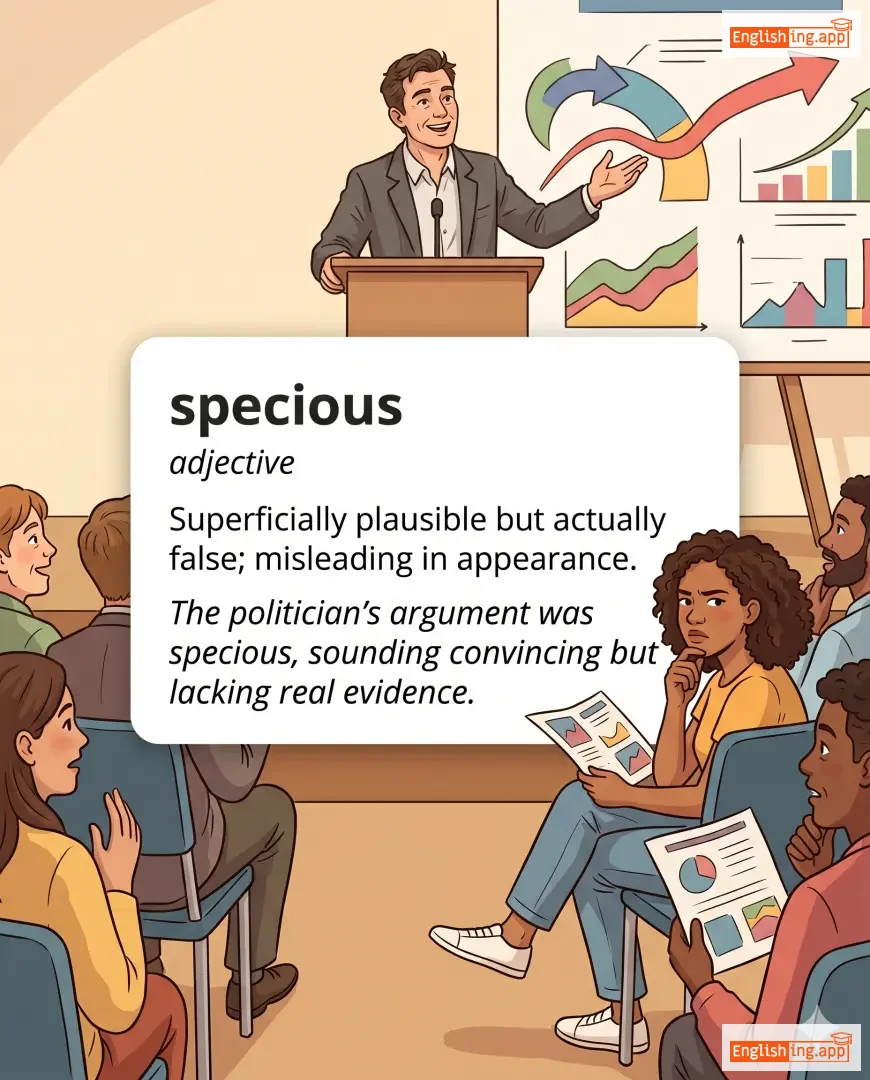
specious definition card — visual illustration of the meaning
adjective
/ˈspiːʃəs/
虚假 (xu jia)

Superficially plausible but actually false; misleading in appearance.

"The politician’s argument was specious, sounding convincing but lacking real evidence."

"那位政治家的论点是虚假的,听起来很有说服力,但缺乏真实的证据。" (Na wei zhengzhi jia de lundian shi xu jia de, ting qilai hen you shuofu li, dan quefa zhenshi de zhengju.)
noun
/spɛk/
斑点 (bandian)

A very small spot, mark, or particle.

"There was a tiny speck of dust on the glass table."
"玻璃桌上有一小片灰尘。" (Bōlí zhuō shàng yǒu yī xiǎo piàn huīchén.)
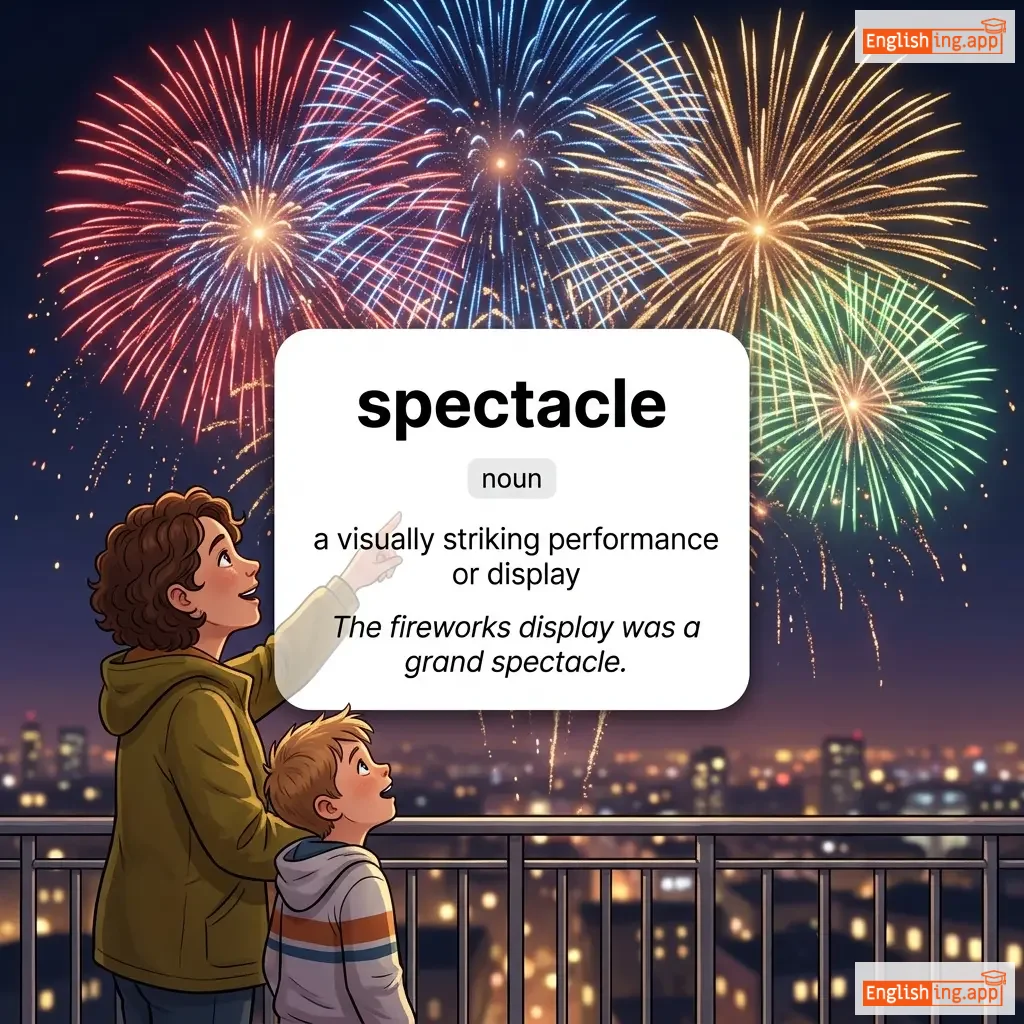
spectacle definition card — visual illustration of the meaning
noun
/ˈspɛktəkəl/
视觉盛宴 (shìjué shèngyàn)

a visually striking performance or display

"The fireworks display was a grand spectacle."
"烟花表演是一场壮观的视觉盛宴。" (Yānhuā biǎoyǎn shì yī chǎng zhuàngguān de shìjué shèngyàn.)
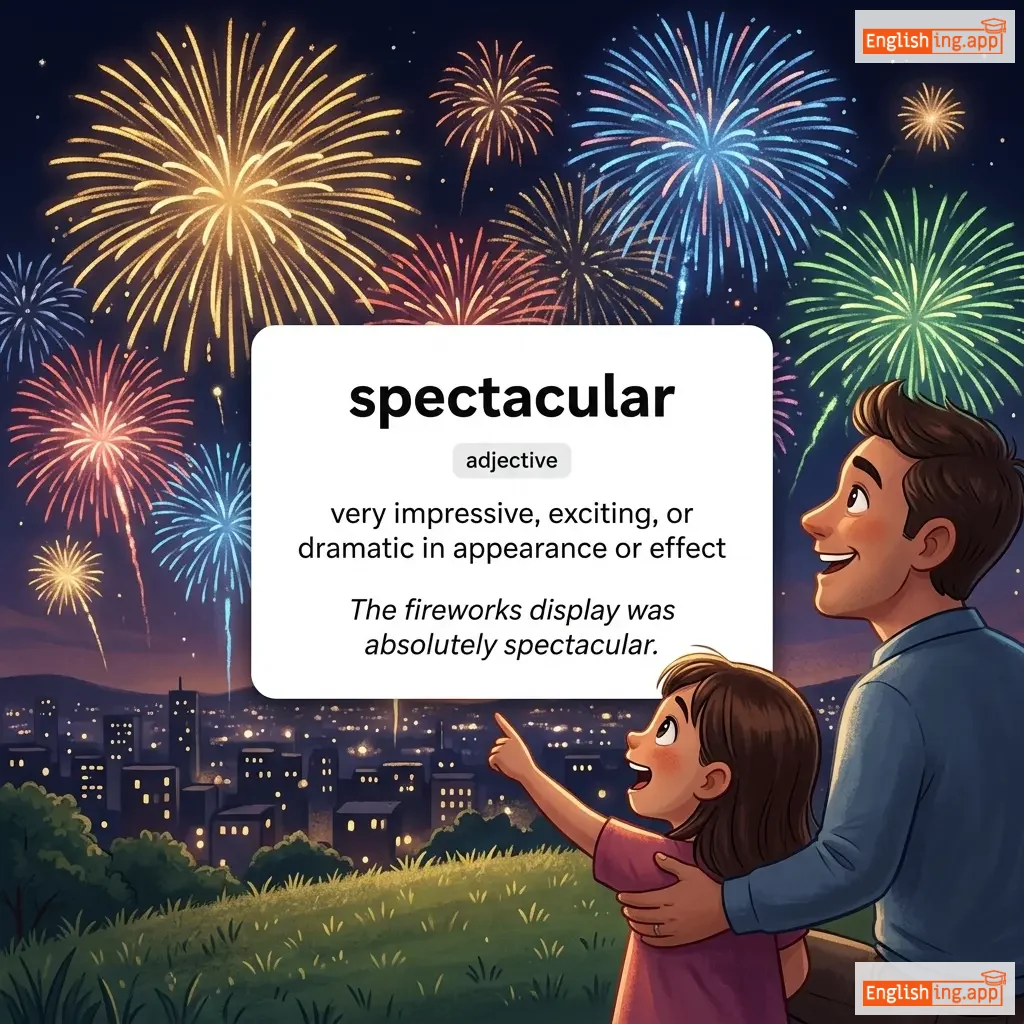
spectacular definition card — visual illustration of the meaning
adjective
/spɛkˈtækjələr/
壮观 (zhuangguan)

very impressive, exciting, or dramatic in appearance or effect

"The fireworks display was absolutely spectacular."

"烟火表演绝对壮观。" (Yanhuo biaoyan juedui zhuangguan.)
noun
/ˈspɛkteɪtər/
观众 (guānzhòng)

A person who watches an event, show, or game without taking part.

"Thousands of spectators gathered to watch the football match."

"成千上万的观众聚集在一起观看足球比赛。" (Chéng qiān shàng wàn de guānzhòng jùjí zài yīqǐ guānkàn zúqiú bǐsài.)
noun
/ˈspɛktər/
幽灵 (youling)

A ghost or spirit; something that causes fear or dread.

"The specter of war still haunts the region."

"战争的幽灵仍然在该地区徘徊。" (Zhànzhēng de yōulíng réngrán zài gāi dìqū pái huái.)
adjective
/ˈspɛktrəl/
幽灵的 (yōulíng de)

Relating to a ghost or specter; ghostly. Also relating to a spectrum.

"The old mansion had a spectral atmosphere at night."
"那座古老的宅邸晚上有一种幽灵般的氛围。" (Nà zuò gǔlǎo de zhái dǐ wǎnshàng yǒu yī zhǒng yōulíng bān de fēnwéi.)
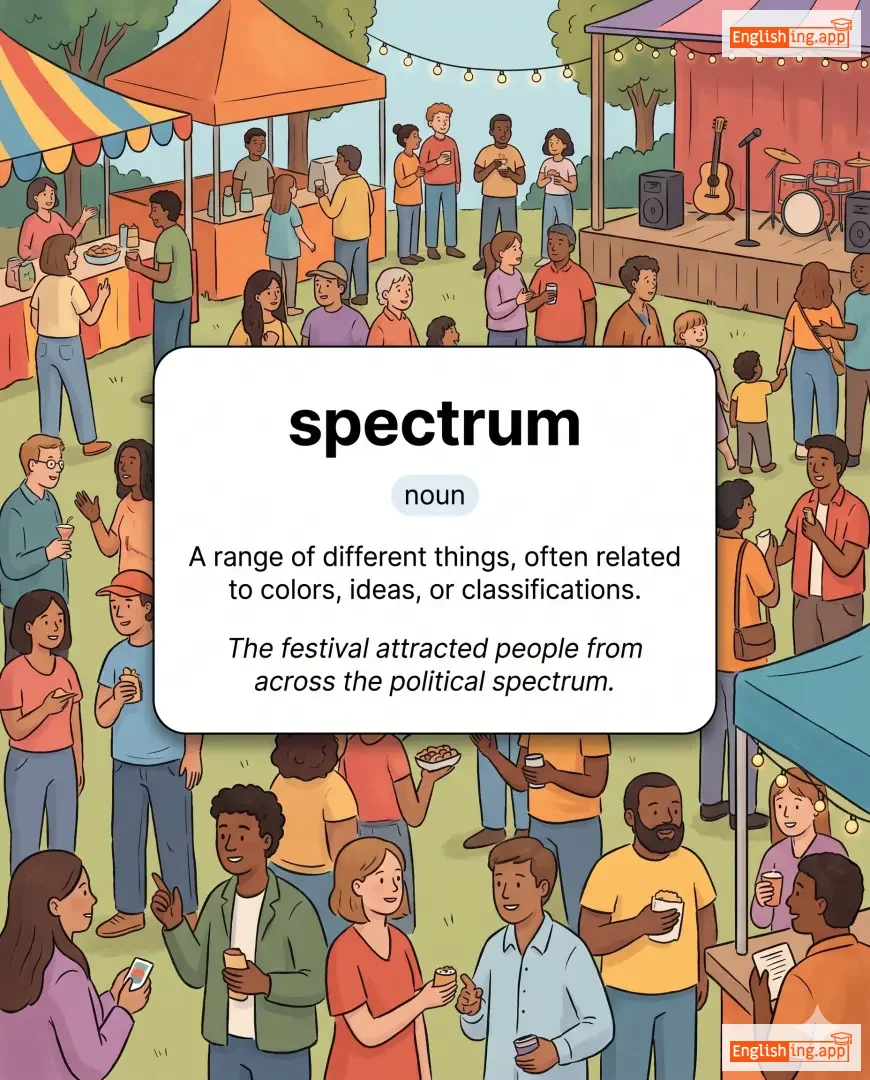
spectrum definition card — visual illustration of the meaning
noun
/ˈspɛktrəm/
光谱 (guāngpǔ)

A range of different things, often related to colors, ideas, or classifications.

"The festival attracted people from across the political spectrum."

"这个节日吸引了来自各个政治光谱的人们。" (Zhège jiérì xīyǐnle láizì gè ge zhèngzhì guāngpǔ de rénmen.)
verb
/ˈspɛkjʊˌleɪt/
投机 / 投资 (tóujī / tóuzī)

To form a theory or guess without firm evidence; to invest in stocks, property, etc. hoping for profit.

"Experts speculate that the company may expand into new markets."
"专家推测公司可能会扩展到新市场。" (zhuānjiā tuīcè gōngsī kěnéng huì kuòzhǎn dào xīn shìchǎng.)
speculation definition card — visual illustration of the meaning
noun
/ˌspɛkjʊˈleɪʃən/
猜测 (caice)

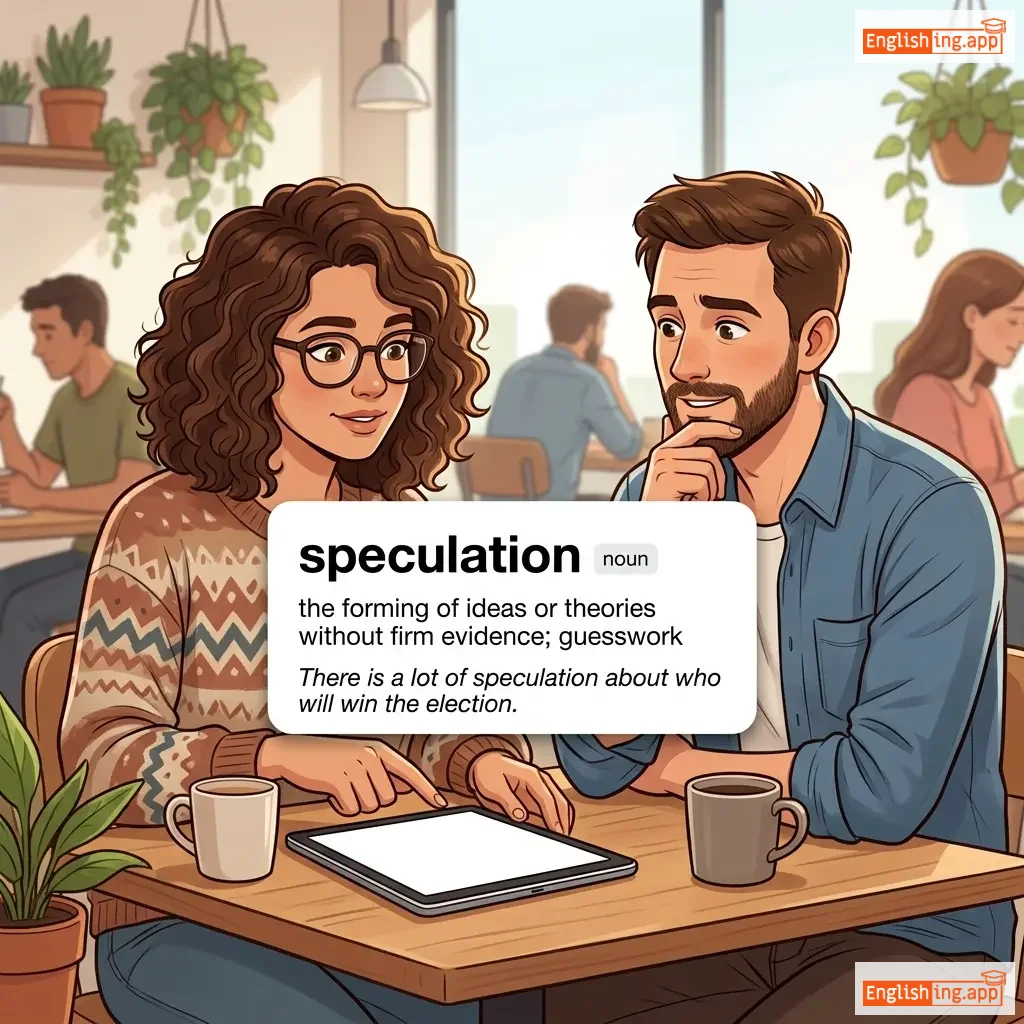
the forming of ideas or theories without firm evidence; guesswork

"There is a lot of speculation about who will win the election."

"关于谁将赢得选举,存在很多猜测。" (Guanyu shei jiang yingde xuanju, cunzai henduo caice.)
noun
/ˈspɛkjʊˌleɪtər/
投机者 (tóujī zhě)

A person who forms theories without evidence, or invests in assets hoping for profit.

"The real estate speculator bought land hoping its value would rise."

"房地产投机者购买了土地,希望其价值会增加。" (Fángdìchǎn tóujī zhě gòumǎi le tǔdì, xīwàng qí jiàzhí huì zēngjiā.)
noun
/spiːʧ/
演讲 (yanjiang)

the expression of thoughts and feelings through spoken words

"The president delivered a speech on national unity."

"总统发表了关于国家统一的演讲。" (Zongtong fabiao le guanyu guojia tongyi de yanjiang.)
adjective
/ˈspiːtʃləs/
无言 (wú yán)

Unable to speak because of shock, surprise, or strong emotion.

"She was speechless when she received the award."

"她获得奖项时无言以对。" (Tā huòdé jiǎngxiàng shí wúyán yǐ duì.)
noun/verb
/spiːd/
速度 (sudu)

the rate at which something moves or happens

"The car was moving at high speed."

"这辆车以高速行驶。" (Zhè liàng chē yǐ gāosù xíngshǐ.)
adjective
/ˈspiː.di/
快速的; 极速的; 敏捷的; (kuài sù de, jí sù de, mǐn jié de)

moving or happening quickly; fast

"The speedy delivery service arrived within an hour."

"快速的送货服务在一小时内到达。" (Kuai su de song huo fu wu zai yi xiao shi nei dao da.)
verb
/spɛl/
拼写 / 咒语 (pīnxiě / zhòuyǔ)

to write or name the letters of a word in the correct order; also a short period of time or a state of enchantment

"She asked me to spell her name correctly on the form."

"她让我在表格上正确拼写她的名字。" (Tā ràng wǒ zài biǎogé shàng zhèngquè pīnxiě tā de míngzì.)
adjective
/ˈspel.baʊnd/
着迷的; 迷住的 (zhuó mí de, mí zhù de)

completely fascinated and unable to move or think about anything else; enchanted

"The children sat spellbound as the magician performed his tricks."

"孩子们看到魔术师表演时都目瞪口呆。" (Háizimen kàn dào móshù shī biǎoyǎn shí dōu mù dèng kǒu dāi.)
noun
/spɪˈlʌŋkər/
洞穴探险者 (dòngxué tànxiǎn zhě)

A person who explores caves as a hobby.

"The spelunker carried ropes and lights into the dark cave."

"洞穴探险者带着绳子和灯光进入了黑暗的洞穴。" (Dòngxué tànxiǎn zhě dàizhe shéngzi hé dēngguāng jìnrù le hēi'àn de dòngxué.)
spend definition card — visual illustration of the meaning
verb
/spɛnd/
花费 (huafei)

to use money to buy or pay for something

"He spent all his money on books."
"他把所有的钱都花在了书上。" (Tā bǎ suǒyǒu de qián dōu huā zài le shū shàng.)
noun
/ˈspɛndɪŋ/

the act of paying money for goods or services

"Her spending on clothes was higher than expected."

spendthrift definition card — visual illustration of the meaning
noun
/ˈspɛndˌθrɪft/
挥霍者 (huīhuò zhě)

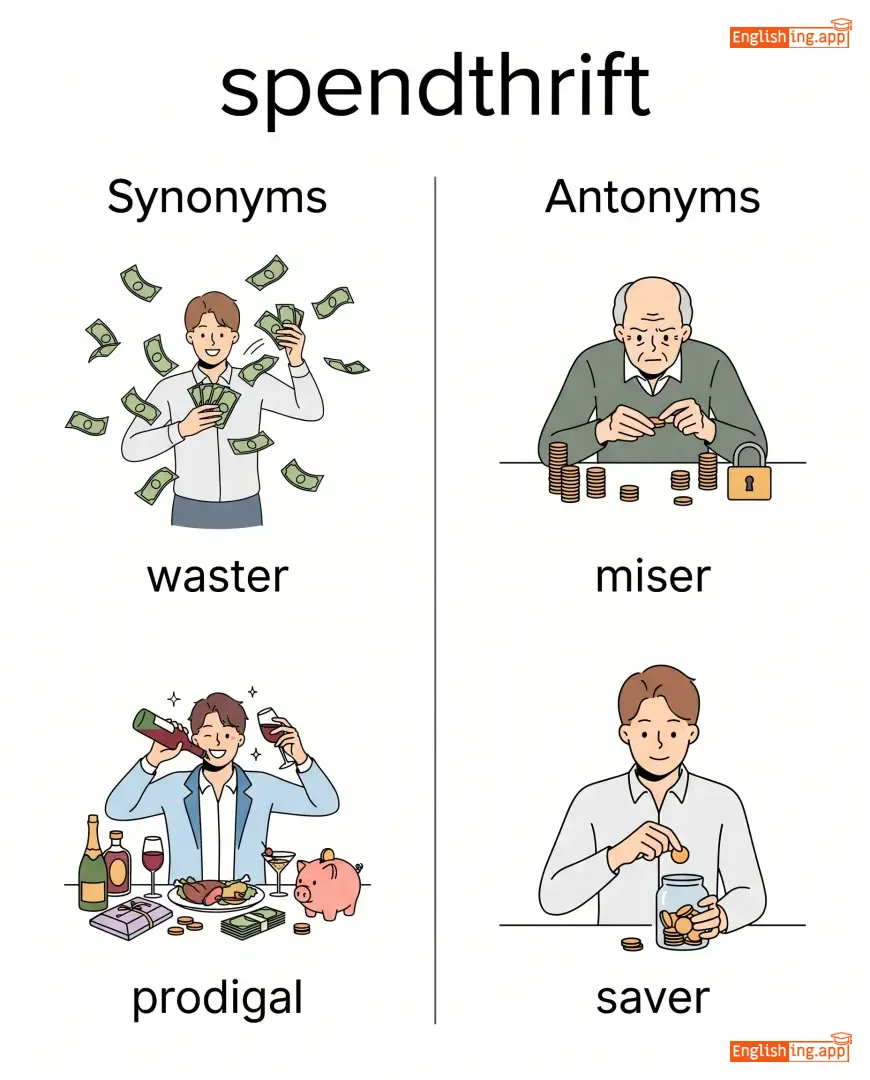
A person who spends money extravagantly or wastefully.

"The young prince was known as a spendthrift, wasting his fortune on lavish parties."

"年轻的王子被称为挥霍者,浪费他的钱财在奢华的派对上。" (nián qīng de wáng zǐ bèi chēng wèi huī huò zhě, làng fèi tā de qián cái zài shē huá de pài duì shàng.)
verb, adjective
/spɛnt/
花费的, 精疲力竭的 (huāfèi de, jīngpí lìjié de)

Past tense and past participle of 'spend'; also used as an adjective meaning exhausted or used up.

"She spent all her energy preparing for the exam."

"她为考试花费了所有的精力。" (Tā wèi kǎoshì huāfèi le suǒyǒu de jīnglì.)
noun
/sfɪər/
球体 (qiútǐ)

a round, three-dimensional shape that is perfectly symmetrical around its center; an area of activity or knowledge

"The Earth is almost a perfect sphere."

"地球几乎是一个完美的球体。" (Dìqiú jīhū shì yīgè wánměi de qiútǐ.)
noun
/sfɛˈrɪsɪti/
球形 (qiúxíng)

The quality or state of being spherical; roundness.

"The sphericity of the ball made it roll smoothly on the ground."

"球的球形使它能够平稳地在地面上滚动。" (Qiú de qiúxíng shǐ tā nénggòu píngwěn de zài dìmiàn shàng gǔndòng.)
noun
/ˈsfɛrɔɪd/
椭球体 (tuoqiuti)

A three-dimensional shape that is almost spherical but slightly flattened or elongated.

"The Earth is not a perfect sphere but an oblate spheroid."

"地球不是一个完美的球体,而是一个扁球体。" (diqiu bushi yige wanmei de qiuti ershi yige bianqiuti)
noun
/sfɪˈrɒmɪtər/
球形仪 (qiúxíng yí)

An instrument used for measuring the curvature of spherical surfaces.

"The scientist used a spherometer to measure the lens curvature."

"科学家使用了一个球形仪来测量透镜的曲率。" (kēxuéjiā shǐyòng le yīgè qiúxíng yí lái cèliàng tòujìng de qūlǜ.)
adjective
/ˈsfɪŋks laɪk/
神秘的 (shénmì de)

Mysterious, enigmatic, or difficult to interpret

"Her sphinx-like smile made it hard to guess what she was thinking."

"她的斯芬克斯式笑容让人难以猜测她在想什么。" (Tā de sī fēng kè sī shì xiàoróng ràng rén nán yǐ cāicè tā zài xiǎng shénme.)
noun
/spaɪs/
香料 (xiangliao)

a substance used to add flavor to food

"She added a pinch of spice to the curry for extra flavor."

"她在咖喱里加入了一撮香料以增加味道。" (Tā zài gālí lǐ jiārù le yī cuǒ xiāngliào yǐ zēngjiā wèidào.)
noun
/ˈspaɪs bɒks/
香料盒 (xiangliao he)

a container used to store various spices and seasonings

"She opened the spice box to find cumin for her curry."

"她打开香料盒,找到了她咖喱所需的孜然。" (Ta dakaixiangliaohe, zhaodao le ta gali suoxu de ziran.)
adjective
/spɪk/
极其干净整洁;完美无瑕 (spik)

extremely clean and neat; immaculate

"The house was spick and span after the cleaning."

"清洁后,房子变得一尘不染,整洁如新。" (qīngjié hòu, fángzi biàn dé yī chén bù rǎn, zhěng jié rú xīn.)
adjective
/ˈspaɪ.si/
辛辣 (xinla)

having a strong, hot flavor from spices; containing spices

"This curry is too spicy for me to eat."

"这道咖喱对我来说太辣了。" (zhe dao gāli duì wǒ lái shuō tài là le.)
noun
/ˈspaɪ.dər/
蜘蛛 (zhizhu)

a small creature with eight legs that makes webs to catch insects

"The spider caught a fly in its web."

"蜘蛛在它的网中抓住了一只苍蝇。" (Zhizhu zai ta de wang zhong zhua zhuo le yi zhi cangying.)
verb
/spɪl/
(sa)

to cause liquid to flow or fall out of a container by accident

"Be careful not to spill your coffee."

"小心不要洒出你的咖啡。" (Xiaoxin bu yao sa chu ni de kafei.)
verb
/spɪn/
旋转 (xuánzhuǎn)

To turn around quickly or cause something to rotate

"The dancer began to spin gracefully on the stage."

"舞者开始在舞台上优雅地旋转。" (Wǔzhě kāishǐ zài wǔtái shàng yōuyǎ de xuánzhuǎn.)
noun
/ˈspɪn.ɪtʃ/
菠菜 (bōcài)

a vegetable with large dark green leaves that are eaten cooked or uncooked

"Fresh spinach is very nutritious."

"新鲜的菠菜非常有营养。" (xīnxiān de bōcài fēicháng yǒu yíngyǎng)
adjective
/ˈspɪndli/
细长而脆弱 (xichang er cuizhuo)

Long, thin, and weak-looking

"The spindly tree bent under the weight of the snow."

"细长的树在雪的重量下弯曲。" (Xichang de shu zai xue de zhongliang xia wanqu.)
noun
/spaɪn/
脊柱 (jizhu)

the backbone; a series of bones extending from the skull to the lower back

"The doctor examined her spine after the accident."

"事故发生后,医生检查了她的脊柱。" (Shigu fashen hou, yisheng jiancha le ta de jizhu.)