词汇表

英语词汇词典 | 单词含义、定义和示例

noun
/ˌsɒlɪˈdærɪti/
团结 (tuánjié)

Unity or agreement of feeling or action, especially among individuals with a common interest.

"Workers held a strike in solidarity with their colleagues."

"工人们在与同事们的团结下举行了罢工。" (Gōngrén men zài yǔ tóngshì men de tuánjié xià jǔxíngle bàgōng.)
verb
/səˈlɪdəˌfaɪ/
巩固 (gonggu)

To make something firm, strong, or more certain.

"The company solidified its position in the market."
"公司巩固了其在市场中的地位。" (Gongsi gonggu le qi zai shichang zhong de diwei.)
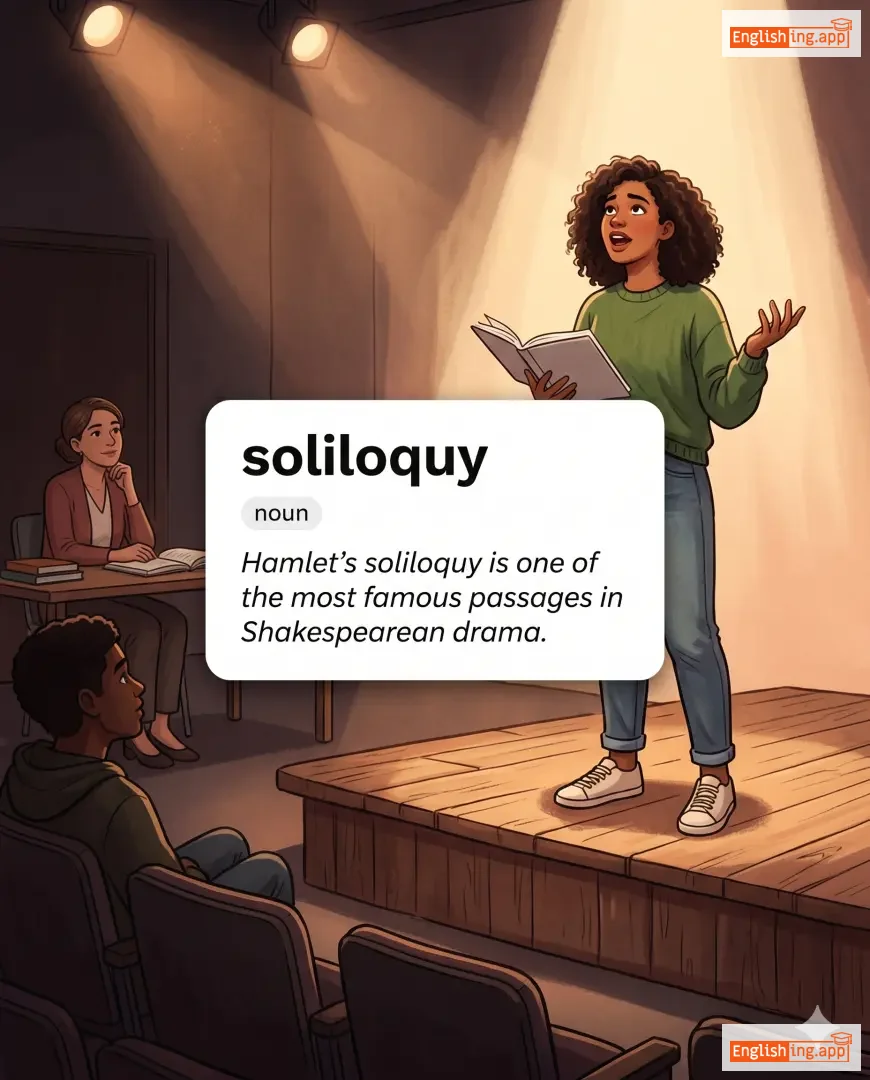
soliloquy definition card — visual illustration of the meaning
noun
/səˈlɪləkwi/
独白 (dúbái)

a speech in which a character talks to themselves, often used in drama to reveal inner thoughts

"Hamlet's soliloquy is one of the most famous passages in Shakespearean drama."

"哈姆雷特的独白是莎士比亚戏剧中最著名的段落之一。" (Hāmǔléitè de dúbái shì Shāshìbǐyà xìjù zhōng zuì zhùmíng de duànluò zhī yī.)
adjective
/ˈsɒl.ɪ.ter.i/
孤独; 隔离; 单独 (gūdú; gélí; dāndú)

alone; without companions; single; isolated

"He lived a solitary life in the mountains."
"他在山中过着孤独的生活。" (Tā zài shān zhōng guòzhe gūdú de shēnghuó.)
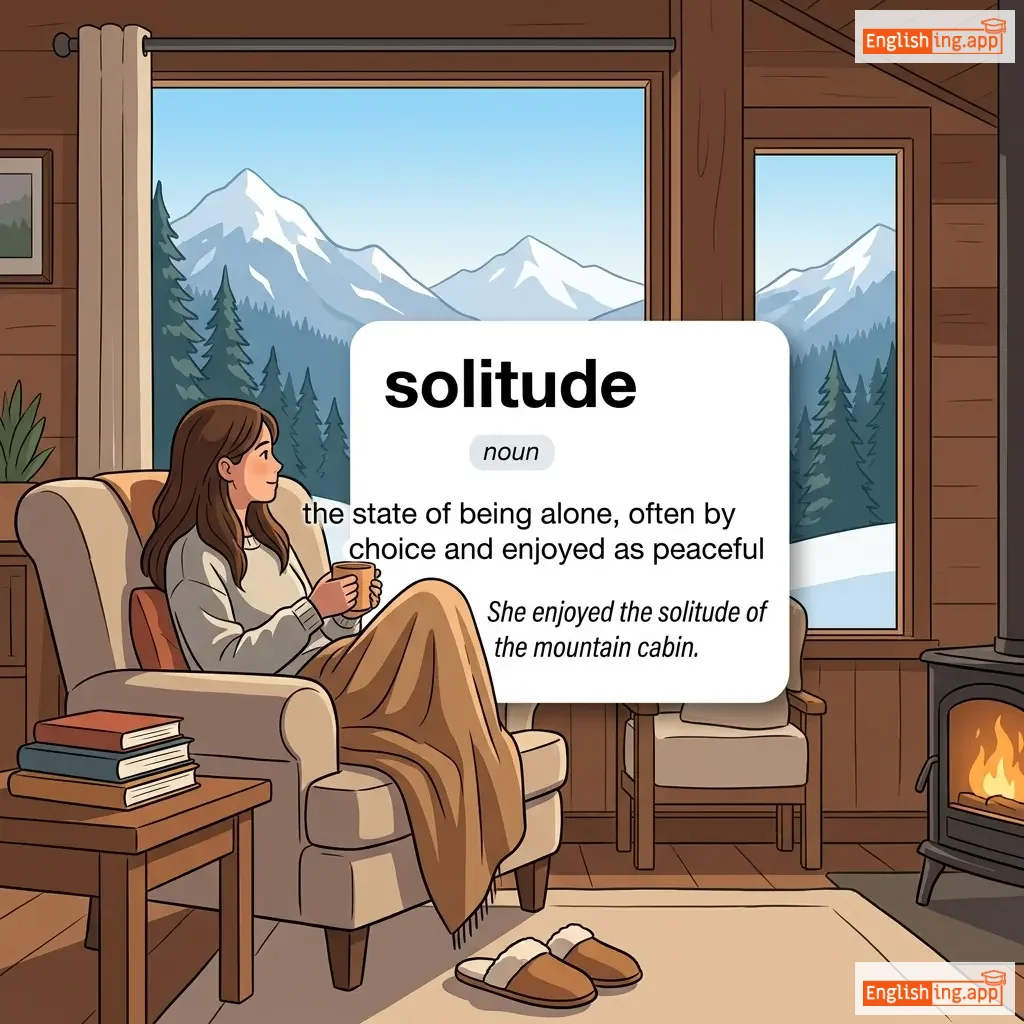
solitude definition card — visual illustration of the meaning
noun
/ˈsɒlɪtjuːd/
孤独 (gudou)

the state of being alone, often by choice and enjoyed as peaceful

"She enjoyed the solitude of the mountain cabin."

"她在山间小屋里享受孤独。" (Tā zài shān jiān xiǎowū lǐ xiǎngshòu gūdú.)
adjective
/ˈsoʊloʊ/
独奏 (du zou)

performed by one person alone; a single performance

"She decided to perform a solo dance at the talent show."

"她决定在才艺表演中做独舞表演。" (Ta jue ding zai cai yi biao yan zhong zuo du wu biao yan.)
noun
/ˈsɒlstɪs/
至点 (zhì diǎn)

the two times in the year when the sun is at its greatest distance from the equator (summer and winter solstice)

"People celebrate the summer solstice with festivals and rituals."

"人们通过节日和仪式庆祝夏至。" (Rénmen tōngguò jiérì hé yíshì qìngzhù xià zhì.)
solubility definition card — visual illustration of the meaning
noun
/ˌsɒl.jʊˈbɪləti/
溶解度 (rongjie du)

The ability of a substance to dissolve in a solvent.

"The solubility of salt in water is high."

"盐在水中的溶解度很高。" (yan zai shui zhong de rongjie du hen gao.)
adjective
/ˈsɒljʊbəl/
可溶的 (kerongde)

able to be dissolved, especially in water

"Sugar is soluble in water."

"糖在水中可溶。" (Tang zai shui zhong kerong.)
noun
/səˈluːʃən/
解决方案 (jiejue fang'an)

a means of solving a problem or dealing with a difficult situation

"The solution to the problem was simpler than we thought."
"这个问题的解决方案比我们想的要简单。" (Zhege wenti de jiejue fang'an bi women xiang de yao jiandan.)
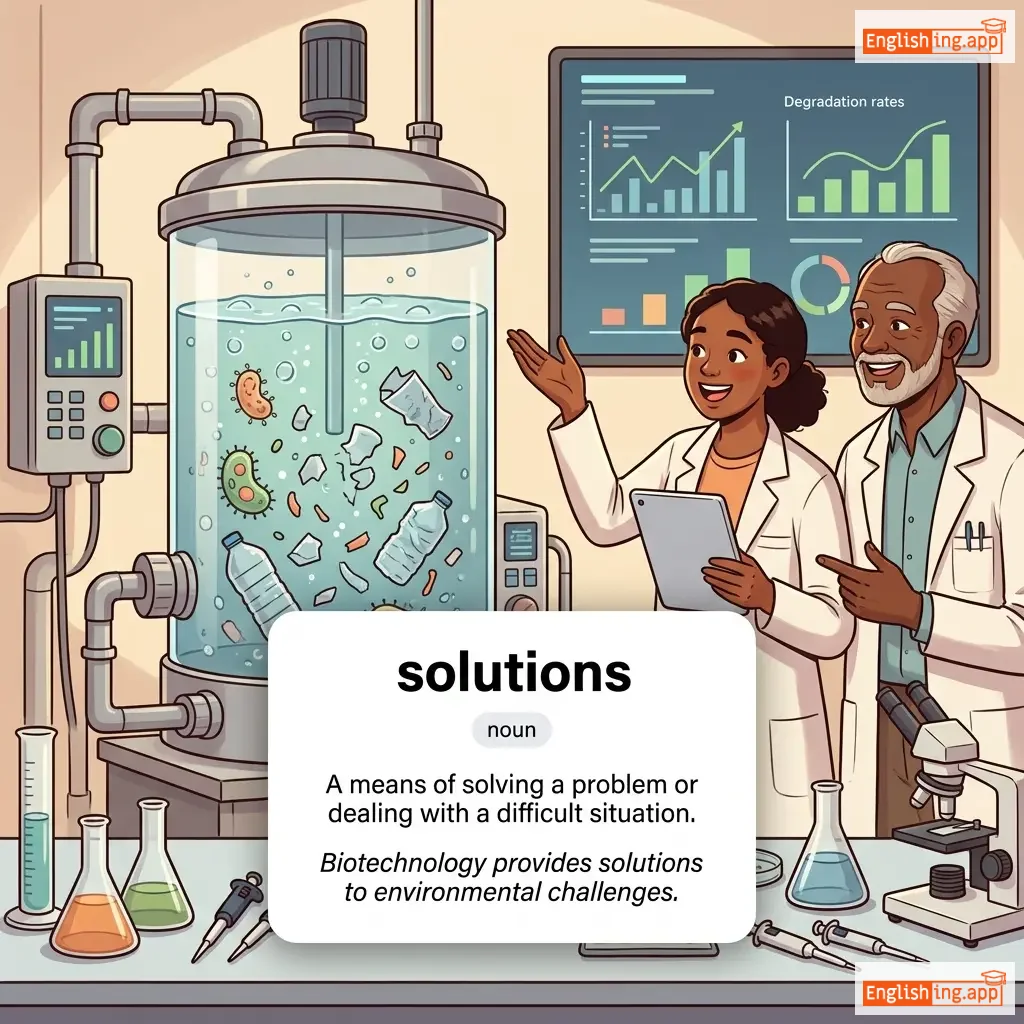
solutions definition card — visual illustration of the meaning
noun
səˈluː.ʃənz
解决方案 (jiejue fang'an)

A means of solving a problem or dealing with a difficult situation.

"Biotechnology provides solutions to environmental challenges."
"生物技术为环境问题提供解决方案。" (Shengwu jishu wei huanjing wenti tigong jiejue fang'an.)
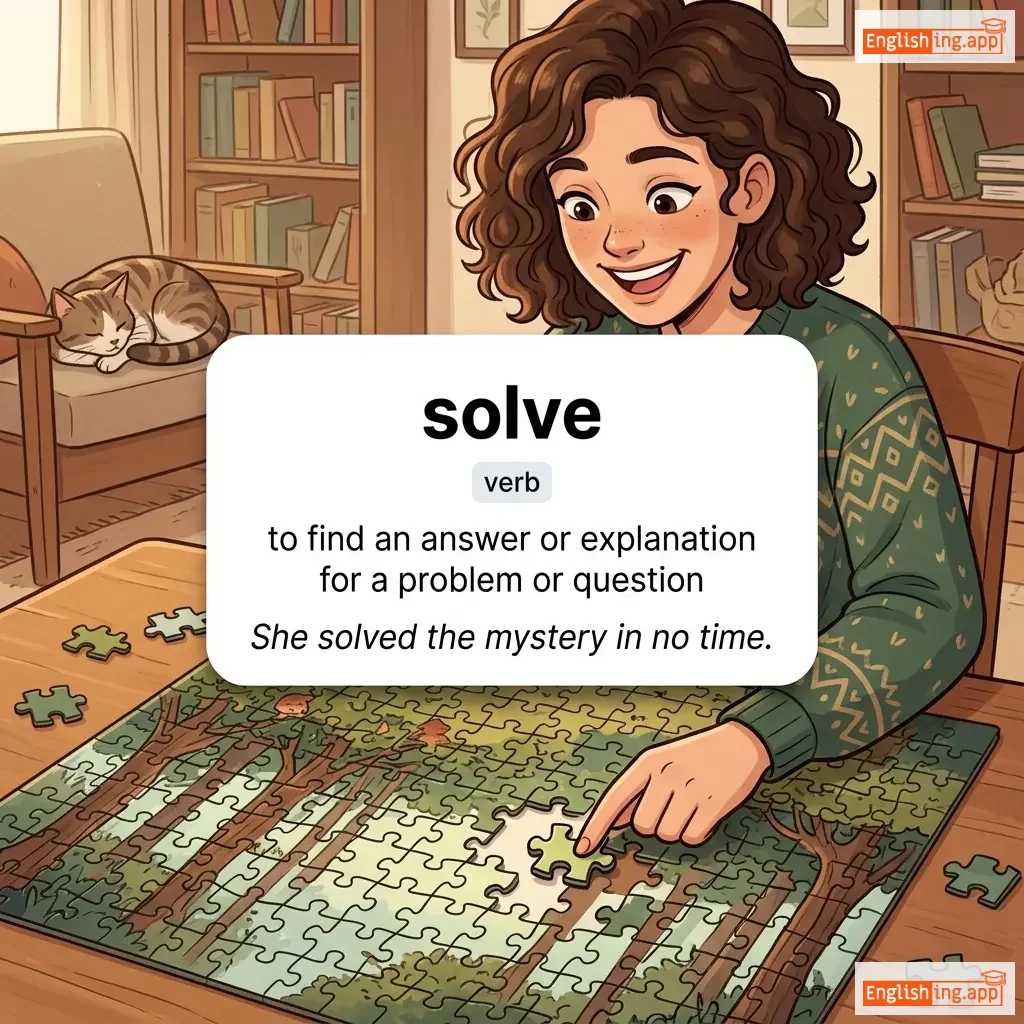
solve definition card — visual illustration of the meaning
verb
/sɒlv/
解决 (jie jue)

to find an answer or explanation for a problem or question

"She solved the mystery in no time."

"她很快解决了谜题。" (Tā hěn kuài jiějuéle míti.)
solvency definition card — visual illustration of the meaning
noun
/ˈsɒl.vən.si/
拥有超过负债的资产;偿还债务的能力 (yōngyǒu chāoguò fùzhài de zīchǎn; chánghuán zhàiwù de nénglì)

The possession of assets in excess of liabilities; ability to pay debts.

"The company's solvency determines its financial health."
"公司的偿付能力决定了其财务健康状况。" (Gōngsī de chángfù nénglì juédìngle qí cáiwù jiànkāng zhuàngkuàng.)
solvent definition card — visual illustration of the meaning
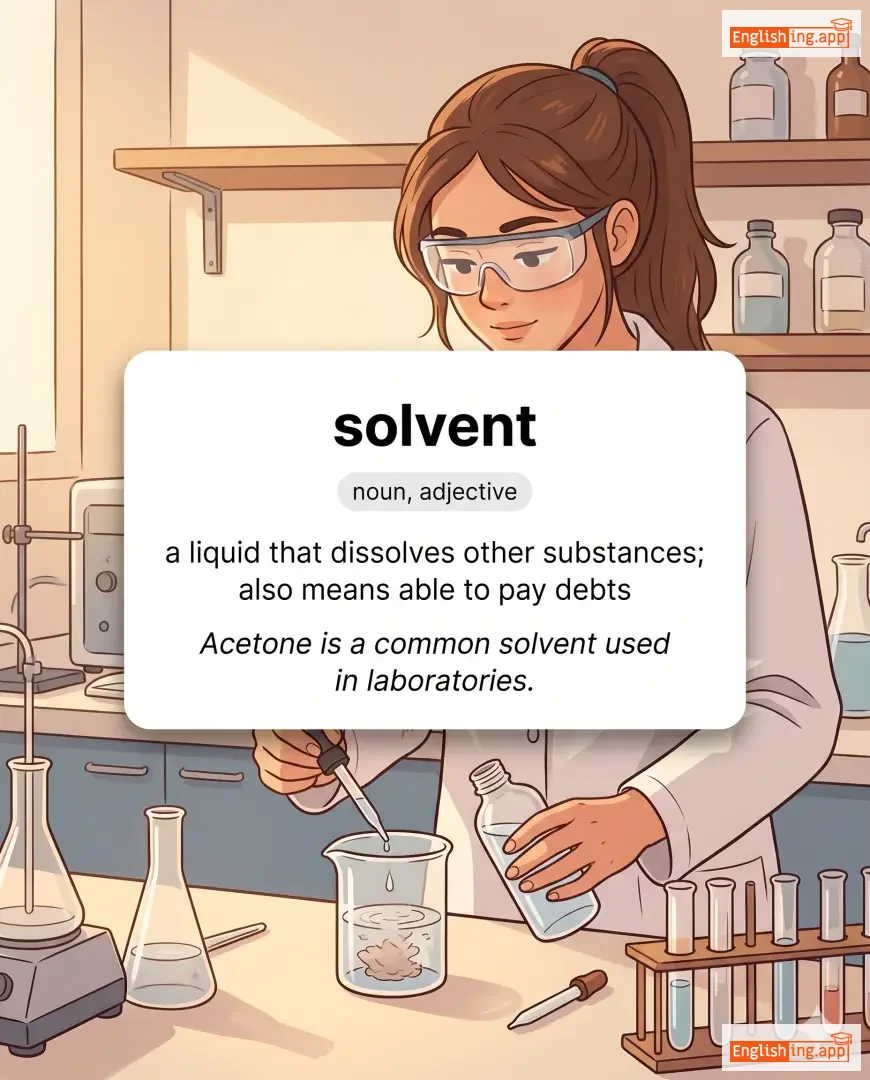
noun, adjective
/ˈsɒlvənt/
溶剂, 还债能力 (rongji, huan zhai nengli)

a liquid that dissolves other substances; also means able to pay debts

"Acetone is a common solvent used in laboratories."
"丙酮是实验室中常用的溶剂。" (Bingtong shi shiyan shi zhong changyong de rongji.)
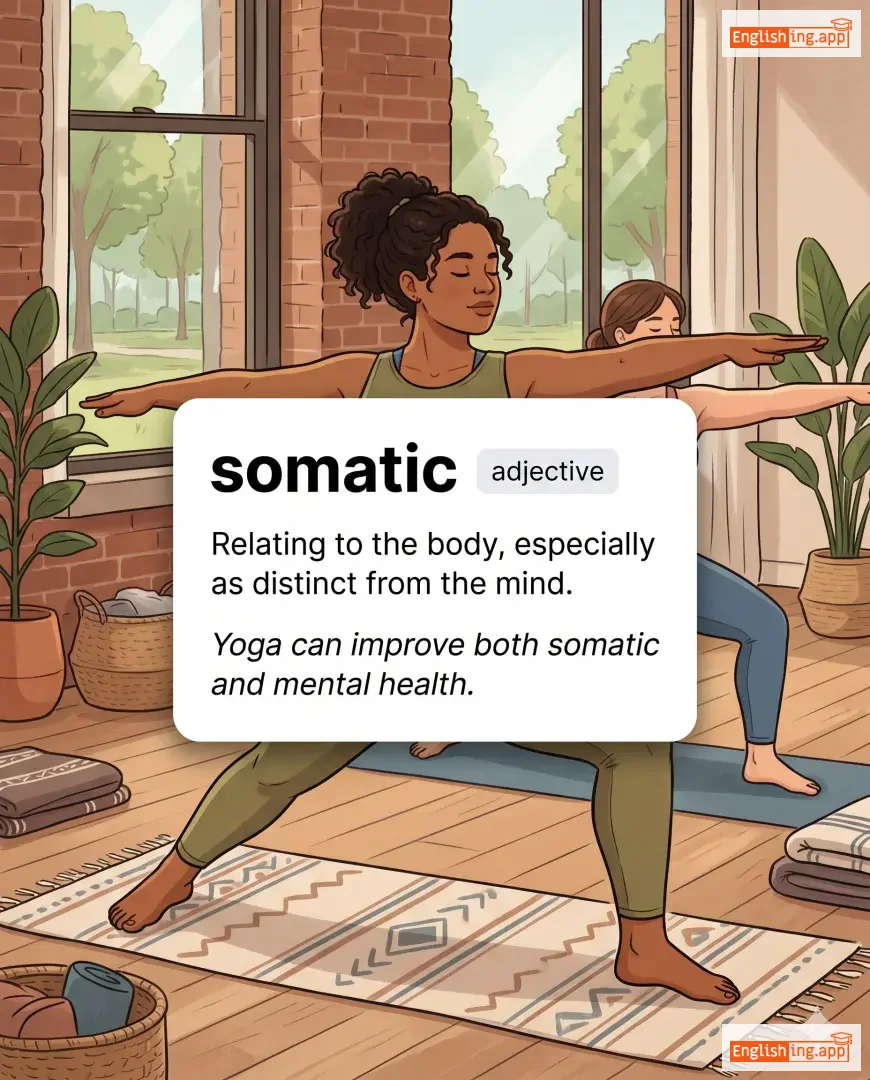
somatic definition card — visual illustration of the meaning
adjective
/səˈmætɪk/
身体的 (shen ti de)

Relating to the body, especially as distinct from the mind.

"Yoga can improve both somatic and mental health."

"瑜伽可以改善身体和心理健康。" (Yujia keyi gaishan shenti he xinli jiankang.)
adjective
/ˈsɒmbər/
阴沉 (yīnchén)

Dark or dull in color or tone; gloomy or serious.

"The funeral had a somber atmosphere."

"葬礼有一种阴沉的气氛。" (Zànglǐ yǒu yī zhǒng yīnchén de qìfēn.)
determiner
/sʌm/
一些 (yīxiē)

an unspecified amount or number of something

"I have some money in my wallet."

"我的钱包里有一些钱。" (Wǒ de qiánbāo lǐ yǒu yīxiē qián.)
pronoun
/ˈsʌmbədi/
有人 (you ren)

an unspecified person

"Somebody is knocking at the door."

"有人在敲门。" (You ren zai qiao men.)
adverb
/ˈsʌm.deɪ/
某天 (mǒu tiān)

at some time in the future

"Someday, I want to travel the world."

"某天,我想环游世界。" (Mǒu tiān, wǒ xiǎng huán yóu shìjiè.)
adverb
/ˈsʌmˌhaʊ/
以某种方式 (yi mou zhong fang shi)

in some way, but not exactly known or specified

"Somehow, they managed to finish the project on time."

"以某种方式,他们按时完成了项目。" (Yi mou zhong fang shi, tamen an shi wancheng le xiangmu.)
pronoun
/ˈsʌmwʌn/
某人 (mǒu rén)

a person, but not specifically known or named

"Someone left their umbrella in the hallway."

"某人把他们的伞忘在了走廊里。" (Mǒu rén bǎ tāmen de sǎn wàng zài le zǒuláng lǐ.)
pronoun
/ˈsʌmθɪŋ/
某事 (mou shi)

an unspecified or unknown thing

"I think something is wrong with my phone."

"我觉得我的手机有些问题。" (Wo juede wode shouji youxie wenti.)
adverb
/ˈsʌm.taɪm/
某个时候 (mǒu gè shíhòu)

at a time that is not known or stated; occasionally

"Let's meet for coffee sometime next week."

"我们下周某个时候见面喝咖啡吧。" (Wǒmen xià zhōu mǒu gè shíhòu jiànmiàn hē kāfēi ba.)
adverb
/ˈsʌmˌtaɪmz/
有时 (yǒu shí)

at certain times, but not always

"Sometimes I wonder what life would have been like if I had made different choices."

"有时我会想,如果我做出了不同的选择,生活会是什么样子。" (Yǒu shí wǒ huì xiǎng, rúguǒ wǒ zuò chūle bùtóng de xuǎnzé, shēnghuó huì shì shénme yàngzi.)
adverb
/ˈsʌmˌwʌt/
稍微 (shaowei)

to a small degree or extent

"The new policy is somewhat better than the previous one."

"新政策比以前的好一点。" (Xin zhengce bi yiqian de hao yidian.)
adverb
/ˈsʌmˌwɛr/
某个地方 (mǒu gè dìfāng)

in, at, or to a place that is not known or specified

"Somewhere in the city, there is a hidden café."

"在城市的某个地方,有一家隐藏的咖啡馆。" (Zài chéngshì de mǒu gè dìfāng, yǒu yījiā yǐncáng de kāfēi guǎn.)
noun
/sɒmˈnæmbjʊlɪst/
嗣眠者 (simian zhe)

A person who sleepwalks.

"The somnambulist wandered out of the house at night."

"嗣眠者晚上走出屋外。" (Simian zhe wanshang zou chu wuwai.)
adjective
/sɒmˈnɪfərəs/
催眠的 (cuīmián de)

Tending to induce sleep; soporific.

"The professor's somniferous lecture put half the class to sleep."
"教授的催眠讲座让一半的学生睡着了。" (Jiàoshòu de cuīmián jiǎngzuò ràng yíbàn de xuéshēng shuìzhe le.)
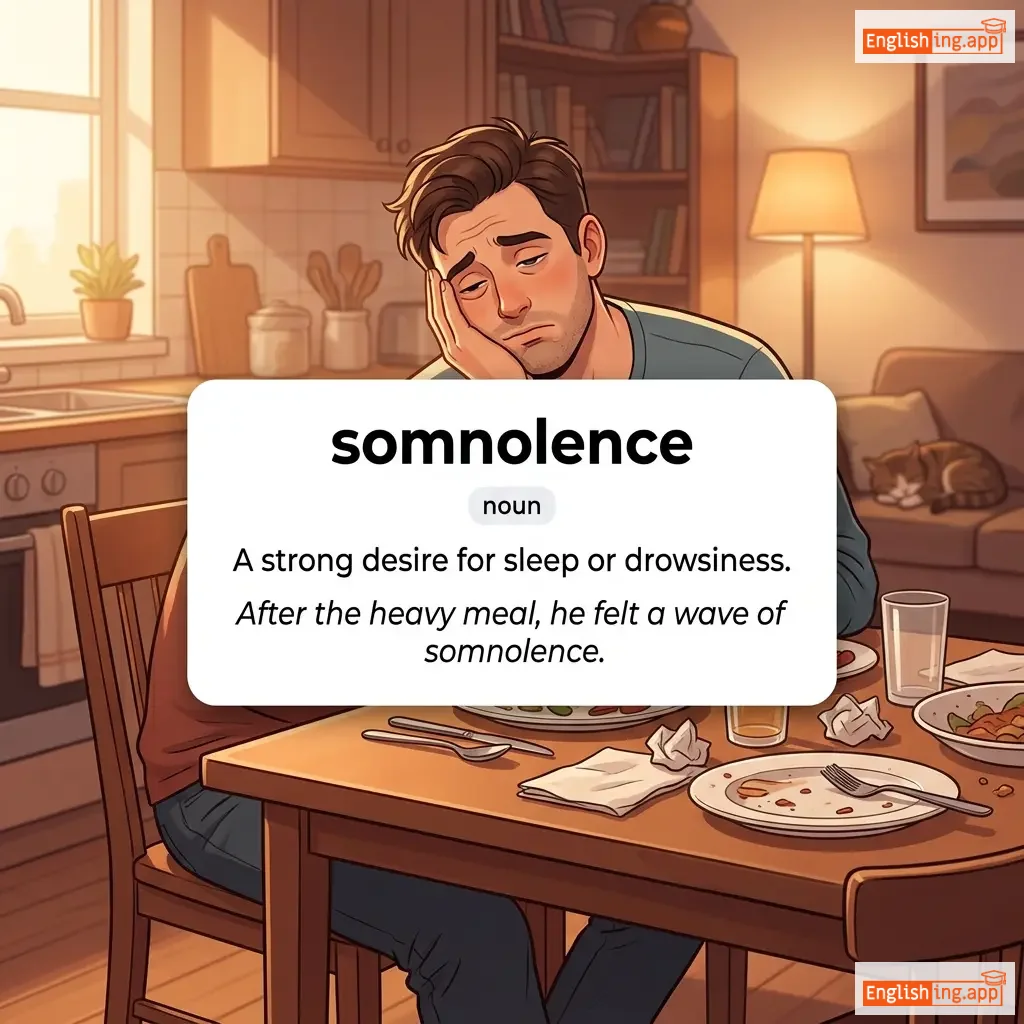
somnolence definition card — visual illustration of the meaning
noun
/ˈsɒmnələns/
嗜睡 (shishui)

A strong desire for sleep or drowsiness.

"After the heavy meal, he felt a wave of somnolence."

"在丰盛的晚餐后,他感到一阵困倦。" (Zai fengsheng de wancan hou, ta gandao yizhen kunjuan.)
adjective
/ˈsɒmnələnt/
昏昏欲睡 (hūnhūn yù shuì)

Sleepy or drowsy; causing a desire to sleep.

"The somnolent lecture made half the class fall asleep."

"那堂昏昏欲睡的讲座让一半的班级都睡着了。" (Nà táng hūnhūn yù shuì de jiǎngzuò ràng yībàn de bānjí dōu shuìzhe le.)
noun
/sʌn/
儿子 (er zi)

a male child of a parent

"His son is very talented in music."

"他的儿子在音乐方面非常有才华。" (Tā de érzi zài yīnyuè fāngmiàn fēicháng yǒu cáihuá.)
noun
/səˈnɑːtə/
音乐作品 (奏鸣曲) (yīn yuè zuò pǐn (zòu míng qǔ))

A musical composition for one or more instruments, typically in several movements.

"She performed a beautiful Beethoven sonata on the piano."

"她在钢琴上演奏了贝多芬的美丽奏鸣曲。" (Tā zài gāngqín shàng yǎnzòu le bèiduōfēn de měilì zòumíngqǔ.)
noun
/sɔːŋ/
歌曲 (gequ)

a short piece of music with words that are sung

"She sang a beautiful song at the concert."
"她在音乐会上唱了一首美丽的歌曲。" (Ta zai yinyuehui shang chang le yi shou mei li de gequ.)
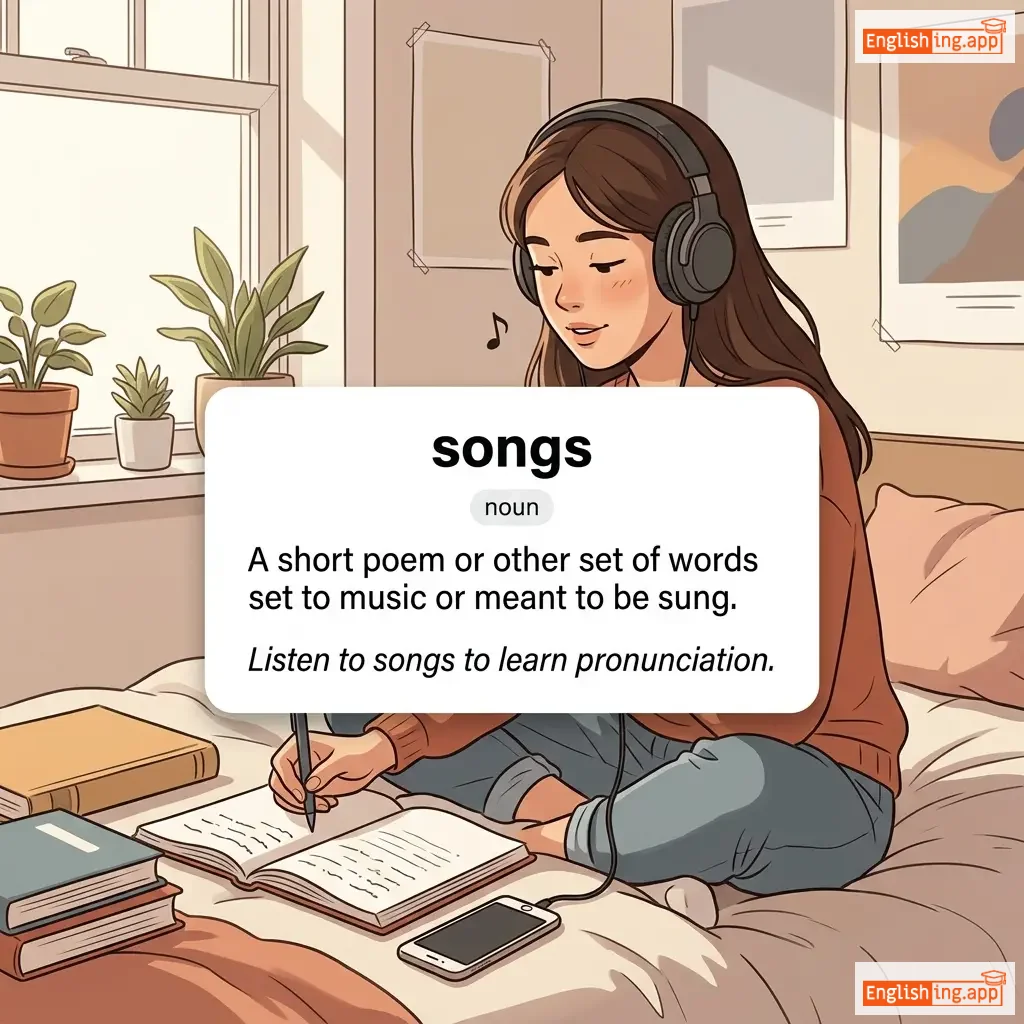
songs definition card — visual illustration of the meaning
noun
sɔːŋz
歌曲 (gequ)

A short poem or other set of words set to music or meant to be sung.

"Listen to songs to learn pronunciation."

"听歌曲来学习发音。" (Tīng gēqǔ lái xuéxí fāyīn.)
adjective
/ˈsɒnɪk/
音速的 (yīnsù de)

Relating to or involving sound waves or speed of sound.

"The jet created a loud boom when it broke the sonic barrier."

"喷气机突破声速壁垒时发出了巨大的爆炸声。" (Pēnqìjī tūpò shēngsù bìlěi shí fāchūle jùdà de bàozhà shēng.)
noun
/ˈsɒnɪt/
十四行诗 (shísì háng shī)

A poem of 14 lines using formal rhyme schemes, often about love.

"Shakespeare wrote many famous sonnets about love and beauty."

"莎士比亚写了许多关于爱情与美丽的著名十四行诗。" (Shāshìbǐyà xiěle xǔduō guānyú àiqíng yǔ měilì de zhùmíng shísì háng shī.)
adjective
/səˈnɔːrəs/
深沉的声音 (shencheng de shengyin)

Deep, full, and rich in sound.

"The actor's sonorous voice filled the entire theater."

"演员那深沉的声音充满了整个剧院。" (Yǎnyuán nà shēnchén de shēngyīn chōngmǎnle zhěnggè jùyuàn.)
adverb
/suːn/
很快 (hen kuai)

in a short time; shortly

"I will be home soon."
"我很快就到家了。" (Wo hen kuai jiu dao jia le.)
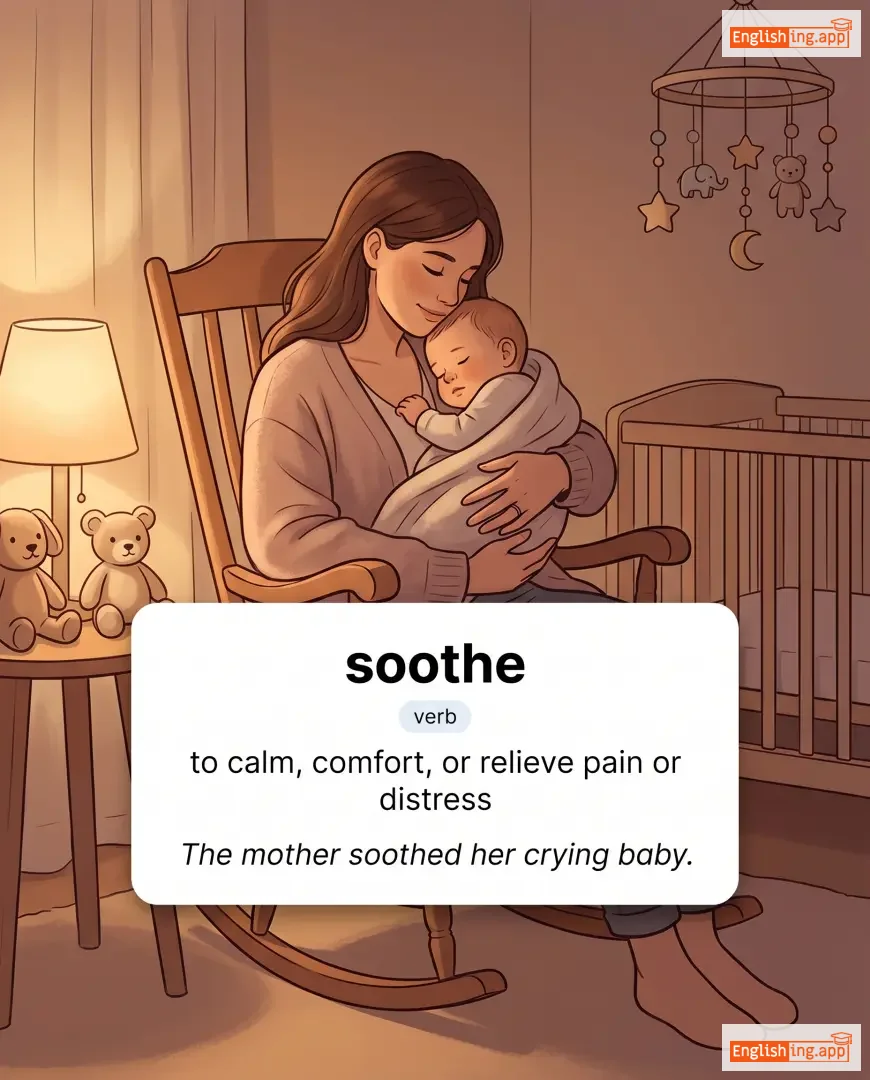
soothe definition card — visual illustration of the meaning
verb
/suːð/
安抚 (ānfǔ)

to calm, comfort, or relieve pain or distress

"The mother soothed her crying baby."

"母亲安抚了哭泣的婴儿。" (Mǔqīn ānfǔ le kūqì de yīng'ér.)
noun
/ˈsuːθˌseɪər/
预言家 (yùyán jiā)

a person who claims to predict the future

"The king consulted a soothsayer before going to war."

"国王在出征前咨询了一个算命师。" (Guówáng zài chūzhēng qián zīxún le yí gè suànmìng shī.)
🥖

sop

noun
/sɒp/

a concession or appeasement to pacify someone; also a piece of bread dipped in liquid

"The manager offered a bonus as a sop to the unhappy employees."

noun
/ˈsɒfɪzəm/
诡辩 (guǐbiàn)

a clever but misleading argument; fallacious reasoning

"The politician's speech was full of sophism designed to mislead voters."

"政治家的演讲充满了旨在误导选民的诡辩。" (Zhèngzhìjiā de yǎnjiǎng chōngmǎnle zhǐzài wùdǎo xuǎnmín de guǐbiàn.)
noun
/ˈsɒfɪst/
诡辩家 (guǐ biàn jiā)

a person who uses clever but misleading arguments

"He was dismissed as a sophist who twisted facts to win debates."

"他被当作一个诡辩家,扭曲事实来赢得辩论。" (Tā bèi dāngzuò yīgè guǐ biàn jiā, niǔqū shìshí lái yíngdé biànlùn.)
verb
/səˈfɪstɪkeɪt/
使精致 (shi jing zhi)

to make something more complex or refined; to educate or develop in taste and manners

"Traveling abroad helped sophisticate his worldview."
"出国旅行帮助他完善了世界观。" (Chu guo lv xing bang zhu ta wan shan le shi jie guan.)
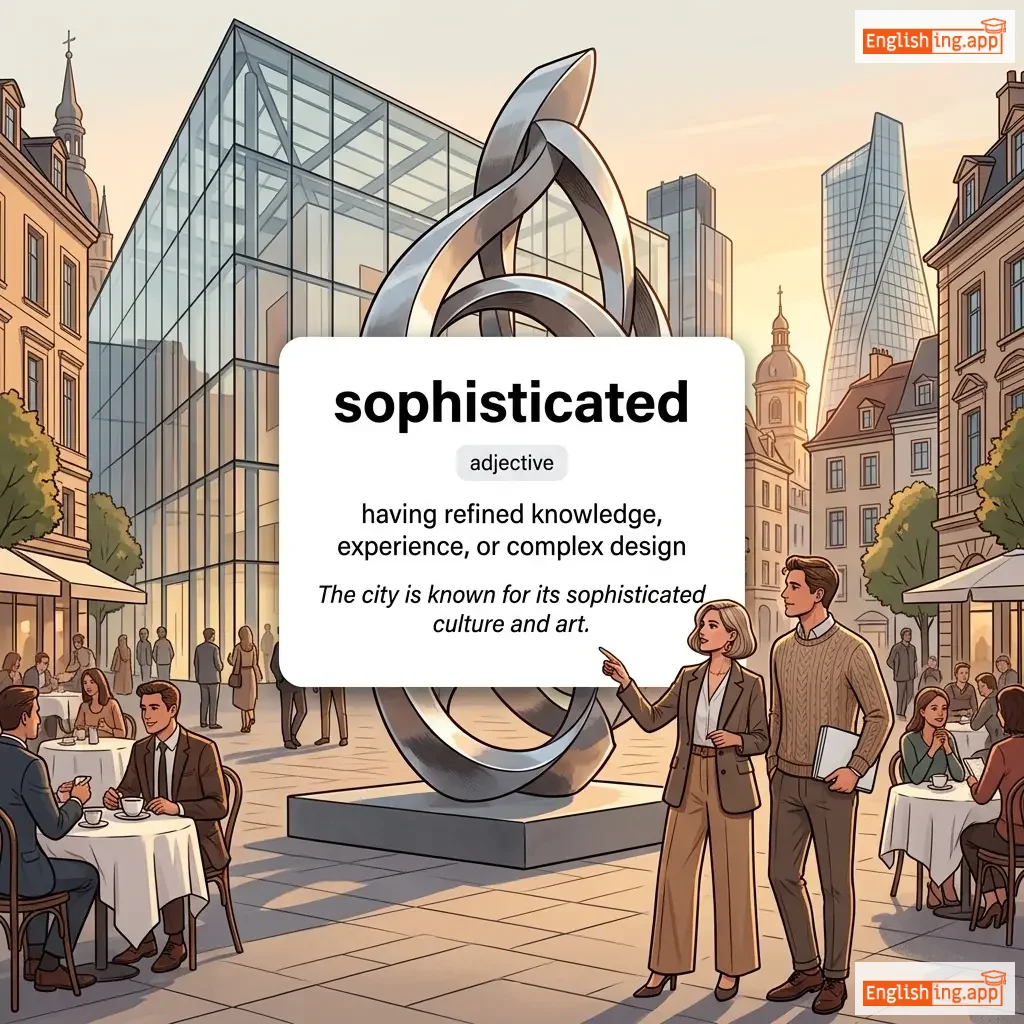
sophisticated definition card — visual illustration of the meaning
adjective
/səˈfɪstɪkeɪtɪd/
复杂的 (fuza de)

having refined knowledge, experience, or complex design

"The city is known for its sophisticated culture and art."
"这个城市以其复杂的文化和艺术而闻名。" (Zhe ge chengshi yi qi fuza de wenhua he yishu er wenming.)
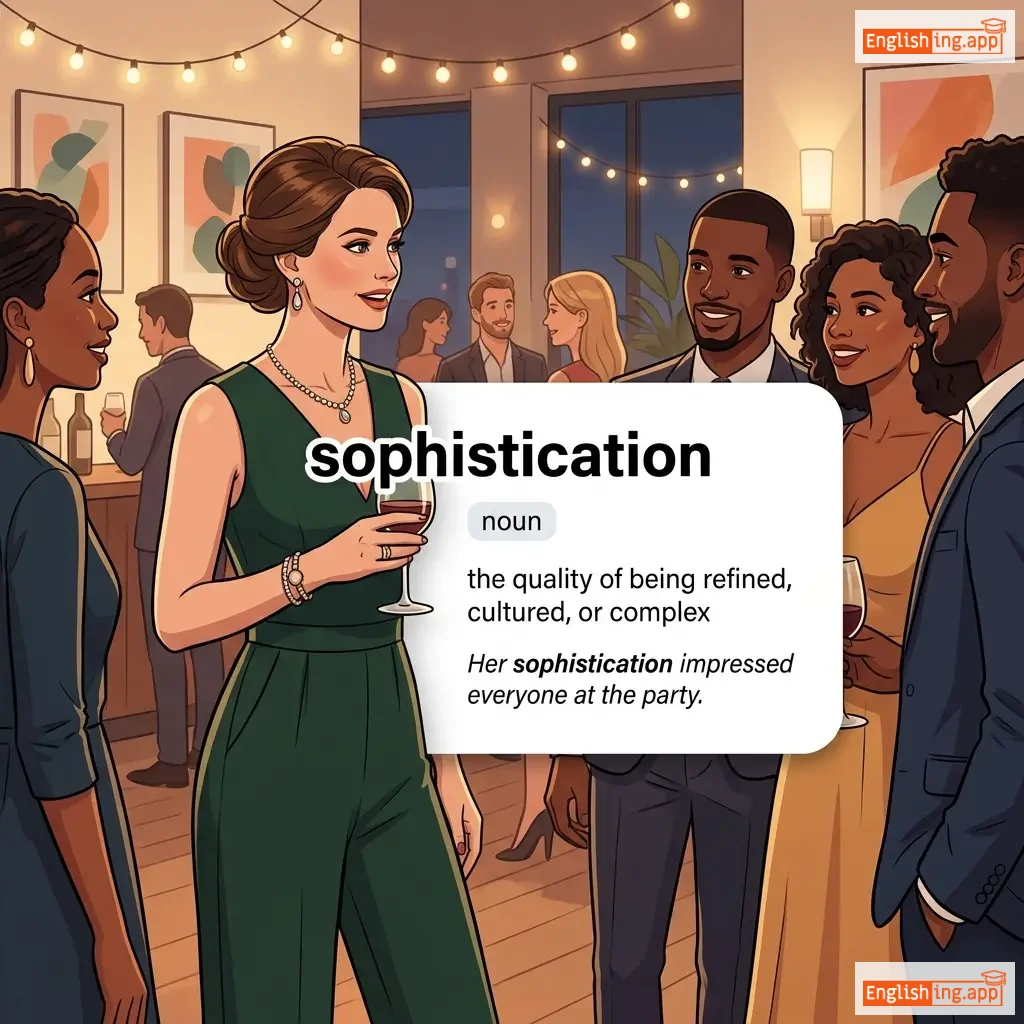
sophistication definition card — visual illustration of the meaning
noun
/səˌfɪstɪˈkeɪʃən/
复杂性 (fùzáxìng)

the quality of being refined, cultured, or complex

"Her sophistication impressed everyone at the party."

"她的复杂性给派对上的每个人留下了深刻印象。" (Tā de fùzáxìng gěi pàiduì shàng de měi gè rén liú xià le shēnkè yìnxiàng.)
noun
/ˈsɒfɪstri/
诡辩 (gui bian)

the use of clever but false arguments, often to deceive

"The politician's speech was full of sophistry."

"那位政治家的演讲充满了诡辩。" (Nà wèi zhèng zhì jiā de yǎn jiǎng chōng mǎn le guǐ biàn.)
noun
/ˈsɑːfmɔːr/
大二学生 (dà èr xuéshēng)

a student in their second year of study at a university or high school

"He’s a sophomore in college, studying computer science."

"他是大学的二年级学生,学习计算机科学。" (Tā shì dàxué de èr nián jí xuéshēng, xuéxí jìsuànjī kēxué.)
adjective
/ˌsɒfəˈmɒrɪk/
不成熟 (bù chéngshú)

showing immaturity and overconfidence, like a sophomore

"His sophomoric behavior embarrassed his friends."

"他的不成熟行为让他的朋友们感到尴尬。" (Tā de bù chéngshú xíngwéi ràng tā de péngyǒumen gǎndào gāngà.)
soporific definition card — visual illustration of the meaning
adjective
/ˌsɒpəˈrɪfɪk/
幸福 (xìngfú)

tending to induce drowsiness or sleep; causing sleepiness

"The professor's lecture was so soporific that half the class fell asleep."

"当她收到奖项时,她无法掩饰自己的快乐。" (Dāng tā shōu dào jiǎngxiàng shí, tā wúfǎ yǎnshì zìjǐ de kuàilè.)