词汇表

英语词汇词典 | 单词含义、定义和示例

noun
/smɔːl boʊl/
小碗 (xiao wan)

a round, shallow container of small size used for serving food or liquids

"She served the soup in a small bowl."
"她把汤倒在一个小碗里。" (Ta ba tang dao zai yi ge xiao wan li.)
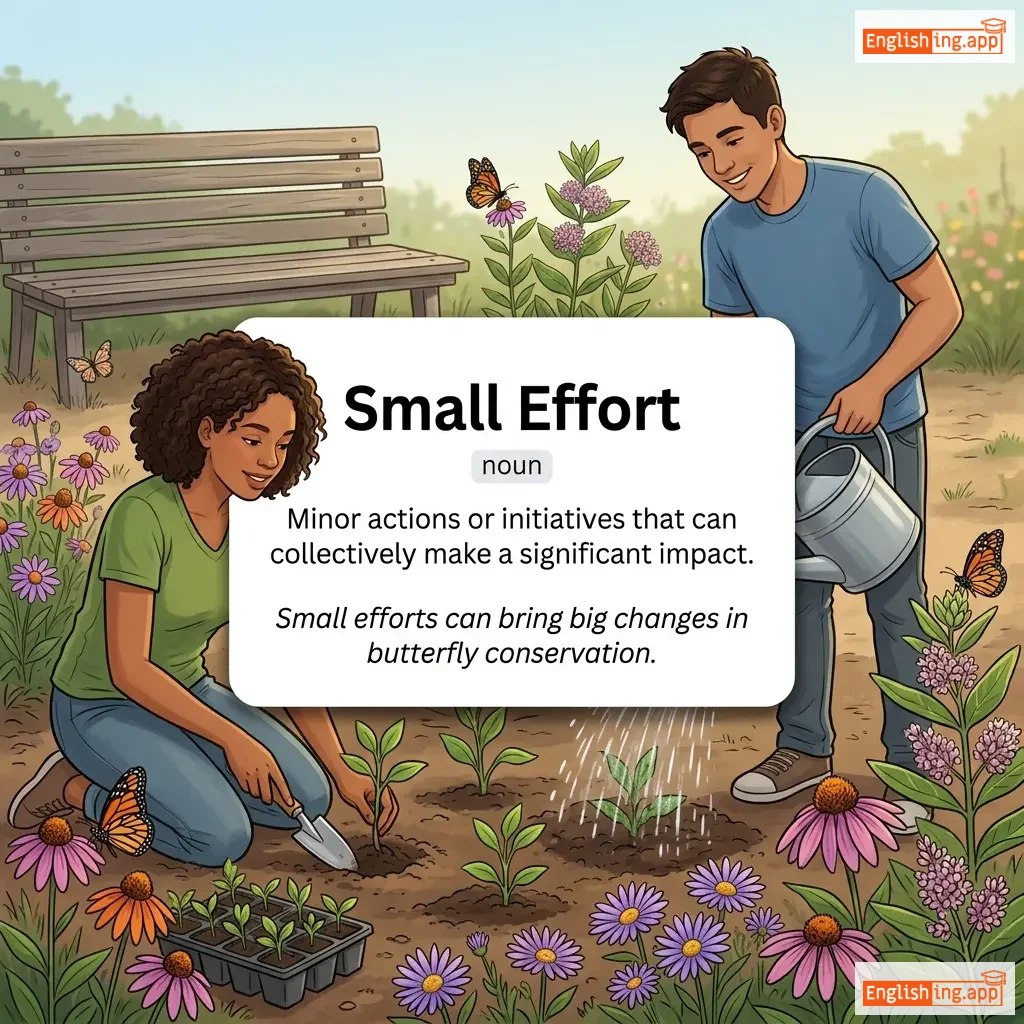
Small Effort definition card — visual illustration of the meaning
noun
smɔːl ˈɛfərt
小努力 (xiǎo nǔlì)

Minor actions or initiatives that can collectively make a significant impact.

"Small efforts can bring big changes in butterfly conservation."

"小努力可以带来蝴蝶保护中的巨大变化。" (Xiǎo nǔlì kěyǐ dàilái húdié bǎohù zhōng de jùdà biànhuà.)
adjective
/ˈsmɑːrmi/
奉承 / 虚伪的礼貌 (fèngchéng / xūwěi de lǐmào)

Excessively flattering or ingratiating, often insincerely.

"The salesman gave a smarmy pitch that felt fake."

"销售员做了一个让人觉得虚假的奉承推销。" (Xiāoshòu yuán zuòle yīgè ràng rén juéde xūjiǎ de fèngchéng tuīxiāo.)
adjective, noun, verb
/smɑːrt/
聪明 / 时尚 (cōngmíng / shíshàng)

Clever and intelligent; also stylish in appearance; or to feel pain.

"She is a smart student who always excels in class."

"她是一个聪明的学生,总是在课堂上表现出色。" (Tā shì yīgè cōngmíng de xuéshēng, zǒng shì zài kètáng shàng biǎoxiàn chūsè.)
adverb
/ˈsmɑːt.li/
聪明地; 有风格地; 快速地 (cōngmíng de; yǒu fēnggé de; kuàisù de)

in a clever or intelligent way; neatly and stylishly; quickly

"He was smartly dressed for the business meeting."

"他为商务会议穿得很聪明。" (Tā wèi shāngwù huìyì chuān dé hěn cōngmíng.)
noun
/ˈsmɑːrt.nəs/
智慧;机智;整洁和时尚的外观 (zhìhuì; jīzhì; zhěngjié hé shíshàng de wàiguān)

intelligence; cleverness; neat and fashionable appearance

"Her smartness in solving problems impressed everyone."

"她在解决问题时的智慧给大家留下了深刻印象。" (Tā zài jiějué wèntí shí de zhìhuì gěi dàjiā liúxiàle shēnkè yìnxiàng.)
verb
/smæʃ/
打破 (dǎ pò)

to break something into pieces violently

"She smashed the glass in frustration."

"她因沮喪而摔碎了玻璃。" (Tā yīn jǔ sàng ér shuāi suì le bō lí.)
noun
/ˈsmætərɪŋ/
浅薄的知识 (qianbo de zhishi)

A small amount or superficial knowledge of something.

"He has a smattering of Spanish."

"他对西班牙语有浅薄的了解。" (Ta dui xibanyayu you qianbo de liaojie.)
verb
/smɪr/
涂抹 / 诽谤 (tumo / feibang)

to spread or apply a substance messily; to damage someone's reputation with false or unfair words

"The child smeared paint across the wall."
"孩子把油漆涂在墙上。" (Haizi ba youqi tu zai qiang shang.)
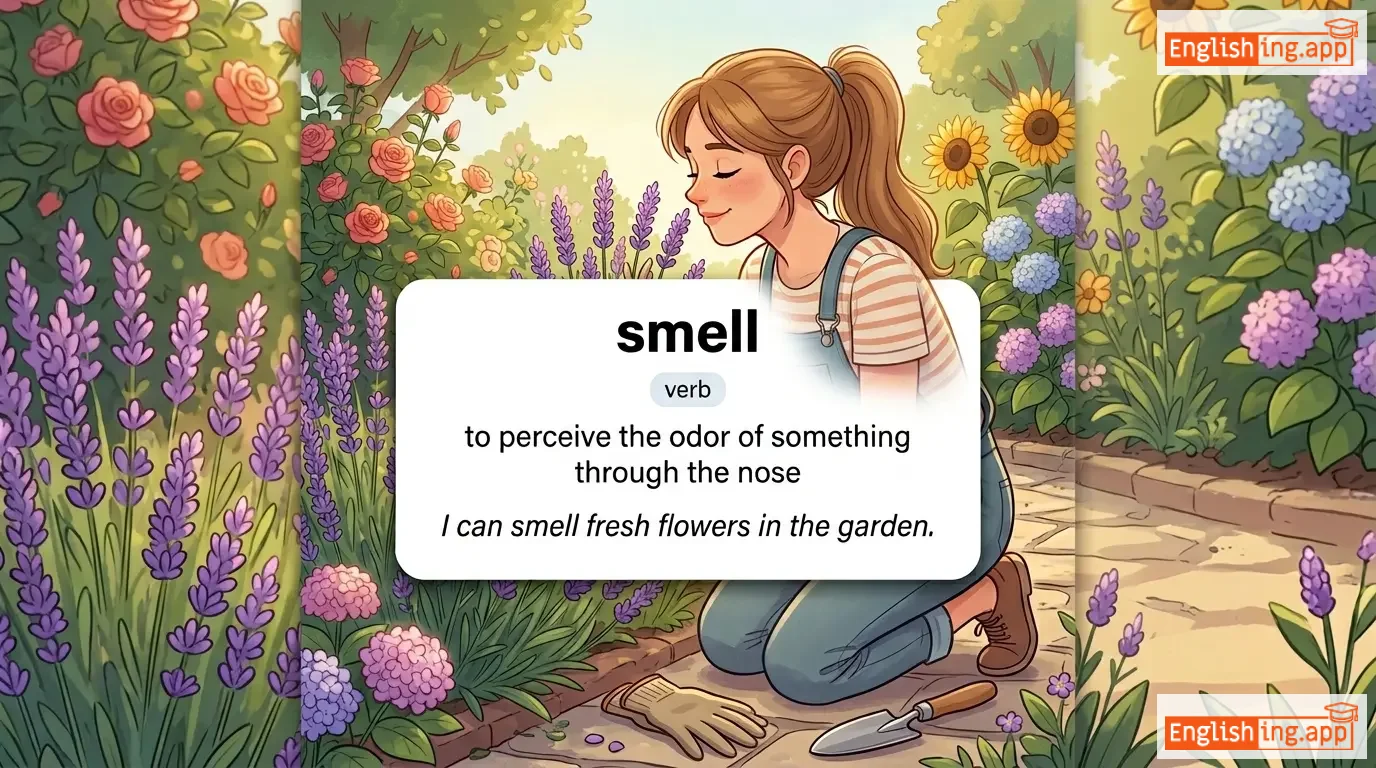
smell definition card — visual illustration of the meaning
verb
/smɛl/
(wén)

to perceive the odor of something through the nose

"I can smell fresh flowers in the garden."

"我可以闻到花园里的新鲜花朵。" (Wǒ kěyǐ wén dào huāyuán lǐ de xīnxiān huāduǒ.)
verb
/smɛlt/
冶炼 (yeliàn)

to extract metal from its ore by heating and melting

"The workers smelt iron from its ore in the factory."

"工人在工厂中从矿石中冶炼铁。" (Gongren zai gongchang zhong cong kuangshi zhong yelian tie.)
verb
/smaɪl/
微笑 (weixiao)

to express happiness or friendliness by turning the corners of the mouth upwards

"She smiled when she saw the gift."

"她看到礼物时笑了。" (Ta kan dao liwu shi xiao le.)
verb
/smɜrk/
得意的微笑 (déyì de wēixiào)

to smile in a self-satisfied, smug, or silly way

"He smirked when he won the argument."
"他在赢得争论时得意地笑了。" (Tā zài yíngdé zhēnglùn shí déyì de xiàole.)
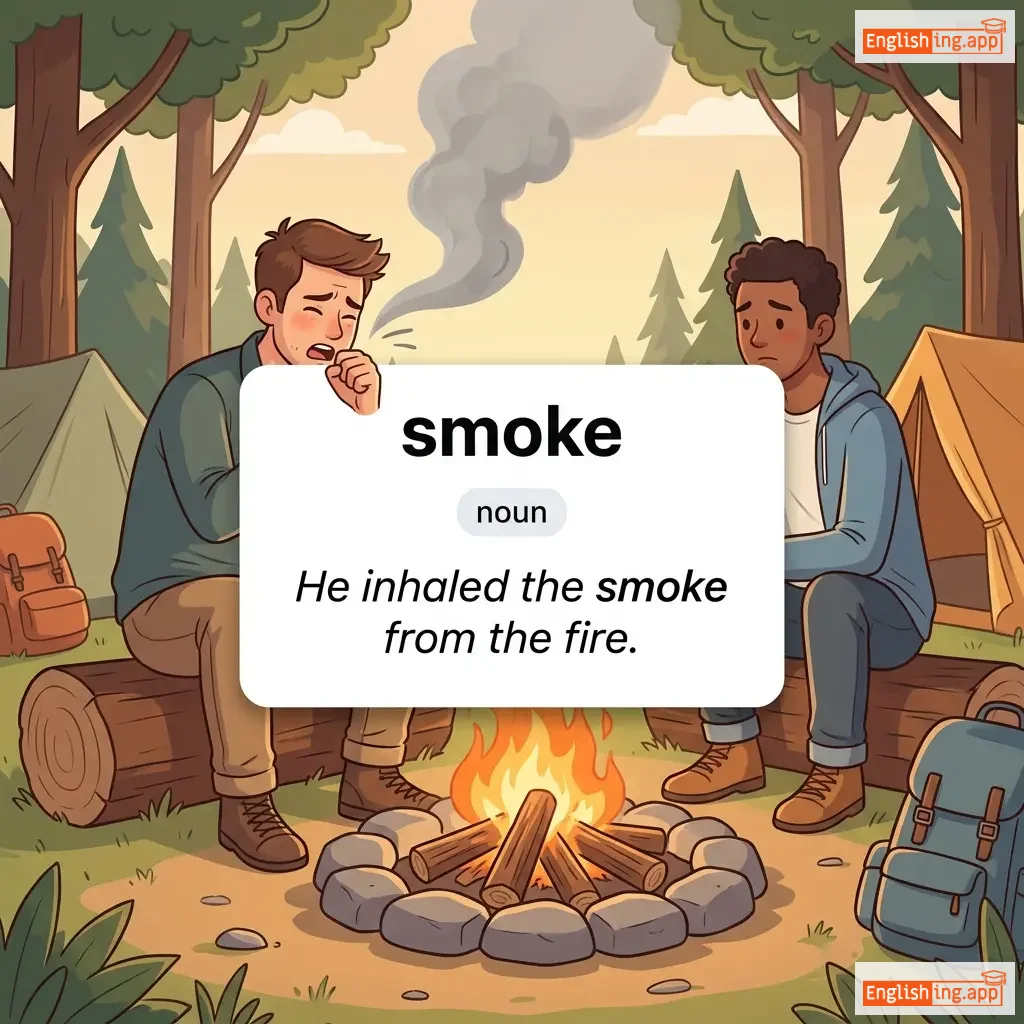
smoke definition card — visual illustration of the meaning
noun
/smoʊk/
烟雾 (yanwu)

a visible suspension of fine particles of matter in the air, typically produced by combustion

"He inhaled the smoke from the fire."

"他吸入了火灾中的烟雾。" (Ta xiru le huozai zhong de yanwu.)
noun
/ˈsmoʊkər/
吸烟者 (xiyanzhe)

A person who smokes tobacco or other substances

"He is a heavy smoker and tries to quit every year."

"他是一个吸烟者,每年都试图戒烟。" (Ta shi yi ge xiyanzhe, mei nian dou shitu jieyan.)
noun/adjective
/ˈsmoʊ.kɪŋ/
吸烟 (xiyān)

The act of inhaling and exhaling the smoke of tobacco or other substances; wearing a tuxedo (adjective, formal context).

"Smoking is prohibited inside the building."

"建筑物内禁止吸烟。" (Jianzhu wu nei jin zhi xiyān.)
verb
/ˈsmoʊldər/
慢慢燃烧 (màn màn rán shāo)

to burn slowly with smoke but no flame; to show suppressed anger or emotion

"The fire smoldered for hours before it went out."

"火灾持续了几个小时才熄灭。" (huǒ zāi chí xù le jǐ gè xiǎo shí cái xī miè)
adjective
/smuːð/
光滑 (guānghuá)

having an even surface without roughness; happening without difficulty

"The table has a smooth surface."

"桌子的表面很光滑。" (Zhuōzi de biǎomiàn hěn guānghuá.)
adverb
/ˈsmuːð.li/
顺畅地; 没有问题 (shùnchàng de; méiyǒu wèntí)

without problems or difficulties; in an even and regular way

"The car runs smoothly on the new highway."

"汽车在新高速公路上顺畅行驶。" (qìchē zài xīn gāosù gōnglù shàng shùnchàng xíngshǐ.)
verb
/ˈsmʌðər/
窒息 / 扑灭 (zhìxī / pūmiè)

to kill someone by covering their nose and mouth to prevent breathing; to cover something completely; to overwhelm with excessive attention or affection

"She smothered the fire with a blanket."

"她用毯子把火扑灭了。" (Tā yòng tǎnzi bǎ huǒ pūmiè le.)
noun/verb
/smʌdʒ/
污点,脏污的印记 (wudian, zangwu de yinji)

a dirty mark or smear; to make something dirty or unclear by rubbing or touching

"She accidentally smudged her lipstick on the napkin."

"她不小心把口红弄到餐巾纸上了。" (Ta bu xiaoxin ba kourong nong dao canjin zhi shang le.)
adjective
/smʌɡ/
自负 (zì fù)

having or showing an excessive pride in oneself or one's achievements

"He wore a smug smile after winning the debate."

"他在赢得辩论后,露出了自负的笑容。" (Tā zài yíngdé biànlùn hòu, lùchūle zìfù de xiàoróng.)
verb
/ˈsmʌɡəl/

to move goods illegally into or out of a country

"The gang tried to smuggle gold across the border."

noun
/sneɪl/
蜗牛 (guāniú)

a small soft creature with a shell on its back that moves very slowly

"The snail left a shiny trail as it crawled across the leaf."

"蜗牛在叶子上爬行时留下了一条闪亮的痕迹。" (guāniú zài yèzi shàng páxíng shí liúxià le yītiáo shǎnliàng de hénjì)
noun
/sneɪk/
(she)

a long, legless reptile that moves by slithering

"A snake slithered across the garden path."

"一条蛇沿着花园小径滑行。" (Yi tiao she yan zhe huayuan xiao jing huaxing.)
noun
/sneɪk ɡɔːrd/
蛇瓜 (shé guā)

a long, curved vegetable that resembles a snake, commonly used in South Asian cuisine

"The snake gourd grows in a twisted, serpentine shape in the garden."
"蛇瓜在花园里以弯曲的蛇形生长。" (shé guā zài huā yuán lǐ yǐ wān qū de shé xíng shēng zhǎng.)
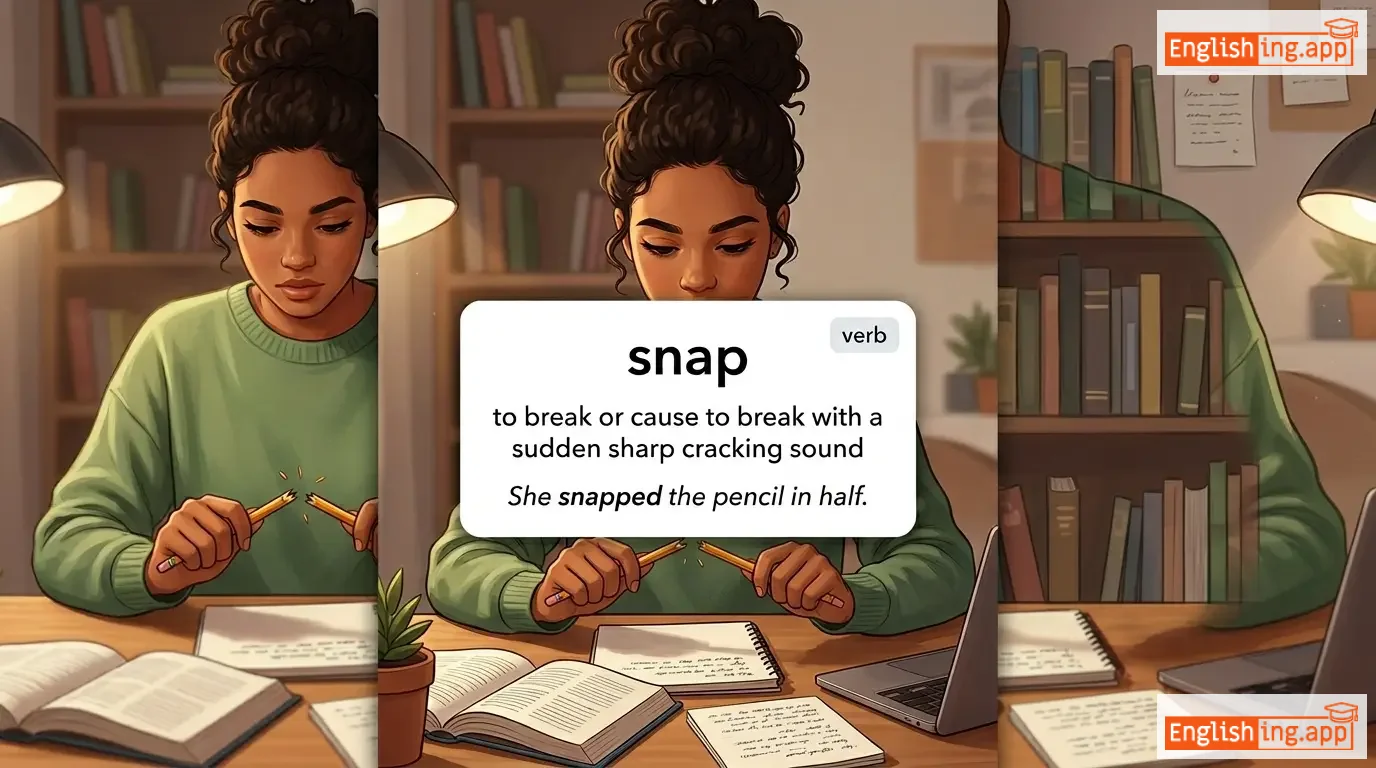
snap definition card — visual illustration of the meaning
verb
/snæp/
折断 (zhé duàn)

to break or cause to break with a sudden sharp cracking sound

"She snapped the pencil in half."

"她把铅笔折成了两半。" (Tā bǎ qiānbǐ zhé chéngle liǎng bàn.)
noun/verb
/snɛər/
陷阱 (xianjing)

a trap for catching animals; to catch or trap

"The hunter set a snare to catch rabbits."

"猎人设置了一个陷阱来捕捉兔子。" (Lieren shezhi le yige xianjing lai buchu tuzi.)
verb/noun
/snɑːrl/
咆哮,堵塞 (páo xiào, dǔ sè)

to growl aggressively with bared teeth; a tangle or mess

"The dog snarled at the stranger near the gate."

"狗对门口的陌生人咆哮。" (gǒu duì mén kǒu de mò shēng rén páo xiào.)
🥷

sneak

verb
/sniːk/

to move quietly and secretly to avoid being noticed

"He tried to sneak into the house without waking anyone."

verb
/snɪər/
嘲笑 (chaoxiao)

to smile or speak in a mocking or contemptuous way

"She sneered at his attempt to sing."

"她嘲笑他的唱歌尝试。" (Ta chaoxiao ta de changge changshi.)
verb, noun
/sniːz/
打喷嚏 (da penti)

to expel air involuntarily from the nose and mouth due to irritation; the act of sneezing

"I had to sneeze during the meeting."

"我在会议中不得不打喷嚏。" (wo zai huiyi zhong bude bu da penti)
verb
/ˈsnɪkər/
偷笑 (tōu xiào)

to laugh quietly in a disrespectful or mocking way

"The students snickered when the teacher made a mistake."

"当老师犯错时,学生们偷偷地笑了。" (Dāng lǎoshī fàn cuò shí, xuéshēngmen tōutōu de xiàole.)
adjective
/snaɪd/
讽刺的 (fèngcì de)

mocking or insulting in an indirect way

"He couldn’t resist making a snide comment about her dress."

"他忍不住对她的裙子做出讽刺的评论。" (Tā rěn bù zhù duì tā de qúnzi zuòchū fèngcì de pínglùn.)
verb
/snɪp/
剪切 (jianqie)

to cut something quickly with scissors or a sharp tool

"She snipped the loose thread from her dress."

"她剪下了裙子上松散的线。" (Ta jian xia le qunzi shang songsan de xian.)
verb
/ˈsnɪvəl/
以软弱或令人讨厌的方式哭泣或抱怨 (yǐ ruǎnruò huò lìng rén tǎoyàn de fāngshì kūqì huò bàoyuàn)

to cry or complain in a weak or annoying way

"He began to snivel when he didn’t get his way."

"当他没得到他想要的东西时,他开始哭泣。" (Dāng tā méi dédào tā xiǎng yào de dōngxi shí, tā kāishǐ kūqì.)
adjective
/ˈsnɒbɪʃ/
自命不凡 (zì mìng bù fán)

having or showing the attitude of people who think they are better than others

"She seemed snobbish because she avoided talking to the waiters."

"她看起来很自命不凡,因为她避免与服务员交谈。" (Tā kàn qǐlái hěn zì mìng bù fán, yīnwèi tā bìmiǎn yǔ fúwùyuán jiāotán.)
noun
/snoʊ/
(xue)

frozen water vapor that falls from the sky as white flakes

"Children love to play in the snow."

"孩子们喜欢在雪中玩耍。" (Haizimen xihuan zai xuezhong wanshua.)
noun
/ˈsnoʊ.fɔːl/
降雪 (jiangxue)

the process of snow falling from the sky; the amount of snow that falls

"The heavy snowfall blocked all the roads yesterday."

"昨天下的大雪封锁了所有的道路。" (zuótiān dà de xuě fēngsuǒ le suǒyǒu de dàolù.)
verb
/snʌb/
冷落 (lěngluò)

to insult or ignore someone by treating them rudely

"He felt hurt when his invitation was snubbed."

"他感到受伤,当他的邀请被冷落。" (Tā gǎndào shòushāng, dāng tā de yāoqǐng bèi lěngluò.)
verb
/ˈsnʌfəl/
鼻子发出声音地呼吸 (bìzi fāchū shēngyīn de hūxī)

to breathe noisily through the nose, often because of crying or a cold

"The child began to snuffle after crying for a long time."

"孩子在哭了很久之后开始嗅鼻。" (Háizi zài kū le hěn jiǔ zhīhòu kāishǐ xiù bí.)
adverb
/soʊ/
如此 (rúcǐ)

to such a degree or extent

"She was so happy with the gift."

"她对礼物感到如此高兴。" (Tā duì lǐwù gǎndào rúcǐ gāoxìng.)
adjective
/ˈsoʊ kɔːld/

referred to as or known by a particular name or title, often misleadingly

"The so-called expert couldn't answer the question."

verb
/soʊk/
浸泡 (jìnpào)

to make something completely wet by immersing it in liquid

"She soaked the clothes in water before washing them."

"她在洗衣前把衣服浸泡在水中。" (tā zài xǐyī qián bǎ yīfú jìnpào zài shuǐ zhōng.)
🧼

Soap

noun
/soʊp/

a substance used for washing and cleaning, typically made from fats and alkalis

"She washed her hands with soap and water."

noun
/soʊp keɪs/
肥皂盒 (feizao he)

a container used to store soap

"She bought a beautiful soap case for the bathroom."

"她为浴室买了一个漂亮的肥皂盒。" (Ta wei yushi mai le yige piaoliang de feizao he.)
adjective
/ˈsoʊpi/
覆盖着肥皂的; 泡沫的 (fùgài zhe féizào de; pào mò de)

covered with soap; having the characteristics of soap; foamy

"The dishes were still soapy after washing."

"洗完后,碗盘仍然很肥皂。" (Xǐ wán hòu, wǎn pán réngrán hěn féizào.)
verb
/sɔːr/
翱翔 / 快速增长 (áo xiáng / kuài sù zēng zhǎng)

to fly or rise high in the air; to increase rapidly or dramatically

"The eagle soared high above the mountains."

"鹰飞得很高,越过山脉。" (Yīng fēi de hěn gāo, yuèguò shānmài.)
verb
/sɑːb/
大声哭泣 (dàshēng kūqì)

to cry noisily while taking short breaths

"She began to sob uncontrollably after hearing the news."

"她在听到消息后开始无法控制地呜咽。" (Tā zài tīngdào xiāoxi hòu kāishǐ wúfǎ kòngzhì de wūyān.)
adjective
/ˈsoʊbər/
清醒 / 严肃 (qīngxǐng / yánsù)

not affected by alcohol; serious, sensible, and solemn

"He gave a sober speech about the challenges ahead."

"他就未来的挑战发表了一个清醒的演讲。" (Tā jiù wèilái de tiǎozhàn fābiǎo le yīgè qīngxǐng de yǎnjiǎng.)