
词汇表

英语词汇词典 | 单词含义、定义和示例

shroud definition card — visual illustration of the meaning
verb
/ʃraʊd/
覆盖 (fùgài)

to cover or hide; to wrap in cloth

"The mountain peak was shrouded in mist."

"山顶被雾气笼罩。" (Shāndǐng bèi wùqì lóngzhào.)
verb
/ʃrʌɡ/
耸肩 (sǒng jiān)

To raise and lower the shoulders to express uncertainty or indifference.

"He shrugged when asked about the missing file."

"他在被问到关于丢失文件的事时耸了耸肩。" (Tā zài bèi wèn dào guānyú diūshī wénjiàn de shì shí sǒngle sǒng jiān.)
verb
/ʃʌk/
剥壳 (bāo ké)

To remove the outer covering, such as the husk of corn or shell of shellfish.

"She learned how to shuck oysters quickly."

"她学会了如何快速打开牡蛎。" (Tā xuéhuìle rúhé kuàisù dǎkāi mǔlì.)
verb
/ˈʃʌdər/
颤抖 (chàndǒu)

to tremble or shake suddenly, often due to fear, cold, or strong emotion

"She shuddered at the thought of walking alone in the dark forest."
"她在想到独自走在黑暗森林中的时候不禁颤抖。" (Tā zài xiǎngdào dúzì zǒu zài hēi'àn sēnlín zhōng de shíhòu bùjīn chàndǒu.)
verb
/ˈʃʌfəl/

to walk by dragging one's feet along or without lifting them fully; to mix or rearrange

"He shuffled the cards before dealing them."

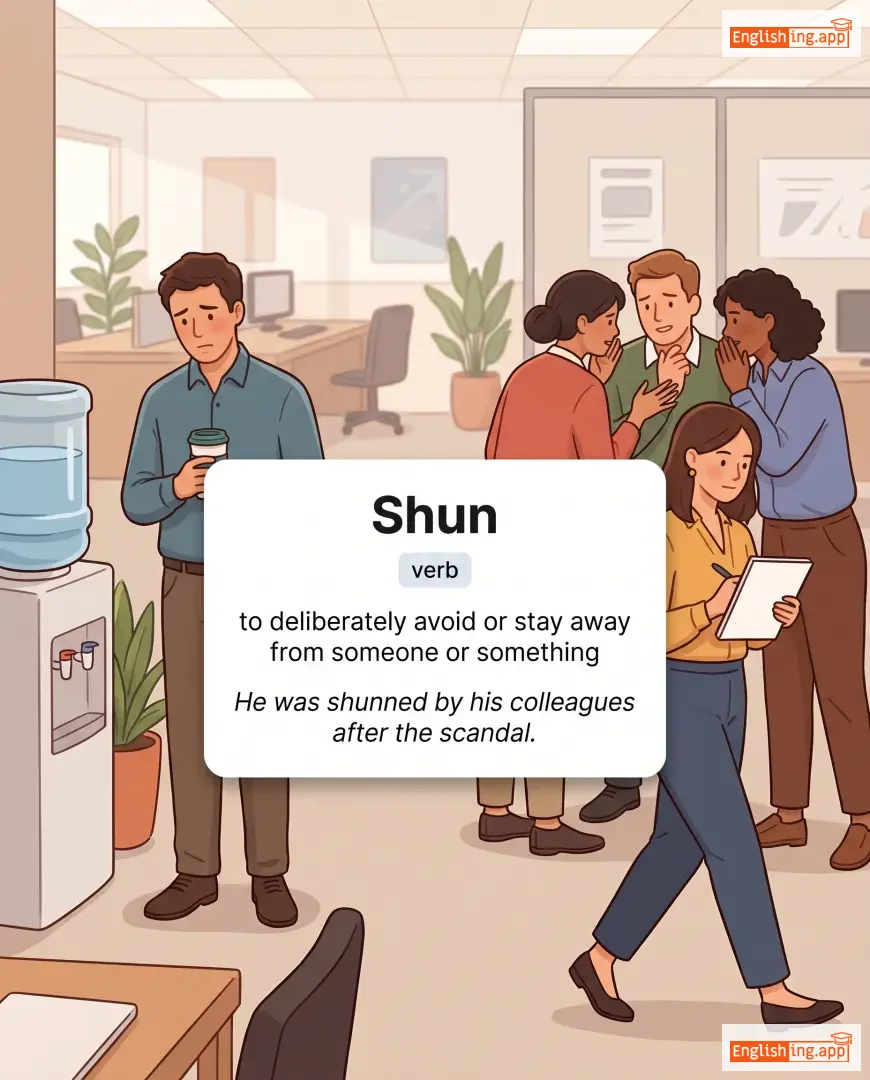
Shun definition card — visual illustration of the meaning
verb
/ʃʌn/
回避 (huibi)

to deliberately avoid or stay away from someone or something

"He was shunned by his colleagues after the scandal."

"他在丑闻之后被同事们回避了。" (Ta zai chouwen zhihou bei tongshimeng huibi le.)
verb
/ʃʌnt/
转轨 (zhuǎn guǐ)

to move or turn aside; to push or divert from one track to another

"The train was shunted onto a different track."

"火车被调到另一条轨道。" (Huǒchē bèi tiáo dào lìng yītiáo guǐdào.)
verb
/ʃʌt/
关上 (guan shang)

to close something, especially a door or window

"Please shut the door before you leave."

"请在离开前关上门。" (Qǐng zài líkāi qián guān shàng mén.)
noun
/ˈʃʌtəl/
在两个地点之间定期往返的交通工具 (zai liang ge didian zhijian dingqi wangfan de jiaotong gongju)

a vehicle or craft that travels regularly between two places.

"The airport shuttle runs every 30 minutes."

"机场接驳车每30分钟运行一次。" (Jichang jiebo che mei 30 fenzhong yunxing yi ci.)
adjective
/ʃaɪ/
害羞 (haixiu)

Being reserved or nervous around other people.

"The child was too shy to speak in class."

"这个孩子在课堂上太害羞,不敢发言。" (Zhege haizi zai kètáng shàng tài haixiu, bù gǎn fāyán.)
noun
/ˈʃaɪstər/
骗子 (pianzi)

a person, especially a lawyer, who uses unscrupulous or dishonest methods

"The businessman was exposed as a shyster who cheated clients."

"这位商人被曝光为一个骗子,他欺骗了客户。" (Zhè wèi shāngrén bèi pùguāng wéi yīgè piànzi, tā qīpiànle kèhù.)
noun
/ˈsɪbɪləns/
嘶嘶声 (sī sī shēng)

A hissing or hushing sound, especially in speech with 's' or 'sh'.

"The poet used sibilance to create a soft, hissing effect in the verse."

"诗人用西比兰斯在诗句中创造了一个柔和的嘶嘶效果。" (Shīrén yòng xī bǐ lán sī zài shī jù zhōng chuàngzàole yīgè róuhé de sī sī xiàoguǒ.)
adjective
/ˈsɪbɪlənt/
带有嘶嘶声的 (dài yǒu sī sī shēng de)

Making or characterized by a hissing sound.

"The word 'snake' starts with a sibilant sound."

"单词 'snake' 以西比兰特的声音开始。" (Dāncí 'snake' yǐ xī bǐ lán tè de shēngyīn kāishǐ.)
verb
/ˈsɪbəleɪt/
发出嘶嘶声 (fāchū sī sī shēng)

To pronounce with a hissing sound.

"The actor sibilated his lines for dramatic effect."

"演员为了戏剧效果,用嘶嘶声说出了他的台词。" (Yǎnyuán wèile xìjù xiàoguǒ, yòng sī sī shēng shuō chūle tā de táicí.)
noun
/ˈsɪblɪŋ/
兄弟姐妹 (xiōngdì jiěmèi)

A brother or sister.

"She has three siblings, two brothers and one sister."
"她有三个兄弟姐妹,两个兄弟和一个妹妹。" (Tā yǒu sān gè xiōngdì jiěmèi, liǎng gè xiōngdì hé yī gè mèimei.)
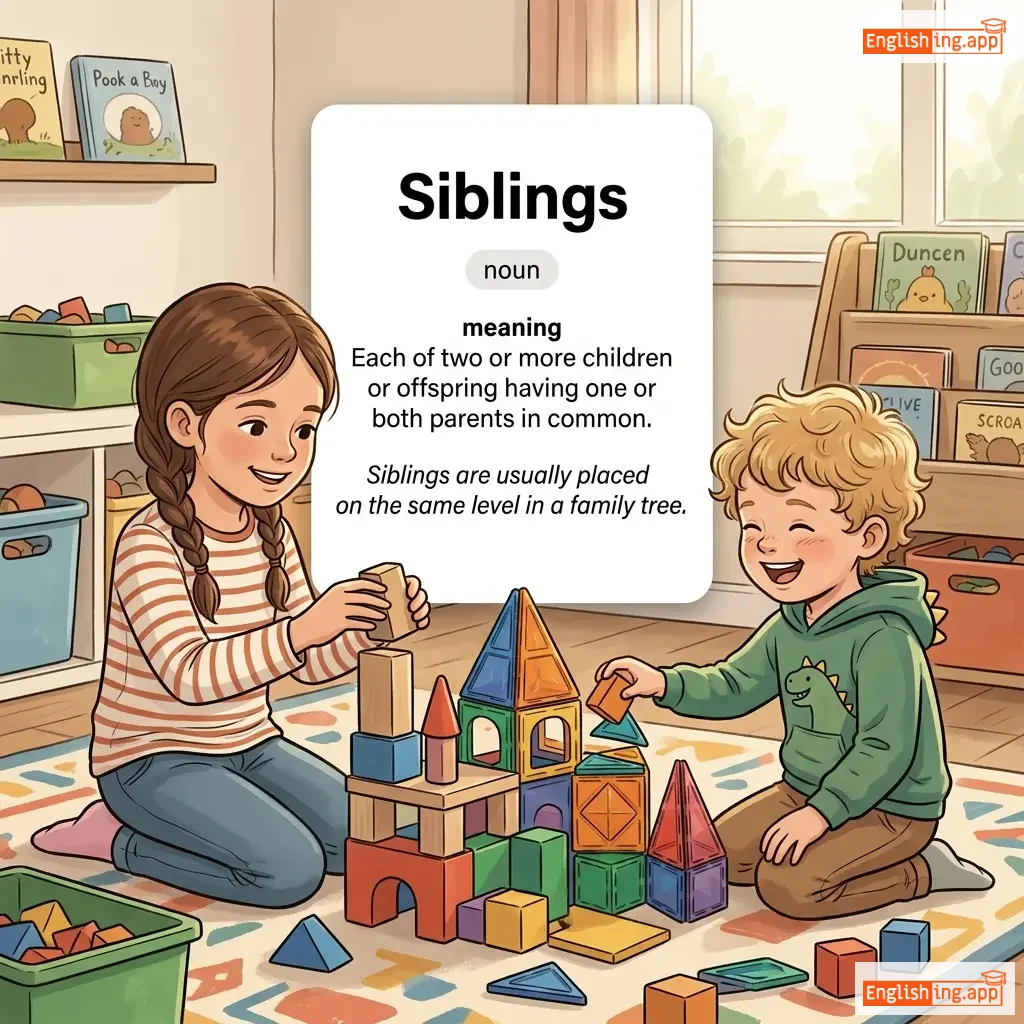
Siblings definition card — visual illustration of the meaning
noun
ˈsɪblɪŋz
兄弟姐妹 (xiōngdì jiěmèi)

Each of two or more children or offspring having one or both parents in common.

"Siblings are usually placed on the same level in a family tree."

"兄弟姐妹通常在家谱中处于同一水平。" (Xiōngdì jiěmèi tōngcháng zài jiāpǔ zhōng chù yú tóng yī shuǐpíng.)
adjective
/ˈsɪbɪlaɪn/
希比林 (xī bǐ lín)

Prophetic, mysterious, or cryptic in meaning.

"The old woman gave a sibylline warning about the future."

"那位老妇人对未来做出了一个希比林的警告。" (Nà wèi lǎo fùrén duì wèilái zuòchūle yīgè xī bǐ lín de jǐnggào.)
adjective
/sɪk/
生病 (sheng bing)

feeling unwell or suffering from illness

"She stayed home because she was feeling sick."

"她留在家里,因为她感觉生病了。" (ta liu zai jia li yin wei ta gan jue sheng bing le)
noun
/ˈsɪk.əl/
镰刀 (liándāo)

a tool with a curved metal blade and short handle used for cutting grain crops

"The farmer harvested wheat using a traditional sickle."

"农民用传统的镰刀收割小麦。" (Nóngmín yòng chuántǒng de liándāo shōugē xiǎomài.)
adjective
/ˈsɪk.li/
虚弱; 生病; 苍白 (xuruo)

weak and unhealthy; prone to illness; appearing weak or pale

"The sickly child needed extra care and attention."

"这个虚弱的孩子需要额外的照顾和关注。" (Zhege xuruo de haizi xuyao ewai de zhaogu he guanzhu)
noun
/ˈsɪk.nəs/
疾病; 病痛 (jíbìng; bìngtòng)

the state of being ill; a disease or illness

"She took time off work due to sickness."

"她因病休假。" (Tā yīn bìng xiūjià.)
noun
/saɪd/
旁边 (pangbian)

a position to the left or right of something

"The store is on the side of the road."
"商店位于路的旁边。" (Shangdian weiyu lu de pangbian.)
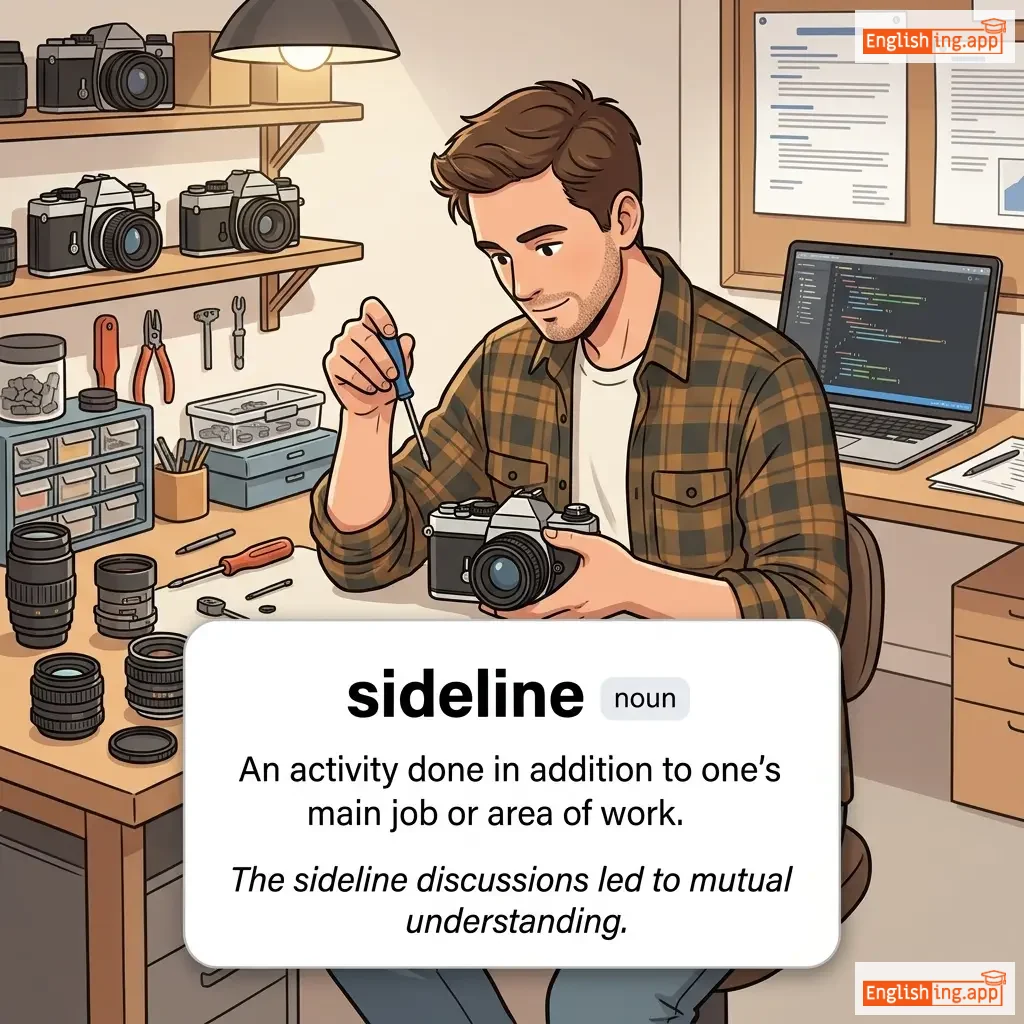
sideline definition card — visual illustration of the meaning
noun
/ˈsaɪd.laɪn/
副业 (fù yè)

An activity done in addition to one's main job or area of work.

"The sideline discussions led to mutual understanding."

"副线讨论促进了相互理解。" (Fùxiàn tǎolùn cùjìnle xiānghù lǐjiě.)
sideline discussions definition card — visual illustration of the meaning
noun
/ˈsaɪd.laɪn dɪˈskʌʃənz/
边缘讨论 (bian yuan tao lun)

Informal or secondary conversations that occur outside the main agenda of a formal meeting.

"Sideline discussions often lead to agreements."

"边缘讨论常常导致协议。" (Bian yuan tao lun chang chang daozhi xieyi.)
adjective, adverb
/ˈsaɪdlɔːŋ/
斜视 (xie shi)

Directed to the side; indirect, furtive, or not straightforward.

"She gave him a sidelong glance across the room."

"她穿过房间投给他一个斜视。" (Tā chuānguò fángjiān tóu gěi tā yīgè xié shì.)
sidereal definition card — visual illustration of the meaning
adjective
/saɪˈdɪəriəl/
恒星的 (héng xīng de)

Relating to the stars or constellations; measured relative to the stars.

"Astronomers use sidereal time to track the positions of stars."

"天文学家使用恒星时间来追踪星星的位置。" (tiān wén xué jiā shǐ yòng héng xīng shí jiān lái zhuī zōng xīng xīng de wèi zhì.)
verb
/ˈsaɪdˌstɛp/
回避 (huíbì)

To avoid something by stepping aside; to evade a problem or question indirectly.

"The politician tried to sidestep the difficult question."

"那位政治家试图回避那个棘手的问题。" (Nà wèi zhèngzhìjiā shìtú huíbì nàgè jíshǒu de wèntí.)
verb
/ˈsaɪdˌtræk/
分心 (fēn xīn)

To distract from the main subject or activity.

"She was sidetracked by an unexpected phone call."

"她被一个意外的电话打断了。" (Tā bèi yīgè yìwài de diànhuà dǎduànle.)
noun
/ˈsaɪdˌwɔːk/
人行道 (renxingdao)

a paved path for pedestrians at the side of a street.

"Children were playing on the sidewalk."

"孩子们在路边的人行道上玩耍。" (Haizimen zai lubian de renxingdao shang wanshua.)
noun
/siːdʒ/
围攻 (wéiqīng)

A military operation in which a place is surrounded to force its surrender.

"The castle fell after a long siege."

"城堡在长时间的围困后倒塌。" (Chéngbǎo zài cháng shíjiān de wéikùn hòu dǎotā.)
Sierra Club definition card — visual illustration of the meaning
noun
/siˈɛrə klʌb/
塞拉俱乐部 (Sierra Julebu)

An American environmental organization founded in 1892 by John Muir, focused on promoting conservation of the natural environment by influencing public policy decisions.

"John Muir founded the Sierra Club in 1892 to protect wild areas."

"约翰·缪尔在1892年创立了塞拉俱乐部,以保护野生地区。" (Yuēhàn·Miù'ěr zài 1892 nián chuànglìle Sàilā Jùlèbù, yǐ bǎohù yěshēng dìqū.)
noun
/sɪv/
筛子 (shaizi)

a utensil with a mesh or perforated bottom, used for straining or sifting

"She used a sieve to strain the pasta."

"她用筛子过滤意大利面。" (Tā yòng shāizi guòlǜ yìdàlì miàn.)
noun
/siːdʒ/
围困 (wéikùn)

a military operation to capture a place by surrounding it and cutting off supplies

"The siege of the castle lasted for three months."

"城堡的围困持续了三个月。" (Chéngbǎo de wéikùn chíxù le sān gè yuè.)
verb
/sɪft/
筛 / 仔细检查 (shai / zixi jiancha)

to separate or sort through carefully, often using a sieve or by examining closely

"She sifted the flour before adding it to the cake mixture."

"她在把面粉加到蛋糕混合物中之前筛选了面粉。" (Tā zài bǎ miànfěn jiā dào dàngāo hùn héwù zhōng zhīqián shāixuǎn le miànfěn.)
verb
/saɪ/
叹气 (tanqi)

to let out a long, deep breath as an expression of tiredness, relief, or sadness

"She sighed with relief when she heard the good news."

"她听到好消息时松了口气。" (Ta tingdao hao xiaoxi shi song le kouqi.)
noun
/saɪt/
视力 (shili)

the ability to see or something that is seen

"The sight of the sunset took her breath away."

"日落的景象让她屏住了呼吸。" (Rìluò de jǐngxiàng ràng tā bǐngzhù le hūxī.)
👁️‍🗨️

Sightless (saitles)

adjective
/ˈsaɪt.ləs/
盲目; 无视力 (mángmù; wú shìlì)

unable to see; blind; lacking vision

"The sightless man navigated the street with his guide dog."

"盲人带着他的导盲犬穿过街道。" (Máng rén dàizhe tā de dǎománg quǎn chuānguò jiēdào)
sign definition card — visual illustration of the meaning
noun
/saɪn/
标志 (biaozhi)

a symbol, mark, or gesture that conveys information or instructions

"The sign on the door said 'Closed for lunch'."

"门上的标志写着‘午餐时间关闭’。" (Men shang de biaozhi xie zhe 'wucan shijian guanbi'.)
noun/verb
/ˈsɪɡnəl/
信号 (xinhao)

a gesture, sound, or action used to convey information or instructions

"The driver gave a hand signal before turning left."
"司机在左转之前给出了手势信号。" (Sījī zài zuǒ zhuǎn zhīqián gěi chūle shǒushì xìnhào.)
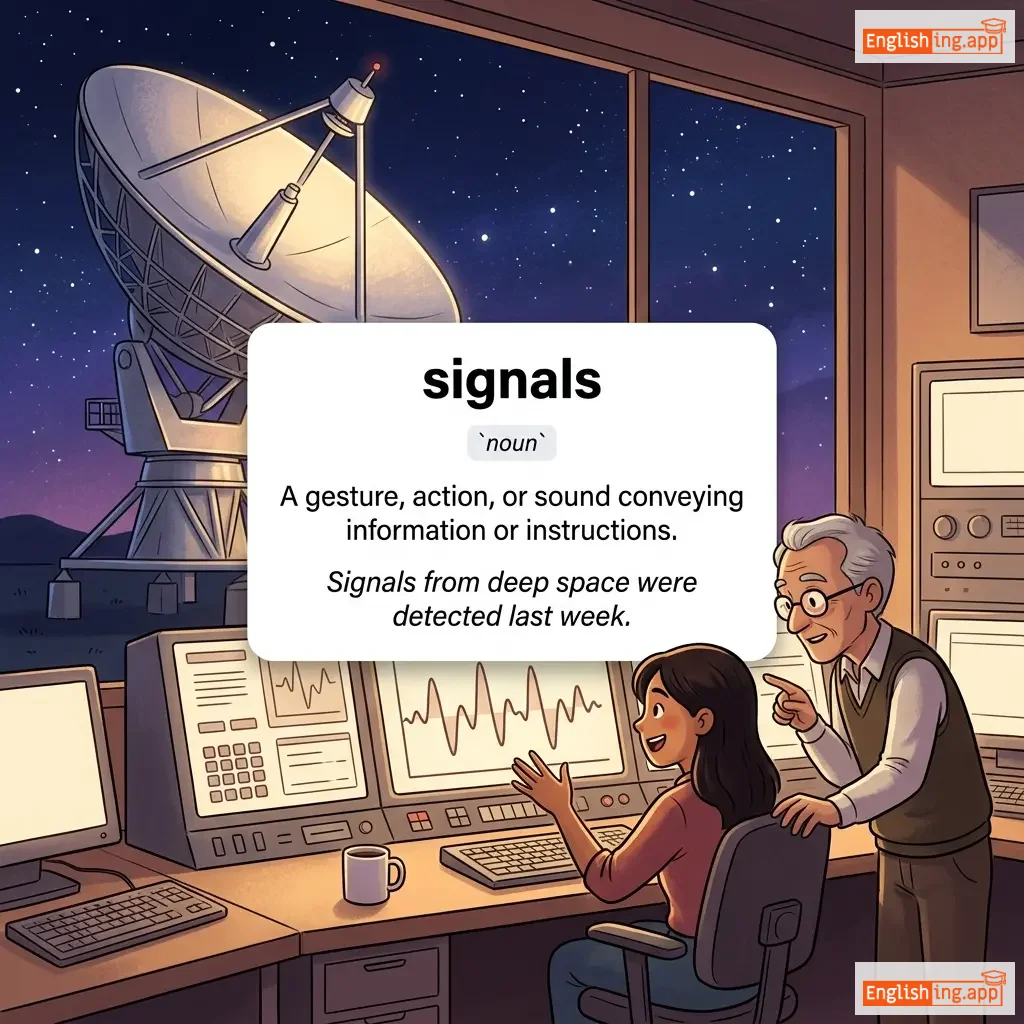
signals definition card — visual illustration of the meaning
noun
/ˈsɪɡ.nəlz/
信号 (xinhao)

A gesture, action, or sound conveying information or instructions.

"Signals from deep space were detected last week."

"上周探测到了来自深空的信号。" (Shang zhou tance dao le laizi shenkong de xinhao.)
noun
/ˈsɪɡ.nə.tʃər/
签名 (qianming)

a person's name written by themselves, often as a form of identification or authorization

"She signed the contract with her elegant signature."

"她用她优雅的签名签署了合同。" (Tā yòng tā yōu yǎ de qiān míng qiān shǔ le hé tóng.)
noun
/sɪɡˈnɪfɪkəns/
意义 (yìyì)

the quality of being important, meaningful, or worthy of attention

"The significance of the discovery was recognized worldwide."

"这一发现的重要性在全球范围内得到了认可。" (Zhè yī fāxiàn de zhòngyào xìng zài quánqiú fànwéi nèi dédào le rènkě.)
significant definition card — visual illustration of the meaning
adjective
/sɪɡˈnɪfɪkənt/
显著的 (xian zhu de)

important, meaningful, or having a noticeable effect

"The company made a significant investment in new technology."

"公司对新技术进行了显著投资。" (Gōngsī duì xīn jìshù jìnxíngle xiǎnzhù tóuzī.)
adverb
/sɪɡˈnɪfɪkəntli/
显著 (xian zhu)

in a way that is large or important enough to have an effect

"The economy has significantly improved over the last decade."

"过去十年中,经济显著改善。" (Guoqu shinian zhong, jingji xianzhu gaishan.)
noun
/ˌsɪɡnɪfɪˈkeɪʃən/
含义 (hányì)

the meaning or sense conveyed by a word, action, or symbol

"The signification of the gesture was misunderstood."
"这个手势的含义被误解了。" (Zhège shǒushì de hányì bèi wùjiěle.)
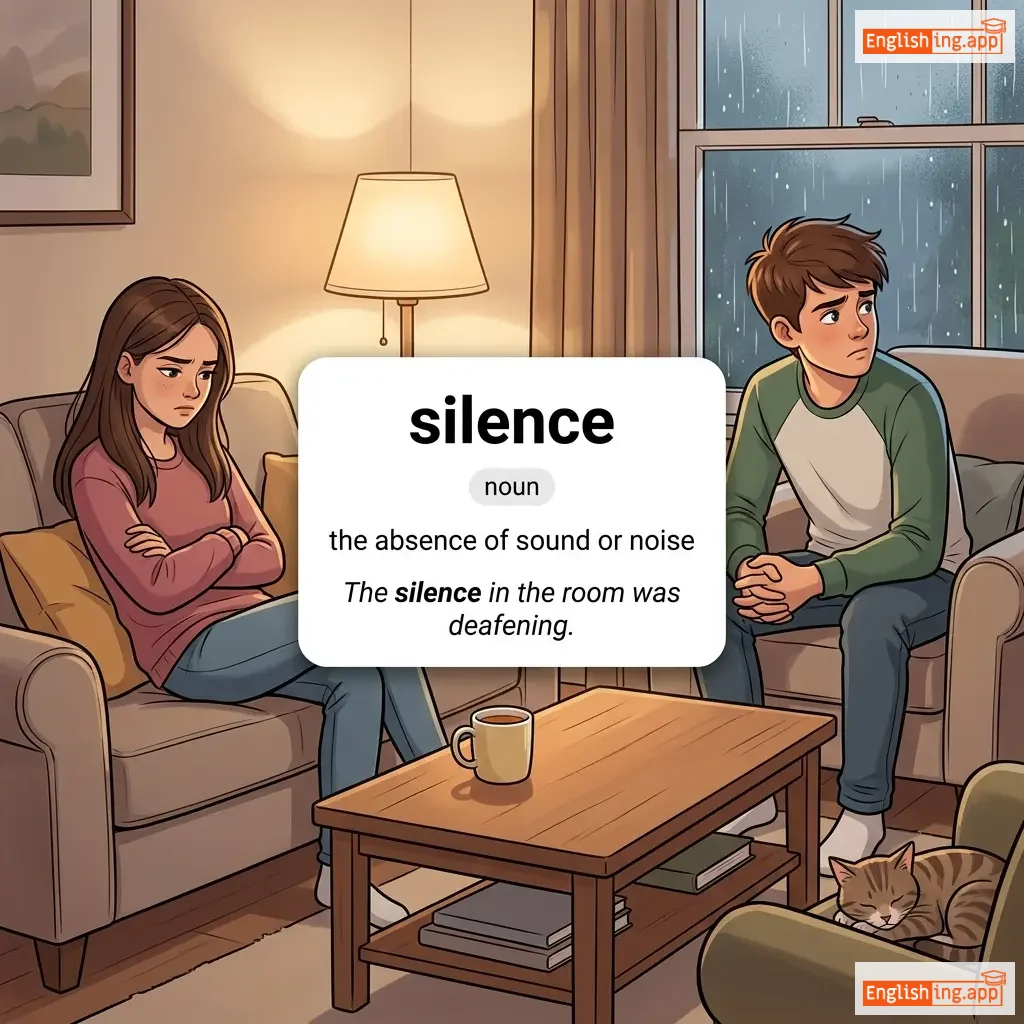
silence definition card — visual illustration of the meaning
noun
/ˈsaɪləns/
沉默 (chenmo)

the absence of sound or noise

"The silence in the room was deafening."

"房间里的沉默震耳欲聋。" (Fángjiān lǐ de chénmò zhèner yù lóng.)
adjective
/ˈsaɪlənt/
安静 (anjing)

not speaking or making noise

"The room was silent as everyone waited for the announcement."

"房间安静,大家都在等待公告。" (Fángjiān ānjìng, dàjiā dōu zài děngdài gōnggào.)
noun
/sɪlk/
丝绸 (sichou)

a fine, smooth fabric made from the threads produced by silkworms

"The dress was made of pure silk."

"这件裙子是用纯丝绸做的。" (Zhe jian qunzi shi yong chun sichou zuo de.)
noun
/sɪlk klɔːθ/
丝绸布料 (sīchóu bùliào)

fabric made from natural fibers produced by silkworms

"The bride wore a beautiful dress made of silk cloth."

"新娘穿着一件美丽的丝绸布料做的裙子。" (xīnniáng chuānzhuó yī jiàn měilì de sīchóu bùliào zuò de qúnzi.)
noun
/ˈsɪlk.wɜːrm/
(cán)

the caterpillar of a moth that produces silk fibers used to make silk fabric

"Silkworms feed on mulberry leaves to produce silk."

"蚕虫以桑叶为食,产生丝绸。" (Cánchóng yǐ sāng yè wéi shí, chǎnshēng sīchóu.)