词汇表

英语词汇词典 | 单词含义、定义和示例

adjective
/ˈʃɪft.ləs/
懒惰 (landuo)

Lacking ambition or the ability to accomplish anything; lazy and unmotivated.

"He was seen as a shiftless young man with no goals."

"他被看作是一个没有目标的懒惰年轻人。" (Tā bèi kànzuò shì yīgè méiyǒu mùbiāo de lǎnduò niánqīng rén.)
verb
/ˈʃɪmər/
闪烁 (shan shuo)

To shine with a soft, wavering light.

"The lake shimmered under the moonlight."

"湖泊在月光下闪烁。" (Húpō zài yuèguāng xià shǎnshuò.)
verb
/ʃaɪn/
闪耀 (shanyao)

to give out a bright light or glow

"The sun will shine brightly tomorrow."

"太阳明天会明亮地照耀。" (Tàiyáng míngtiān huì míngliàng de zhàoyào.)
adjective
/ˈʃaɪ.ni/
闪亮的; 光亮的; (shanliang de; guangliang de;)

reflecting light; bright and polished; glossy

"The shiny new car caught everyone's attention."

"那辆闪亮的新车吸引了所有人的注意。" (Nà liàng shǎn liàng de xīn chē xīyǐn le suǒyǒu rén de zhùyì.)
noun
/ʃɪp/
(chuan)

a large boat used for travel or transporting goods across water

"The ship set sail across the ocean."

"船开始航行,越过了海洋。" (Chuan kaishi hangxing, yueguo le haiyang.)
noun
/ˈʃɪpɪŋ/
运输 (yunshu)

the process of transporting goods

"The shipping of the products was delayed due to weather conditions."

"由于天气原因,产品的运输被延迟了。" (Yóuyú tiānqì yuányīn, chǎnpǐn de yùnshū bèi yánchíle.)
adjective
/ˈʃɪpˌʃeɪp/
井然有序 (jǐngrán yǒuxù)

Neat, tidy, and in good order.

"She kept her office shipshape at all times."

"她总是保持办公室井然有序。" (Tā zǒng shì bǎochí bàngōngshì jǐngrán yǒuxù.)
verb
/ʃɜːrk/
逃避 (taobi)

to avoid or neglect a duty or responsibility

"He always tries to shirk his responsibilities at work."

"他总是尽力避免工作中的责任。" (Ta zongshi jinli taobi gongzuo zhong de zeren.)
noun
/ʃɜːrt/
衬衫 (chenshan)

a piece of clothing worn on the upper body, usually with sleeves and a collar

"He wore a blue shirt to the party."

"他穿了一件蓝色衬衫去派对。" (Tā chuānle yī jiàn lánsè chènshān qù pàiduì.)
noun
/ʃɪt/
(shi)

a vulgar term for feces or excrement

"The dog made a mess by leaving its shit on the floor."

"狗在地板上留下了它的屎,弄得一团糟。" (gǒu zài dìbǎn shàng liúxiàle tā de shǐ, nòng de yī tuán zāo.)
noun
/ʃoʊl/
鱼群 (yu qun)

a large group of fish swimming together; a shallow place in water

"We saw a shoal of fish near the coast."

"我们在海岸附近看到了鱼群。" (Wo men zai ha'an fu jin kan dao le yu qun.)
noun
/ʃɒk/
震惊 (zhènjīng)

a sudden upsetting or surprising event or experience

"The news of his sudden departure was a shock to everyone."

"他的突然离开消息让每个人都震惊。" (Tā de túrán líkāi xiāoxī ràng měi gèrén dōu zhènjīng.)
adjective
/ˈʃɒkɪŋ/
令人震惊的 (ling ren zhen jing de)

causing surprise or disbelief; startling

"The news of the accident was shocking to everyone."

"事故的消息令所有人震惊。" (Shigu de xiaoxi ling suoyouren zhenjing.)
adjective
/ˈʃɑːdi/
劣质 (liezhi)

badly made or done; of poor quality

"The contractor did a shoddy job on the repairs."

"承包商在修理工作中做了劣质的工作。" (Chengbaoshang zai xiuli gongzuo zhong zuo le liezhi de gongzuo.)
noun
/ʃuː/
鞋子 (xiezi)

a covering for the foot, typically made of leather, with a sturdy sole and heel

"She bought a new pair of shoes for the wedding."

"她为婚礼买了一双新鞋。" (Ta wei hunli mai le yi shuang xin xie.)
verb
/ʃuːt/
射击 / 拍照 (sheji / paizhao)

to fire a bullet or arrow from a weapon; to take a photograph or film

"He learned how to shoot a bow and arrow."

"他学会了如何用弓和箭射击。" (Ta xuehui le ruhe yong gong he jian sheji.)
noun
/ˈʃuːtɪŋ/
拍摄 (paishè)

the action of shooting a gun, camera, or similar device

"The shooting of the movie took several months."

"电影的拍摄花费了几个月的时间。" (Diànyǐng de pāishè huāfèi le jǐ gè yuè de shíjiān.)
noun
/ʃɒp/
商店 (shāngdiàn)

a place where goods are sold to customers

"I need to go to the shop to buy some groceries."

"我需要去商店买一些杂货。" (Wǒ xūyào qù shāngdiàn mǎi yīxiē záhuò.)
noun
/ˈʃɒpɪŋ/
购物 (gòuwù)

the activity of going to shops to buy things

"She spent the afternoon shopping for clothes."

"她下午花时间去购物买衣服。" (Tā xiàwǔ huā shíjiān qù gòuwù mǎi yīfú.)
adjective
/ˈʃɑːpwɔːrn/
旧的 / 陈旧的 (jiù de / chén jiù de)

worn or faded from being displayed in a shop; no longer fresh or original

"The shopworn shoes were sold at a discount."

"这些 shopworn 鞋子以折扣价出售。" (Zhèxiē shopworn xiézi yǐ zhékòu jià chūshòu.)
noun
/ʃɔːr/
岸边 (an bian)

the land along the edge of a sea, lake, or other large body of water

"We walked along the shore of the lake."

"我们在湖边散步。" (Wǒmen zài húbiān sànbù.)
adjective
/ʃɔːrt/
(duan)

having little length or duration

"She wore a short dress for the party."

"她穿了一件短裙去参加聚会。" (Ta chuan le yi jian duan qun qu canjia ju hui.)
adjective
/ˈʃɔːrt ˌsaɪtɪd/
近视; 短期视野 (jìnshì; duǎnqī shìyě)

lacking foresight or consideration for the future; myopic

"His short-sighted decision to quit school early affected his career prospects."

"他短视的决定早早离开学校影响了他的职业前景。" (tā duǎnshì de juédìng zǎozǎo líkāi xuéxiào yǐngxiǎngle tā de zhíyè qiánjǐng.)
adjective
/ˈʃɔːrt ˌtempərd/
易怒的; 容易生气的 (yì nù de; róng yì shēng qì de)

quick to lose one's temper; easily angered

"She became short-tempered when the traffic made her late for the meeting."

"当交通让她迟到时,她变得很暴躁。" (dāng jiāo tōng ràng tā chí dào shí, tā biàn dé hěn bào zào.)
short-term definition card — visual illustration of the meaning
adjective
/ˈʃɔːrt tɜːrm/
短期 (duǎn qī)

lasting for or involving a short period of time

"They offered a short-term loan to help the business."

"他们提供了一个短期贷款来帮助企业。" (Tāmen tígōngle yīgè duǎnqī dàikuǎn lái bāngzhù qǐyè.)
noun
/ˈʃɔːrtɪdʒ/
短缺 (duǎnquē)

a state or situation in which something needed cannot be obtained in sufficient amounts

"There is a shortage of skilled workers in the industry."

"工业中缺乏熟练的工人。" (Gōngyè zhōng quēfá shúliàn de gōngrén.)
noun
/ˈʃɔːrt.kʌm.ɪŋ/
缺陷; 不足; 缺点 (quēxiàn; bùzú; quēdiǎn)

a fault or failure to meet a certain standard; a deficiency

"Despite his many talents, he has some shortcomings."
"尽管他有许多才华,他仍然有一些短处。" (Jǐnguǎn tā yǒu xǔduō cáihuá, tā réngrán yǒu yīxiē duǎnchù.)
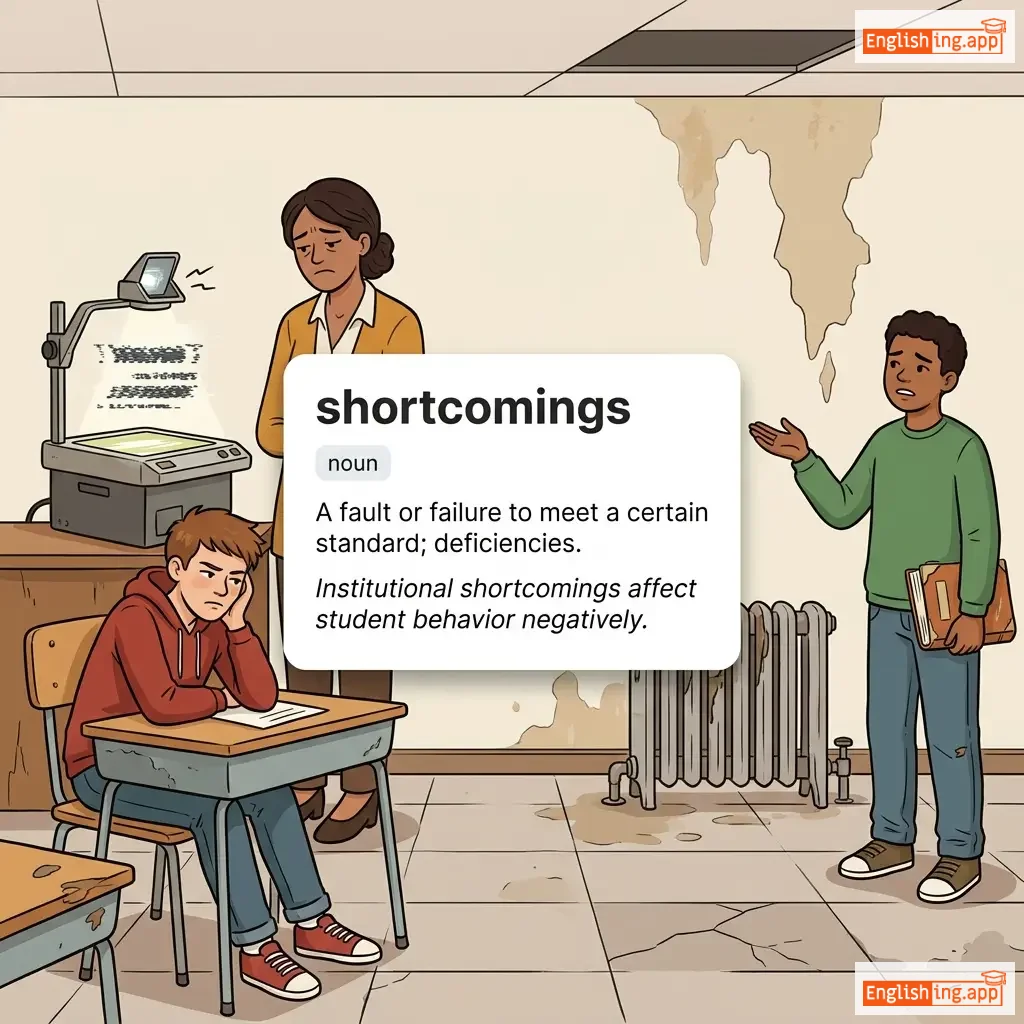
shortcomings definition card — visual illustration of the meaning
noun
ˈʃɔːtkʌmɪŋz
短处 (duǎn chù)

A fault or failure to meet a certain standard; deficiencies.

"Institutional shortcomings affect student behavior negatively."

"制度性短处对学生行为产生了负面影响。" (Zhìdù xìng duǎn chù duì xuéshēng xíngwéi chǎnshēng le fùmiàn yǐngxiǎng.)
verb
/ˈʃɔːrtn/
缩短 (suoduan)

To make something shorter in length, duration, or extent

"She decided to shorten her speech to fit the time limit."

"她决定缩短她的演讲以符合时间限制。" (Ta jueding suoduan ta de yanjiang yi fuhe shijian xianzhi.)
adverb
/ˈʃɔːrtli/
很快 (hen kuai)

in a short time; soon

"He will be back shortly."

"他很快就会回来。" (Ta hen kuai jiu hui huilai.)
noun
/ʃɔːrts/
短裤 (duǎn kù)

a short garment worn on the lower half of the body that covers each leg separately, usually above the knees.

"He wore a pair of blue shorts to the beach."

"他穿了一条蓝色的短裤去海滩。" (Tā chuānle yītiáo lánsè de duǎn kù qù hǎitān.)
noun, verb
/ʃɒt/
射击 (sheji)

a single attempt to hit something, usually with a weapon or a ball

"He took a shot at the goal."

"他朝着球门射击。" (Tā cháo zhe qiúmén shèjí.)
modal verb
/ʃʊd/
应该 (yinggai)

used to indicate obligation or duty

"You should study for your exams."

"你应该为考试学习。" (Ni yinggai wei kaoshi xuexi.)
noun
/ˈʃoʊldər/
肩膀 (jianbang)

the upper joint of the human arm and the part of the body to which it is attached

"He hurt his shoulder while lifting weights."

"他在举重时伤到了肩膀。" (Ta zai ju zhong shi shang dao le jianbang.)
verb
/ʃaʊt/
喊叫 (hanjiao)

to say something very loudly

"He shouted at the top of his lungs to get their attention."

"他尽可能大声地喊叫,以引起他们的注意。" (Ta jin keneng dasheng de hanjiao, yi yinqi tamen de zhuyi.)
verb
/ʃʌv/
(tui)

to push someone or something roughly

"He shoved the box into the corner."

"他把箱子推到角落里。" (Tā bǎ xiāngzi tuī dào jiǎoluò lǐ.)
noun
/ˈʃʌv.əl/
铲子 (chanzi)

a tool with a broad flat blade and long handle used for digging and moving earth, snow, or other materials

"He grabbed a shovel to clear the snow from the driveway."

"他拿起铲子清理车道上的雪。" (Tā ná qǐ chǎnzi qīnglǐ chēdào shàng de xuě.)
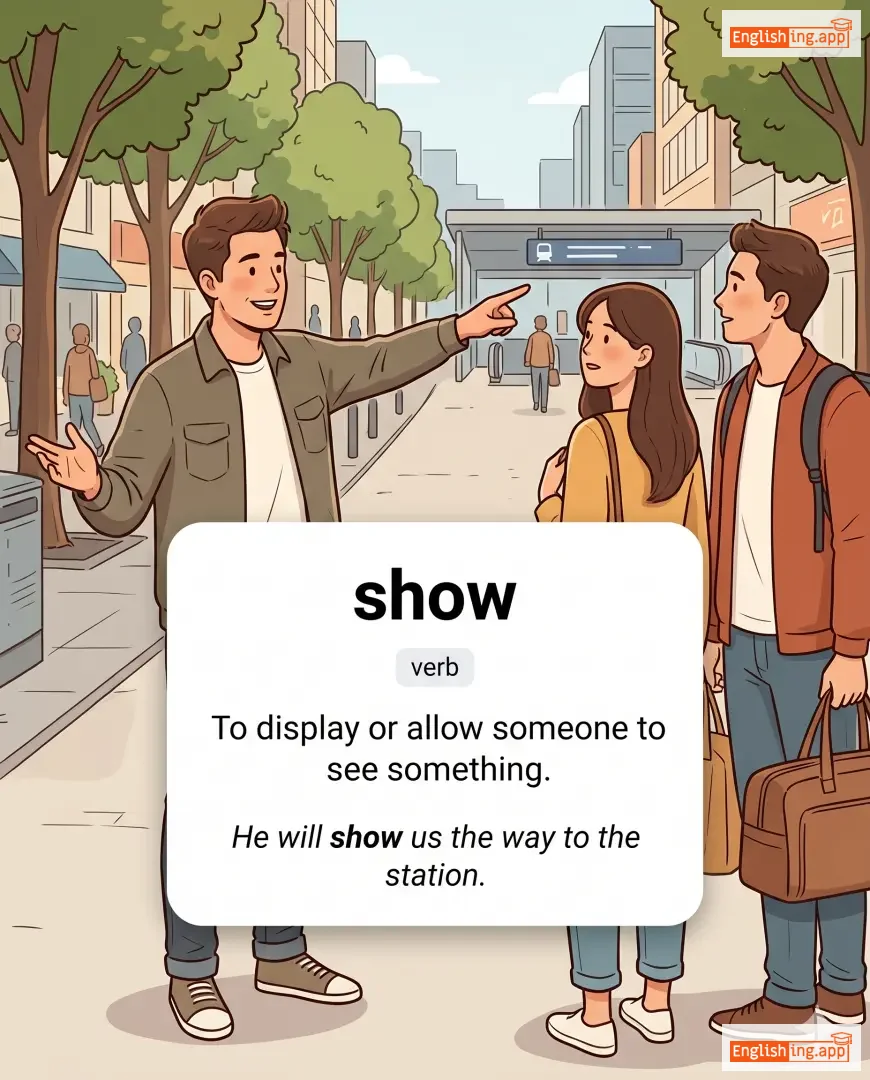
show definition card — visual illustration of the meaning
verb
/ʃoʊ/
展示 (zhǎnshì)

To display or allow someone to see something.

"He will show us the way to the station."

"他会带我们去车站。" (Tā huì dài wǒmen qù chēzhàn.)
showcase definition card — visual illustration of the meaning
noun
/ˈʃəʊ.keɪs/
展示柜,吸引或有利地展示某物 (zhanshigui, xīyǐn huò yǒulì de zhǎnshì mǒuwù)

A display case or exhibition; to present something in an attractive or favorable way.

"The exhibition showcased the artist's best works."

"展览展示了艺术家的最佳作品。" (Zhǎnlǎn zhǎnshìle yìshùjiā de zuì jiā zuòpǐn.)
noun
/ˈʃaʊər/

a brief fall of rain or snow or a device for taking a bath or washing oneself

"After the workout, I took a quick shower to refresh myself."

/ʃrɛd/
撕裂 (silie)

to tear or cut something into small pieces

"She shredded the old documents before throwing them away."

"她在扔掉之前把旧文件撕成了碎片。" (Ta zai reng diao zhiqian ba jiu wenjian sile cheng le suipian.)
noun
/ʃruː/
暴躁的女人 / 小鼠类动物 (bao zao de nu ren / xiao shu lei dong wu)

a small mouse-like animal; also a woman with a bad temper

"The play describes a strong-willed woman as a shrew."

"这部戏描述了一位坚强的女性,像一个暴躁的女人一样。" (Zhe bu xi miaoshu le yi wei jianqiang de nvxing, xiang yi ge baozao de nvren yiyang.)
adjective
/ʃruːd/
精明 (jingming)

having sharp judgment and practical intelligence

"She made a shrewd investment in real estate."

"她在房地产方面做出了精明的投资。" (Ta zai fangdichan fangmian zuo chule jingming de touzi.)
verb
/ʃriːk/
尖叫 (jianjiao)

to make a loud, high-pitched cry

"She shrieked when she saw the spider."

"她看到蜘蛛时尖叫了。" (Ta kandao zhizhu shi jianjiao le.)
adjective
/ʃrɪl/
尖锐的声音 (jianrui de shengyin)

High-pitched and piercing in sound.

"The shrill whistle startled everyone in the room."

"尖锐的哨声让房间里的每个人都吓了一跳。" (Jianrui de shaosheng rang fangjian li de mei ge ren dou xià le yī tiào.)
noun
/ʃrɪmp/
(xia)

a small marine crustacean that is often used as food.

"We ordered grilled shrimp for dinner."

"我们点了烤虾作为晚餐。" (Wǒmen diǎnle kǎo xiā zuòwéi wǎncān.)
noun
/ʃraɪn/
圣地 (shengdi)

A place regarded as holy, often associated with a saint or deity.

"Thousands of pilgrims visit the shrine each year."
"每年都有成千上万的朝圣者参观这个圣地。" (Mei nian dou you chengqian shangwan de chaoshengzhe canguan zhege shengdi.)
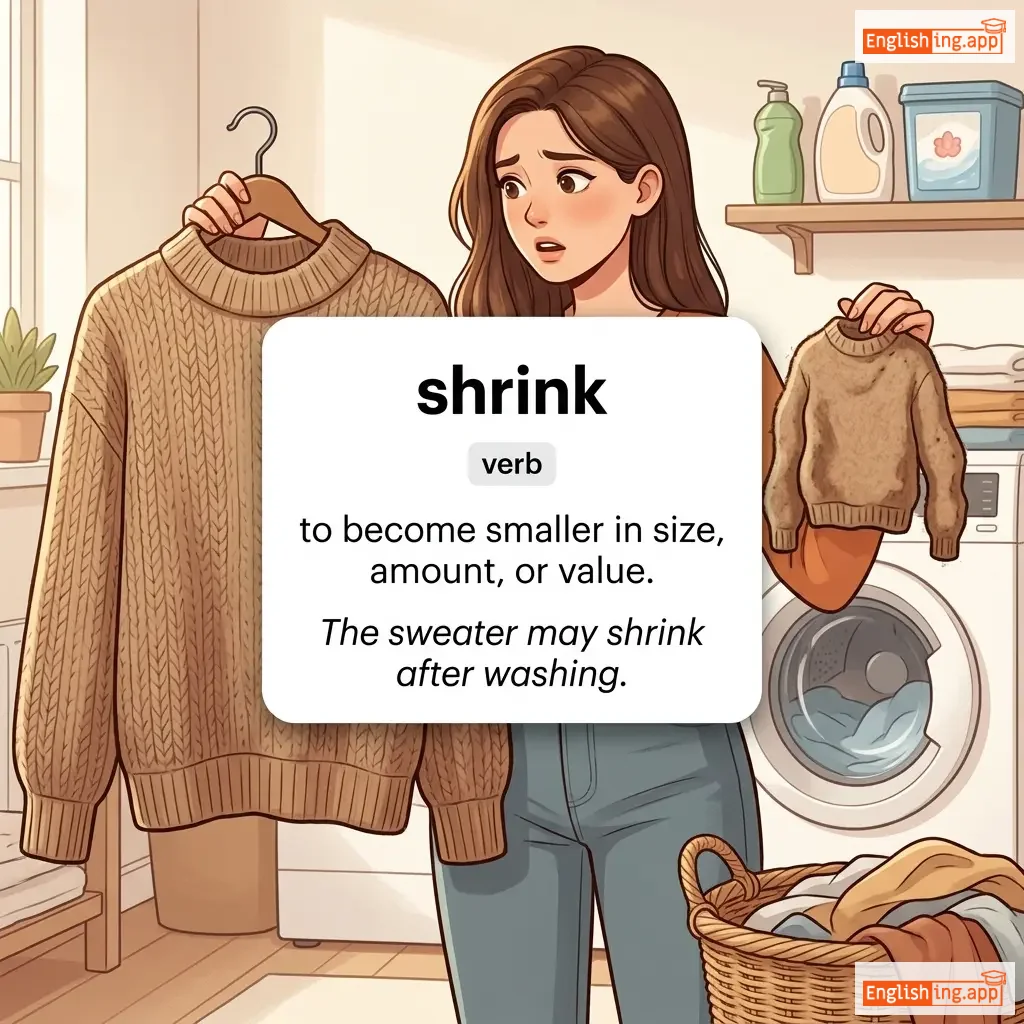
shrink definition card — visual illustration of the meaning
verb
/ʃrɪŋk/
幸福 (xingfu)

to become smaller in size, amount, or value.

"The sweater may shrink after washing."

"当她收到奖项时,她无法掩饰自己的幸福。" (Dāng tā shōu dào jiǎngxiàng shí, tā wúfǎ yǎnshì zìjǐ de xìngfú.)
noun
/ˈʃrɪŋkɪdʒ/
收缩 (shousuo)

The process of becoming smaller in size, amount, or value.

"The company reported a shrinkage in profits this quarter."

"公司报告了本季度利润的收缩。" (Gongsi baogao le ben jidu lilun de shousuo.)
verb
/ˈʃrɪvəl/
枯萎 (ku wei)

To become dry, wrinkled, and smaller due to lack of moisture.

"The flowers shriveled under the hot sun."

"花朵在烈日下枯萎。" (Hua duo zai lie ri xia ku wei.)