词汇表

英语词汇词典 | 单词含义、定义和示例

adjective
/rɪˈɡret.ə.bəl/
令人遗憾的; 不幸的; 可惜的 (lìng rén yí hàn de; bù xìng de; kě xī de)

causing or deserving regret; unfortunate; deplorable

"It is regrettable that so many talented people left the company."

"很遗憾这么多有才华的人离开了公司。" (Hěn yí hàn zhè me duō yǒu cáihuá de rén líkāi le gōngsī.)
adjective
/ˈrɛɡjələr/
常规的 (changgui de)

Happening at fixed intervals; usual or normal in pattern or quality

"He is a regular visitor to the library."

"他是图书馆的常客。" (Ta shi tushuguan de changke.)
noun
/ˌreɡ.jʊˈlær.ɪ.ti/
规律性 (guīlǜxìng)

the quality of being regular; occurring at fixed intervals or in a consistent pattern

"The regularity of his exercise routine helped him stay healthy."

"他锻炼的规律性帮助他保持健康。" (tā duànliàn de guīlǜxìng bāngzhù tā bǎochí jiànkāng)
adverb
/ˈrɛɡjələrli/
定期地 (dingqi de)

at regular intervals; in a regular manner

"She exercises regularly to stay healthy."
"她定期锻炼以保持健康。" (Ta dingqi duanlian yi baochi jiankang.)
regulate definition card — visual illustration of the meaning
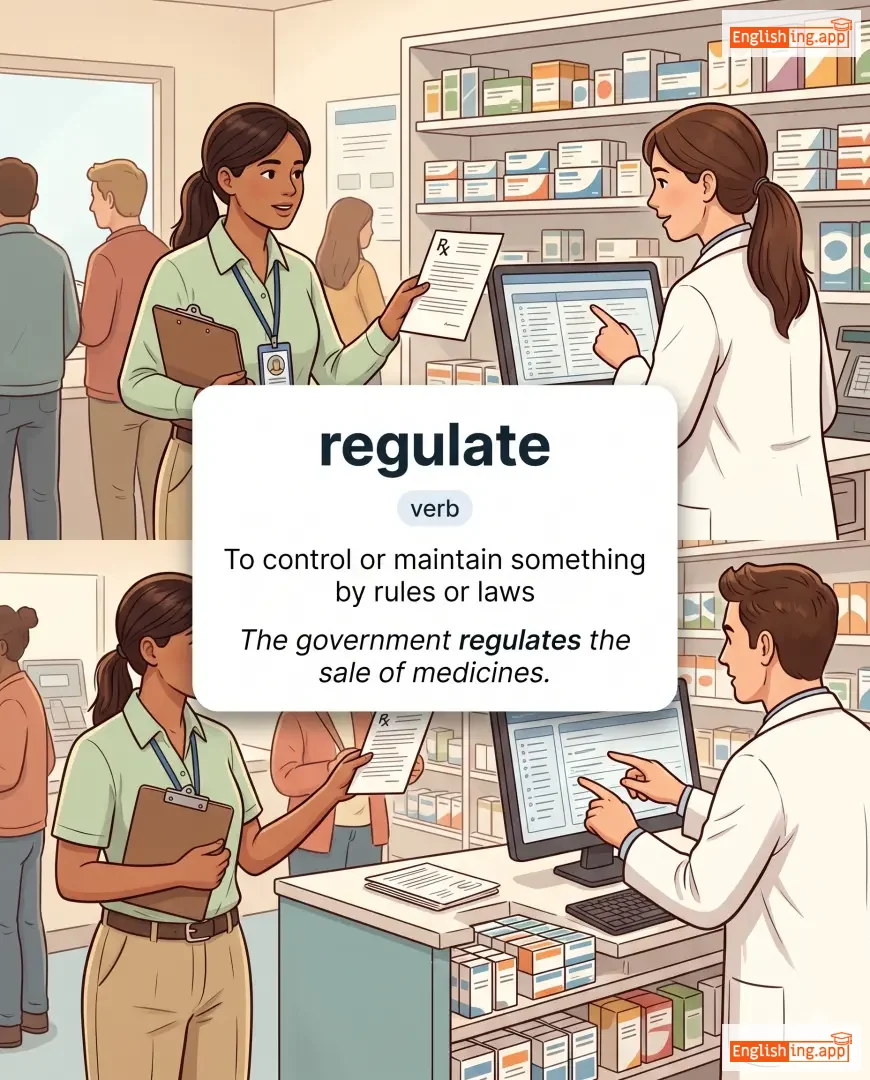
verb
/ˈrɛɡjʊˌleɪt/
管理 (guanli)

To control or maintain something by rules or laws

"The government regulates the sale of medicines."
"政府监管药品销售。" (Zhengfu jianguan yaopin xiaoshou.)
regulation definition card — visual illustration of the meaning
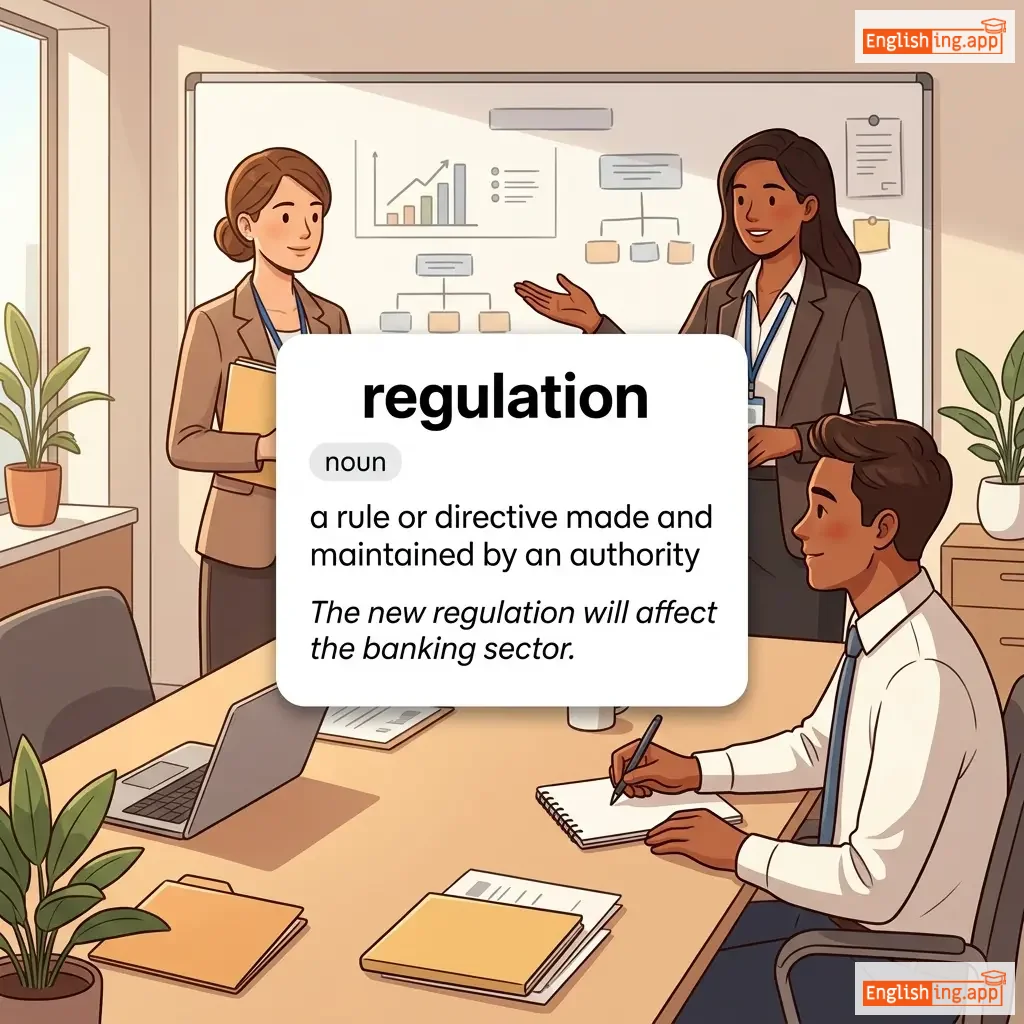
noun
/ˌrɛɡjuˈleɪʃən/
规章 (guizhang)

a rule or directive made and maintained by an authority

"The new regulation will affect the banking sector."
"新的规章将影响银行业。" (Xin de guizhang jiang yingxiang yinhangye.)
regulations definition card — visual illustration of the meaning
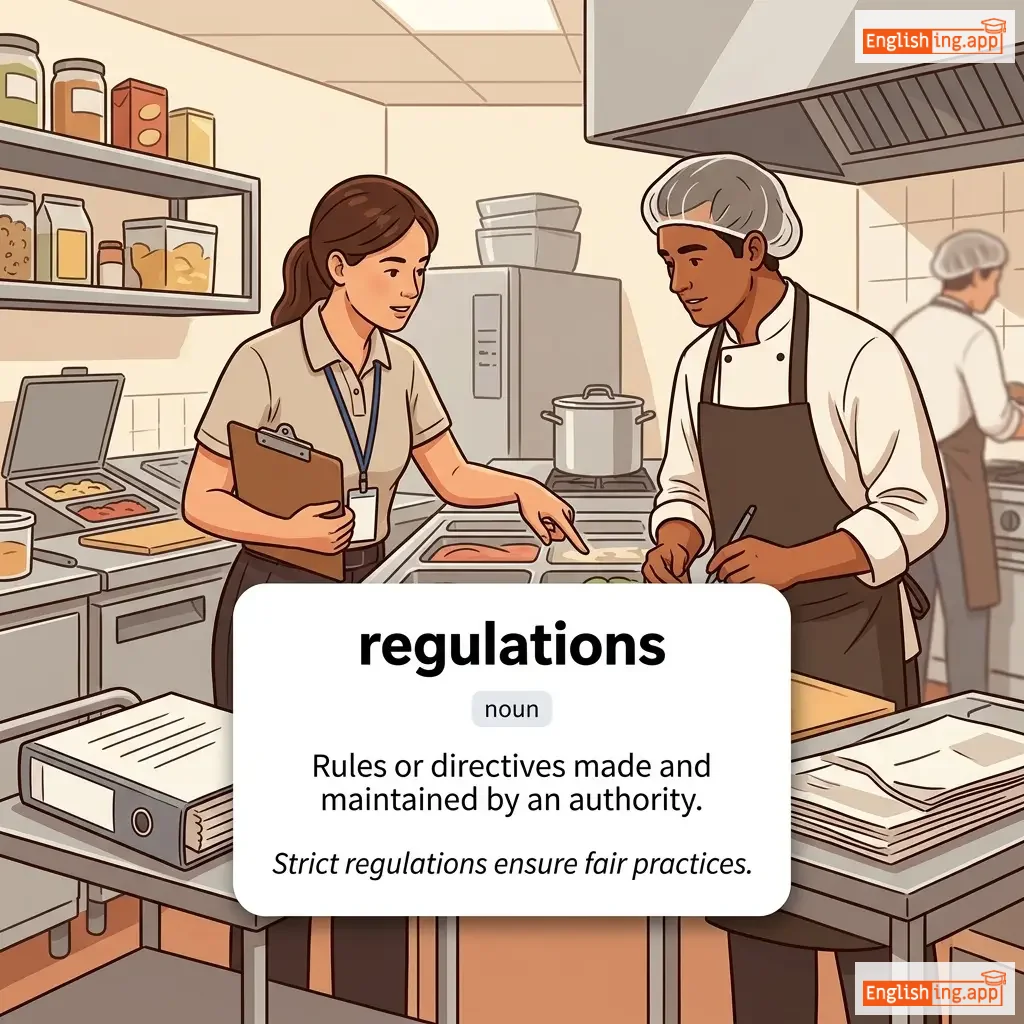
noun
/ˌreɡ.jʊˈleɪ.ʃənz/
规定 (guīdìng)

Rules or directives made and maintained by an authority.

"Strict regulations ensure fair practices."

"严格的规定确保公平的做法。" (Yángé de guīdìng quèbǎo gōngpíng de zuòfǎ.)
noun
/ˈrɛɡjəleɪtər/
调节器 (tiaojieqi)

a person or device that controls or maintains the operation of a system

"The government appointed a new regulator for the financial sector."

"政府为金融部门任命了新的调节器。" (Zhèngfǔ wèi jīnróng bùmén rènmìngle xīn de tiáojiéqì.)
Regulatory definition card — visual illustration of the meaning
adjective
/ˈrɛɡjʊlətɔːri/
监管的 (jiānguǎn de)

relating to the rules or laws made by an authority to control an activity or process

"The company must comply with all regulatory requirements before launching the product."

"公司必须在推出产品之前遵守所有监管要求。" (Gōngsī bìxū zài tuīchū chǎnpǐn zhīqián zūnshǒu suǒyǒu jiānguǎn yāoqiú.)
verb
/ˌriːhəˈbɪlɪteɪt/

to restore someone to health, normal life, or a good condition after illness, injury, or imprisonment

"The clinic helps rehabilitate injured athletes."

noun
/ˌriːhəˌbɪlɪˈteɪʃən/
幸福 (xìngfú)

the process of restoring someone or something to health or normal life through training or therapy

"After the accident, he went through months of rehabilitation to walk again."

"她无法掩饰自己获得奖项时的喜悦。" (Tā wúfǎ yǎnshì zìjǐ huòdé jiǎngxiàng shí de xǐyuè.)
noun
/rɪˈhɜːrsəl/
排练 (páiliàn)

a practice or trial performance of a play, music, or other work for later public performance

"The actors had a final rehearsal before the play."

"演员们在剧本演出之前进行最后的排练。" (Yǎnyuánmen zài jùběn yǎnchū zhīqián jìnxíng zuìhòu de páiliàn.)
verb, noun
/reɪn/
统治 (tǒngzhì)

to rule as a king or queen; the period during which a sovereign rules

"Queen Elizabeth II reigned for many decades."

"伊丽莎白二世女王统治了几十年。" (Yīlìshābái èrshì nǚwáng tǒngzhìle jǐ shí nián.)
verb
/ˌriːɪmˈbɜːrs/
报销 (baoxiao)

to pay back money to someone who has spent it or lost it

"The company reimbursed him for travel expenses."

"公司为他报销了旅行费用。" (Gongsi wei ta baoxiao le luxing feiyong.)
🐎

rein

noun/verb
/reɪn/

A strap used to control a horse; to control or guide something.

"The rider pulled the rein to stop the horse."

noun
/ˈreɪn.dɪər/
驯鹿 (xùn lù)

a large deer with branched horns that lives in cold northern areas

"Santa's reindeer pulled his sleigh across the sky."

"圣诞老人的驯鹿拉着他的雪橇穿越天空。" (Shèngdàn lǎorén de xùn lù lāzhe tā de xuěqiāo chuānyuè tiānkōng)
reinforce definition card — visual illustration of the meaning
verb
/ˌriːɪnˈfɔːrs/
加强 (jiāqiáng)

To strengthen or support something with additional material, people, or ideas

"The teacher reinforced the lesson with examples."
"老师通过示例强化了课堂。" (Lǎoshī tōngguò shìlì qiánghuàle kètáng.)
reinforcement definition card — visual illustration of the meaning
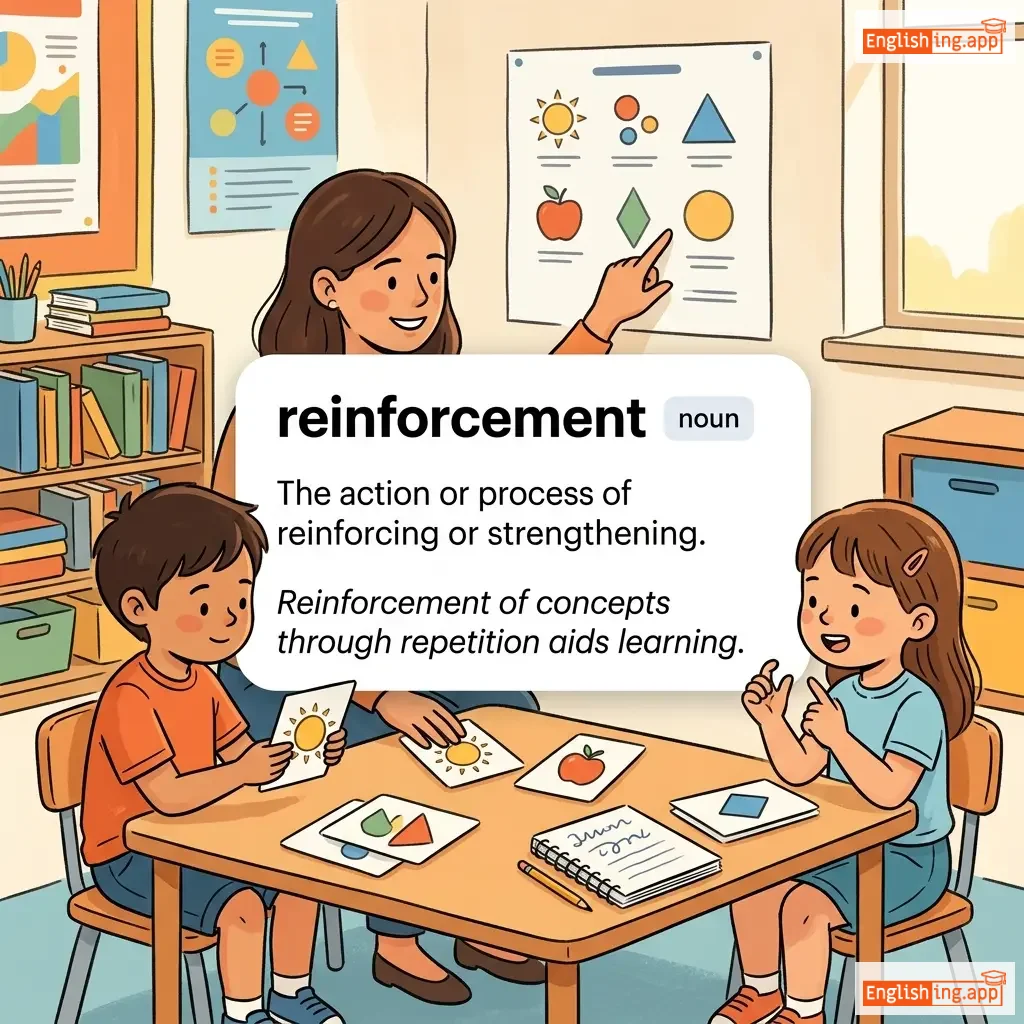
noun
ˌriː.ɪnˈfɔːrs.mənt
增强或加强 (zengqiang huo jiaqiang)

The action or process of reinforcing or strengthening.

"Reinforcement of concepts through repetition aids learning."

"通过重复强化概念有助于学习。" (Tongguo chongfu qianghua gainian youzhu yu xuexi.)
verb
/ˌriːɪnˈsteɪt/
恢复 (huīfù)

To restore someone or something to their former position or condition.

"The company decided to reinstate the suspended employee."

"公司决定恢复被停职的员工。" (Gōngsī juédìng huīfù bèi tíngzhí de yuángōng.)
verb
/ˌriːɪnˈtɪɡreɪt/
重新融入 (chongxin rongru)

To bring someone or something back into a group or society after being separated.

"The program helps prisoners reintegrate into society."

"该程序帮助囚犯重新融入社会。" (Gai chengxu bangzhu qiufen chongxin rongru shehui.)
verb
/riˈɪtəreɪt/
重申 (chóngshēn)

To say something again or repeatedly for emphasis or clarity.

"The teacher reiterated the importance of honesty."

"老师重申了诚实的重要性。" (Lǎoshī chóngshēnle chéngshí de zhòngyào xìng.)
reject definition card — visual illustration of the meaning
verb
/rɪˈdʒɛkt/
拒绝 (jujue)

to dismiss or refuse to accept, consider, or submit to

"She decided to reject the offer."

"她决定拒绝这个提议。" (Tā juédìng jùjué zhège tíyì.)
noun
/rɪˈdʒɛkʃən/
拒绝 (jùjué)

the action of refusing or dismissing something or someone

"Her rejection of the offer surprised everyone."

"她拒绝了这个提议,令所有人吃惊。" (Tā jùjué le zhège tíyì, lìng suǒyǒu rén chījīng.)
verb
/rɪˈdʒɔɪs/
高兴 (gāoxìng)

To feel or show great joy or delight.

"The fans rejoiced after their team won the championship."

"球迷们在他们的队伍赢得冠军后感到非常高兴。" (Qiúmí men zài tāmen de duìwǔ yíngdé guànjūn hòu gǎndào fēicháng gāoxìng.)
noun
/rɪˈdʒɔɪsɪŋ/
欢庆 (huānqìng)

The action of showing great joy or happiness

"There was much rejoicing after the victory."

"胜利之后有很多欢庆。" (Shènglì zhīhòu yǒu hěn duō huānqìng.)
verb
/riˈdʒɔɪn/
重新加入 (chong xin jia ru)

to join again or return to a group, place, or activity

"After a short break, she decided to rejoin the team."

"短暂休息后,她决定重新加入团队。" (Duan zan xiu xi hou, ta jue ding chong xin jia ru tuan dui.)
noun
/rɪˈdʒɔɪndər/
回应 (huiying)

a quick or witty reply; a response to a remark or argument

"His sharp rejoinder silenced the crowd."

"他犀利的回答让人群安静下来。" (Ta xili de huida rang renqun anjing xiala.)
rejuvenate definition card — visual illustration of the meaning
verb
/rɪˈdʒuːvəˌneɪt/
使年轻 (shǐ niánqīng)

to make someone or something look or feel younger, fresher, or more lively

"A good night's sleep can rejuvenate the body and mind."

"一夜好眠可以让身体和心灵焕发活力。" (Yīyè hǎo mián kěyǐ ràng shēntǐ hé xīnlíng huànfā huólì.)
rejuvenation definition card — visual illustration of the meaning
noun
rɪˌdʒuː.vɪˈneɪ.ʃən
复兴 (fuxing)

The action or process of making someone or something look or feel better, younger, or more vital.

"Forest rejuvenation is essential for restoring biodiversity."

"森林恢复对于恢复生物多样性至关重要。" (Senlin huifu duiyu huifu shengwu duoyangxing zhiguang zhongyao.)
noun
/rɪˌdʒuːvəˈnɛsəns/
重生 (chongsheng)

the action or process of becoming young or fresh again

"The forest showed signs of rejuvenescence after the rains."

"雨后森林展现出重生的迹象。" (Yuhou senlin zhanxian chu chongsheng de jixiang.)
noun/verb
/rɪˈlæps/
复发 (fùfā)

to return to a worse condition, especially after improvement; a deterioration after recovery

"After months of progress, he suffered a relapse."

"经过几个月的进展后,他遭遇了复发。" (jīngguò jǐ gè yuè de jìnzhǎn hòu, tā zāoyùle fùfā.)
verb
/rɪˈleɪt/
关联 (guanlian)

to show or make a connection between things or people

"She could relate to his feelings of loss."

"她能够理解他失落的感觉。" (Ta nenggou liji tie ta shiluo de ganjue.)
adjective
/rɪˈleɪtɪd/
相关 (xiāngguān)

connected or associated with something else

"The documents are all related to the same project."

"文件都与同一个项目相关。" (Wénjiàn dōu yǔ tóng yī gè xiàngmù xiāngguān.)
noun
/rɪˈleɪʃən/
关系 (guanxi)

the way in which two or more concepts, objects, or people are connected

"Their relation has always been one of mutual respect."

"他们的关系一直建立在相互尊重的基础上。" (Tāmen de guānxi yīzhí jiànlì zài xiānghù zūnzhòng de jīchǔ shàng.)
noun
/rɪˈleɪʃənʃɪp/
关系 (guanxi)

the state of being connected or involved with someone or something in a significant way

"They have a strong, supportive relationship."

"他们有着强大、支持性的关系。" (Tāmen yǒu zhe qiángdà, zhīchí xìng de guānxì.)
👨‍👩‍👧‍👦

Relative (雷拉提夫)

noun
/ˈrɛlətɪv/
亲戚 (qīnqi)

a person who is part of your family

"He invited his close relatives to the wedding."

"他邀请了他的近亲参加婚礼。" (Tā yāoqǐngle tā de jìnqīn cānjiā hūnlǐ.)
adverb
/ˈrɛlətɪvli/
相对 (xiangdui)

in comparison with something else

"The task was relatively easy compared to others."
"这项任务与其他任务相比相对简单。" (Zhe xiang renwu yu qita renwu xibiao xiangdui jiandan.)
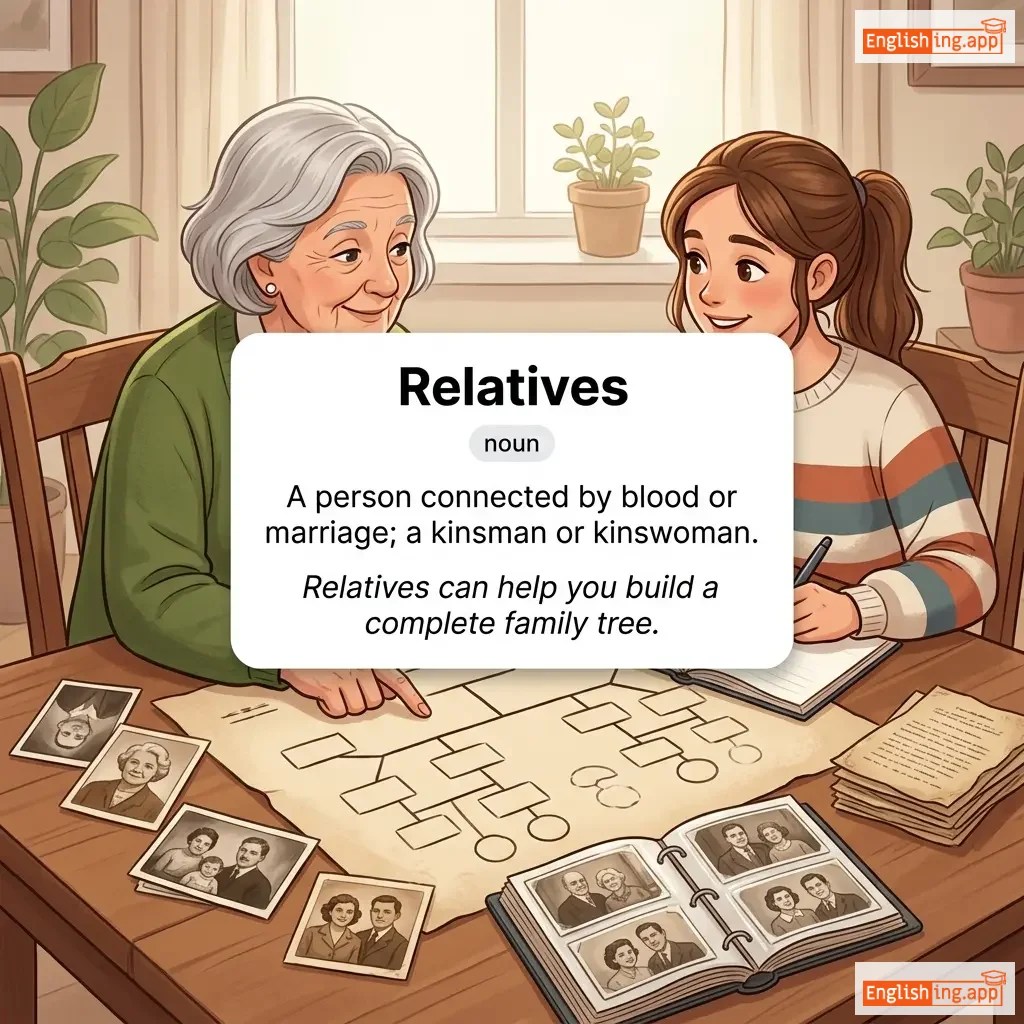
Relatives definition card — visual illustration of the meaning
👨‍👩‍👧‍👦

Relatives (亲戚)

noun
ˈrɛlətɪvz
亲戚 (qīnqi)

A person connected by blood or marriage; a kinsman or kinswoman.

"Relatives can help you build a complete family tree."

"亲戚们可以帮助你建立完整的家族树。" (Qīnqī men kěyǐ bāngzhù nǐ jiànlì wánzhěng de jiāzú shù.)
verb
/rɪˈlæks/
放松 (fangsong)

to make or become less tense or anxious; to rest

"After a long day, she likes to relax with a good book."

"经过一天的劳累,她喜欢拿一本好书放松一下。" (Jīngguò yītiān de láolèi, tā xǐhuān ná yī běn hǎo shū fàngsōng yīxià.)
adjective
/rɪˈlækst/
放松的 (fangsong de)

free from tension or stress; calm and comfortable

"She felt relaxed after listening to soft music."

"听了轻音乐后,她感到很放松。" (Tingle qing yinyue hou, ta gandao hen fangsong)
release definition card — visual illustration of the meaning
verb
/rɪˈliːs/
释放, 发布 (shifang, fabu)

to set free, to make available, or to allow something to go out

"The company will release the new product next month."
"公司将在下个月发布新产品。" (Gongsi jiang zai xiayige yue fabu xin chanpin.)
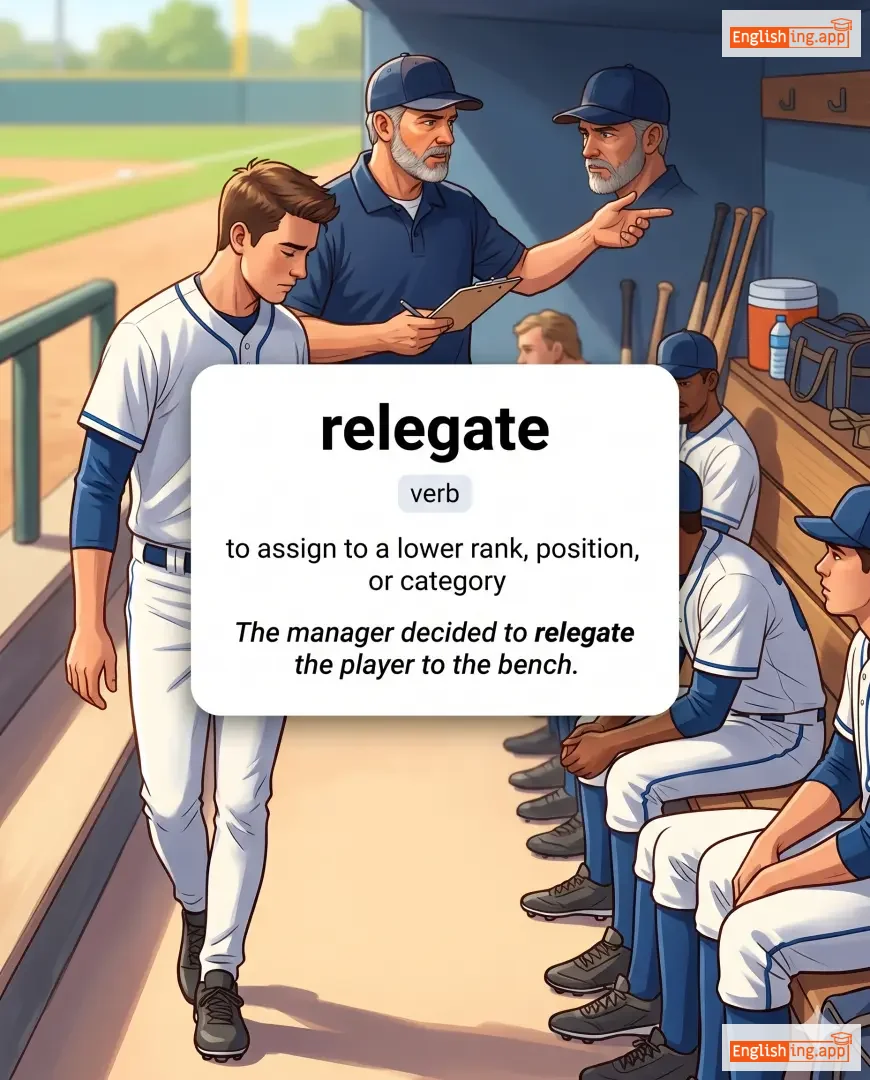
relegate definition card — visual illustration of the meaning
verb
/ˈrɛlɪɡeɪt/
降级 (jiangji)

to assign to a lower rank, position, or category

"The manager decided to relegate the player to the bench."

"经理决定将球员降级到替补席。" (Jingli jueding jiang qiuyan jiangji dao tibuxi.)
verb
/rɪˈlɛnt/
让步,变得温和 (rangbu, biande wenhe)

to become less severe, harsh, or strict

"After hours of begging, she finally relented."

"经过几个小时的恳求,她终于心软了。" (Jingguo jige xiaoshi de kenqiu, ta zhongyu xinruan le.)
relentless definition card — visual illustration of the meaning
adjective
/rɪˈlɛntləs/

continuing without becoming weaker or less strict; unyielding

"She pursued her goals with relentless determination."

noun
/ˈrɛlɪvəns/
相关性 (xiāngguān xìng)

the quality or state of being closely connected or appropriate

"The relevance of the information was clear to everyone."

"信息的相关性对每个人来说都很清楚。" (Xinxi de xiangguan xing dui meige ren lai shuo dou hen qingchu.)
noun
/ˈrɛlɪvənsi/
相关性 (xiangguansheng)

the quality of being closely connected or appropriate

"The professor questioned the relevancy of the example to the topic."

"教授质疑了这个例子与主题的相关性。" (Jiaoshou zhiyi le zhege lizi yu zhuti de xiangguansheng.)
adjective
/ˈrɛl.ə.vənt/
相关的 (xiāngguān de)

closely connected or appropriate to what is being considered or done

"Your comments are not relevant to the discussion."

"你的评论与讨论无关。" (Nǐ de pínglùn yǔ tǎolùn wúguān.)
noun
/rɪˌlaɪəˈbɪləti/
可靠性 (kekao xing)

the quality of being trustworthy or performing consistently well

"Customers value the reliability of our service."

"客户重视我们服务的可靠性。" (Kehu zhongshi women fuwu de kekao xing.)
reliable definition card — visual illustration of the meaning
adjective
/rɪˈlaɪəbl/
可靠 (kekao)

Consistently good in quality or performance; able to be trusted

"She is a reliable friend who always keeps her promises."

"她是一个可靠的朋友,总是信守承诺。" (Ta shi yi ge kekao de pengyou, zong shi xinshou chengnuo.)
noun
/rɪˈlaɪ.əns/
依赖 (yilai)

dependence on or trust in someone or something

"Her reliance on her friends helped her through difficult times."

"她对朋友的依赖帮助她度过了困难的时光。" (Ta dui pengyou de yilai bangzhu ta duoguole kunnan de shiguang.)