词汇表

英语词汇词典 | 单词含义、定义和示例

noun
/rɒd/
细长的棒子,尤其是金属或木制的 (xì cháng de bàngzi, yóuqí shì jīnshǔ huò mùzhì de)

a thin straight bar, especially of metal or wood

"He used an iron rod to support the structure."

"他用铁棒支撑结构。" (Tā yòng tiě bàng zhīchēng jiégòu.)
noun
/ˈroʊdənt/
啮齿动物 (nièchǐ dòngwù)

a small mammal such as a mouse, rat, or squirrel, characterized by constantly growing incisors

"The farmer set traps to catch the rodents in his barn."

"农民设置了陷阱,以捕捉谷仓中的啮齿动物。" (Nóngmín shèzhìle xiànjǐng, yǐ bǔzhuō gǔcāng zhōng de nièchǐ dòngwù.)
adjective
/ˈroʊ.ɡɪʃ/
调皮的; 狡猾的 (tiáopí de; jiǎohuá de)

mischievous; playfully dishonest

"His roguish smile suggested he was up to some mischief."

"他的调皮笑容暗示着他正在策划一些恶作剧。" (Tā de tiáopí xiàoróng ànshìzhe tā zhèngzài cèhuà yīxiē èzuòjù.)
verb
/rɔɪl/
搅动 (jiǎo dòng)

to make a liquid muddy or disturbed; to cause agitation or disorder

"The constant protests roiled the city streets."

"持续的抗议活动搅动了城市的街道。" (Chíxù de kàngyì huódòng jiǎo dòngle chéngshì de jiēdào.)
verb
/ˈrɔɪstər/
喧闹庆祝 (xuan nao qing zhu)

to revel noisily; to engage in loud, boisterous celebration

"The fans roistered in the streets after the victory."

"球迷在街头欢庆,庆祝胜利。" (Qiu mi zai jie tou huan qing, qing zhu sheng li.)
noun
/roʊl/
角色 (juese)

a part or function of something

"Her role in the project was crucial."
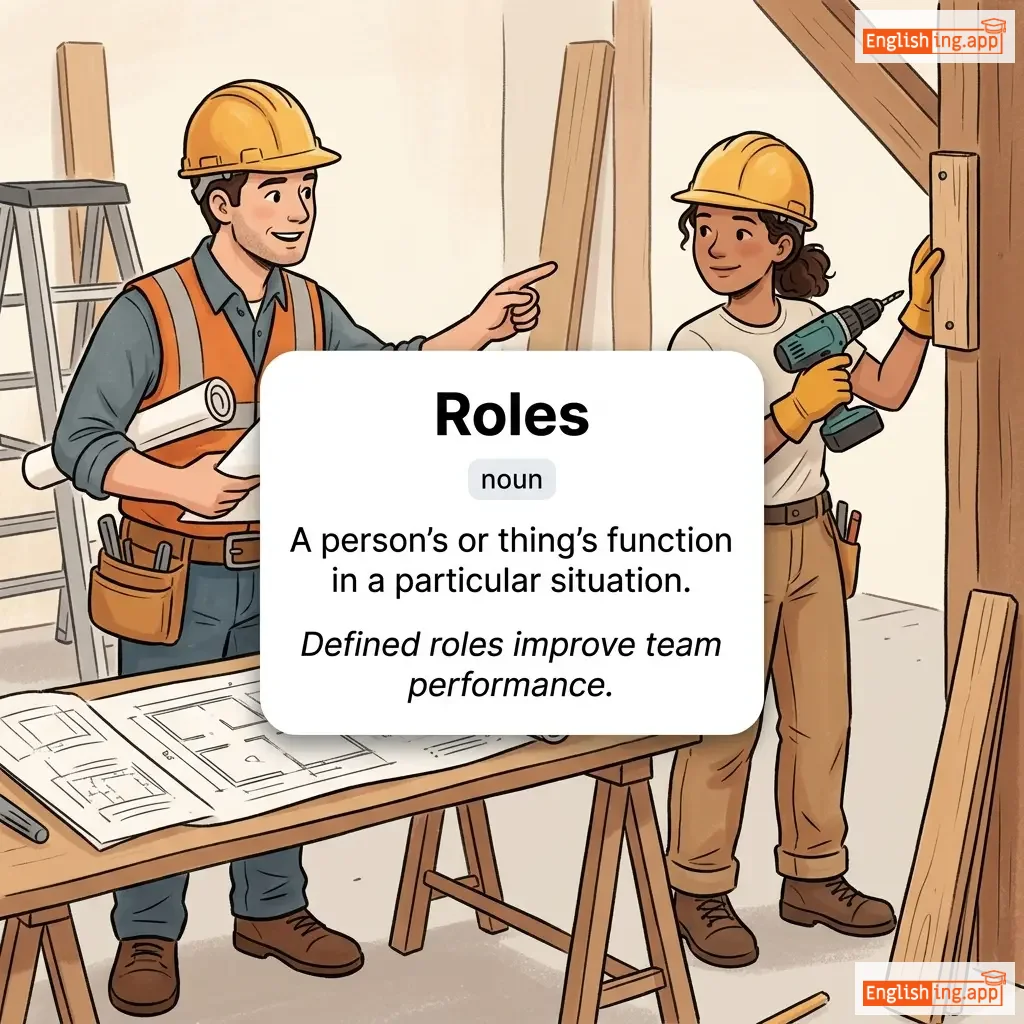
"她在项目中的角色至关重要。" (Ta zai xiangmu zhong de juese zhiguān zhòngyào.)
Roles definition card — visual illustration of the meaning
noun
rəʊlz
角色 (juésè)

A person's or thing's function in a particular situation.

"Defined roles improve team performance."

"定义的角色改善团队表现。" (Dìngyì de juésè gǎishàn tuánduì biǎoxiàn.)
verb
/roʊl/
滚动 (gundong)

to move by turning over and over on an axis

"She rolled the ball down the hill."

"她把球滚下了山坡。" (Ta ba qiu gun xia le shanpo.)
adjective
/ˈroʊlɪŋ/
滚动 (gundong)

moving in gentle undulations; moving forward by turning over and over

"They drove through the rolling hills of the countryside."

"他们开车穿过乡村的滚动山丘。" (Tamen kaiche chuanguo xiangcun de gundong shanqu.)
noun
/ˈroʊ.lɪŋ bɔːrd/
擀面板 (ganmianban)

a flat wooden or marble surface used for rolling out dough

"She placed the dough on the rolling board."

"她把面团放在了擀面板上。" (Tā bǎ miàntuán fàng zài le gǎn miànbǎn shàng.)
noun
/ˈroʊ.lɪŋ pɪn/
擀面杖 (gǎn miàn zhàng)

a cylindrical tool used for rolling out dough or pastry

"Roll the dough flat with a rolling pin."

"用擀面杖把面团擀平。" (Yòng gǎn miàn zhàng bǎ miàn tuán gǎn píng.)
adjective, noun
/ˈroʊmən/
罗马的 / 古罗马公民 (luoma de / gu luoma gongmin)

relating to Rome or its people; a citizen of ancient Rome

"The Roman Empire influenced much of modern civilization."

"罗马帝国影响了现代文明的许多方面。" (Luoma diguo yingxiang le xiandai wenming de xu duo fangmian.)
noun
/roʊˈmæns/
浪漫,爱情 (langman, aiqing)

a feeling of love, especially one that is exciting and mysterious

"Their romance began during a summer trip to Paris."

"他们的浪漫故事开始于一次夏天的巴黎旅行。" (Tamen de langman gushi kaishi yu yici xiatian de bāli lǚxíng.)
adjective
/rəʊˈmæntɪk/
浪漫 (langman)

related to or involving love or feelings of love

"He wrote her a romantic letter for their anniversary."

"他在他们的纪念日写了一封浪漫的信给她。" (Ta zai tamen de jinian ri xie le yi feng langman de xin gei ta.)
verb
/rɒmp/
快乐地玩耍 (kuaile de wan shua)

to play or move in a lively, carefree, and energetic way

"The children romped happily in the garden."

"孩子们在花园里高兴地玩耍。" (Haizimen zai huayuan li gaoxing de wanshua.)
noun
/ˈrɒndoʊ/
音乐作品(具有重复主题) (yinyue zuopin (juxu chongfu zhuti))

a musical composition with a recurring leading theme

"The pianist ended the recital with a lively rondo."

"钢琴家以一首生动的朗多结束了演奏。" (Gangqin jia yi yi shou shengdong de langdu jie shu le yanzou.)
noun
/ruːd/
十字架 (shízìjià)

a crucifix, especially one positioned above the entrance to the chancel of a church

"The old church displayed a carved rood above the altar."

"这座古老的教堂展示了一个雕刻的十字架在祭坛上方。" (Zhè zuò gǔlǎo de jiàotáng zhǎnshìle yīgè diāokè de shízìjià zài jìtán shàngfāng.)
noun
/ruːf/
屋顶 (wūdǐng)

the top covering of a building or vehicle

"The roof of the house needs to be repaired."

"房子的屋顶需要修理。" (Fángzi de wūdǐng xūyào xiūlǐ.)
noun
/ˈrʊkəri/
鸟类栖息地 (niao lei qi xi di)

a place where rooks or other birds breed and nest in colonies

"We saw a rookery full of noisy birds near the forest."

"我们看到一个充满吵闹鸟类的鸟类栖息地,靠近森林。" (Wo men kan dao yi ge chong man chao nao niao lei de niao lei qi xi di, kao jin sen lin.)
noun
/ˈrʊki/
菜鸟 (cainiao)

a person who is new to an activity or organization; a beginner

"The rookie policeman made a few mistakes on his first day."

"新警察在第一天犯了几次错误。" (Xin jingcha zai di yi tian fan le ji ci cuowu.)
noun
/ruːm/
房间 (fangjian)

A space within a building enclosed by walls, floor, and ceiling

"She decorated her room with bright colors."

"她用明亮的颜色装饰了她的房间。" (ta yong mingliang de yanse zhuangshi le ta de fangjian)
adjective
/ˈruː.mi/
宽敞的; 有很多空间的 (kuānchǎng de; yǒu hěn duō kōngjiān de)

spacious; having a lot of room

"The apartment is very roomy with spacious bedrooms."

"公寓非常宽敞,拥有宽大的卧室。" (Gōngyù fēicháng kuānchǎng, yǒngyǒu kuāndà de wòshì.)
noun
/ˈruːstər/
公鸡 (gongji)

A male domestic chicken, especially one that crows.

"The rooster crowed at dawn, waking up the whole village."

"公鸡在黎明时分打鸣,唤醒了整个村庄。" (Gōngjī zài límíng shífēn dǎmíng, huànxǐngle zhěnggè cūnzhuāng.)
noun
/ruːt/
(gen)

the part of a plant that attaches it to the ground and absorbs nutrients

"The tree's roots are deep in the soil."

"树根深深地扎根在土壤中。" (Shùgēn shēn shēn de zhágēn zài tǔrǎng zhōng.)
adjective
/ˈruː.tɪd/
根深蒂固的 (gen shen di gu de)

deeply established; firmly fixed

"His beliefs are deeply rooted in tradition."
"他的信念深深扎根于传统。" (ta de xin nian shen shen zha gen yu chuan tong)
noun
/roʊp/
绳子 (shengzi)

a strong, thick cord made of twisted fibers or strands

"The climbers used a rope to scale the mountain."

"登山者用绳子攀登山峰。" (Dengshan zhe yong shengzi pandeng shanfeng.)
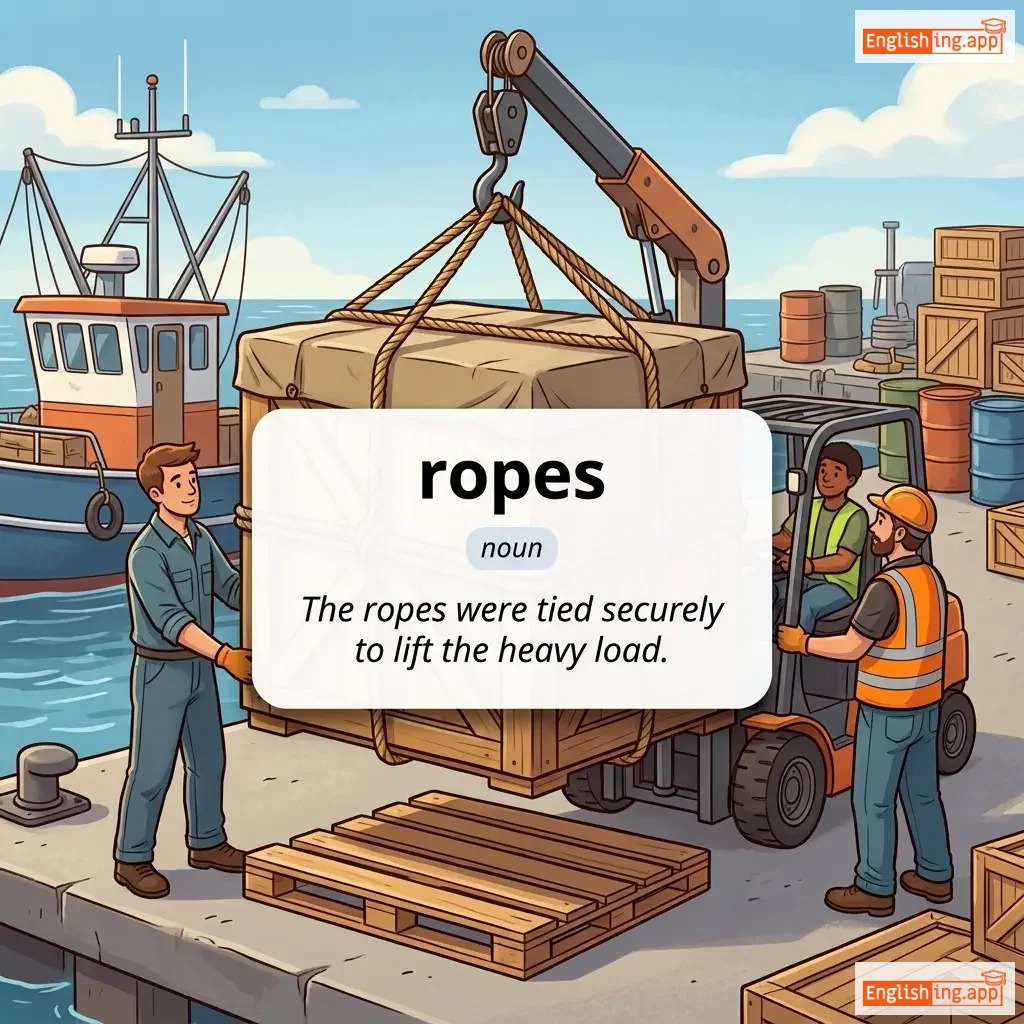
ropes definition card — visual illustration of the meaning
noun
roʊps
绳子 (shengzi)

A length of thick strong cord made by twisting together strands of hemp, sisal, nylon, or similar material.

"The ropes were tied securely to lift the heavy load."

"这些绳子被牢牢绑住以提升重物。" (Zhexie shengzi bei laolao bang zhu yi tizheng zhongwu.)
noun
/roʊz/
玫瑰花 (méiguī huā)

a type of flowering plant, known for its beautiful and fragrant blooms

"She gave me a rose on my birthday."

"她在我的生日那天送了我一朵玫瑰。" (Tā zài wǒ de shēngrì nà tiān sòngle wǒ yī duǒ méiguī.)
noun
/roʊz ˈber.i/
玫瑰莓 (luo si bei rui)

a type of berry with rose-like characteristics or flavor

"The rose berry has a delicate floral taste that reminds me of roses."

"玫瑰莓具有细腻的花香口感,让我想起玫瑰花。" (mei gui mei ju you xi ni de hua xiang kou gan rang wo xiang qi mei gui hua)
noun
/ˈroʊz ˈwɔː.tər/
玫瑰水 (méiguī shuǐ)

a flavored water made by steeping rose petals in water, used in cooking and cosmetics

"She added a few drops of rose-water to the dessert."

"她在甜点中加入了几滴玫瑰水。" (tā zài tiándiǎn zhōng jiārùle jǐ dī méiguī shuǐ.)
adjective
/ˈroʊziət/
玫瑰色的,乐观的 (méiguī sè de, lèguān de)

Having a pink color; optimistic or idealistic.

"She looked at the future with roseate optimism."

"她以玫瑰色的乐观主义看待未来。" (Tā yǐ méiguī sè de lèguān zhǔyì kàn dài wèilái.)
noun
/ˈrɑːstər/
名单 (mingdan)

A list or plan showing people’s duties or times when they are scheduled.

"The manager updated the staff roster for next week."

"经理更新了下周的员工名单。" (Jīnglǐ gēngxīnle xià zhōu de yuángōng míngdān.)
noun
/ˈrɒstrəm/
讲台 (jiangtai)

A raised platform for speakers, performers, or leaders.

"The politician delivered a speech from the rostrum."

"政治家在讲台上发表了演讲。" (zhengzhijia zai jiangtai shang fabiao le yanjiang.)
verb
/rɒt/
腐烂 (fǔlàn)

to decay or decompose; to become corrupt

"The fruit will rot if left in the sun."

"水果如果暴露在阳光下会腐烂。" (Shuǐguǒ rúguǒ bàolù zài yángguāng xià huì fǔlàn)
adjective
/ˈroʊtəri/
旋转的 (xuán zhuǎn de)

Relating to or characterized by rotation; revolving around an axis.

"The machine uses a rotary engine to function efficiently."

"这台机器使用旋转引擎高效地工作。" (Zhè tái jīqì shǐyòng xuánzhuǎn yǐnqíng gāoxiào de gōngzuò.)
verb
/ˈroʊ.teɪt/
旋转 (xuánzhuǎn)

to turn around a central point or axis

"The Earth rotates on its axis once every 24 hours."

"地球每24小时围绕其轴线旋转一次。" (Dìqiú měi 24 xiǎoshí wéirào qí zhóuxiàn xuánzhuǎn yīcì.)
noun
/rəʊˈteɪʃən/
旋转 (xuánzhuǎn)

the action of rotating or turning something around a center or axis

"The rotation of the earth around the sun causes seasons."

"地球绕太阳的旋转导致季节变化。" (Dìqiú rào tàiyáng de xuánzhuǎn dǎozhì jìjié biànhuà.)
noun
/roʊt/
死记硬背 (siji yingbei)

mechanical or habitual repetition, often without understanding

"He learned the poem by rote without understanding its meaning."

"他通过死记硬背学会了这首诗,但没有理解其含义。" (Ta tongguo siji yingbei xuehui le zhe shou shi, dan mei you lijie qi hanyi.)
adjective
/ˈrɒt.ən/
腐烂的; 坏的 (fǔlàn de; huài de)

decayed; spoiled; bad

"The apple is rotten and should be thrown away."

"苹果已经腐烂了,应该扔掉。" (Píngguǒ yǐjīng fǔlàn le, yīnggāi rēngdiào.)
adjective
/roʊˈtʌnd/
圆形的 (yuánxíng de)

round or plump in shape; full in sound

"The rotund cat struggled to climb the fence."

"那只圆形的猫爬不上围栏。" (Nà zhī yuánxíng de māo pá bù shàng wéilán.)
noun
/roʊˈtʌn.də/
圆形建筑 (yuánxíng jiànzhú)

a large circular building or hall, often with a dome

"Tourists gathered inside the grand rotunda of the capitol."

"游客们聚集在国会大厦的宏伟圆顶大厅内。" (Yóukèmen jùjí zài guóhuì dàshà de hóngwěi yuándǐng dàtīng nèi.)
noun
/roʊˈtʌn.də.ti/
圆形 (yuanxing)

the quality of being round or plump

"The rotundity of the balloon made it float gracefully."

"气球的圆形使它优雅地漂浮。" (Qiqiu de yuanxing shi ta youya de piaofu.)
noun
/ruːˈeɪ/
一位沉迷于感官享受的男人 (yī wèi chénmí yú gǎnguān xiǎngshòu de nánrén)

A man devoted to a life of sensual pleasure; a debauched man.

"The old roue squandered his fortune on gambling and women."

"那位年老的鲁埃把他的财富都浪费在赌博和女人身上。" (Nà wèi niánlǎo de lǔ'āi bǎ tā de cáifù dōu làngfèi zài dǔbó hé nǚrén shēnshàng.)
adjective
/rʌf/
粗糙 (cūcāo)

having an uneven or irregular surface; not smooth or level

"The road was rough and difficult to drive on."

"道路粗糙,驾驶困难。" (Dàolù cūcāo, jiàshǐ kùnnán.)
adverb
/ˈrʌfli/
大致 (dazhi)

in a manner that is not precise or exact; approximately

"He roughly estimated the cost of the project."

"他大致估算了项目的成本。" (Ta dazhi gusuanle xiangmu de chengben.)
adjective
/raʊnd/
圆形的 (yuánxíng de)

having a circular shape; shaped like a sphere or disk

"The table was round and had a smooth surface."

"桌子是圆形的,表面光滑。" (Zhuōzi shì yuánxíng de, biǎomiàn guānghuá.)
verb
/raʊz/
唤醒 (huanxing)

To awaken from sleep or to stir into action.

"The loud alarm roused him from his deep sleep."

"响亮的警报把他从深度睡眠中唤醒。" (Xiangliang de jingbao ba ta cong shendu shuimian zhong huanxing.)
adjective
/ˈraʊzɪŋ/
激动人心 (jī dòng rén xīn)

Exciting, inspiring, or stirring.

"The speaker delivered a rousing speech that moved the audience."

"演讲者发表了一个激动人心的演讲,打动了观众。" (Yǎnjiǎng zhě fābiǎo le yī gè jī dòng rén xīn de yǎnjiǎng, dǎ dòng le guānzhòng.)
noun, verb
/raʊt/
失败 (shibai)

A decisive defeat; to defeat completely.

"The army routed the enemy forces in the battle."

"军队在战斗中彻底击败了敌军。" (Jundui zai zhandou zhong chedi jiba le dijun.)
🛣️

route

noun
/ruːt/

a way or course taken to get from one place to another

"The best route to the airport is through the highway."