词汇表

英语词汇词典 | 单词含义、定义和示例

noun
/rɪˈvaɪvəl/
复兴 (fuxing)

an improvement in the condition or strength of something

"The revival of the old traditions brought a sense of nostalgia."

"老传统的复兴带来了怀旧的感觉。" (Lao chuántǒng de fùxīng dàilái le huáijiù de gǎn jué.)
verb
/rɪˈvaɪv/
复苏 (fùsū)

To bring back to life, consciousness, or activity.

"The paramedics managed to revive the unconscious man."

"急救员成功让昏迷的男子复苏。" (Jíjiùyuán chénggōng ràng hūnmí de nánzǐ fùsū.)
noun
/ˌrɛv.əˈkeɪ.ʃən/
撤销 (chexiao)

The act of officially canceling or withdrawing something.

"The court ordered the revocation of his license."

"法院命令撤销他的许可证。" (Fǎyuàn mìnglìng chèxiāo tā de xǔkě zhèng.)
verb
/rɪˈvoʊk/
撤销 (chèxiāo)

To officially cancel or withdraw a decision, privilege, or right.

"The government decided to revoke his passport."
"政府决定撤销他的护照。" (Zhèngfǔ juédìng chèxiāo tā de hùzhào.)
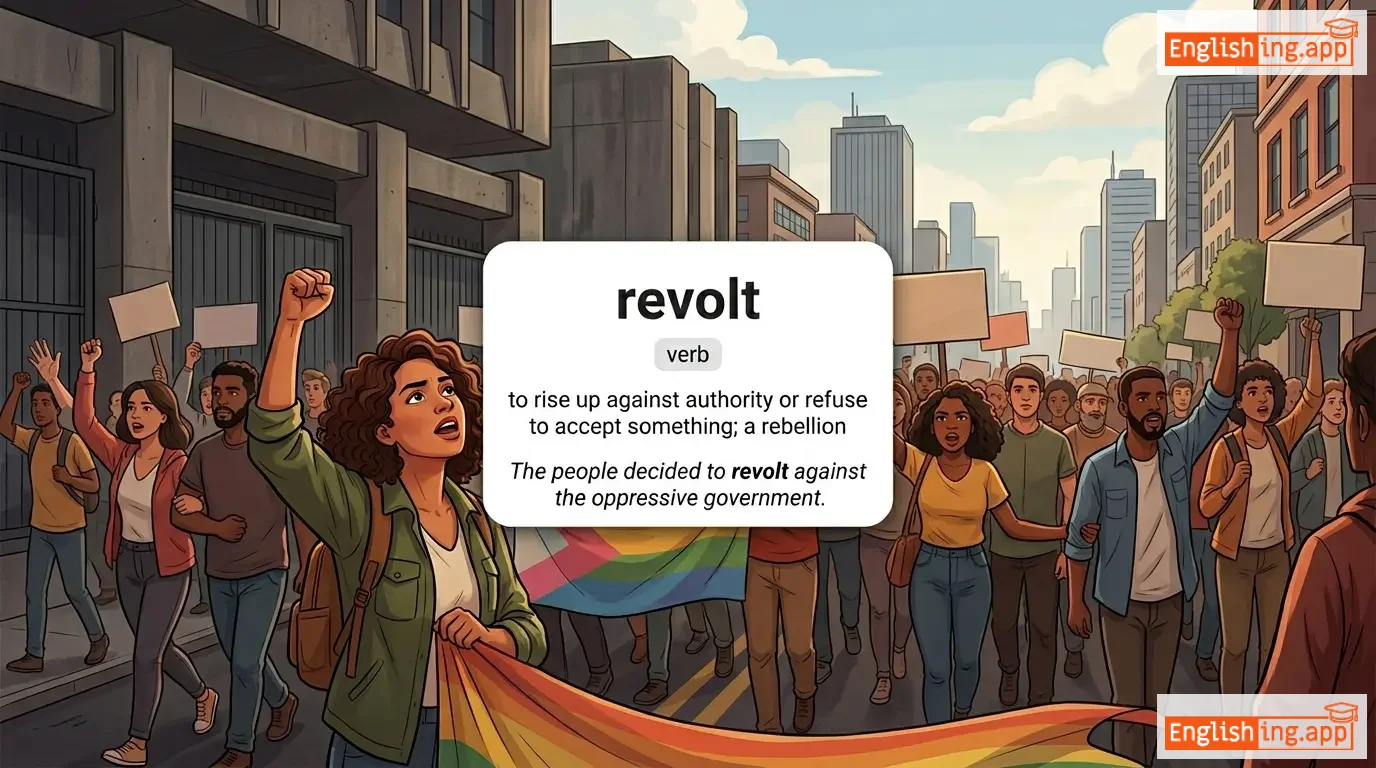
revolt definition card — visual illustration of the meaning
verb
/rɪˈvoʊlt/
反叛 (fǎnpàn)

to rise up against authority or refuse to accept something; a rebellion

"The people decided to revolt against the oppressive government."

"人民决定反抗压迫政府。" (Rénmín juédìng fǎnkàng yāpò zhèngfǔ.)
adjective
/rɪˈvoʊltɪŋ/
令人作呕的 (ling ren zuo ou de)

extremely unpleasant or disgusting

"The smell of the garbage was revolting."
"垃圾的气味令人作呕。" (la ji de qi wei ling ren zuo ou)
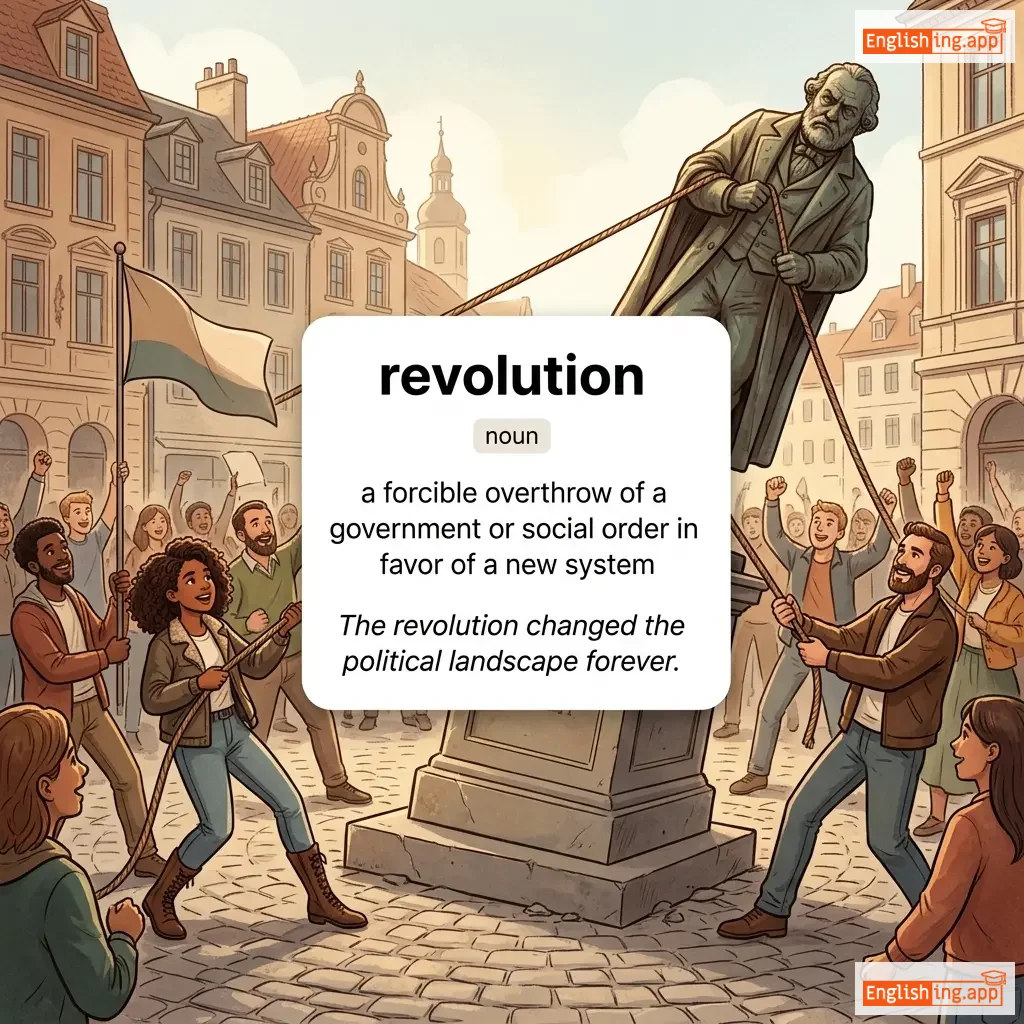
revolution definition card — visual illustration of the meaning
noun
/ˌrɛvəˈluːʃən/
革命 (geming)

a forcible overthrow of a government or social order in favor of a new system

"The revolution changed the political landscape forever."
"革命永远改变了政治格局。" (Geming yongyuan gaibianle zhengzhi geju.)
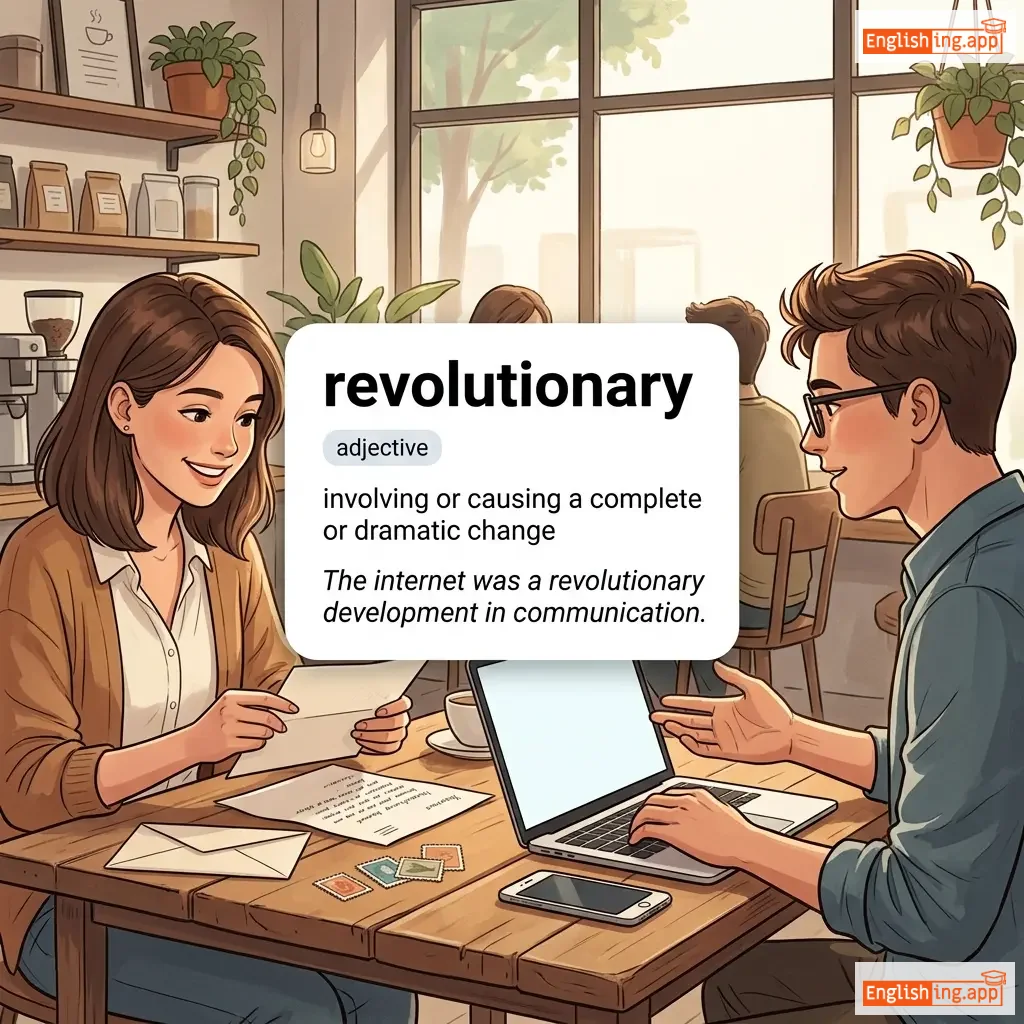
revolutionary definition card — visual illustration of the meaning
adjective
/ˌrɛvəˈluːʃəˌnɛri/
革命性的 (gémìngxìng de)

involving or causing a complete or dramatic change

"The internet was a revolutionary development in communication."
"互联网是通信领域的革命性发展。" (Hùliánwǎng shì tōngxìn lǐngyù de gémìngxìng fāzhǎn.)
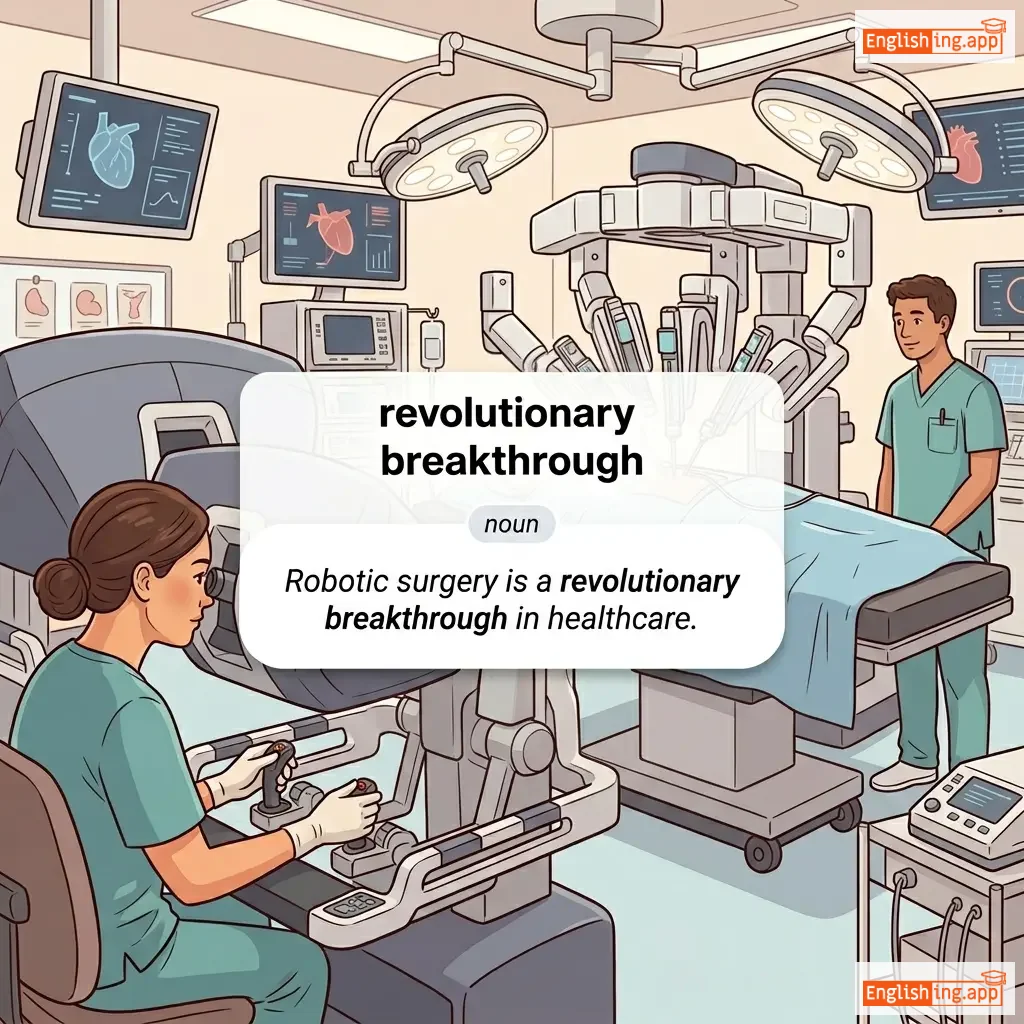
revolutionary breakthrough definition card — visual illustration of the meaning
noun
/ˌrev.əˈluː.ʃən.ər.i ˈbreɪk.θruː/
革命性的突破 (gemingxing de tupo)

A sudden, dramatic, and important discovery or development that changes everything.

"Robotic surgery is a revolutionary breakthrough in healthcare."
"机器人手术是医疗领域的革命性突破。" (Jīqìrén shǒushù shì yīliáo lǐngyù de gémìngxìng túpò.)
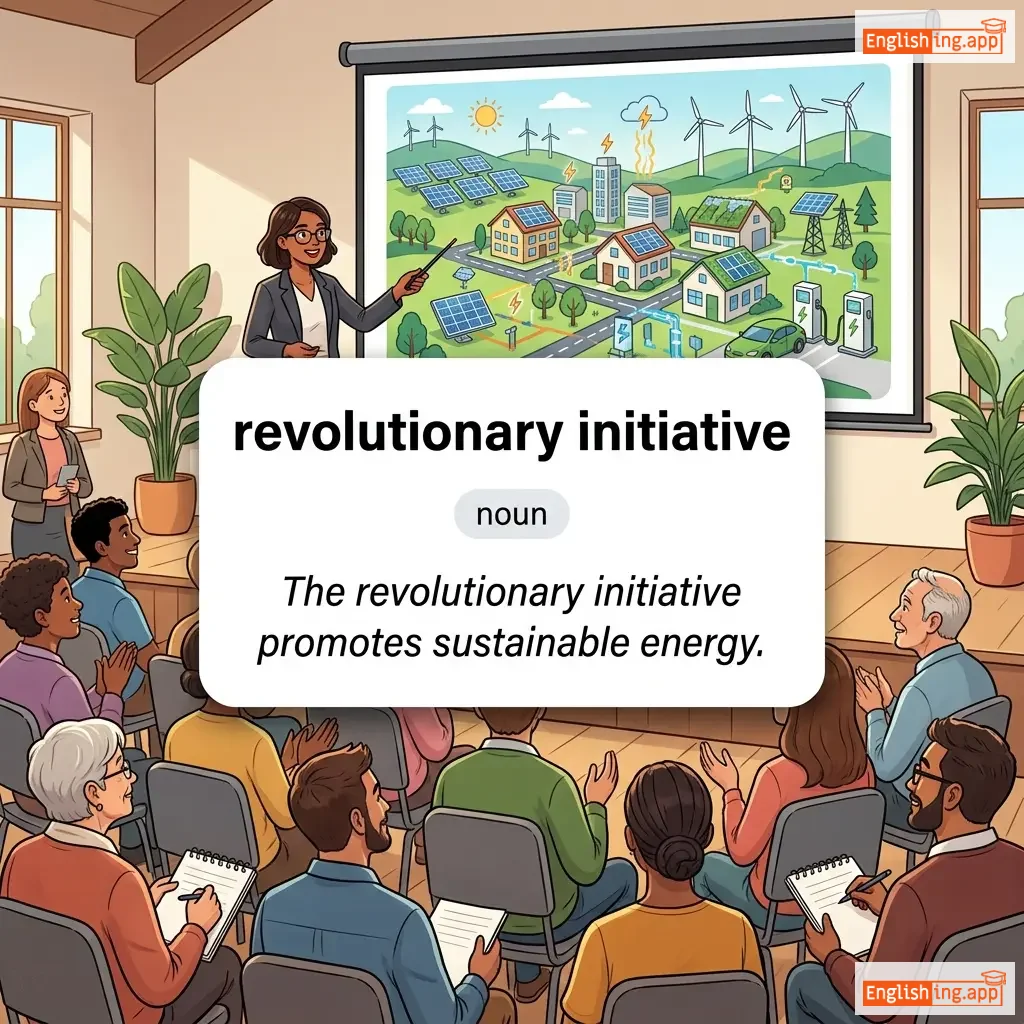
revolutionary initiative definition card — visual illustration of the meaning
noun
ˌrev.əˈluː.ʃən.ər.i ɪˈnɪʃ.ə.tɪv
革命性倡议 (gemingxing changyi)

A groundbreaking action or plan that brings about significant change or transformation.

"The revolutionary initiative promotes sustainable energy."
"革命性倡议促进可持续能源。" (Gemingxing changyi cujin keshichu nengyuan.)
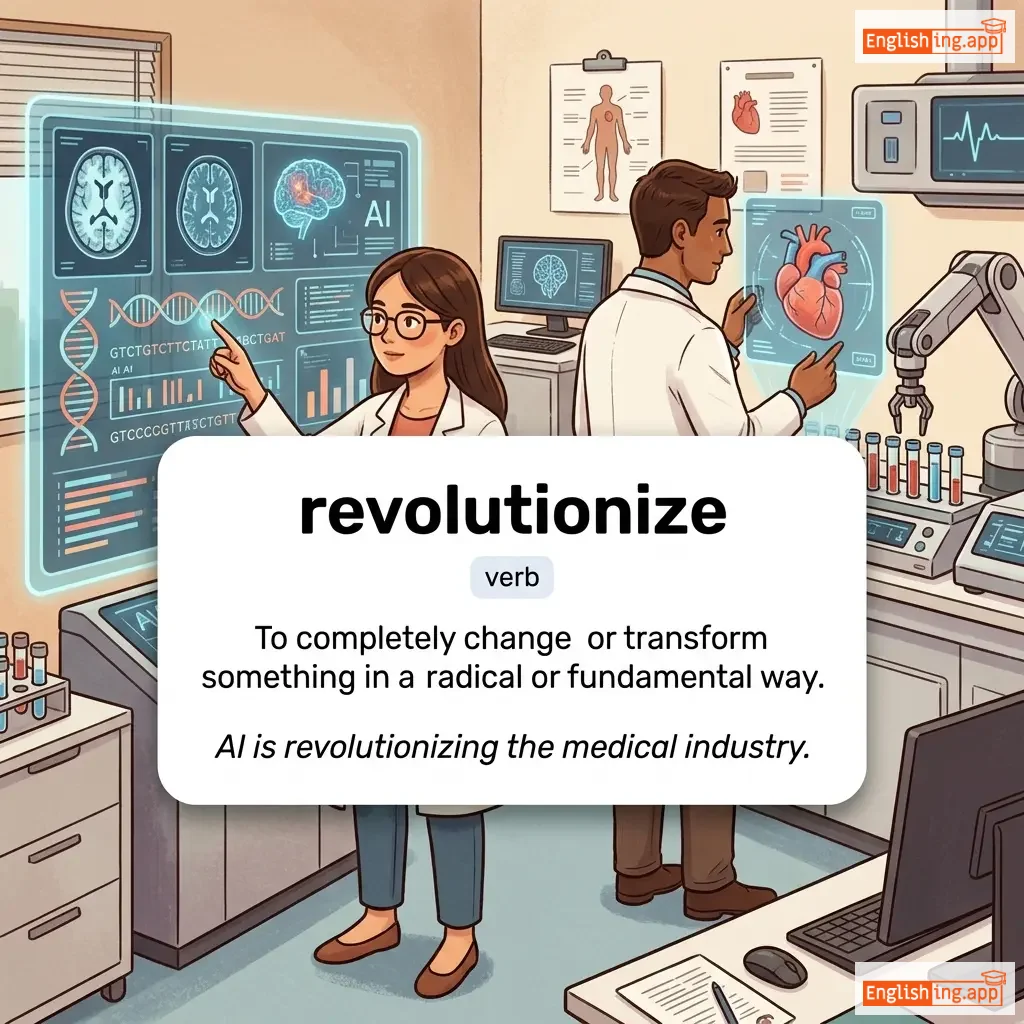
revolutionize definition card — visual illustration of the meaning
verb
ˌrev.əˈluː.ʃən.aɪz
革命化 (ge ming hua)

To completely change or transform something in a radical or fundamental way.

"AI is revolutionizing the medical industry."
"人工智能正在革命化医疗行业。" (Ren gong zhi neng zheng zai ge ming hua yi liao hang ye.)
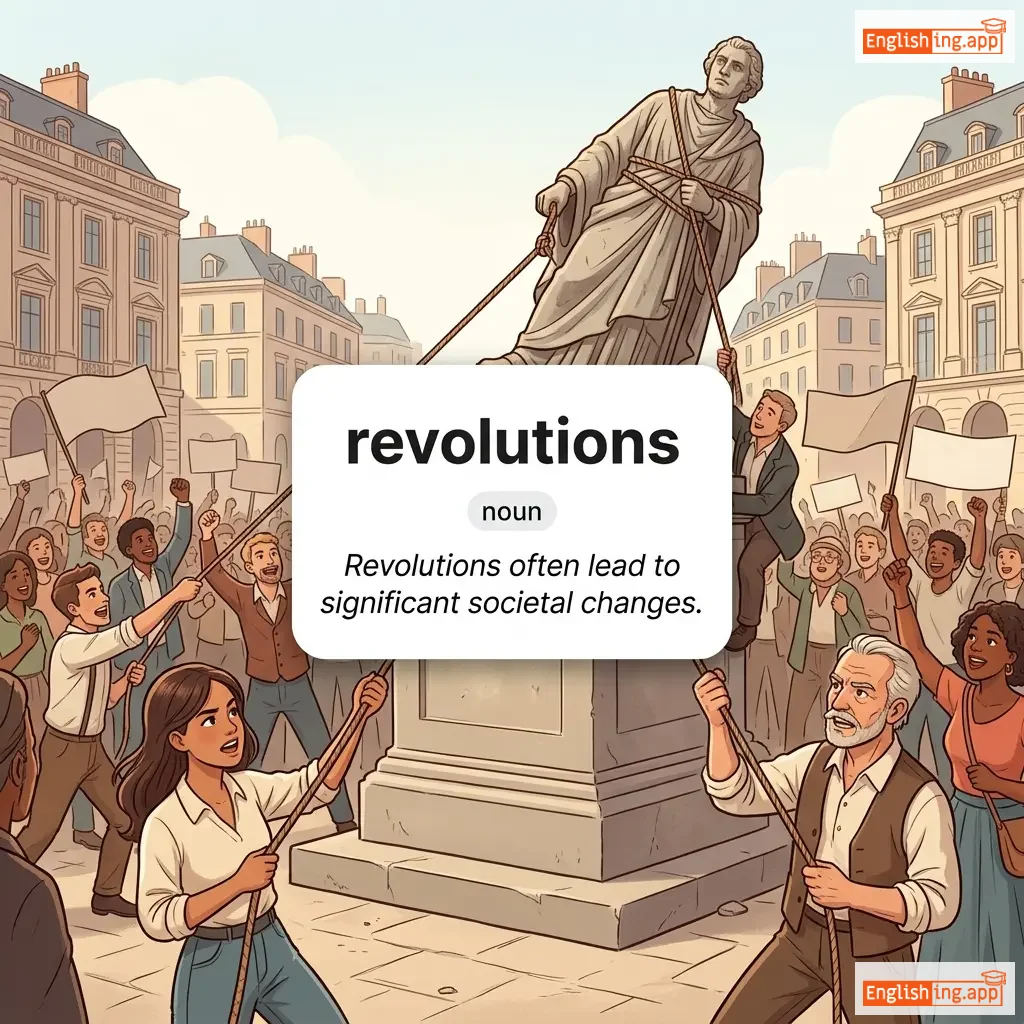
revolutions definition card — visual illustration of the meaning
noun
ˌrev.əˈluː.ʃənz
革命 (geming)

Dramatic and wide-reaching changes in political, social, or economic systems, often involving the overthrow of a government or social order.

"Revolutions often lead to significant societal changes."

"革命常常导致社会变革的重要变化。" (Geming changchang daozhi shehui biangeng de zhongyao bianghua.)
noun
/rɪˈvɒl.vər/
左轮手枪 (zuǒ lún shǒu qiāng)

a pistol with revolving chambers enabling several shots to be fired without reloading

"The detective drew his revolver from its holster."

"侦探从枪套中拔出了他的左轮手枪。" (Zhēntàn cóng qiāng tào zhōng bá chūle tā de zuǒ lún shǒu qiāng.)
noun
/rɪˈvʌlʃən/
厌恶 (yànwù)

a strong feeling of disgust or repulsion

"She felt revulsion at the sight of the cruel act."

"她看到残忍的行为时感到厌恶。" (Tā kàn dào cánrěn de xíngwéi shí gǎndào yànwù.)
noun
/rɪˈwɔːd/
奖励 (jiangli)

something given in recognition of service, effort, or achievement

"He received a reward for returning the lost wallet."

"他因归还丢失的钱包而获得奖励。" (Tā yīn guīhuán diūshī de qiánbāo ér huòdé jiǎnglì.)
verb
/ˈræpsəˌdaɪz/
热情洋溢地谈论 (rèqíng yángyì de tánlùn)

to speak or write with great enthusiasm and admiration

"He would often rhapsodize about his travels to Europe."

"他常常带着极大的热情谈论他的欧洲旅行。" (Tā chángcháng dàizhe jí dà de rèqíng tánlùn tā de Ōuzhōu lǚxíng.)
noun
/ˈræpsədi/
激昂的歌曲/赞美 (jīáng de gēqǔ/zànměi)

an expression of great enthusiasm or an epic musical composition

"The singer’s performance was a rhapsody of emotions."
"歌手的表演是一场情感的狂想曲。" (Gēshǒu de biǎoyǎn shì yī chǎng qínggǎn de kuángxiǎngqǔ.)
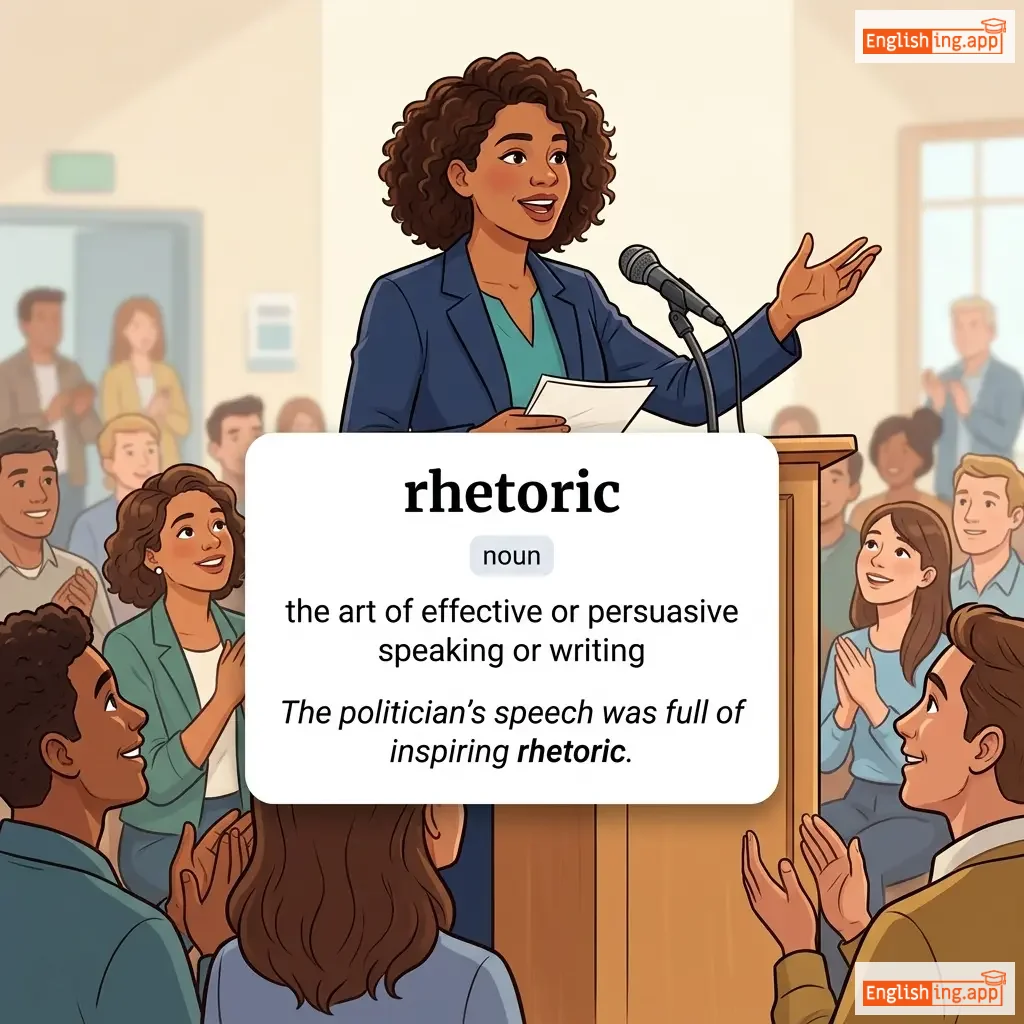
rhetoric definition card — visual illustration of the meaning
noun
/ˈrɛtərɪk/
修辞 (xiuci)

the art of effective or persuasive speaking or writing

"The politician’s speech was full of inspiring rhetoric."

"那位政治家的演讲充满了鼓舞人心的修辞。" (Na wei zhengzhijia de yanjiang chongman le gumu renxin de xiuci.)
adjective
/rɪˈtɔːrɪkəl/
修辞的 (xiūcí de)

relating to the art of effective or persuasive speaking or writing; often a question asked to make a point rather than get an answer

"He asked a rhetorical question during the debate."

"他在辩论中提出了一个修辞性问题。" (Tā zài biànlùn zhōng tíchūle yīgè xiūcí xìng wèntí.)
noun
/ˌrɛtəˈrɪʃən/
雄辩家 (xióngbiànjiā)

A person who is skilled in the art of rhetoric or persuasive speaking/writing.

"The rhetorician captivated the audience with his eloquence."

"雄辩家凭借其雄辩技巧吸引了听众。" (Xióngbiànjiā píngjiè qí xióngbiàn jìqiǎo xīyǐnle tīngzhòng.)
adjective
/ˈruːmi/
泪眼 (lèiyǎn)

Watery, especially referring to the eyes.

"His rheumy eyes showed signs of age and fatigue."

"他那泪眼朦胧的眼睛显示出年龄和疲劳的迹象。" (Tā nà lèiyǎn ménglóng de yǎnjīng xiǎnshì chū niánlíng hé píláo de jìxiàng.)
noun
/raɪˈnɒs.ər.əs/
犀牛 (xiniu)

a large, heavy animal with thick skin and one or two horns on its nose

"The rhinoceros charged through the grassland."

"犀牛冲过草原。" (Xiniu chōngguò cǎoyuán.)
noun
/ˈrɪðəm/
节奏 (jiezou)

a strong, regular, repeated pattern of movement or sound

"The rhythm of the music made everyone want to dance."

"音乐的节奏让每个人都想跳舞。" (Yinyue de jiezou rang mei ge ren dou xiang tiaowu.)
noun
/rɪb/
肋骨 (lèigǔ)

one of the curved bones that form the rib cage in humans and animals, protecting the chest organs

"He broke a rib while playing football."

"他在踢足球时摔断了一根肋骨。" (tā zài tī zúqiú shí shuāi duànle yī gēn lèigǔ)
adjective
/ˈrɪbɔːld/
猥亵笑话 (wěixiè xiàohuà)

Referring to sexual matters in a humorous or vulgar way.

"The comedian’s ribald jokes made the audience laugh uncomfortably."

"喜剧演员的猥亵笑话让观众不自在地笑了。" (Xǐjù yǎnyuán de wěixiè xiàohuà ràng guānzhòng bù zìzài de xiàole.)
noun
/ˈrɪb.ən/
缎带 (duàndài)

a long, narrow strip of fabric used for tying or decoration

"She tied her hair with a red ribbon."

"她用一条红色的缎带绑住了她的头发。" (Tā yòng yī tiáo hóngsè de duàndài bǎng zhùle tā de tóufǎ.)
noun
/raɪs/
大米 (dami)

a cereal grain that is the staple food of many countries

"Rice is an important part of the daily diet in many countries."

"米饭是许多国家日常饮食的重要组成部分。" (Mifan shi xuduo guojia rìcháng yǐnshí de zhòngyào zǔchéng bùfen.)
noun
/raɪs ˈkʊkər/
电饭煲 (diànfànbāo)

an electric appliance designed to cook rice automatically

"The rice cooker automatically switches off when the rice is perfectly cooked."

"当米饭煮得刚好时,电饭煲会自动关闭。" (Dāng mǐfàn zhǔ dé gānghǎo shí, diànfànbāo huì zìdòng guānbì)
adjective
/rɪʧ/
富有 (fuyu)

having a great deal of money or assets

"He became rich after his successful business venture."

"他在成功的商业冒险后变得富有。" (Ta zai chenggong de shangye maoxian hou biande fuyu.)
adjective
/ˈrɪkɪti/
摇摇欲坠 (yáo yáo yù zhuì)

Poorly made and likely to collapse; shaky.

"They crossed a rickety wooden bridge over the river."

"他们过了一座摇摇欲坠的木桥。" (Tāmen guò le yī zuò yáo yáo yù zhuì de mù qiáo.)
noun
/ˈrɪk.ʃɔː/
人力车 (ren li che)

a light two-wheeled passenger vehicle drawn by one or more people

"We took a rickshaw to reach the busy marketplace."

"我们乘坐人力车前往繁忙的市场。" (Wo men chengzuo ren li che qianwang fanmang de shichang.)
verb
/rɪd/
清除 (qingchu)

to remove or get rid of something

"I need to rid the house of all the clutter."

"我需要把家里的杂乱清理掉。" (Wo xuyao ba jiali de zaluan qingli diao.)
noun
/ˈrɪdəns/
摆脱 (bǎituō)

The action of getting rid of something unwanted or unpleasant.

"His departure was considered a welcome riddance by the team."

"他的离开被团队视为一种欢迎的摆脱。" (Tā de líkāi bèi tuánduì shì wéi yī zhǒng huānyíng de bǎituō.)
adjective
/ˈrɪdən/
充斥 (chongchi)

Full of or dominated by something unpleasant.

"The country was ridden with corruption."

"这个国家充斥着腐败。" (Zhe ge guo jia chong chi zhe fu bai.)
noun
/ˈrɪdəl/
谜语 (miyu)

A question or statement designed to test ingenuity or puzzle the mind.

"The children enjoyed solving the riddle."

"孩子们喜欢解谜语。" (Haizimen xihuan jie miyu.)
verb
/raɪd/
(qi)

to sit on and control the movement of something, typically a vehicle or animal

"She loves to ride her bike around the park."

"她喜欢在公园骑自行车。" (Ta xihuan zai gongyuan qi zixingche.)
noun
/ˈraɪdər/
骑手 (qí shǒu)

A person who rides a horse, bicycle, motorcycle, or other vehicle.

"The rider fell off the horse."

"骑手从马背上摔了下来。" (Qí shǒu cóng mǎ bèi shàng shuāi le xiàlái.)
noun
/rɪdʒ/
山脊或山顶 (shan ji huo shan ding)

a long, narrow hilltop, mountain range, or raised strip

"We walked along the mountain ridge."

"我们沿着山脊走。" (Wo men yan zhe shan ji zou.)
verb
/ˈrɪdɪkjuːl/
嘲笑 (chaoxiaoxiao)

To make fun of someone or something in a cruel or dismissive way.

"He was ridiculed for his strange ideas."

"他因奇怪的想法而被嘲笑。" (Ta yin qiguai de xiangfa er bei chaoxiaoxiao.)
adjective
/rɪˈdɪkjʊləs/
荒谬 (huangmiu)

Deserving mockery; absurd or unreasonable.

"The idea of flying pigs is ridiculous."

"飞猪的想法很荒谬。" (Fei zhu de xiangfa hen huangmiu.)
adjective
/raɪf/
普遍 (pǔbiàn)

widespread or common, often in a negative sense

"Corruption was rife in the old government system."

"腐败在旧政府体制中盛行。" (fǔbài zài jiù zhèngfǔ tǐzhì zhōng shèngxíng.)
🔫

Rifle

noun
/ˈraɪfəl/

a type of long-barreled gun designed for accurate shooting

"The hunter carried a rifle to catch game."

noun
/rɪft/
裂缝 (lièfèng)

a serious break in a relationship; a split or crack

"A rift developed between the two friends after the argument."

"争执后,两个朋友之间产生了裂缝。" (Zhēngzhí hòu, liǎng gè péngyǒu zhī jiān chǎnshēngle lièfèng.)
🛠️

rig (rig)

verb
/rɪɡ/
操控 (caokong)

to manipulate or control something dishonestly; to set up equipment

"The election was rigged by corrupt officials."

"选举被腐败官员操控了。" (Xuanju bei fubai guanyuan caokong le.)
noun, adjective, adverb
/raɪt/
权利 (quanli)

something that is morally good, fair, or just; or a legal/entitled claim

"Everyone has the right to free speech."

"每个人都有言论自由的权利。" (Mei ge ren dou you yanlun ziliu de quanli.)
adjective
/ˈraɪtʃəs/
正义 (zhèngyì)

morally right or justifiable; virtuous

"She is known for her righteous actions and honesty."

"她以正义的行为和诚实而闻名。" (Tā yǐ zhèngyì de xíngwéi hé chéngshí ér wénmíng.)
noun
/ˈraɪtʃəsnəs/
正义 (zhèngyì)

the quality of being morally right or justifiable

"His life was dedicated to righteousness and truth."

"他的一生致力于正义和真理。" (Tā de yīshēng zhìlì yú zhèngyì hé zhēnlǐ.)
adjective
/ˈraɪtfəl/
合法的 (héfǎ de)

having a legitimate or just claim; proper or lawful

"She is the rightful owner of the property."

"她是该财产的合法所有者。" (Tā shì gāi cáichǎn de héfǎ suǒyǒu zhě.)
adverb
/ˈraɪtli/
正确地; 适当地; 公正地 (zhèngquè de; shìdàng de; gōngzhèng de)

correctly; properly; justly

"She rightly pointed out the mistakes in the report."
"她正确地指出了报告中的错误。" (Tā zhèngquè de zhǐchūle bàogào zhōng de cuòwù.)
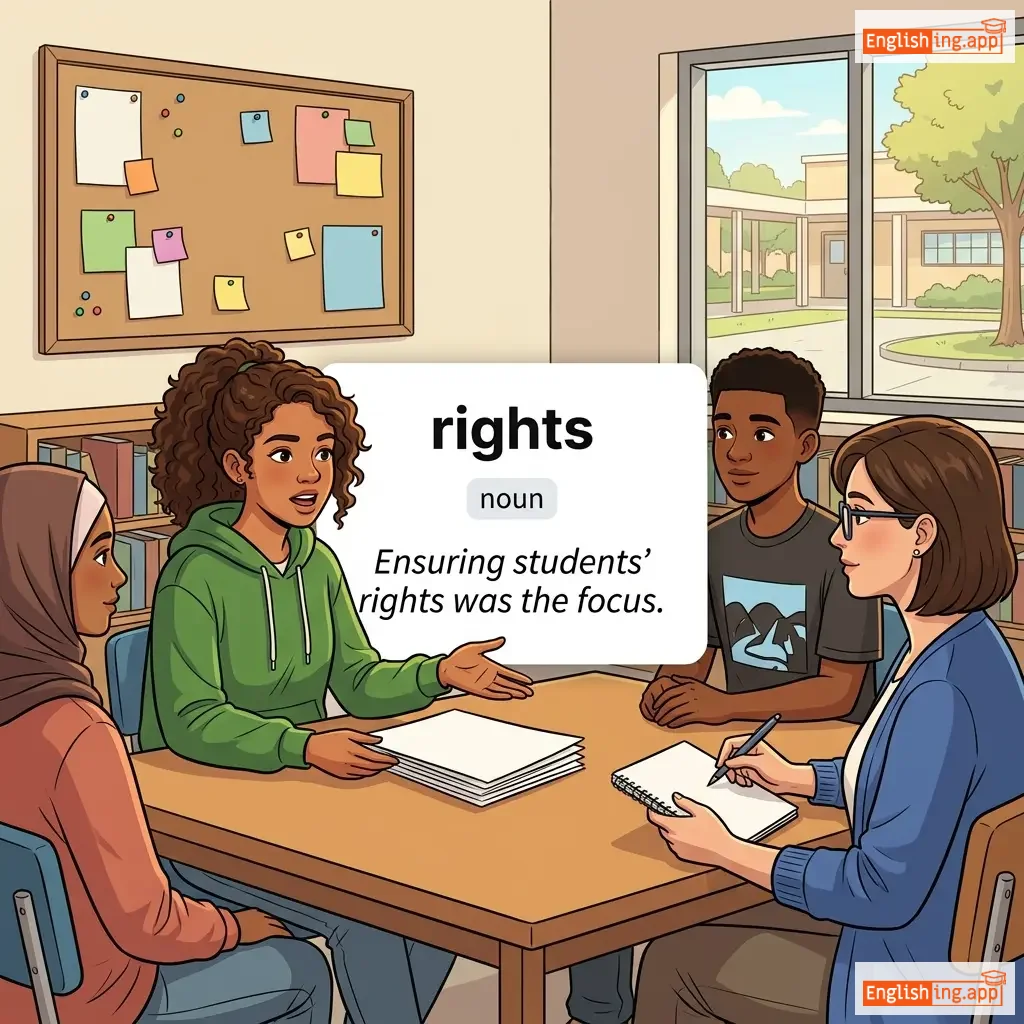
rights definition card — visual illustration of the meaning
noun
raɪts
权利 (quanli)

Things to which one has a just claim; the authority or power of having something.

"Ensuring students' rights was the focus."

"确保学生的权利是焦点。" (Quèbǎo xuéshēng de quánlì shì jiāodiǎn.)