词汇表

英语词汇词典 | 单词含义、定义和示例

verb
/rɪˈtaɪə/
退休 (tuìxiū)

to stop working after reaching a certain age or having completed a career

"She decided to retire after working for 40 years."

"她决定在工作了40年后退休。" (Tā juédìng zài gōngzuòle 40 nián hòu tuìxiū.)
adjective
/rɪˈtaɪərd/
退休 (tuìxiū)

no longer working at one's job, typically because of having reached a certain age

"My grandfather is a retired teacher who now enjoys gardening."

"我的祖父是一位退休教师,现在享受园艺。" (Wǒ de zǔfù shì yī wèi tuìxiū jiàoshī, xiànzài xiǎngshòu yuányì.)
noun
/rɪˈtaɪə.mənt/
退休 (tuixiu)

the period of time when someone stops working after reaching a certain age

"She is looking forward to her retirement in two years."

"她期待着两年后的退休生活。" (Ta qidai zhe liang nian hou de tuixiu shenghuo.)
adjective
/rɪˈtaɪərɪŋ/
害羞 (haixiu)

Shy and reserved; avoiding social contact.

"She is a quiet, retiring woman who avoids attention."

"她是一个安静、害羞的女人,避免引起注意。" (tā shì yīgè ānjìng, haixiu de nǚrén, bìmiǎn yǐnqǐ zhùyì.)
verb
/rɪˈtɔːrt/
反驳 (fǎnbó)

To reply quickly or sharply, often in a witty or angry manner.

"He quickly retorted that he was not to blame."

"他迅速回应说他没有错。" (Tā xùnsù huíyìng shuō tā méiyǒu cuò.)
verb
/ˌriːˈtʌtʃ/
修饰 (xiūshì)

To improve or repair a picture, photograph, or image by making small changes.

"The photographer retouched the image to remove blemishes."

"摄影师对图片进行了修饰以去除瑕疵。" (Shèyǐngshī duì túpiàn jìnxíngle xiūshì yǐ qùchú xiácī.)
↩️

retrace

verb
/rɪˈtreɪs/

to go back over a path or route; to recall and repeat steps taken earlier

"She retraced her steps to find her lost keys."

↪️

retract

verb
/rɪˈtrækt/

to withdraw a statement, promise, or part of the body; to pull back

"The company retracted its earlier statement after realizing the error."

noun
/rɪˈtrækʃən/
撤回,撤回声明 (chehui, chehui shengming)

the act of taking back a statement, promise, or belief

"The newspaper issued a retraction of the false report."

"报纸发布了对虚假报道的撤回。" (Baozhi fabulei dui xujia baodao de chehui.)
verb
/rɪˈtriːt/
撤退 (chè tuì)

to move back or withdraw from a position or situation

"The soldiers had to retreat after losing the battle."

"士兵们在失去战斗后不得不撤退。" (Shì bīng men zài shī qù zhàn dòu hòu bù dé bù chè tuì.)
verb
/rɪˈtrɛntʃ/
减少开支,裁员 (jiǎnshǎo kāizhī, cáiyuán)

to reduce costs, spending, or staff to save resources

"The company had to retrench employees due to financial difficulties."

"公司由于财务困难不得不裁员。" (Gōngsī yóuyú cáiwù kùnán bùdébù cáiyuán.)
noun
/ˌrɛtrɪˈbjuːʃən/
报应,惩罚 (baò yìng, chéng fá)

punishment inflicted as vengeance for a wrong or crime

"The villagers demanded retribution for the crime committed."

"村民要求对犯下的罪行进行报应。" (Cūnmín yāoqiú duì fàn xià de zuìxíng jìnxíng bàoyìng.)
retrieval definition card — visual illustration of the meaning
noun
rɪˈtriː.vəl
恢复 (huīfù)

The process of getting or bringing something back; recovery of stored information.

"AI-based search engines ensure fast retrieval of data."

"基于人工智能的搜索引擎确保数据的快速恢复。" (Jīyú réngōng zhìnéng de sōusuǒ yǐnqíng quèbǎo shùjù de kuàisù huīfù.)
verb
/rɪˈtriːv/
找回 (zhao hui)

to get something back that was lost or taken; to recover

"She managed to retrieve her lost phone from the taxi."

"她成功地从出租车中找回了她丢失的手机。" (Ta chenggong de cong chuzuche zhong zhaohui le ta diushi de shouji.)
adjective
/ˌrɛtroʊˈæktɪv/
追溯的 (zhuīsù de)

applying to a period before it was enacted or established

"The new law was made retroactive to cover past cases."
"新法律追溯适用于过去的案件。" (Xīn fǎlǜ zhuīsù shìyòng yú guòqù de ànjiàn.)
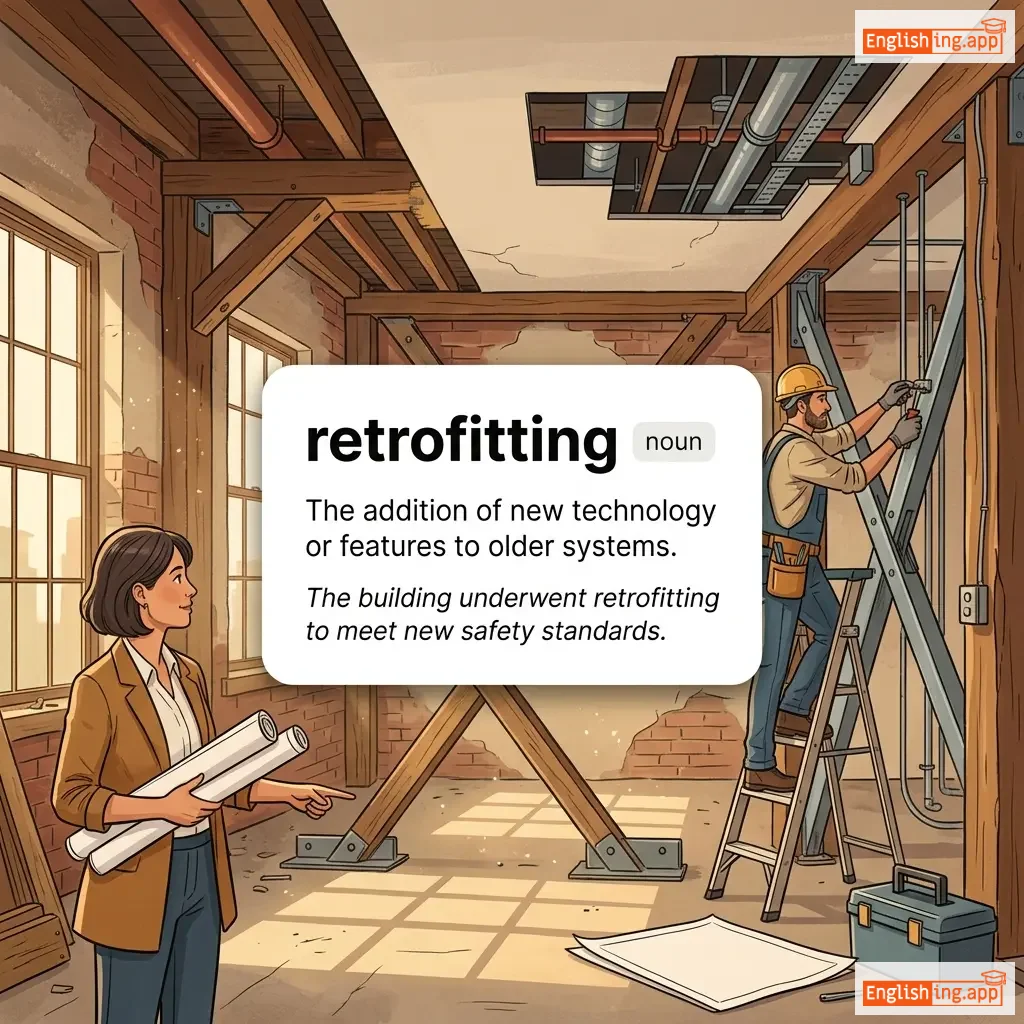
retrofitting definition card — visual illustration of the meaning
noun
/ˈrɛ.trəʊ.fɪt.ɪŋ/
为旧系统添加新技术或功能 (wèi jiù xìtǒng tiānjiā xīn jìshù huò gōngnéng)

The addition of new technology or features to older systems.

"The building underwent retrofitting to meet new safety standards."

"这座建筑通过加装 retrofit 来满足新的安全标准。" (Zhè zuò jiànzhù tōngguò jiā zhuāng retrofit lái mǎnzú xīn de ānquán biāozhǔn.)
adjective
/ˈrɛtroʊˌɡreɪd/
逆行的 (nìxíng de)

moving backward or returning to a worse condition

"The policy was seen as a retrograde step for human rights."

"该政策被视为人权的倒退步骤。" (Gāi zhèngcè bèi shì wéi rénquán de dào tuì bùzhòu.)
noun
/ˌrɛtroʊˈɡrɛʃən/
倒退 (daotui)

a return to a worse or less developed state

"The country experienced economic retrogression after the crisis."

"该国在危机后经历了经济倒退。" (Gai guo zai weiji hou jingli le jingji daotui.)
noun
/ˈrɛtrəsˌpɛkt/
回顾 (huígù)

the act of looking back on or reviewing past events

"In retrospect, the decision seemed unwise."

"回顾来看,那个决定似乎不明智。" (Huígù lái kàn, nàgè juédìng shìhū bù míngzhì.)
adjective
/ˌrɛtrəˈspɛktɪv/
回顾 (huígù)

Looking back on or dealing with past events or situations.

"The museum held a retrospective exhibition of the artist's work."
"博物馆举办了艺术家作品的回顾展。" (Bówùguǎn jǔbànle yìshùjiā zuòpǐn de huígù zhǎn.)
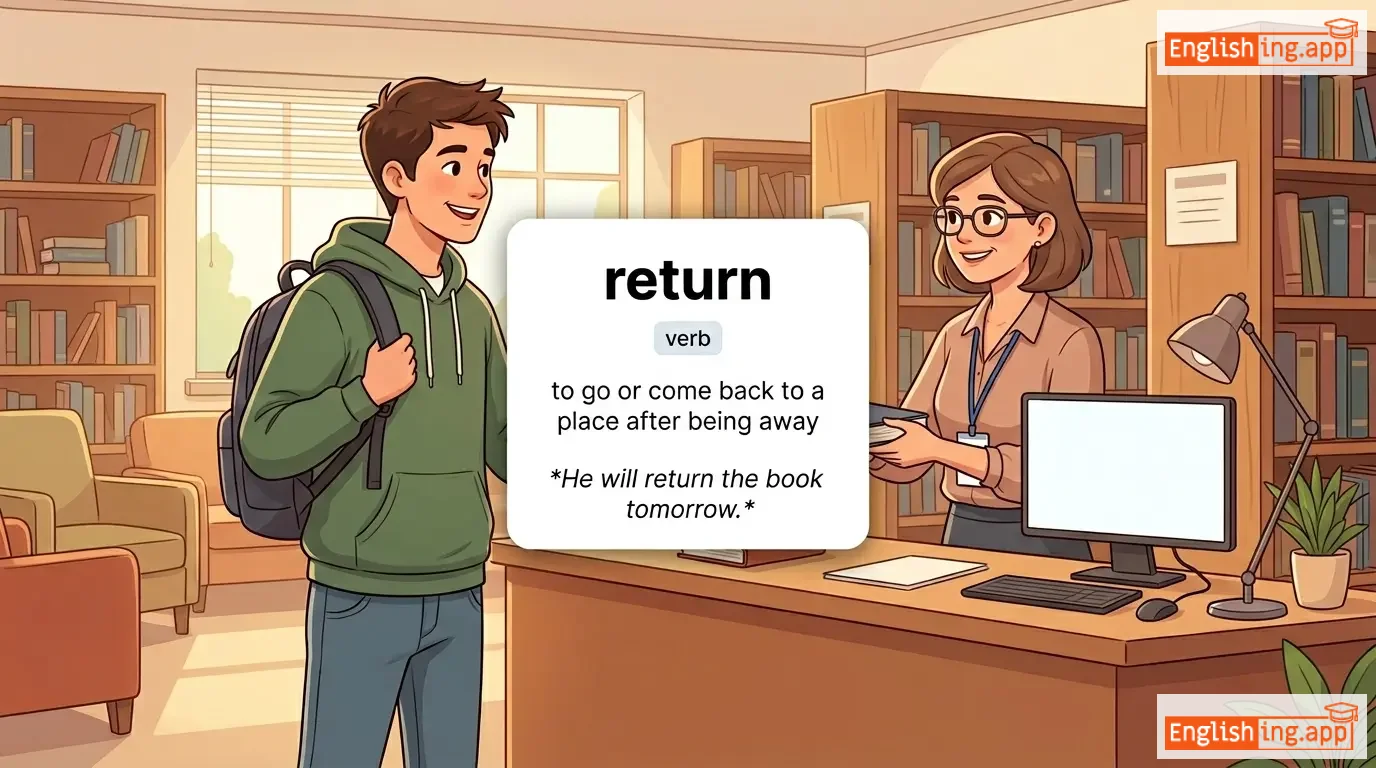
return definition card — visual illustration of the meaning
verb
/rɪˈtɜːn/
归还 (guihuan)

to go or come back to a place after being away

"He will return the book tomorrow."

"他明天会把书还回来。" (Ta mingtian hui ba shu huan huilai.)
adjective
/rɪˈtɜː.nə.bəl/
可退还的 (ke tuihuan de)

able to be returned or given back

"The bottle is returnable for a deposit refund."
"这瓶瓶子可以退还存款退款。" (Zhe ping pingzi keyi tuihuan cunkuan tuihuan.)
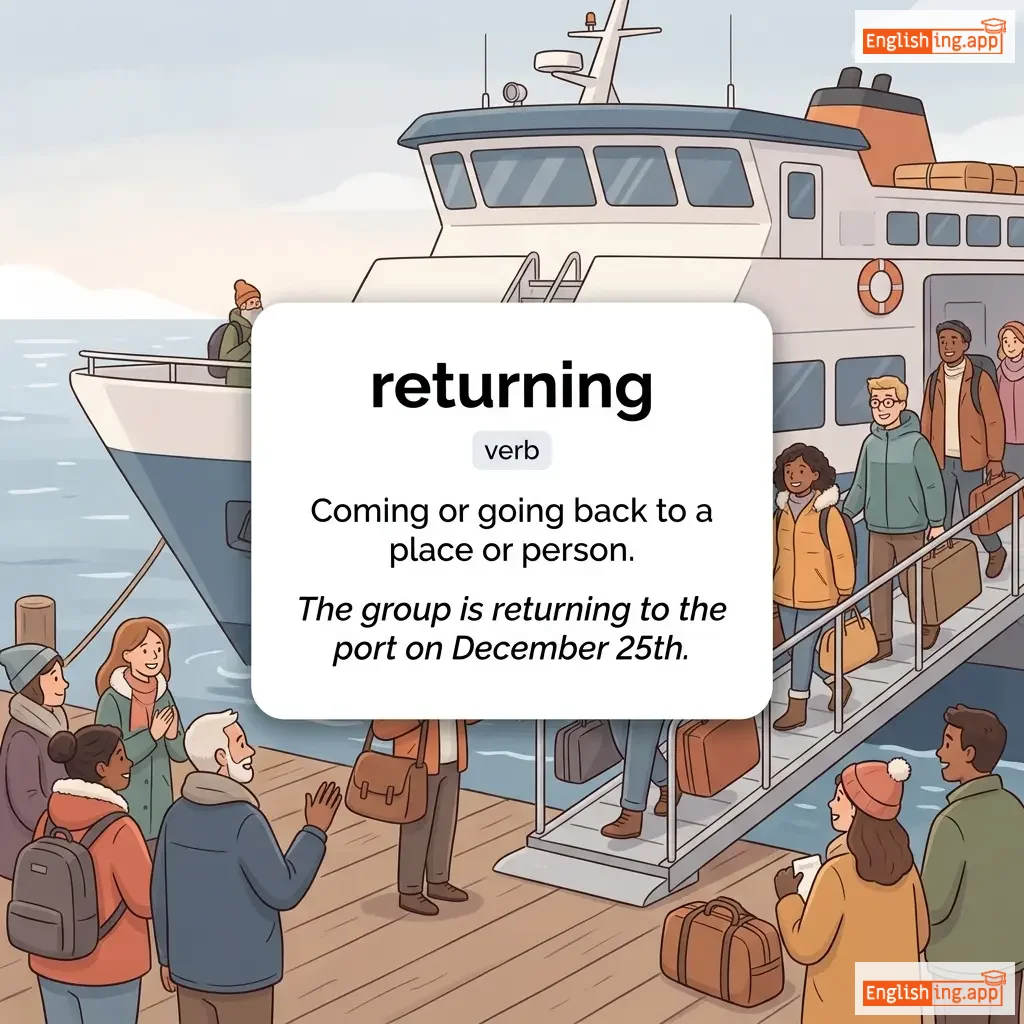
returning definition card — visual illustration of the meaning
verb
/rɪˈtɜrnɪŋ/
返回 (fǎnhuí)

Coming or going back to a place or person.

"The group is returning to the port on December 25th."

"小组将于12月25日返回港口。" (Xiǎozǔ jiāng yú 12 yuè 25 rì fǎnhuí gǎngkǒu.)
reunite definition card — visual illustration of the meaning
verb
/ˌriːjuːˈnaɪt/
重新团聚 (chóngxīn tuánjù)

To bring people or things back together after being apart.

"The event helped reunite old friends after many years."

"活动帮助多年后重新团聚了老朋友。" (Huódòng bāngzhù duōnián hòu chóngxīn tuánjùle lǎo péngyǒu.)
verb
/ˌriːˈvæmp/
翻新 (fānxīn)

To give a new and improved form, structure, or appearance to something.

"The company decided to revamp its website for a modern look."

"公司决定重新设计其网站,以获得现代化外观。" (Gōngsī juédìng chóngxīn shèjì qí wǎngzhàn, yǐ huòdé xiàndàihuà wàiguān.)
reveal definition card — visual illustration of the meaning
verb
/rɪˈviːl/
揭示 (jie shi)

to make something known that was previously hidden or secret

"The magician refused to reveal his secrets."

"魔术师拒绝透露他的秘密。" (Móshùshī jùjué tòulù tā de mìmì.)
revel definition card — visual illustration of the meaning
verb
/ˈrevəl/
陶醉 (tao zui)

to enjoy oneself in a lively and noisy way; to take great pleasure in

"They revel in their success."

"他们沉浸在成功中。" (Tāmen chénjìn zài chénggōng zhōng.)
noun
/ˌrɛvəˈleɪʃən/
启示 (qishi)

A surprising and previously unknown fact, especially one made known in a dramatic way.

"The book was full of shocking revelations about the politician."

"这本书充满了对政治家的震惊启示。" (Zhè běn shū chōngmǎnle duì zhèngzhìjiā de zhèngjīng qǐshì.)
noun
/ˈrɛvəlri/
庆典 (qingdian)

Lively and noisy festivities, especially involving drinking and dancing.

"The sound of revelry could be heard throughout the night."

"整晚都能听到庆典的声音。" (Zhěng wǎn dōu néng tīng dào qìngdiǎn de shēngyīn.)
noun, verb
/rɪˈvɛndʒ/
复仇 (fùchóu)

The action of inflicting harm on someone as punishment for a wrong suffered.

"She sought revenge for the betrayal of her trust."

"她为了自己信任的背叛而寻求复仇。" (Tā wèile zìjǐ xìnrèn de bèipàn ér xúnqiú fùchóu.)
adjective
/rɪˈvenʒ.fəl/
复仇的 (fùchóu de)

seeking or desiring revenge; vindictive

"He became revengeful after being betrayed by his friend."

"他在被朋友背叛后变得复仇心切。" (Tā zài bèi péngyǒu bèipàn hòu biàn dé fùchóu xīn qiè)
revenue definition card — visual illustration of the meaning
noun
/ˈrɛvənjuː/
收入 (shouru)

income generated from business activities, especially sales

"The company's revenue increased by 20% last year."

"公司的收入去年增长了20%。" (Gongsi de shouru qunian zengzhang le 20%.)
verb
/rɪˈvɜːrbəreɪt/
回响 (huíxiǎng)

To echo repeatedly or have continuing effects.

"The sound of the explosion reverberated through the valley."

"爆炸声在山谷中回响。" (Bàozhà shēng zài shāngǔ zhōng huíxiǎng.)
verb
/rɪˈvɪər/
敬仰 (jìng yǎng)

To deeply respect or admire someone or something.

"The students revered their teacher for his wisdom."

"学生们因他的智慧而敬重老师。" (Xuéshēngmen yīn tā de zhìhuì ér jìngzhòng lǎoshī.)
noun
/ˈrɛvərəns/
崇敬 (chongjing)

deep respect for someone or something

"The students showed reverence to their teacher."

"学生们向他们的老师表达了崇敬。" (Xueshengmen xiang tamen de laoshi biaodale chongjing.)
noun, adjective
/ˈrɛvərənd/
牧师,尊敬的 (mùshī, zūnjìng de)

A title of respect used for members of the clergy; deserving deep respect.

"The Reverend gave an inspiring sermon at the church."
"牧师在教堂发表了鼓舞人心的讲道。" (Mùshī zài jiàotáng fābiǎo le gǔwǔ rénxīn de jiǎngdào.)
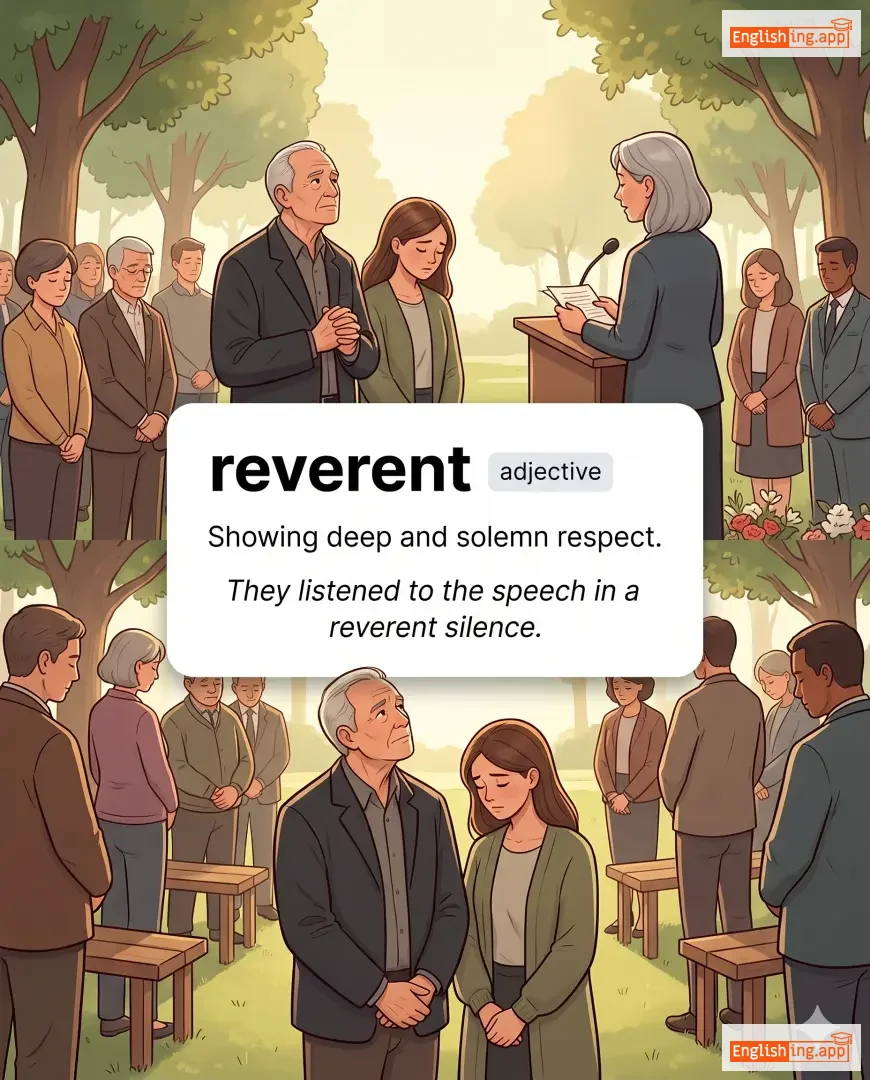
reverent definition card — visual illustration of the meaning
adjective
/ˈrɛvərənt/
虔诚的 (qiánchéng de)

Showing deep and solemn respect.

"They listened to the speech in a reverent silence."

"他们在虔诚的沉默中听取了演讲。" (Tāmen zài qiánchéng de chénmò zhōng tīngqǔle yǎnjiǎng.)
reverie definition card — visual illustration of the meaning
noun
/ˈrɛvəri/
白日梦 (báirìmèng)

a state of being pleasantly lost in one's thoughts; a daydream

"She drifted into a reverie while staring at the sunset."

"她在看着日落时沉浸在白日梦中。" (Tā zài kànzhe rìluò shí chénjìn zài báirìmèng zhōng.)
verb
/rɪˈvɜːs/
反转 (fǎn zhuǎn)

to change something to the opposite direction, position, or result

"She quickly reversed the car out of the driveway."

"她迅速把车从车道上倒了出来。" (Tā xùnsù bǎ chē cóng chē dào shàng dào le chū lái.)
adjective
/rɪˈvɜː.sə.bəl/
可逆的 (rihversuhbul)

able to be turned the other way around; able to be undone or changed back

"This jacket is reversible and can be worn on both sides."

"这件夹克是可翻面的,可以正反两面穿着。" (zhejianjiakeshikefanmiandekeyizhengfanliangmianchuanzhuo)
noun
/rɪˈvɜːrʒən/
逆转 (nì zhuǎn)

the act of returning to a previous state or condition

"The new policy marked a reversion to traditional methods."

"新政策标志着回归传统方法。" (Xīn zhèngcè biāozhìzhe huíguī chuántǒng fāngfǎ.)
verb
/rɪˈvɜːrt/
恢复 (huifu)

to return to a previous state, condition, or practice

"The system will revert to its original settings after the update."

"系统将在更新后恢复到原始设置。" (Xitong jiang zai gengxin hou huifu dao yuanshi shezhi.)
noun
/rɪˈvjuː/
评论 (pinglun)

an evaluation or assessment of something

"I wrote a review of the movie for the blog."

"我为博客写了电影的评论。" (Wǒ wèi bókè xiěle diànyǐng de pínglùn.)
verb
/rɪˈvaɪl/
谴责 (qianze)

to criticize in an abusive or angrily insulting manner

"The politician was reviled by the public for his corruption."

"政治家因腐败而被公众谴责。" (Zhèngzhìjiā yīn fǔbài ér bèi gōngzhòng qiǎnzé.)
noun
/rɪˈvaɪlər/
侮辱者 (wǔrǔ zhě)

a person who criticizes or insults others abusively

"He was known as a reviler of all who opposed him."

"他以侮辱所有反对他的人而闻名。" (Tā yǐ wǔrǔ suǒyǒu fǎnduì tā de rén ér wénmíng.)
noun
/rɪˈvaɪ.zəl/
修订 (xiūdìng)

The act of revising, reviewing, or making changes to something.

"The revisal of the contract took longer than expected."

"合同的修订比预期花费了更多时间。" (Hétóng de xiūdìng bǐ yùqī huāfèi le gèng duō shíjiān.)
verb
/rɪˈvaɪz/
修改 (xiugai)

To change, improve, or update something, especially a written work.

"She had to revise her essay before submission."

"她必须在提交之前修改她的论文。" (Ta bixu zai tijiao zhiqian xiugai ta de lunwen.)
noun
/rɪˈvɪʒən/
修订 (xiudìng)

the action of revising or updating something, typically in preparation for something else

"She made some last-minute revisions to her report before submitting it."
"她在提交报告前做了一些最后的修订。" (Ta zai tijiao baogao qian zuo le yixie zuihou de xiuding.)
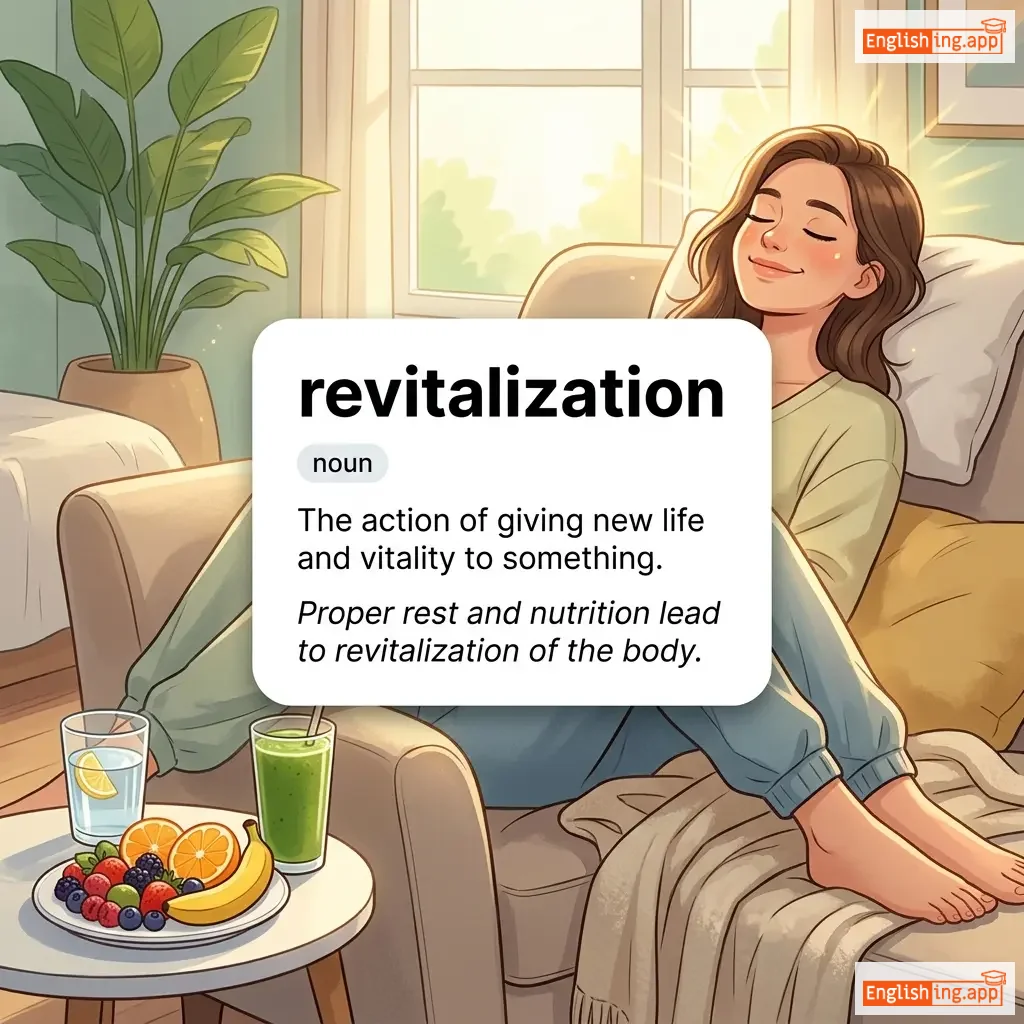
revitalization definition card — visual illustration of the meaning
noun
ˌriːˌvaɪ.təl.aɪˈzeɪ.ʃən
复兴 (fùxīng)

The action of giving new life and vitality to something.

"Proper rest and nutrition lead to revitalization of the body."
"适当的休息和营养有助于身体的复兴。" (Shìdàng de xiūxí hé yíngyǎng yǒuzhù yú shēntǐ de fùxīng.)
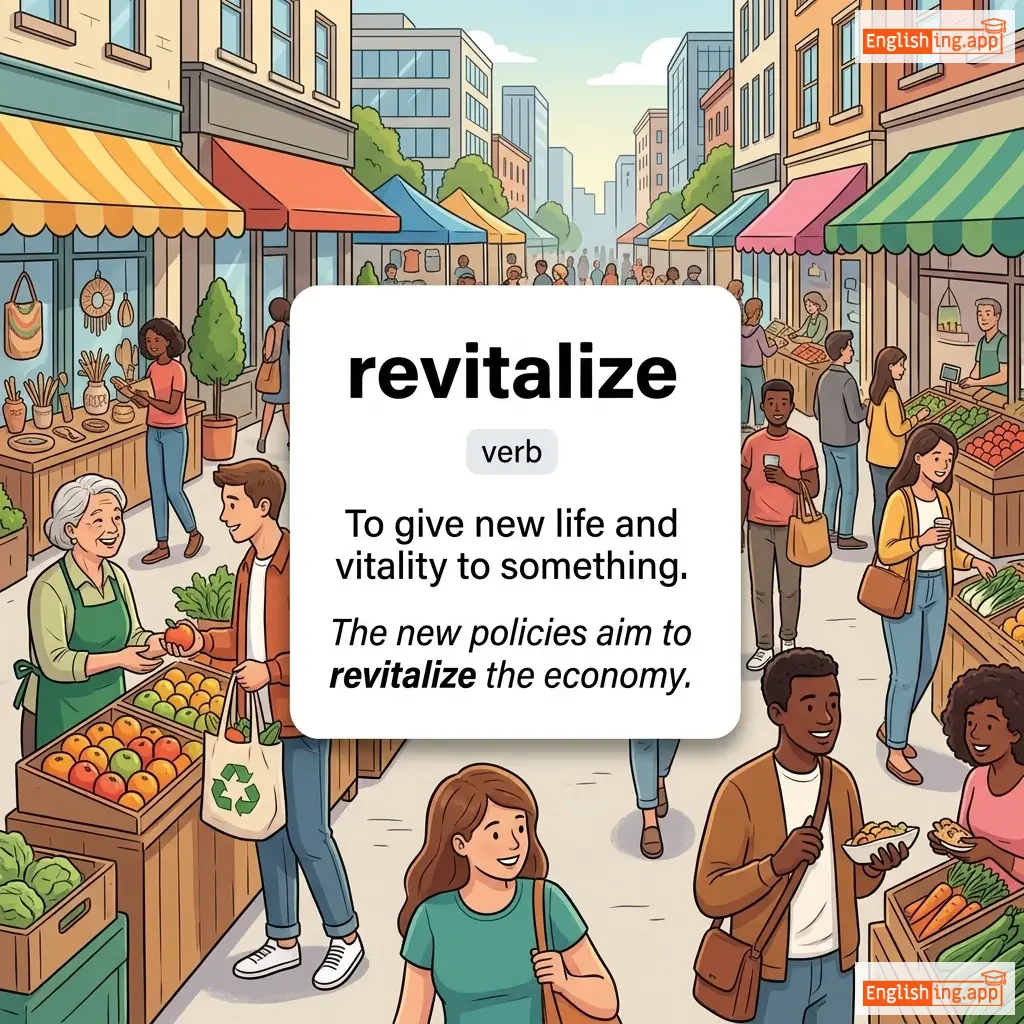
revitalize definition card — visual illustration of the meaning
verb
/ˌriːˈvaɪ.təl.aɪz/
复兴 (fùxīng)

To give new life and vitality to something.

"The new policies aim to revitalize the economy."

"新政策旨在复兴经济。" (Xīn zhèngcè zhǐ zài fùxīng jīngjì.)