词汇表

英语词汇词典 | 单词含义、定义和示例

noun
/ˌrɛspɪˈreɪʃən/

The process of breathing or the exchange of gases in living organisms.

"Respiration is essential for all living beings."

😮‍💨

respire (呼吸)

verb
/rɪˈspaɪər/
呼吸 (hūxī)

To breathe in and out; to inhale and exhale.

"Plants also respire to release energy."

"植物也呼吸以释放能量。" (Zhíwù yě hūxī yǐ shìfàng néngliàng.)
noun
/ˈrɛspɪt/
喘息 (chuǎnxī)

A short period of rest or relief from something difficult or unpleasant.

"The weekend provided a welcome respite from work."

"周末提供了工作上的一个受欢迎的休息。" (Zhōumò tígōngle gōngzuò shàng de yīgè shòu huānyíng de xiūxí.)
adjective
/rɪˈsplɛndənt/
辉煌 (huihuang)

Shining brilliantly; dazzling in appearance or effect

"The bride looked resplendent in her wedding gown."
"新娘穿着婚纱看起来光彩照人。" (Xinniang chuanzhe hunsha kàn qǐlái guāngcǎi zhàorén.)
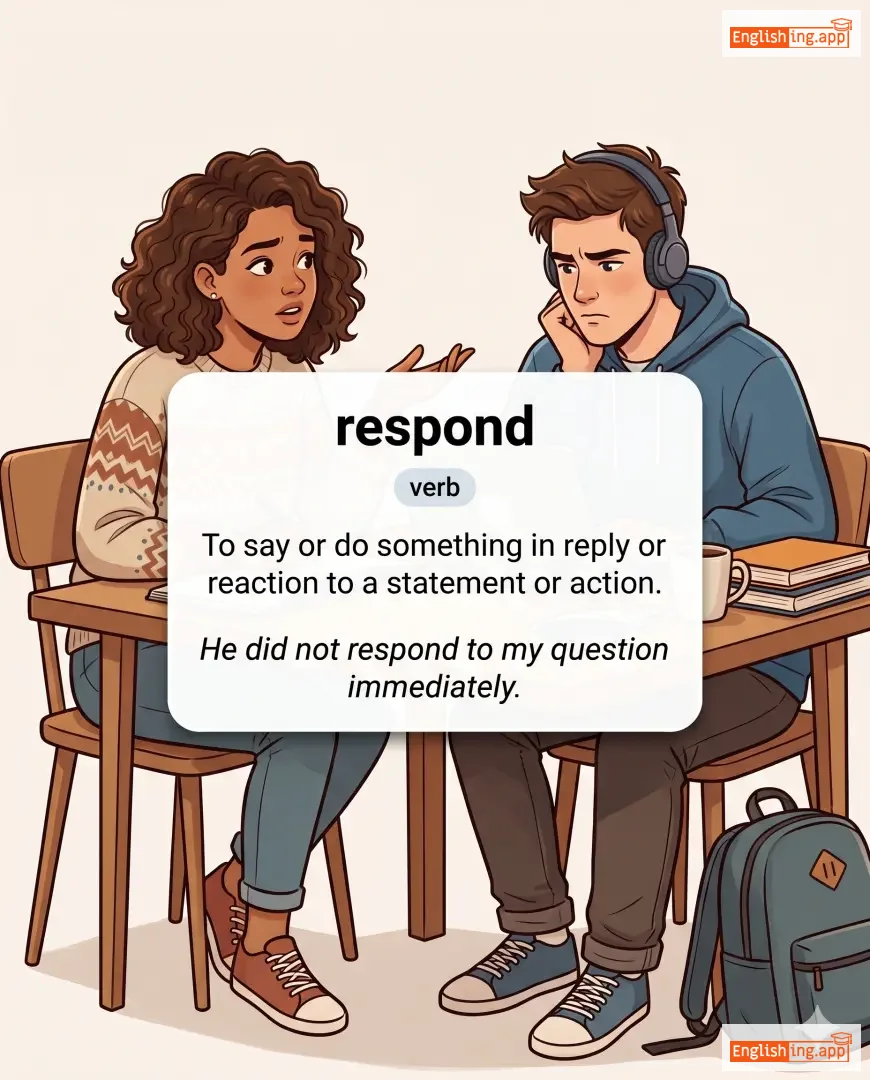
respond definition card — visual illustration of the meaning
verb
/rɪˈspɒnd/
回应 (hui ying)

To say or do something in reply or reaction to a statement or action.

"He did not respond to my question immediately."

"他没有立即回应我的问题。" (Ta meiyou liji hui ying wode wenti.)
noun
/rɪˈspɒndənt/
响应者 (xiǎngyìng zhě)

A person who replies to something, especially in a survey or legal case

"The survey had over 1,000 respondents."

"调查有超过1000名响应者。" (Diàochá yǒu chāoguò 1000 míng xiǎngyìng zhě.)
noun
/rɪˈspɒns/
回应 (huiying)

a reaction to something that has been said or done

"Her response to the question was both thoughtful and clear."

"她对问题的回应既深思熟虑又清晰。" (Ta dui wenti de huiying ji shensi shulü yòu qīngxī.)
responsibility definition card — visual illustration of the meaning
noun
/rɪˌspɒnsɪˈbɪləti/
责任 (zeren)

the state or fact of having a duty to deal with something or having control over someone

"Being a manager comes with a lot of responsibility."

"成为经理意味着很大的责任。" (Chengwei jingli yijing hen da de zeren.)
adjective
/rɪˈspɒnsɪbl/
负责 (fuzé)

having an obligation to do something or being the cause of something

"She is responsible for managing the project."

"她负责管理这个项目。" (Tā fùzé guǎnlǐ zhège xiàngmù.)
adjective
/rɪˈspɒnsɪv/
响应的 (xiǎngyìng de)

Reacting quickly and positively to something

"The website is fully responsive on all devices."

"该网站在所有设备上完全响应。" (Gāi wǎngzhàn zài suǒyǒu shèbèi shàng wánquán xiǎngyìng.)
noun
/rɪˈspɒnsɪvnəs/
反应能力 (fǎn yìng néng lì)

The quality of reacting quickly and positively

"The manager appreciated her responsiveness to customer feedback."

"经理欣赏她对客户反馈的反应能力。" (Jīnglǐ xīnshǎng tā duì kèhù fǎnkuì de fǎnyìng nénglì.)
🛌

rest

noun, verb
/rɛst/

to cease work or movement in order to relax or recover strength

"He needs to rest after the long journey."

noun
/ˈrɛst(ə)rɒnt/
餐馆 (canguan)

a place where meals are prepared and served to customers

"We went to the restaurant for dinner."
"我们去餐馆吃晚餐。" (Wǒmen qù cānguǎn chī wǎncān.)
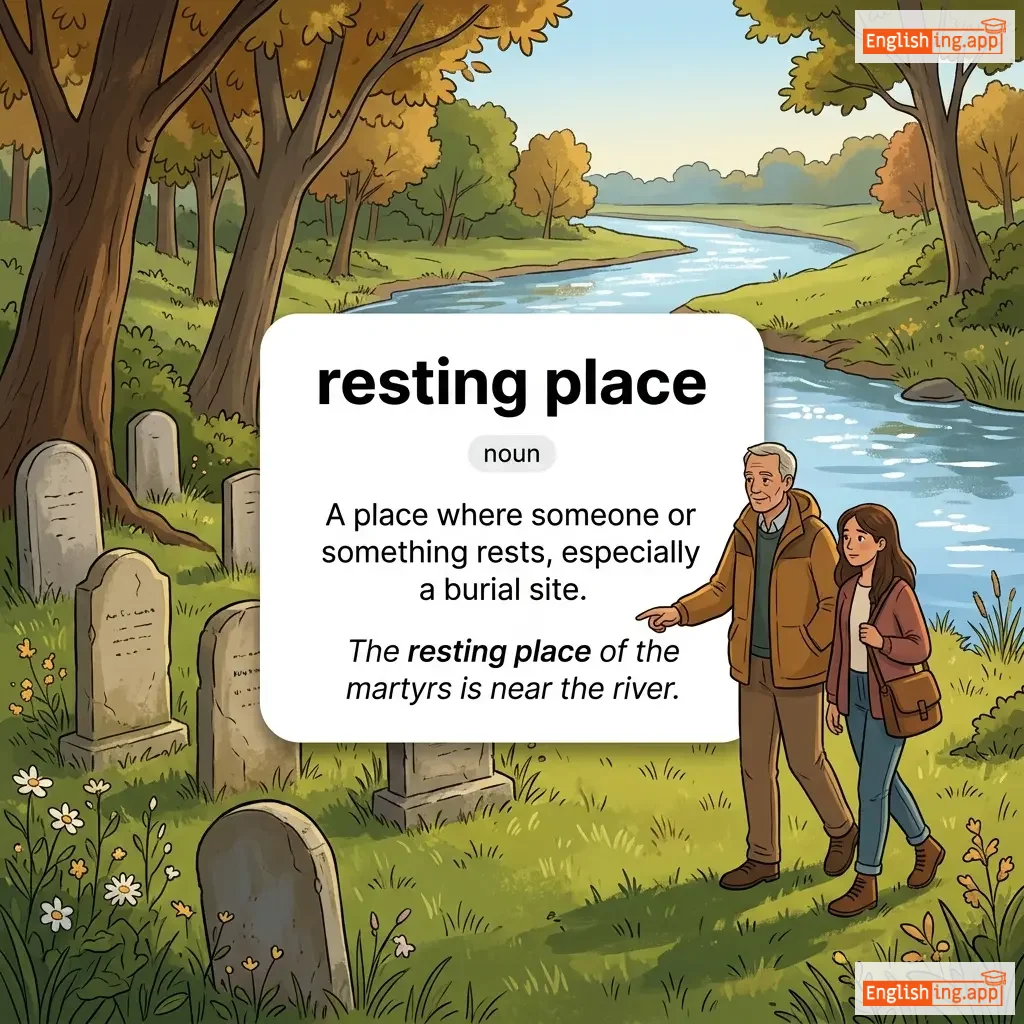
resting place definition card — visual illustration of the meaning
noun
ˈrɛstɪŋ pleɪs
安息地 (ānxí dì)

A place where someone or something rests, especially a burial site.

"The resting place of the martyrs is near the river."

"烈士的安息地靠近河流。" (Lièshì de ānxí dì kàojìn héliú.)
noun
/ˌrɛstɪˈtjuːʃən/
赔偿 (peichang)

The act of restoring something to its rightful owner or compensating for loss

"The court ordered restitution to the victims of the fraud."

"法院命令对欺诈受害者进行赔偿。" (Fayuan mingling dui qizha shouhaizhe jinxing peichang.)
adjective
/ˈrɛstɪv/
不安定的 (bu'anding de)

unable to stay still or silent; restless and impatient

"The crowd grew restive as they waited for the concert to begin."

"人群在等待音乐会开始时变得不安定。" (Renqun zai dengdai yinyuehui kaishi shi biande bu'anding.)
adjective
/ˈrɛstləs/
幸福 (xingfu)

unable to relax or remain still; constantly in motion

"He felt restless during the long meeting."

"当她获得奖项时,她无法掩饰自己的幸福。" (Dāng tā huòdé jiǎngxiàng shí, tā wúfǎ yǎnshì zìjǐ de xìngfú.)
noun
/ˈrest.ləs.nəs/
不安 (bù'ān)

the inability to rest or relax as a result of anxiety or boredom

"His restlessness during the long meeting was obvious to everyone."

"在长时间的会议中,他的不安对每个人都很明显。" (zài cháng shíjiān de huìyì zhōng, tā de bù'ān duì měi gè rén dōu hěn míngxiǎn.)
restoration definition card — visual illustration of the meaning
noun
/ˌrɛstəˈreɪʃən/
修复 (xiūfù)

the act of returning something to its former condition or state

"The building is undergoing restoration to preserve its historical value."

"这座建筑正在进行修复,以保护其历史价值。" (Zhè zuò jiànzhú zhèngzài jìnxíng xiūfù, yǐ bǎohù qí lìshǐ jiàzhí.)
restore definition card — visual illustration of the meaning
verb
/rɪˈstɔː/
恢复 (huīfù)

to bring something back to its original or former condition

"The art gallery plans to restore the old paintings."

"艺术画廊计划恢复旧画作。" (Yìshù huàláng jìhuà huīfù jiù huàzuò.)
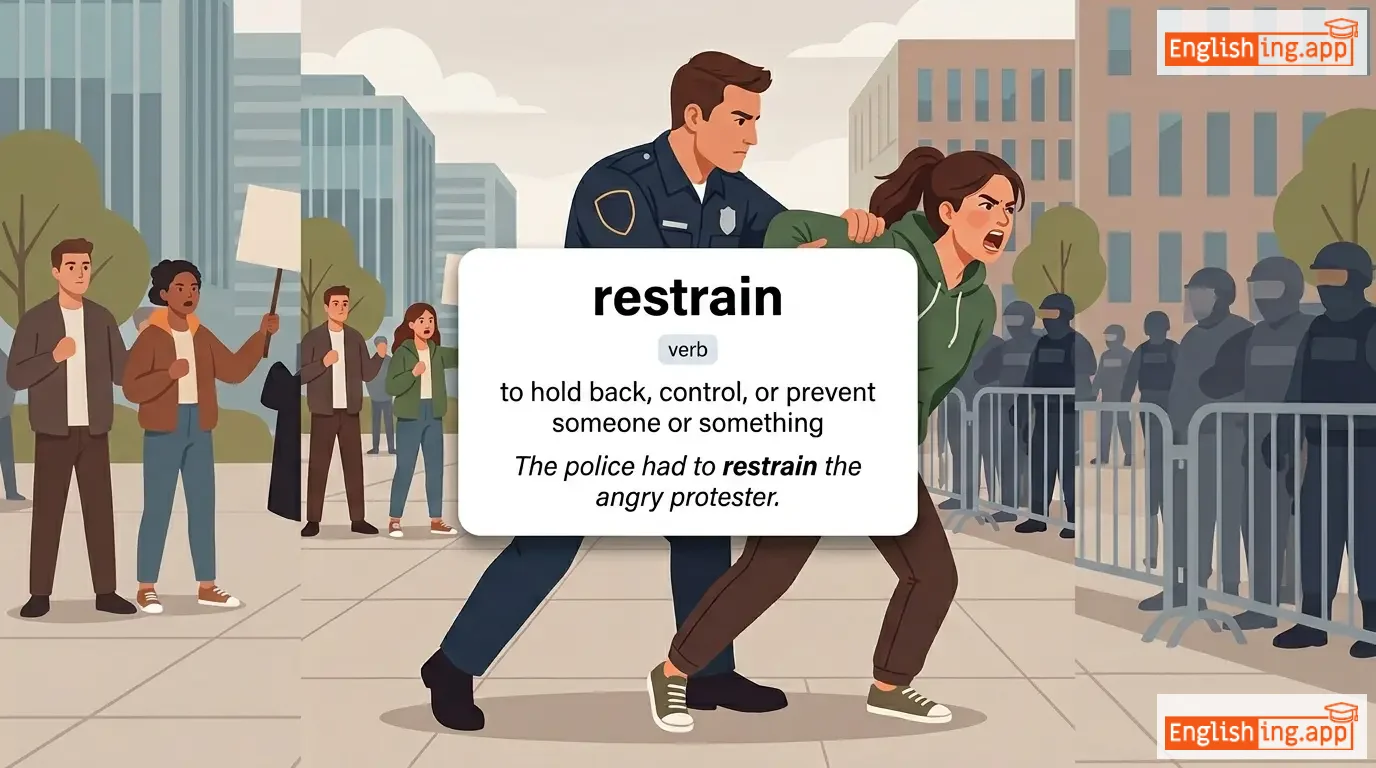
restrain definition card — visual illustration of the meaning
verb
/rɪˈstreɪn/

to hold back, control, or prevent someone or something

"The police had to restrain the angry protester."

adjective
/rɪˈstreɪnd/
克制的 (ke zhi de)

characterized by reserve or self-control; held back

"Her restrained reaction surprised everyone."

"她克制的反应让所有人都感到惊讶。" (Ta ke zhi de fan ying rang suo you ren dou gan dao jing ya.)
noun
/rɪˈstreɪnt/
克制 (ke zhi)

the act of holding back or controlling; self-control

"He showed great restraint in not responding to the insult."

"他在没有回应侮辱时表现出了极大的克制。" (Tā zài méiyǒu huíyīng wǔrǔ shí biǎoxiàn chūle jí dà de kèzhì.)
verb
/rɪˈstrɪkt/
限制 (xianzhi)

To limit the size, amount, or range of something.

"The government decided to restrict the use of plastic bags."

"政府决定限制塑料袋的使用。" (Zhengfu jueding xianzhi suliada de shiyong.)
adjective
/rɪˈstrɪk.tɪd/
有限制的或控制的;受限制的 (yǒu xiànzhì de huò kòngzhì de; shòu xiànzhì de)

limited or controlled; subject to restrictions

"Access to this area is restricted to authorized personnel only."

"进入此区域仅限授权人员。" (Jìnrù cǐ qūyù jǐnxiàn shòuquán rényuán.)
noun
/rɪˈstrɪkʃən/
限制 (xianzhi)

a rule or law that limits or controls something

"The new restrictions will affect the business hours."
"新的限制将影响营业时间。" (Xin de xianzhi jiang yingxiang yingye shijian.)
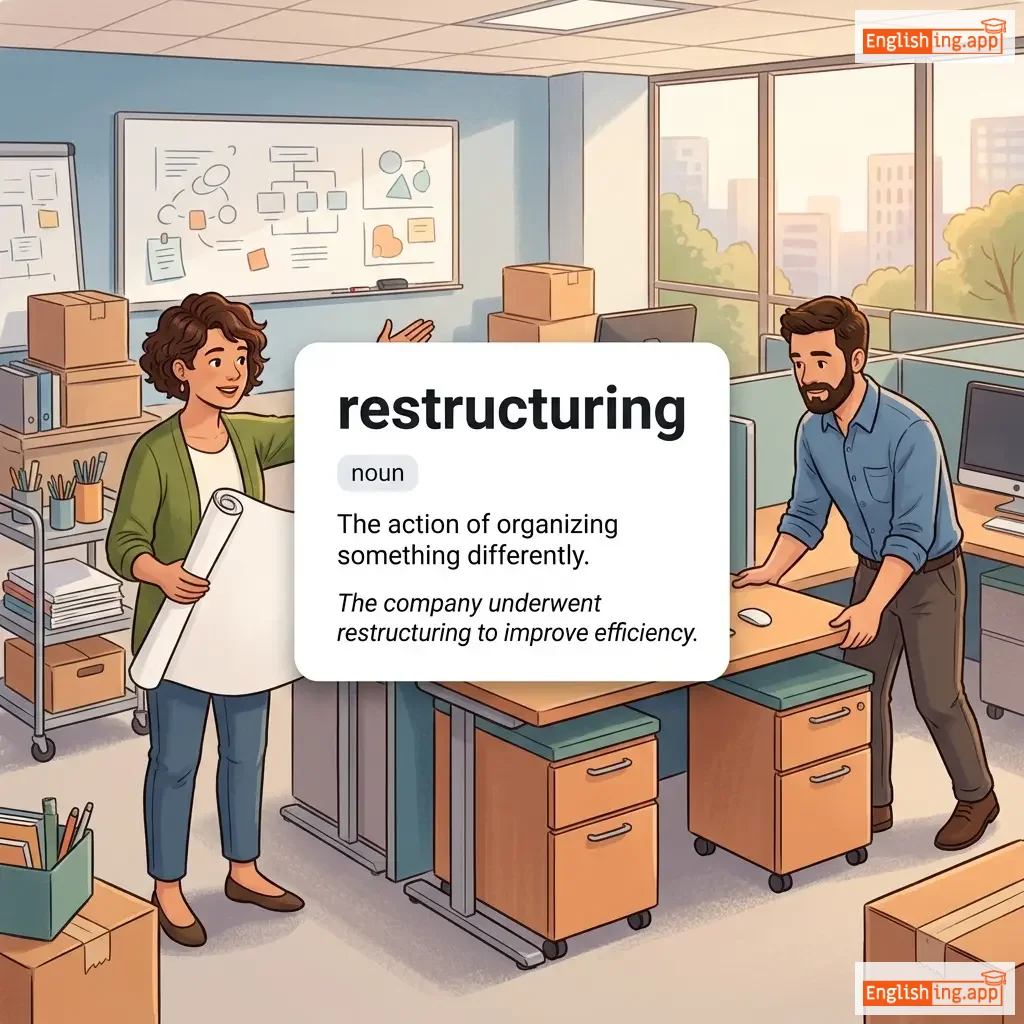
restructuring definition card — visual illustration of the meaning
noun
ˌriːˈstrʌk.tʃər.ɪŋ
重组 (chóngzǔ)

The action of organizing something differently.

"The company underwent restructuring to improve efficiency."

"公司进行重组以提高效率。" (Gōngsī jìnxíng chóngzǔ yǐ tígāo xiàolǜ.)
noun
/rɪˈzʌlt/
结果 (jieguo)

a consequence, effect, or outcome of something

"The result of the test was excellent."

"测试的结果是优秀的。" (Ceshi de jieguo shi youxiu de.)
resume definition card — visual illustration of the meaning
verb, noun
/rɪˈzjuːm/ (verb), /ˈrɛzjʊmeɪ/ (noun)
恢复 / 简历 (huīfù / jiǎnlì)

to begin again after a pause; or a summary of one’s qualifications and work experience

"She resumed her studies after a two-year break."

"她在两年的休息后重新开始了她的学业。" (Tā zài liǎng nián de xiūxí hòu chóngxīn kāishǐle tā de xuéyè.)
noun
/rɪˈzʌmpʃən/
恢复 (huīfù)

The act of starting something again after a pause or interruption.

"The resumption of classes after the holidays brought excitement among students."

"假期后课程的恢复带来了学生们的兴奋。" (Jiaqi hou kecheng de huifu dai lai le xueshengmen de xingfen.)
verb
/rɪˈsɜːrdʒ/
复兴 (fùxīng)

To rise, increase, or become active again after a decline.

"Interest in traditional crafts has begun to resurge."
"对传统手工艺的兴趣已经开始复兴。" (Duì chuántǒng shǒugōngyì de xìngqù yǐjīng kāishǐ fùxīng.)
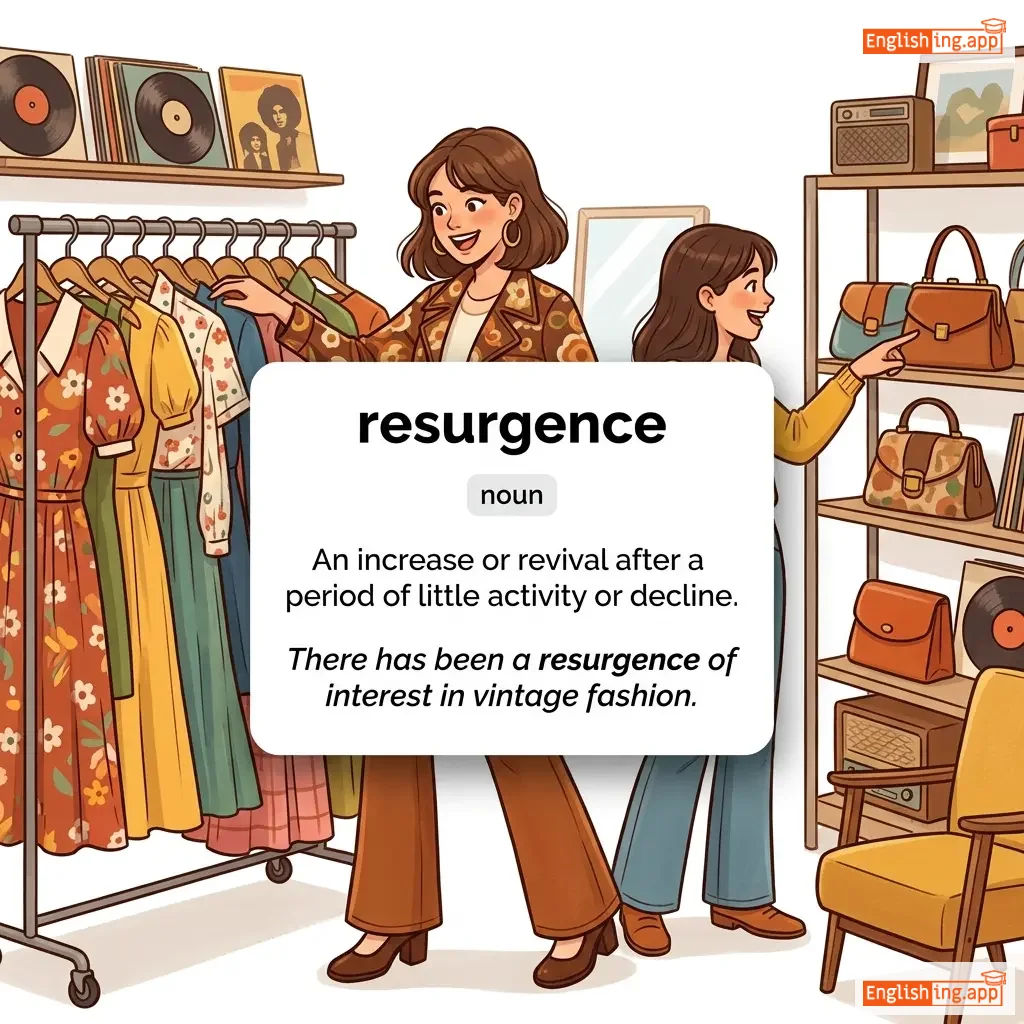
resurgence definition card — visual illustration of the meaning
noun
/rɪˈsɜːrdʒəns/
复兴 (fuxing)

An increase or revival after a period of little activity or decline.

"There has been a resurgence of interest in vintage fashion."

"复古时尚的兴趣复兴了。" (Fùgǔ shíshàng de xìngqù fùxīngle.)
adjective
/rɪˈsɜːrdʒənt/
复兴的 (fùxīng de)

Becoming strong, active, or popular again.

"The resurgent economy gave hope to many businesses."

"复兴的经济给许多企业带来了希望。" (Fùxīng de jīngjì gěi xǔduō qǐyè dài lái le xīwàng.)
verb
/ˌrɛzəˈrɛkt/
复活 (fuhuo)

To bring back to life or revive something from the past.

"The director decided to resurrect the old play for a new audience."

"导演决定让旧剧本为新的观众复活。" (Dao yan jue ding rang jiu ju ben wei xin de guan zhong fu huo.)
verb
/rɪˈsʌsɪteɪt/

to revive someone from unconsciousness or apparent death

"The doctors tried to resuscitate the patient after the heart attack."

noun, verb
/ˈriːteɪl/
零售 (ling shou)

the sale of goods to the public in small quantities for use or consumption rather than for resale

"The company specializes in the retail of clothing and accessories."

"公司专注于服装和配件的零售业务。" (Gongsi zhuanzhu yu fuzhuang he peijian de lingshou ye wu.)
noun
/ˈriːteɪlər/
零售商 (líng shòu shāng)

a person or business that sells goods to consumers rather than to other businesses

"The retailer offers discounts on electronic products."

"零售商提供电子产品的折扣。" (Líng shòu shāng tígōng diànzǐ chǎnpǐn de zhékòu.)
verb
/rɪˈteɪn/
保持 (bǎo chí)

to keep possession of something

"The company decided to retain its experienced employees."

"公司决定保留其经验丰富的员工。" (Gōngsī juédìng bǎoliú qí jīngyàn fēngfù de yuángōng.)
noun
/rɪˈteɪnər/
预付款 / 固定器 (yù fù kuǎn / gù dìng qì)

a fee paid in advance to secure someone's services, or a device that holds something in place

"The lawyer asked for a retainer before taking the case."

"律师在接案之前要求预付款。" (Lǜ shī zài jiē àn zhī qián yāo qiú yù fù kuǎn.)
verb
/rɪˈtælieɪt/
报复 (baofu)

to make an attack in return for a similar attack

"The army retaliated after the enemy attack."

"军队在敌人的攻击后进行了报复。" (Jundui zai diren de gongji hou jinxingle baofu.)
noun
/rɪˌtæl.iˈeɪ.ʃən/
报复 (bàofù)

the action of returning a military attack; counterattack; revenge for an injury or wrong

"The country threatened retaliation against any act of aggression."
"该国威胁对任何侵略行为进行报复。" (gāi guó wēixié duì rènhé qīnlüè xíngwéi jìnxíng bàofù.)
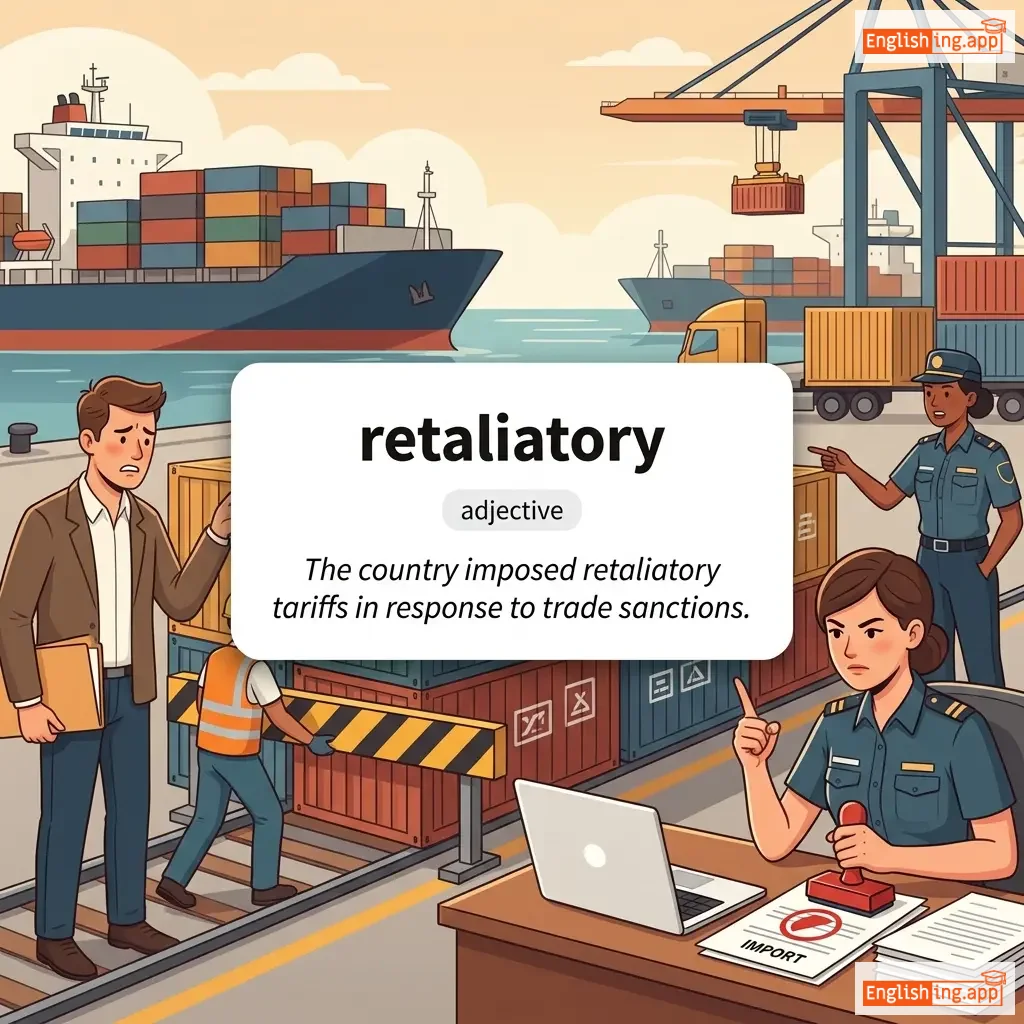
retaliatory definition card — visual illustration of the meaning
adjective
/rɪˈtæl.i.ə.tɔːr.i/
报复性 (bàofùxìng)

Taking action in response to another's action, characterized as punitive, revengeful, or counteractive.

"The country imposed retaliatory tariffs in response to trade sanctions."

"该国对贸易制裁实施了报复性关税。" (Gāi guó duì màoyì zhìcái shíshīle bàofùxìng guānshuì.)
verb
/rɪˈtɑːrd/
延迟 / 放慢 (yánchí / fàngmàn)

to delay or slow down the progress of something

"Lack of funds may retard the development of the project."

"资金不足可能会延缓项目的发展。" (Zījīn bùzú kěnéng huì yánhuǎn xiàngmù de fāzhǎn.)
verb
/rɛtʃ/
幸福 (xingfu)

to make the sound and movement of vomiting without bringing anything up

"The smell of spoiled food made him retch violently."
"腐烂的食物气味使他剧烈地呕吐。" (Fu lan de shi wu qi wei shi ta ju lie de ou tu.)
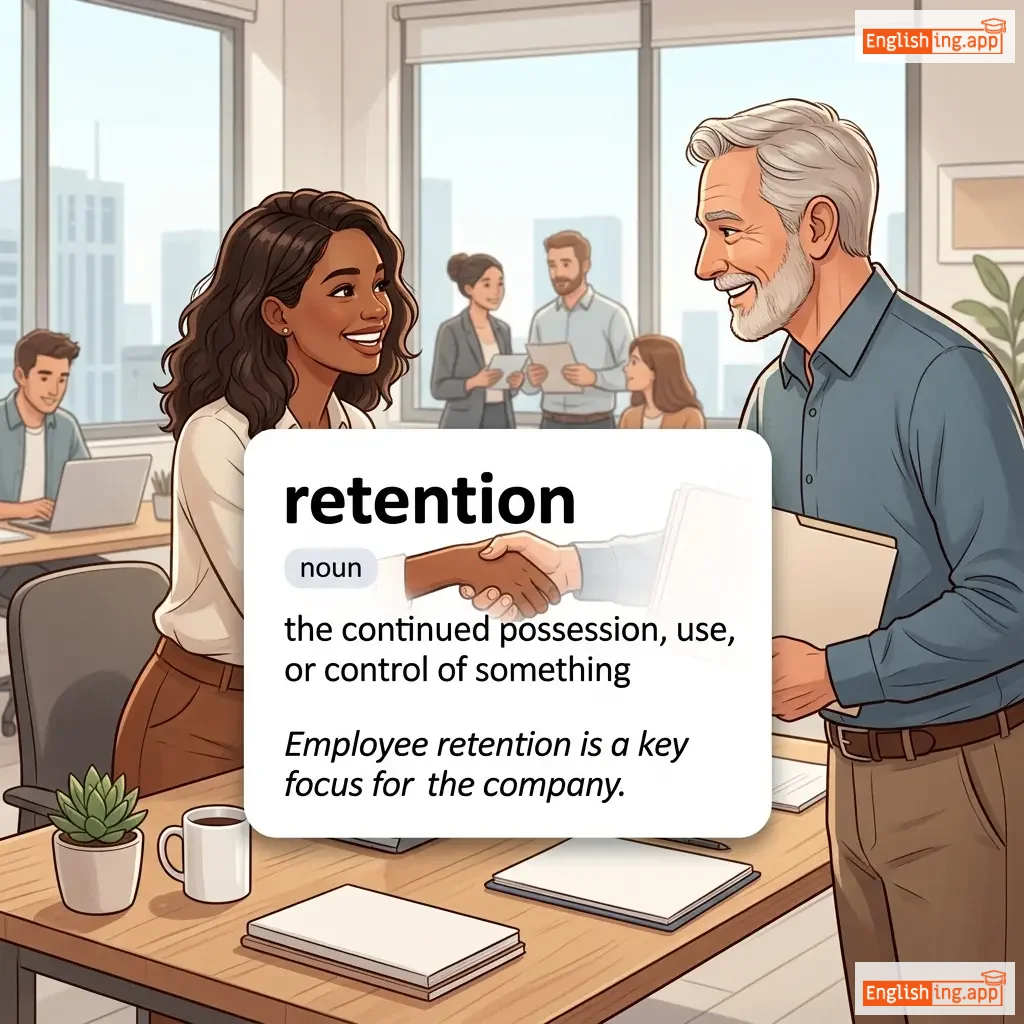
retention definition card — visual illustration of the meaning
noun
/rɪˈtɛnʃən/
保持 (bǎo chí)

the continued possession, use, or control of something

"Employee retention is a key focus for the company."

"员工保留是公司关注的重点。" (Yuángōng bǎo liú shì gōngsī guānzhù de zhòngdiǎn.)
retentive definition card — visual illustration of the meaning
adjective
/rɪˈtɛntɪv/
记忆力强的 (jìyìlì qiáng de)

having the ability to remember things easily or keep something for a long time

"She has a highly retentive memory."

"她有很强的记忆力。" (Tā yǒu hěn qiáng de jìyìlì.)
noun
/ˈrɛtɪsəns/
沉默 (chenmo)

the quality of being reserved or unwilling to speak freely

"His reticence made it difficult to know what he was thinking."

"他的沉默让人很难知道他在想什么。" (Tade chenmo rang ren hendan zhidao ta zai xiang shenme.)
reticent definition card — visual illustration of the meaning
adjective
/ˈrɛtɪsənt/
沉默寡言 (chenmo guayan)

not revealing one's thoughts or feelings readily; reserved

"She was reticent about her personal life."

"她对自己的个人生活保持沉默。" (Ta dui ziji de geren shenghuo baochi chenmo.)
adjective
/rɪˈtɪkjʊlət/
网状 (wǎngzhuàng)

Having a net-like pattern or structure.

"The leaf had a reticulate pattern of veins."

"叶子有着网状的脉络图案。" (Yèzi yǒu zhe wǎngzhuàng de mài luò tú'àn.)
noun
/ˈrɛtɪnjuː/
随行人员 (suíxíng rényuán)

A group of attendants or followers accompanying an important person.

"The king entered the hall followed by his retinue."

"国王带着随行人员进入了大厅。" (Guówáng dàizhe suíxíng rényuán jìnrùle dàtīng.)