词汇表

英语词汇词典 | 单词含义、定义和示例

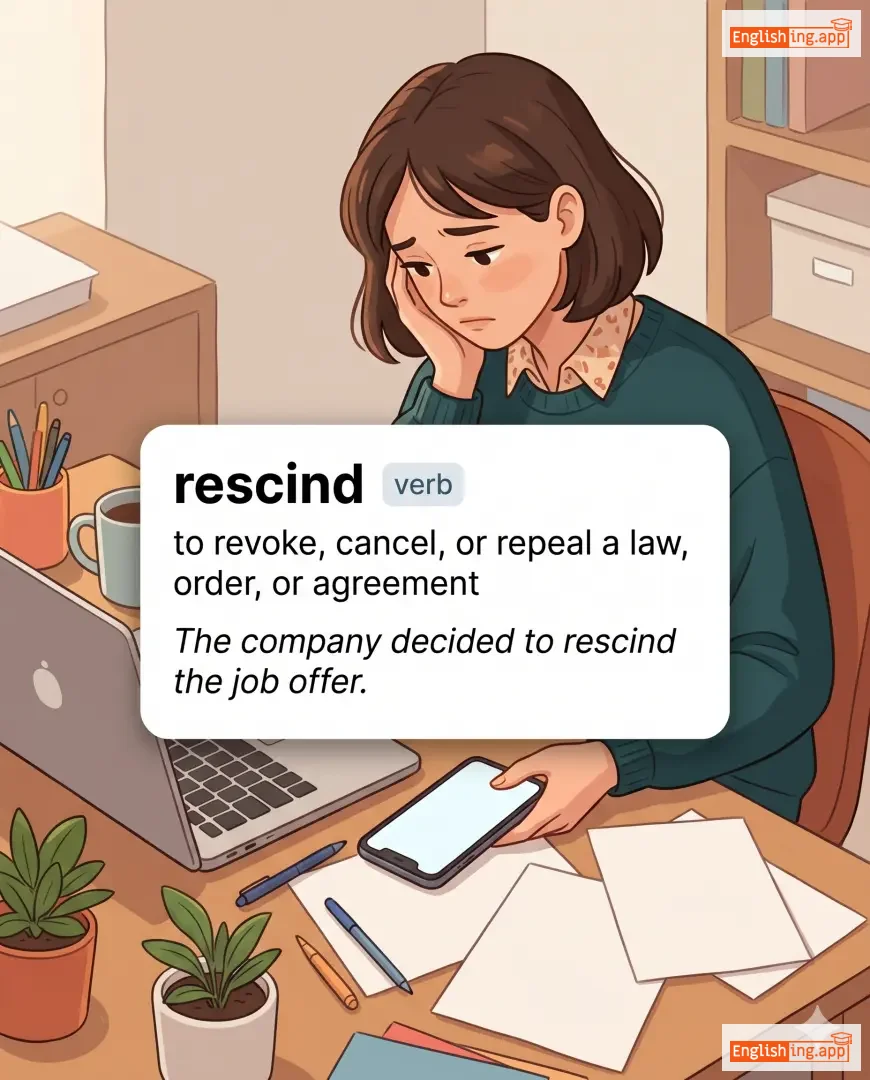
rescind definition card — visual illustration of the meaning
verb
/rɪˈsɪnd/
撤销 (chèxiāo)

to revoke, cancel, or repeal a law, order, or agreement

"The company decided to rescind the job offer."

"公司决定撤销工作机会。" (Gōngsī juédìng chèxiāo gōngzuò jīhuì.)
noun
/rɪˈsɪʒən/
取消 (qǔxiāo)

the cancellation or annulment of a law, contract, or agreement

"The rescission of the contract left both parties disappointed."
"合同的取消让双方都感到失望。" (Hétóng de qǔxiāo ràng shuāngfāng dōu gǎndào shīwàng.)
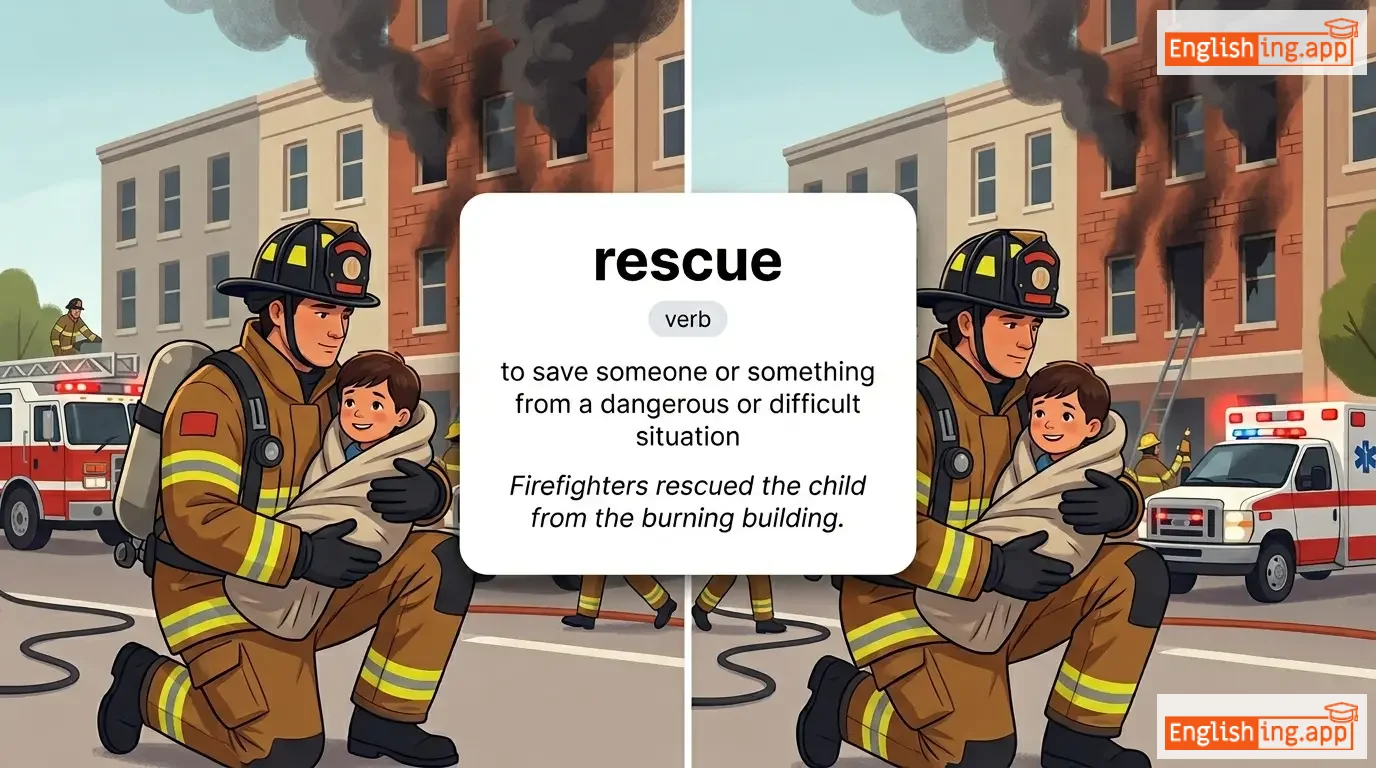
rescue definition card — visual illustration of the meaning
verb
/ˈrɛskjuː/
救援 (jiùyuán)

to save someone or something from a dangerous or difficult situation

"Firefighters rescued the child from the burning building."

"消防员从着火的大楼中救出了孩子。" (Xiāofángyuán cóng zháohuǒ de dàlóu zhōng jiùchūle háizi.)
research definition card — visual illustration of the meaning
noun
/rɪˈsɜːtʃ/
研究 (yanjiu)

the systematic investigation into and study of materials and sources in order to establish facts and reach new conclusions

"She conducted research on climate change effects."

"她进行了关于气候变化影响的研究。" (Ta jinxingle guanyu qihou bianhua yingxiang de yanjiu.)
noun
/rɪˈsɜːtʃə(r)/
研究员 (yanjiuyuan)

a person who conducts research

"The researcher published her findings in a scientific journal."

"研究员在科学期刊上发表了她的研究结果。" (Yanjiuyuan zai kexue qikan shang fabiao le ta de yanjiu jieguo.)
researchers definition card — visual illustration of the meaning
noun
rɪˈsɜː.tʃəz
研究人员 (yanjiu renyuan)

People who study and investigate to discover new information or facts.

"Researchers are working on innovative solutions."

"研究人员正在研究创新解决方案。" (Yanjiu renyuan zhengzai yanjiu chuangxin jiejue fang'an.)
verb
/ˌriːˈsiːt/
重新安排 (chongxin anpai)

to seat someone again or to fit something back into its place

"The usher had to reseat the guests after the interruption."

"引座员在干扰后不得不重新安排宾客。" (Yinzuo yuan zai ganrao hou budebu chongxin anpai binke.)
noun
/rɪˈzembləns/
相似 (xiangsi)

the state of being alike or similar, especially in appearance

"There is a strong resemblance between the two brothers."

"这两个兄弟之间有很强的相似性。" (Zhe liang ge xiongdi zhijian you hen qiang de xiangsi xing.)
verb
/rɪˈzɛmbəl/
(xiang)

to look like or be similar to something or someone

"She resembles her mother in both appearance and mannerisms."

"她在外貌和举止上都像她母亲。" (Ta zai waimao he juzhi shang dou xiang ta muqin.)
verb
/rɪˈzɛnt/
怨恨 (yuànhèn)

to feel bitterness or displeasure about something or someone

"She began to resent the constant criticism from her boss."
"她开始对老板的不断批评感到愤恨。" (Tā kāishǐ duì lǎobǎn de bùduàn pīpíng gǎndào fènhèn.)
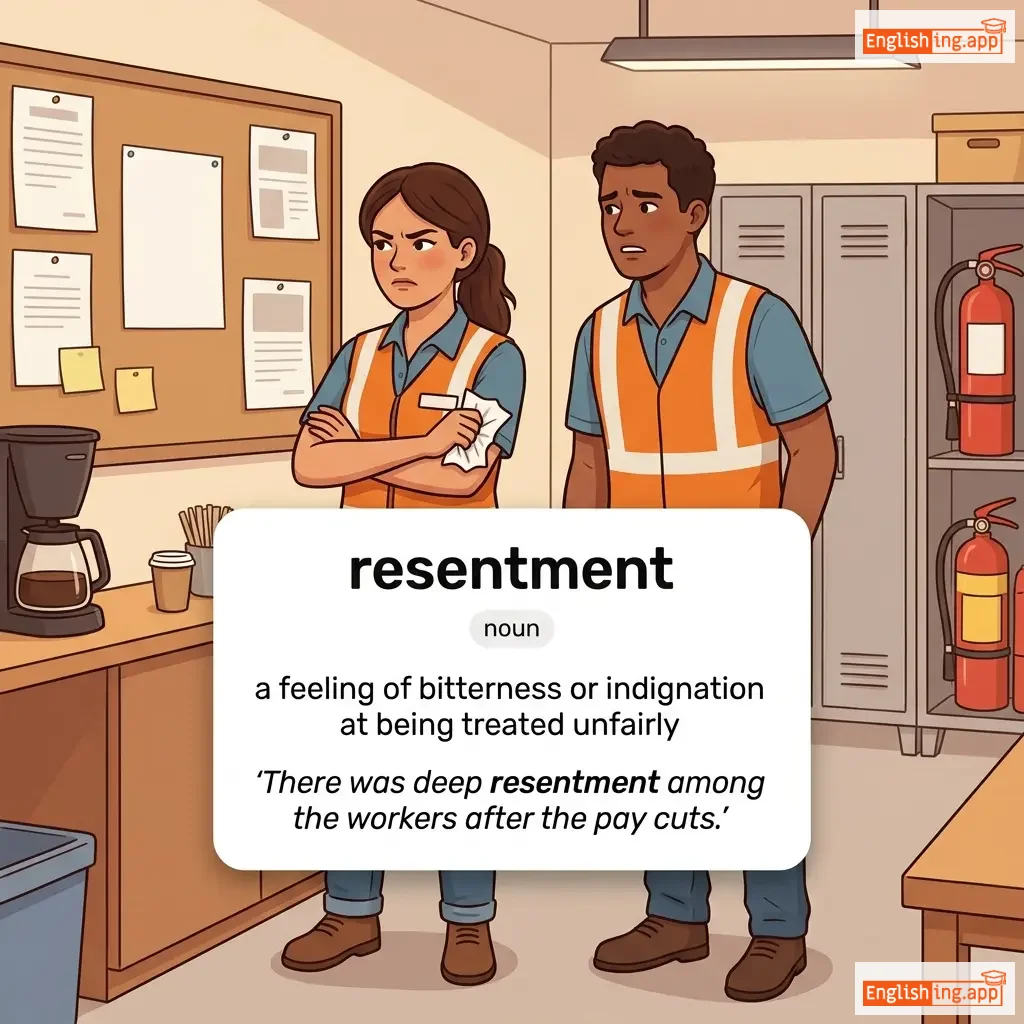
resentment definition card — visual illustration of the meaning
noun
/rɪˈzɛntmənt/
怨恨 (yuànhèn)

a feeling of bitterness or indignation at being treated unfairly

"There was deep resentment among the workers after the pay cuts."

"工人们在薪资削减后感到深深的怨恨。" (Gōngrénmen zài xīn zī xuējiǎn hòu gǎndào shēn shēn de yuànhèn.)
noun
/ˌrɛzərˈveɪʃən/
预订 (yùdìng)

an arrangement made in advance to secure accommodation, a seat, or service

"He made a reservation at the hotel for the weekend."

"他为周末在酒店做了预订。" (Tā wèi zhōumò zài jiǔdiàn zuòle yùdìng.)
reserve definition card — visual illustration of the meaning
verb
/rɪˈzɜːrv/
预定 (yùdìng)

to arrange for something to be kept for future use or for a particular person

"They reserved a table for two at the restaurant."

"他们在餐厅为两个人预定了一张桌子。" (Tāmen zài cāntīng wèi liǎng gèrén yùdìngle yī zhāng zhuōzi.)
adjective
/rɪˈzɜːrvd/
保留的 / 内敛的 (baoliu de / neilian de)

quiet, restrained, or not openly expressive of feelings

"He is a reserved person who rarely shares his thoughts."

"他是一个保留的人,几乎不分享他的想法。" (Ta shi yige baoliu de ren, jihu bu fenxiang tade xiangfa.)
noun
/ˈrɛzərvwɑːr/
水库 (shuiku)

A large natural or artificial lake used as a source of water supply.

"The city built a new reservoir to ensure enough drinking water for its residents."

"这座城市建造了一个新的水库,以确保为居民提供足够的饮用水。" (Zhè zuò chéngshì jiànzào le yí gè xīn de shuǐkù, yǐ quèbǎo wèi jūmín tígōng zúgòu de yǐnòng shuǐ.)
verb
/rɪˈzaɪd/
居住 (jūzhù)

to live or dwell in a particular place

"They reside in a large house near the river."

"他们住在河边的一座大房子里。" (Tāmen zhù zài hébiān de yīzuò dà fángzi lǐ.)
noun
/ˈrɛzɪdəns/
住所 (zhùsuǒ)

a place where someone lives; a home or dwelling

"He recently moved to a new residence near the city center."

"他最近搬到了市中心附近的一处新住所。" (Tā zuìjìn bān dào le shì zhōngxīn fùjìn de yī chù xīn zhùsuǒ.)
noun
/ˈrɛzɪdənt/
居民 (jumin)

A person who lives in a particular place.

"Every resident of the building must follow the safety rules."
"大楼的每个居民都必须遵守安全规则。" (Dàlóu de měi ge jūmín dōu bìxū zūnshǒu ānquán guīzé.)
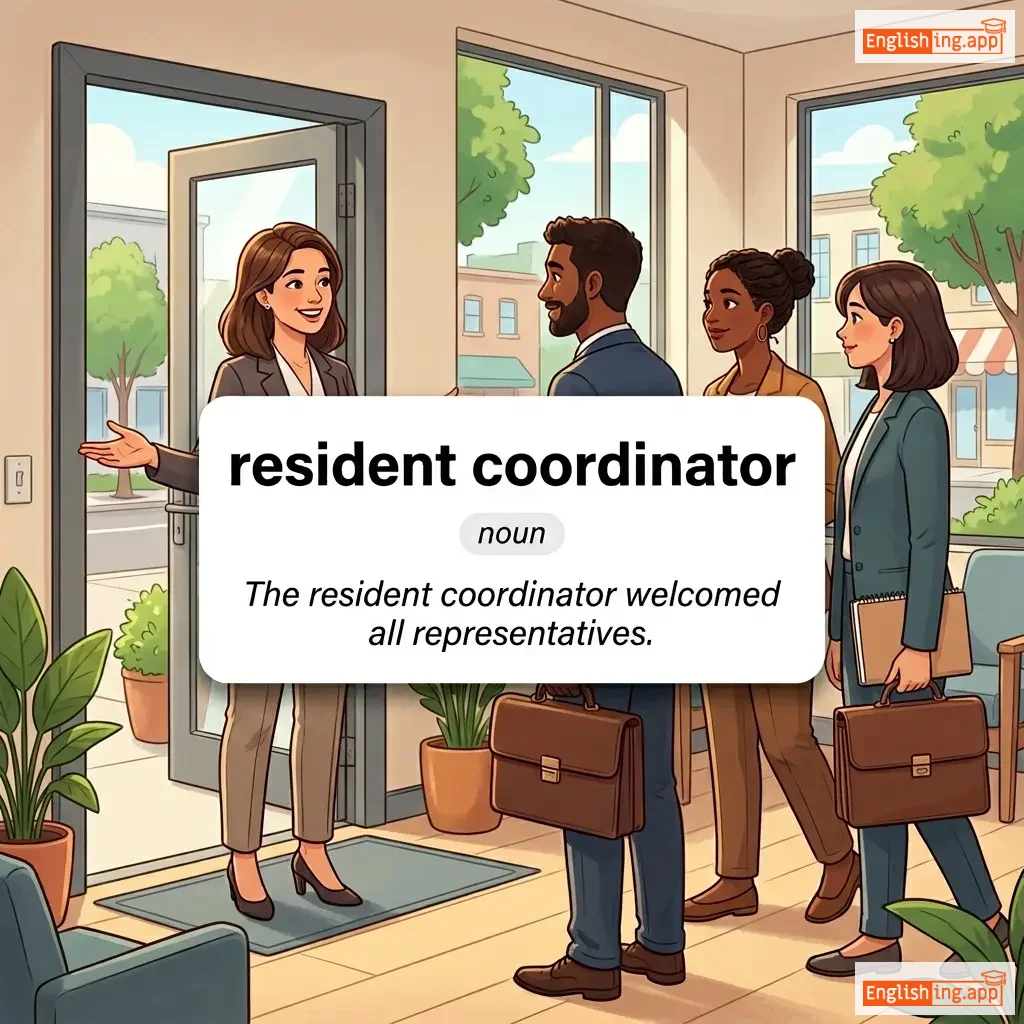
resident coordinator definition card — visual illustration of the meaning
noun
/ˈrez.ɪ.dənt ˈkəʊ.ɔː.dɪ.neɪ.tər/
驻地协调员 (zhù dì xié tiáo yuán)

A local administrator or official who coordinates activities in a specific region.

"The resident coordinator welcomed all representatives."
"驻地协调员欢迎所有代表。" (Zhù dì xié tiáo yuán huān yíng suǒ yǒu dàibiǎo.)
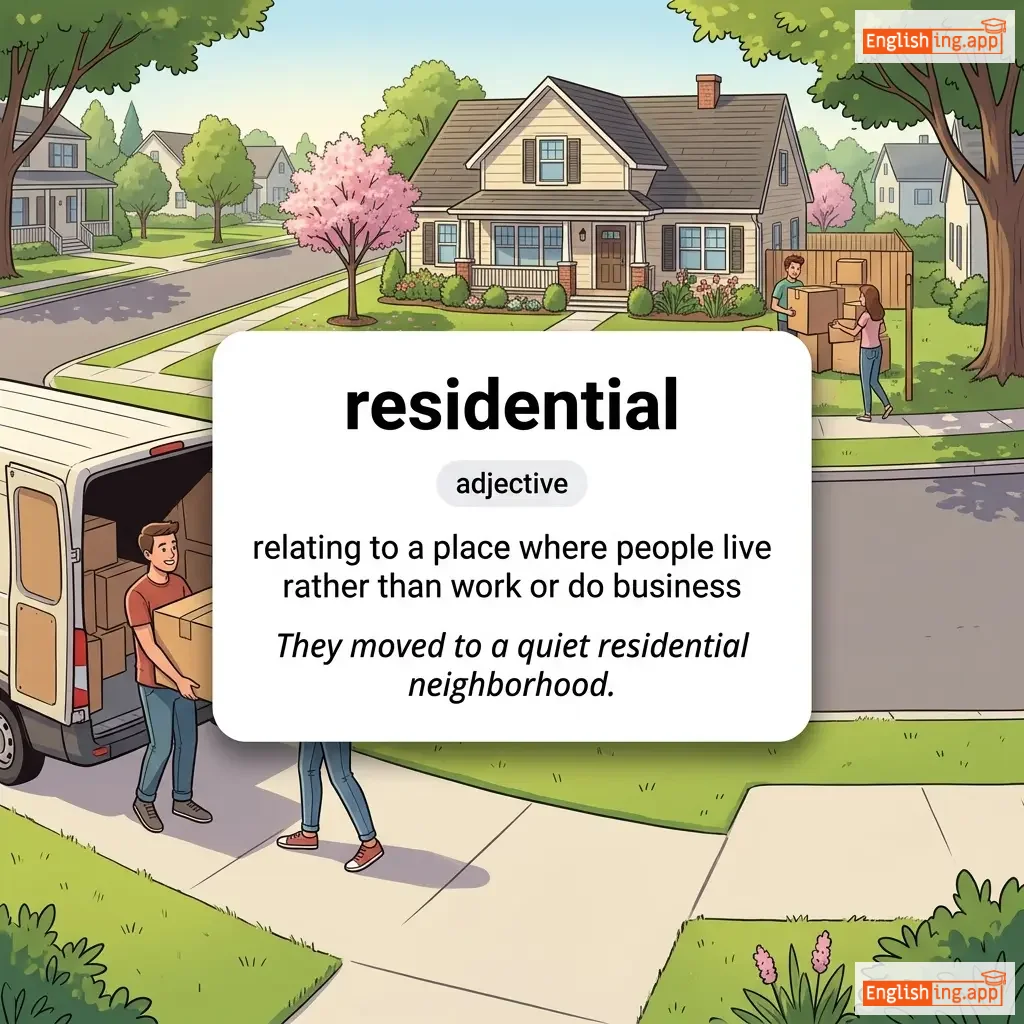
residential definition card — visual illustration of the meaning
adjective
/ˌrɛzɪˈdɛnʃəl/
住宅区 (zhùzhái qū)

relating to a place where people live rather than work or do business

"They moved to a quiet residential neighborhood."

"他们搬到了一个安静的住宅区。" (Tāmen bān dào le yīgè ānjìng de zhùzhái qū.)
adjective
/rɪˈzɪdjuəl/
剩余的 (shengyu de)

Remaining after the greater part has gone.

"The patient experienced residual pain after the surgery."
"病人在手术后经历了剩余的疼痛。" (Bingren zai shoushu hou jingli le shengyu de tengtong.)
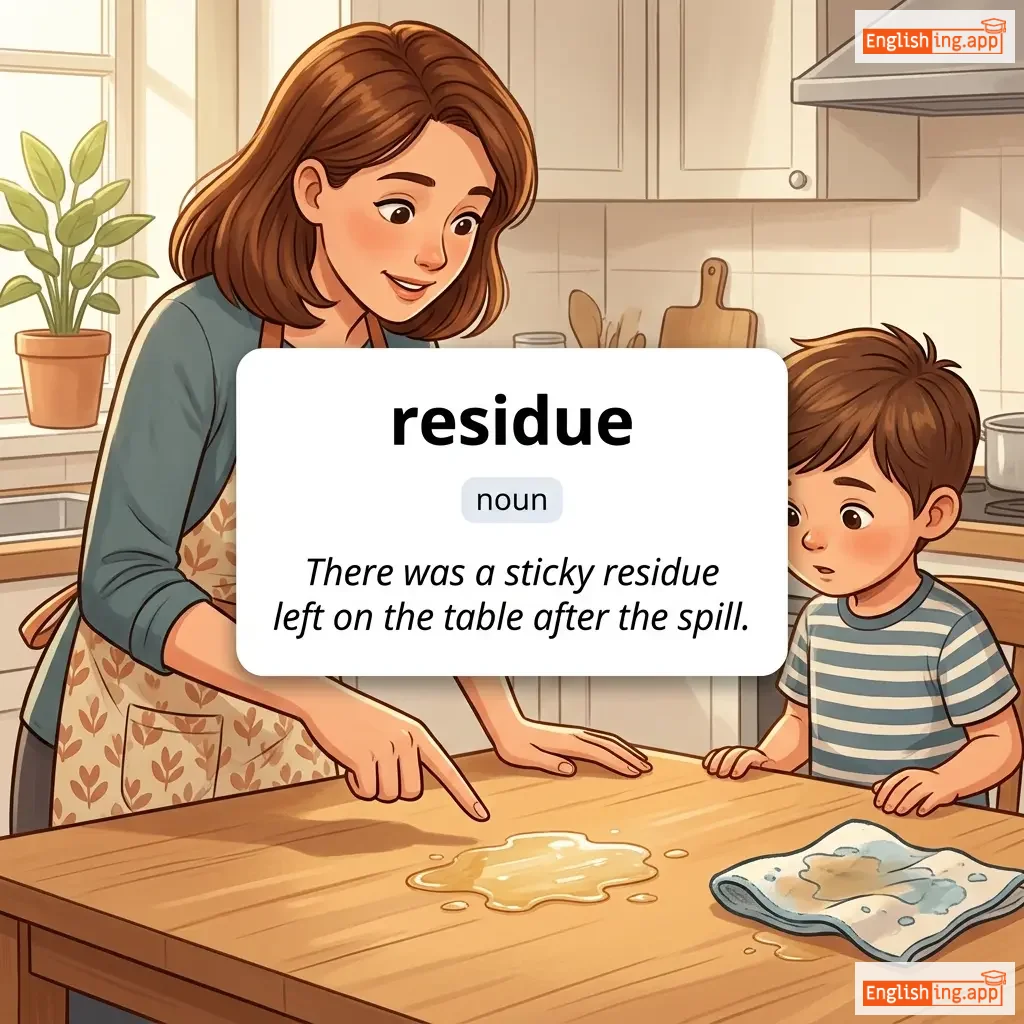
residue definition card — visual illustration of the meaning
noun
/ˈrɛzɪdjuː/
残留物 (can liu wu)

A small amount of something that remains after the main part has been removed or used.

"There was a sticky residue left on the table after the spill."
"溢出后,桌子上留下了粘性的残留物。" (Yichu hou, zhuozi shang liuxia le nianxing de can liu wu.)
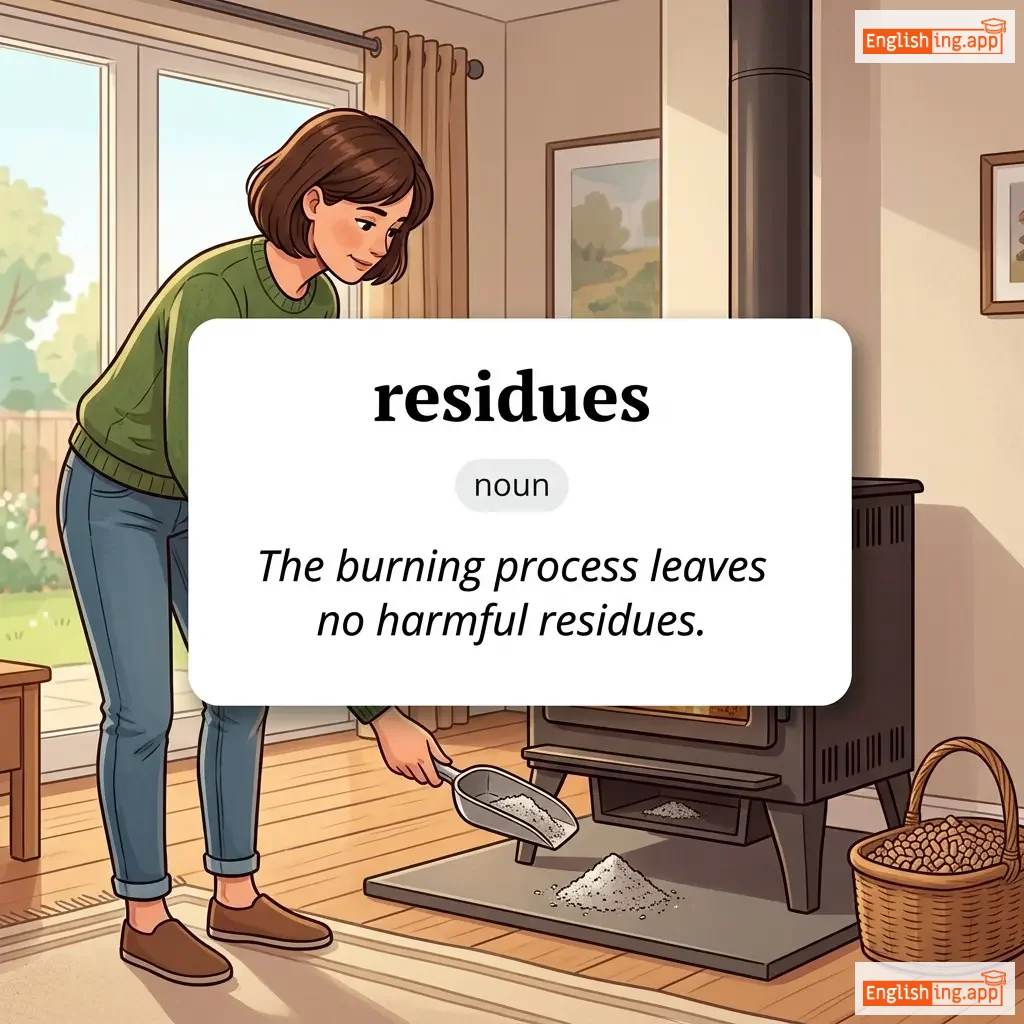
residues definition card — visual illustration of the meaning
noun
ˈrez.ɪ.djuːz
残留物 (cánliú wù)

A small amount of something that remains after the main part has gone or been taken or used.

"The burning process leaves no harmful residues."

"燃烧过程不会留下有害的残留物。" (Ránshāo guòchéng bù huì liú xià yǒuhài de cánliú wù.)
resign definition card — visual illustration of the meaning
verb
/rɪˈzaɪn/
辞职 (cízhí)

To voluntarily leave a job or office.

"She decided to resign from her position due to personal reasons."

"她决定因个人原因辞去她的职位。" (Tā juédìng yīn gèrén yuányīn cíqù tā de zhíwèi.)
resignation definition card — visual illustration of the meaning
noun
/ˌrɛzɪɡˈneɪʃən/
辞职 (cizhi)

The act of giving up a job or position; acceptance of something undesirable but inevitable.

"The CEO submitted his resignation yesterday."
"首席执行官昨天提交了辞职信。" (Shǒuxí zhíxíngguān zuótiān tíjiāo le cízhi xìn.)
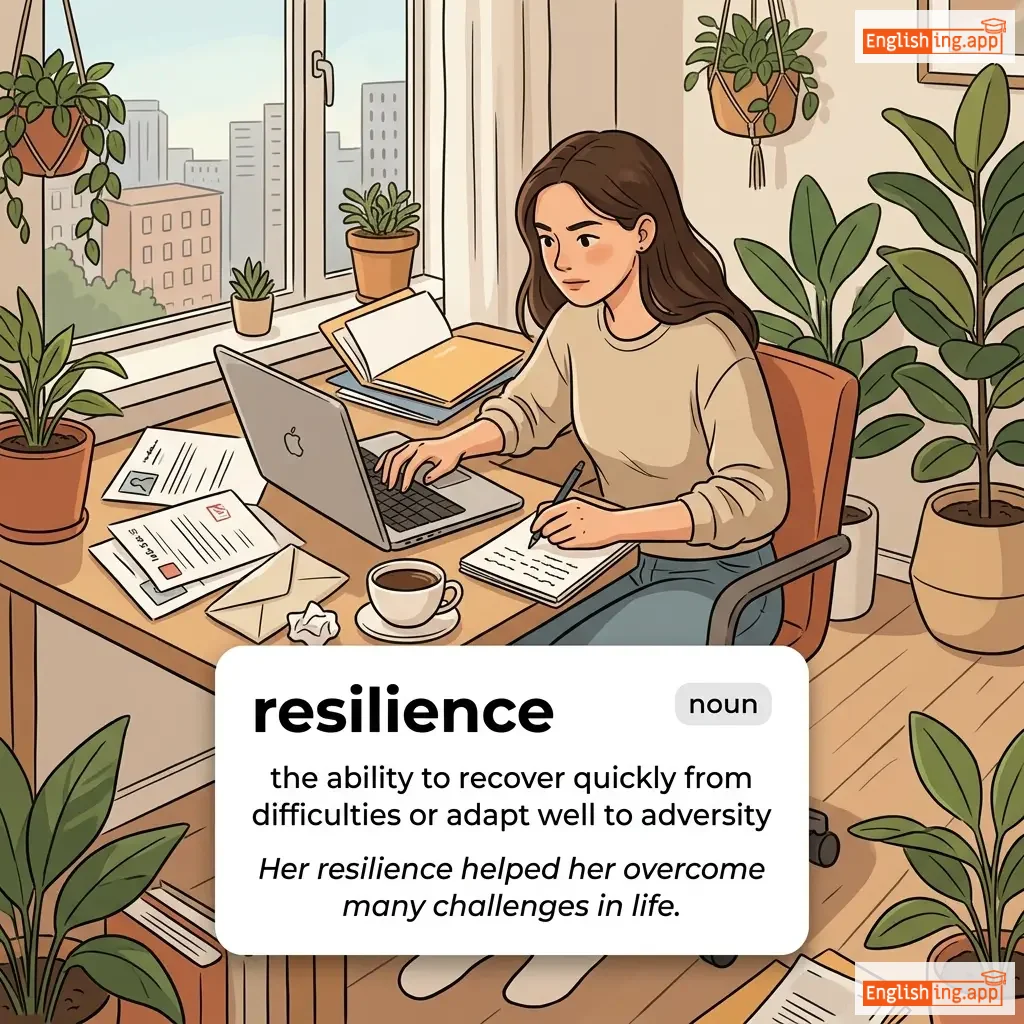
resilience definition card — visual illustration of the meaning
noun
/rɪˈzɪliəns/
韧性 (renxing)

the ability to recover quickly from difficulties or adapt well to adversity

"Her resilience helped her overcome many challenges in life."
"她的韧性帮助她克服了生活中的许多挑战。" (Ta de renxing bangzhu ta keku le shenghuo zhong de xu duo tiaozhan.)
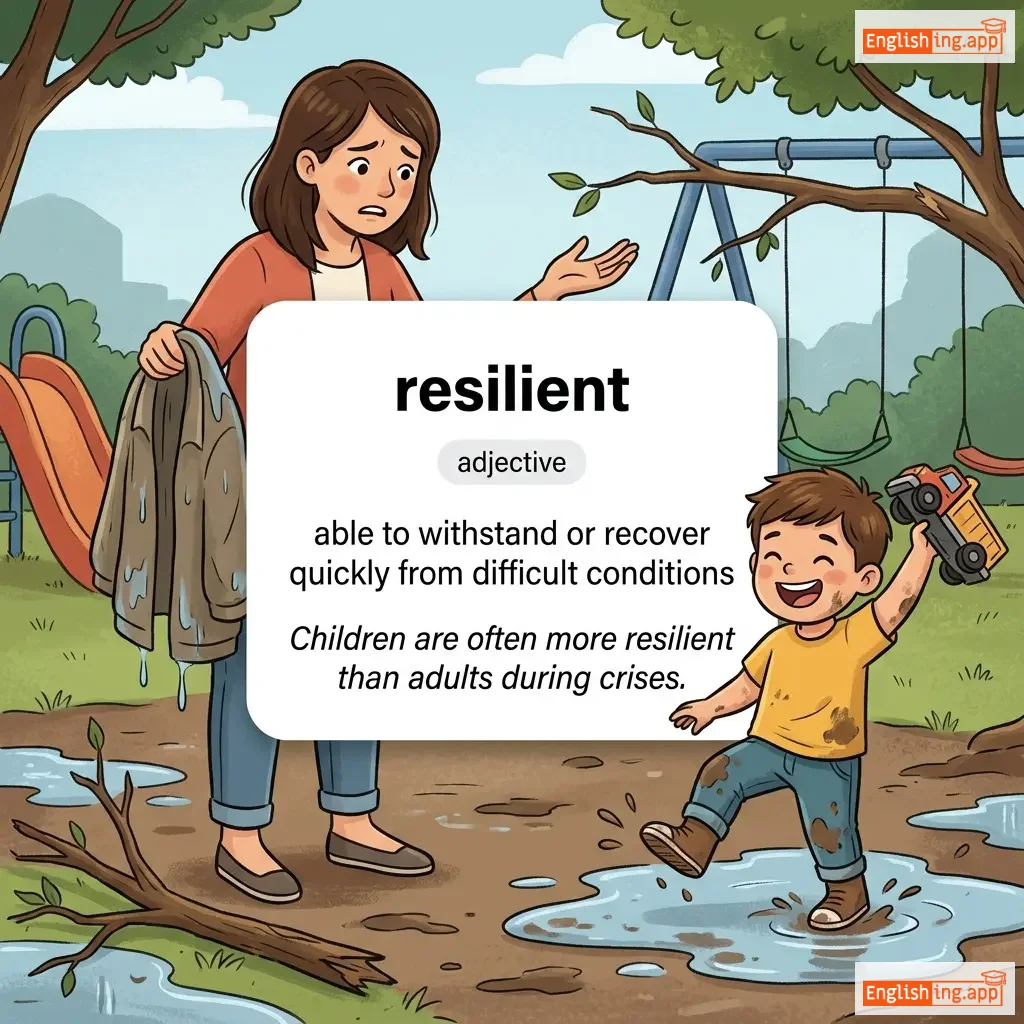
resilient definition card — visual illustration of the meaning
adjective
/rɪˈzɪliənt/
坚韧的 (jianren de)

able to withstand or recover quickly from difficult conditions

"Children are often more resilient than adults during crises."

"孩子们在危机期间通常比成年人更具坚韧性。" (Haizimen zai weiji qijian tongchang bi chengnianren geng ju jianrenxing.)
noun
/ˈrɛzɪn/
树脂 (shuzhi)

a sticky organic substance, usually secreted by plants, often used in varnishes or plastics

"The craftsman used natural resin to make the sculpture shine."
"工匠用天然树脂使雕塑闪闪发光。" (Gōngjiàng yòng tiānrán shùzhī shǐ diāosù shǎn shǎn fāguāng.)
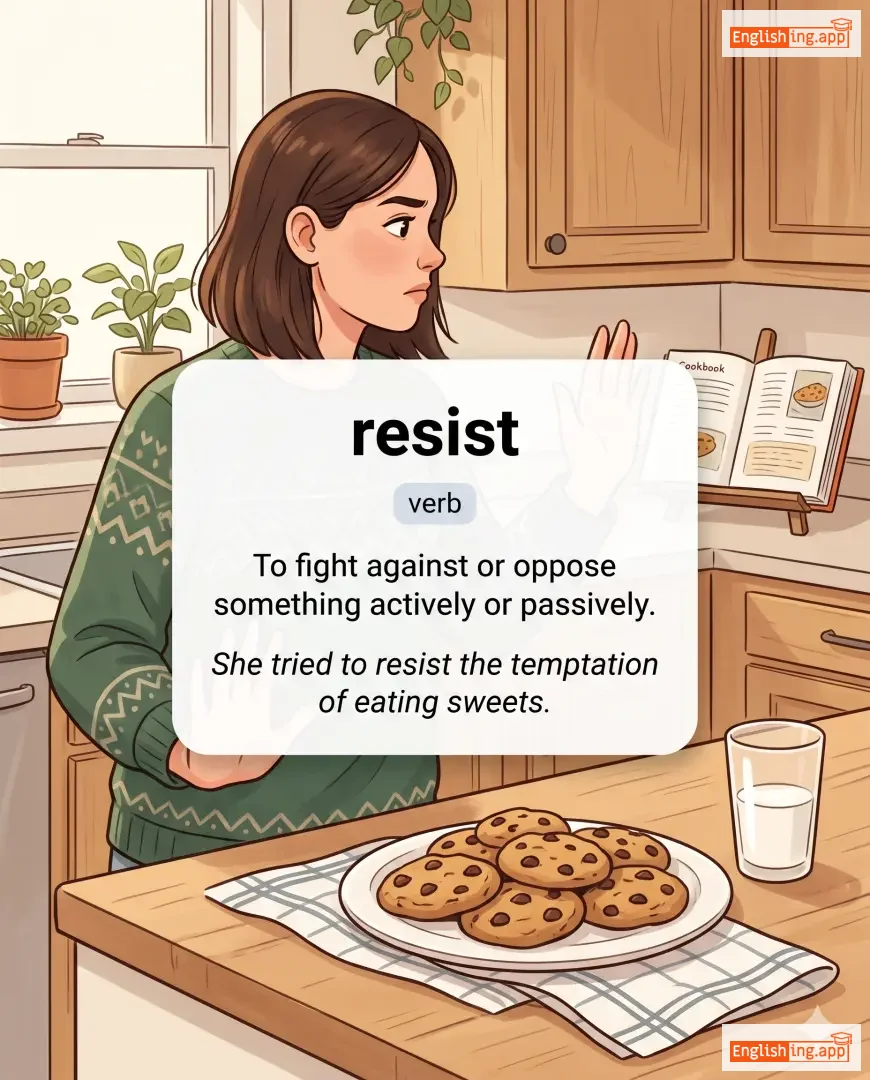
resist definition card — visual illustration of the meaning
verb
/rɪˈzɪst/
抵抗 (dǐkàng)

To fight against or oppose something actively or passively.

"She tried to resist the temptation of eating sweets."
"她试图抵抗吃糖果的诱惑。" (Tā shìtú dǐkàng chī tángguǒ de yòuhuò.)
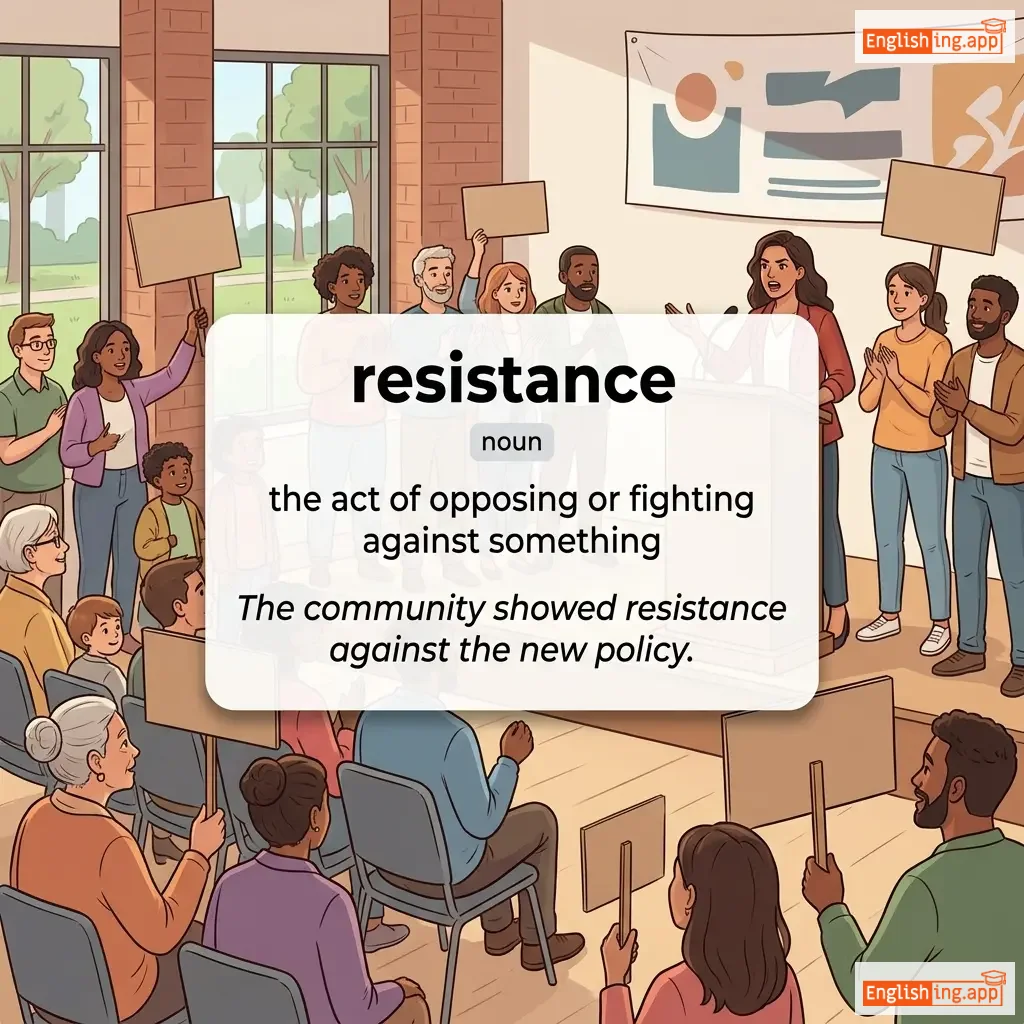
resistance definition card — visual illustration of the meaning
noun
/rɪˈzɪstəns/
抵抗 (dǐkàng)

the act of opposing or fighting against something

"The community showed resistance against the new policy."

"社区对新政策表现出抵抗。" (Shèqū duì xīn zhèngcè biǎoxiàn chū dǐkàng.)
adjective
/rɪˈzɪstənt/
抗性 (kàngxìng)

not affected by something; able to oppose or withstand

"This fabric is resistant to water and stains."

"这块布料对水和污渍具有抗性。" (Zhè kuài bùliào duì shuǐ hé wūzì jùyǒu kàngxìng.)
adjective
/rɪˈzɪstɪv/
电阻性 (dianzu xing)

tending to resist or oppose; in physics, relating to electrical resistance

"The material has resistive properties that slow down current flow."

"该材料具有电阻特性,能够减慢电流流动。" (Gai cailiao juyou dianzu texing, nenggou jianman dianliu liudong.)
adjective
/rɪˈzɪstləs/
无法抗拒 (wúfǎ kàngjù)

Impossible to resist; having an overpowering effect.

"She felt a resistless urge to laugh at the joke."

"她感到无法抗拒的冲动,忍不住笑出声。" (Tā gǎndào wúfǎ kàngjù de chōngdòng, rěn bù zhù xiàochū shēng.)
adjective
/ˈrɛzəluːt/
果断 (guǒduàn)

Admirably purposeful, determined, and unwavering.

"He remained resolute despite the many challenges."

"尽管面临许多挑战,他依然保持果断。" (Jǐnguǎn miànlín xǔduō tiǎozhàn, tā yīrán bǎochí guǒduàn.)
resolution definition card — visual illustration of the meaning
noun
/ˌrɛzəˈluːʃən/
决心 (juexin)

A firm decision to do or not to do something; the quality of being determined.

"She made a resolution to exercise daily."

"她做出了每天锻炼的决心。" (Tā zuòchūle měitiān duànliàn de juéxīn.)
resolve definition card — visual illustration of the meaning
verb
/rɪˈzɒlv/
解决 (jie jue)

To decide firmly on a course of action; to settle or solve a problem.

"They resolved to finish the project on time."

"他们决定按时完成项目。" (Tamen jueding anshi wancheng xiangmu.)
resonance definition card — visual illustration of the meaning
noun
/ˈrɛzənəns/
共鸣 (gongming)

The quality of a sound being deep, full, and reverberating; the ability to evoke a strong response.

"Her voice had a resonance that filled the hall."

"她的声音有一种共鸣,充满了整个大厅。" (Tā de shēngyīn yǒu yī zhǒng gòngmíng, chōngmǎnle zhěnggè dàtīng.)
adjective
/ˈrɛzənənt/
共鸣的 (gongming de)

Deep, clear, and continuing to sound or echo.

"The resonant voice of the speaker filled the hall."

"演讲者那共鸣的声音充满了大厅。" (Yǎnjiǎng zhě nà gòngmíng de shēngyīn chōngmǎn le dàtīng.)
verb
/ˈrɛzəneɪt/
共鸣 (gongming)

To produce or be filled with a deep, full, and reverberating sound; to evoke a feeling or memory.

"Her words resonated with the audience."

"她的话在听众中产生了共鸣。" (Tā de huà zài tīngzhòng zhōng chǎnshēngle gòngmíng.)
noun, verb
/rɪˈzɔːrt/
度假村 / 最后的选择 (dùjiàcūn / zuìhòu de xuǎnzé)

A place for rest or recreation; to turn to something for help or solution.

"They stayed at a beach resort during their vacation."

"他们在度假期间住在海滩度假村。" (Tāmen zài dùjià qījiān zhù zài hǎitān dùjiàcūn.)
verb
/rɪˈzaʊnd/
回响 (huíxiǎng)

To fill a place with sound; to be celebrated or talked about widely.

"The hall resounded with applause."

"大厅里回荡着掌声。" (dàtīng lǐ huídàng zhuó zhǎngshēng.)
noun
/rɪˈsɔːrs/
资源 (ziyuan)

A supply of materials, money, or assets that can be used when needed.

"Water is a vital natural resource."
"水是宝贵的自然资源。" (Shuǐ shì bǎoguì de zìrán zīyuán.)
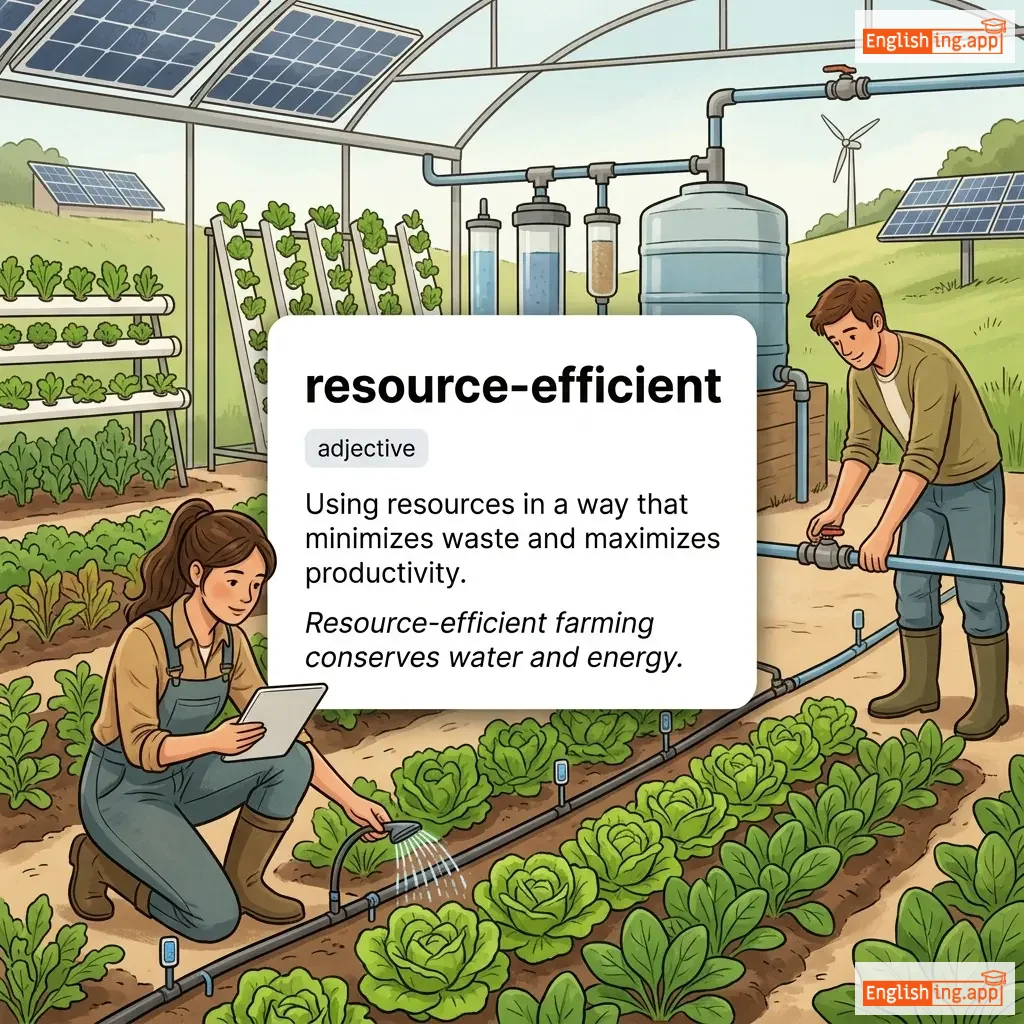
resource-efficient definition card — visual illustration of the meaning
adjective
/rɪˈsɔːrs ɪˈfɪʃ.ənt/
资源高效 (ziyuan gaoxiao)

Using resources in a way that minimizes waste and maximizes productivity.

"Resource-efficient farming conserves water and energy."

"资源高效的农业节约水和能源。" (Ziyuan gaoxiao de nongye jieyue shui he nengyuan.)
adjective
/rɪˈsɔːrsfəl/

Having the ability to find quick and clever ways to overcome difficulties.

"She is very resourceful when it comes to solving unexpected problems."
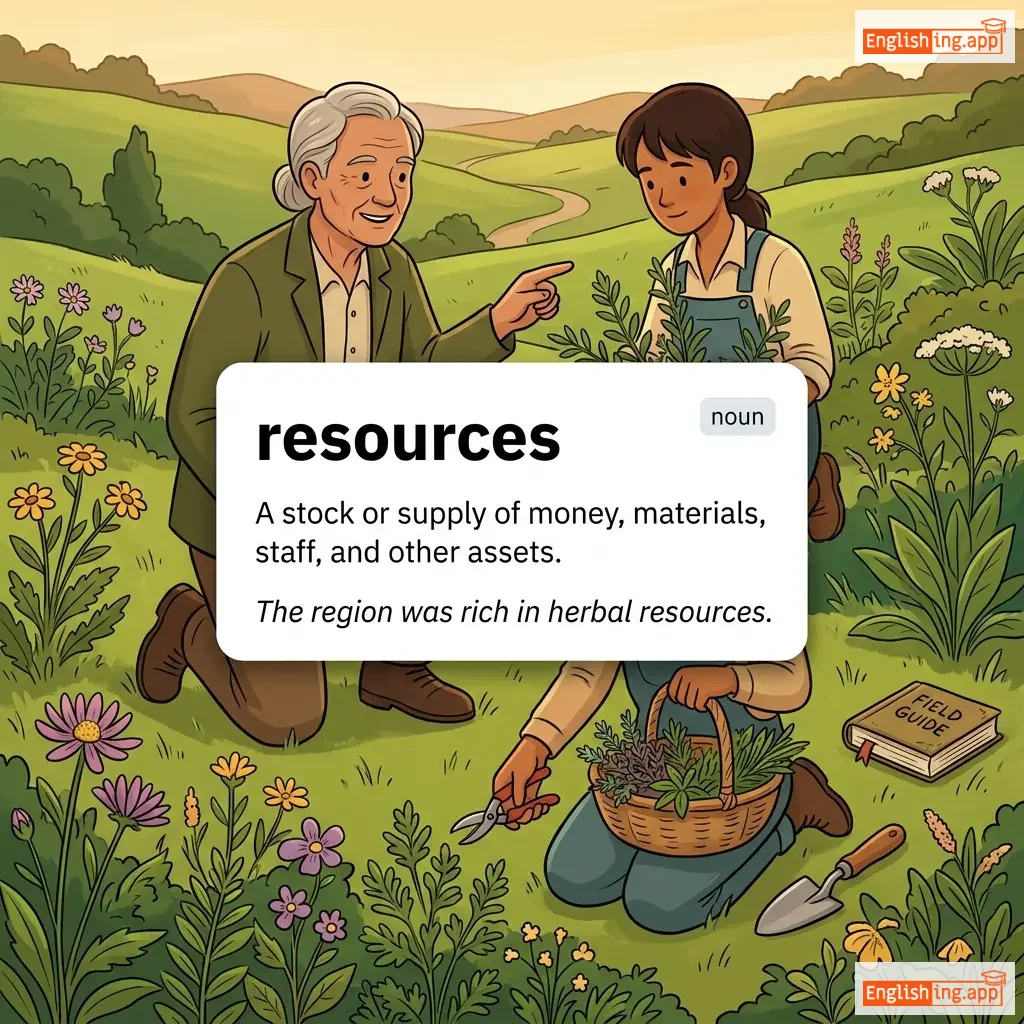
resources definition card — visual illustration of the meaning
noun
/rɪˈzɔː.sɪz/
资源 (ziyuan)

A stock or supply of money, materials, staff, and other assets.

"The region was rich in herbal resources."

"该地区富含草本资源。" (Gai diqu fuhan caoben ziyuan.)
respect definition card — visual illustration of the meaning
noun/verb
/rɪˈspɛkt/
尊重 (zūnzhòng)

to treat someone with admiration or regard; high regard for someone or something

"We should respect each other's opinions, even if we disagree."

"我们应该尊重彼此的意见,即使我们不同意。" (Wǒmen yīnggāi zūnzhòng bǐcǐ de yìjiàn, jíshǐ wǒmen bùtóngyì.)
adjective
/rɪˈspek.tə.bəl/
体面 (tǐmiàn)

worthy of respect; having good reputation; decent

"He comes from a respectable family in the community."

"他来自社区一个体面的家庭。" (Tā láizì shèqū yīgè tǐmiàn de jiātíng.)
adverb
/rɪˈspek.tə.bli/
以尊敬的方式; 体面地; (yǐ zūnjìng de fāngshì; tǐmiàn de;)

in a way that is worthy of respect; decently; properly

"She was dressed respectably for the interview."

"她为面试穿得体面。" (Tā wèi miànshì chuān dé tǐmiàn.)
adjective
/rɪˈspɛktɪv/
各自的 (gèzì de)

belonging or relating separately to each of the people or things already mentioned

"The students were in their respective rooms."

"学生们各自在各自的房间里。" (Xuéshēngmen gèzì zài gèzì de fángjiān lǐ.)
adverb
/rɪˈspɛktɪvli/
分别 (fenbie)

Separately and in the order already mentioned.

"The two teams scored 3 and 5 points, respectively."

"两支队伍分别得到了3和5分。" (Liang zhi duiwu fenbie dedaole 3 he 5 fen.)