词汇表

英语词汇词典 | 单词含义、定义和示例

noun
/ˈrɛnəˌsɑːns/
文艺复兴 (wenyi fuxing)

a revival of art, culture, or learning; a period of renewed interest and growth

"The city experienced a cultural renaissance during the 1990s."

"这座城市在1990年代经历了文化复兴。" (Zhe zuo chengshi zai 1990 niandai jingli le wenhua fuxing.)
verb
/rɛnd/
撕裂 (silie)

to tear something apart violently or forcefully

"The explosion rent the air with a deafening noise."
"爆炸以震耳欲聋的声音撕裂了空气。" (Bàozhà yǐ zhèng'ěr yù lóng de shēngyīn sīlièle kōngqì.)
render definition card — visual illustration of the meaning
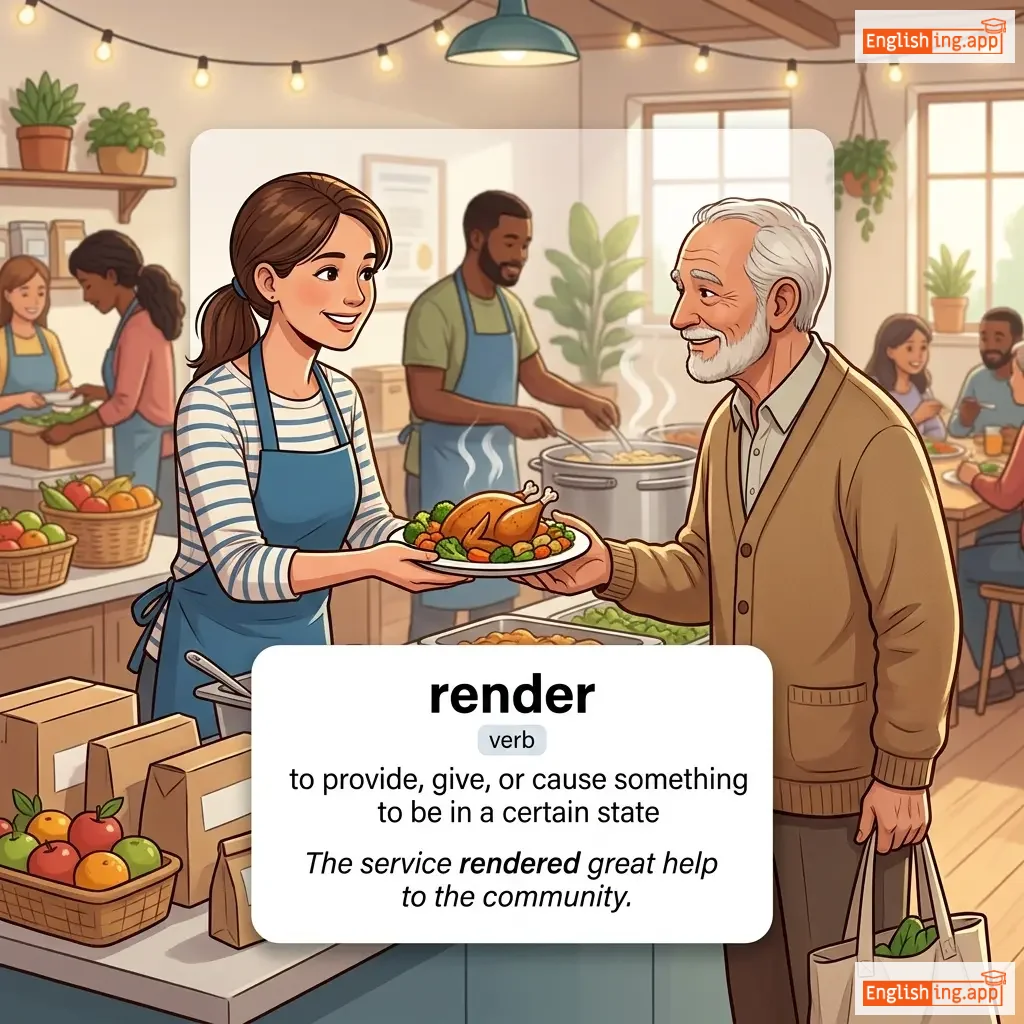
verb
/ˈrɛndər/
提供 (tigong)

to provide, give, or cause something to be in a certain state

"The service rendered great help to the community."

"提供的服务给社区带来了很大的帮助。" (Tigong de fuwu gei shequ daile hen da de bangzhu.)
noun
/ˈrɒndɪvuː/
约会 (yuēhuì)

a meeting or appointment at an agreed time and place

"They arranged a secret rendezvous at the café."

"他们在咖啡馆安排了一次秘密的会面。" (Tāmen zài kāfēiguǎn ānpái le yīcì mìmì de huìmiàn.)
noun
/rɛnˈdɪʃən/
演绎 (yǎn yì)

a performance or interpretation of a piece of art, music, or text

"The singer gave a moving rendition of the classic song."

"歌手献上了一场感人的经典歌曲演绎。" (Gēshǒu xiàn shàng le yī chǎng gǎn rén de jīngdiǎn gēqǔ yǎn yì.)
noun
/ˈrɛnɪˌɡeɪd/
叛徒 (pantu)

a person who deserts or betrays an organization, country, or principles

"He was labeled a renegade after leaving the party and criticizing its policies."
"他在离开党派并批评其政策后被贴上了叛徒的标签。" (Ta zai likai dangpai bing piping qi zhengce hou bei tie shang le pantu de biaoqian.)
renege definition card — visual illustration of the meaning
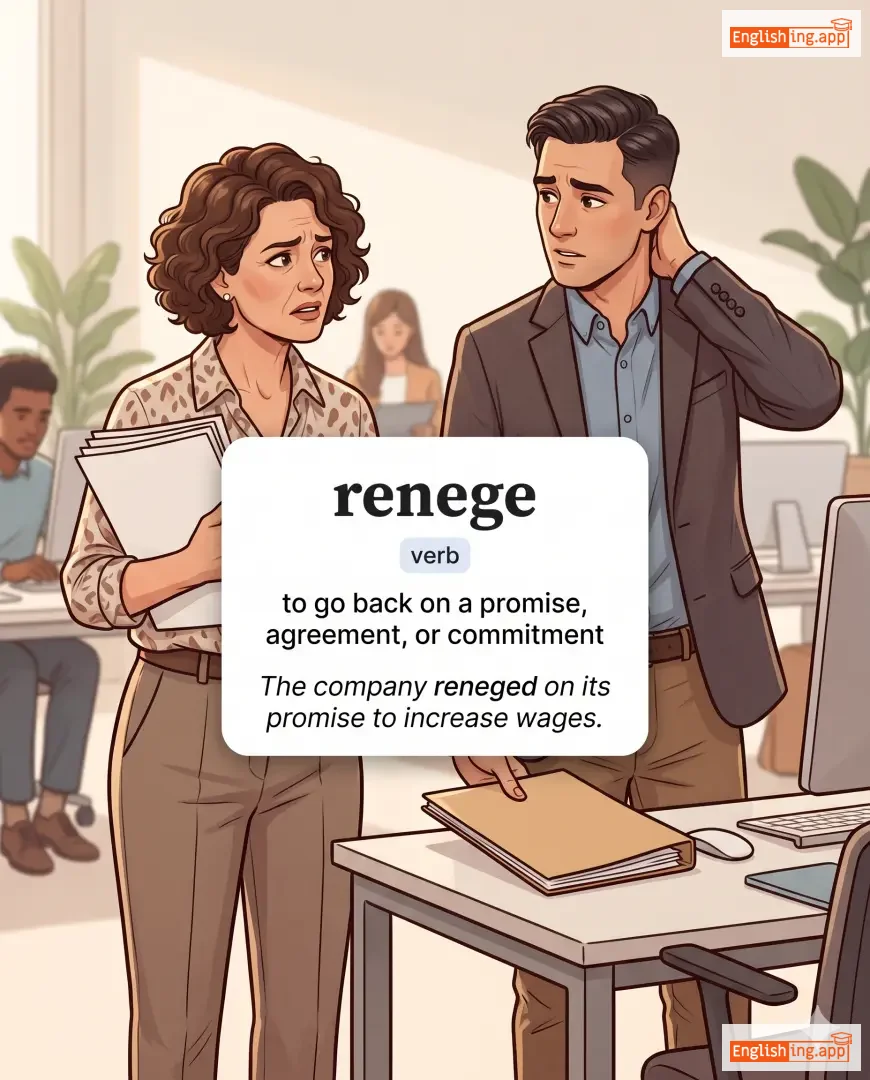
verb
/rɪˈnɛɡ/
违约 (wéiyuē)

to go back on a promise, agreement, or commitment

"The company reneged on its promise to increase wages."
"公司违背了他们提高工资的承诺。" (Gōngsī wéibèi le tāmen tígāo gōngzī de chéngnuò.)
🔄

renew

verb
/rɪˈnuː/

to make something new again or extend its period of validity

"I need to renew my passport before traveling."

renewable definition card — visual illustration of the meaning
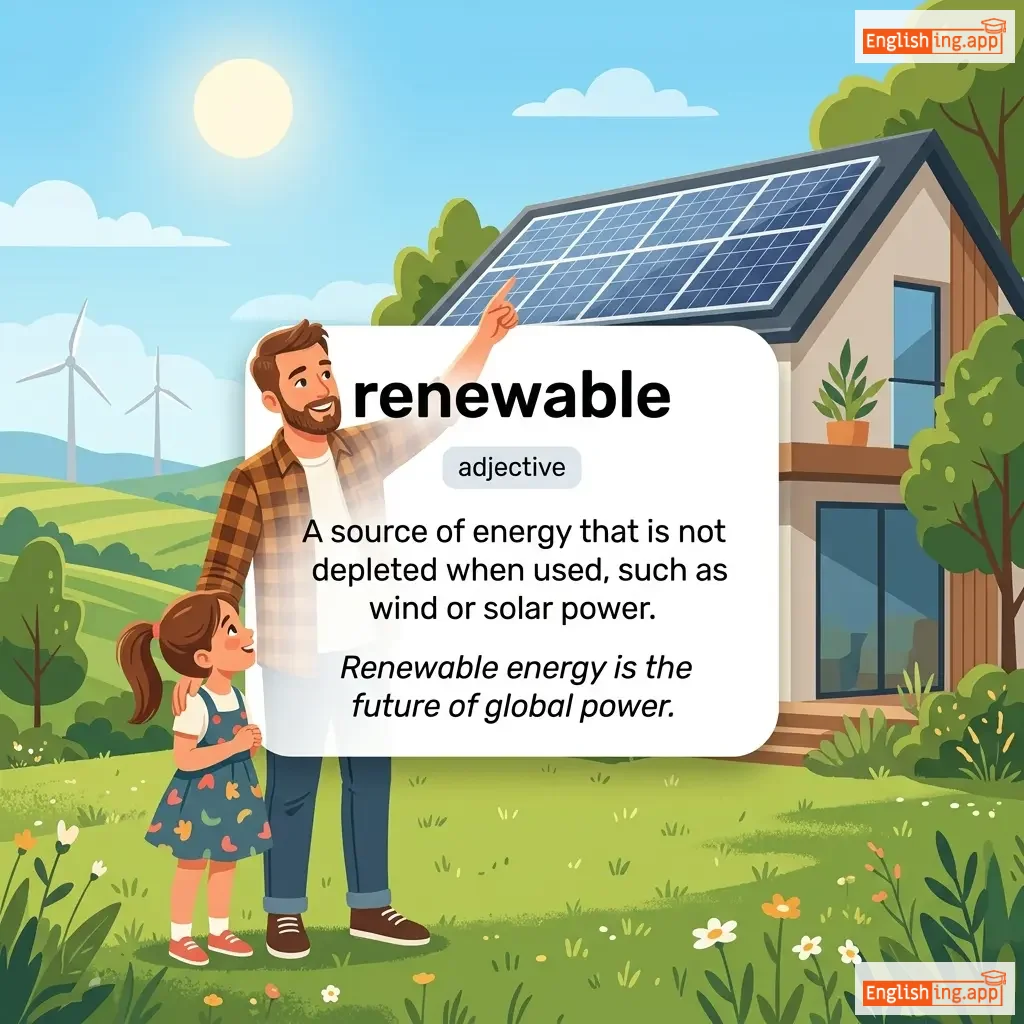
adjective
rɪˈnjuː.ə.bəl
可再生 (kě zàishēng)

A source of energy that is not depleted when used, such as wind or solar power.

"Renewable energy is the future of global power."

"可再生能源是全球能源的未来。" (Kě zàishēng néngyuán shì quánqiú néngyuán de wèilái.)
verb
/rɪˈnaʊns/
放弃 (fàngqì)

to formally declare rejection of something, such as a claim, belief, or way of life

"She renounced her citizenship to move abroad permanently."

"她放弃了国籍以便永久定居国外。" (Tā fàngqì le guójí yǐbiàn yǒngjiǔ dìngjū guówài.)
verb
/ˈrɛnəˌveɪt/
翻新 (fānxīn)

to restore something old to a good state or to improve it

"They decided to renovate the old house before moving in."

"他们决定在搬进之前修复旧房子。" (Tāmen juédìng zài bān jìn zhīqián xiūfù jiù fángzi.)
noun
/ˌren.əˈveɪ.ʃən/
翻新; 恢复 (fanxin; huifu)

the act of renovating; restoration to a former better state

"The old house underwent a complete renovation last year."

"去年老房子进行了彻底的翻修。" (qunian lao fangzi jinxingle chedi de fanxin.)
noun
/rɪˈnaʊn/
声誉 (shengyu)

the condition of being widely known and highly respected

"The scientist gained international renown for his groundbreaking research."

"这位科学家因其开创性的研究而获得了国际声誉。" (Zhe wei kexuejia yin qi kaichuangxing de yanjiu er huodele guoji shengyu.)
renowned definition card — visual illustration of the meaning
adjective
/rɪˈnaʊnd/
著名 (zhùmíng)

famous or well-known for a particular skill or achievement

"She is a renowned artist in the country."

"她是国内著名的艺术家。" (Tā shì guónèi zhùmíng de yìshùjiā.)
noun, verb
/rɛnt/
租金 (zujin)

payment made regularly by a tenant to a landlord for the use of property or land; also to pay for the use of something

"They decided to rent an apartment in the city center."

"他们决定在市中心租一间公寓。" (Tāmen juédìng zài shì zhōngxīn zū yī jiān gōngyù.)
noun
/ˈrɛntəl/
租赁 (zūlìn)

an arrangement in which something is rented, or the amount paid for renting

"The car rental was more expensive than we expected."

"汽车租赁比我们预期的要贵。" (qìchē zūlìn bǐ wǒmen yùqí de yào guì.)
noun
/rɪˌnʌnsiˈeɪʃən/
放弃 (fangqi)

the formal rejection or giving up of something, usually a belief, claim, or way of life

"His renunciation of worldly pleasures impressed the monks."

"他对世俗享乐的放弃让僧侣们印象深刻。" (Tā duì shìsú xiǎnglè de fàngqì ràng sēnglǚmen yìnxiàng shēnkè.)
verb
/riːˈɔːrɡənaɪz/
重新组织 (chóngxīn zǔzhī)

to arrange something again in a different way for greater efficiency or order

"The manager decided to reorganize the team structure."

"经理决定重新组织团队结构。" (Jīnglǐ juédìng chóngxīn zǔzhī tuánduì jiégòu.)
repair definition card — visual illustration of the meaning
verb
/rɪˈpɛər/

to fix or restore something that is broken or damaged

"He repaired his broken watch with patience."

adjective
/rɪˈper.ə.bəl/
可修复的 (ke xiufu de)

able to be fixed or mended; capable of being repaired

"The broken phone is repairable with the right parts."

"坏掉的手机可以用正确的部件修复。" (Huai diao de shouji keyi yong zhengque de bujian xiufu.)
noun
/rɪˈpɛərə/
修理工 (xiuligong)

a person whose job is to fix damaged or broken things

"The repairer fixed the broken washing machine quickly."

"修理工很快修好了坏掉的洗衣机。" (xiuligong hen kuai xiu hao le huai diao de xiyiji)
adjective
/ˈrɛpərəbəl/
可修复的 (ke xiufu de)

able to be repaired or fixed

"The damage to the car was serious but still reparable."
"汽车的损坏很严重,但仍然是可修复的。" (Qiche de sunhai hen yanzhong, dan rengran shi ke xiufu de.)
reparation definition card — visual illustration of the meaning
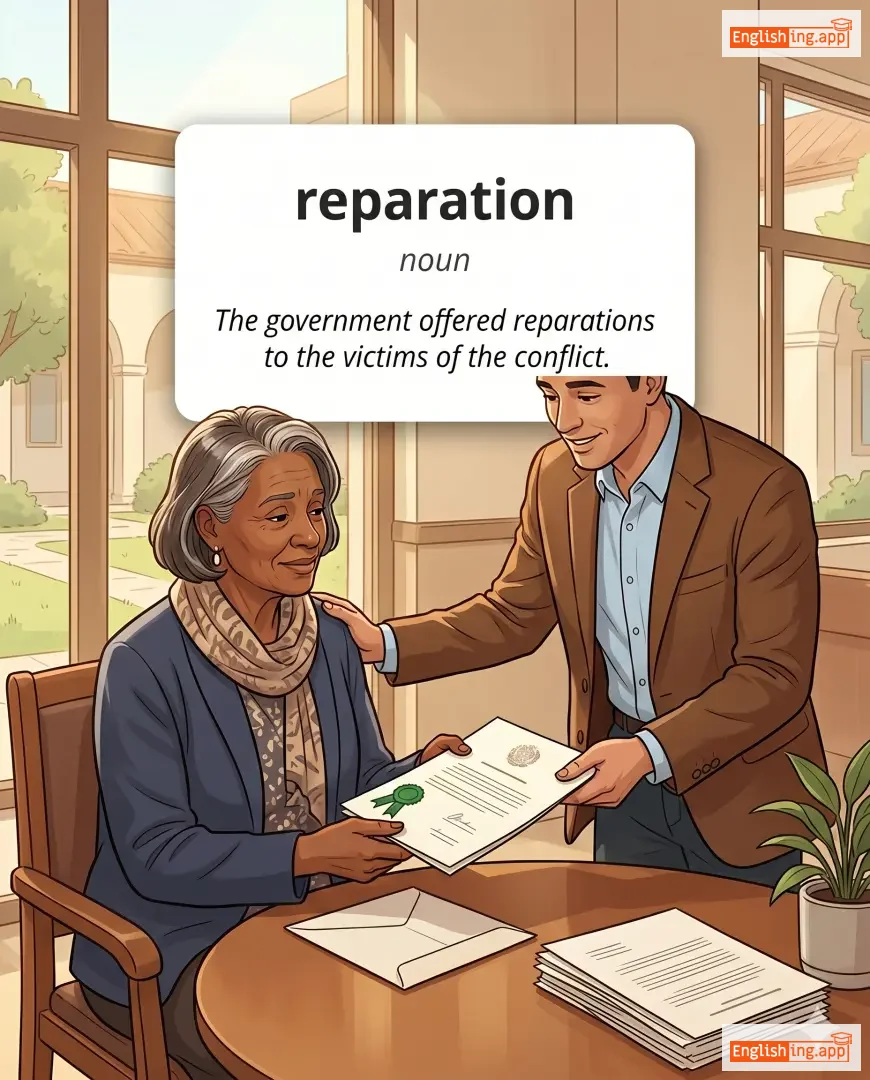
noun
/ˌrɛpəˈreɪʃən/
赔偿 (peichang)

the making of amends for a wrong done by paying money or helping those who were wronged

"The government offered reparations to the victims of the conflict."

"政府向冲突受害者提供了赔偿。" (Zhengfu xiang chongtu shouhaizhe tigongle peichang.)
noun
/ˌrɛpɑːrˈtiː/
机智的回答 (jīzhì de huídá)

A quick, witty, and clever reply in conversation.

"The debate was full of sharp repartee between the two speakers."

"辩论充满了两位演讲者之间的机智回答。" (Biànlùn chōngmǎnle liǎng wèi yǎnjiǎng zhě zhī jiān de jīzhì huídá.)
noun
/rɪˈpæst/
宴席 (yanxi)

A meal or the food eaten during a meal.

"They enjoyed a delicious repast by the riverside."

"他们在河边享用了美味的宴席。" (Tāmen zài hé biān xiǎngyòngle měiwèi de yànxí.)
verb
/riːˈpeɪ.tri.eɪt/
遣返 (qianfan)

To return someone to their own country, often after war or imprisonment.

"The government worked to repatriate the refugees safely."

"政府努力确保安全地将难民遣返回国。" (Zhengfu nuli quebao anquan de jiang nanmin qianfan hui guo.)
📜❌

repeal

verb
/rɪˈpiːl/

To officially cancel or revoke a law or decision.

"The government decided to repeal the outdated law."

verb
/rɪˈpiːt/
重复 (chong fu)

to say again or do again

"Could you please repeat that sentence?"

"你能再说一遍那句话吗?" (Ni neng zai shuo yi bian na ju hua ma?)
adjective
/rɪˈpiː.tɪd/
重复的; 多次发生 (chongfu de; duoci fasheng)

done again; happening again; occurring multiple times

"He made repeated attempts to contact her."

"他多次尝试联系她。" (Ta duoci changshi lianxi ta)
adverb
/rɪˈpiːtɪdli/
反复地 (fǎn fù de)

in a way that is repeated or done many times

"She apologized repeatedly for the mistake."

"她因错误反复道歉。" (Tā yīn cuòwù fǎnfù dàoqiàn.)
repel definition card — visual illustration of the meaning
verb
/rɪˈpɛl/
击退 (jī tuì)

To drive back or push away, especially an attack or something unwanted.

"The army managed to repel the enemy forces."

"军队成功地击退了敌军。" (Jūnduì chénggōng de jī tuì le dí jūn.)
adjective
/rɪˈpɛlənt/
驱虫剂 (qūchóng jì)

Able to drive away something, especially insects or unpleasant things; causing disgust or distaste.

"This cream is highly effective as a mosquito repellent."

"这款乳霜在防蚊方面非常有效。" (Zhè kuǎn rǔshuāng zài fáng wén fāngmiàn fēicháng yǒuxiào.)
noun
/rɪˈpɛntəns/
忏悔 (chanhui)

Deep regret or remorse for wrongdoing; sincere sorrow for one's sins or mistakes.

"He showed true repentance after apologizing for his mistakes."

"他在为自己的错误道歉后表现出了真正的忏悔。" (Tā zài wèi zìjǐ de cuòwù dàoqiàn hòu biǎoxiàn chūle zhēnzhèng de chànhuǐ.)
adjective
/rɪˈpen.tənt/
悔过的; 懊悔的; 后悔的 (huǐguò de; àohuǐ de; hòuhuǐ de)

feeling or expressing sincere regret and remorse; sorry for one's actions

"The repentant thief returned the stolen money."
"悔过的窃贼归还了被盗的钱。" (Huǐguò de qièzéi guīhuán le bèi dào de qián.)
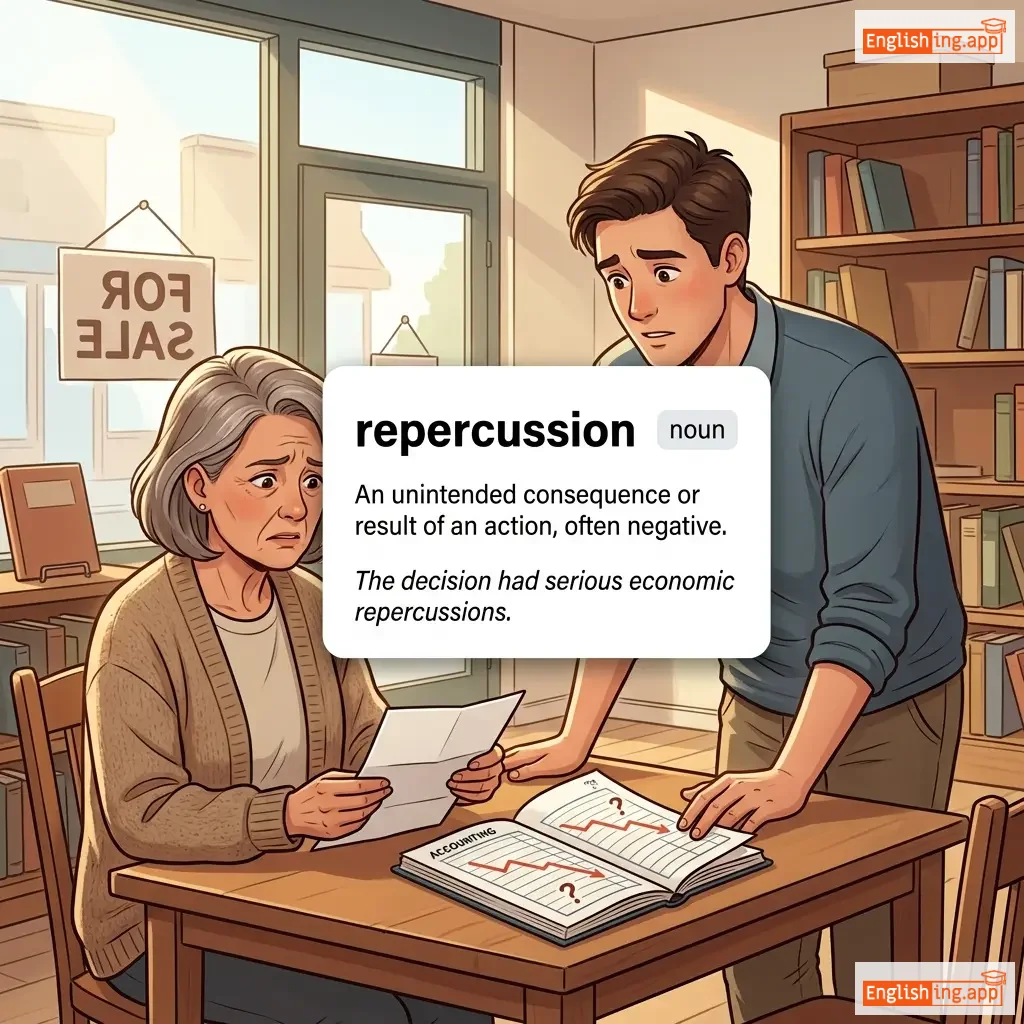
repercussion definition card — visual illustration of the meaning
noun
/ˌriːpərˈkʌʃən/

An unintended consequence or result of an action, often negative.

"The decision had serious economic repercussions."
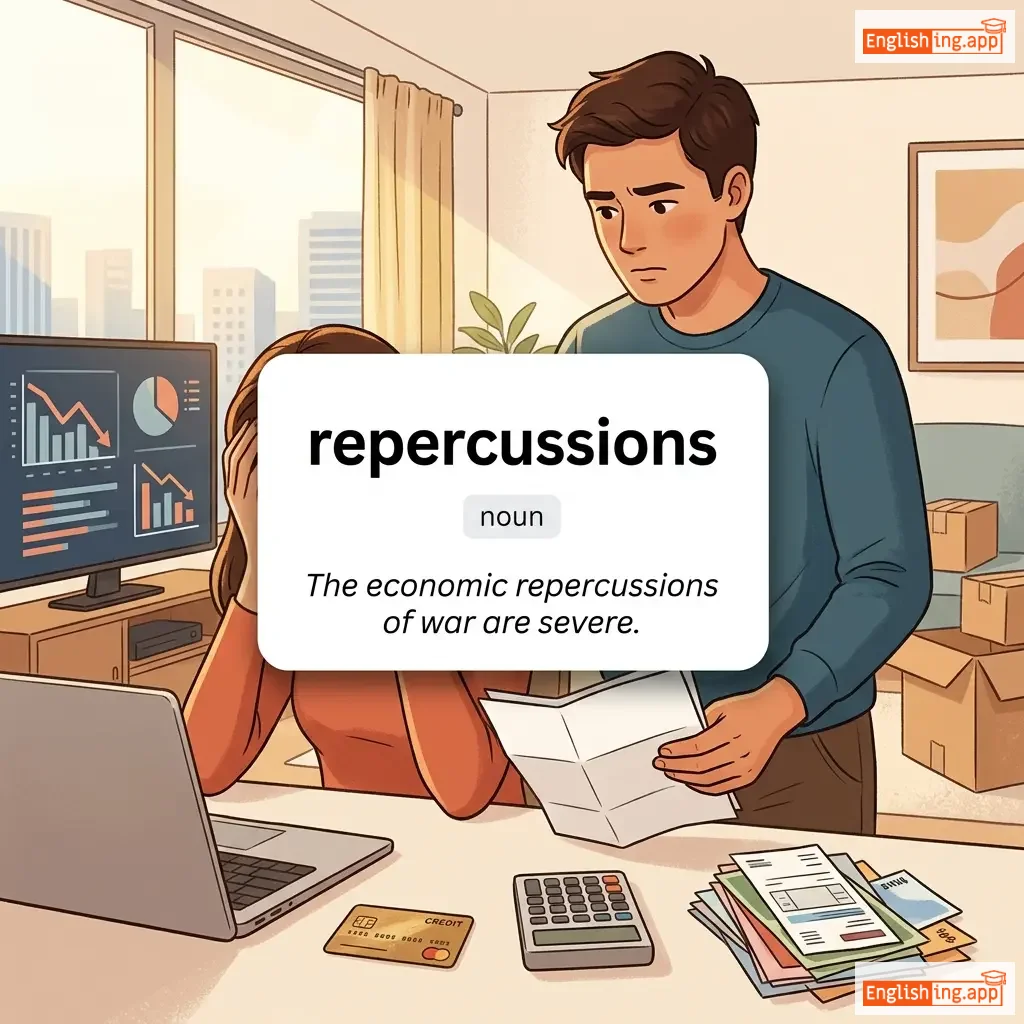
repercussions definition card — visual illustration of the meaning
noun
/ˌriː.pəˈkʌʃ.ənz/
后果 (houguo)

An unintended consequence occurring some time after an event or action; the effects or results of something.

"The economic repercussions of war are severe."
"战争的经济后果是严重的。" (Zhànzhēng de jīngjì hòuguǒ shì yánzhòng de.)
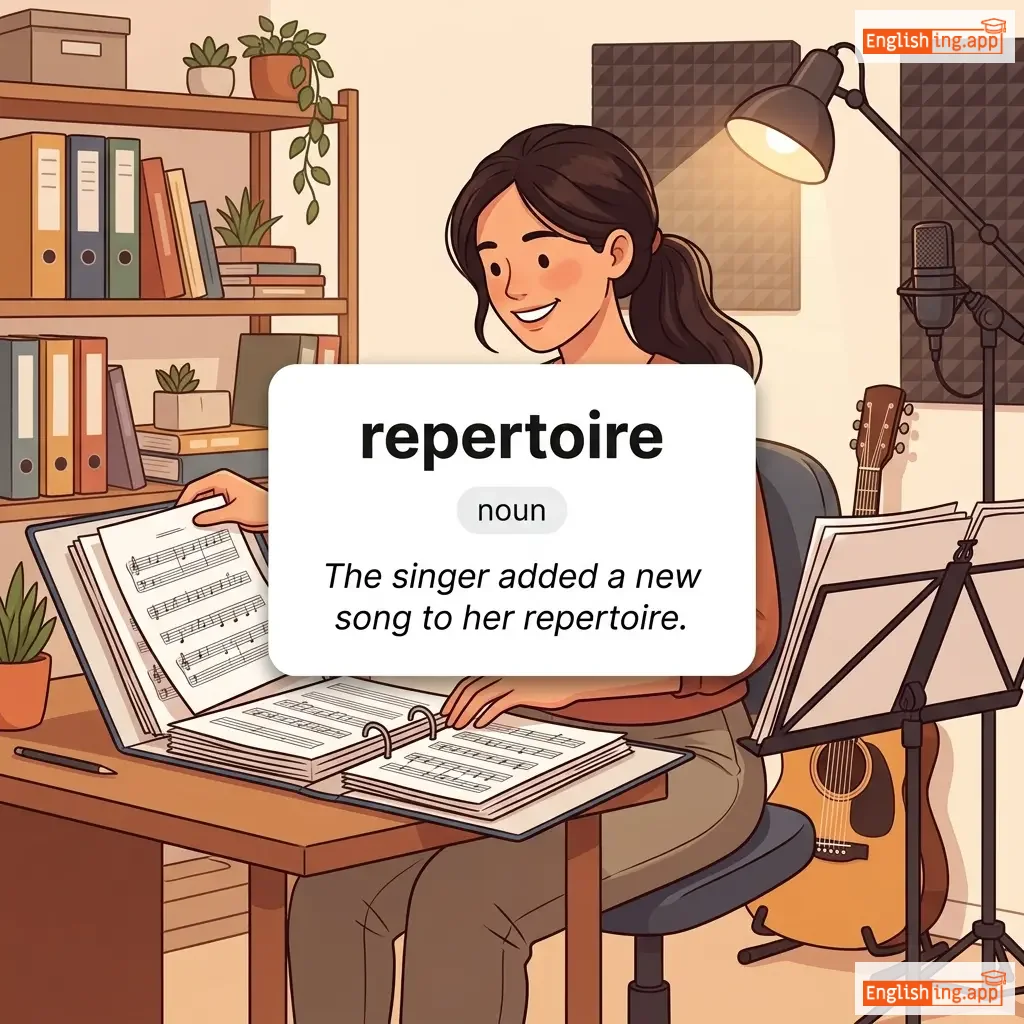
repertoire definition card — visual illustration of the meaning
noun
/ˈrɛpərˌtwɑːr/
曲目 (qumu)

The entire range of skills, works, or pieces that a person or group is prepared to perform or use.

"The singer added a new song to her repertoire."

"这位歌手将一首新歌加入了她的曲目。" (Zhè wèi gēshǒu jiāng yī shǒu xīn gē jiārùle tā de qǔmù.)
adjective
/ˌrɛpərˈtɔːriəl/
报道的 (baodao de)

Relating to or characteristic of a repertoire, especially in journalism or performance contexts.

"The journalist's repertorial style captured every detail of the unfolding story."

"记者的报道风格捕捉了展开故事的每个细节。" (Jìzhě de bàodào fēnggé bǔzhuōle zhǎnkāi gùshì de měi gè xìjié.)
noun
/ˈrɛpərˌtɔːri/
剧目 (jumu)

A collection of works that a company, performer, or institution regularly performs; also a storehouse of information or skills.

"The theater has a repertory of classic plays."

"剧院有一系列经典剧目的演出。" (Juyuan you yi xilie jingdian jumuke de yanchu.)
noun
/ˌrɛpɪˈtɪʃən/
重复 (chóngfù)

The action of repeating something that has already been said, written, or done.

"The teacher emphasized the importance of repetition in learning new vocabulary."
"老师强调了在学习新词汇时重复的重要性。" (Lǎoshī qiángdiàole zài xuéxí xīn cíhuì shí chóngfù de zhòngyào xìng.)
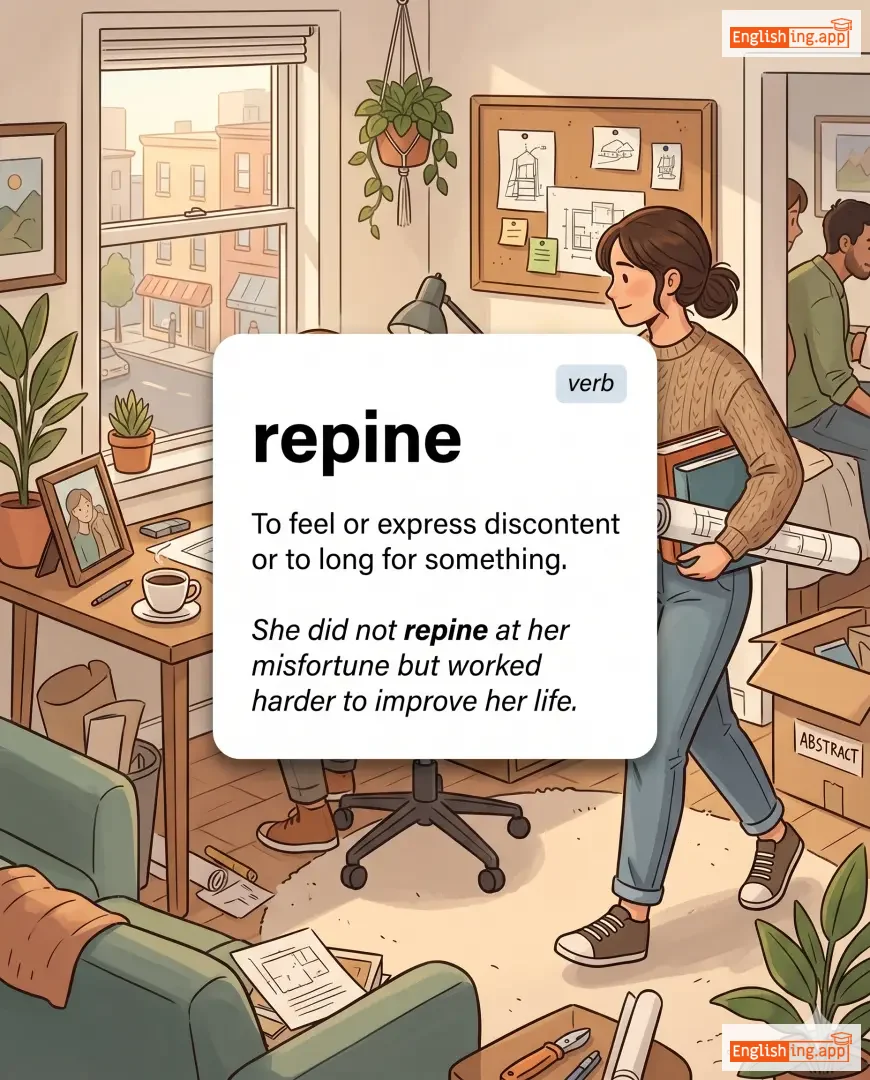
repine definition card — visual illustration of the meaning
verb
/rɪˈpaɪn/
感到不满 (gǎndào bùmǎn)

To feel or express discontent or to long for something.

"She did not repine at her misfortune but worked harder to improve her life."

"她没有为自己的不幸而感到悲伤,而是更加努力地工作来改善她的生活。" (Tā méiyǒu wèi zìjǐ de bùxìng ér gǎndào bēishāng, ér shì gèngjiā nǔlì de gōngzuò lái gǎishàn tā de shēnghuó.)
verb
/rɪˈpleɪs/
替换 (tihuàn)

to take the place of something or someone; to put something new in place of something old

"He decided to replace the broken lamp with a new one."

"他决定用一盏新的替代坏掉的灯。" (Tā juédìng yòng yī zhǎn xīn de tìdài huài diào de dēng.)
noun
/rɪˈpleɪsmənt/
替代 (tìdài)

the act of substituting one thing or person for another

"She got a replacement for her damaged phone."
"她为她损坏的手机找到了一个替代品。" (Tā wèi tā sǔnhuài de shǒujī zhǎodào le yīgè tìdàipǐn.)
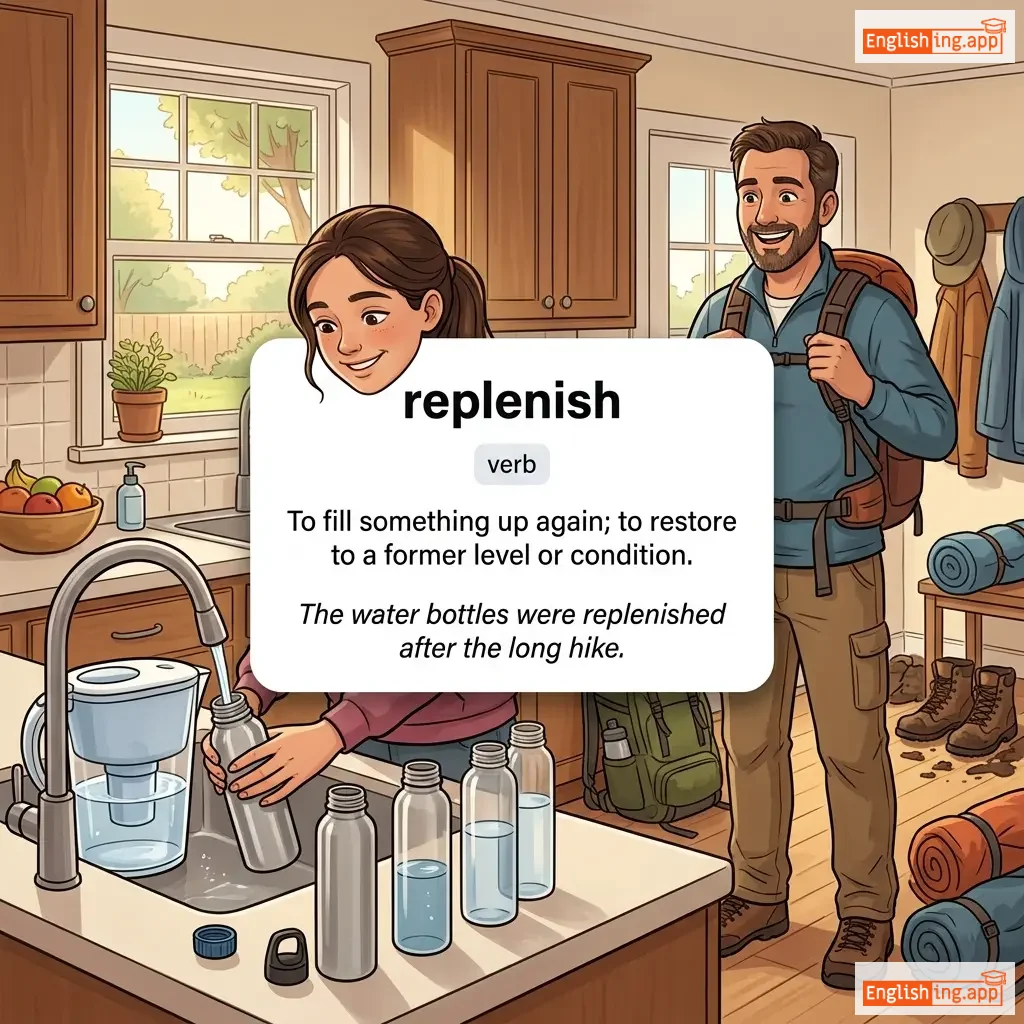
replenish definition card — visual illustration of the meaning
verb
/rɪˈplɛnɪʃ/
补充 (buchong)

To fill something up again; to restore to a former level or condition.

"The water bottles were replenished after the long hike."

"长时间徒步后,水瓶已重新补充。" (Chang shi jian tu bu hou, shui ping yi chong xin bu chong.)
adjective
/rɪˈpliːt/
充满 (chongman)

Filled or well-supplied with something; abundantly full.

"The book is replete with fascinating historical details."

"这本书充满了迷人的历史细节。" (Zhe ben shu chongman le mi ren de li shi xi jie.)
noun
/ˈrɛplɪkə/
复制品 (fùzhì pǐn)

An exact copy or model of something, especially one on a smaller scale.

"The museum displayed a replica of the ancient sculpture."

"博物馆展示了古代雕塑的复制品。" (Bówùguǎn zhǎnshìle gǔdài diāosù de fùzhì pǐn.)
verb
/ˈrɛplɪkeɪt/
复制 (fuzhi)

to copy, reproduce, or duplicate something exactly

"The scientist tried to replicate the experiment for accuracy."

"科学家尝试复制实验以确保准确性。" (Kexuejia changshi fuzhi shiyan yi quebao zhunquexing.)
verb, noun
/rɪˈplaɪ/
回复 (huífù)

to respond to someone or something

"She didn't reply to my message."

"她没有回复我的消息。" (Tā méiyǒu huífù wǒ de xiāoxi.)
report definition card — visual illustration of the meaning
noun, verb
/rɪˈpɔːrt/
报告 (baogao)

to give a detailed account of something or to make an official statement

"The journalist will report on the recent events."

"记者将报告最近的事件。" (Jizhe jiang baogao zuijin de shijian.)
noun
/rɪˈpɔːrtɪʒ/
报道 (baodao)

the act of reporting news or describing events in the media

"The magazine is known for its detailed reportage of political issues."

"这本杂志以其对政治问题的详细报道而闻名。" (Zhe ben zazhi yi qi dui zhengzhi wenti de xiangxi baodao er wenming.)