词汇表

英语词汇词典 | 单词含义、定义和示例

noun
/per/
(lí)

a sweet juicy fruit with a rounded shape that is wider at the bottom than the top

"She enjoyed a fresh pear from the orchard."

"她享受着来自果园的新鲜梨子。" (Tā xiǎngshòu zhe láizì guǒyuán de xīnxiān lízi.)
noun
/pɜːrl/
珍珠 (zhenzhu)

a hard, lustrous object produced within the soft tissue of a shelled mollusk; used in jewelry

"She wore a beautiful pearl necklace to the wedding."

"她在婚礼上戴着一条美丽的珍珠项链。" (Tā zài hūnlǐ shàng dàizhe yītiáo měilì de zhēnzhū xiàngliàn.)
noun
/pɜːrl drɒp/
珍珠滴 (zhēnzhū dī)

a single pearl used as jewelry, often in earrings or pendants

"The elegant pearl drop earrings complemented her outfit perfectly."

"那对优雅的珍珠滴耳环与她的服装完美搭配。" (nà duì yōuyǎ de zhēnzhū dī ěrhuán yǔ tā de fúzhuāng wánměi dāpèi)
noun
/ˈpɛzənt/
农民 (nóngmín)

a poor farmer or agricultural laborer who owns or rents a small piece of land for cultivation

"The peasant worked hard in the fields from dawn to dusk."

"农民从黎明到黄昏在田地里辛勤劳作。" (Nóngmín cóng límíng dào huánghūn zài tiándì lǐ xīnqín láo zuò.)
noun
/ˈpɛbl/
卵石 (luǎn shí)

a small smooth stone found on beaches or rivers

"He threw a pebble into the pond and watched the ripples."

"他把一块卵石扔进池塘,看着水波。" (Tā bǎ yī kuài luǎn shí rēng jìn chítáng, kànzhe shuǐ bō.)
adjective
/ˈpɛkəbl/
有罪的 (youzui de)

liable to sin or error; capable of doing wrong

"Humans are peccable, but they strive for goodness."

"人类是有罪的,但他们努力向善。" (Renlei shi youzui de, dan tamen nuli xiangshan.)
noun
/ˌpɛkəˈdɪloʊ/
小错误 (xiao cuo wu)

a small or minor fault or sin

"Forgetting to call was just a small peccadillo, not a serious mistake."

"忘记打电话只是一个小错误,不是一个严重的错误。" (Wangji da dianhua zhishi yi ge xiao cuo wu, bushi yi ge yan zhong de cuo wu.)
adjective
/ˈpɛkənt/
有罪的 (youzui de)

Guilty of a moral offense or wrongdoing; sinful.

"The judge declared the peccant official unfit for office."

"法官宣布有罪的官员不适合担任职务。" (Fǎguān xuānbù yǒuzuì de guānyuán bù shìhé dānrèn zhíwù.)
verb
/pɛk/
(zhuo)

To strike or bite something with a beak; to eat in small bites.

"The hen began to peck at the grains scattered on the ground."

"母鸡开始啄地面上散落的谷物。" (Mǔ jī kāishǐ zhuó dìmiàn shàng sànluò de gǔwù.)
adjective
/ˈpɛktərəl/
胸肌 (xiōng jī)

Relating to the chest or breast.

"The athlete focused on strengthening his pectoral muscles."

"运动员专注于增强他的胸肌。" (Yùndòngyuán zhuānzhù yú zēngqiáng tā de xiōng jī.)
verb
/ˈpɛkjʊˌleɪt/
贪污 (tānwū)

To embezzle or steal money, especially public funds.

"The corrupt official was found guilty of peculating government funds."

"腐败的官员被判定为盗用政府资金。" (Fǔbài de guānyuán bèi pàn dìng wèi dào yòng zhèngfǔ zījīn.)
noun
/ˌpɛkjʊˈleɪʃən/
挪用公款 (nuo yong gong kuan)

The act of embezzling or stealing money, especially from public funds.

"The minister resigned after being accused of peculation."

"部长在被指控参与挪用公款后辞职。" (Buzhang zai bei zhigong canyu nuo yong gong kuan hou cizhi.)
adjective
/pɪˈkjuːliər/
奇怪 (qíguài)

strange or unusual; characteristic of only one person, place, or thing

"She has a peculiar habit of talking to her plants."

"她有一个奇怪的习惯,就是和她的植物说话。" (Tā yǒu yīgè qíguài de xíguàn, jiùshì hé tā de zhíwù shuōhuà.)
adverb
/pɪˈkju:.li.ə.li/
以奇怪的方式; 以不寻常的方式 (yǐ qíguài de fāngshì; yǐ bù xúncháng de fāngshì)

in a strange or unusual way; in a manner that is distinctive or characteristic

"She dressed peculiarly for the formal dinner, wearing bright colors and unusual patterns."

"她为正式晚宴穿着非常独特,穿着鲜艳的颜色和不寻常的图案。" (Tā wèi zhèngshì wǎnyàn chuānzhuó fēicháng dútè, chuānzhuó xiānyàn de yánsè hé bù xúncháng de tú'àn.)
adjective
/pɪˈkjuːniˌɛri/
财务的 (cáiwù de)

relating to money or financial matters

"They faced pecuniary difficulties after the business failed."

"在生意失败后,他们面临着财务困难。" (Zài shēngyì shībài hòu, tāmen miànlínzhe cáiwù kùnnán.)
pedagogical definition card — visual illustration of the meaning
adjective
/ˌpɛdəˈɡɒdʒɪkəl/
教学的 (jiaoxue de)

relating to the methods and practice of teaching

"The teacher introduced new pedagogical approaches in the classroom."

"教师在课堂上引入了新的教学方法。" (Jiaoshi zai kètáng shàng yǐnrùle xīn de jiàoxué fāngfǎ.)
noun
/ˌpɛdəˈɡɒdʒɪks/
教育学 (jiaoyu xue)

the science or art of teaching

"He studied pedagogics to become a better teacher."

"他学习了教育学,成为一名更好的教师。" (Ta xuexi le jiaoyu xue, chengwei yi ming geng hao de jiaoshi.)
noun
/ˈpɛdəˌɡɒɡ/
教师 (jiaoshi)

a teacher, especially a strict or formal one

"The old pedagogue insisted on discipline in the classroom."

"那位老教育学家坚持在课堂上纪律。" (Na wei lao jiaoyuxuejia jianchi zai ketang shang jilv.)
pedagogy definition card — visual illustration of the meaning
noun
/ˈpɛdəˌɡoʊdʒi/
教育学 (jiaoyu xue)

The art, science, or profession of teaching and education methods.

"Modern pedagogy emphasizes student-centered learning."

"现代教育学强调以学生为中心的学习。" (Xiandai jiaoyu xue qiangdiao yi xuesheng wei zhongxin de xuexi.)
noun, verb
/ˈpɛdəl/
脚操作的杠杆 (jiao caozuo de ganggan)

A foot-operated lever for powering or controlling a mechanism, especially on a bicycle.

"He pressed down hard on the bicycle pedal."

"他用力踩下了自行车的踏板。" (Tā yòng lì cǎi xiàle zìxíngchē de tàbǎn.)
noun
/ˈpɛdənt/
书呆子 (shū dāizi)

A person who is excessively concerned with minor details or rules, often in a showy way.

"The professor was criticized as a pedant who focused too much on trivial details."
"教授被批评为一个书呆子,他过于关注微不足道的细节。" (Jiàoshòu bèi pīpíng wéi yīgè shū dāizi, tā guòyú guānzhù wēi bùzúdào de xìjié.)
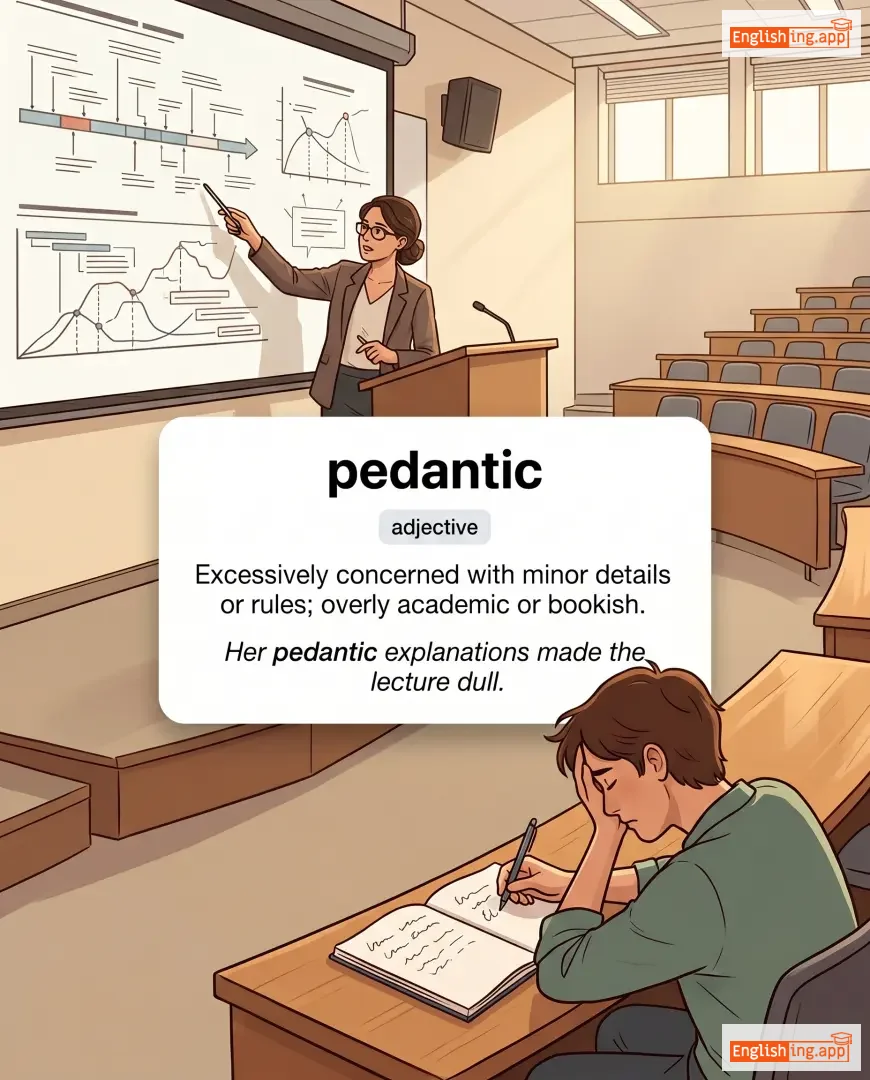
pedantic definition card — visual illustration of the meaning
adjective
/pəˈdæntɪk/
过于关注细节或规则的人 (guò yú guān zhù xì jié huò guī zé de rén)

Excessively concerned with minor details or rules; overly academic or bookish.

"Her pedantic explanations made the lecture dull."

"她的呗丹提克解释让讲座变得无聊。" (Tā de bèi dān tí kè jiě shì ràng jiǎng zuò biàn dé wú liáo.)
noun
/ˈpɛd.ən.tri/
对小细节或规则的过度关注 (dui xiao xijie huo guize de guodu guanzhu)

Excessive concern with minor details or rules.

"His pedantry made the meeting unnecessarily long."

"他的偏执让会议变得不必要地漫长。" (Tade pianzhi rang huiyi biande bubiyao de manchang.)
verb
/ˈpɛdəl/
推销 (tuīxiāo)

To sell goods, often by going from place to place; sometimes used negatively to mean promoting an idea or product in a pushy way.

"Street vendors peddle handmade jewelry to tourists."

"街头小贩向游客出售手工珠宝。" (Jiētóu xiǎofàn xiàng yóukè chūshòu shǒugōng zhūbǎo.)
noun
/ˈpɛdlər/
小贩 (xiaofan)

a person who sells goods, often traveling from place to place

"The peddler walked through the village selling fresh fruits."

"小贩走过村庄,卖着新鲜的水果。" (Xiaofan zouguo cunzhuang, maizhe xinxian de shuiguo.)
noun
/ˈpɛdəstəl/
基座 / 台座 (jīzuò / táizuò)

the base or support on which a statue or object stands

"The statue was placed on a marble pedestal."

"雕像被放置在大理石基座上。" (Diāoxiàng bèi fàngzhì zài dàlǐshí jīzuò shàng.)
noun, adjective
/pəˈdɛstriən/
行人 (xing ren)

a person walking on the street; also means dull or ordinary

"The pedestrian crossed the road at the crosswalk."
"行人通过人行道过马路。" (Xing ren tongguo renxingdao guo malu.)
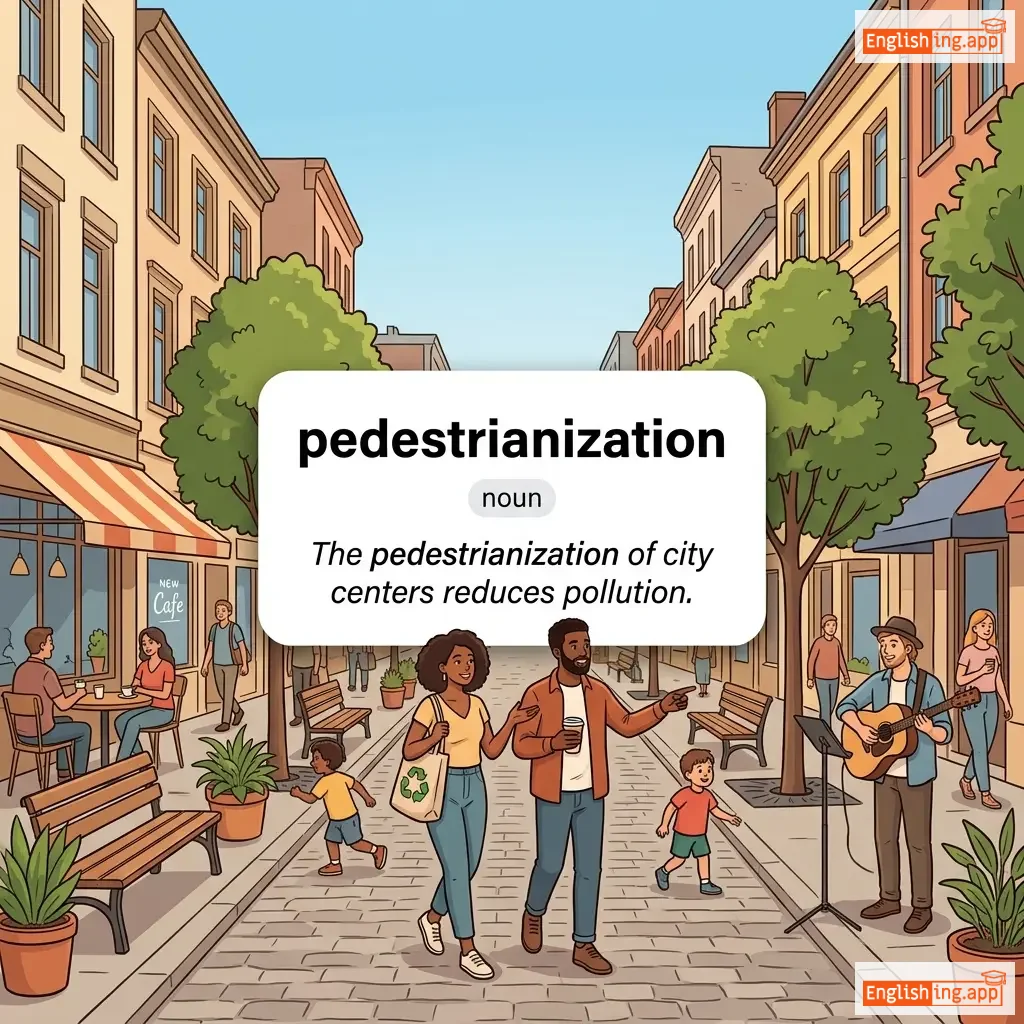
pedestrianization definition card — visual illustration of the meaning
noun
/pɪˌdɛs.tri.ə.naɪˈzeɪ.ʃən/
行人化 (xingrenhua)

Making areas pedestrian-friendly, closing any area to vehicle traffic and making it open only for pedestrians.

"The pedestrianization of city centers reduces pollution."

"城市中心的行人化减少了污染。" (Chengshi zhongxin de xingrenhua jianshao le wuran.)
noun
/ˌpiːdiəˈtrɪʃən/
儿科医生 (ér kē yī shēng)

a doctor who specializes in the medical care of children

"The pediatrician examined the child carefully."

"儿科医生仔细地检查了孩子。" (Ér kē yī shēng zǐ xì de jiǎn chá le hái zi.)
noun
/ˌpiːdiˈætrɪks/
儿科学 (ér kē xué)

the branch of medicine dealing with the health and medical care of children

"She decided to specialize in pediatrics after medical school."

"她决定在医学学校后专攻儿科学。" (Tā juédìng zài yīxué xuéxiào hòu zhuāngōng ér kē xué.)
noun
/ˈpɛdɪɡriː/
家谱 (jiapu)

the recorded ancestry or lineage of a person, family, or animal; the history or origin of something

"The dog has a pedigree that traces back several generations."

"这只狗有一条可以追溯到几代的家谱。" (Zhe zhi gou you yi tiao ke yi zhuisu dao ji dai de jiapu.)
noun
/ˈpɛdɪmənt/
三角山墙 (sanjiao shanqiang)

a triangular gable found above the horizontal structure of a building, often in classical architecture

"The ancient temple had a pediment decorated with sculptures."
"古老的寺庙有一个装饰着雕塑的山墙。" (Gu lao de si miao you yi ge zhuangshi zhe diaosu de shanqiang.)
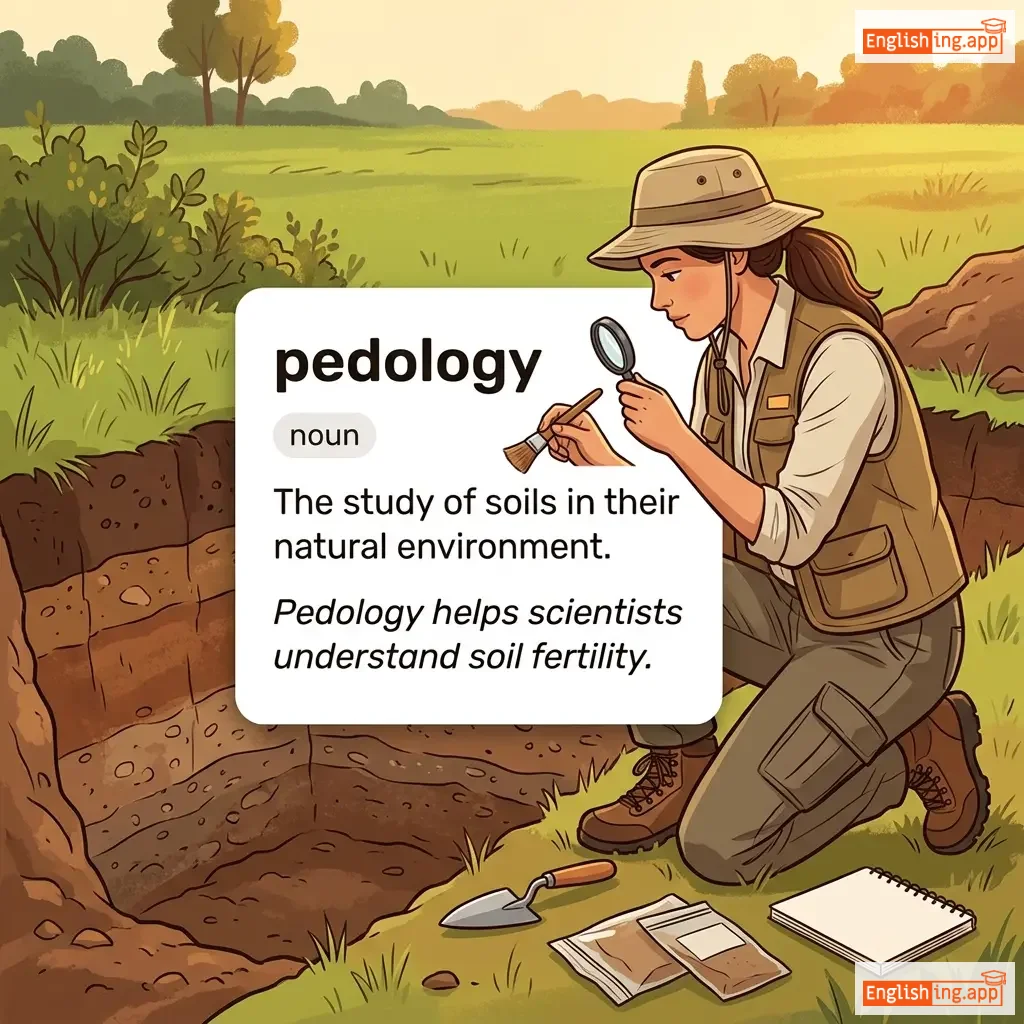
pedology definition card — visual illustration of the meaning
noun
/pɪˈdɒl.ə.dʒi/
土壤学 (tǔrǎng xué)

The study of soils in their natural environment.

"Pedology helps scientists understand soil fertility."

"土壤学帮助科学家理解土壤的肥力。" (Tǔrǎng xué bāngzhù kēxuéjiā lǐjiě tǔrǎng de féilì.)
verb
/piːl/
剥皮 (bāopí)

to remove the outer covering or skin from a fruit or vegetable

"She peeled the mango before eating it."

"她在吃之前把芒果削皮了。" (Tā zài chī zhīqián bǎ mángguǒ xuēpíle.)
noun
/ˈpiː.lər/
削皮器 (xiao pi qi)

a kitchen tool used to remove the outer skin or peel from fruits and vegetables

"Use a peeler to remove the potato skin."

"使用削皮器去除土豆皮。" (Shi yong xiao pi qi qu chu tu dou pi.)
peep definition card — visual illustration of the meaning
👀

peep

verb
/piːp/

to look quickly or secretly, especially through a narrow opening

"The child tried to peep through the keyhole."

🧑‍🤝‍🧑

peer (pi-er)

noun, verb
/pɪə(r)/
同级 (tongji)

noun: a person of the same rank or status; verb: to look closely or with difficulty

"He tried to peer through the fog to see his peers on the other side."
"他试图穿过雾气,看他的同伴在另一边。" (Ta shitu chuan guo wuqi, kan ta de tongban zai ling yi bian.)
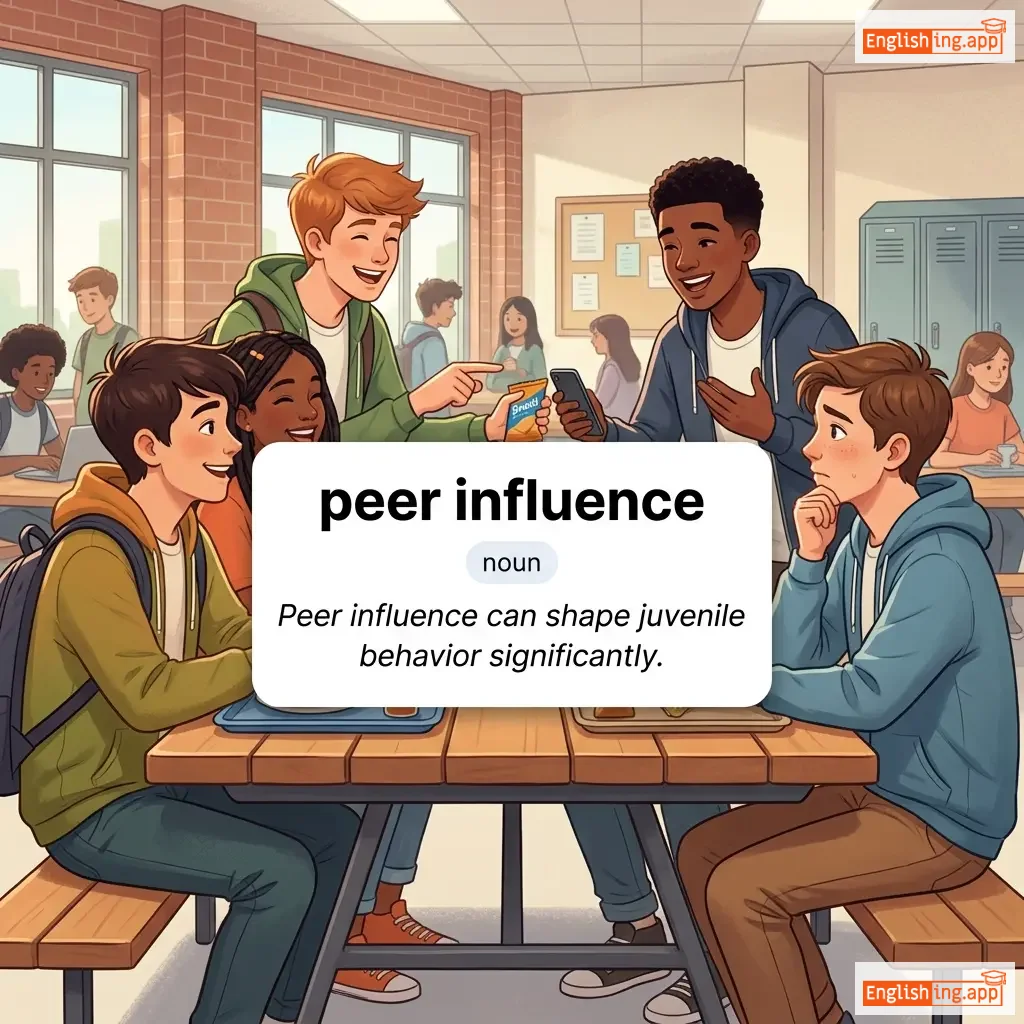
peer influence definition card — visual illustration of the meaning
noun
pɪər ˈɪnfluəns
同龄人影响 (tongling ren yingxiang)

The effect that members of a peer group have on each other, especially in terms of behavior, attitudes, and decision-making.

"Peer influence can shape juvenile behavior significantly."

"同龄人影响可以显著塑造青少年的行为。" (Tongling ren yingxiang keyi xianzhu shuzhao qingshaonian de xingwei.)
noun
/ˈpɪərɪdʒ/
贵族身份 (guìzú shēnfèn)

the title or rank of a peer; the nobility as a group

"He was elevated to the peerage by the king."

"他被国王提升为贵族身份。" (Tā bèi guówáng tíshēng wéi guìzú shēnfèn.)
adjective
/ˈpɪələs/
无与伦比 (wú yǔ lún bǐ)

Unequaled; without rival or match.

"Her peerless performance earned her a standing ovation."

"她无与伦比的表现为她赢得了全场起立的掌声。" (Tā wú yǔ lún bǐ de biǎo xiàn wèi tā yíng dé le quánchǎng qǐlì de zhǎng shēng.)
verb
/piːv/
烦扰 (fanrao)

To annoy or irritate someone.

"His constant interruptions really peeve me."

"他的不断打断真的让我很烦。" (Tade buduan daduan zhen de rangwo hen fan.)
adjective
/ˈpiːvɪʃ/
易怒的 (yì nù de)

Easily irritated, especially by unimportant things.

"The child grew peevish when denied candy."

"孩子因没得到糖果而变得易怒。" (Háizi yīn méi dédào tángguǒ ér biàn dé yì nù de.)
adjective
/pɪˈdʒɒrətɪv/
贬义的 (bian yi de)

Expressing contempt or disapproval.

"He used pejorative terms to insult his opponents."

"他用贬义的词语侮辱他的对手。" (Ta yong bian yi de ci yu wu ru ta de dui shou.)
pelagic definition card — visual illustration of the meaning
adjective
/pəˈlædʒ.ɪk/
与开放海洋相关 (yu kaifang haiyang xiangguan)

Relating to the open sea or ocean water column, away from the shore.

"Pelagic fish like tuna are found far from the coast."

"像金枪鱼这样的深海鱼类通常在离海岸很远的地方发现。" (Xiang jinqiangyu zheyang de shenhai yulei tongchang zai li hai'an hen yuan de difang faxian.)
noun
/pɛlf/
不正当的钱 (bù zhèngdàng de qián)

Money, especially when gained dishonorably.

"The corrupt official was motivated only by pelf."

"腐败的官员仅仅是为了不正当的钱而动机。" (Fǔbài de guānyuán jǐnjǐn shì wèile bù zhèngdàng de qián ér dòngjī.)
adverb
/ˌpɛlˈmɛl/
杂乱无章 (zaluan wuzhang)

In a confused, rushed, or disorderly manner.

"The children ran pell-mell through the playground."

"孩子们在游乐场里杂乱无章地奔跑。" (Haizimen zai youlexiang li zaluan wuzhang de benpao.)
adjective
/pəˈluːsɪd/
透明 (tòu míng)

Transparently clear; easy to understand.

"The lake water was so pellucid that you could see the stones at the bottom."

"湖水是如此透明,你可以看到底部的石头。" (hú shuǐ shì rú cǐ tòu míng, nǐ kě yǐ kàn dào dǐ bù de shí tóu.)
noun/verb
/pɛn/
幸福 (xìngfú)

A writing instrument using ink; also, to write something.

"She used a pen to sign the document."

"她在收到奖项时无法隐藏她的幸福。" (Tā zài shōu dào jiǎngxiàng shí wúfǎ yǐncáng tā de xìngfú.)
noun
/pen stænd/
笔架 (bijia)

a container or holder designed to keep pens, pencils, and other writing instruments organized

"He organized his pens in the pen stand on his desk."

"他把他的钢笔放在桌上的笔架里。" (Ta ba tade gangbi fang zai zhuo shang de bijia li)
noun
/ˈpen neɪm/
笔名 (bǐmíng)

a fictitious name used by an author instead of their real name; a pseudonym

"Mark Twain was the pen-name of Samuel Clemens."

"马克·吐温是塞缪尔·克莱门斯的笔名。" (Mǎkè Tǔwēn shì Sàimù'ěr Kèláiménzī de bǐmíng.)