词汇表

英语词汇词典 | 单词含义、定义和示例

noun
/pɑːrt/
部分 (bùfen)

a piece or segment of something

"She gave me a part of her chocolate."

"她给了我她巧克力的一部分。" (Tā gěile wǒ tā qiǎokèlì de yī bùfen.)
adjective
/ˈpɑːt taɪm/
兼职 (jian zhi)

working for only part of the usual working day or week

"She works part-time as a waitress."

"她做兼职工作,担任服务员。" (Ta zuo jian zhi gongzuo, dan ren fuwuyuan.)
adjective
/ˈpɑːrʃəl/
部分的,偏袒的 (bùfen de, piāntǎn de)

existing only in part; biased toward one side

"The report gave a partial view of the situation."

"报告给出了部分视图。" (Bàogào gěi chūle bùfen shìtú.)
noun
/ˌpɑːrʃiˈæləti/
偏袒 (piāntǎn)

an unfair preference or bias toward one side or person

"The judge was criticized for showing partiality in the case."

"法官因在案件中表现出偏袒而受到批评。" (Fǎguān yīn zài ànjiàn zhōng biǎoxiàn chū piāntǎn ér shòudào pīpíng.)
adverb
/ˈpɑːrʃəli/
部分地 (bùfen de)

to some extent but not completely

"The project was partially completed before the deadline."

"该项目在截止日期前部分完成。" (Gāi xiàngmù zài jiézhǐ rìqī qián bùfen wánchéng.)
adjective
/ˈpɑːrtəbl/
可分割的 (kě fēn gē de)

capable of being divided or separated

"The estate was partible among the heirs."

"这项财产可以在继承人之间分割。" (Zhè xiàng cáichǎn kě yǐ zài jìchéngrén zhī jiān fēn gē.)
noun
/pɑːrˈtɪsɪpənt/
参与者 (canyu zhe)

a person who takes part in an event or activity

"Each participant received a certificate after the workshop."

"每位参与者在工作坊结束后收到了证书。" (Měi wèi cān yù zhě zài gōng zuò fāng jié shù hòu shōu dào le zhèng shū.)
participants definition card — visual illustration of the meaning
noun
pɑːˈtɪs.ɪ.pənts
参与者 (cānyù zhě)

People who take part in something; those involved in an activity or event.

"Participants will enjoy breathtaking views."
"参与者将享受令人惊叹的景观。" (Cānyù zhě jiāng xiǎngshòu lìng rén jīngtàn de jǐngguān.)
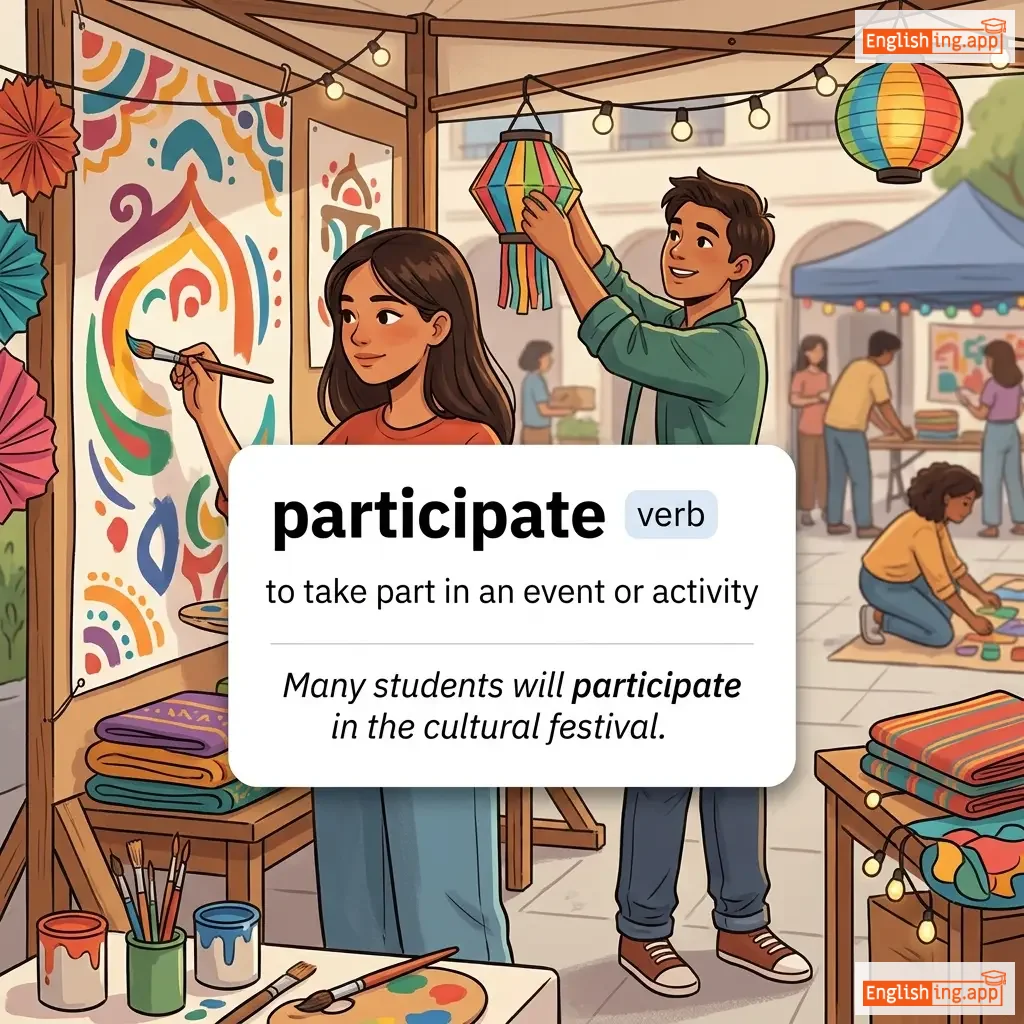
participate definition card — visual illustration of the meaning
verb
/pɑːrˈtɪsɪpeɪt/
参加 (cānjiā)

to take part in an event or activity

"Many students will participate in the cultural festival."
"许多学生将参加文化节。" (Xǔduō xuéshēng jiāng cānjiā wénhuà jié.)
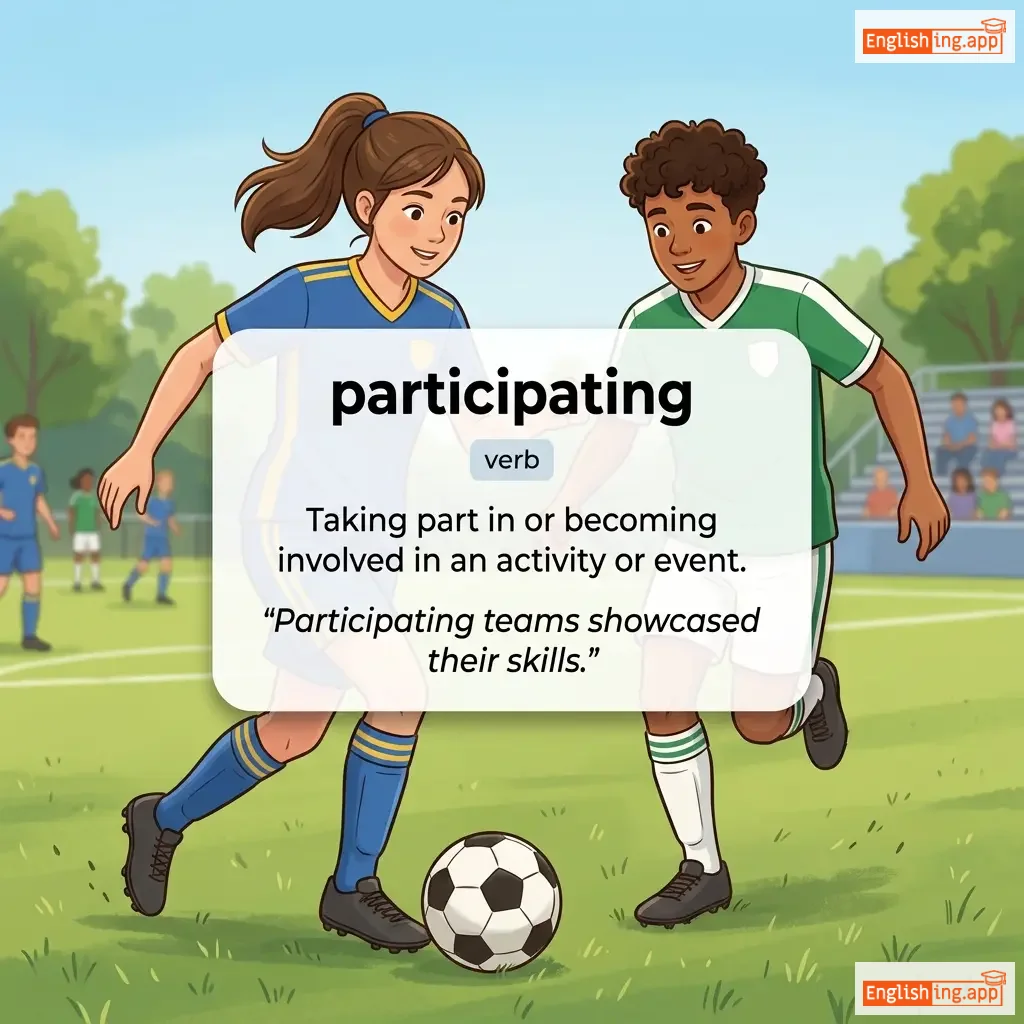
participating definition card — visual illustration of the meaning
verb
pɑːˈtɪs.ɪ.peɪ.tɪŋ
参加 (cānjiā)

Taking part in or becoming involved in an activity or event.

"Participating teams showcased their skills."

"参与的团队展示了他们的技能。" (Cānjiā de tuánduì zhǎnshìle tāmen de jìnéng.)
noun
/pɑːrˌtɪsɪˈpeɪʃən/
参与 (can yu)

the action of taking part in something

"Her participation in the competition was commendable."

"她在比赛中的参与值得称赞。" (Ta zai bisai zhong de canyu zhide chengzan.)
noun
/ˈpɑːrtɪkəl/
粒子 (lìzǐ)

a very small piece or amount of something

"Dust particles floated in the air near the window."
"尘土粒子在靠近窗户的空气中飘浮。" (Chéntǔ lìzǐ zài kàojìn chuānghù de kōngqì zhōng piāofú.)
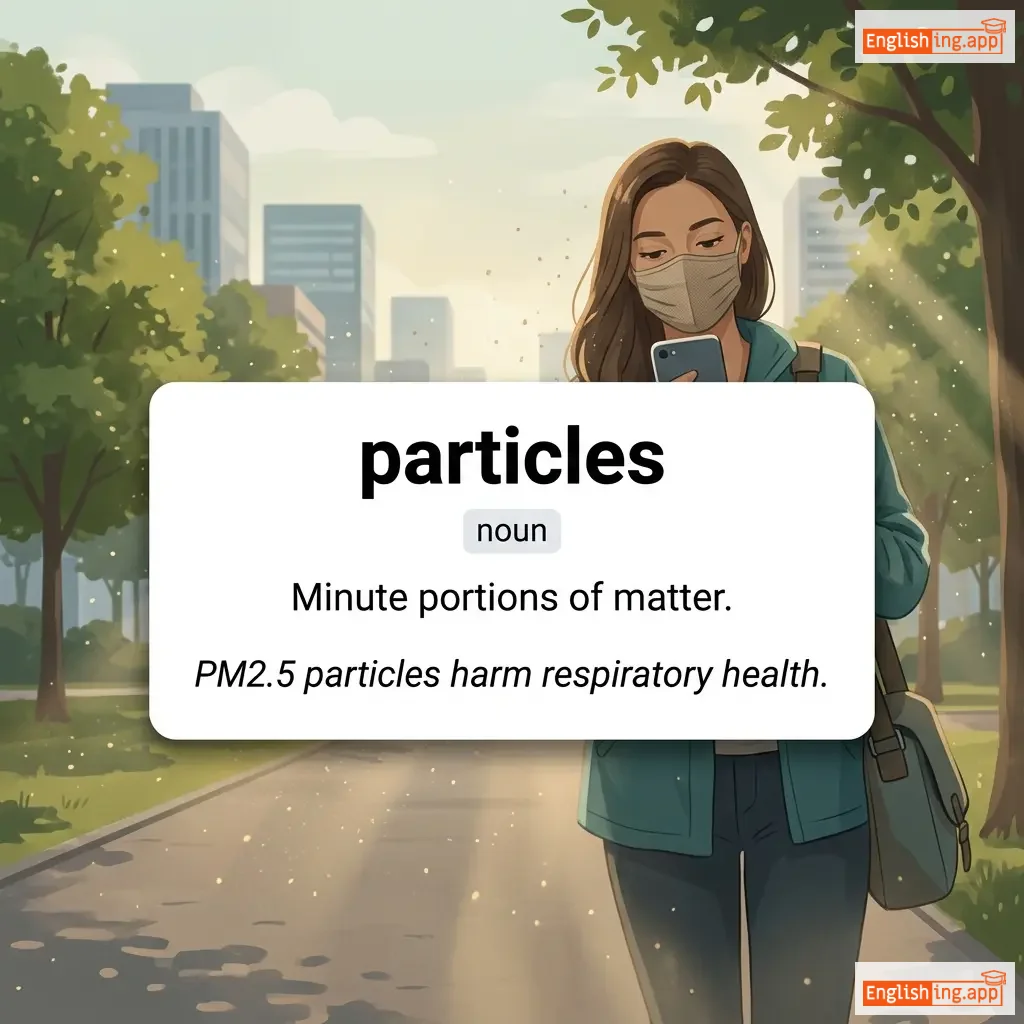
particles definition card — visual illustration of the meaning
noun
/ˈpɑː.tɪ.klz/
微粒 (weili)

Minute portions of matter.

"PM2.5 particles harm respiratory health."

"PM2.5微粒危害呼吸健康。" (PM2.5 weili weihai huxi jiankang.)
adjective
/pərˈtɪk.jʊ.lər/
特别 (tebie)

specific or special; distinct from others

"He is very particular about his diet."

"他对自己的饮食非常挑剔。" (Ta dui ziji de yinshi feichang tiaoti.)
verb
/pərˈtɪkjələrˌaɪz/
具体说明 (jùtǐ shuōmíng)

to mention or describe something in detail

"The witness was asked to particularize the events of that night."

"证人被要求详细叙述那个夜晚的事件。" (Zhèngrén bèi yāoqiú xiángxì xùshù nàgè yèwǎn de shìjiàn.)
adverb
/pɑːrˈtɪkjʊləli/
特别地 (tèbié de)

to a higher degree than is usual or expected

"She is particularly fond of Italian food."
"她特别喜欢意大利菜。" (Tā tèbié xǐhuān Yìdàlì cài.)
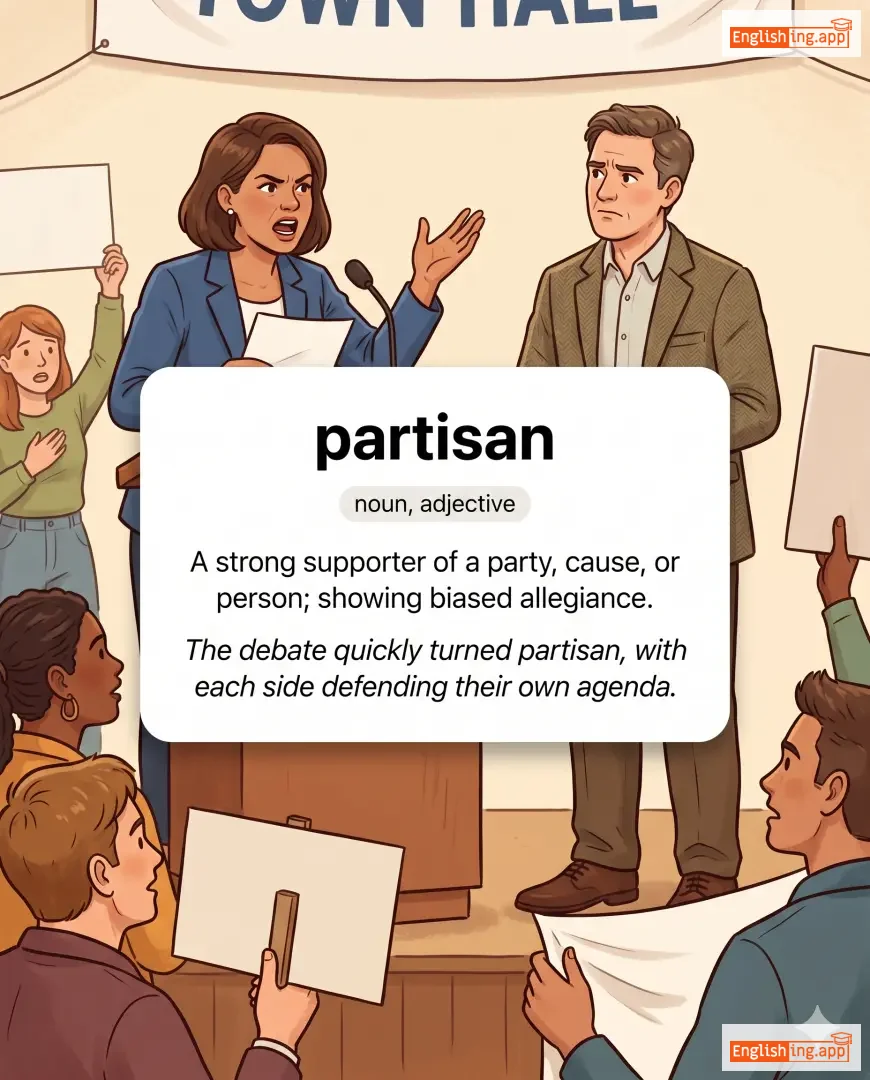
partisan definition card — visual illustration of the meaning
noun, adjective
/ˈpɑːrtɪzən/
党派支持者 (dǎngpài zhīchí zhě)

A strong supporter of a party, cause, or person; showing biased allegiance.

"The debate quickly turned partisan, with each side defending their own agenda."
"辩论迅速变得党派化,每一方都在捍卫自己的议程。" (Biànlùn xùnsù biàn dé dǎngpài huà, měi yī fāng dōu zài hànwèi zìjǐ de yìchéng.)
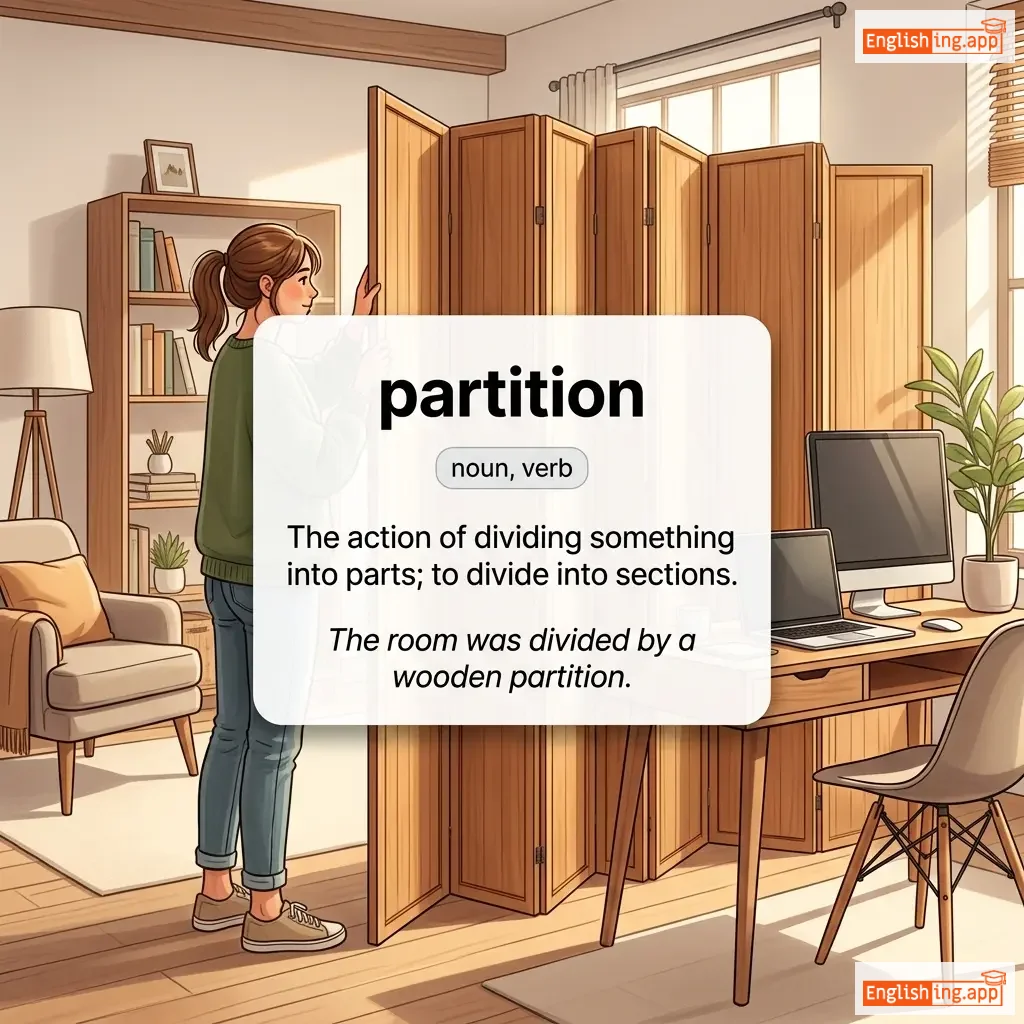
partition definition card — visual illustration of the meaning
noun, verb
/pɑːrˈtɪʃən/
分隔 / 隔断 (fenge / geduan)

The action of dividing something into parts; to divide into sections.

"The room was divided by a wooden partition."

"房间被木质隔断分开。" (Fángjiān bèi mùzhì gēduàn fēn kāi.)
adverb
/ˈpɑːrtli/
部分地 (bùfen de)

to some extent but not completely

"The project was partly successful, but more work is needed."

"项目部分成功,但仍需要更多的工作。" (Xiàngmù bùfen chénggōng, dàn réng xūyào gèng duō de gōngzuò.)
noun
/ˈpɑːtnər/
合作伙伴 (hezuo huoban)

a person who shares or is associated with another in some action or endeavor

"She is my business partner in the new venture."

"她是我在这个新项目中的商业合作伙伴。" (Ta shi wo zai zhege xin xiangmu zhong de shangye hezuo huoban.)
noun
/ˈpɑːtnəʃɪp/
合作伙伴关系 (hezuo huoban guanxi)

the state of being a partner or a group of partners

"Our partnership has helped both companies grow."

"我们的伙伴关系帮助了两家公司增长。" (Wo men de hezuo huoban guanxi bangzhu le liang jia gongsi zengzhang.)
noun
/ˌpɑːrtjʊˈrɪʃən/
分娩 (fenmian)

The act of giving birth; childbirth.

"The doctor explained the stages of parturition to the students."

"医生向学生们解释了分娩的各个阶段。" (Yisheng xiang xuéshengmen jiěshìle fēnmiǎn de gège jiēduàn.)
noun
/ˈpɑːti/
聚会 (jùhuì)

a social gathering of people, typically for entertainment

"We had a great time at the birthday party."

"我们在生日聚会上度过了美好的时光。" (Wǒmen zài shēngrì jùhuì shàng dùguòle měihǎo de shíguāng.)
noun
/ˈpɑːrvənuː/
新富人 (xīn fù rén)

A person who has recently gained wealth or influence but is not yet accepted socially.

"He was seen as a parvenu who lacked refinement despite his riches."

"他被视为一个新富阶层,尽管他拥有财富,但却缺乏 refinement。" (Tā bèi shì wéi yīgè xīn fù jiēcéng, jǐnguǎn tā yǒngyǒu cáifù, dàn què quēfá refinement.)
🏃‍♂️

pass

verb
/pæs/

to move past or beyond something

"He passed the test with flying colors."

verb (phrasal)
/ˈpæs ˌɔːf/

to present something or someone falsely as something else; to pretend or deceive

"He tried to pass off the fake watch as a luxury brand."

adjective
/ˈpæs.ə.bəl/
可接受的 (ke jie shou de)

good enough to be accepted, though not excellent

"The road is barely passable after the storm."

"风暴过后,路几乎无法通行。" (Fengbao guo hou, lu jihu wufa tongxing.)
noun
/ˈpæsɪdʒ/
狭窄的通道; 片段/引用; 从一个状态或地方到另一个的过程 (xiázhǎi de tōngdào; piàn duàn/yǐn yòng; cóng yī gè zhuàngtài huò dìfāng dào lìng yī gè de guòchéng)

a narrow way through or between; a section of text or music; the process of moving from one state or place to another

"The narrow passage led from the courtyard to the library."

"狭窄的通道从庭院通向图书馆。" (xiázhǎi de tōngdào cóng tíngyuàn tōngxiàng túshūguǎn.)
adjective
/pæˈseɪ/
过时的; 过时 (guo shi de; guo shi)

no longer fashionable or current; out of date

"Some trends from last decade feel utterly passé now."

"过去十年的一些趋势现在看起来完全过时了。" (Guo qu shi nian de yi xie qu shi xian zai kan qi lai wan quan guo shi le.)
noun
/ˈpæsɪndʒər/
乘客 (chéngkè)

a person traveling in a vehicle but not operating it

"The passenger was reading a book during the trip."

"乘客在旅途中读书。" (Chéngkè zài lǚtú zhōng dúshū.)
noun
/ˈpæsɪt/
奶酪 (nǎilào)

Fresh cheese curds; cottage cheese made from curdled milk

"The cook prepared fresh passet by curdling warm milk with lemon juice."

"厨师通过用柠檬汁凝固温热的牛奶,制作了新鲜的奶酪。" (Chúshī tōngguò yòng níngméng zhī nínggù wēnnuǎn de niúnǎi, zhìzuò le xīnxiān de nǎilào.)
adjective
/ˈpæsɪbəl/
能够感知; 易受痛苦 (nénggòu gǎnzhī; yì shòu tòngkǔ)

capable of feeling or suffering; susceptible to sensation or emotion (often theological)

"In some traditions, deities are described as passible, sharing human emotions."

"在一些传统中,神被描述为能够感知,分享人类情感。" (Zài yīxiē chuántǒng zhōng, shén bèi miáoshù wèi nénggòu gǎnzhī, fēnxiǎng rénlèi qínggǎn.)
noun
/ˈpæsɪŋ/
经过, 死亡 (jingguo, siwang)

the act of moving past something or the end of someone's life

"The passing of the leader was a great loss for the nation."

"领导人的去世对国家是一个巨大的损失。" (Lingdaoren de qushi dui guojia shi yige juda de sunshi.)
noun
/ˈpæʃ.ən/
激情 (jīqíng)

a strong feeling of enthusiasm or excitement for something or about doing something

"Her passion for teaching was evident in every class."

"她对教学的激情在每节课上都很明显。" (Tā duì jiàoxué de jīqíng zài měi jié kè shàng dōu hěn míngxiǎn.)
noun
/ˈpæʃ.ən ˌflaʊ.ər/
激情花 (jīqíng huā)

A climbing plant with intricate, colorful flowers; also refers to royal poinciana tree with red-orange blooms

"The passion flower vine covered the garden wall with beautiful blooms."

"激情花藤用美丽的花朵覆盖了花园的墙壁。" (jīqíng huā téng yòng měilì de huāduǒ fùgàile huāyuán de qiángbì.)
adjective
/ˈpæʃənət/
热情的 (rèqíng de)

showing or caused by strong feelings or a strong belief

"He is passionate about environmental conservation."

"他对环境保护充满热情。" (Tā duì huánjìng bǎohù chōngmǎn rèqíng.)
adjective
/ˈpæsɪv/
被动; (语法) 被动语态 (bèidòng; (yǔfǎ) bèidòng yǔtài)

not actively responding or participating; in grammar, denoting the voice in which the subject undergoes the action

"Instead of taking charge, he remained passive during the meeting."

"他在会议中没有采取主导,而是保持被动。" (Tā zài huìyì zhōng méiyǒu cǎiqǔ zhǔdǎo, ér shì bǎochí bèidòng.)
noun
/ˈpɑːsˌpɔːrt/
护照 (huzhao)

an official government document that identifies a person and allows them to travel internationally

"She renewed her passport before traveling abroad."

"她在出国前更新了她的护照。" (ta zai chuguo qian gengxin le ta de huzhao)
noun
/ˈpɑːswɜːd/
密码 (mima)

a secret word or phrase used to gain access to something

"Make sure your password is strong and unique."

"确保您的密码强大且独特。" (Que sure nín de mìmǎ qiángdà qiě dútè.)
noun/adjective/preposition
/pɑːst/
过去 (guo qu)

the time before the present; gone by in time

"He often thinks about his past mistakes."

"他经常想起自己的过去错误。" (Tā jīngcháng xiǎngqǐ zìjǐ de guòqù cuòwù.)
noun
/ˈpæstə/
意大利面 (yidali mian)

an Italian food made from flour and water, typically shaped into noodles or sheets

"We had creamy pasta for dinner last night."

"昨晚我们吃了奶油意大利面作为晚餐。" (Zuowan women chi le nayi you yidali mian zuowei wancan.)
paste definition card — visual illustration of the meaning
verb, noun
/peɪst/
粘贴 (zhāntiē)

to stick or attach something using a soft, moist substance; also a thick, soft, moist substance itself

"She pasted the picture into her notebook."

"她把照片粘在了她的笔记本里。" (Tā bǎ zhàopiàn zhāntiē zài le tā de bǐjìběn lǐ.)
noun
/pæˈstiːʃ/
模仿作品 (mófǎng zuòpǐn)

a work of art, literature, or music that imitates the style of another artist, period, or genre

"The film was a clever pastiche of 1950s detective movies."

"这部电影是1950年代侦探电影的巧妙模仿。" (Zhè bù diànyǐng shì 1950 niándài zhēntàn diànyǐng de qiǎomiào mófǎng.)
noun
/ˈpæs.taɪm/
消遣 (xiāoqiǎn)

an activity done regularly for enjoyment; a hobby or recreational activity

"Reading books is her favorite pastime during weekends."

"阅读书籍是她在周末的最爱消遣。" (Yuèdú shūjí shì tā zài zhōumò de zuì ài xiāoqiǎn.)
noun
/ˈpæstər/
牧师 (mùshī)

a minister in charge of a Christian church or congregation

"The pastor delivered a heartfelt sermon on compassion."

"牧师讲了一场充满同情的讲道。" (Mùshī jiǎngle yī chǎng chōngmǎn tóngqíng de jiǎngdào.)
adjective, noun
/ˈpæstərəl/
乡村的,与牧羊人相关 (xiangcun de, yu muyangren xiangguan)

relating to the countryside, shepherds, or rural life; also relating to spiritual guidance by a pastor

"The painting had a calm pastoral scene with sheep grazing."
"这幅画展示了一个安静的田园场景,羊群在吃草。" (Zhe fu hua zhanshi le yi ge anjing de tianyuan changjing, yangqun zai chi cao.)
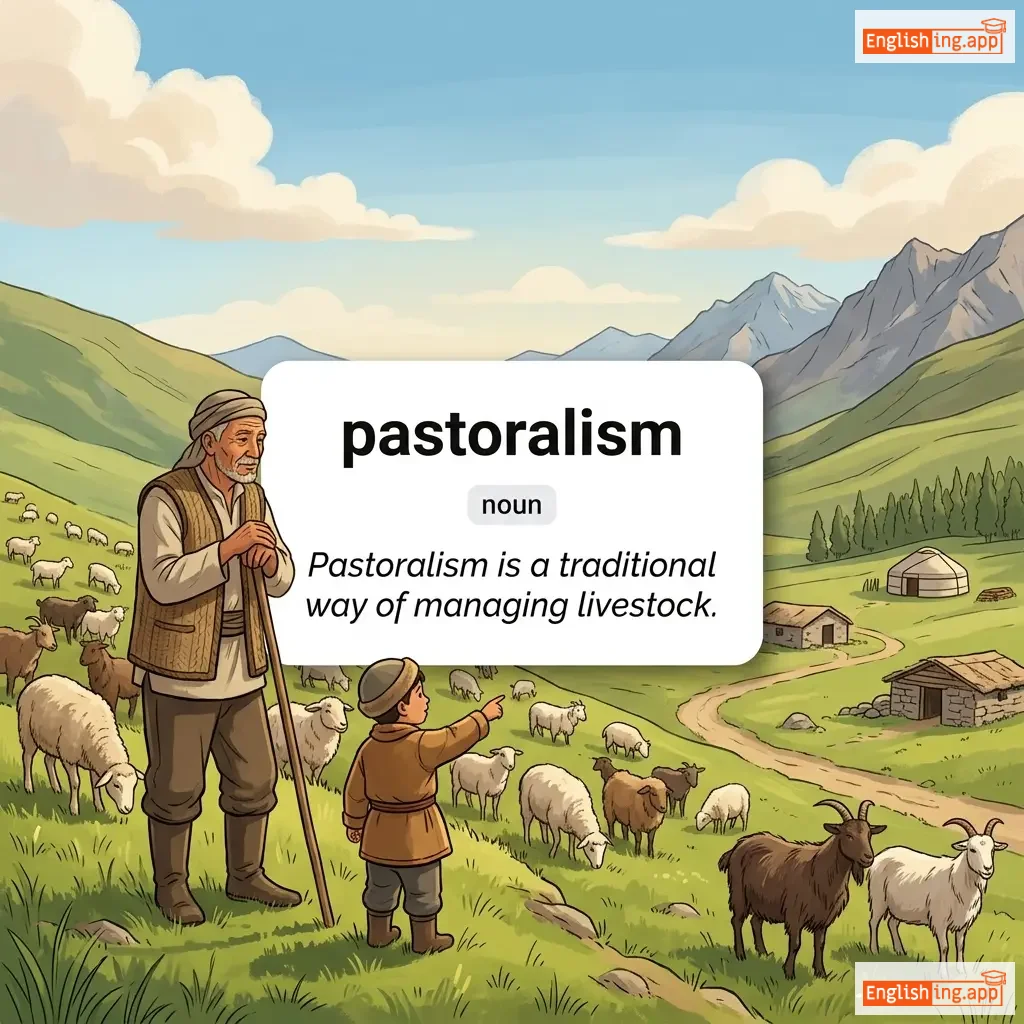
pastoralism definition card — visual illustration of the meaning
noun
ˈpɑː.stər.ə.lɪ.zəm
牧羊主义, 以草为基础的放牧系统 (mù yáng zhǔ yì, yǐ cǎo wèi jīchǔ de fàng mù xì tǒng)

A form of animal husbandry where domesticated animals are released onto large vegetated outdoor lands for grazing.

"Pastoralism is a traditional way of managing livestock."

"牧羊主义是传统的牲畜管理方式。" (Mù yáng zhǔ yì shì chuántǒng de shēngchù guǎnlǐ fāngshì.)
noun
/ˈpeɪstri/
糕点 (gaodian)

a baked food product made from flour, fat, and water, often sweet or savory

"I bought a box of fresh pastries for breakfast."

"我买了一个盒子的新鲜糕点作为早餐。" (Wǒ mǎi le yīgè hézi de xīnxiān gāodiǎn zuòwéi zǎocān.)
🤚

pat

verb
/pæt/

to touch someone or something gently, often to show affection or approval

"She gently patted the dog on its head."

noun
/pætʃ/
补丁 (bǔdīng)

a piece of cloth or material used to cover or mend a hole or a tear

"He put a patch on his jeans to cover the tear."

"他在牛仔裤上贴了一个补丁来遮住破洞。" (Tā zài niúzǎikù shàng tiēle yīgè bǔdīng lái zhē zhù pòdòng.)