英语词汇词典 | 单词含义、定义和示例
a lover, especially an illicit one
"The secret paramour was finally revealed."
an irrational and persistent feeling that people are 'out to get you' or are constantly watching you
"His constant paranoia made it hard for him to trust anyone."
A person who suffers from paranoia or exhibits extreme, irrational distrust and suspicion.
"The paranoiac refused to leave his house, fearing everyone was against him."
having an unreasonable fear or suspicion of others
"She became paranoid after hearing strange noises outside."
A low protective wall along the edge of a roof, balcony, or bridge.
"The soldier hid behind the parapet for protection."
Miscellaneous articles, especially equipment needed for a particular activity.
"The fisherman carried all his fishing paraphernalia in a large box."
To express the meaning of something using different words, often to make it clearer.
"The teacher asked the students to paraphrase the poem in their own words."
An organism that lives in or on another organism and benefits at the host’s expense.
"The parasite weakened the tree by feeding on its nutrients."
A green vegetable also known as pointed gourd, commonly used in South Asian cuisine
"Mother prepared parbal curry with fish."
an object or collection of objects wrapped in paper for carrying or sending by mail; a piece of land
"The postman delivered a parcel to our door."
to make something extremely dry, especially by exposure to heat
"The scorching sun began to parch the fields."
extremely dry, especially because of heat or thirst
"After walking in the desert, he was parched with thirst."
a thin material made from animal skin, used in the past for writing
"The ancient manuscript was written on parchment."
forgiveness; the action of forgiving or being forgiven for an error or offense
"I beg your pardon for interrupting the meeting."
able to be forgiven; excusable
"His mistake was pardonable given the difficult circumstances."
to cut away the outer covering or reduce something gradually
"She pared the apple before eating it."
a medicine containing opium, once used to relieve pain and diarrhea
"Doctors once prescribed paregoric to treat diarrhea in children."
a mother or father of a person or animal
"Both of his parents are teachers."
The identity and origins of one's parents; descent or lineage.
"Her noble parentage gave her access to the royal court."
relating to a parent or parents; characteristic of a mother or father
"Parental guidance is important for a child's development."
A pair of curved marks ( ) used to enclose words or numbers; also an interruption or digression in speech or writing.
"The explanation was given in a parenthesis within the text."
Relating to or expressed in parentheses; a side remark or digression.
"He added a parenthetical comment during the lecture."
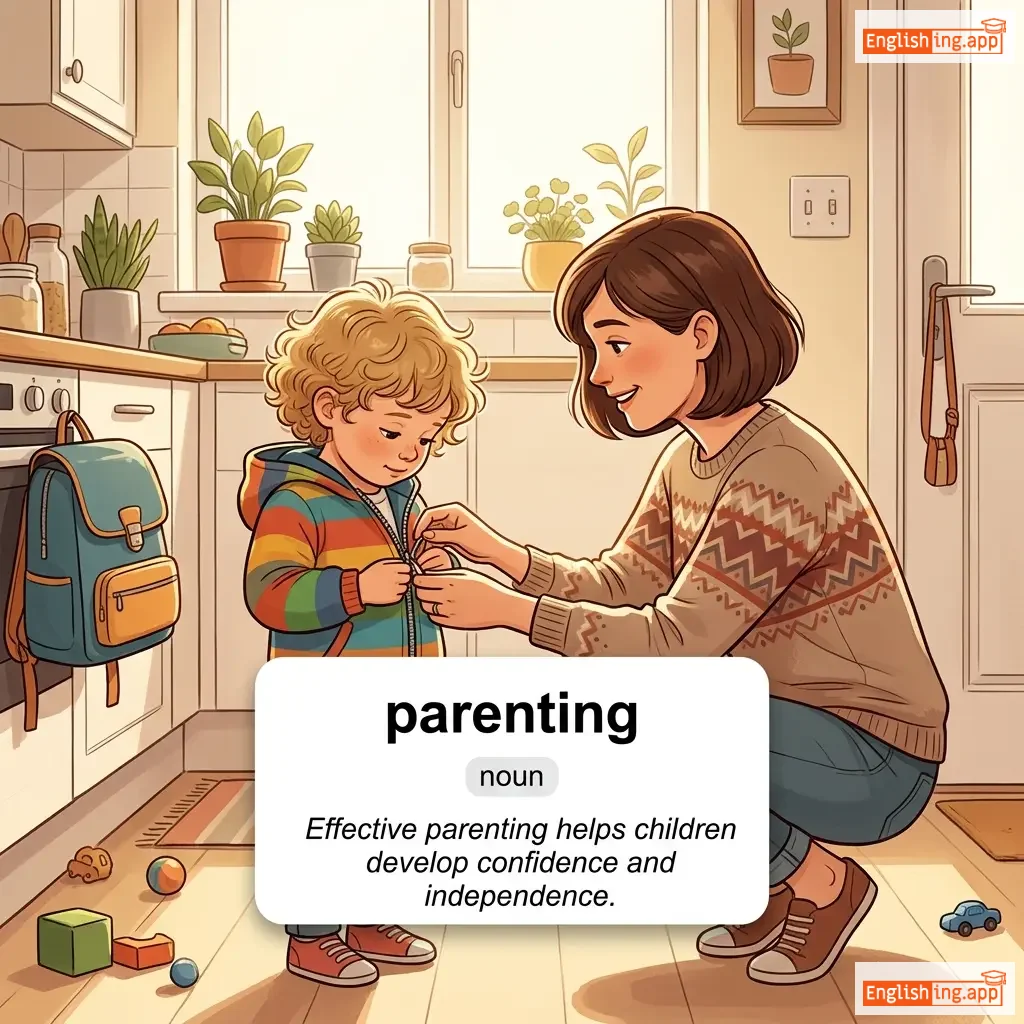
The care and training a child receives while growing up, involving the development of their mental, physical, and social aspects.
"Effective parenting helps children develop confidence and independence."
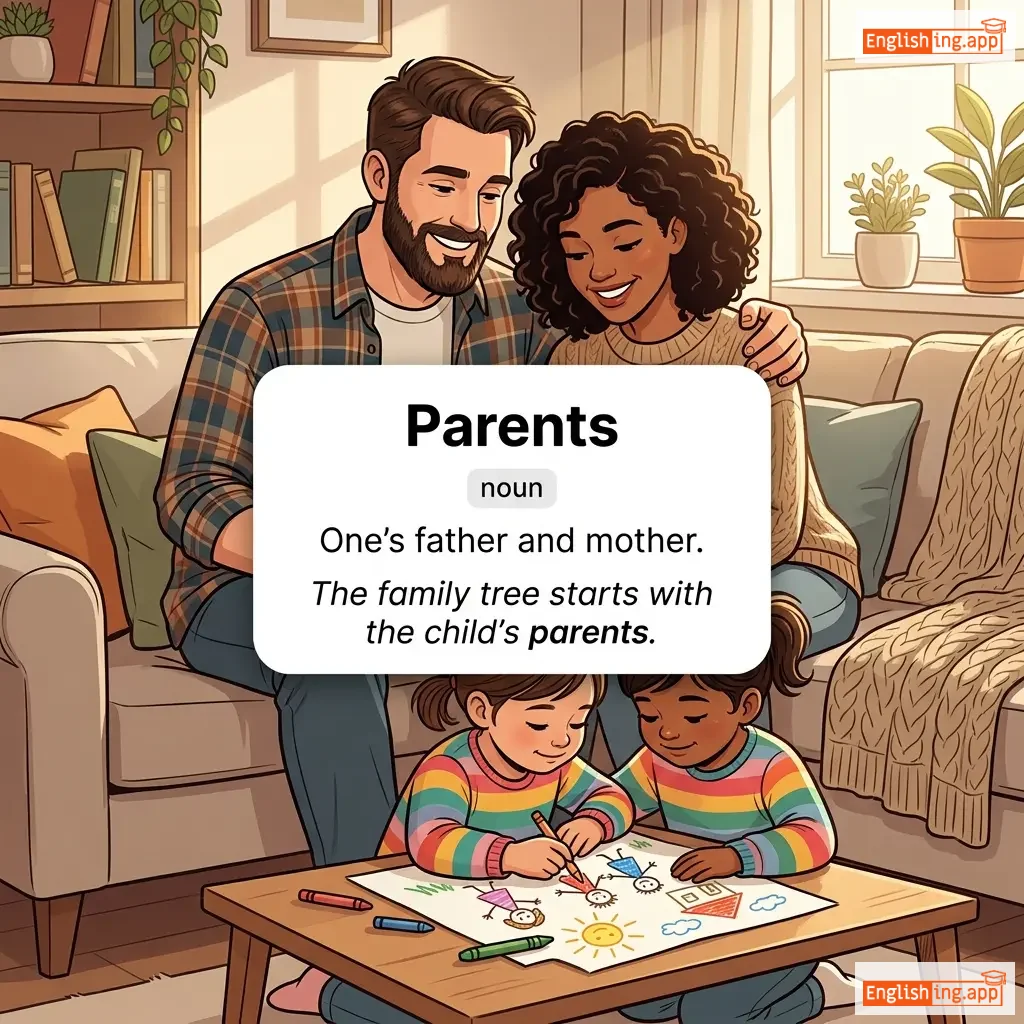
One's father and mother.
"The family tree starts with the child's parents."
An outcast; someone who is rejected by society or a social group.
"After the scandal, he became a social pariah."
A local church community or the area served by a parish church.
"The parish gathered for Sunday service."
relating to Paris or its people
"She wore a Parisian style dress at the party."
the state or condition of being equal, especially in status or pay
"The campaign aims to achieve pay parity between men and women."
the action or practice of leaving a vehicle in a particular place for a period of time
"There was no available parking near the restaurant."
a particular way of speaking or using words, common to a group
"In legal parlance, the term has a different meaning."
a discussion between opposing sides, especially to negotiate terms
"The generals met to parley over the terms of surrender."
the highest legislative body in a country
"The bill was passed in parliament after a long debate."
relating to a parliament or its members; relating to a system of government with parliamentary authority
"The country follows a parliamentary form of government."
A sitting room in a private house, or a shop providing specified services.
"They welcomed the guests into the front parlor."
Full of danger or risk; precarious.
"The company is in a parlous financial state."
Having a limited or narrow outlook; relating to a parish.
"His parochial view prevented him from understanding global issues."
A humorous or satirical imitation of a serious piece of literature, music, or style.
"The comedian performed a parody of the president’s speech."
Words that are derived from the same root or sound alike.
"The words 'effect' and 'effective' are paronymous."
A sudden, violent outburst of emotion or activity.
"She was seized by a paroxysm of laughter."
A floor made of wooden blocks arranged in a geometric pattern.
"The old mansion had a beautiful parquet floor."
The art or technique of laying parquet floors.
"The craftsman specialized in parquetry for luxury homes."
The act of killing one's father, mother, or other close relative.
"The court tried him for parricide after the tragic incident."
A brightly colored bird that can imitate human speech; to repeat words mechanically without understanding.
"The child parroted the teacher's words without thinking."
a climbing plant with curved red and orange flowers resembling a parrot's beak
"The parrot beak flower's unique curved shape makes it a fascinating addition to any garden."
to ward off or deflect an attack, especially in fencing or conversation
"He managed to parry the opponent’s sword with quick reflexes."
to analyze a sentence or text grammatically or logically
"The software can parse large amounts of text data efficiently."
unwilling to spend money or use resources; stingy
"The company was too parsimonious to invest in better equipment."
extreme unwillingness to spend money or use resources
"His parsimony was evident in the way he avoided any unnecessary expenses."
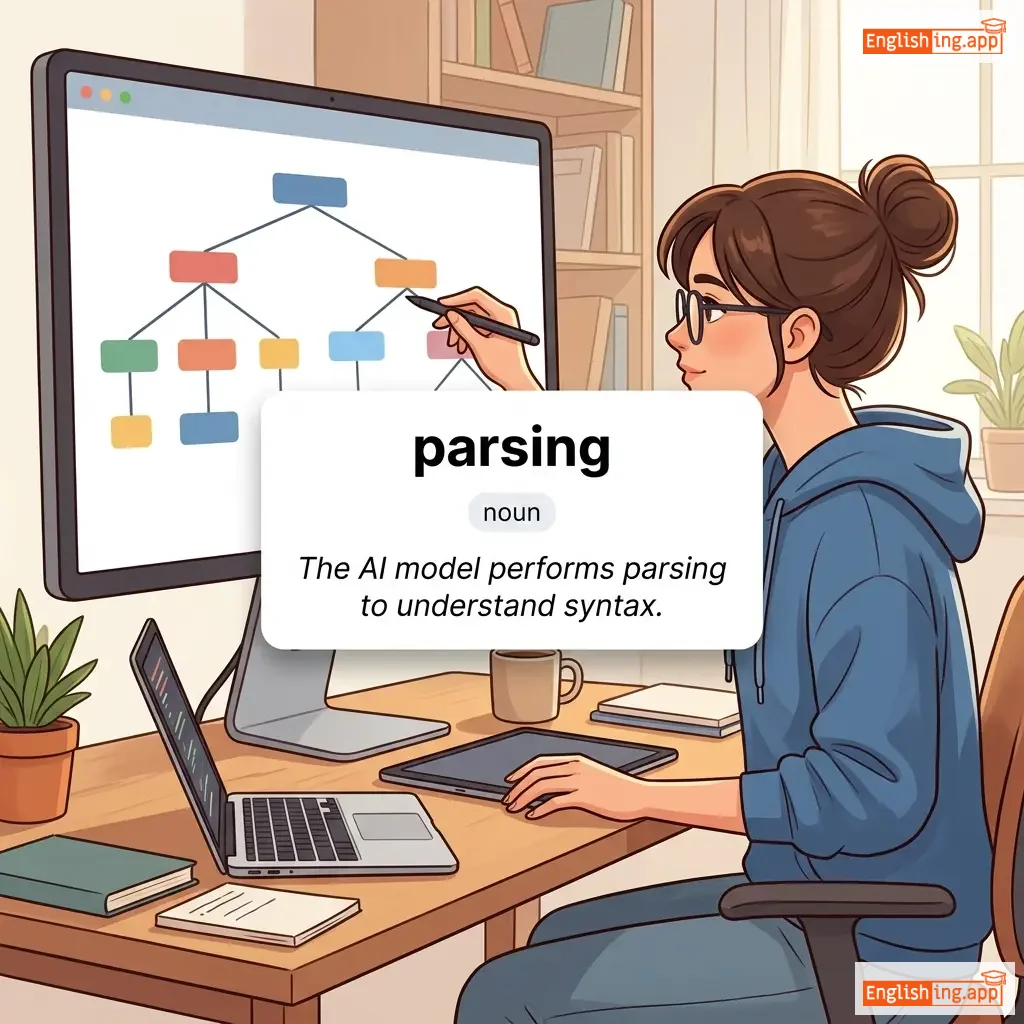
The process of analyzing sentence structure to understand grammatical relationships.
"The AI model performs parsing to understand syntax."

