词汇表

英语词汇词典 | 单词含义、定义和示例

noun
/prəˈtuːbərəns/
肿块 (zhǒng kuài)

A rounded swelling or lump on a surface.

"The doctor examined the small protuberance on his arm."

"医生检查了他手臂上的小肿块。" (Yīshēng jiǎnchá le tā shǒubì shàng de xiǎo zhǒng kuài.)
adjective
/prəˈtuːbərənt/
突出或膨胀 (tūchū huò péngzhàng)

Sticking out or bulging.

"His protuberant belly showed after the meal."

"饭后他凸出的肚子显现出来。" (Fàn hòu tā tūchū de dùzi xiǎnxiàn chūlái.)
verb
/ˈproʊtjuːbəreɪt/
膨胀 (péngzhàng)

To swell out or bulge.

"The roots began to protuberate from the ground."

"根开始从土壤中膨胀出来。" (Gēn kāishǐ cóng tǔrǎng zhōng péngzhàng chūlái.)
adjective
/praʊd/
骄傲 (jiaoao)

Feeling deep pleasure or satisfaction as a result of achievements or qualities.

"She felt proud of her son's accomplishments."

"她为儿子的成就感到骄傲。" (Tā wèi érzi de chéngjiù gǎndào jiāoào.)
adverb
/ˈpraʊdli/
自豪地 (zihao de)

in a way that shows pride or satisfaction; with a sense of honor or achievement

"She proudly displayed her achievements to her family."
"她自豪地向家人展示了她的成就。" (ta zihao de xiang jiaren zhanshi le ta de chengjiu)
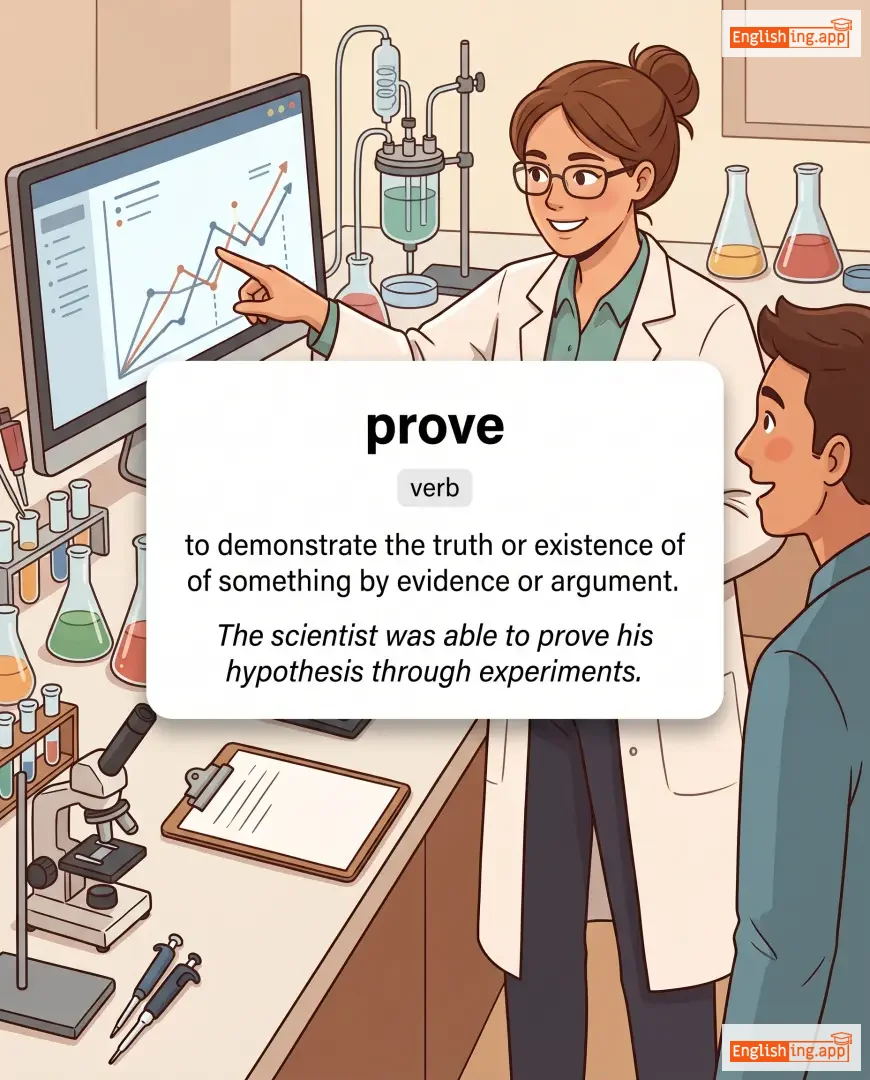
prove definition card — visual illustration of the meaning
verb
/pruːv/
证明 (zhèngmíng)

to demonstrate the truth or existence of something by evidence or argument.

"The scientist was able to prove his hypothesis through experiments."

"科学家通过实验能够证明他的假设。" (Kēxuéjiā tōngguò shíyàn nénggòu zhèngmíng tā de jiǎshè.)
noun
/ˈprɒvənəns/
来源 (laiyuan)

The origin or source of something.

"The museum verified the provenance of the ancient manuscript."

"博物馆验证了古代手稿的出处。" (Bówùguǎn yànzhèngle gǔdài shǒugǎo de chūchù.)
noun
/ˈprɒvəndər/
牲畜食物 (shēngchù shíwù)

food or provisions, especially for livestock

"The barn was filled with provender for the cattle."

"谷仓里装满了牲畜的食物。" (Gǔcāng lǐ zhuāngmǎnle shēngchù de shíwù.)
noun
/ˈprɒvərb/
谚语 (yànyǔ)

a short, commonly known saying that expresses a truth or piece of advice

"The proverb 'A stitch in time saves nine' teaches the value of prompt action."

"谚语‘亡羊补牢’教导我们迅速采取行动的价值。" (Yànyǔ ‘wáng yáng bǔ láo’ jiàodǎo wǒmen xùncháng cǎiqǔ xíngdòng de jiàzhí.)
verb
/prəˈvaɪd/
提供 (tigong)

to give or supply something that is needed or wanted

"The teacher will provide extra materials for the students."

"老师将为学生提供额外的材料。" (Laoshi jiang wei xuesheng tigong ewai de cailiao.)
verb
/prəˈvaɪdɪd/
提供的 (tigong de)

gave or supplied something that was needed

"The hotel provided free breakfast for all guests."

"酒店为所有客人提供了免费早餐。" (Jiudian wei suoyou ke ren tigong le miantiao zaochan.)
noun
/ˈprɒvɪdəns/
神的眷顾 (shén de juàngù)

the protective care of God or nature as a spiritual power; foresight or prudence

"They believed their survival was due to divine providence."

"他们相信他们的生存归功于神的眷顾。" (Tāmen xiāngxìn tāmen de shēngcún guīgōng yú shén de juàngù.)
adjective
/ˈprɒvɪdənt/
有远见的 (yǒu yuǎnjiàn de)

making or indicative of timely preparation for the future

"She was provident in saving money for her children’s education."

"她为孩子们的教育储蓄,非常有远见。" (Tā wèi háizimen de jiàoyù chǔxù, fēicháng yǒu yuǎnjiàn.)
adjective
/ˌprɒvɪˈdɛnʃəl/
天意的 (tian yi de)

occurring at a favorable or opportune time, as if guided by divine intervention

"Their timely rescue was considered providential."

"他们及时的救援被认为是天意的。" (Tamen jishi de jiuyuan bei renwei shi tianyi de.)
noun
/prəˈvaɪdər/
供应商 (gongying shang)

a person or thing that provides something.

"The service provider ensures that all customers receive timely support."

"服务供应商确保所有客户及时获得支持。" (Fúwù gōngyìng shāng quèbǎo suǒyǒu kèhù jíshí huò dé zhīchí.)
noun
/ˈprɒvɪns/
(sheng)

a principal administrative division of certain countries or empires.

"The province is known for its rich cultural heritage and stunning landscapes."
"这个省因其丰富的文化遗产和壮丽的自然景观而闻名。" (Zhège shěng yīn qí fēngfù de wénhuà yíchǎn hé zhuànglì de zìrán jǐngguān ér wénmíng.)
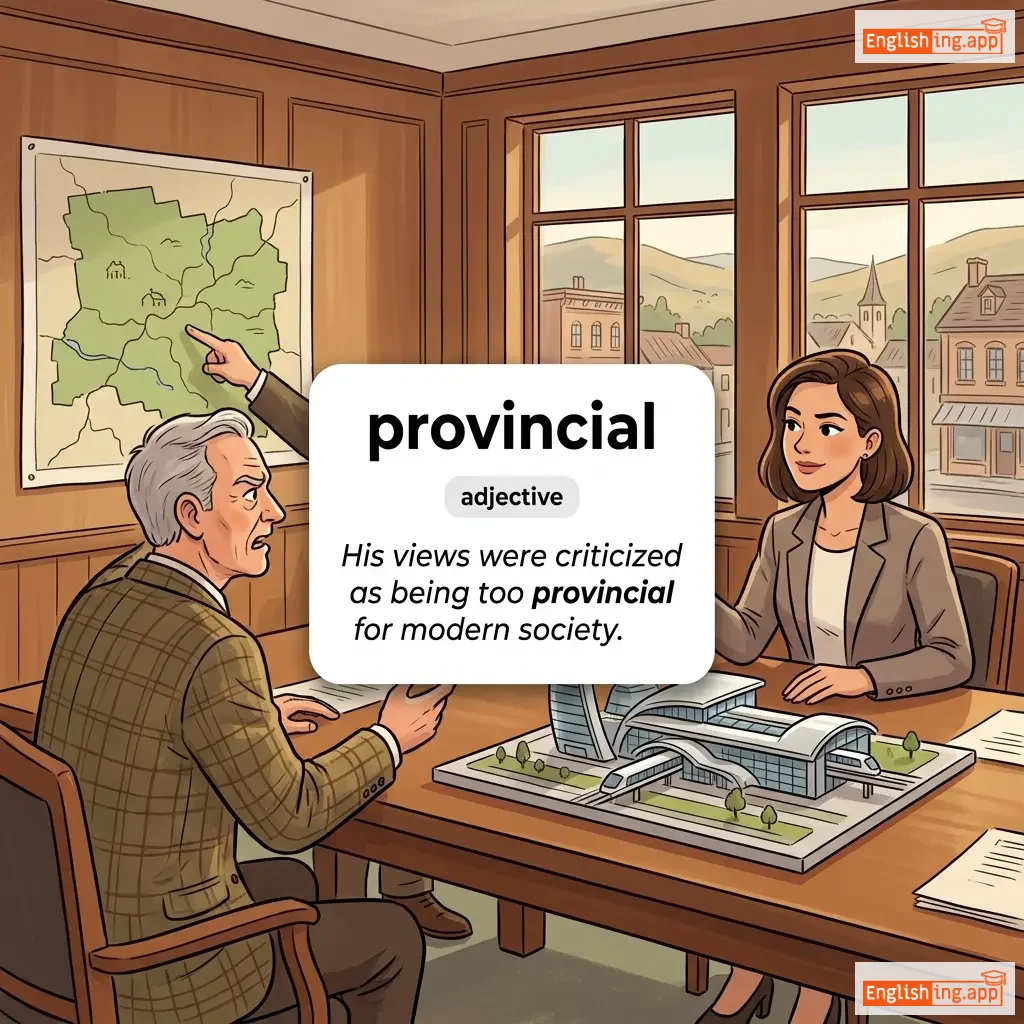
provincial definition card — visual illustration of the meaning
adjective
/prəˈvɪnʃəl/
省级的 (shengji de)

relating to a province or the regions outside the capital city; often suggesting narrow-mindedness

"His views were criticized as being too provincial for modern society."

"他的观点被批评为对现代社会来说过于狭隘。" (tā de guāndiǎn bèi pīpíng wéi duì xiàndài shèhuì lái shuō guòyú xiá'ài.)
noun
/prəˈvɪʒən/
规定 / 条款 (guīdìng / tiáokuǎn)

the act of providing or supplying something; a condition in a legal document

"The contract includes a provision for early termination."

"合同包括提前终止的条款。" (Hétóng bāokuò tíqián zhōngzhǐ de tiáokuǎn.)
adjective
/prəˈvɪʒənl/
临时的 (lin shi de)

arranged or existing for the present, possibly to be changed later

"The committee gave its provisional approval to the project."
"委员会对该项目给予了临时批准。" (wei yuan hui dui gai xiang mu ji yu le lin shi zhi pi.)
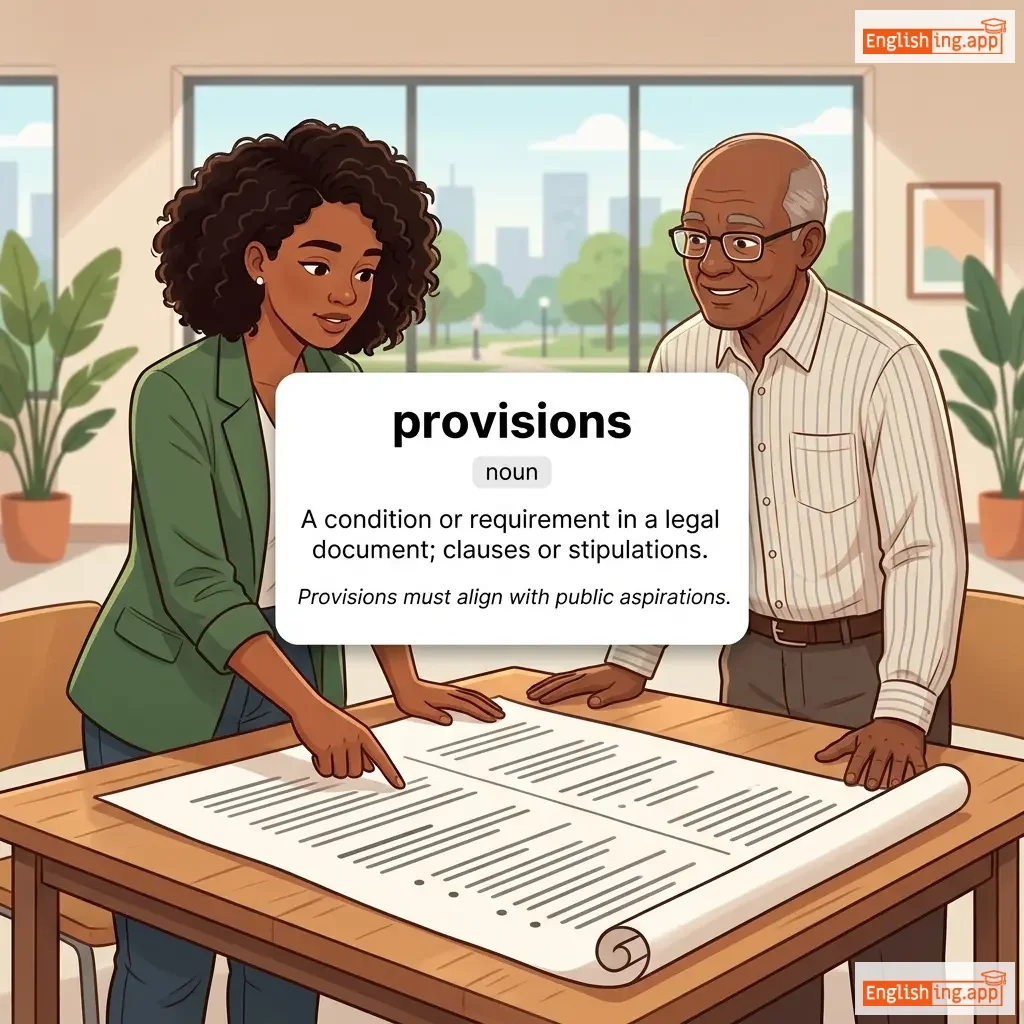
provisions definition card — visual illustration of the meaning
noun
prəˈvɪʒ.ənz
条款 (tiaokuan)

A condition or requirement in a legal document; clauses or stipulations.

"Provisions must align with public aspirations."

"条款必须与公众的期望一致。" (Tiaokuan bixu yu gongzhong de qiwang yizhi.)
noun
/prəˈvaɪzoʊ/
条件 (tiaojian)

a condition or stipulation attached to an agreement

"He accepted the job offer with the proviso that he could work remotely twice a week."

"他接受了工作邀请,前提是他每周可以远程工作两次。" (Ta jieshou le gongzuo yaoqing, qianti shi ta mei zhou keyi yuancheng gongzuo liang ci.)
adjective
/prəˈvaɪzəri/
临时的 (linshi de)

conditional; depending on certain terms being met

"The arrangement was only provisory until the final contract was signed."

"该安排只是临时的,直到最终合同签署。" (Gai anpai zhishi linshi de, zhidao zuihou hetong qianshu.)
noun
/ˌprɒvəˈkeɪʃən/
挑衅 (tiaoxin)

An action or statement that is intended to make someone angry or to cause a reaction.

"His rude comment was a clear provocation."

"他的粗鲁评论是明显的挑衅。" (Tade culi pinglun shi mingxian de tiaoxin.)
adjective
/prəˈvɒkətɪv/
挑衅的 (tiǎoxìn de)

Intended to make people angry, excited, or interested.

"She wore a provocative dress to the party."

"她穿了一件挑衅的衣服去参加派对。" (Tā chuānle yī jiàn tiǎoxìn de yīfú qù cānjiā pàiduì.)
verb
/prəˈvoʊk/
挑衅 (tiaoxin)

To cause someone to become angry or to cause a reaction.

"His words provoked a heated argument."

"他的话引发了一场激烈的争论。" (Ta de hua yinfa le yi chang jilie de zhenglun.)
adjective
/prəˈvoʊkɪŋ/
挑衅的 (tiaoxian de)

causing anger or strong reaction; irritating; stimulating

"His provoking comments made everyone angry."
"他挑衅的评论让每个人都生气了。" (Tā tiǎoxiàn de pínglùn ràng měi gèrén dōu shēngqì le.)
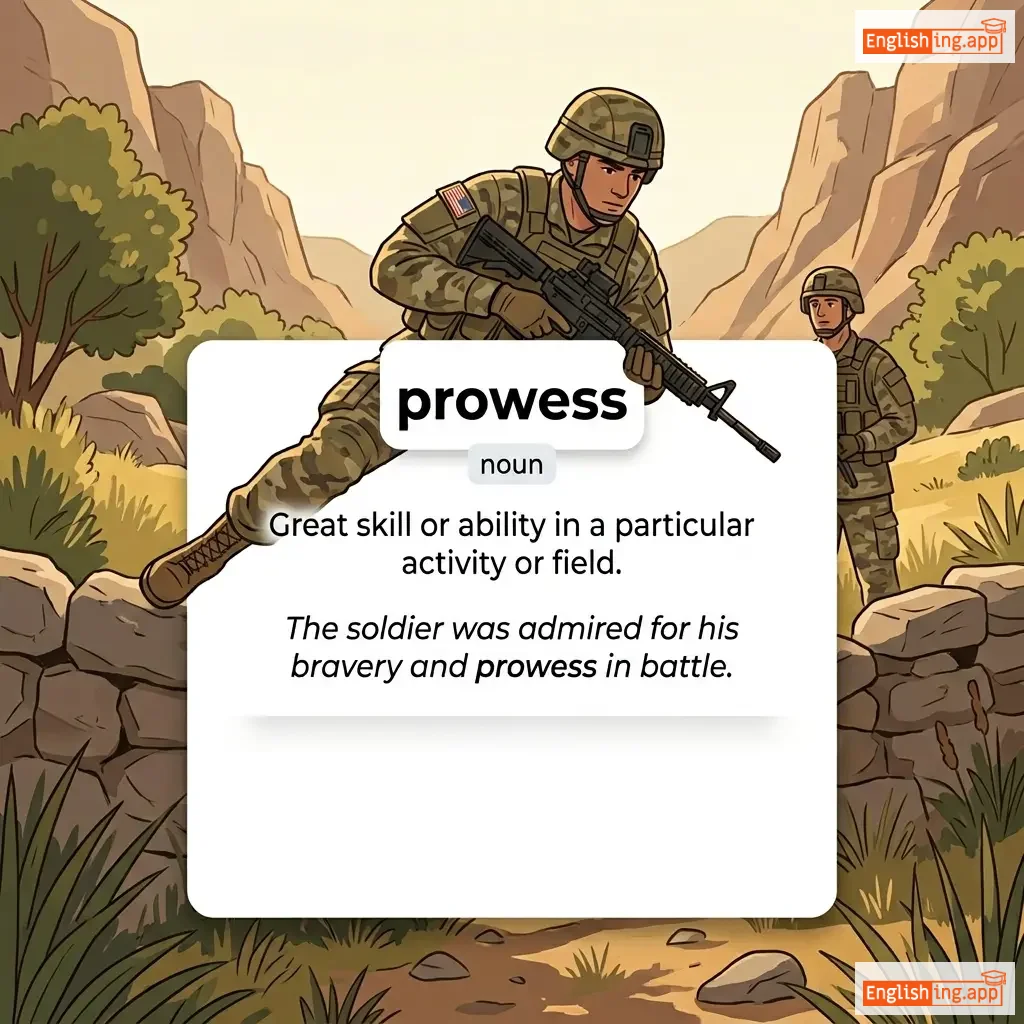
prowess definition card — visual illustration of the meaning
noun
/ˈpraʊəs/
能力 (nengli)

Great skill or ability in a particular activity or field.

"The soldier was admired for his bravery and prowess in battle."

"这位士兵因其勇气和战斗中的能力而受到赞赏。" (Zhe wei shibing yin qi yongqi he zhandaozhong de nengli er shoudao zanshang.)
verb
/praʊl/
悄悄走动(猎取或寻找) (qiaoqiao zoudong (liequ huo xunzhao))

To move around quietly and secretly, especially while hunting or searching.

"The cat prowled around the garden at night."
"猫在夜间悄悄地绕着花园走。" (Mao zai yejian qiaoqiao de raozhe huayuan zou.)
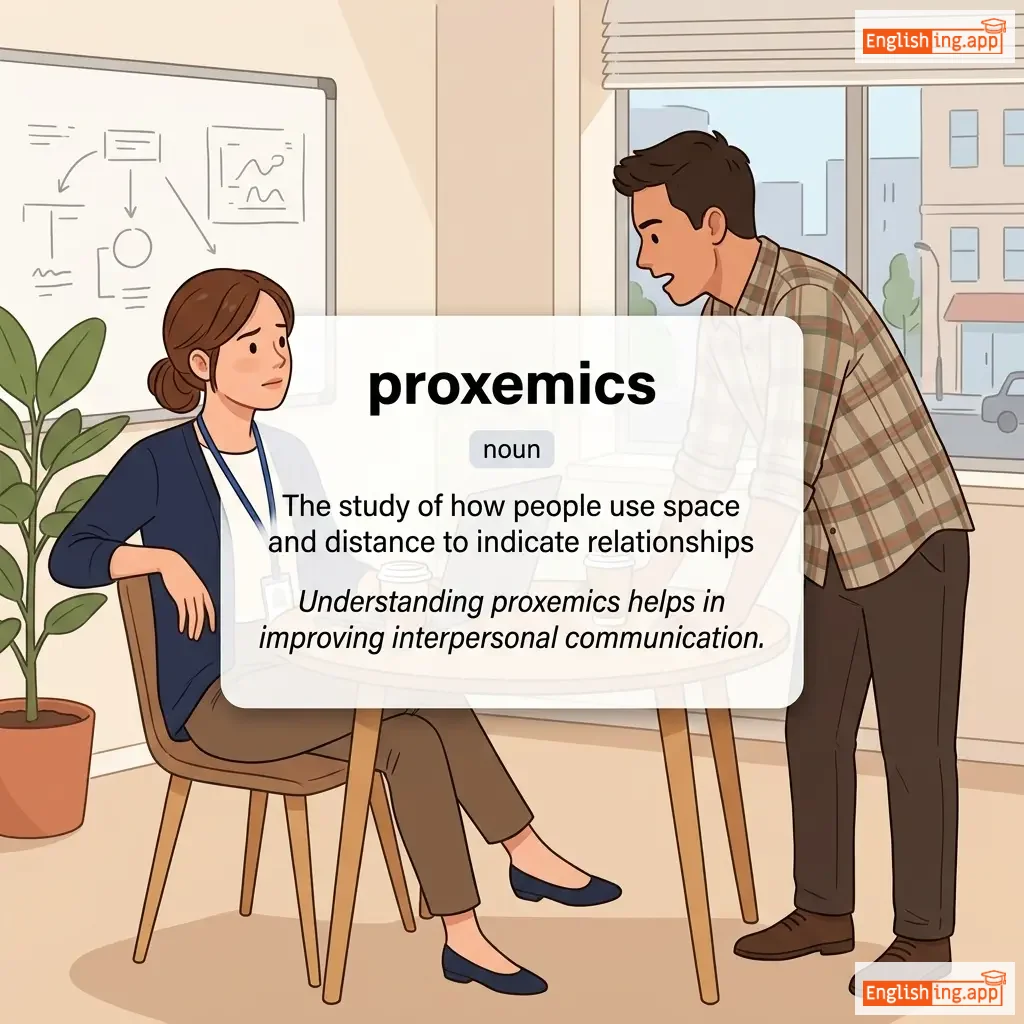
proxemics definition card — visual illustration of the meaning
noun
prɒkˈsiː.mɪks
个人空间使用的研究 (gèrén kōngjiān shǐyòng de yánjiū)

The study of how people use space and distance to indicate relationships

"Understanding proxemics helps in improving interpersonal communication."

"理解亲密距离有助于改善人际沟通。" (Lǐjiě qīnmì jùlí yǒuzhù yú gǎishàn rénjì gōutōng.)
adverb
/ˈprɒksɪmətli/
附近 (fujin)

In a near or close manner; nearly.

"The village lies proximately to the river."

"村庄位于河流附近。" (Cun zhuang wei yu he liu fujin.)
noun
/prɒkˈsɪmɪti/
接近 (jie jin)

Nearness in space, time, or relationship.

"The proximity of the school to her house made it convenient."

"学校离她家很近,这使得它很方便。" (Xuexiao li ta jia hen jin, zhe shideda hen fangbian.)
🧑‍💼

proxy (代理)

noun
/ˈprɒksi/
代理人 (dàilǐrén)

A person authorized to act on behalf of another; a substitute.

"She voted by proxy at the meeting."

"她在会议上通过代理投票。" (Tā zài huìyì shàng tōngguò dàilǐ tóupiào.)
noun
/pruːd/
过于害羞的人 (guòyú hàixiū de rén)

A person who is easily shocked by matters relating to sex or nudity; someone overly modest.

"He was called a prude for blushing at the movie scenes."

"因为在电影场景中脸红,他被称为过于害羞的人。" (yīnwèi zài diànyǐng chǎngjǐng zhōng liǎnhóng, tā bèi chēng wéi guòyú hàixiū de rén.)
noun
/ˈpruːdəns/
谨慎 (jinshen)

The quality of being cautious, wise, and exercising good judgment.

"She invested her money with great prudence."

"她非常谨慎地投资了她的钱。" (Ta feichang jinshen de touzi le ta de qian.)
adjective
/ˈpruːdənt/

acting with or showing care and thought for the future

"It is always prudent to save some money for emergencies."

adjective
/pruːˈdɛnʃəl/
审慎的 (shěn shèn de)

involving or showing prudence, especially in financial or business matters

"The bank has set prudential rules to protect depositors."

"银行制定了审慎的规则以保护存款人。" (Yínháng zhìdìng le shěnshèn de guīzé yǐ bǎohù cúnkuǎn rén.)
noun
/ˈpruːdəri/

the behavior or attitude of people who are too easily shocked or offended by sexual matters

"His prudery often made others uncomfortable during open discussions."

adjective
/ˈpruːdɪʃ/
过于拘谨的 (guòyú jūjǐn de)

having or revealing a tendency to be easily shocked by matters relating to sex or nudity

"She was too prudish to watch the movie with her friends."

"她太拘谨了,不愿和朋友一起看电影。" (Tā tài jūjǐn le, bù yuàn hé péngyǒu yīqǐ kàn diànyǐng.)
verb
/pruːn/
修剪 (xiūjiǎn)

to cut off unwanted parts of a plant or tree to help it grow better

"Gardeners prune the trees in spring to encourage growth."

"园丁在春天修剪树木以促进生长。" (Yuan ding zai chun tian xiu jian shu mu yi cu jin sheng zhang.)
adjective
/ˈprʊəriənt/
淫荡 (yín dàng)

having or showing an excessive interest in sexual matters

"The magazine was criticized for its prurient content."

"这本杂志因其淫荡内容而受到批评。" (Zhe ben zazhi yin qi yindang neirong er shoudao piping.)
verb
/praɪ/
窥探 / 干涉 (kuītàn / gānshè)

to look closely into something; to try to find out private information

"She tried to pry into her neighbor’s private life."

"她试图窥探她邻居的私人生活。" (Tā shìtú kuītàn tā línjū de sīrén shēnghuó.)
noun
/ˌsuːdəʊəˈpɒsəl/
伪使徒 (wei shitu)

a false or pretended apostle

"The preacher was condemned as a pseudapostle."

"这位传教士被定为伪使徒。" (Zhè wèi chuánjiàoshì bèi dìng wèi wèi shítú.)
noun
/ˈsuːdənɪm/
笔名 (bi ming)

a fictitious name used by an author instead of their real name

"Mark Twain was the pseudonym of Samuel Clemens."

"马克·吐温是塞缪尔·克莱门斯的笔名。" (Ma ke Tu wen shi Sai miu er Ke lai men si de bi ming.)
noun
/ˌsuːdəˈnɪmɪti/
使用笔名 (shiyong binming)

the practice or state of using a pseudonym

"The author maintained pseudonymity throughout her career."

"这位作者在整个职业生涯中一直使用笔名。" (Zhe wei zuozhe zai zhengge zhiyeshiye zhong yizhi shiyong binming.)
noun
/ˈsaɪkiː/
灵魂 / 心智 (linghun / xinzhi)

the human soul, mind, or spirit

"The novel explores the depths of the human psyche."

"这本小说探索了人类心智的深度。" (Zhe ben xiaoshuo tansuo le renlei xinzhi de shendu.)
adjective
/ˌsaɪkiˈætrɪk/

relating to mental illness or its treatment

"The psychiatric hospital provides care for those with severe conditions."

noun
/saɪˈkaɪətrɪst/
精神科医生 (jīngshén kē yīshēng)

a medical doctor specializing in the diagnosis and treatment of mental illness

"The psychiatrist prescribed medication for the patient’s anxiety."

"精神科医生为患者的焦虑开了药。" (Jīngshén kē yīshēng wèi huànzhě de jiāolǜ kāile yào.)
noun
/saɪˈkaɪətri/
精神病学 (jīngshén bìngxué)

the branch of medicine focused on the study and treatment of mental illness

"She decided to study psychiatry to help people with mental health issues."

"她决定学习精神病学,帮助有心理健康问题的人。" (Tā juédìng xuéxí jīngshén bìngxué, bāngzhù yǒu xīnlǐ jiànkāng wèntí de rén.)
adjective, noun
/ˈsaɪkɪk/

relating to the mind or supernatural powers; a person claiming to have extrasensory abilities

"The psychic claimed she could predict the future."

Psychographics definition card — visual illustration of the meaning
noun
/ˌsaɪ.kəʊˈɡræf.ɪks/
根据人们的态度、愿望和其他心理标准对人进行研究和分类 (genju renmen de taidu, yuangwang he qita xinli biaozhun dui ren jinxing yanjiu he fenlei)

The study and classification of people according to their attitudes, aspirations, and other psychological criteria.

"Psychographics reveal consumer buying motives."

"心理图谱揭示了消费者购买动机。" (Xinli tupu jieshi le xianghuo zhi hui maimai dongji.)