
词汇表

英语词汇词典 | 单词含义、定义和示例

proposal definition card — visual illustration of the meaning
noun
/prəˈpəʊzəl/
提案 (tian4 an4)

a formal suggestion or plan put forward for consideration or discussion

"She submitted a proposal for the new project to the board."

"她向董事会提交了新的项目提案。" (Tā xiàng dǒngshìhuì tíjiāo le xīn de xiàngmù tí'àn.)
propose definition card — visual illustration of the meaning
verb
/prəˈpoʊz/
提议 (tíyì)

to suggest a plan or idea for consideration or discussion

"I propose that we meet tomorrow to discuss the project."

"我提议我们明天见面讨论这个项目。" (Wǒ tíyì wǒmen míngtiān jiànmiàn tǎolùn zhège xiàngmù.)
adjective
/prəˈpoʊzd/
提议的 (tíyì de)

suggested or put forward for consideration or discussion

"The proposed changes will improve the system."

"提议的变更将改善系统。" (Tíyì de biàngē jiāng gǎishàn xìtǒng.)
noun
/ˌprɒpəˈzɪʃən/
提议, 计划 (tiyi, jihua)

A statement, idea, or plan put forward for consideration or discussion.

"The company made a business proposition to the investors."

"公司向投资者提出了商业提议。" (Gōngsī xiàng tóuzī zhě tíchūle shāngyè tíyì.)
verb
/prəˈpaʊnd/
提出 (tichu)

To put forward an idea, theory, or point for consideration.

"The professor propounded a new theory on climate change."

"教授提出了关于气候变化的新理论。" (Jiaoshou tichu le guanyu qihou bianhua de xin lilun.)
propriety definition card — visual illustration of the meaning
noun
/prəˈpraɪəti/
得体 (deti)

Conformity to accepted standards of behavior or morality.

"He always behaved with the utmost propriety in public."
"他在公共场合总是表现得体。" (Ta zai gonggong changhe zong shi biaoxian deti.)
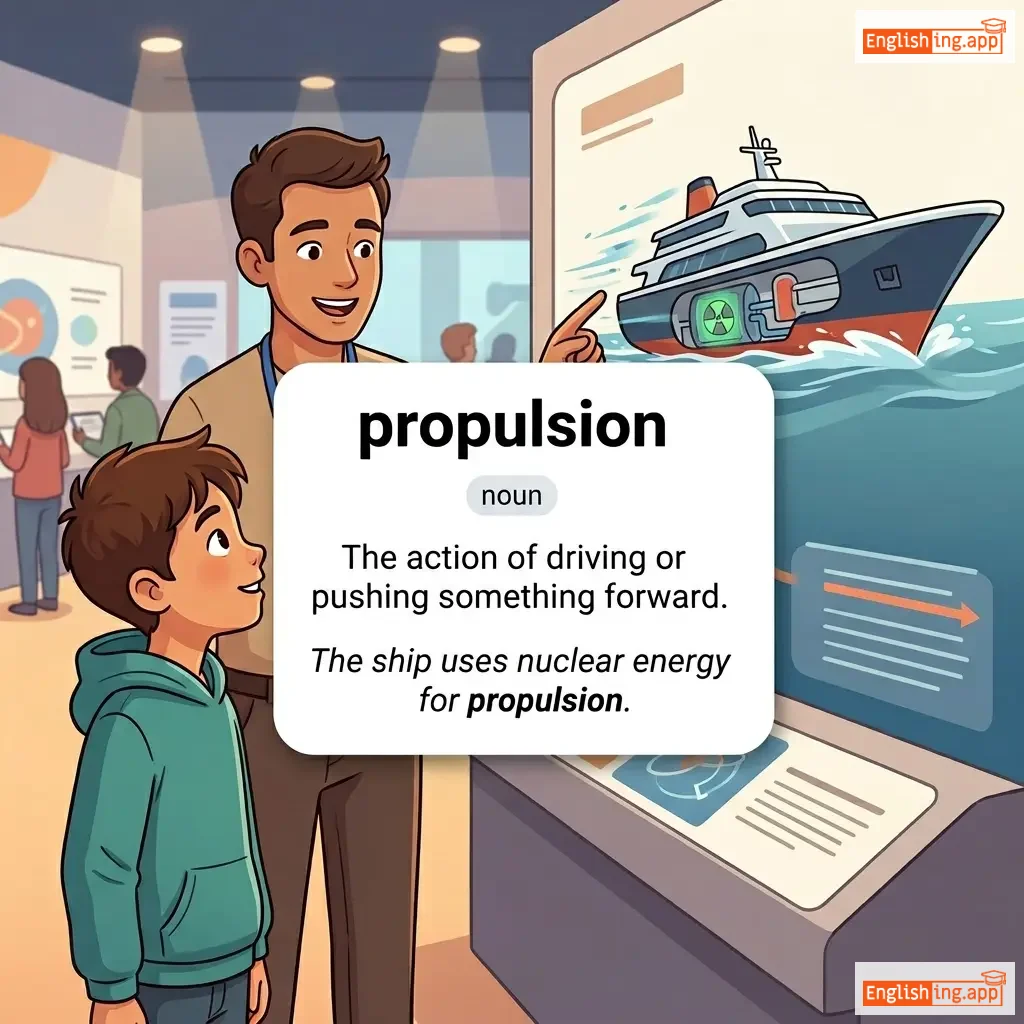
propulsion definition card — visual illustration of the meaning
noun
/prəˈpʌlʃən/
推进力 (tuī jìn lì)

The action of driving or pushing something forward.

"The ship uses nuclear energy for propulsion."

"这艘船使用核能推进。" (Zhè sōu chuán shǐyòng hé néng tuī jìn.)
adjective
/prəˈpʌlsɪv/
推进的 (tuījìn de)

Having the power to drive or push something forward.

"The propulsive force of the rocket lifted it off the ground."

"火箭的推进力将它从地面抬起。" (Huǒjiàn de tuījìn lì jiāng tā cóng dìmiàn táiqǐ.)
verb
/prəˈroʊɡ/
暂停会议 (zanting huiyi)

to discontinue a session of a parliament or assembly without dissolving it

"The president decided to prorogue parliament until the crisis was resolved."

"总统决定暂停议会,直到危机得到解决。" (Zongtong jueding zanting yihui, zhidao weiji dedao jieju.)
adjective
/proʊˈzeɪ.ɪk/
平凡的 (pingfan de)

ordinary, dull, or lacking imagination

"The teacher’s explanation was accurate but rather prosaic."

"老师的解释很准确,但相当平凡。" (Laoshi de jieshi hen zhunque, dan xiangdang pingfan.)
noun
/proʊˈsiː.ni.əm/
舞台前沿 (wǔtái qián yán)

the part of a theater stage in front of the curtain; the arch framing the stage

"The actors bowed at the proscenium before leaving the stage."
"演员在离开舞台之前向舞台前沿鞠躬。" (yǎnyuán zài líkāi wǔtái zhīqián xiàng wǔtái qián yán jūgōng.)
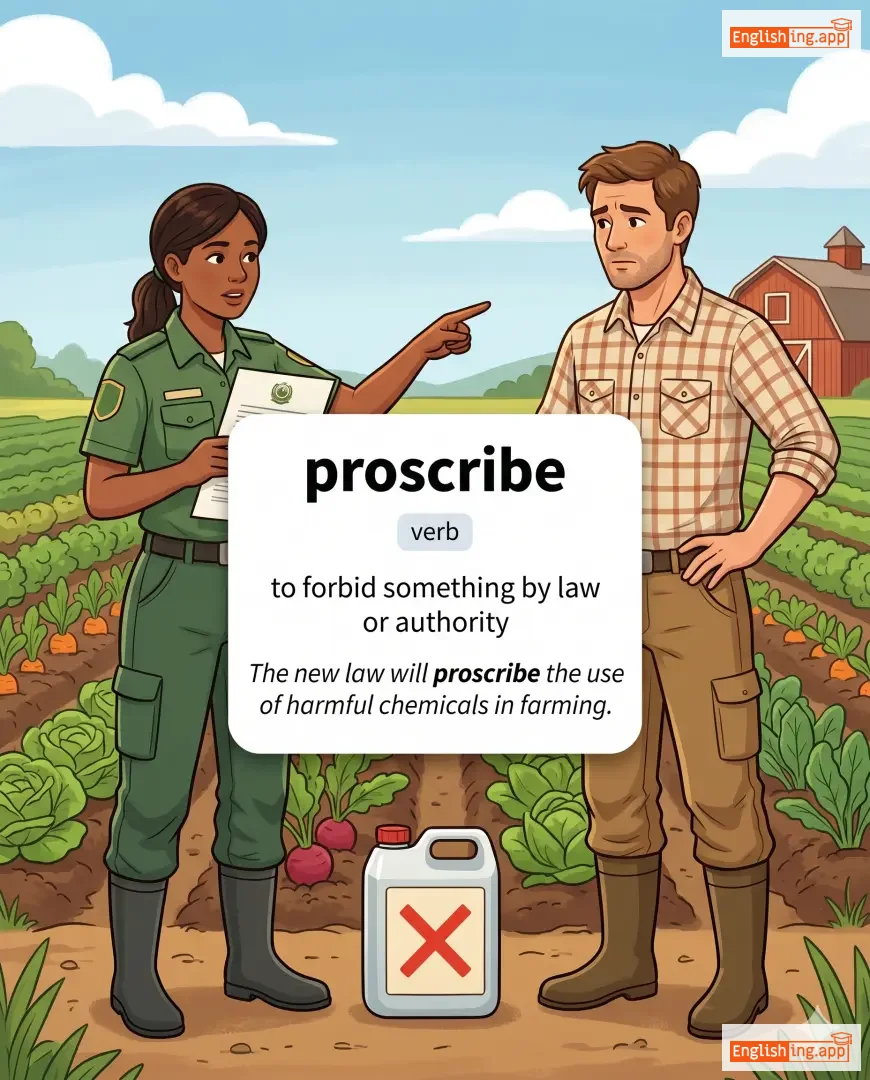
proscribe definition card — visual illustration of the meaning
verb
/proʊˈskraɪb/
禁止 (jìnzhǐ)

to forbid something by law or authority

"The new law will proscribe the use of harmful chemicals in farming."

"新法律将禁止在农业中使用有害化学品。" (Xīn fǎlǜ jiāng jìnzhǐ zài nóngyè zhōng shǐyòng yǒuhài huàxué pǐn.)
noun
/proʊˈskrɪp.ʃən/
禁令 (jinling)

the act of forbidding something, especially by law

"The proscription of child labor is an important human rights achievement."

"禁止童工劳动是人权的重要成就。" (Jinzhi tonggong laodong shi renquan de zhongyao chengjiu.)
verb
/ˈprɒsɪkjuːt/
起诉 (qisu)

to institute legal proceedings against someone

"The lawyer decided to prosecute the case after gathering sufficient evidence."

"律师在收集到足够证据后决定起诉此案。" (Lushi zai shouji dao zugei zhengju hou jueding qisu ci an.)
noun
/ˌprɒsɪˈkjuːʃən/
起诉 (qǐsù)

The act of bringing a criminal charge against someone and pursuing legal action in court.

"The prosecution presented strong evidence against the defendant."

"起诉方提出了有力的证据反对被告。" (Qǐsù fāng tíchūle yǒulì de zhèngjù fǎnduì bèigào.)
noun
/ˈprɑsɪˌkjuːtər/
检察官 (jiancha guan)

a lawyer who represents the government in criminal cases

"The prosecutor argued that the defendant was guilty of the crime."

"检察官辩称被告犯有罪。" (Jiancha guan bian cheng beigao fan you zui.)
noun
/ˈprɒsɪlaɪt/
改信者 (gǎi xìn zhě)

A person who has converted from one belief, opinion, or religion to another.

"She became a proselyte after converting to a new faith."

"她在转信到新的信仰后成为了一名改信者。" (Tā zài zhuǎn xìn dào xīn de xìnyǎng hòu chéngwéi le yī míng gǎi xìn zhě.)
verb
/ˈprɒsəˌlaɪtaɪz/
试图使某人改信 (shìtú shǐ mǒurén gǎixìn)

To try to persuade someone to convert to a different belief or religion.

"They tried to proselytize the villagers with their new ideas."

"他们试图用他们的新思想来传教村民。" (Tāmen shìtú yòng tāmen de xīn sīxiǎng lái chuánjiào cūnmín.)
noun
/ˈprɒsədi/
韵律学 (yùn lǜ xué)

The patterns of rhythm and sound used in poetry and speech.

"The professor explained how prosody affects the mood of a poem."

"教授解释了韵律学如何影响诗歌的情绪。" (Jiàoshòu jiěshìle yùnlǜ xué rúhé yǐngxiǎng shīgē de qíngxù.)
prospect definition card — visual illustration of the meaning
noun
/ˈprɒspɛkt/
前景 (qianjing)

The possibility or likelihood of some future event occurring.

"The prospect of traveling abroad excited her."

"出国旅行的前景让她感到兴奋。" (Chūguó lǚxíng de qiánjǐng ràng tā gǎndào xīngfèn.)
adjective
/prəˈspɛktɪv/
前景的 (qianjing de)

likely or expected to happen in the future; potential

"The company is meeting with prospective clients next week."

"公司将于下周与潜在客户会面。" (Gongsi jiang yu xia zhou yu qianzai kehu huimian.)
noun
/ˈprɒspɛktər/
矿产勘探员 (kuàngchǎn kāntàn yuán)

a person who searches for mineral deposits, especially gold

"The prospector spent years in the mountains searching for gold."

"矿产勘探员花了多年在山中寻找黄金。" (Kuàngchǎn kāntàn yuán huāle duōnián zài shān zhōng xúnzhǎo huángjīn.)
prospects definition card — visual illustration of the meaning
noun
/ˈprɒs.pekts/
前景 (qianjing)

The possibility or likelihood of some future event occurring.

"The prospects for growth look promising."

"增长的前景看起来很有前途。" (Zengzhang de qianjing kan qilai hen you qiantu.)
noun
/prəˈspɛktəs/
招生简章 (zhaosheng jianzhang)

a printed document that advertises or describes a school, business, or investment offering

"The university sent out a prospectus to attract new students."

"大学发送了招生简章以吸引新生。" (Daxue fasongle zhaosheng jianzhang yi xiqin xinsheng.)
verb
/ˈprɒspər/
繁荣 (fánróng)

to succeed or flourish, especially in financial or business matters

"With hard work and determination, she managed to prosper in her career."

"凭借努力工作和决心,她在事业中取得了成功。" (Píngjiè nǔlì gōngzuò hé juéxīn, tā zài shìyè zhōng qǔdéle chénggōng.)
prosperity definition card — visual illustration of the meaning
noun
/prɒˈspɛrɪti/
繁荣 (fanrong)

the state of being successful, especially financially

"Education is often seen as the key to prosperity."

"教育通常被认为是繁荣的关键。" (Jiaoyu tongchang bei renwei shi fanrong de guanjian.)
adjective
/ˈprɒspərəs/

successful in material terms; flourishing financially or in general well-being

"The town became prosperous after the new trade route opened."

adjective/verb
/ˈprɒstreɪt/
俯卧 (fǔwò)

lying stretched out on the ground with one's face downward, often as a sign of submission or exhaustion

"He lay prostrate on the ground after the long battle."

"他在长时间的战斗后趴倒在地。" (Tā zài cháng shíjiān de zhàndòu hòu pā dǎo zài dì.)
protagonist definition card — visual illustration of the meaning
noun
/prəˈtæɡənɪst/
主角 (zhǔjiǎo)

the main character or leading figure in a story, drama, or other work

"The protagonist of the novel struggles with her inner conflicts."

"小说的主角正在与她的内心冲突斗争。" (xiǎoshuō de zhǔjiǎo zhèngzài yǔ tā de nèixīn chōngtú dòuzhēng.)
adjective
/ˈproʊtiən/
多变的 (duobian de)

tending or able to change frequently or easily; versatile

"She is a protean artist who experiments with many styles."

"她是一位多变的艺术家,尝试许多不同的风格。" (Ta shi yi wei duobian de yishujia, changshi xu duo butong de fengge.)
protect definition card — visual illustration of the meaning
verb
/prəˈtɛkt/
保护 (baohu)

to keep safe from harm or danger

"It is important to protect your personal information online."
"保护个人信息在网上非常重要。" (Baohu geren xinxi zai wangshang feichang zhongyao.)
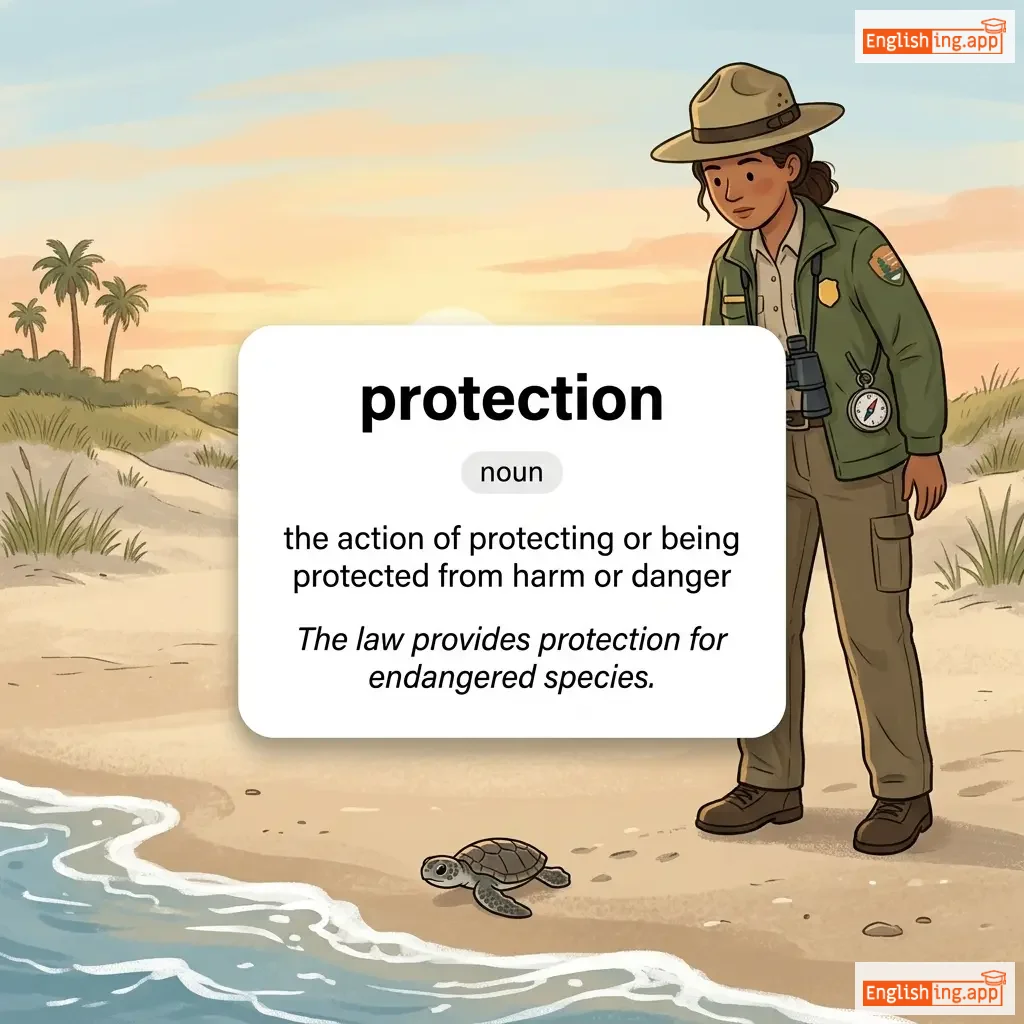
protection definition card — visual illustration of the meaning
noun
/prəˈtɛkʃən/
幸福 (xingfu)

the action of protecting or being protected from harm or danger

"The law provides protection for endangered species."
"她在获得奖项时无法掩饰她的幸福。" (Tā zài huòdé jiǎngxiàng shí wúfǎ yǎnshì tā de xìngfú.)
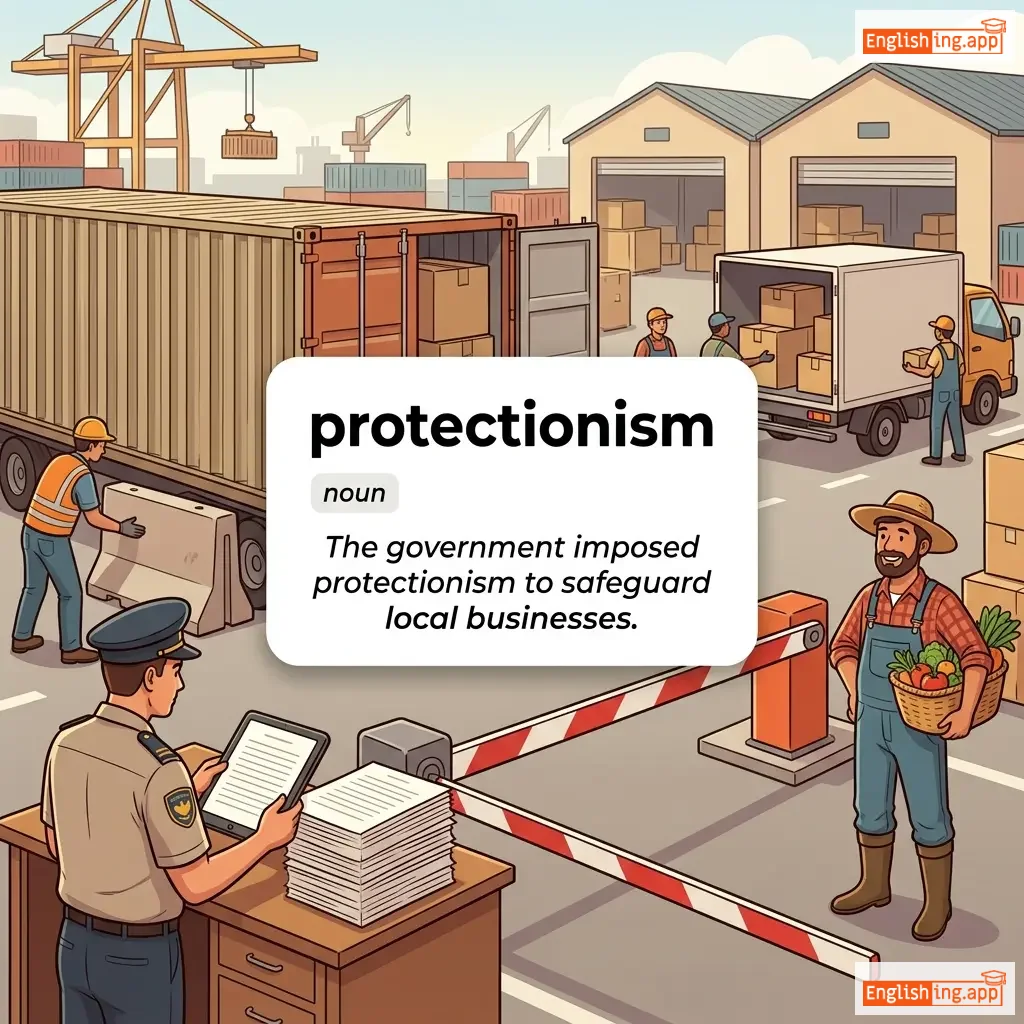
protectionism definition card — visual illustration of the meaning
noun
/prəˈtɛk.ʃəˌnɪz.əm/
贸易保护主义 (puluotekesheniximu)

A trade policy that restricts imports to safeguard domestic industries through trade restriction, economic nationalism, or isolationism.

"The government imposed protectionism to safeguard local businesses."

"政府采取了保护主义政策以保护本地企业。" (zhengfu shishi le maoyi baohu zhuyi yi bendi qiye)
adjective
/prəˈtɛktɪv/
保护性的 (bǎohùxìng de)

giving or capable of giving protection; shielding from harm or danger

"She wore a protective helmet while riding her bike."

"她骑自行车时戴着保护性头盔。" (Tā qí zìxíngchē shí dàizhe bǎohùxìng tóukuī.)
noun
/prəˈtɛktər/
保护者 (bǎohù zhě)

a person or thing that protects someone or something

"The dog was seen as the family's protector."

"这只狗被视为家庭的保护者。" (Zhè zhī gǒu bèi shì wéi jiātíng de bǎohù zhě.)
noun
/prəˈtɛktərət/
保护国 (baohu guo)

A state that is controlled and protected by another.

"The small country became a protectorate of the empire."

"这个小国成为了帝国的保护国。" (Zhe ge xiao guo cheng wei le di guo de bao hu guo.)
noun
/ˈproʊtəˌʒeɪ/
门徒 (mentu)

a person who is guided and supported by an older and more experienced person

"The young artist was the protege of a famous painter."

"这位年轻艺术家是著名画家的门徒。" (Zhè wèi niánqīng yìshùjiā shì zhùmíng huàjiā de méntú.)
noun
/ˈproʊtiːn/

a molecule composed of amino acids essential for bodily functions

"Proteins are essential for building and repairing tissues in the body."

proteins definition card — visual illustration of the meaning
noun
/ˈprəʊ.tiːnz/
蛋白质 (danbaizhi)

Large biomolecules consisting of amino acids that perform essential functions in living organisms, including building and repairing tissues.

"Lean meats and legumes provide high-quality proteins."
"瘦肉和豆类提供高质量的蛋白质。" (Shourou he doulei tigong gao zhiliang de danbaizhi.)
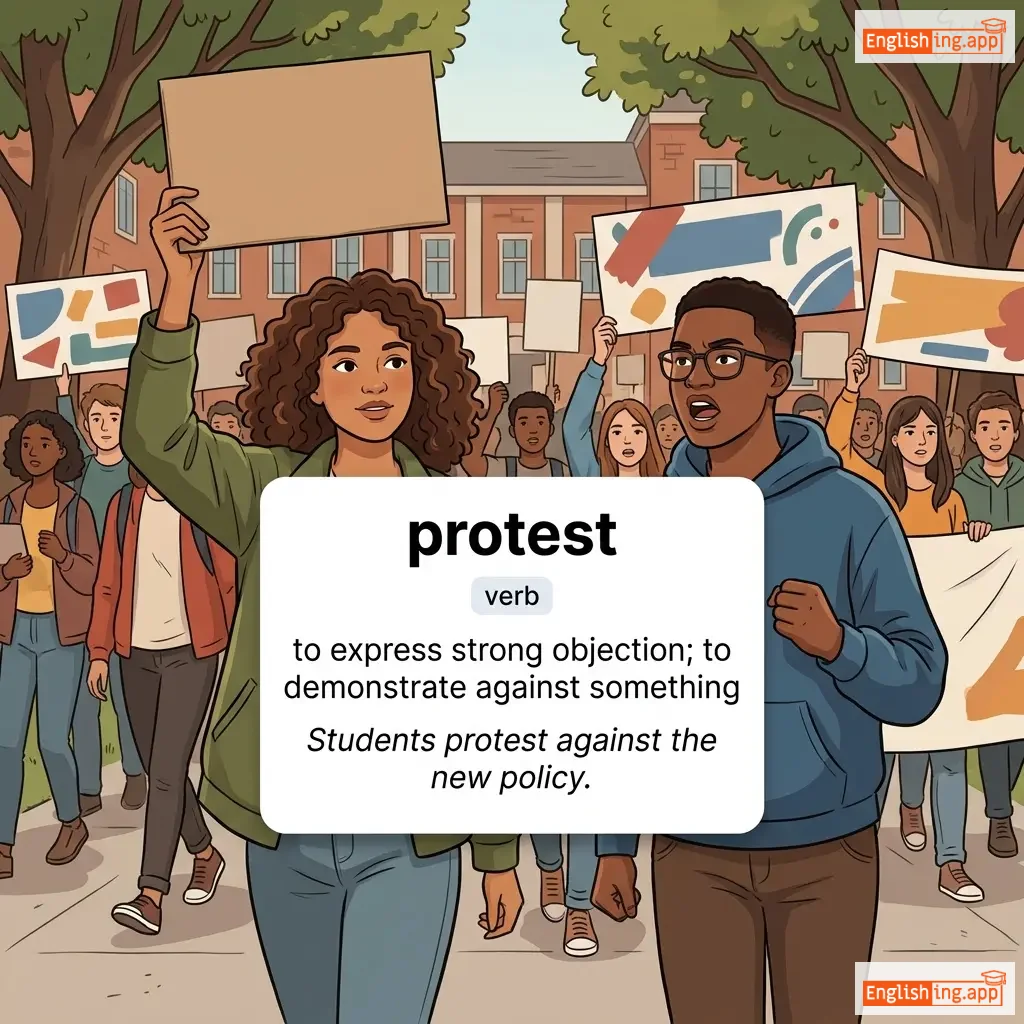
protest definition card — visual illustration of the meaning
noun
/ˈproʊtɛst/
抗议 (kangyi)

a statement or action expressing disapproval of or objection to something.

"Thousands gathered in the square to protest the new law."

"成千上万的人聚集在广场上抗议新法律。" (Cheng qian shang wan de ren juji zai guangchang shang kangyi xin falu.)
noun
/ˈprɑːtɪstənt/
新教徒 (xīnjiàotú)

a member of the Christian church that separated from the Roman Catholic Church during the Reformation

"Martin Luther was a key figure in the Protestant Reformation."

"马丁·路德是新教改革的关键人物。" (Mǎdīng Lùdé shì xīnjiào gǎigé de guānjiàn rénwù.)
noun
/prəˈtɛstər/
抗议者 (kàngyì zhě)

a person who takes part in a protest or demonstration

"The protester spoke passionately about the cause."

"抗议者激情洋溢地谈论了这个原因。" (Kàngyì zhě jīqíng yángyì de tánlùnle zhège yuányīn.)
noun
/ˈproʊtəkɔːl/
协议 (xieyi)

an official procedure or system of rules

"The security team followed strict protocol during the event."

"安全团队在活动期间遵循了严格的协议。" (Anquan tuandui zai huodong qijian zunxunle yange de xieyi.)
noun
/ˈproʊtoʊˌmɑːrtɚ/
第一位殉道者 (dì yī wèi xùn dào zhě)

The first martyr in a cause or religion, often referring to the first Christian martyr.

"St. Stephen is known as the protomartyr of Christianity."

"圣斯蒂芬被称为基督教的原始殉道者。" (Sheng Siti fen bei cheng wei Jidujiao de yuanshi xundaozhe.)
noun
/ˈproʊtoʊˌplæzəm/
原生质 (yuán shēng zhí)

The living substance inside a cell, including the cytoplasm and nucleus.

"Scientists observed the movement of protoplasm under the microscope."

"科学家在显微镜下观察了原生质的运动。" (Kēxuéjiā zài xiǎnwēijìng xià guānchá le yuán shēng zhí de yùndòng.)
noun
/ˈproʊtəˌtaɪp/
原型 (yuánxíng)

The first model or version of something, used as a sample for testing or improvement.

"The company built a prototype of the new smartphone before mass production."

"公司在大规模生产之前构建了新智能手机的原型。" (Gōngsī zài dà guīmó shēngchǎn zhīqián gòujiànle xīn zhìnéng shǒujī de yuánxíng.)
verb
/proʊˈtrækt/
延长 (yáncháng)

To prolong or extend in time or duration.

"Negotiations were protracted for several months."

"谈判持续了几个月。" (Tánpàn chíxùle jǐ gè yuè.)
protracted definition card — visual illustration of the meaning
adjective
/prəˈtræktɪd/
拖延的 (tuōyán de)

Lasting for a long time or longer than expected.

"The negotiation turned into a protracted process."

"谈判变成了一个拖延的过程。" (Tánpàn biàn chéngle yīgè tuōyán de guòchéng.)
verb
/proʊˈtruːd/
突出 (tuchu)

To stick out or extend beyond a surface.

"A nail was protruding from the wooden board."

"一根钉子从木板中突出出来。" (Yi gen dingzi cong muban zhong tuchu chulai.)
noun
/prəˈtruːʒən/
突出部分 (tūchū bùfen)

Something that sticks out or projects from a surface.

"The protrusion on the wall made it difficult to move the furniture."

"墙上的突出部分使得移动家具变得困难。" (Qiáng shàng de túchū bùfen shǐdé yídòng jiājù biàn dé kùnnán.)