词汇表

英语词汇词典 | 单词含义、定义和示例

adjective
/prəˈdɪdʒəs/
惊人的 (jing ren de)

remarkably or impressively great in extent, size, or degree

"The team made a prodigious effort to complete the project on time."

"团队为按时完成项目做出了惊人的努力。" (Tuan dui wei an shi wan cheng xiang mu zuo chu le jing ren de nu li.)
noun
/ˈprɒdɪdʒi/
神童 (shéntóng)

a person, especially a young one, with exceptional talents or abilities

"Mozart was a child prodigy in music."

"莫扎特是一个音乐神童。" (Mozart shì yīgè yīnyuè shéntóng.)
verb
/prəˈdjuːs/
生产 (shēngchǎn)

to make or manufacture from components or raw materials

"They produce high-quality goods."

"他们生产高质量的商品。" (Tāmen shēngchǎn gāo zhìliàng de shāngpǐn.)
noun
/prəˈdjuːsə/
制片人 (zhìpiànrén)

a person, company, or country that makes or grows something

"He is a film producer."

"他是电影制片人。" (Tā shì diànyǐng zhìpiànrén.)
noun
/ˈprɒdʌkt/
产品 (chanpin)

an item or substance that is manufactured or produced

"This is a new product launched by the company."

"这是公司推出的新产品。" (Zhè shì gōngsī tuīchū de xīn chǎnpǐn.)
noun
/prəˈdʌkʃən/
生产 (shengchan)

the process of manufacturing or creating something

"The production of this film took over a year."

"这部电影的制作超过了一年。" (Zhe bu dianying de zhizuo chao guo le yinian.)
adjective
/prəˈdʌktɪv/
高效 (gaoxiao)

producing or achieving a significant amount of results, work, or output

"She had a very productive day at the office."

"她在办公室度过了非常高效的一天。" (Tā zài bàngōngshì dùguòle fēicháng gāoxiào de yītiān.)
productivity definition card — visual illustration of the meaning
noun
/ˌprɒdʌkˈtɪvɪti/
生产力 (shengchanli)

the rate at which work is done or goods are produced, especially in relation to the time and resources used

"Improving employee productivity is vital for business growth."

"提高员工生产力对业务增长至关重要。" (Tigao yuangong shengchanli dui yewu zengzhang zhiguan zhongyao.)
adjective
/prəˈfeɪn/
亵渎的,不敬的 (xièdú de, bù jìng de)

showing disrespect or contempt for sacred things; irreverent or vulgar

"His jokes were considered too profane for the ceremony."

"他的笑话被认为是太亵渎仪式了。" (tā de xiàohuà bèi rènwéi shì tài xièdú yíshì le.)
profess definition card — visual illustration of the meaning
verb
/prəˈfes/
宣称 (xuancheng)

to declare or claim openly; to state one's belief

"He professes his love for classical music."

"他宣称自己热爱古典音乐。" (Ta xuancheng ziji reai gudian yinyue)
noun
/prəˈfɛʃən/
职业 (zhiye)

a paid occupation, especially one requiring specialized education or training

"Medicine is considered a noble profession."

"医学被认为是一种高尚的职业。" (Yīxué bèi rènwéi shì yī zhǒng gāoshàng de zhíyè.)
adjective
/prəˈfɛʃənl/
专业 (zhuānyè)

relating to a job that requires special training or education

"She is a professional dancer who performs internationally."

"她是一位专业舞者,国际上有表演。" (Tā shì yī wèi zhuānyè wǔzhě, guójì shàng yǒu biǎoyǎn.)
noun
/prəˈfɛsər/
教授 (jiaoshou)

a senior teacher or academic at a college or university

"The professor explained the theory clearly."

"教授清楚地解释了理论。" (jiaoshou qingchu de jieshi le lilun.)
verb
/ˈprɒfər/
提供,呈现 (tígōng, chéngxiàn)

to offer something for acceptance; to present

"She proffered her hand as a sign of friendship."

"她伸出手作为友谊的象征。" (Tā shēn chū shǒu zuòwéi yǒuyì de xiàngzhēng.)
proficiency definition card — visual illustration of the meaning
noun
/prəˈfɪʃənsi/
能力 (nénglì)

a high degree of skill or expertise in a particular field

"She has great proficiency in English grammar."

"她在英语语法方面有很高的能力。" (Tā zài yīngyǔ yǔfǎ fāngmiàn yǒu hěn gāo de nénglì.)
proficient definition card — visual illustration of the meaning
adjective
/prəˈfɪʃənt/
熟练的 (shúliàn de)

skilled and competent in doing something

"She is proficient in both English and Spanish."

"她在英语和西班牙语方面都很熟练。" (Tā zài yīngyǔ hé xībānyá yǔ fāngmiàn dōu hěn shúliàn.)
noun
/ˈproʊˌfaɪl/
个人资料 (geren ziliao)

a description or representation of someone or something; an outline

"He updated his profile on the company website."

"他更新了公司网站上的个人资料。" (Ta gengxin le gongsi wangzhan shang de geren ziliao.)
noun, verb
/ˈprɒfɪt/
利润 (lìrùn)

financial gain, especially the difference between the amount earned and the amount spent

"The company made a huge profit this quarter."

"公司在本季度赚了大笔利润。" (Gōngsī zài běn jìdù zhuànle dà bǐ lìrùn.)
profitability definition card — visual illustration of the meaning
noun
ˌprɒf.ɪ.təˈbɪl.ɪ.ti
盈利能力 (yingli nengli)

The degree to which a business or activity yields profit or financial gain.

"Increasing sales and reducing costs boosted profitability."

"增加销售并减少成本提高了盈利能力。" (Zengjia xiaoshou bing jianshao chengben tigao le yingli nengli.)
adjective
/ˈprɒfɪtəbl/
盈利的 (yí lì de)

yielding profit or financial gain

"The company has become highly profitable after the new strategy was implemented."

"公司在实施新策略后变得极具盈利性。" (Gōngsī zài shíshī xīn cèlüè hòu biàn dé jí jù yí lì xìng.)
noun
/ˌprɑːfɪˈtɪr/
牟取暴利者 (móu qǔ bào lì zhě)

a person who makes excessive profits, especially unfairly or illegally

"The government punished war profiteers."

"政府惩罚了战争的牟取暴利者。" (Zhèngfǔ chéngfá le zhànzhēng de móu qǔ bào lì zhě.)
noun
/ˈprɑːflɪɡəsi/
挥霍 (huihuo)

reckless wastefulness or extravagance

"His profligacy with money led him to bankruptcy."

"他的挥霍导致了破产。" (Tā de huihuo dǎozhì le pòchǎn.)
adjective
/ˈprɑːflɪɡət/
挥霍无度 (huīhuò wúdù)

recklessly extravagant or wasteful in resources

"The king was known for his profligate lifestyle."

"国王以奢侈的生活方式而闻名。" (Guó wáng yǐ shēchǐ de shēnghuó fāngshì ér wénmíng.)
profound definition card — visual illustration of the meaning
adjective
/prəˈfaʊnd/
深刻 (shenke)

very great or intense; showing deep insight or understanding

"Her speech had a profound impact on the audience."
"她的演讲对观众产生了深刻的影响。" (Ta de yanjiang dui guanzhong chanshengle shenke de yingxiang.)
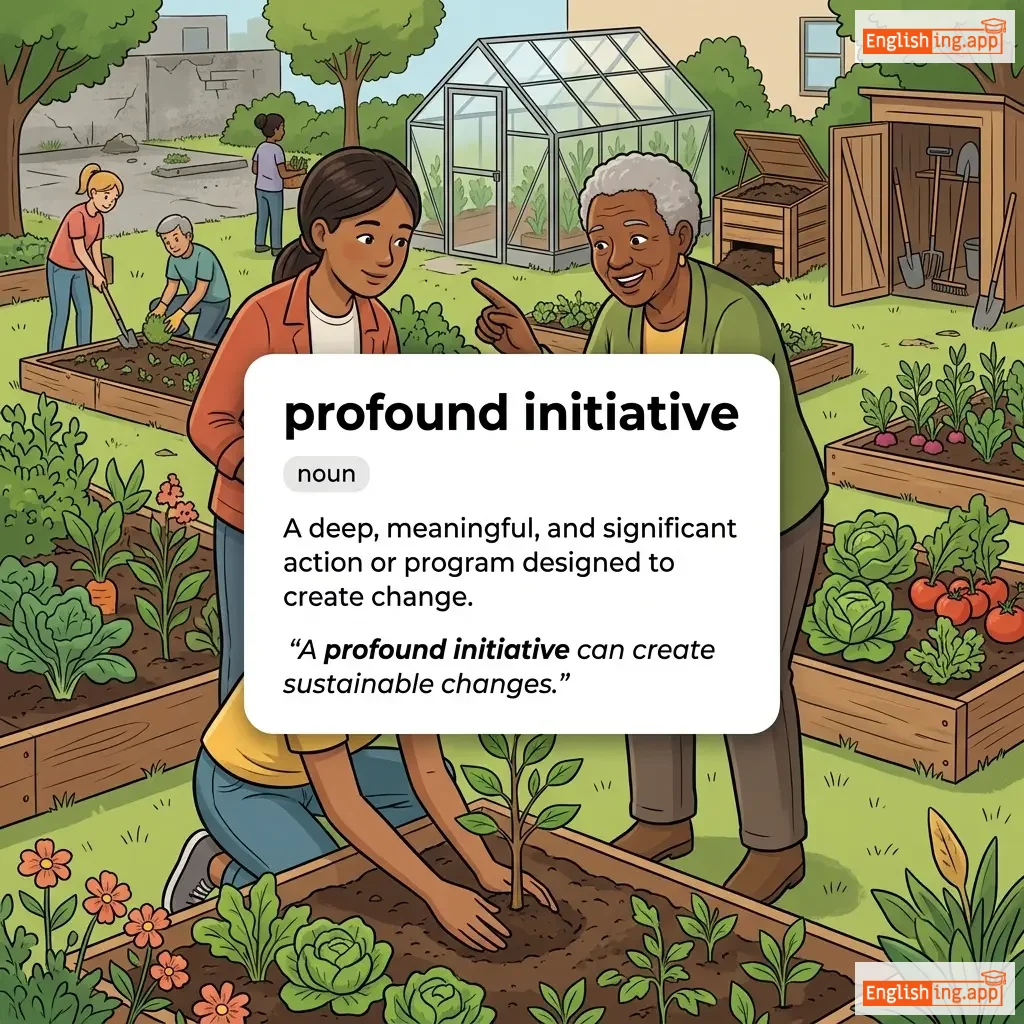
profound initiative definition card — visual illustration of the meaning
noun
prəˈfaʊnd ɪˈnɪʃətɪv
深远的倡议 (shēnyuǎn de chàngyì)

A deep, meaningful, and significant action or program designed to create change.

"A profound initiative can create sustainable changes."

"一个深刻的倡议可以创造可持续的变化。" (Yī gè shēnkè de chàngyì kěyǐ chuàngzào kěchíxù de biànhuà.)
profundity definition card — visual illustration of the meaning
noun
/prəˈfʌndɪti/
深度 (shendù)

great depth of insight, knowledge, or emotion

"The essay impressed the judges with its clarity and profundity."

"这篇文章以其清晰度和深度打动了评委。" (Zhè piān wén zhāng yǐ qí qīng xī dù hé shēn dù dǎ dòng le píng wěi.)
adjective
/prəˈfjuːs/
丰富的 (fēngfù de)

existing or given in large amounts; abundant

"He offered profuse thanks for their timely help."

"他为他们及时的帮助表示了丰富的感谢。" (Tā wèi tāmen jíshí de bāngzhù biǎoshìle fēngfù de gǎnxiè.)
noun
/prəˈfjuːʒən/
丰富 (fengfu)

an abundance or large quantity of something

"Spring brought a profusion of wildflowers to the valley."

"春天给山谷带来了大量的野花。" (Chūntiān gěi shāngǔ dàiláile dàliàng de yěhuā.)
noun
/proʊˈdʒɛnɪtər/
祖先 (zu xian)

a direct ancestor; a person or thing that originates something

"Researchers traced the custom back to a common progenitor."
"研究人员追溯了这个习俗,发现它源自一个共同的祖先。" (Yánjiū rényuán zhuīsùle zhège xísú, fāxiàn tā yuánzì yīgè gòngtóng de zǔxiān.)
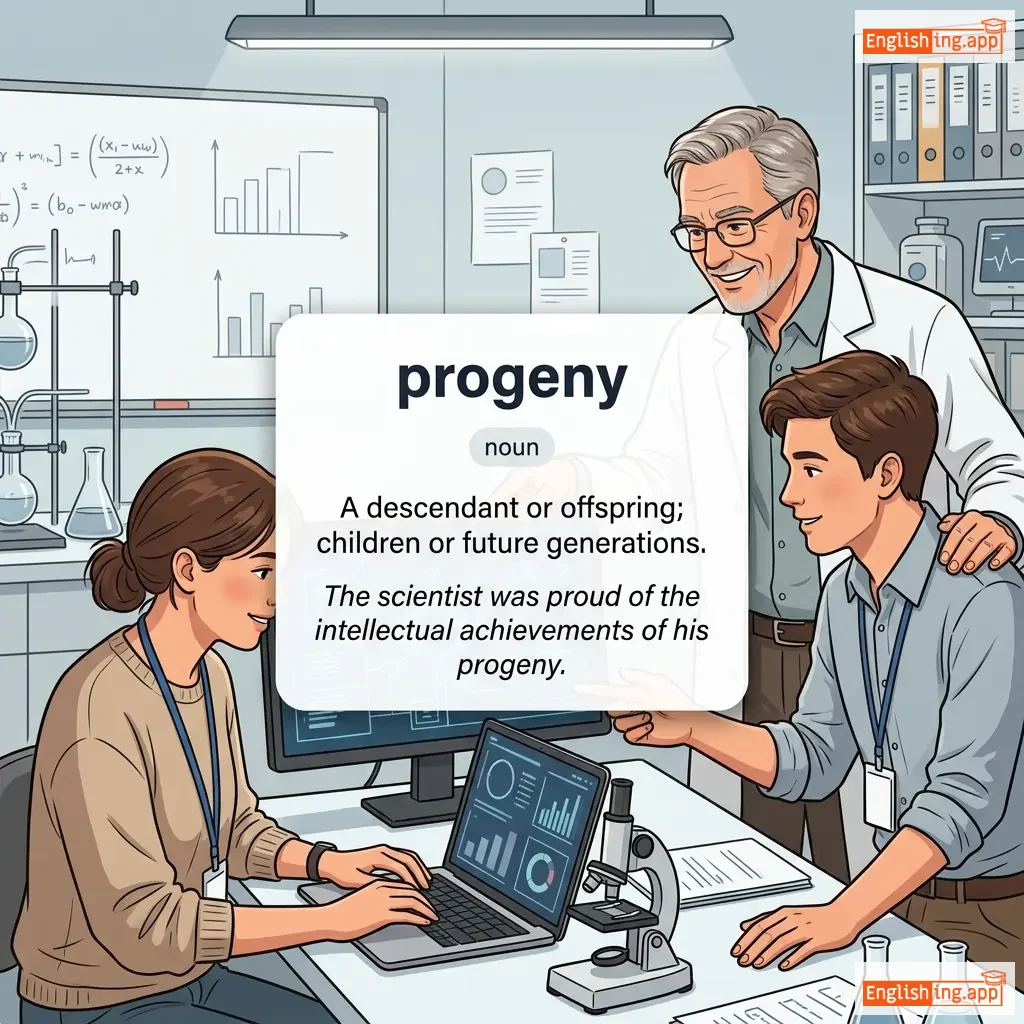
progeny definition card — visual illustration of the meaning
noun
/ˈprɒdʒəni/
后代 (hòudài)

A descendant or offspring; children or future generations.

"The scientist was proud of the intellectual achievements of his progeny."

"科学家为自己后代的智力成就感到骄傲。" (Kēxuéjiā wèi zìjǐ hòudài de zhìlì chéngjiù gǎndào jiāo'ào.)
adjective
/ˈprɒɡnəθəs/
前突颌骨 (qiántū hégǔ)

Having jaws that project forward beyond the rest of the face.

"The fossil displayed a distinctly prognathous skull structure."

"化石展示了一个明显的前突颌骨结构。" (Huàshí zhǎnshìle yīgè míngxiǎn de qiántū hégǔ jiégòu.)
noun
/prɒɡˈnoʊsɪs/
预后 (yùhòu)

A forecast of the likely outcome of a disease or situation.

"The doctor gave a positive prognosis for the patient's recovery."

"医生给出了患者康复的积极预后。" (Yīshēng gěi chūle huànzhě kāngfù de jījí yùhòu.)
verb
/prɒɡˈnɒstɪkeɪt/
预测 (yùcè)

To foretell or predict future events, especially based on current signs.

"Experts attempted to prognosticate the outcome of the election."

"专家们尝试预测选举结果。" (Zhuānjiāmen chángshì yùcè xuǎnjǔ jiéguǒ.)
noun
/prɒɡˌnɒstɪˈkeɪʃən/
预言 (yùyán)

The act of foretelling or predicting future events.

"The astrologer's prognostication fascinated the audience."

"占星师的预言吸引了观众。" (Zhānxīngshī de yùyán xīyǐnle guānzhòng.)
noun
/ˈprəʊɡræm/
程序 (chengxu)

a planned series of events or activities

"The program starts at 9 AM sharp."

"程序在上午9点准时开始。" (Chengxu zai shangwu 9 dian zhunshi kaishi.)
noun
/ˈproʊɡræmɪŋ/
编程 (biancheng)

the process of writing computer code to create software or applications

"He spends most of his time learning computer programming."

"他把大部分时间用来学习计算机编程。" (Ta ba dabufen shijian yonglai xuexi jisuanci biancheng.)
noun
/ˈprəʊɡræmɪŋ/
编程 (biancheng)

the process of designing and writing computer programs

"He has been learning programming for several months now."
"他已经学习编程好几个月了。" (Ta yijing xuexi biancheng hao ji ge yue le.)
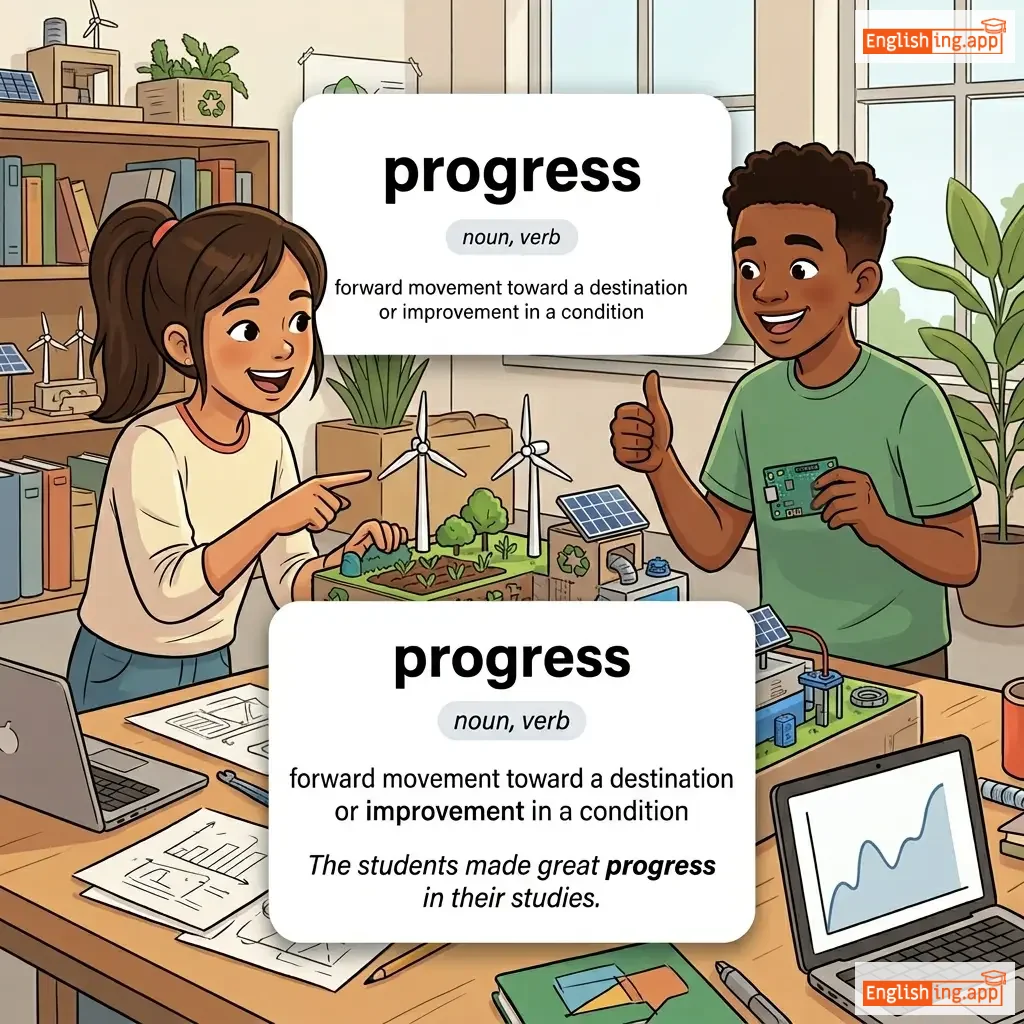
progress definition card — visual illustration of the meaning
noun, verb
/ˈprəʊɡrɛs/ (noun), /prəˈɡrɛs/ (verb)
进展 (jìnzhǎn)

forward movement toward a destination or improvement in a condition

"The students made great progress in their studies."
"学生们在学习上取得了巨大进展。" (Xuéshēngmen zài xuéxí shàng qǔdéle jùdà jìnzhǎn.)
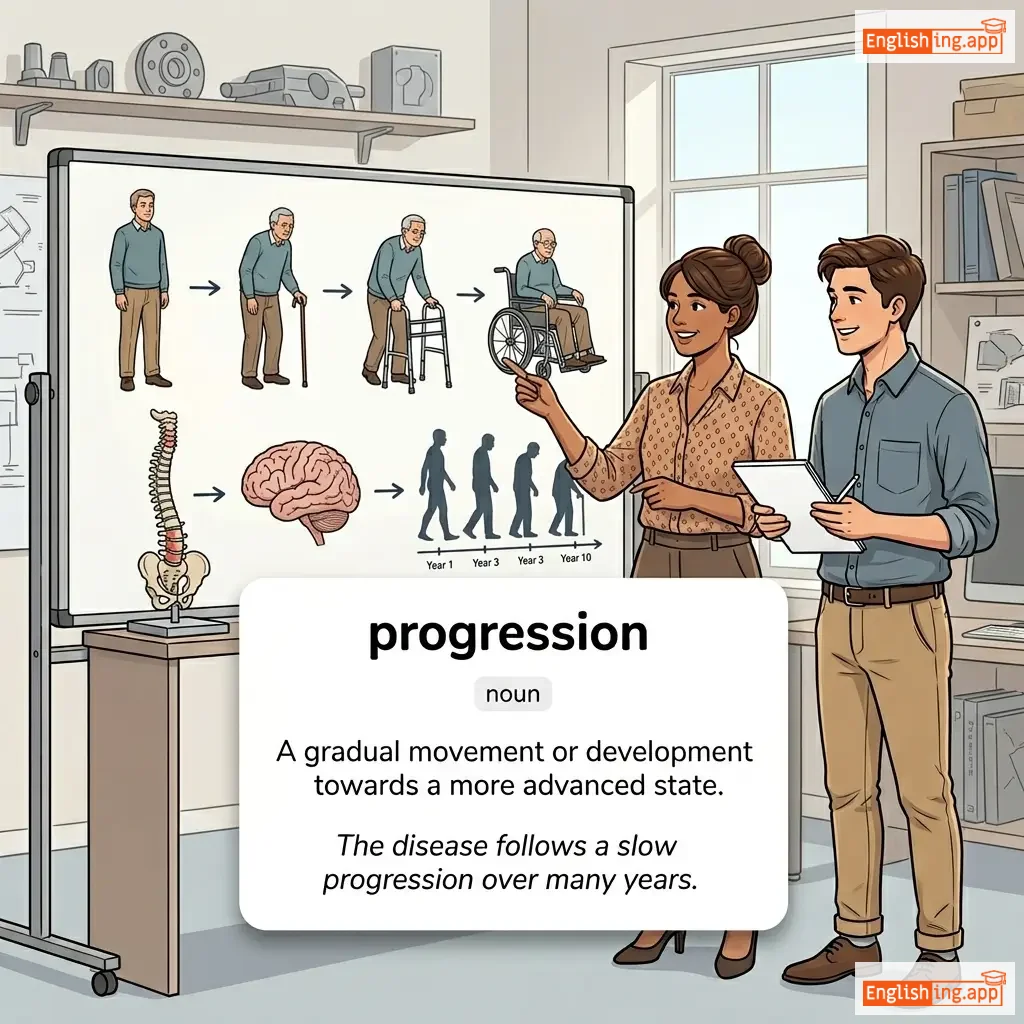
progression definition card — visual illustration of the meaning
noun
/prəˈɡrɛʃən/
进展 (jin zhan)

A gradual movement or development towards a more advanced state.

"The disease follows a slow progression over many years."

"该疾病在许多年来逐步进展。" (Gai jibing zai xuduo nianlai zhubu jin zhan.)
adjective
/prəˈɡrɛsɪv/
进步的 (jinbu de)

favoring or implementing new and modern ideas or policies; moving forward or improving

"She holds progressive views on social justice and equality."

"她对社会公正和平等持有进步的观点。" (Tā duì shèhuì gōngzhèng hé píngděng chíyǒu jìnbù de guāndiǎn.)
verb
/prəˈhɪbɪt/
禁止 (jìnzhǐ)

to formally forbid something by law, rule, or authority

"Smoking is strictly prohibited inside the hospital."

"医院内严禁吸烟。" (Yīyuàn nèi yánjìn xīyān.)
noun
/ˌproʊɪˈbɪʃən/
禁止 (jinzhi)

The act of forbidding something by law or authority.

"The government announced the prohibition of smoking in public places."

"政府宣布在公共场所禁烟。" (Zhengfu xuānbù zài gōnggòng chǎngsuǒ jìnyān.)
noun
/ˌproʊɪˈbɪʃənɪst/
禁酒主义者 (jìn jiǔ zhǔ yì zhě)

A person who supports or advocates prohibition, especially of alcohol.

"The prohibitionist campaigned against the sale of liquor in the town."

"禁酒主义者在城里反对酒类销售的运动。" (Jìn jiǔ zhǔ yì zhě zài chéng lǐ fǎn duì jiǔ lèi xiāo shòu de yùn dòng.)
prohibitive definition card — visual illustration of the meaning
adjective
/prəˈhɪbɪtɪv/
过高的 (guò gāo de)

Too high or expensive to be affordable; serving to prevent or discourage action.

"The cost of the medication is prohibitive for many families."

"药物的费用对于许多家庭来说是过高的。" (Yàowù de fèiyòng duìyú xǔduō jiātíng lái shuō shì guò gāo de.)
adjective
/prəˈhɪbɪtɔːri/
禁止的 (jìnzhǐ de)

Serving or tending to prohibit or forbid.

"The prohibitory laws were strictly enforced in the region."

"禁止性的法律在该地区严格执行。" (Jìnzhǐ xìng de fǎlǜ zài gāi dìqū yángé zhíxíng.)
project definition card — visual illustration of the meaning
noun, verb
/ˈprɒdʒɛkt/ (noun), /prəˈdʒɛkt/ (verb)

As a noun: a planned task or assignment. As a verb: to plan, estimate, or extend something outward.

"The company plans to project its growth over the next five years."

noun
/prəˈdʒɛktaɪl/
弹丸 (dànwán)

An object fired, thrown, or propelled, especially from a weapon.

"The soldier dodged the incoming projectile."

"士兵躲过了来袭的弹丸。" (Shìbīng duǒguòle láixí de dànwán.)
projection definition card — visual illustration of the meaning
noun
/prəˈdʒɛkʃən/
预测 (yùcè)

An estimate or forecast of a future situation based on current trends.

"The sales projection shows a steady increase in revenue."

"销售预测显示收入稳步增长。" (Xiāoshòu yùcè xiǎnshì shōurù wěnbù zēngzhǎng.)
projects definition card — visual illustration of the meaning
noun
ˈprɒdʒ.ekts
项目 (xiangmu)

Individual or collaborative enterprises that are carefully planned to achieve a particular aim.

"These projects aim for technological breakthroughs."

"这些项目旨在推动技术突破。" (Zhèxiē xiàngmù zhǐ zài tuīdòng jìshù túpò.)
noun, adjective
/ˌproʊlɪˈtɛəriən/
无产阶级 (wúchǎn jiējí)

Relating to the working class, especially those who do not own property.

"The movement was rooted in proletarian struggles."

"这场运动根植于无产阶级的斗争中。" (Zhè chǎng yùndòng gēnzhí yú wúchǎn jiējí de dòuzhēng zhōng.)