词汇表

英语词汇词典 | 单词含义、定义和示例

adjective
/ˈprɛvələnt/
普遍 (pǔbiàn)

widespread or commonly occurring

"Flu is prevalent during the winter season."

"流感在冬季季节很常见。" (Liúgǎn zài dōngjì jìjié hěn chángjiàn.)
prevaricate definition card — visual illustration of the meaning
verb
/prɪˈværɪkeɪt/

to avoid telling the truth by not giving a direct answer

"The politician began to prevaricate when asked about the scandal."
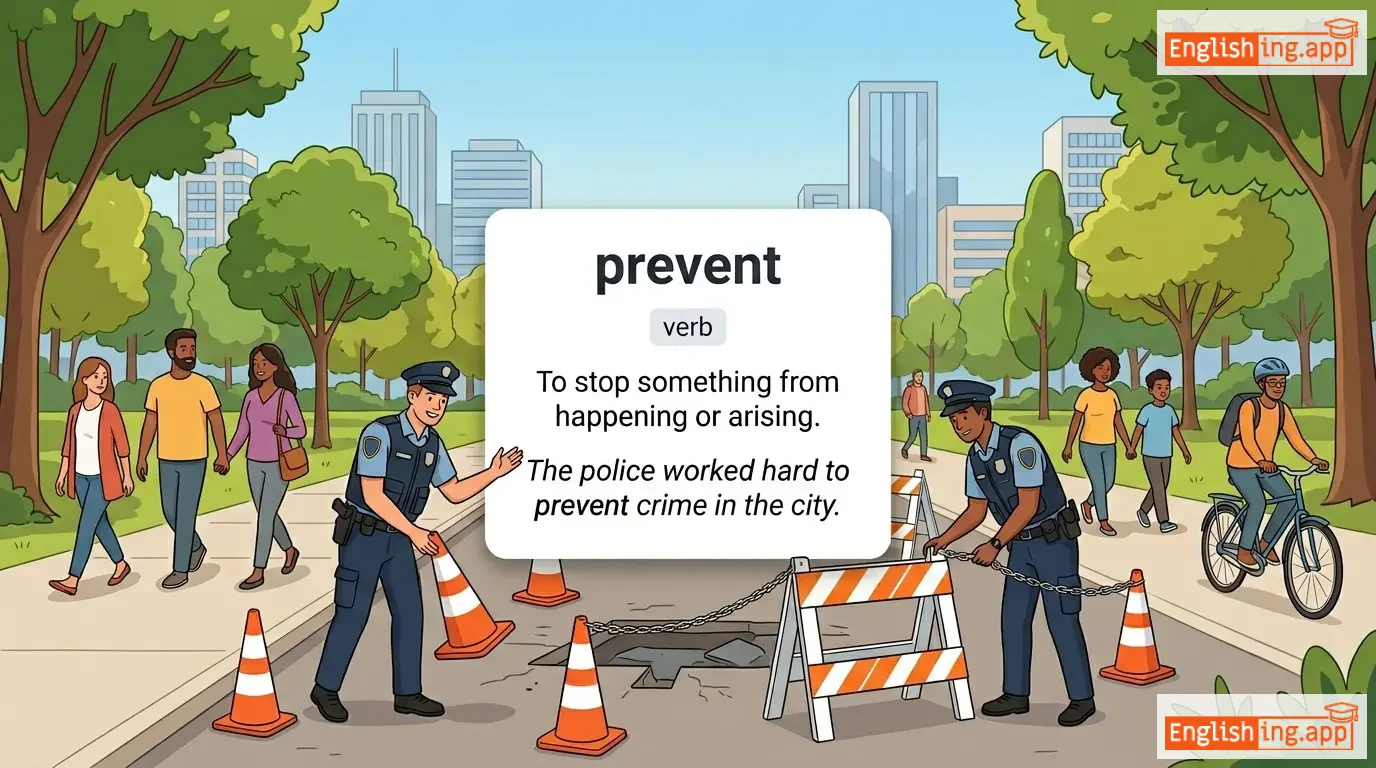
prevent definition card — visual illustration of the meaning
verb
/prɪˈvɛnt/
预防 (yùfáng)

To stop something from happening or arising.

"The police worked hard to prevent crime in the city."

"警察努力防止城市犯罪。" (Jǐngchá nǔlì fángzhǐ chéngshì fànzuì.)
prevention definition card — visual illustration of the meaning
noun
/prɪˈvɛnʃən/
预防 (yufang)

the act of stopping something from happening

"Exercise is important for the prevention of heart disease."

"运动对预防心脏病很重要。" (Yùndòng duì yùfáng xīnzàngbìng hěn zhòngyào.)
adjective
/prɪˈventɪv/
预防的;设计用来防止某事发生 (yùfáng de)

designed to prevent something from happening; protective against disease

"Regular exercise is a preventive measure against heart disease."
"定期锻炼是预防心脏病的措施。" (Dìngqī duànliàn shì yùfáng xīnzàngbìng de cuòshī.)
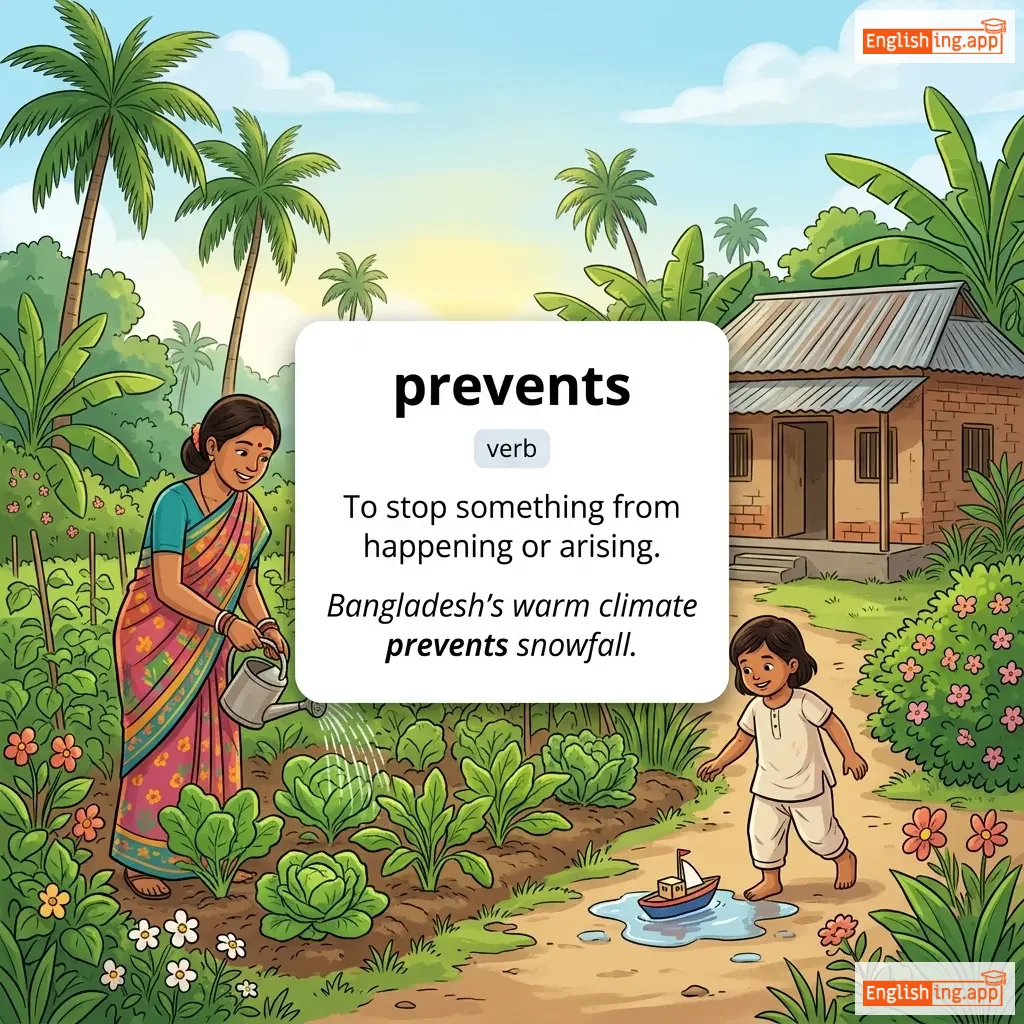
prevents definition card — visual illustration of the meaning
verb
প্রিভেন্টস
阻止 (zǔzhǐ)

To stop something from happening or arising.

"Bangladesh's warm climate prevents snowfall."

"孟加拉国的温暖气候阻止了降雪。" (Mèngjiālāguó de wēnnuǎn qìhòu zǔzhǐle jiàngxuě.)
adjective
/ˈpriːviəs/
以前的 (yǐqián de)

Existing or happening before the present time.

"He referred to the previous meeting to explain his point."

"他引用了上一场会议来解释他的观点。" (Tā yǐn yòngle shàng yī chǎng huì yì lái jiěshì tā de guāndiǎn.)
adverb
/ˈpriːviəsli/
以前 (yǐqián)

at an earlier time or before now

"She had previously worked at a bank before starting her own business."

"她曾在银行工作过,之后才开始了自己的生意。" (Tā céng zài yínháng gōngzuò guò, zhīhòu cái kāishǐle zìjǐ de shēngyì.)
🦁

prey

noun/verb
/preɪ/

an animal hunted by another for food; to hunt and feed on

"Lions prey on zebras in the wild."

noun
/praɪs/
价格 (jiàgé)

the amount of money expected, required, or given for something

"The price of the car has increased recently."

"这辆车的价格最近上涨了。" (Zhè liàng chē de jiàgé zuìjìn shàngzhǎng le.)
adjective
/ˈpraɪs.ləs/
无价的;极其宝贵的 (wú jià de; jí qí bǎo guì de)

extremely valuable; invaluable; beyond price

"Her grandmother's antique jewelry is absolutely priceless."
"她祖母的古董珠宝是绝对无价的。" (Tā zǔmǔ de gǔdǒng zhūbǎo shì juéduì wú jià de.)
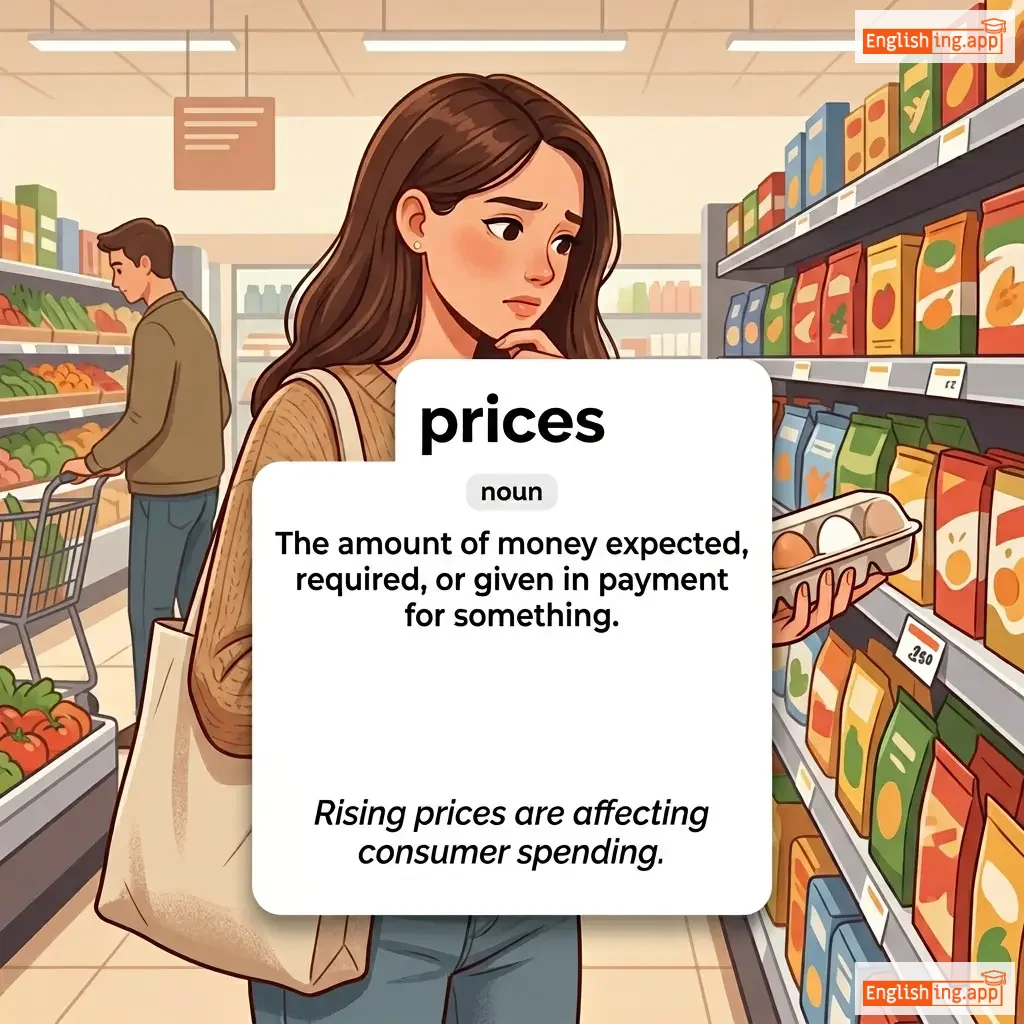
prices definition card — visual illustration of the meaning
noun
ˈpraɪsɪz
价格 (jiàgé)

The amount of money expected, required, or given in payment for something.

"Rising prices are affecting consumer spending."

"不断上涨的价格影响着消费者的支出。" (Bùduàn shàngzhǎng de jiàgé yǐngxiǎngzhe xiāofèi zhě de zhīchū.)
verb
/ˈprɪkəl/

to cause a slight stinging or tingling sensation on the skin

"Her skin began to prickle in the cold wind."

pride definition card — visual illustration of the meaning
noun
/praɪd/
自豪 (zì háo)

a feeling of deep pleasure or satisfaction derived from one's own achievements

"He took pride in his work and always aimed for perfection."

"他为自己的工作感到自豪,总是追求完美。" (Tā wèi zì jǐ de gōngzuò gǎn dào zì háo, zǒng shì zhuī qiú wán měi.)
noun
/priːst/
牧师 (mùshī)

a person who performs religious duties and ceremonies

"The priest blessed the congregation during the Sunday service."

"牧师在主日礼拜期间祝福了会众。" (Mùshī zài zhǔrì lǐbài qījiān zhùfú le huìzhòng.)
adjective
/ˈprɪɡɪʃ/
自以为是的道德主义者 (zì yǐ wéi shì de dàodé zhǔyì zhě)

self-righteously moralistic and superior

"He came across as priggish when correcting everyone's manners."

"当他纠正每个人的行为时,他显得很自以为是的道德主义者。" (Dāng tā jiūzhèng měi gèrén de xíngwéi shí, tā xiǎndé hěn zì yǐ wéi shì de dàodé zhǔyì zhě.)
adjective
/prɪm/
过于正式或合适 (guo yu zheng shi huo he shi)

stiffly formal and proper in appearance or behavior

"She looked prim in her neatly pressed dress."

"她穿着精心熨烫的裙子看起来非常端庄。" (Ta chuanzhuo jingxin yuntao de qunzi kan qilai feichang duanzhuang.)
adjective
/ˈpriːmə/
主要的, 卓越的 (zhǔyào de, zhuóyuè de)

first or most important; excellent

"She was treated as the prima ballerina of the troupe."

"她被视为舞蹈团的首席舞者。" (Tā bèi shì wéi wǔdǎo tuán de shǒuxí wǔzhě.)
noun
/ˈpraɪməsi/
优先权 (yōuxiānquán)

the state of being first in importance or authority

"The primacy of education cannot be denied."

"教育的优先权不可否认。" (Jiàoyù de yōuxiānquán bù kě fǒrèn.)
adjective
/ˈpraɪ.məl/
原始的, 基本的 (yuánshǐ de, jīběn de)

Relating to the earliest stage of development; essential or fundamental.

"Fear is one of the most primal emotions humans experience."

"恐惧是人类体验的最原始的情感之一。" (Kǒngjù shì rénlèi tǐyàn de zuì yuánshǐ de qínggǎn zhī yī.)
adverb
/praɪˈmɛrɪli/
主要 (zhu yao)

for the most part; mainly

"She is primarily responsible for managing the finances."

"她主要负责管理财务。" (Ta zhu yao fu ze guan li cai wu.)
adjective
/ˈpraɪ.mɛr.i/
主要的, 首要的 (zhǔyào de, shǒuyào de)

Most important; main; happening first.

"Education is a primary factor in economic growth."
"教育是经济增长的一个主要因素。" (Jiàoyù shì jīngjì zēngzhǎng de yīgè zhǔyào yīnsù.)
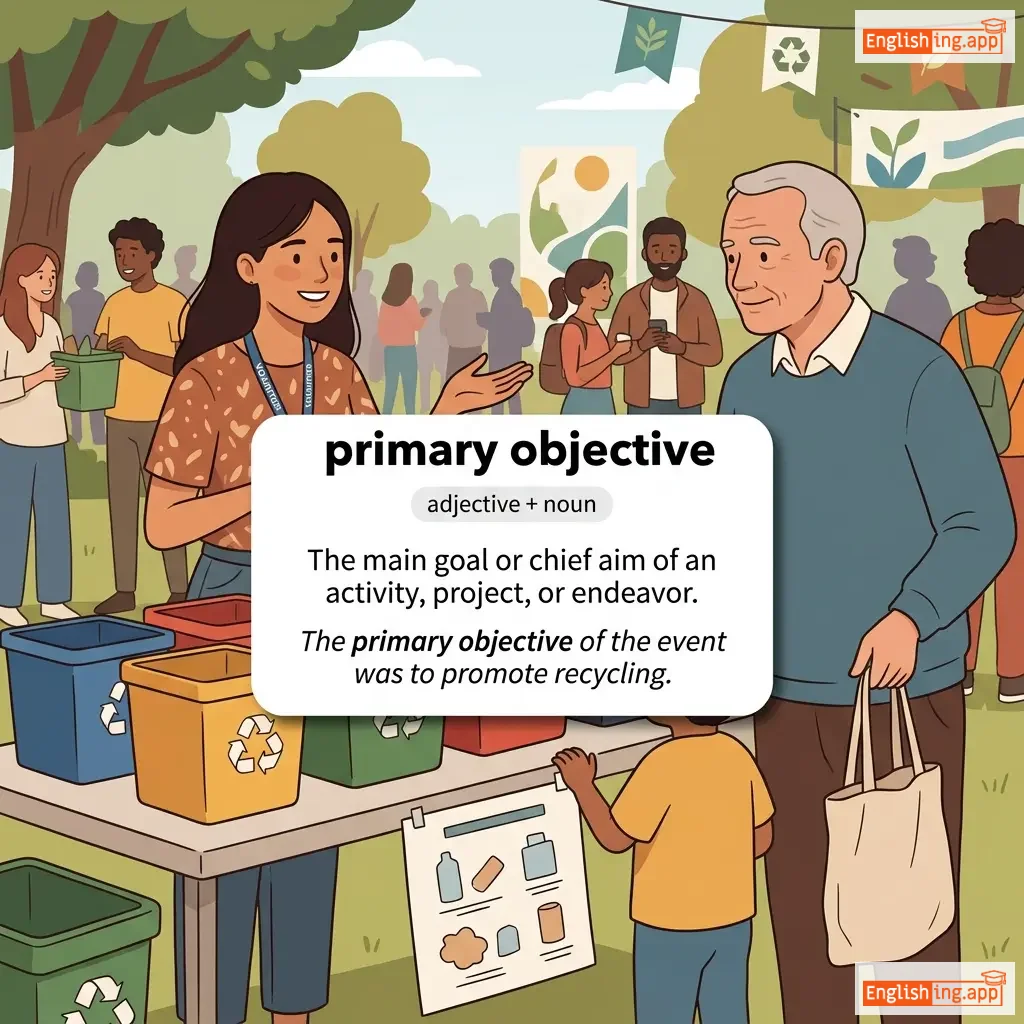
primary objective definition card — visual illustration of the meaning
adjective + noun
ˈpraɪməri əbˈdʒektɪv
主要目标 (zhǔyào mùbiāo)

The main goal or chief aim of an activity, project, or endeavor.

"The primary objective of the event was to promote recycling."

"该活动的主要目标是推广回收。" (Gāi huódòng de zhǔyào mùbiāo shì tuīguǎng huíshōu.)
noun
/ˈpraɪ.meɪt/
灵长类动物, 类人猿 (língzhǎnglèi dòngwù, lèirényuán)

A member of the group of animals including humans, apes, and monkeys.

"Humans are classified as primates."

"人类被归类为灵长类动物。" (Rénlèi bèi guīlèi wéi língzhǎnglèi dòngwù.)
adjective
/praɪm/
首要的, 重要的 (shouyao de, zhongyao de)

Of the best quality; most important; peak condition.

"She is in the prime of her career."

"她处于事业的巅峰时刻。" (Ta chǔyú shìyè de diānfēng shíkè.)
noun
/ˈpraɪ.mər/ (US), /ˈprɪm.ər/ (UK)
入门书籍,底漆 (rùmén shūjí, dǐqī)

A basic introductory book or a substance used to prepare a surface for painting.

"He read a primer on programming before starting his course."

"他在开始他的课程之前,阅读了一本编程入门书籍。" (Tā zài kāishǐ tā de kèchéng zhīqián, yuèdúle yī běn biānchéng rùmén shūjí.)
adjective
/praɪˈmiːvəl/
原始 (yuánshǐ)

Relating to the earliest ages in history; ancient and primitive.

"The explorers ventured into the primeval forest untouched by humans."

"探险者进入了未曾被人类触及的原始森林。" (Tànxiǎn zhě jìnrùle wèi céng bèi rénlèi chùjí de yuánshǐ sēnlín.)
adjective
/ˈprɪmətɪv/
原始的 (yuánshǐ de)

Relating to an early stage of development; simple and basic.

"The tribe lived in primitive huts made of mud and straw."

"部落住在由泥土和稻草做成的原始小屋里。" (Bùluò zhù zài yóu nítǔ hé dàocǎo zuò chéng de yuánshǐ xiǎowū lǐ.)
noun
/ˌpraɪmoʊˈdʒɛnɪtʃər/
长子继承权 (zhǎngzǐ jìchéng quán)

The right of the firstborn child to inherit the family estate or title.

"Under primogeniture, the eldest son inherited the entire estate."

"在长子继承制下,长子继承了整个家族产业。" (Zài zhǎngzǐ jìchéng zhì xià, zhǎngzǐ jìchéngle zhěnggè jiāzú chǎnyè.)
adjective
/praɪˈmɔːrdiəl/
原始的 (yuánshǐ de)

Existing at or from the beginning of time; fundamental and original.

"Scientists study the primordial soup from which life emerged."

"科学家研究了原始汤,生命由此诞生。" (Kēxuéjiā yánjiūle yuánshǐ tāng, shēngmìng yóu cǐ dànshēng.)
verb
/prɪmp/
幸福 (xìngfú)

To spend time making minor adjustments to one's appearance.

"She primped in front of the mirror before the party."

"她在收到奖项时无法掩饰自己的幸福。" (Tā zài shōudào jiǎngxiàng shí wúfǎ yǎnshì zìjǐ de xìngfú.)
noun
/prɪns/
王子 (wangzi)

a male member of a royal family, especially the son of a king or queen; a ruler of a principality

"The prince addressed the nation on his birthday."

"王子在生日那天向全国发表了讲话。" (wangzi zai shengri natian xiang quanguo fabiao le jianghua)
noun
/ˈprɪn.ses/
公主 (gongzhu)

a female royal family member, especially the daughter of a king or queen; a woman regarded as noble, cherished, or elegant

"The princess waved to the crowd from the palace balcony."

"公主从皇宫的阳台向人群挥手。" (gongzhu cong huanggong de yangtai xiang renqun huishou)
noun, adjective
/ˈprɪnsəpəl/
校长 (xiaozhang)

the person with the highest authority or most important position; main or most important

"The school principal addressed the students in the auditorium."

"学校的校长在礼堂里向学生们致辞。" (Xuexiao de xiaozhang zai litang li xiang xueshengmen zhici.)
noun
/ˌprɪnsɪˈpæləti/
公国 (gongguo)

a state ruled by a prince

"Monaco is a famous principality in Europe."

"摩纳哥是欧洲著名的公国。" (Monako shi Ouzhou zhuming de gongguo.)
principle definition card — visual illustration of the meaning
noun
/ˈprɪnsəpəl/
原则 (yuánzé)

a fundamental truth, law, or rule that serves as the foundation for a system of belief or behavior

"She refused to lie because it was against her principles."

"她拒绝撒谎,因为这违背了她的原则。" (Tā jùjué sāhuǎng, yīnwèi zhè wéibèi le tā de yuánzé.)
adjective
/ˈprɪnsəpəld/
有原则的 (yǒu yuánzé de)

acting in accordance with moral or ethical standards

"He is a principled leader who always puts honesty first."

"他是一个有原则的领导,总是把诚实放在第一位。" (Tā shì yīgè yǒu yuánzé de lǐngdǎo, zǒng shì bǎ chéngshí fàng zài dì yī wèi.)
verb
/prɪnt/
打印 (dayin)

to produce text or images on paper or other materials using a machine

"He will print the report tomorrow morning."

"他明天早上将打印报告。" (Ta mingtian zaoshang jiang dayin baogao.)
noun
/ˈprɪn.tər/
打印机 (dǎ yìn jī)

a person whose job is printing books, newspapers, or other materials; a machine that prints documents

"The printer delivered the wedding invitations on time."

"打印机准时交付了婚礼请柬。" (Dǎ yìn jī zhǔnshí jiāofù le hūnlǐ qǐngjiǎn.)
adjective
/ˈpraɪər/
先前的 (xianqian de)

existing or coming before something in time or order

"He had no prior knowledge of the event."
"他对这个事件没有事先的了解。" (Ta dui zhe ge shijian mei you shixian de liaojie.)
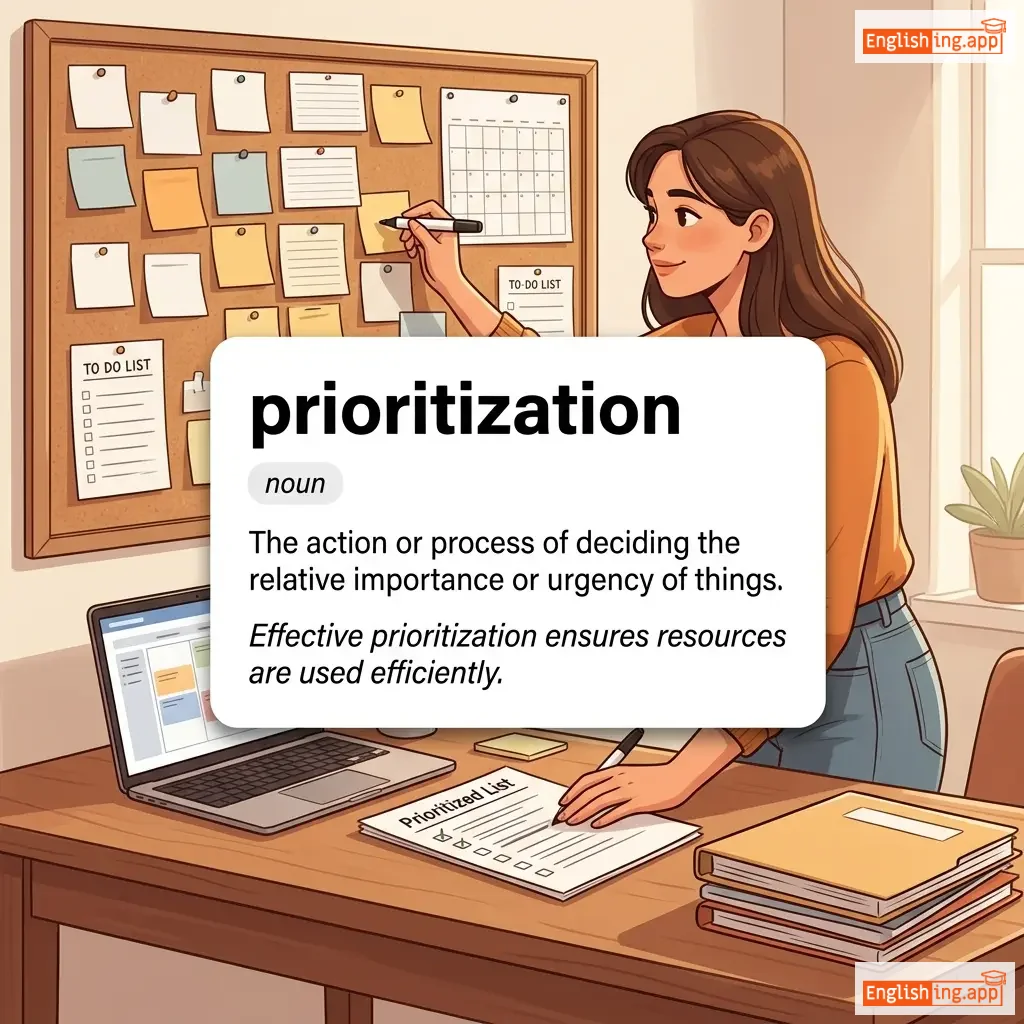
prioritization definition card — visual illustration of the meaning
noun
ˌpraɪɔːrɪtaɪˈzeɪʃən
优先排序 (youxian paixu)

The action or process of deciding the relative importance or urgency of things.

"Effective prioritization ensures resources are used efficiently."

"有效的优先排序确保资源得到有效利用。" (Yǒuxiào de yōuxiān pàixù quèbǎo zīyuán dédào yǒuxiào lìyòng.)
prioritize definition card — visual illustration of the meaning
verb
/praɪˈɔːrətaɪz/
优先考虑 (yōuxiān kǎolǜ)

To designate or treat something as more important than other things.

"Always prioritize tasks to avoid delay."

"始终优先考虑任务,以避免延迟。" (Shǐzhōng yōuxiān kǎolǜ rènwù, yǐ bìmiǎn yánchí.)
noun
/praɪˈɒrɪti/
优先 (youxian)

Something that is regarded as more important than other things.

"Safety is the top priority in this company."

"在这家公司,安全是最重要的优先事项。" (Zai zhe jia gongsi, anquan shi zui zhongyao de youxian shixiang.)
noun
/ˈpraɪəri/
修道院 (xiūdàoyuàn)

a small monastery or convent governed by a prior or prioress

"The old priory was converted into a museum."

"那个古老的修道院被改造成了博物馆。" (Nàgè gǔlǎo de xiūdàoyuàn bèi gǎizào chéngle bówùguǎn.)
noun
/ˈprɪzən/
监狱 (jianyu)

a building where people are kept as punishment for a crime or while waiting for trial

"He was sent to prison for his crimes."

"他因犯下罪行而被送进监狱。" (Ta yin fànxià zuìxíng ér bèi sòng jìn jiānyù.)
👨‍⚖️

prisoner (囚犯)

noun
/ˈprɪzənər/
囚犯 (qiúfàn)

a person who is in prison

"The prisoner was granted parole after serving 10 years."

"这个囚犯在服刑10年后被释放。" (Zhège qiúfàn zài fúxíng 10 nián hòu bèi shìfàng.)
pristine definition card — visual illustration of the meaning
adjective
/ˈprɪstiːn/

In its original condition; unspoiled, clean, and fresh.

"The hikers were amazed by the pristine beauty of the untouched forest."

noun
/ˈpraɪvəsi/
隐私 (yǐnsī)

the state of being free from public attention or intrusion

"Everyone has the right to privacy in their own home."

"每个人在自己的家中都有隐私权。" (Měi gèrén zài zìjǐ de jiā zhōng dōu yǒu yǐnsī quán.)
adjective
/ˈpraɪvət/
私密的 (simi de)

belonging to or for the use of one particular person or group

"She enjoys her private time away from work."

"她喜欢远离工作的私人时间。" (Ta xihuan yuanli gongzuo de simi shijian.)
noun
/ˈpraɪ.vət ˈtuː.tər/
私人导师 (sīrén dǎoshī)

a teacher who gives individual instruction to a student outside of regular school

"The private tutor helped the student improve his math skills."

"私人导师帮助学生提高了他的数学技能。" (sīrén dǎoshī bāngzhù xuéshēng tígāo le tā de shùxué jìnéng)