词汇表

英语词汇词典 | 单词含义、定义和示例

adjective
/prɪˈpɒndərənt/
主要的 (zhǔyào de)

Having superior weight, force, influence, or importance.

"The preponderant influence of the media shapes public opinion."

"媒体的主要影响塑造了公众舆论。" (Méi tǐ de zhǔyào yǐngxiǎng sùzào le gōngzhòng yúlùn.)
verb
/prɪˈpɒndəreɪt/
占优势 (zhàn yōushì)

To be greater in influence, weight, or number.

"In the debate, logical arguments preponderated over emotional appeals."

"在辩论中,逻辑论点优于情感呼吁。" (Zài biànlùn zhōng, luójí lùndiǎn yōu yú qínggǎn hūyù.)
adjective
/ˌpriːpəˈzɛsɪŋ/
迷人 (mírén)

Attractive or appealing in appearance or manner.

"She had a prepossessing smile that charmed everyone."

"她有一个迷人的微笑,让每个人都着迷。" (Tā yǒu yīgè mírén de wēixiào, ràng měi gèrén dōu zháomí.)
noun
/ˌpriːpəˈzɛʃən/
偏见 (pianjian)

An opinion or feeling formed beforehand; a prejudice or preoccupation.

"His prepossession in favor of tradition made him resist change."

"他的偏见使他反对改变。" (Tā de piānjiàn shǐ tā fǎnduì gǎibiàn.)
adjective
/prɪˈpɒstərəs/
荒谬的, 可笑的 (huangmiu de, kexiao de)

completely ridiculous or absurd; contrary to reason or common sense

"The idea that pigs could fly is preposterous."

"认为猪能飞的想法是荒谬的。" (Renwei zhu neng fei de xiangfa shi huangmiu de.)
noun
/prɪˈrɒɡətɪv/
特权 (tequan)

a special right or privilege exclusive to a particular person or group

"It is the manager’s prerogative to make the final decision."

"这是经理做出最终决定的特权。" (Zhe shi jingli zuo chu zui zhong jueding de tequan.)
verb
/ˈprɛsɪdʒ/
预兆 (yùzhào)

to be a sign or warning that something will happen; to foreshadow

"Dark clouds presage a storm."

"暗云预示着一场风暴。" (Àn yún yùshìzhe yī chǎng fēngbào.)
noun
/ˈprɛʃəns/ or /ˈpriːʃəns/
预见 (yùjiàn)

the ability to know or predict what will happen in the future

"Her prescience about market trends saved the company."

"她对市场趋势的预见拯救了公司。" (Tā duì shìchǎng qūshì de yùjiàn zhěngjiùle gōngsī.)
adjective
/ˈprɛʃənt/ or /ˈpriːʃənt/
先知的 (xiān zhī de)

having or showing knowledge of events before they take place

"The prescient investor sold his shares just before the market crashed."

"那位先知的投资者在市场崩盘之前卖掉了他的股票。" (Nà wèi xiān zhī de tóu zī zhě zài shì chǎng bēng pán zhī qián mài diào le tā de gǔ piào.)
verb
/prɪˈskrʌɪb/
开药 (kāi yào)

to recommend or authorize the use of something, especially medicine

"The doctor prescribed medication for my cold."

"医生给我开了药治我的感冒。" (Yīshēng gěi wǒ kāi le yào zhì wǒ de gǎnmào.)
noun
/ˈpriːskrɪpt/
规定 (gui ding)

An authoritative rule or direction; something laid down as a command.

"The prescript of the organization required strict punctuality."

"该组织的规定要求严格的准时。" (Gai zuzhi de guiding yaoqiu yange de zhunshi.)
adjective
/prɪˈskrɪptɪbəl/
可规定的 (kě guīdìng de)

Capable of being prescribed or laid down as a rule or directive.

"Certain regulations are prescriptible under the law."

"某些规定在法律下是可以规定的。" (Mǒu xiē guīdìng zài fǎlǜ xià shì kě guīdìng de.)
noun
/prɪˈskrɪpʃən/
处方 (chǔfāng)

A written order from a doctor for the preparation and administration of a medicine; also, a recommendation or authoritative rule.

"The doctor gave her a prescription for antibiotics."

"医生给她开了抗生素的处方。" (Yīshēng gěi tā kāi le kàngshēngsù de chǔfāng.)
presence definition card — visual illustration of the meaning
noun
/ˈprɛzəns/
存在 (cúnzài)

the state of being present in a particular place

"Her presence at the meeting was greatly appreciated."

"她在会议中的存在受到高度赞赏。" (Tā zài huìyì zhōng de cúnzài shòu dào gāodù zànshǎng.)
noun, verb, adjective
/ˈprɛzənt/
呈现 (chengxian)

existing or happening now; to give something to someone in a formal way

"She presented her report to the team yesterday."

"她昨天向团队展示了她的报告。" (Tā zuótiān xiàng tuánduì zhǎnshìle tā de bàogào.)
adjective
/prɪˈzentəbl/
适合公众展示; 看起来体面 (shìhé gōngzhòng zhǎnshì; kàn qǐlái tǐmiàn)

neat and suitable for being seen in public; acceptable in appearance

"Make sure you look presentable for the job interview."

"确保在面试中看起来像个体面的人。" (quèbǎo zài miànshì zhōng kàn qǐlái xiàng gè tǐmiàn de rén)
presentation definition card — visual illustration of the meaning
noun
/ˌprɛzənˈteɪʃən/
展示 (zhǎnshì)

the act of presenting something to an audience, typically involving speaking or showing information

"The presentation on digital marketing was very informative."

"关于数字营销的展示非常有信息量。" (Guānyú shùzì yíngxiāo de zhǎnshì fēicháng yǒu xìnxī liàng.)
adjective
/prɪˈsɛnʃənt/
预感 (yùgǎn)

Having a feeling or sense of something about to happen; predictive.

"She was presentient of the coming disaster."

"她预感到即将来临的灾难。" (Ta yugan dao jijiang lailin de zainan.)
noun
/prɪˈsɛntɪmənt/
预感 (yugan)

An intuitive feeling about the future, especially of something bad about to happen.

"He had a strong presentiment that the plan would fail."

"他有强烈的预感,计划会失败。" (Tā yǒu qiángliè de yugan, jìhuà huì shībài.)
adverb
/ˈprɛzntli/
目前 (mu qian)

at the current moment; now

"Presently, I am working on a new project."

"目前,我正在做一个新项目。" (Mu qian, wo zhengzai zuo yige xin xiangmu.)
noun
/prɪˈzɛntmənt/
正式呈交 (zhèngshì chéngjiāo)

The act of presenting something formally or officially; a formal statement or document.

"The lawyer made a presentment of the evidence to the court."
"律师将证据呈交给法庭。" (Lǜshī jiāng zhèngjù chéngjiāo gěi fǎtíng.)
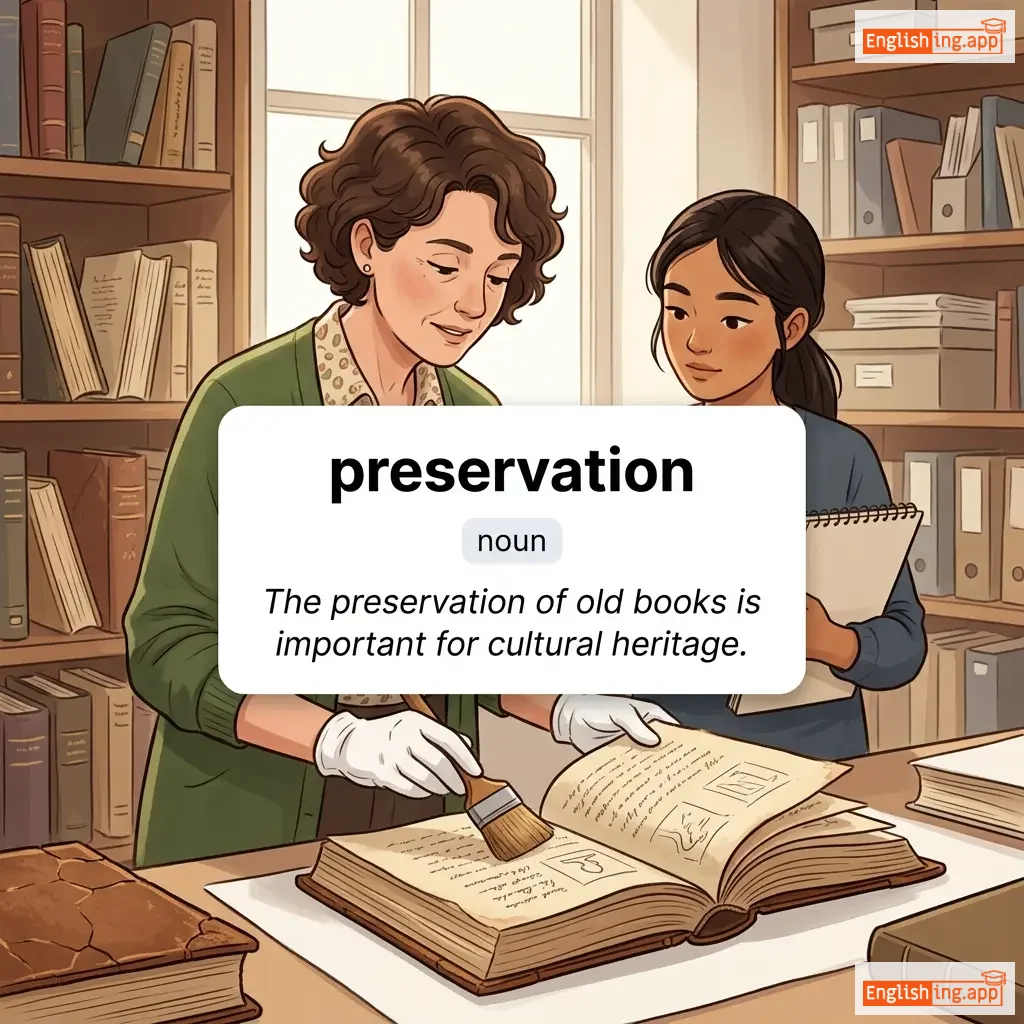
preservation definition card — visual illustration of the meaning
noun
/ˌprɛzəˈveɪʃən/
保护 (baohu)

The act of keeping something in its original state or protecting it from harm or decay.

"The preservation of old books is important for cultural heritage."
"保护古老书籍对于文化遗产至关重要。" (Baohu gulao shujing dui yu wenhua yichan zhiguang zhongyao.)
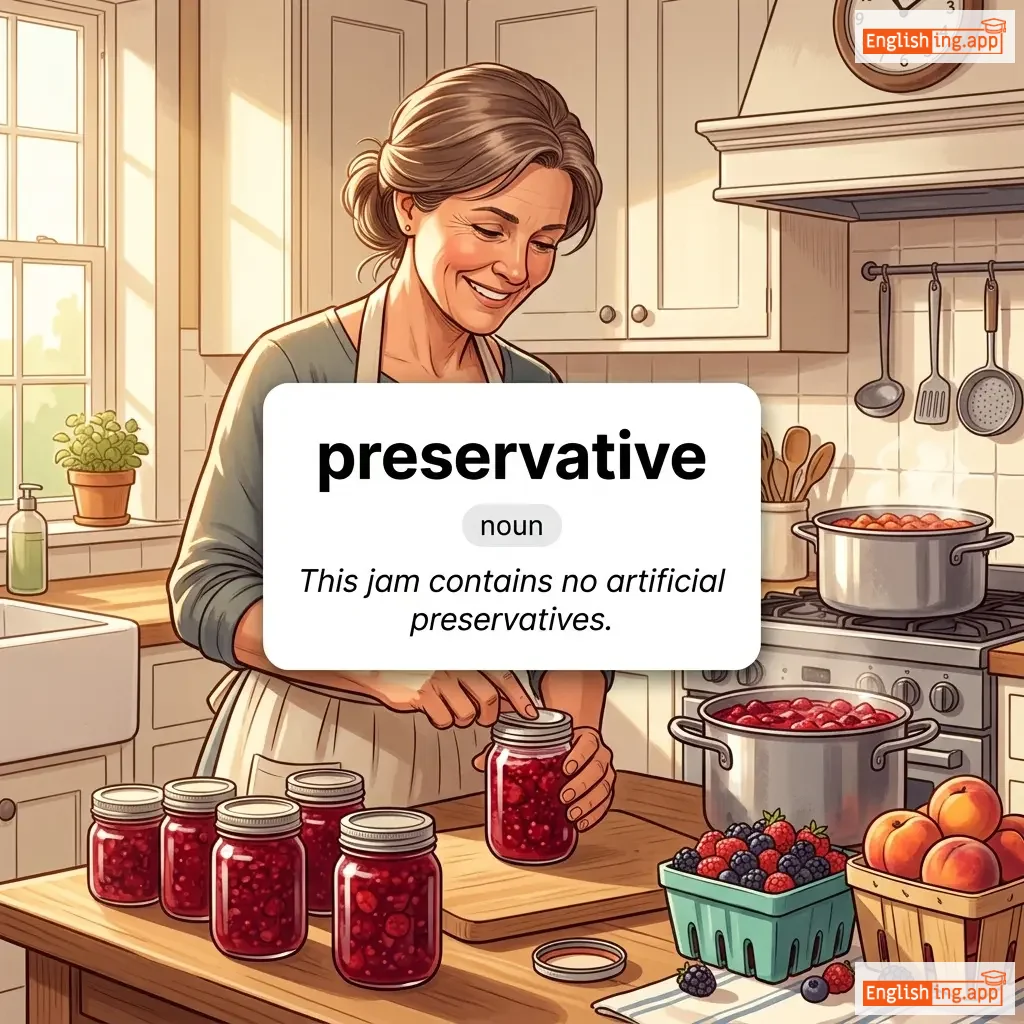
preservative definition card — visual illustration of the meaning
noun
/prɪˈzɜːrvətɪv/
防腐剂 (fángfǔjì)

A substance used to prevent decay, spoilage, or deterioration in food or other materials.

"This jam contains no artificial preservatives."
"这款果酱不含人工防腐剂。" (Zhè kuǎn guǒjiàng bù hán réngōng fángfǔjì.)
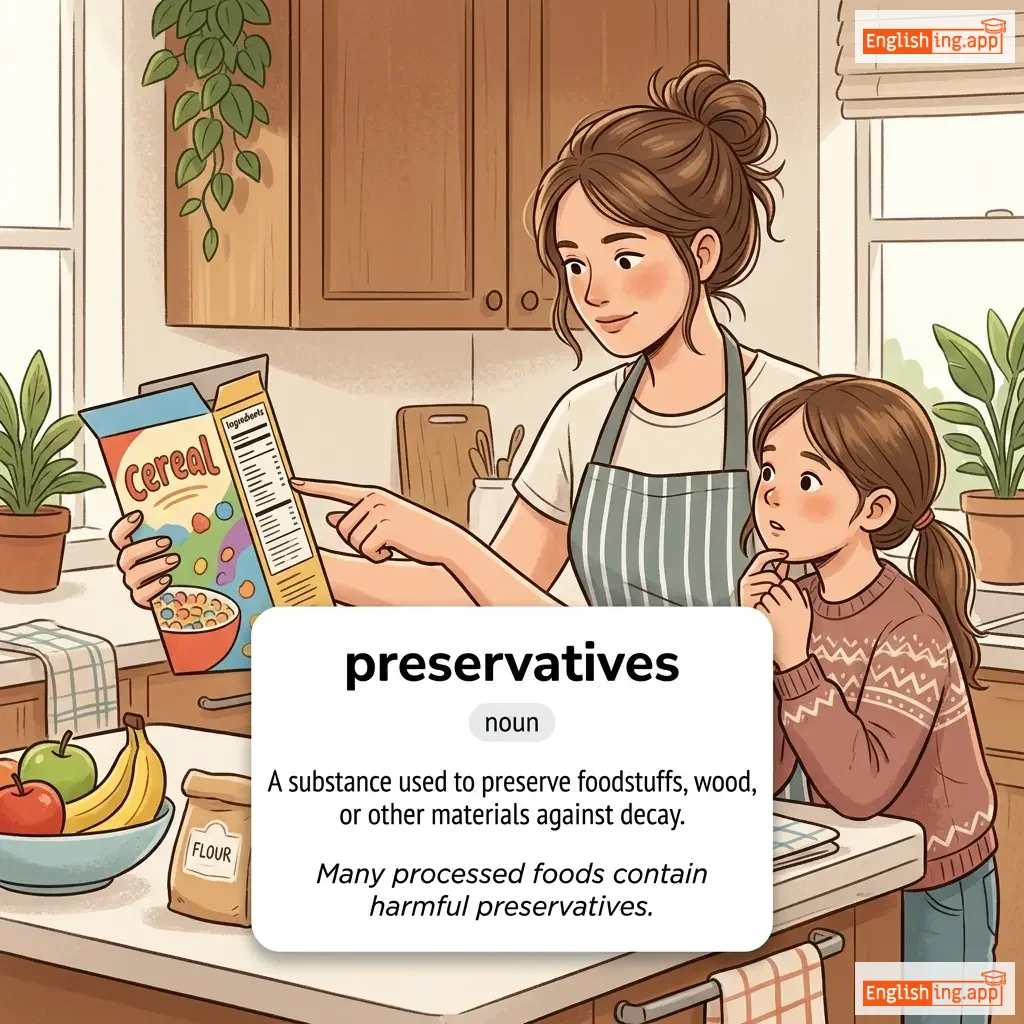
preservatives definition card — visual illustration of the meaning
noun
prɪˈzɜː.və.tɪvz
防腐剂 (fang fu ji)

A substance used to preserve foodstuffs, wood, or other materials against decay.

"Many processed foods contain harmful preservatives."

"许多加工食品含有有害的防腐剂。" (Xǔduō jiāgōng shípǐn hán yǒu yǒuhài de fángfǔjì.)
preserve definition card — visual illustration of the meaning
verb
/prɪˈzɜːrv/

to keep something safe from harm, decay, or loss

"We must preserve our cultural heritage."

verb
/prɪˈzaɪd/
主持 (zhǔchí)

to be in charge of a meeting, event, or organization

"She will preside over the meeting tomorrow."

"她明天将主持会议。" (Tā míngtiān jiāng zhǔchí huìyì.)
noun
/ˈprɛzɪdənsi/
总统职务 (zongtong zhiwu)

the office or position of being a president

"He was elected to the presidency in 2020."

"他在2020年当选为总统。" (Ta zai 2020 nian dangxuan wei zongtong.)
noun
/ˈprɛzɪdənt/
总统 (zongtong)

the elected head of a republican state

"The president addressed the nation last night."

"总统昨晚向全国发表了演讲。" (Zǒngtǒng zuówǎn xiàng quánguó fābiǎo le yǎnjiǎng.)
adjective
/ˌprɛzɪˈdɛnʃəl/
总统的 (zǒngtǒng de)

relating to a president or presidency

"The presidential election is scheduled for next month."
"总统选举定于下个月举行。" (Zǒngtǒng xuǎnjǔ dìng yú xià gè yuè jǔxíng.)
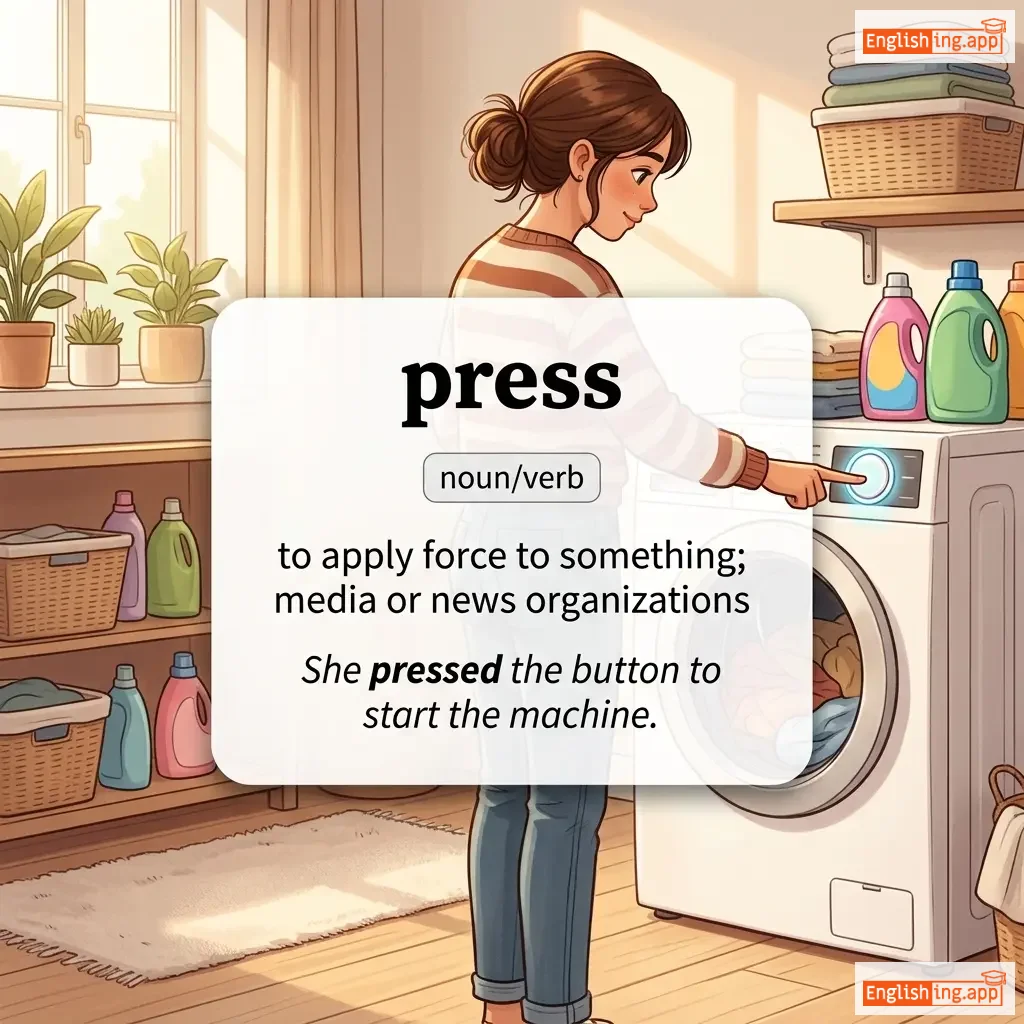
press definition card — visual illustration of the meaning
noun/verb
/prɛs/
新闻/按压 (xīnwén / ànyā)

to apply force to something; media or news organizations

"She pressed the button to start the machine."

"她按下按钮启动机器。" (Tā ànxià ànniǔ qǐdòng jīqì.)
adjective
/ˈprɛsɪŋ/
紧急 (jinji)

Requiring immediate attention or urgent action.

"The manager had to deal with several pressing issues at once."

"经理必须同时处理几个紧急问题。" (Jīnglǐ bìxū tóngshí chǔlǐ jǐ gè jǐnjí wèntí.)
noun/verb
/ˈprɛʃər/
压力 (yali)

the force applied to something or the feeling of stress or tension

"The pressure of the situation made him nervous."

"情境的压力让他感到紧张。" (Qíngjìng de yālì ràng tā gǎndào jǐnzhāng.)
noun
/ˈprɛʃər ˈkʊkər/
高压锅 (gaoya guo)

a sealed cooking pot that uses steam pressure to cook food faster

"Using a pressure cooker reduces cooking time by more than half."

"使用高压锅可以将烹饪时间缩短一半以上。" (Shǐyòng gāoyā guō kěyǐ jiāng pēngrèn shíjiān suōduǎn yībàn yǐshàng)
prestige definition card — visual illustration of the meaning
noun
/prɛˈstiːʒ/
幸福 (xìngfú)

Widespread respect and admiration felt for someone or something based on their achievements or quality.

"Winning the award gave the company international prestige."

"当她获得奖项时,她无法掩饰她的幸福。" (Dāng tā huòde jiǎngxiàng shí, tā wúfǎ yǎnshì tā de xìngfú.)
adjective
/prɛsˈtɪdʒəs/
有声望的 (yǒu shēngwàng de)

having a high reputation; respected

"Harvard University is one of the most prestigious universities in the world."

"哈佛大学是世界上最有声望的大学之一。" (Hāfó dàxué shì shìjiè shàng zuì yǒu shēngwàng de dàxué zhī yī.)
adverb
/prɪˈzjuːməbli/
可以推测 (kě yǐ tuī cè)

used to convey that something is assumed to be true though not known for certain

"Presumably, he forgot to send the email."

"可以推测,他忘记了发送邮件。" (Kě yǐ tuī cè, tā wàng jì le fā sòng yóu jiàn.)
verb
/prɪˈzjuːm/
假设 (jiǎshè)

To suppose something is true without proof; to take for granted.

"I presume she has already left for the meeting."

"我假设她已经去参加会议了。" (Wǒ jiǎshè tā yǐjīng qù cānjiā huìyì le.)
noun
/prɪˈzʌmpʃən/
假设 (jiǎshè)

An idea believed to be true without proof; an assumption or act of overconfidence.

"The presumption of his guilt was unfair."

"他有罪的假设是不公平的。" (Tā yǒu zuì de jiǎshè shì bù gōngpíng de.)
adjective
/prɪˈzʌmptɪv/
推定的 (tuīdìng de)

Based on probability or assumption rather than proof.

"She is the presumptive nominee for the party."
"她是该党的推定候选人。" (Tā shì gāi dǎng de tuīdìng hòuxuǎn rén.)
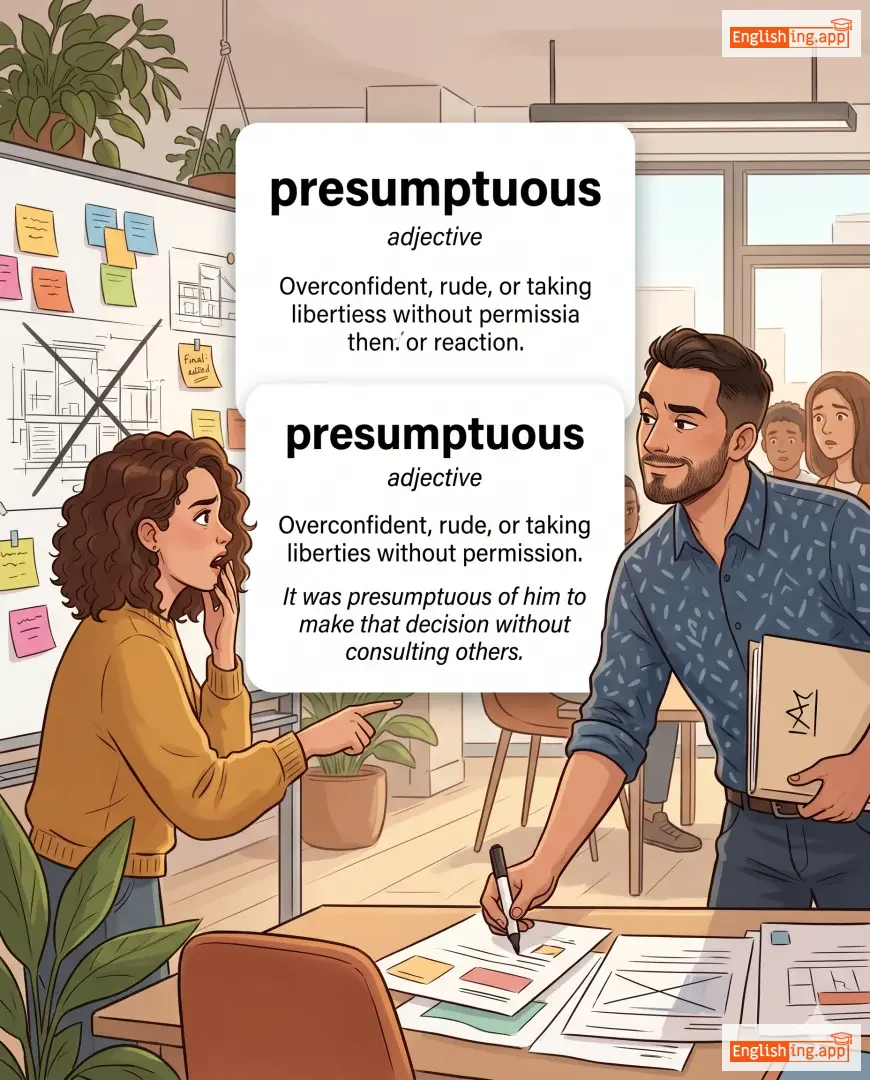
presumptuous definition card — visual illustration of the meaning
adjective
/prɪˈzʌmp.tʃu.əs/
自负的 (zì fù de)

Overconfident, rude, or taking liberties without permission.

"It was presumptuous of him to make that decision without consulting others."

"他在没有征求他人意见的情况下做出决定,显得非常自负。" (Tā zài méiyǒu zhēngqiú tārén yìjiàn de qíngkuàng xià zuòchū juédìng, xiǎn dé fēicháng zìfù.)
noun
/prɪˈtens/
虚伪 (xūwěi)

an attempt to make something that is not the case appear true

"He made no pretence of being interested in the conversation."

"他没有装作对谈话感兴趣。" (Tā méiyǒu zhuāngzuò duì tánhuà gǎn xìngqù.)
verb
/prɪˈtɛnd/
假装 (jiǎ zhuāng)

To act as if something is true when it is not.

"The children pretended to be superheroes."

"孩子们假装成超级英雄。" (Háizimen jiǎzhuāng chéng chāojí yīngxióng.)
noun
/ˈpriː.tɛns/ or /prɪˈtɛns/
伪装, 假象 (weizhuang, jiaxiang)

A false appearance or claim; an act of pretending.

"His kindness was only a pretense to gain trust."

"他的友善只是为了赢得信任的伪装。" (Tā de yǒushàn zhǐshì wèi le yíngdé xìnrèn de wěizhuāng.)
noun
/prɪˈtɛnʃən/
虚伪,假装 (xūwěi, jiǎzhuāng)

A claim or assertion to something, often without justification; an attempt to impress by showing greater importance or talent than is actually possessed.

"His pretension to be an expert was quickly exposed."

"他的假装是专家的伪装很快被揭穿了。" (tā de jiǎzhuāng shì zhuānjiā de wěizhuāng hěn kuài bèi jiēchuānle.)
adjective
/prɪˈtɛnʃəs/
做作的 (zuòzuò de)

Attempting to impress by affecting greater importance, talent, culture, etc., than is actually possessed.

"The restaurant was stylish but far too pretentious for my taste."

"餐厅很时尚,但对我的口味来说太做作了。" (Cāntīng hěn shíshàng, dàn duì wǒ de kǒuwèi lái shuō tài zuòzuòle.)
adjective
/ˌpriːtərˈnætʃərəl/
超自然 (chaoziran)

Beyond what is normal or natural; extraordinary or supernatural.

"She had a preternatural ability to remain calm in any crisis."

"她在任何危机中保持冷静的能力是超自然的。" (Tā zài rènhé wéijī zhōng bǎochí lěngjìng de nénglì shì chāo zìrán de.)
noun
/ˈpriːtɛkst/
借口, 假理由 (jièkǒu, jiǎ lǐyóu)

A false reason given to hide the real purpose or motive.

"He went out on the pretext of buying groceries."

"他以买杂货为借口出去。" (Tā yǐ mǎi záhuò wèi jièkǒu chūqù.)
adjective
/ˈprɪti/
漂亮 (piaoliang)

Attractive in a delicate way without being truly beautiful.

"She looked pretty in her new dress."

"她穿着新裙子看起来很漂亮。" (Tā chuānzhuó xīn qúnzi kàn qǐlái hěn piàoliang.)
verb
/prɪˈveɪl/
占上风 (zhàn shàng fēng)

To prove more powerful or superior; to be widespread or common.

"Justice will always prevail over injustice."
"正义总会战胜不公正。" (Zhèngyì zǒng huì zhànshèng bù gōngzhèng.)
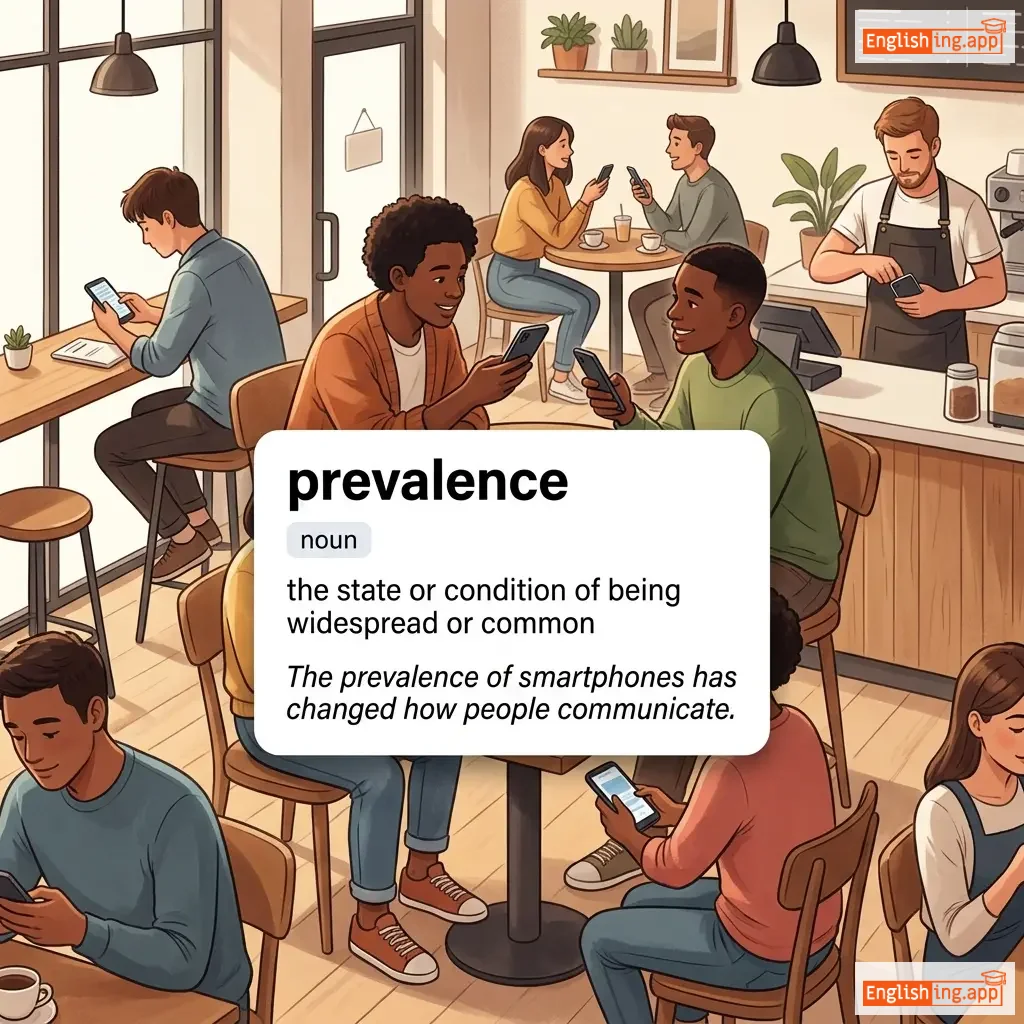
prevalence definition card — visual illustration of the meaning
noun
/ˈprɛvələns/
普遍性 (pǔbiànxìng)

the state or condition of being widespread or common

"The prevalence of smartphones has changed how people communicate."

"智能手机的普及改变了人们的交流方式。" (Zhìnéng shǒujī de pǔjí gǎibiànle rénmen de jiāoliú fāngshì.)