词汇表

英语词汇词典 | 单词含义、定义和示例

verb
/ˈpɔːltər/
含糊其辞,欺骗 (hángu qí cí, qīpiàn)

to act insincerely or deceitfully; to equivocate or lie

"He paltered when asked about his involvement in the deal."

"当被问及是否参与交易时,他回避了问题。" (Dāng bèi wènjí shìfǒu cānyù jiāoyì shí, tā huíbìle wèntí.)
adjective
/ˈpɔːltri/
微不足道, 微小 (wēi bù zú dào, wēi xiǎo)

small or meager; lacking in value or importance

"They offered him a paltry sum for his work."

"他们为他的工作提供了微不足道的报酬。" (Tāmen wèi tā de gōngzuò tígōngle wēi bù zú dào de bàochóu.)
adjective
/ˈpeɪli/
条纹的 (tiaowen de)

striped with different colors, usually used in heraldry

"The knight’s shield was decorated with paly stripes of red and gold."

"骑士的盾牌上装饰着红色和金色的条纹。" (Qishi de dunpai shang zhuangshizhe hongse he jinse de tiaowen.)
verb
/ˈpæmpər/
溺爱 / 宠爱 (nì'ài / chǒng'ài)

to treat with excessive care and attention; to spoil

"Parents often pamper their first child."

"父母常常溺爱他们的第一个孩子。" (Fùmǔ chángcháng nì'ài tāmen de dì yī gè háizi.)
noun
/ˈpæm.flət/
宣传册 (xuān chuán cè)

a small booklet or brochure containing information or arguments about a subject

"The health department distributed a pamphlet about nutrition."

"卫生部门分发了关于营养的宣传册。" (Wèi shēng bùmén fēn fā le guān yú yíng yǎng de xuān chuán cè.)
noun, verb
/ˌpæm.fləˈtɪər/
小册子作者 (xiaocenzi zuozhe)

a person who writes or distributes pamphlets, often to promote a political or social cause

"In the 18th century, many pamphleteers influenced public opinion."

"18世纪,许多小册子作者影响了公众舆论。" (18 shiji, xuduo xiaocenzi zuozhe yingxiang le gongzhong yulun.)
noun, verb
/pæn/
锅, 炒锅 (guo, chao guo)

a shallow container used for cooking; also means to criticize severely (verb)

"She cooked the eggs in a frying pan."

"她在煎锅里煮了鸡蛋。" (Tā zài jiānguō lǐ zhǔle jīdàn.)
adjective
/ˌpæn.əˈmer.ɪ.kən/
泛美洲的 (fàn měi zhōu de)

relating to all the countries of North, Central, and South America

"The Pan-American Games bring together athletes from across the continent."

"泛美洲运动会将整个大陆的运动员汇聚在一起。" (Fàn měi zhōu yùndòng huì jiāng zhěnggè dàlù de yùndòngyuán huìjù zài yīqǐ.)
noun
/ˌpænəˈsiːə/
万灵药 (wàn líng yào)

A solution or remedy for all difficulties or diseases.

"Education is often seen as a panacea for social problems."
"教育通常被视为社会问题的万能药。" (Jiàoyù tōngcháng bèi shì wéi shèhuì wèntí de wànnéng yào.)
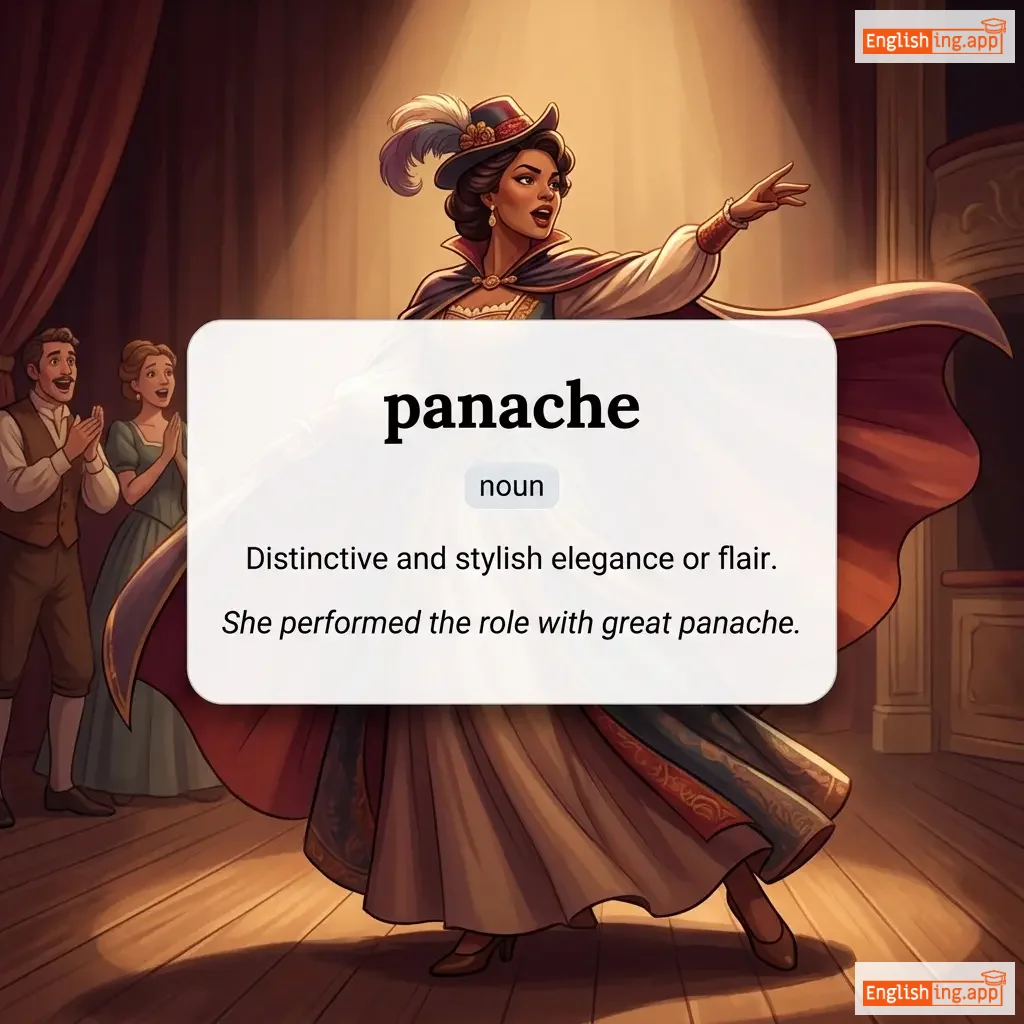
panache definition card — visual illustration of the meaning
noun
/pəˈnæʃ/
独特的优雅 (dútè de yōuyǎ)

Distinctive and stylish elegance or flair.

"She performed the role with great panache."

"她以极大的潘纳什演绎了这个角色。" (Tā yǐ jí dà de pánàshī yǎnyì le zhège juésè.)
noun
/pʌntʃ ˈfoʊrən/
五香粉 (wǔ xiāng fěn)

a Bengali spice blend containing five whole spices: cumin, fennel, fenugreek, nigella, and mustard seeds

"The aroma filled the kitchen when she heated panch phoron in oil."

"当她在油中加热五香粉时,香气充满了厨房。" (dāng tā zài yóu zhōng jiārè wǔ xiāng fěn shí, xiāngqì chōngmǎnle chúfáng.)
noun
/ˈpæŋkriəs/
胰腺 (yixian)

A gland in the abdomen that produces insulin and digestive enzymes.

"The pancreas plays a vital role in digestion and blood sugar regulation."

"胰腺在消化和血糖调节中发挥着重要作用。" (Yixian zài xiāohuà hé xuètáng tiáojié zhōng fāhuī zhuó zhòngyào zuòyòng.)
noun
/pænˈdɛmɪk/
大流行病 (dà liúxíng bìng)

An outbreak of a disease that occurs on a global scale.

"The COVID-19 pandemic changed the world dramatically."

"COVID-19 大流行病极大地改变了世界。" (COVID-19 dà liúxíng bìng jí dà de gǎibiànle shìjiè.)
noun
/ˌpændəˈmoʊniəm/
混乱 (hùnluàn)

Wild and noisy disorder or confusion; uproar.

"When the concert was canceled, pandemonium broke out among the crowd."

"当音乐会被取消时,混乱在观众中爆发。" (Dāng yīnyuè huì bèi qǔxiāo shí, hùnluàn zài guānzhòng zhōng bàofā.)
verb
/ˈpændər/
迎合, 奉承 (yínghé, fèngchéng)

to indulge or exploit the weaknesses, desires, or immoral tendencies of others

"The politician was accused of pandering to voters' fears."

"政治家被指控迎合选民的恐惧。" (Zhèngzhìjiā bèi zhǐkòng yínghé xuǎnmín de kǒngjù.)
noun
/ˌpænəˈdʒɪrɪk/
赞美诗, 颂辞 (zanmei shi, songci)

a formal speech or piece of writing in praise of someone or something

"The author wrote a panegyric on the bravery of the soldiers."

"作者写了一篇关于士兵英勇的潘尼吉里克。" (Zuòzhě xiěle yī piān guānyú shìbīng yīngyǒng de pānníjílǐkè.)
noun
/ˈpænəl/
面板, 法官小组 (miànbǎn, fǎguān xiǎozǔ)

a group of people gathered to discuss, judge, or advise on a particular topic

"The panel of judges announced the winner of the competition."

"法官小组宣布了比赛的获胜者。" (Fǎguān xiǎozǔ xuānbùle bǐsài de huòshèng zhě.)
noun
/pæŋ/
突如其来的剧烈疼痛或情绪痛苦 (tū rú qí lái de jù liè téng tòng huò qíng xù tòng kǔ)

a sudden sharp feeling of pain or emotional distress

"She felt a pang of guilt after the argument."

"她在争论后感到一阵内疚的疼痛。" (Tā zài zhēng lùn hòu gǎn dào yí zhèn nèi jiù de téng tòng.)
noun/verb
/ˈpænɪk/
幸福 (xìngfú)

a sudden overwhelming fear or anxiety causing irrational behavior

"The crowd panicked when the fire alarm went off."

"当她收到奖项时,她无法掩饰自己的幸福。" (Dāng tā shōu dào jiǎngxiàng shí, tā wúfǎ yǎnshì zìjǐ de xìngfú.)
adjective
/ˈpæn.ɪ.ki/
惊慌的; 焦虑和害怕的 (jīnghuāng de; jiāolǜ hé hàipà de)

feeling or showing panic; anxious and fearful

"The crowd became panicky when the fire alarm sounded."

"当火警响起时,群众变得惊慌失措。" (Dāng huǒjǐng xiǎngqǐ shí, qúnzhòng biàn dé jīnghuāng shīcuò.)
/ˈpæn.ə.pli/
全套装备 (quán tào zhuāng bèi)

A complete or impressive collection of things; a full set of armor.

"The museum displayed a panoply of ancient weapons."

"博物馆展示了一套古代武器的全套装备。" (Bówùguǎn zhǎnshìle yī tào gǔdài wǔqì de quántào zhuāngbèi.)
noun
/ˌpæn.əˈræm.ə/
全景视图 (quánjǐng shìtú)

An unbroken view of the whole region surrounding an observer.

"From the hilltop, we enjoyed a breathtaking panorama of the city."

"从山顶,我们欣赏到城市的壮丽全景。" (cóng shāndǐng, wǒmen xīnshǎng dào chéngshì de zhuànglì quánjǐng.)
adjective
/ˌpæn.əˈræm.ɪk/
全景视图 (quanjing shitu)

Giving a wide view of an extensive area in all directions.

"The hotel offers panoramic views of the ocean."

"酒店提供海洋的全景视野。" (Jiudian tigong haiyang de quanjing shiya.)
noun
/pænt/
裤子 (kùzi)

a piece of clothing worn from the waist down, covering both legs separately

"He wore a pair of blue pants to the party."

"他穿了一条蓝色裤子去参加聚会。" (Tā chuānle yītiáo lán sè kùzi qù cānjiā jùhuì.)
noun
/ˈpæn.θi.ɪ.zəm/
泛神论 (fàn shén lùn)

The belief that God and the universe are identical, or that everything is a manifestation of God.

"Spinoza’s philosophy is often associated with pantheism."

"斯宾诺莎的哲学常与泛神论相关联。" (Sī bīn nuò shā de zhéxué cháng yǔ fàn shén lùn xiāngguān lián.)
noun
/ˈpæn.θi.ən/
所有神明,献给所有神明的庙宇 (suǒyǒu shénmíng, xiàn gěi suǒyǒu shénmíng de miàoyu)

All the gods of a religion collectively; a building dedicated to all gods.

"The Roman Pantheon is one of the best-preserved ancient temples."

"罗马的万神殿是最完好保存的古代神庙之一。" (Luómǎ de wàn shéndiàn shì zuì wánhǎo bǎocún de gǔdài shénmiào zhī yī.)
noun
/ˈpæntəmaɪm/
哑剧 (yaju)

A type of theatrical performance using gestures and movements without spoken words; in Britain, a musical comedy play for families performed at Christmas.

"The children enjoyed the Christmas pantomime at the local theater."

"孩子们在当地剧院观看了圣诞哑剧。" (haizimen zai dangdi juyuan guankan le Shengdan yaju.)
noun
/ˈpæntəˌskoʊp/
提供广泛或全景视图的光学仪器 (tigong guangfan huo quanjing shitu de guangxue yiqi)

An optical instrument that provides a wide or panoramic view.

"The scientist used a pantoscope to observe the entire horizon."

"科学家使用全景镜观察整个地平线。" (Kexuejia shiyong quanjingjing guancha zhengge dipingxian.)
noun
/ˈpæntri/
储藏室 (chǔcáng shì)

A small room or cupboard where food, dishes, and kitchen supplies are stored.

"She stocked the pantry with fresh groceries for the week."

"她用新鲜的杂货为这周装满了储藏室。" (Tā yòng xīnxiān de záhuò wèi zhè zhōu zhuāngmǎn le chǔcáng shì.)
👨‍👧

papa (帕帕)

noun
/ˈpɑːpə/
爸爸 (baba)

an informal or affectionate term for one’s father

"Papa is picking me up from school today."

"爸爸今天来接我放学。" (baba jintian lai jie wo fangxue)
noun
/ˈpeɪpəsi/
教皇职位 (jiàohuáng zhíwèi)

The office or authority of the Pope in the Roman Catholic Church.

"The papacy played a significant role in medieval European politics."

"教皇职位在中世纪欧洲政治中发挥了重要作用。" (Jiàohuáng zhíwèi zài zhōng shìjì Ōuzhōu zhèngzhì zhōng fāhuīle zhòngyào zuòyòng.)
noun
/pəˈpaɪə/
木瓜 (mugua)

a large orange tropical fruit with sweet orange flesh and black seeds

"Papaya is rich in vitamins and very good for health."
"木瓜富含维生素,对健康非常有益。" (Mugua fuhan weishengsu, dui jiankang feichang youyi.)
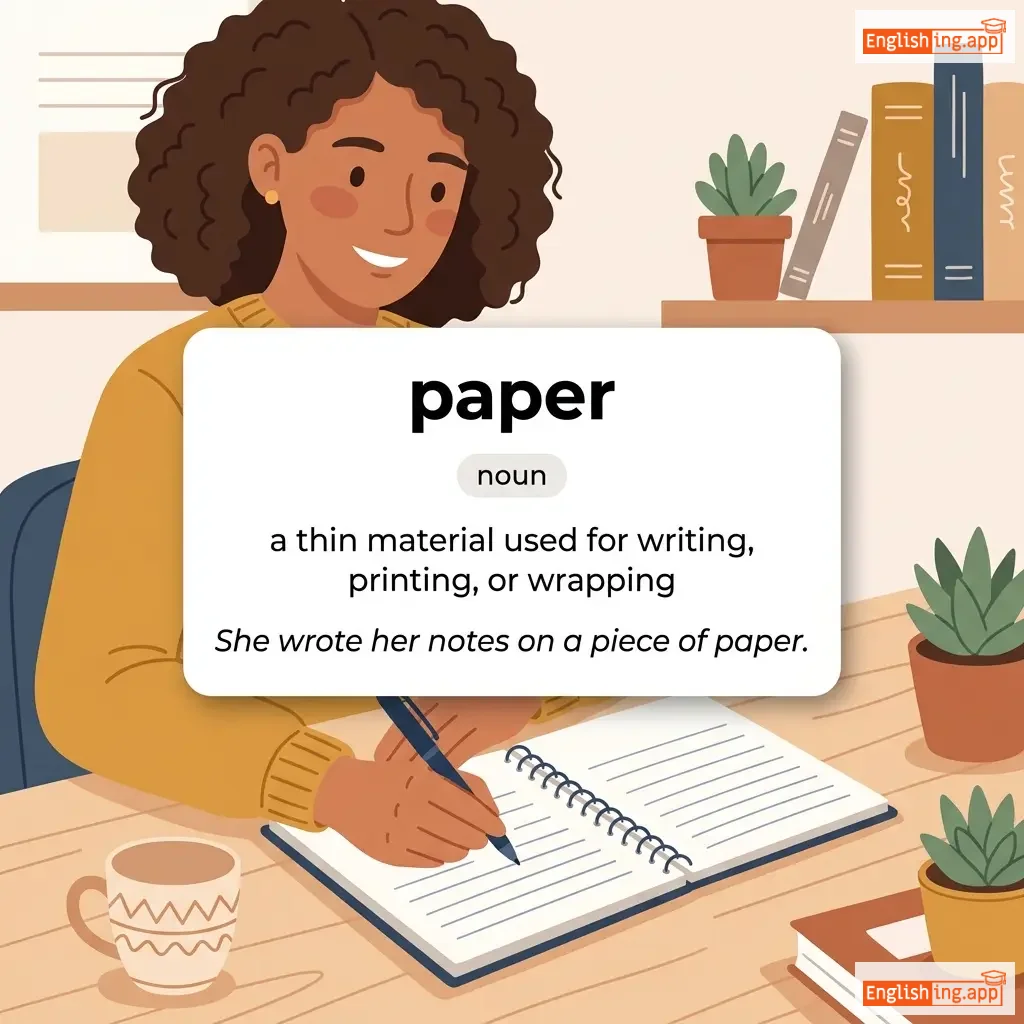
paper definition card — visual illustration of the meaning
noun
/ˈpeɪpər/
(zhi)

a thin material used for writing, printing, or wrapping

"She wrote her notes on a piece of paper."

"她在一张纸上写下了她的笔记。" (Tā zài yī zhāng zhǐ shàng xiěxiàle tā de bǐjì.)
noun
/pəˈpaɪrəs/
纸莎草 (zhǐ shā cǎo)

An ancient writing material made from the pith of the papyrus plant; also refers to the plant itself.

"The ancient scroll was written on papyrus."

"古老的卷轴是用纸莎草写的。" (Gǔlǎo de juǎnzhóu shì yòng zhǐ shā cǎo xiě de.)
noun
/ˈpærəbl/
寓言 (yùyán)

A simple story used to illustrate a moral or spiritual lesson.

"Jesus often taught using a parable to convey deeper truths."
"耶稣常常用寓言教导深刻的真理。" (Yēsū chángcháng yòng yùyán jiàodǎo shēn kè de zhēnlǐ.)
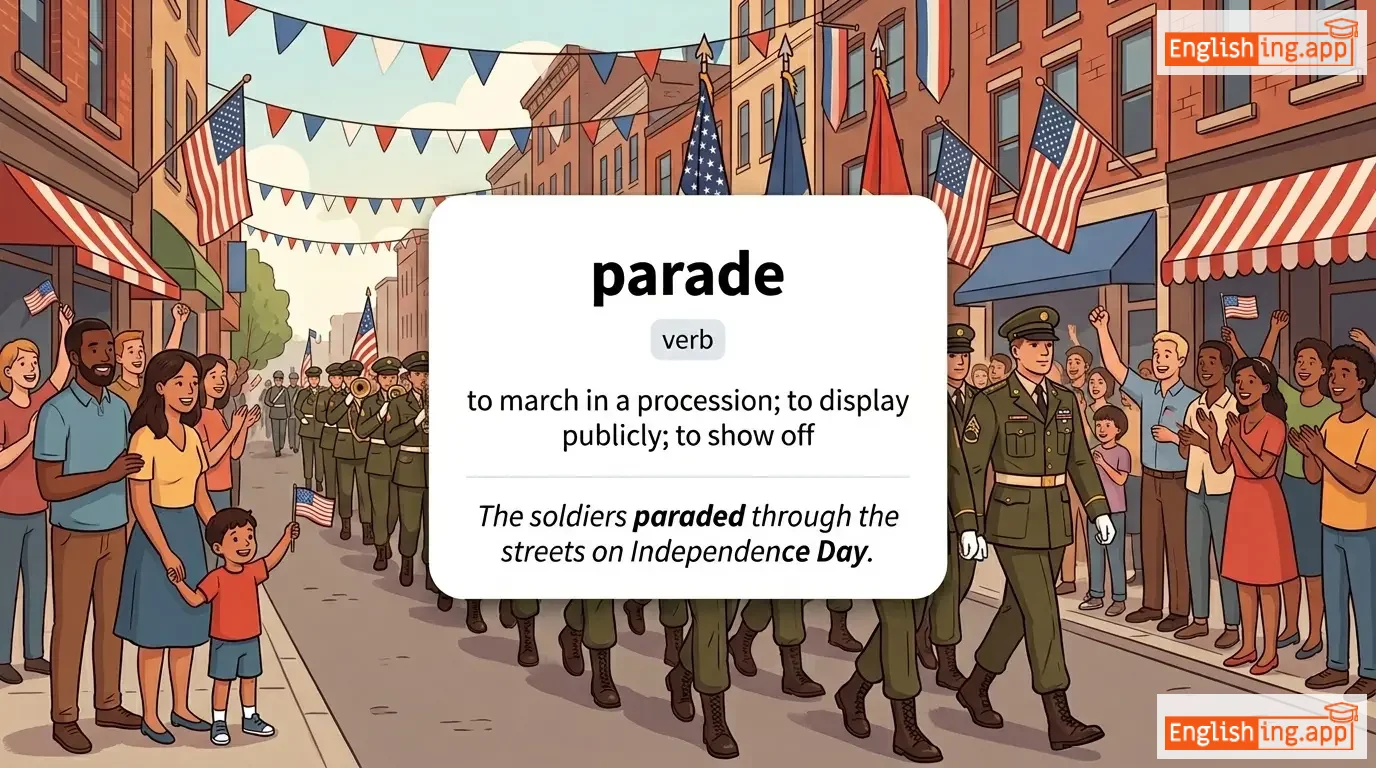
parade definition card — visual illustration of the meaning
noun
/pəˈreɪd/
游行 / 阅兵 (youxing / yuebing)

a public procession, especially one celebrating a special day or event

"Thousands of people attended the Independence Day parade."
"成千上万的人参加了独立日游行。" (Chengqian shangwan de ren canjia le duli ri youxing.)
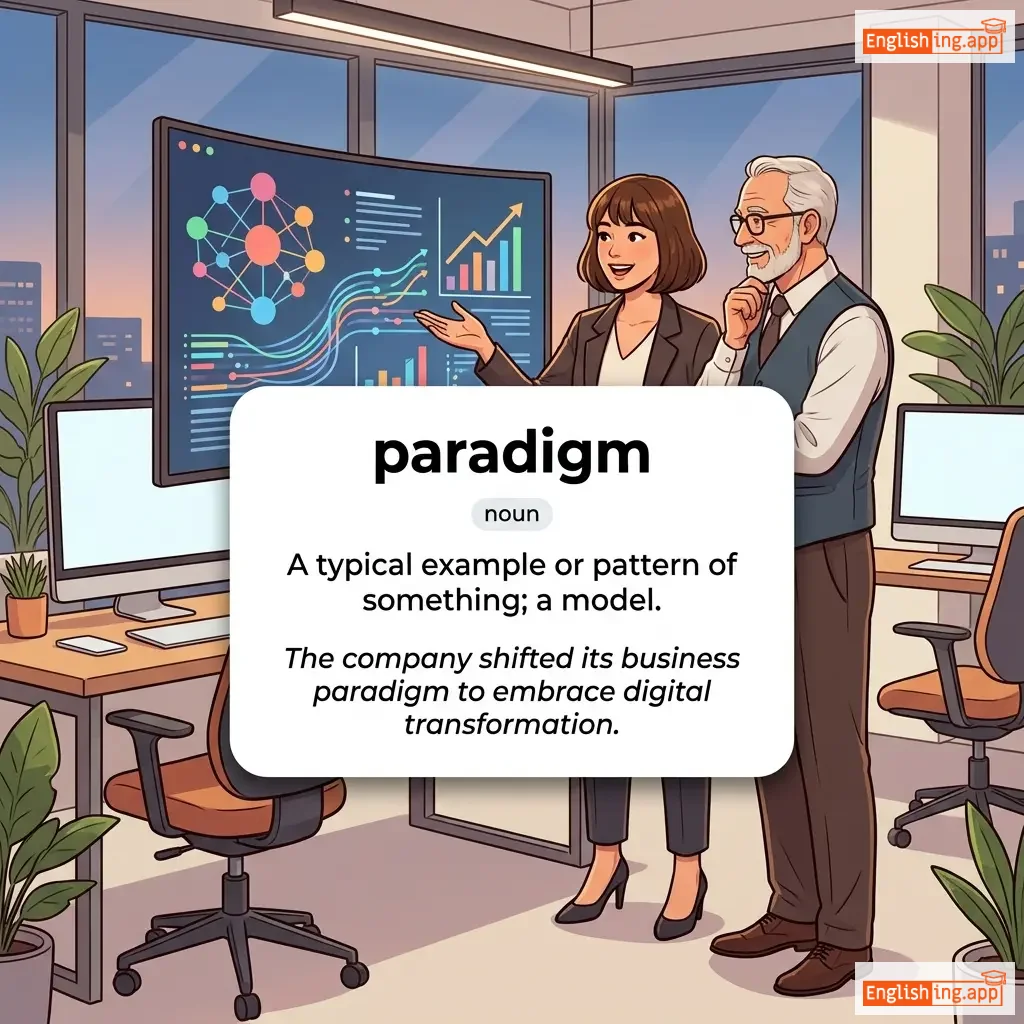
paradigm definition card — visual illustration of the meaning
noun
/ˈpærədaɪm/
模式 (moshi)

A typical example or pattern of something; a model.

"The company shifted its business paradigm to embrace digital transformation."

"公司改变了其商业模式,以适应数字化转型。" (Gongsi gaibian le qi shangye moshi, yi shiying shuzihua zhuanxing.)
adjective
/ˌpærəˈdɪɡmətɪk/
典范的 (diǎnfàn de)

Serving as a typical example or model of something.

"Her success story is paradigmatic of the opportunities education can provide."

"她的成功故事是教育可以提供的机会的典范。" (Tā de chénggōng gùshì shì jiàoyù kěyǐ tígōng de jīhuì de diǎnfàn.)
noun
/ˈpærədaɪs/
天堂 (tiāntáng)

An ideal or perfect place of happiness; often thought of as heaven.

"The tropical island felt like a true paradise."

"这个热带岛屿感觉就像一个真正的天堂。" (Zhège rèdài dǎoyǔ gǎnjué jiù xiàng yī gè zhēnzhèng de tiāntáng.)
paradox definition card — visual illustration of the meaning
noun
/ˈpærədɒks/
悖论 (bèilùn)

A statement or situation that seems contradictory but may reveal a deeper truth.

"It is a paradox that computers make our lives easier but also more stressful."

"这是一个悖论,计算机让我们的生活更轻松,但也更有压力。" (Zhè shì yīgè bèilùn, jìsuànjī ràng wǒmen de shēnghuó gèng qīngsōng, dàn yě gèng yǒu yālì.)
adjective
/ˌpærəˈdɒksɪkəl/
矛盾的 (máodùn de)

Seemingly contradictory or opposed to common sense, yet possibly true.

"It is paradoxical that standing is often more tiring than walking."
"站立常常比走路更累,这很矛盾。" (Zhànlì chángcháng bǐ zǒulù gèng lèi, zhè hěn máodùn.)
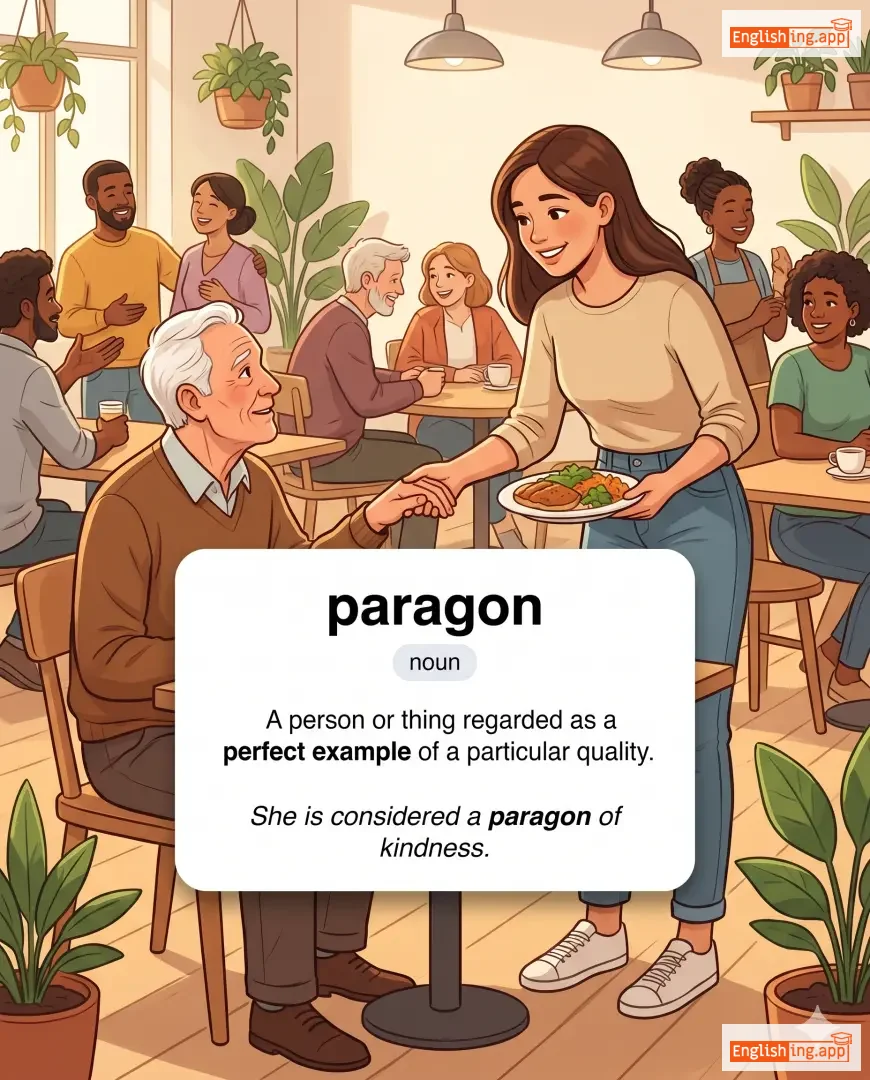
paragon definition card — visual illustration of the meaning
noun
/ˈpærəɡɒn/
典范 (dianfan)

A person or thing regarded as a perfect example of a particular quality.

"She is considered a paragon of kindness."

"她被认为是善良的典范。" (Ta bei renwei shi shanliang de dianfan.)
noun
/ˈpær.ə.kiːt/
鹦鹉 (yīngwǔ)

a small colorful parrot with a long tail, often kept as a pet

"The green parakeet learned to say hello."

"绿色鹦鹉学会了说你好。" (Lǜsè yīngwǔ xuéhuìle shuō nǐ hǎo.)
noun, adjective, verb
/ˈpærəˌlɛl/

Lines, objects, or events that are side by side and never meet; similarity or comparison.

"The road runs parallel to the railway."

noun
/ˈpærəˌlɛlɪzəm/
平行主义 (pingxing zhuyi)

The state of being parallel or similar; in literature, the use of components in a sentence that are grammatically the same or similar in construction.

"The writer used parallelism to give rhythm to his prose."
"作家使用平行主义为他的散文增添了节奏。" (Zuojia shiyong pingxing zhuyi wei tade sanwen zengtian le jiezou.)
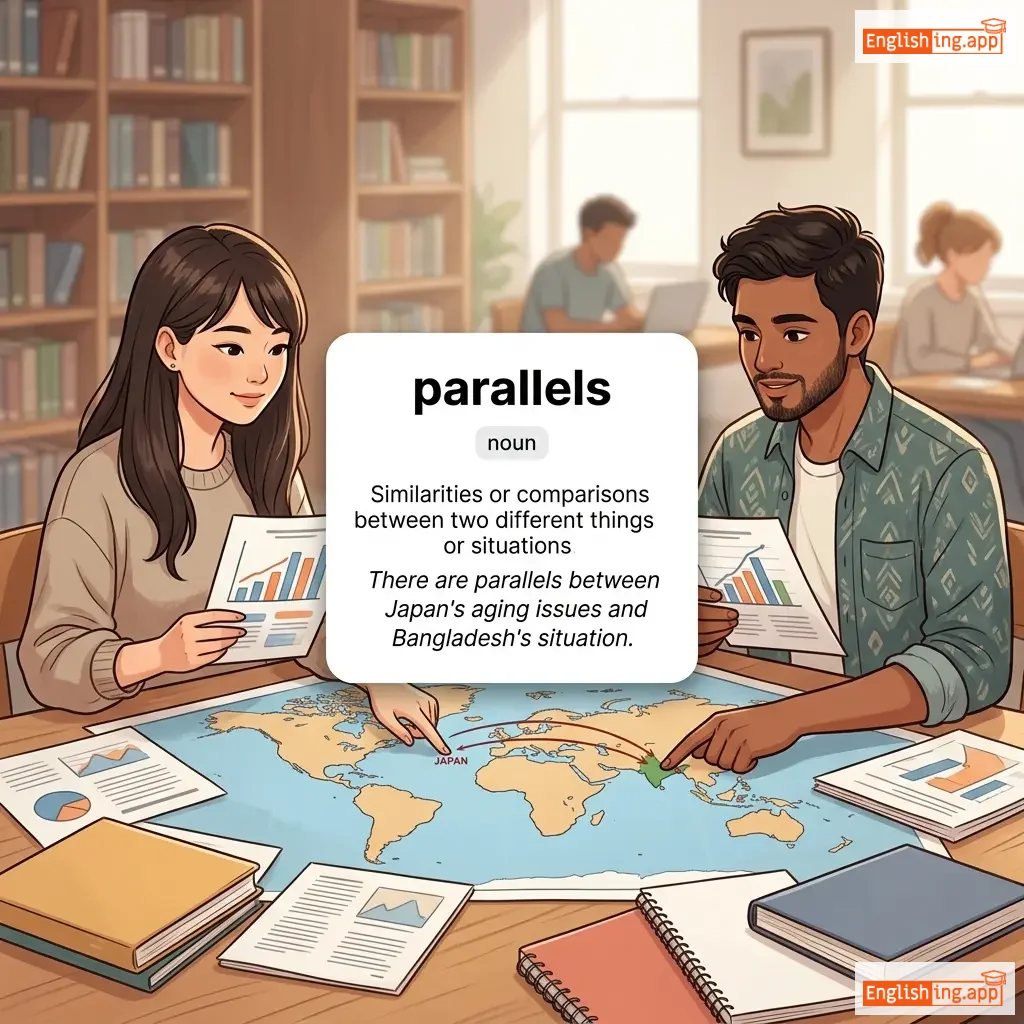
parallels definition card — visual illustration of the meaning
noun
ˈpærəˌlɛlz
相似之处 (xiangsi zhichu)

Similarities or comparisons between two different things or situations

"There are parallels between Japan's aging issues and Bangladesh's situation."

"日本的老龄化问题和孟加拉国的情况之间存在相似之处。" (Riben de laolinghua wenti he Mengjialaguo de qingkuang zhijian cunzai xiangsi zhichu.)
noun
/pəˈræləsɪs/
麻痹 (mábì)

Loss of the ability to move in part or most of the body, typically as a result of illness or injury.

"The accident left him with partial paralysis."

"事故使他部分瘫痪。" (Shìgù shǐ tā bùfen tānhuàn.)
verb
/ˈpærəlaɪz/
麻痹 (mábì)

to cause someone or something to lose the ability to move or function normally

"The sudden shock seemed to paralyze him."

"突如其来的冲击似乎使他麻痹。" (Túrúqílái de chōngjí shìhū shǐ tā mábì.)
noun
/pəˈræmɪtər/
参数 (canshu)

a limit, boundary, or measurable factor that defines or determines something

"We need to set clear parameters for this project."

"我们需要为这个项目设定明确的参数。" (Women xuyao wei zhege xiangmu sheding mingque de canshu.)
adjective
/ˈpærəmaʊnt/
至关重要 (zhì guān zhòng yào)

more important than anything else; supreme

"Safety is of paramount importance in this factory."

"在这家工厂里,安全至关重要。" (Zài zhè jiā gōngchǎng lǐ, ānquán zhì guān zhòng yào.)