词汇表

英语词汇词典 | 单词含义、定义和示例

adjective
/ˌpoʊstˈwɔːr/
战后 (zhanhou)

relating to the period after a war has ended

"The country experienced rapid economic growth in the post-war years."

"该国在战后时期经历了快速的经济增长。" (gai guo zai zhanhou shiqi jingli le kuaishu de jingji zengzhang)
verb
/ˌpoʊstˈdeɪt/
后置日期 (hòuzhì rìqī)

To assign a date later than the actual date to a document or event.

"She postdated the check to next month."

"她把支票的日期改为下个月。" (Tā bǎ zhīpiào de rìqī gǎi wèi xià gè yuè.)
noun
/ˈpoʊstər/
海报 (haibao)

a large printed picture or notice that is put on a wall for decoration or to advertise something

"They put up a movie poster outside the theater."

"他们在电影院外面挂了一张电影海报。" (Tāmen zài diànyǐngyuàn wàimiàn guàle yī zhāng diànyǐng hǎibào.)
adjective
/pɒˈstɪəriər/
后部 (hòubù)

Situated at or toward the back; later in time.

"The posterior part of the brain controls vision."

"大脑的后部控制视觉。" (Dànǎo de hòubù kòngzhì shìjué.)
noun
/pɒˈstɛrɪti/
后代 (hòudài)

All future generations of people.

"The monument was built for the benefit of posterity."

"这座纪念碑是为后代的利益而建造的。" (Zhè zuò jìniànbēi shì wèi hòudài de lìyì ér jiànzào de.)
noun, adjective
/ˌpəʊstˈɡrædʒuət/
研究生 (yan jiu sheng)

A student who has completed a first degree and is studying for a further degree.

"She is doing postgraduate research in physics."

"她正在做物理学的研究生研究。" (Ta zheng zai zuo wu li xue de yan jiu sheng yan jiu.)
adjective
/ˈpɒstjʊməs/
死后的 (sǐhòu de)

Occurring, awarded, or appearing after the death of the originator.

"He received a posthumous award for his bravery."

"他因勇敢获得了死后奖项。" (Tā yīn yǒnggǎn huòdéle sǐhòu jiǎngxiàng.)
noun, adjective
/ˌpəʊstˈmɔːtəm/
尸体解剖 (shī tǐ jiě pō)

An examination of a dead body to determine the cause of death.

"The doctor carried out a postmortem on the body."

"医生对尸体进行了尸体解剖。" (Yīshēng duì shītǐ jìnxíngle shītǐ jiě pō.)
verb
/pəʊs(t)ˈpəʊn/
推迟 (tuīchí)

to delay something to a later time

"The meeting was postponed until next week."

"会议被推迟到下周。" (Huìyì bèi tuīchí dào xià zhōu.)
adjective
/ˌpəʊstˈprændɪəl/
餐后 (cān hòu)

Occurring after a meal.

"He went for a postprandial walk after dinner."

"他在晚餐后去散步。" (Tā zài wǎncān hòu qù sànbù.)
noun
/ˈpəʊstˌskrɪpt/
附言 (fù yán)

an additional remark at the end of a letter or text, after the signature

"She added a brief postscript to thank him again."
"她加了一句简短的附言,再次感谢他。" (Tā jiāle yī jù jiǎnduǎn de fù yán, zàicì gǎnxiè tā.)
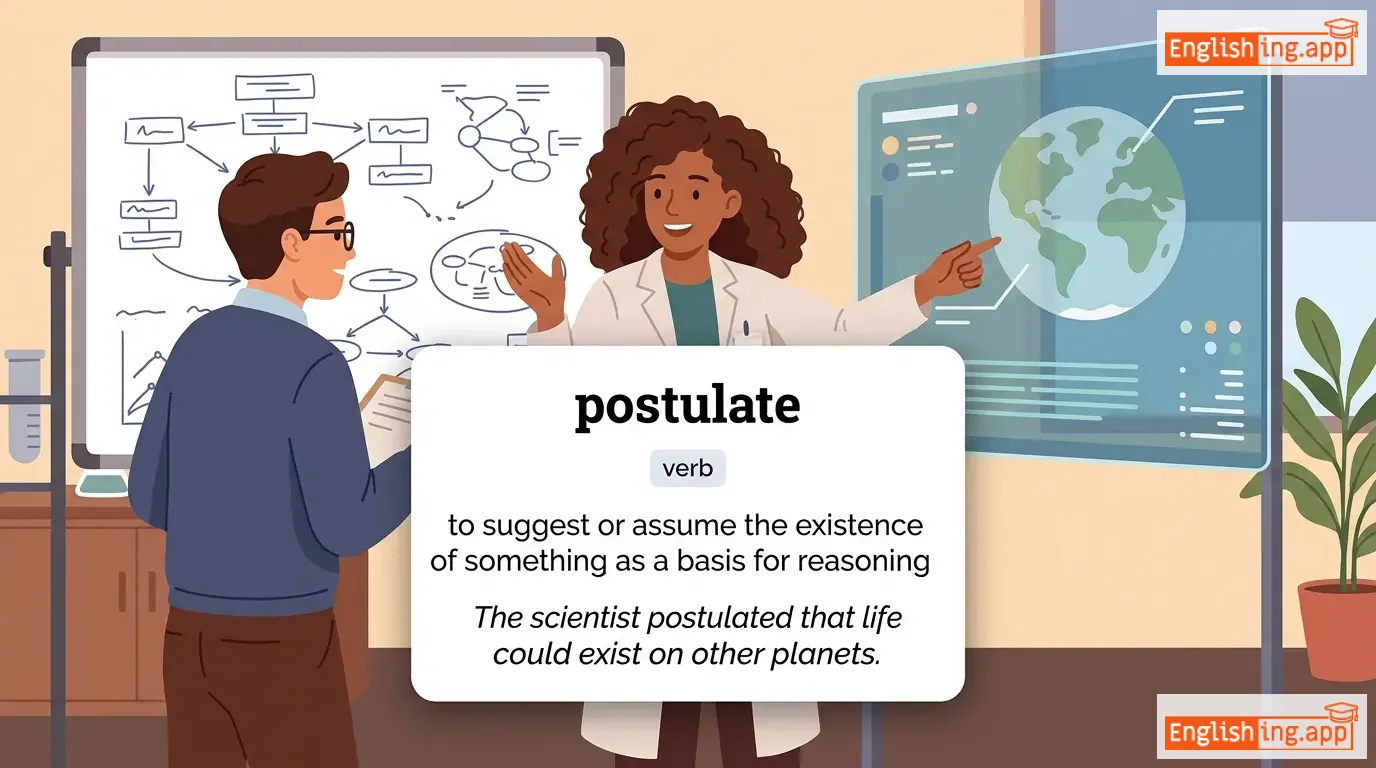
postulate definition card — visual illustration of the meaning
verb
/ˈpɒstjʊˌleɪt/
假设 (jiǎ shè)

to suggest or assume the existence of something as a basis for reasoning

"The scientist postulated that life could exist on other planets."

"科学家假设生命可能存在于其他星球。" (Kēxuéjiā jiǎ shè shēngmìng kěnéng cúnzài yú qítā xīngqiú.)
noun
/ˈpɒstʃə/
幸福 (xingfu)

the position in which someone holds their body; an attitude or approach

"Good posture helps prevent back pain."

"当她获得奖项时,她无法掩饰自己的幸福。" (Dāng tā huòdé jiǎngxiàng shí, tā wúfǎ yǎnshì zìjǐ de xìngfú.)
adjective
/ˈpəʊstwɔːr/
战后 (zhàn hòu)

occurring or existing after a war

"The postwar period saw significant economic growth."

"战后时期见证了显著的经济增长。" (Zhàn hòu shíqī jiànzhèng le xiǎnzhù de jīngjì zēngzhǎng.)
noun
/pɒt/
(guo)

a container, typically round and deep, used for cooking or holding plants

"She put the soup in a pot and set it on the stove."

"她把汤放进锅里并把它放在炉子上。" (Tā bǎ tāng fàng jìn guō lǐ bìng bǎ tā fàng zài lúzi shàng.)
adjective
/ˈpəʊtəbl/
可饮用的 (ke yin yong de)

safe to drink; drinkable

"The villagers did not have access to potable water."

"村民没有水源可以饮用。" (Cunmin meiyou shuiyuan keyi yin yong.)
noun
/pəˈteɪtoʊ/
土豆 (tudou)

a starchy plant tuber that is a staple food around the world

"We had mashed potato with our dinner."

"我们晚餐吃了土豆泥。" (Wǒmen wǎncān chīle tǔdòu ní.)
noun
/ˈpɒtˌbɔɪlə/
低级文学作品 (dijí wénxué zuòpǐn)

a book, play, or film produced quickly to make money rather than for artistic value

"The novel was dismissed by critics as a mere potboiler."

"这本小说被评论家视为仅仅是一本低级文学作品。" (Zhè běn xiǎoshuō bèi pínglùn jiā shì wéi jǐnjǐn shì yī běn dījí wénxué zuòpǐn.)
noun
/ˈpoʊtənsi/
效能 (xiaoneng)

The power or ability of something to affect or influence; strength or effectiveness.

"The potency of the new medicine amazed the doctors."

"新药的效能令医生们惊讶。" (Xin yao de xiaoneng ling yishengmen jingya.)
adjective
/ˈpoʊtənt/
强效 (qiángxiào)

Having great power, influence, or effect.

"This is a very potent drug that should be used carefully."

"这是一种非常强效的药物,应该小心使用。" (Zhè shì yī zhǒng fēicháng qiángxiào de yàowù, yīnggāi xiǎoxīn shǐyòng.)
noun
/ˈpoʊtənˌteɪt/
君主 (junzhu)

A monarch or ruler, especially one with absolute power.

"The ancient land was ruled by a powerful potentate."
"古老的土地由一个强大的君主统治。" (Gulǎo de tǔdì yóu yīgè qiángdà de jūnzhǔ tǒngzhì.)
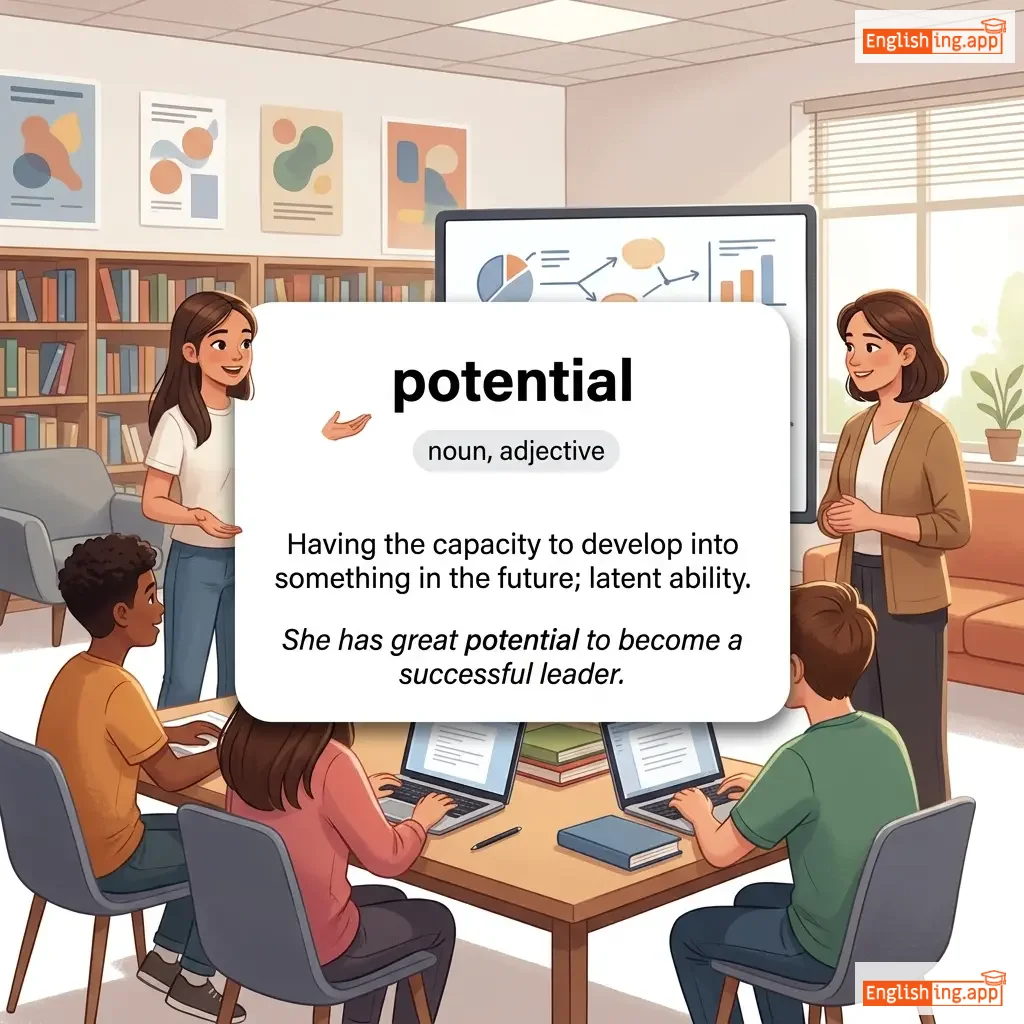
potential definition card — visual illustration of the meaning
noun, adjective
/pəˈtɛnʃəl/
潜力 (qianli)

Having the capacity to develop into something in the future; latent ability.

"She has great potential to become a successful leader."

"她有成为成功领导者的巨大潜力。" (Tā yǒu chéngwéi chénggōng lǐngdǎo zhě de jùdà qiánlì.)
adverb
/pəˈtɛnʃəli/
潜在地 (qiánzài de)

with the possibility of becoming something in the future

"This project is potentially a huge success."

"这个项目潜在地可能是一个巨大的成功。" (Zhège xiàngmù qiánzài de kěnéng shì yīgè jùdà de chénggōng.)
verb
/poʊˈtɛnʃiˌeɪt/
增强 (zengqiang)

To increase the power, effect, or likelihood of something.

"Caffeine can potentiate the effects of some medicines."

"咖啡因可以增强某些药物的效果。" (Kafein keyi zengqiang moxie yao wu de xiaoguo.)
noun
/ˈpoʊʃən/
药水 (yaoshui)

a liquid with healing, magical, or poisonous properties

"The witch gave the hero a healing potion."

"女巫给了英雄一个治疗药水。" (Nǚwū gěile yīngxióng yīgè zhìliáo yàoshuǐ.)
noun
/ˌpoʊpʊˈriː/
干花混合物 (gan hua hunhe wu)

a mixture of dried flowers and spices kept in a bowl to perfume a room; a miscellaneous collection

"The living room was filled with the scent of potpourri."

"客厅里充满了波普瑞的香气。" (Keting li chongman le bopuri de xiangqi.)
noun
/ˈpɑː.tər/
陶艺师 (táo yì shī)

a person who makes pottery

"The potter shaped clay on the spinning wheel."

"陶艺师在旋转的轮子上塑造了泥土。" (Táo yì shī zài xuánzhuǎn de lúnzi shàng sùzào le nítǔ.)
noun
/paʊtʃ/
袋子 (dàizi)

a small bag or pocket, often used to carry small items

"She kept her coins in a small leather pouch."

"她把硬币放在一个小皮袋里。" (tā bǎ yìngbì fàng zài yīgè xiǎo pí dàizi lǐ)
noun
/ˈpoʊltɪs/
温暖的草药敷料 (wēnnuǎn de cǎoyào fūliào)

a soft, moist mass of material applied to the body to relieve soreness and inflammation

"The nurse applied a warm poultice to his injured leg."

"护士把温暖的敷料敷在他受伤的腿上。" (hùshì bǎ wēnnuǎn de fūliào fū zài tā shòushāng de tuǐ shàng.)
noun, verb
/paʊnd/
英镑 (yīng bàng)

a unit of weight equal to 16 ounces or a unit of currency

"The price of the book is five pounds."

"这本书的价格是五英镑。" (Zhè běn shū de jiàgé shì wǔ yīng bàng.)
verb
/pɔːr/
(dao)

to cause a liquid to flow from a container

"She poured the tea into the cup."

"她把茶倒进了杯子。" (Ta ba cha dao jin le beizi.)
verb
/paʊt/
撅嘴 (jue zui)

to push one's lips forward as an expression of annoyance or sulkiness

"The child began to pout when he didn’t get the toy."

"孩子没得到玩具时开始撅嘴。" (Haizi mei dedao wanju shi kaishi jue zui.)
noun
/ˈpɒvəti/
贫困 (pinkuàn)

the state of being extremely poor

"Poverty is a major issue in many countries."

"贫困是许多国家面临的重大问题。" (Pínkùn shì xǔduō guójiā miànlín de zhòngdà wèntí.)
noun
/ˈpaʊdər/
粉末 (fenmo)

a fine, dry substance made of very tiny particles

"She sprinkled some powder on the cake."
"她在蛋糕上撒了一些粉。" (Ta zai dangao shang sa le yixie fen.)
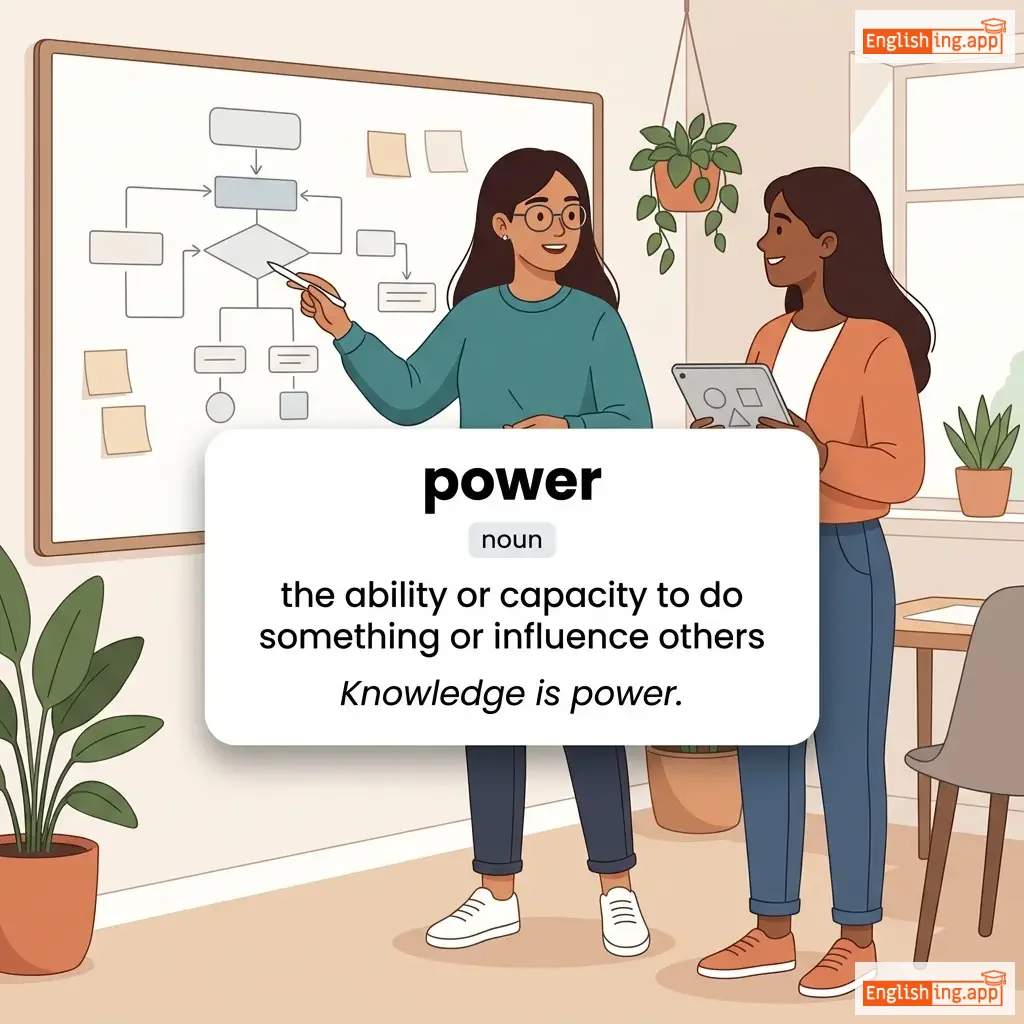
power definition card — visual illustration of the meaning
noun
/ˈpaʊər/
力量 (lìliàng)

the ability or capacity to do something or influence others

"Knowledge is power."

"知识就是力量。" (Zhīshì jiùshì lìliàng.)
powerful definition card — visual illustration of the meaning
adjective
/ˈpaʊərfəl/
强大的 (qiángdà de)

having great strength or influence

"She is a powerful leader in her community."

"她是她社区中的一个强大领导者。" (Tā shì tā shèqū zhōng de yīgè qiángdà lǐngdǎo zhě.)
adjective
/ˈpaʊərləs/
无力的 (wúlì de)

without ability, influence, or strength

"She felt powerless against the unfair system."

"她在不公平的系统面前感到无力。" (Tā zài bù gōngpíng de xìtǒng miànqián gǎndào wúlì.)
noun
/ˈpaʊ.waʊ/
非正式会议 (fei zhengshi huiyi)

an informal meeting or conference to discuss something

"The team held a quick powwow before the presentation."

"团队在演示之前举行了一个快速的非正式会议。" (tuandui zai yanshi zhīqián jǔxíngle yīgè kuàisù de fēi zhèngshì huìyì.)
adjective
/ˈpræk.tɪ.kə.bəl/
可行 (kexing)

able to be done or put into practice successfully

"The plan is not practicable without more resources."
"没有更多的资源,这个计划是不可行的。" (Meiyou geng duo de ziyuan, zhege jihua shi bukexing de.)
practical definition card — visual illustration of the meaning
adjective
/ˈpræk.tɪ.kəl/
实用的 (shiyong de)

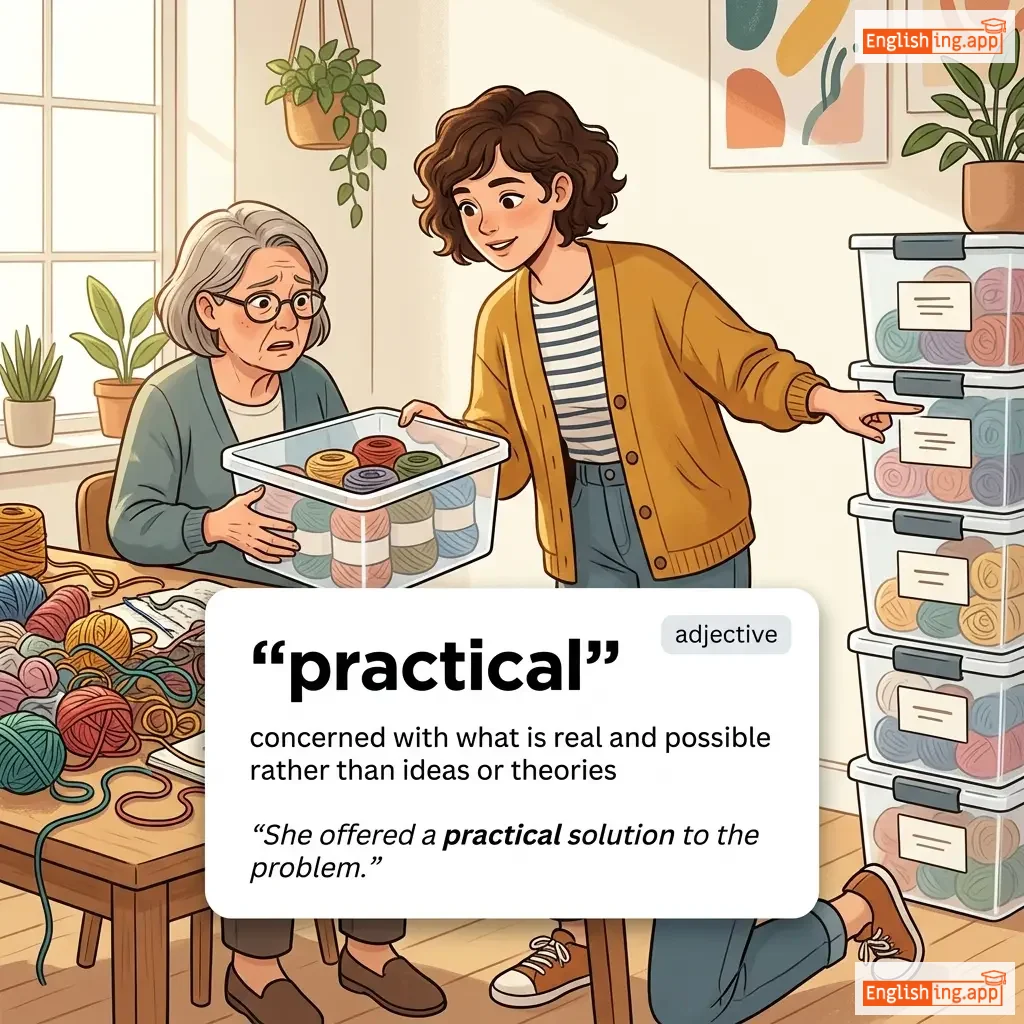
concerned with what is real and possible rather than ideas or theories

"She offered a practical solution to the problem."

"她提供了一个实际的解决方案。" (Ta tigongle yige shiji de jiejue fang'an.)
adverb
/ˈpræktɪkli/
实际上 (shíjì shang)

in a way that is almost or nearly; in a realistic or functional manner

"The movie theater was practically empty."

"电影院实际上是空的。" (Diànyǐngyuàn shíjì shang shì kōng de.)
practice definition card — visual illustration of the meaning
noun/verb
/ˈpræk.tɪs/
练习 (lianxi)

the act of doing something repeatedly to improve skill, or the actual application of an idea

"He practices the piano every day."

"他每天练习钢琴。" (Ta mei tian lianxi gangqin.)
practise definition card — visual illustration of the meaning
verb
/ˈpræktɪs/
练习 (lianxi)

to do something repeatedly to improve skill; to work in a profession

"She practises piano for two hours daily."

"她每天练习两个小时钢琴。" (Ta mei tian lianxi liang ge xiaoshi gangqin.)
noun
/prækˈtɪʃ.ən.ər/
从业者 (congyè zhě)

a person actively engaged in a profession, especially medicine or law

"She is a skilled medical practitioner."
"她是一位合格的医学从业者。" (Tā shì yī wèi hégé de yīxué cóngyè zhě.)
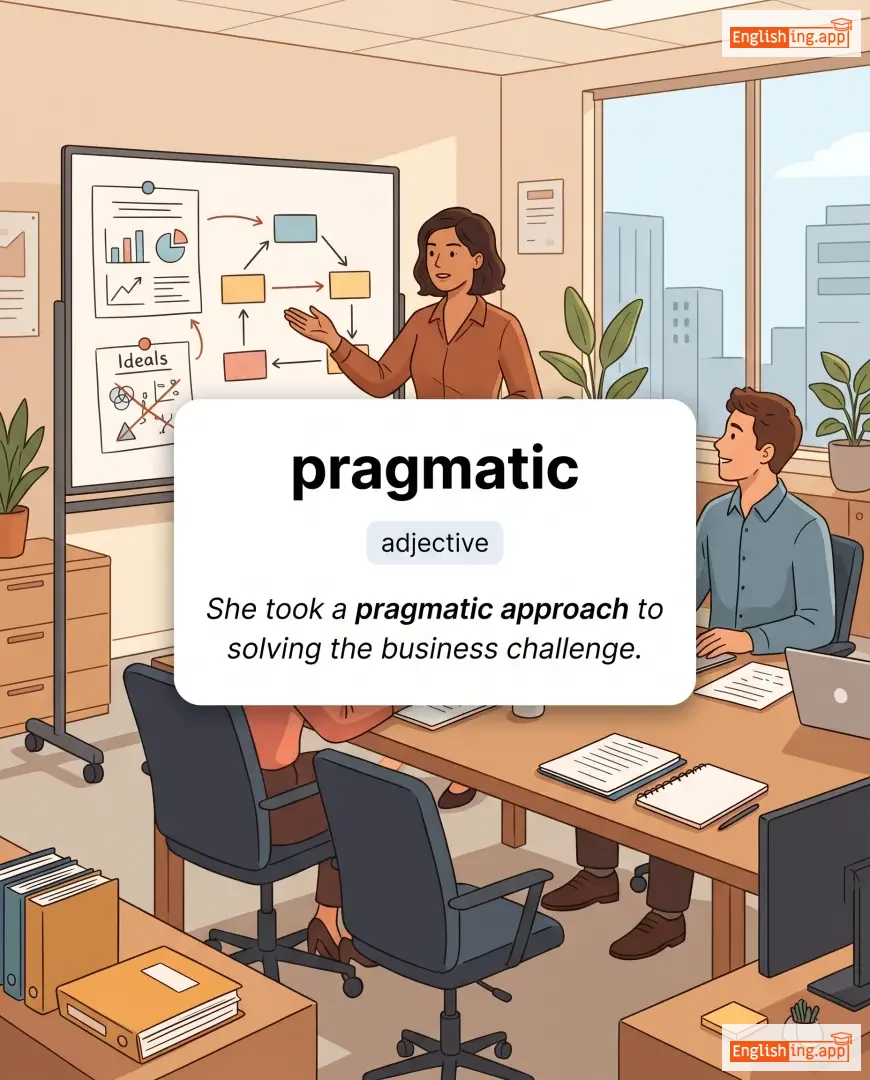
pragmatic definition card — visual illustration of the meaning
🛠️

pragmatic

adjective
/præɡˈmætɪk/

Dealing with problems in a practical and sensible way rather than depending on theories or ideals.

"She took a pragmatic approach to solving the business challenge."

pragmatism definition card — visual illustration of the meaning
noun
/ˈpræɡ.mə.tɪ.zəm/
实用主义 (shí yòng zhǔ yì)

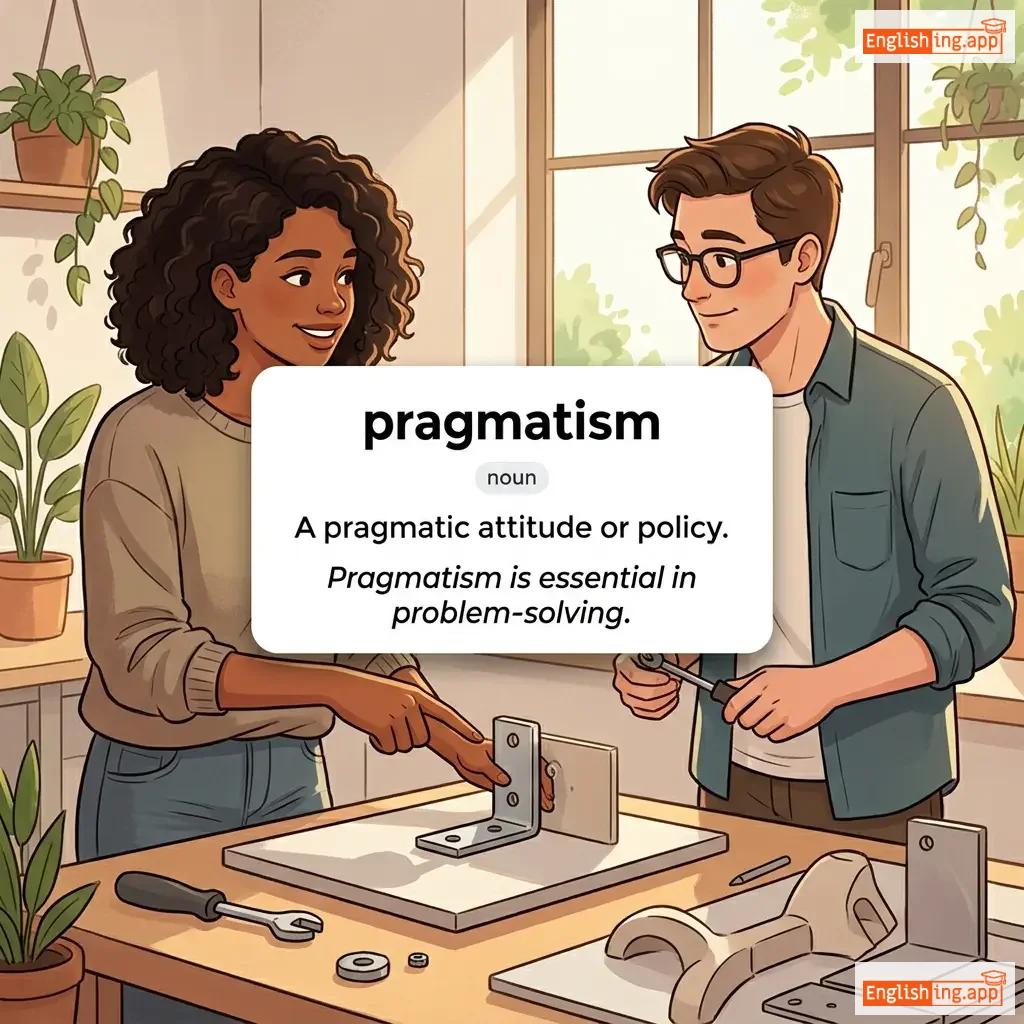
A pragmatic attitude or policy.

"Pragmatism is essential in problem-solving."

"实用主义在解决问题中至关重要。" (Shí yòng zhǔ yì zài jiě jué wèn tí zhōng zhì guān zhòng yào.)
noun
/ˈpræɡmətɪst/
实用主义者 (shí yòng zhǔ yì zhě)

A person who deals with things in a practical and realistic way.

"He is a true pragmatist who values results over ideals."

"他是一个真正的实用主义者,他更看重结果而非理想。" (Tā shì yí gè zhēn zhèng de shí yòng zhǔ yì zhě, tā gèng kàn zhòng jié guǒ ér fēi lǐ xiǎng.)
noun
/ˈprɛəri/
大草原 (da caoyuan)

A large open area of grassland, especially in North America.

"The bison roamed freely across the prairie."

"野牛在大草原上自由地游荡。" (Ye niu zai da caoyuan shang ziyou de you dang.)
Praise definition card — visual illustration of the meaning
verb
/preɪz/
称赞 (chengzan)

to express approval or admiration for someone or something

"The teacher praised the student for her hard work."

"老师表扬了学生的辛勤工作。" (Laoshi biaoyang le xuesheng de xinqin gongzuo.)
adjective
/ˈpreɪz.wɜː.ði/
值得赞扬 (zhí dé zàn yáng)

deserving praise; commendable; admirable

"Her charitable work is truly praiseworthy."

"她的慈善工作确实值得赞扬。" (Tā de cí shàn gōng zuò què shí zhí dé zàn yáng.)