词汇表

英语词汇词典 | 单词含义、定义和示例

adjective
/ˈpɒndərəbl/
可以考虑的, 可思考的 (keyi kaolü de, ke sikao de)

able to be considered or thought about

"The evidence was substantial and ponderable."

"证据是实质性的,并且是可以思考的。" (zhengju shi shizhixing de, bingqie shi keyi sikao de.)
adjective
/ˈpɑːndərəs/
沉重而缓慢 (chénzhòng ér huǎnmàn)

slow and clumsy because of great weight; dull and labored

"The ponderous lecture made it hard for students to stay awake."

"这堂沉重而缓慢的讲座使学生们难以保持清醒。" (Zhè táng chénzhòng ér huǎnmàn de jiǎngzuò shǐ xuéshēngmen nán yǐ bǎochí qīngxǐng.)
noun
/ˈpɒntɪf/
教皇或高级主教 (jiaohuang huo gaoji zhujiao)

the pope or a high-ranking bishop in the Christian church

"The pontiff addressed the nation in a televised speech."

"教皇在电视演讲中向国家发表讲话。" (Jiaohuang zai dianshi yanjiang zhong xiang guojia fabiao jianghua.)
adjective
/pɒnˈtɪfɪkəl/
与教皇或主教相关的;浮夸的或自命不凡的 (yu jiao huang huo zhu jiao xiang guan de; fu kua de huo zi ming bu fan de)

relating to a pope or bishop; pompous or self-important

"His pontifical manner annoyed the other members of the committee."

"他的傲慢态度让委员会的其他成员感到不悦。" (Ta de aoman taidu rang weiyuanhui de qita chengyuan gan dao buyue.)
verb
/ˈpɒntɪfɪkeɪt/
自负或武断地讲话或行动;担任教皇职务 (zìfù huò wǔduàn de jiǎnghuà huò xíngdòng; dān rèn jiàohuáng zhíwù)

to speak or act in a pompous or dogmatic way; to officiate as a pontiff

"He pontificated on the importance of education for over an hour."

"他在一个小时内讲述了教育的重要性。" (Tā zài yī gè xiǎoshí nèi jiǎngshùle jiàoyù de zhòngyào xìng.)
noun
/ˈpoʊni/
小马 (xiao ma)

a small horse, typically under 14.2 hands high

"The children enjoyed riding the gentle pony at the farm."

"孩子们在农场上享受骑着温顺的小马。" (háizimen zài nóngchǎng shàng xiǎngshòu qí zhe wēnshùn de xiǎo mǎ.)
noun/verb
/puːl/
游泳池 (youyongchi)

a small body of still water, or a game played in a rectangular table with balls

"The children swam in the pool all afternoon."

"孩子们整个下午都在游泳池里游泳。" (Haizimen zhengge xiawu dou zai youyongchi li youyong.)
adjective
/pʊr/ or /pɔːr/
贫穷的 (pínqióng de)

Lacking sufficient money, resources, or quality.

"The poor family struggled to buy food."

"贫困的家庭为购买食物而挣扎。" (Pínkùn de jiātíng wèi gòumǎi shíwù ér zhēngzhá.)
verb
/pɒp/
爆炸 (baozha)

to make a short, sharp sound, or to burst or break with such a sound

"The balloon popped when I accidentally pricked it with a pin."

"气球爆裂了,当我不小心用针戳它时。" (Qìqiú bàoliè le, dāng wǒ bù xiǎoxīn yòng zhēn chuō tā shí.)
noun
/ˈpɒp.i/
罂粟 (yīngsù)

a bright red flower with black seeds, often used as a symbol of remembrance

"The red poppy bloomed beautifully in the garden."

"红色的罂粟花在花园里美丽地绽放。" (hóngsè de yīngsù huā zài huāyuán lǐ měilì de zhànfàng)
noun
/ˈpɒp.i siːdz/
罂粟种子 (yīngsù zhǒngzi)

tiny round seeds from the poppy plant used as a spice or garnish in cooking

"Poppy seeds are sprinkled on top of breads and used in Bengali curries."

"罂粟种子撒在面包上,并用于孟加拉咖喱中。" (Yīngsù zhǒngzi sā zài miànbāo shàng, bìng yòng yú Mèngjiālā gālí zhōng.)
noun
/ˈpɒpjʊləs/
民众 (minzhong)

the general public; the ordinary people living in a country or area

"The new law was welcomed by the local populace."

"新法律受到了当地居民的欢迎。" (Xin falu shoudao le dangdi jumin de huanying.)
adjective
/ˈpɒpjʊlər/
受欢迎 (shou huanying)

liked or admired by many people

"She is a popular singer with a huge fan base."

"她是一位受欢迎的歌手,拥有庞大的粉丝群。" (Ta shi yi wei shou huanying de geshou, yongyou pangda de fensi qun.)
noun
/ˌpɒpjəˈlærəti/
受欢迎度 (shòu huānyíng dù)

the state of being liked, admired, or supported by many people

"The singer gained huge popularity after her new album release."
"歌手在发布新专辑后获得了巨大的受欢迎度。" (Gēshǒu zài fābù xīn zhuānjí hòu huòdé le jùdà de shòu huānyíng dù.)
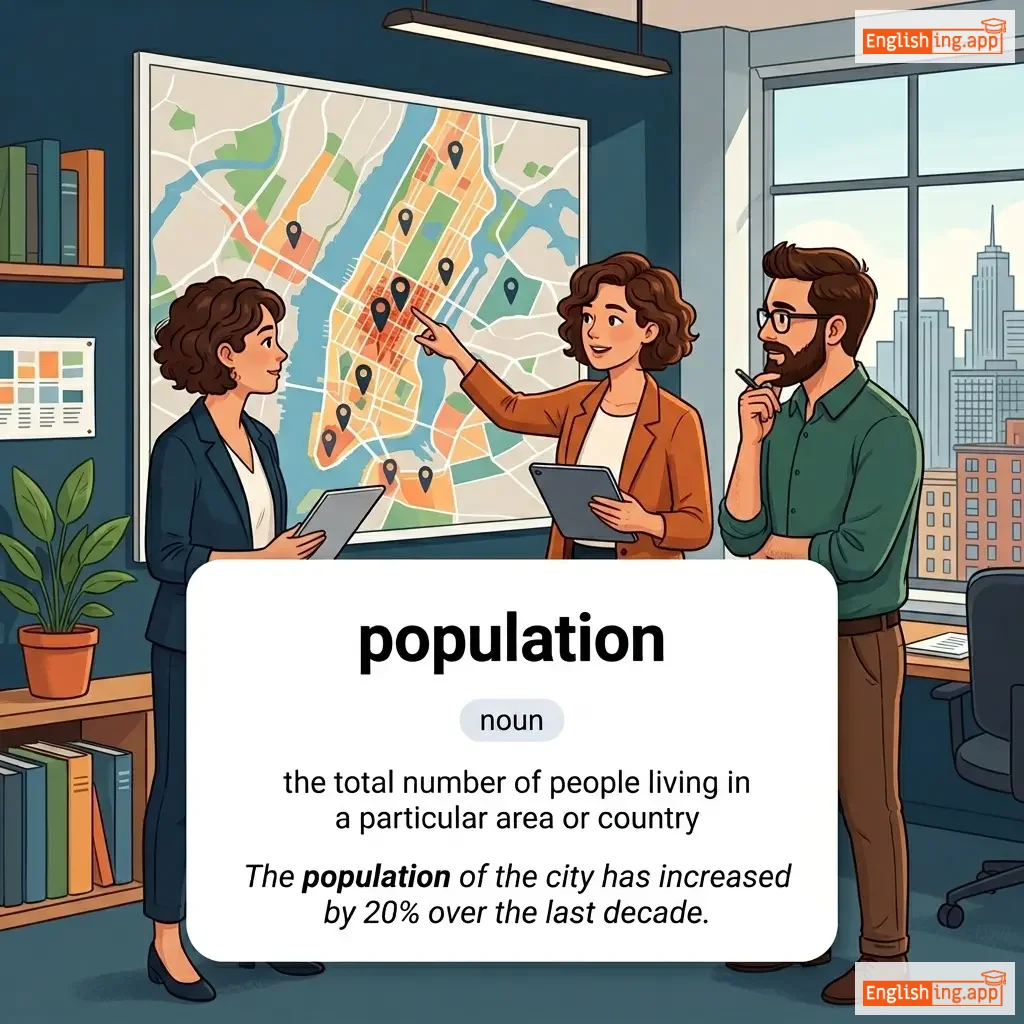
population definition card — visual illustration of the meaning
noun
/ˌpɒpjʊˈleɪʃən/
人口 (renkou)

the total number of people living in a particular area or country

"The population of the city has increased by 20% over the last decade."

"这座城市的人口在过去十年增加了20%。" (Zhe zuo chengshi de renkou zai guoqu shi nian zengjia le 20%.)
noun
/ˈpɒpjʊlɪst/
民粹主义领导人 (míncuì zhǔyì lǐngdǎo rén)

A politician or person who seeks to appeal to ordinary people who feel their concerns are ignored by elites.

"The populist leader promised to put the needs of common citizens first."

"民粹主义领导人承诺将普通公民的需求放在首位。" (Míncuì zhǔyì lǐngdǎo rén chéngnuò jiāng pǔtōng gōngmín de xūqiú fàng zài shǒuwèi.)
adjective
/ˈpɒpjələs/
人口密集 (rénkǒu mìjí)

Having a large population; densely inhabited.

"Dhaka is one of the most populous cities in the world."

"上海是世界上最人口密集的城市之一。" (Shànghǎi shì shìjiè shàng zuì rénkǒu mìjí de chéngshì zhī yī.)
noun
/ˈpɔːrsəlɪn/
瓷器 (cíqì)

A white, hard ceramic material often used for dishes and ornaments.

"The museum displayed ancient porcelain vases from China."

"博物馆展示了来自中国的古代瓷器花瓶。" (Bówùguǎn zhǎnshìle láizì zhōngguó de gǔdài cíqì huāpíng.)
noun
/pɔːrtʃ/
门廊 (menlang)

a covered area at the entrance of a building, often with a roof and open sides

"We sat on the porch and enjoyed the evening breeze."

"我们坐在门廊上,享受晚风。" (Wo men zuo zai menlang shang, xiangshou wanfeng.)
noun
/ˈpɔːr.kjə.paɪn/
豪猪 (háo zhū)

a large rodent with defensive spines or quills on its body

"The porcupine raised its quills when threatened."

"豪猪在受到威胁时竖起了它的刺。" (Háo zhū zài shòu dào wēixié shí shù qǐle tā de cì.)
noun/verb
/pɔːr/
毛孔 / 仔细研究 (máokǒng / zǐxì yánjiū)

As a noun: a tiny opening in the skin or surface. As a verb: to study something carefully.

"She pored over the documents for hours before making a decision."

"她在做出决定之前,花了几个小时仔细查看文件。" (Tā zài zuò chū juédìng zhīqián, huāle jǐ gè xiǎoshí zǐxì chákan wénjiàn.)
noun
/pɔːrk/
幸福 (xìng fú)

the flesh of a pig used as food

"He doesn't eat pork for religious reasons."
"当她收到奖项时,她无法掩饰自己的幸福。" (Dāng tā shōudào jiǎngxiàng shí, tā wúfǎ yǎnshì zìjǐ de xìngfú.)
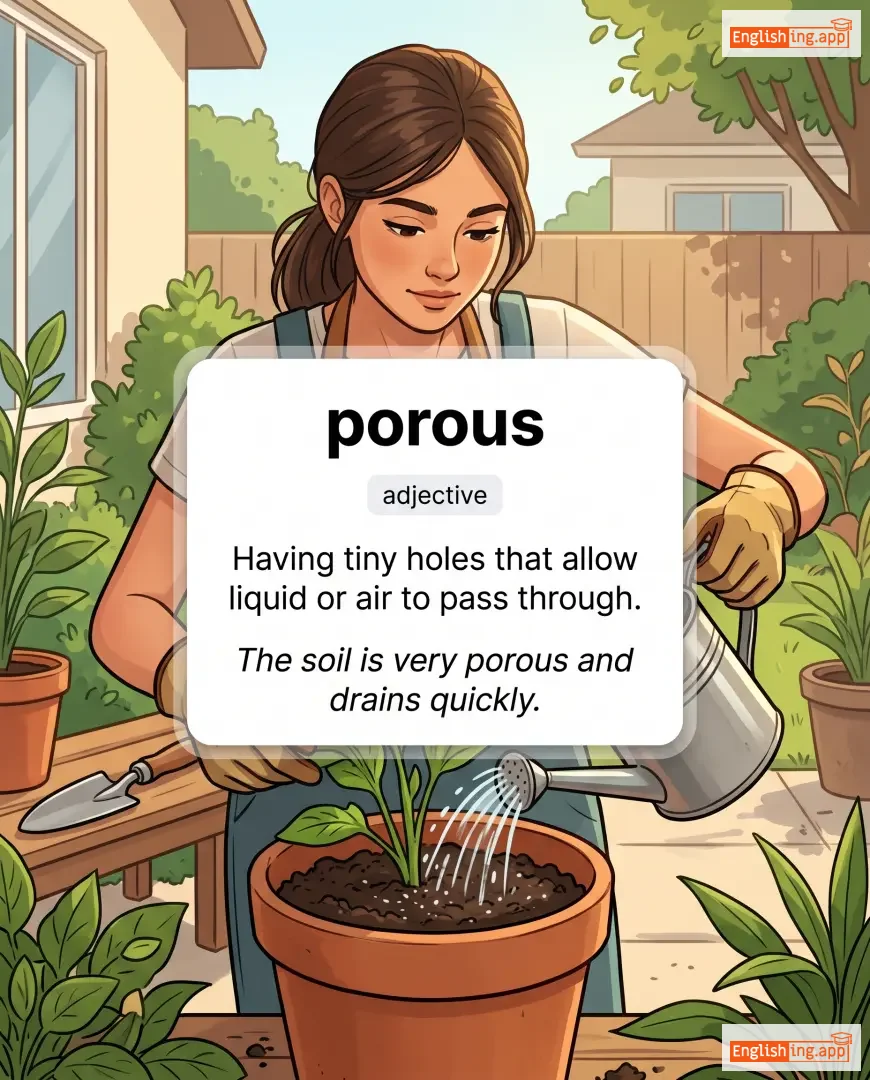
porous definition card — visual illustration of the meaning
adjective
/ˈpɔːrəs/
多孔的 (duō kǒng de)

Having tiny holes that allow liquid or air to pass through.

"The soil is very porous and drains quickly."

"土壤非常多孔,排水很快。" (Tǔrǎng fēicháng duōkǒng, páishuǐ hěn kuài.)
noun
/ˈpɔːrfəri/
一种硬的火成岩 (yī zhǒng yìng de huǒchéng yán)

A hard igneous rock containing crystals, often used for decorative or building purposes.

"The ancient Romans used porphyry to make columns and statues."

"古罗马人使用波斐里石制作柱子和雕像。" (Gǔ Luómǎ rén shǐyòng bō fěi lǐ shí zhìzuò zhùzi hé diāoxiàng.)
noun
/ˈpɔː.pəs/
海豚 (hǎi tún)

a small toothed whale with a low triangular dorsal fin and a blunt rounded snout

"The porpoise jumped gracefully out of the water."

"海豚优雅地跃出水面。" (Hǎi tún yōu yǎ de yuè chū shuǐ miàn.)
noun
/ˈpɔːrɪdʒ/

A soft food made by boiling oats or other grains in milk or water.

"She had a bowl of porridge for breakfast."

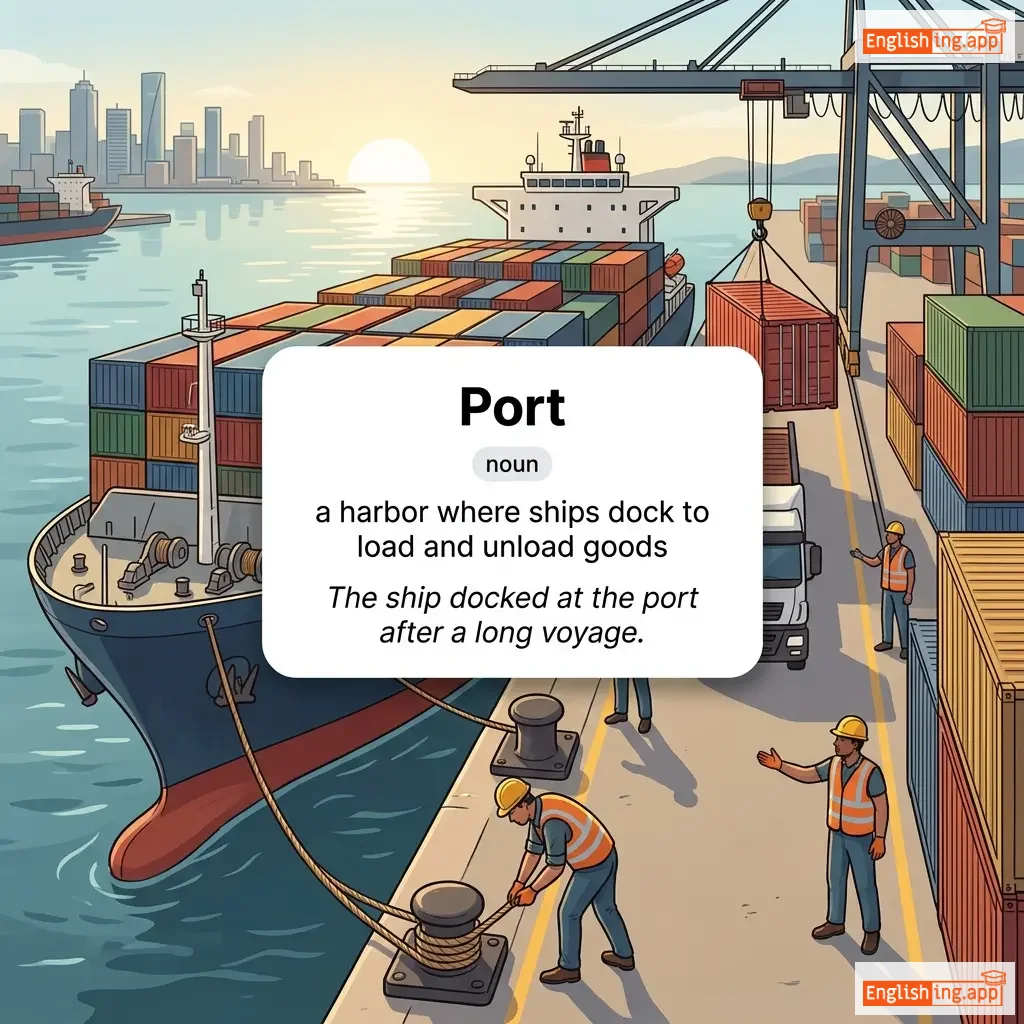
Port definition card — visual illustration of the meaning

Port

noun
/pɔːrt/

a harbor where ships dock to load and unload goods

"The ship docked at the port after a long voyage."

verb
/pɔːrˈtɛnd/
预示 (yùshì)

To be a sign or warning that something, especially something bad, is going to happen.

"Dark clouds portend a storm."

"暗云预示着暴风雨。" (Àn yún yùshì zhe bàofēngyǔ.)
noun
/ˈpɔːrtɛnt/
前兆 (qián zhào)

A sign or warning that something, especially something momentous or calamitous, is likely to happen.

"The sudden drop in stock prices was seen as a portent of economic trouble."

"股票价格的突然下跌被视为经济问题的前兆。" (Gǔ piào jià gé de tú rán xià diē bèi shì wéi jīng jì wèn tí de qián zhào.)
adjective
/pɔːrˈtɛntəs/
不祥的,严肃的 (bùxiáng de, yánsù de)

Giving a sign or warning that something, often bad or serious, is going to happen; or overly solemn and pompous.

"His portentous tone made everyone nervous about the news."

"他那不祥的语气让大家因新闻感到紧张。" (Tā nà bùxiáng de yǔqì ràng dàjiā yīn xīnwén gǎndào jǐnzhāng.)
portfolio definition card — visual illustration of the meaning
noun
/pɔːrtˈfoʊlioʊ/
投资组合 (tóuzī zǔhé)

A collection of financial investments, artworks, or documents presented as a body of work.

"The designer showcased her portfolio during the interview."

"设计师在面试中展示了她的作品集。" (Shèjìshī zài miànshì zhōng zhǎnshìle tā de zuòpǐn jí.)
noun
/ˈpɔːrʃən/
部分 (bùfen)

A part or share of something.

"She ate only a small portion of the meal."

"她只吃了餐点的一小部分。" (Tā zhǐ chīle cāndiǎn de yī xiǎo bùfen.)
adjective
/ˈpɔːrtli/
肥胖 (feipang)

Having a stout or somewhat fat body, often implying dignity or authority.

"The portly man entered the room with confidence."

"那个肥胖的男人自信地走进房间。" (Nàgè féipàng de nánrén zìxìn de zǒu jìn fángjiān.)
noun
/ˈpɔːtrət/
肖像 (xiàoxiàng)

a painting, drawing, photograph, or engraving of a person, especially one showing the face

"The artist painted a beautiful portrait of his wife."

"艺术家画了一幅他妻子的美丽肖像。" (Yìshùjiā huàle yī fú tā qīzǐ de měilì xiàoxiàng.)
verb
/pɔːˈtreɪ/
描绘 (miaohui)

to describe or represent something or someone in a work of art or literature

"The novel portrays a vivid picture of life in the countryside."

"这部小说描绘了乡村生活的生动图景。" (Zhe bu xiaoshuo miaohui le xiangcun shenghuo de shengdong tujing.)
verb
/poʊz/
幸福 (xìng fú)

To assume a particular position, especially for a photograph or display; to present a problem or question.

"She posed for a picture in front of the monument."

"她在收到奖项时,无法隐藏她的幸福。" (Tā zài shōu dào jiǎngxiàng shí, wúfǎ yǐncáng tā de xìngfú.)
noun
/poʊˈzɜːr/

A person who pretends to be something they are not, often to impress others.

"Many considered him a poseur because he exaggerated his accomplishments."

💡

posit

verb
/ˈpɑːzɪt/

To assume or suggest something as a fact or basis for reasoning.

"The scientist posited a new theory to explain the phenomenon."

position definition card — visual illustration of the meaning
noun
/pəˈzɪʃən/
职位 / 位置 (zhiwei / weizhi)

A place, job, or status; the way in which someone or something is placed or arranged.

"She applied for a teaching position at the university."

"她申请了大学的教学职位。" (Tā shēnqǐngle dàxué de jiàoxué zhíwèi.)
positive definition card — visual illustration of the meaning
adjective
/ˈpɒzɪtɪv/
积极的 (jī jí de)

Characterized by optimism, certainty, or something favorable.

"She always tries to maintain a positive attitude."

"她总是尽力保持积极的态度。" (Tā zǒng shì jìnlì bǎochí jījí de tàidù.)
noun
/ˈpɒsi/
帮派 / 朋友群 (bāng pài / péng yǒu qún)

A group of people, often friends or a group organized to support or enforce the law.

"He arrived at the party with his posse of friends."

"他和他的朋友帮派一起到达了派对。" (Tā hé tā de péng yǒu bāng pài yī qǐ dào dá le pài duì.)
verb
/pəˈzɛs/
拥有 / 拥有 (yǒng yǒu / yǒng yǒu)

To have or own something; to hold a quality or characteristic.

"She possesses great talent in music."

"她在音乐上拥有巨大的天赋。" (Tā zài yīnyuè shàng yǒng yǒu jù dà de tiānfù.)
noun
/pəˈzɛʃən/
拥有 (yǒng yǒu)

The state of owning, controlling, or holding something.

"The ring was her most valuable possession."

"那枚戒指是她最珍贵的财富。" (Nà méi jiè zhǐ shì tā zuì zhēn guì de cáifù.)
adjective
/pəˈzɛsɪv/
占有欲的 (zhanyouyu de)

Showing a desire to own or control; relating to possession.

"He became very possessive about his old books."

"他变得非常占有欲强,尤其是对他那本旧书。" (Ta biande feichang zhanyouyu qiang, youqi shi dui ta na ben jiu shu.)
noun
/pəˈzɛsər/
所有者 (suǒyǒu zhě)

A person who owns or holds something.

"The possessor of the land built a new house."

"土地的所有者建造了一座新房。" (Tǔdì de suǒyǒu zhě jiànzào le yī zuò xīn fáng.)
noun
/ˌpɒsəˈbɪləti/
可能性 (kenengxing)

something that may happen or be the case; a chance that something exists or might occur

"There is a strong possibility of rain tomorrow."

"明天有强烈的降雨可能性。" (Mingtian you qianglie de jiangyu kenengxing.)
adjective
/ˈpɒsəbl̩/
可能 (keneng)

Able to be done or achieved.

"Anything is possible if you work hard."

"如果你努力工作,一切皆有可能。" (Ruguo ni nuli gongzuo, yiqie jie you keneng.)
adverb
/ˈpɒsɪbli/
可能 (keneng)

maybe, or in a way that is not certain

"It could possibly rain later today."

"今天晚些时候可能会下雨。" (Jīntiān wǎnxiē shíhòu kěnéng huì xiàyǔ.)
noun, verb
/pəʊst/
邮寄 (yóujì)

a job or position, or to send something by mail

"She posted a letter to her friend yesterday."

"她昨天给她的朋友邮寄了一封信。" (tā zuótiān gěi tā de péngyǒu yóujìle yī fēng xìn.)
noun
/ˈpoʊst ˌɒfɪs/
邮局 (youju)

a public building or agency where mail is sent, received, and other postal services are provided

"I went to the post office to mail a package."

"我去邮局寄了一个包裹。" (wo qu youju ji le yi ge baoguo)