词汇表

英语词汇词典 | 单词含义、定义和示例

verb
/ˈpoʊ.lə.raɪz/
极化 (jī huà)

to divide or cause to divide into two sharply contrasting groups or sets of opinions or beliefs

"The controversial decision polarized public opinion."

"有争议的决定使公众意见分成了两个对立的阵营。" (Yǒu zhēngyì de juédìng shǐ gōngzhòng yìjiàn fēnchéngle liǎng gè duìlì de zhènyíng.)
adjective
/ˈpoʊləraɪzd/
极化的 (jí huà de)

divided into two sharply contrasting groups or opinions

"The debate polarized the community on the issue of climate change."

"辩论使社区在气候变化问题上分裂。" (Biànlùn shǐ shèqū zài qìhòu biànhuà wèntí shàng fēnliè.)
noun
/poʊl/
(gan)

a long, slender, vertical object or structure, typically made of wood, metal, or another material

"They placed the flag on top of the pole."

"他们把旗帜放在杆顶上。" (Tāmen bǎ qízhì fàng zài gǎn dǐng shàng.)
noun
/pəˈlɛmɪk/
激烈的抨击 (jī liè de pēng jī)

a strong verbal or written attack on someone or something

"The article was a fierce polemic against the government's policies."

"这篇文章是对政府政策的激烈抨击。" (zhè piān wén zhāng shì duì zhèng fǔ zhèng cè de jī liè pēng jī.)
adjective
/pəˈlɛmɪkəl/
争议的 (zhengyi de)

relating to or involving strongly critical or controversial writing or speech

"She wrote a polemical article challenging traditional beliefs."

"她写了一篇挑战传统信仰的争议文章。" (Ta xie le yi pian tiaozhan chuantong xinyang de zhengyi wenzhang.)
noun
/pəˈlɛmɪks/
辩论 (biàn lùn)

the art or practice of engaging in controversial debate or dispute

"The conference was full of polemics on economic reforms."

"会议充满了关于经济改革的辩论。" (Huì yì chōng mǎn le guān yú jīng jì gǎi gé de biàn lùn.)
noun
/ˈpoʊl.stɑːr/
北极星 (běi jí xīng)

a bright star that appears to stay in the same position in the sky and is used for navigation

"Sailors used the polestar to navigate across the ocean."

"水手们用北极星导航穿越大海。" (shuǐshǒu men yòng běi jí xīng dǎoháng chuānyuè dàhǎi.)
noun
/pəˈliːs/
警察 (jingcha)

a body of officers representing the civil authority of government

"The police arrived quickly to investigate the scene."

"警察很快赶到现场进行调查。" (Jǐngchá hěn kuài gǎndào xiànchǎng jìnxíng diàochá.)
👮‍♂️

policeman (警察)

noun
/pəˈliːsmən/
警察 (jingcha)

a man whose job is to enforce the law and keep public order

"The policeman directed the traffic at the intersection."

"警察在交叉路口指挥交通。" (Jingcha zai jiaochalu kou zhihui jiaotong.)
policy definition card — visual illustration of the meaning
noun
/ˈpɑːləsi/
政策 (zhèngcè)

a course or principle of action adopted or proposed by an organization or individual

"The company revised its privacy policy last month."

"公司在上个月修改了其隐私政策。" (Gōngsī zài shàng gè yuè xiūgǎile qí yǐnsī zhèngcè.)
polish definition card — visual illustration of the meaning
verb
/ˈpɑːlɪʃ/
擦亮 (cāliàng)

to make smooth and shiny by rubbing; to improve or refine

"She needs to polish her shoes before the interview."

"她需要在面试前擦亮她的鞋子。" (Tā xūyào zài miànshì qián cāliàng tā de xiézi.)
adjective
/ˈpɒlɪʃt/
精致,优雅和精炼 (jīngzhì, yōuyǎ hé jīngliàn)

refined, sophisticated, and elegant in appearance or behavior

"She gave a polished performance at the recital."

"她在音乐会上的表演非常精致。" (Tā zài yīnyuè huì shàng de biǎoyǎn fēicháng jīngzhì.)
adjective
/pəˈlaɪt/
幸福 (xìng fú)

Showing good manners and respect towards others.

"He was very polite to the elderly woman."

"她在收到奖项时无法掩饰她的幸福。" (Tā zài shōu dào jiǎng xiàng shí wú fǎ yǎn shì tā de xìng fú.)
adverb
/pəˈlaɪt.li/
礼貌地; (lǐmàode)

in a respectful and considerate manner; courteously; with good manners

"She politely declined the invitation because she had other commitments."

"她礼貌地拒绝了邀请,因为她有其他的承诺。" (Tā lǐmàode jùjuéle yāoqǐng, yīnwèi tā yǒu qítā de chéngnuò.)
adjective
/ˈpɒlɪtɪk/
精明, 审慎 (jingming, shenshen)

shrewd, prudent, or tactful in practical matters

"It was politic of him to remain silent during the argument."
"在争论中保持沉默是他明智的选择。" (Zai zhenglun zhong baochi chenmo shi ta mingzhi de xuǎnzé.)
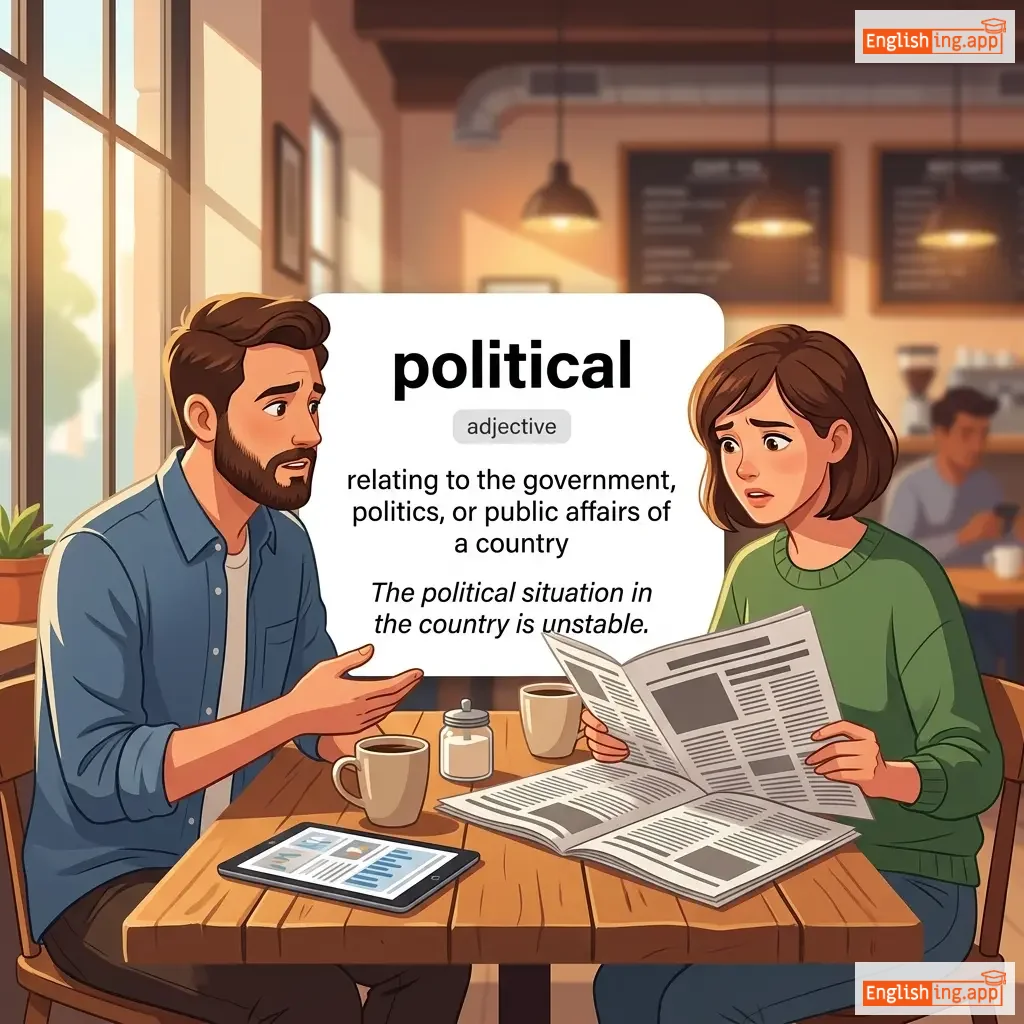
political definition card — visual illustration of the meaning
adjective
/pəˈlɪtɪkəl/
政治的 (zhèngzhì de)

relating to the government, politics, or public affairs of a country

"The political situation in the country is unstable."

"该国的政治形势不稳定。" (Gāi guó de zhèngzhì xíngshì bù wěndìng.)
adverb
/pəˈlɪtɪkəli/
政治上 (zhèngzhì shàng)

in a way that relates to politics or government

"The country is politically divided between two major parties."

"这个国家在政治上分裂为两个主要党派。" (Zhège guójiā zài zhèngzhì shàng fēnliè wéi liǎng gè zhǔyào dǎngpài.)
noun
/pəˈlɪtɪʃən/
政治家 (zhèng zhì jiā)

a person who is involved in politics, especially as a profession

"The politician promised to improve the economy."

"政治家承诺改善经济。" (Zhèng zhì jiā chéng nuò gǎi shàn jīng jì.)
noun
/ˈpɒlɪtɪks/
政治 (zhengzhi)

activities related to the governance of a country or area, especially the debate between parties having power

"Politics often involves making difficult decisions."

"政治通常涉及做出艰难的决策。" (Zhengzhi tongchang shèjí zuòchū jiānnán de juécè.)
noun
/ˈpɒlɪti/
政治,政府形式 (zhèngzhì, zhèngfǔ xíngshì)

an organized society or form of government

"The ancient Greek polity had a system of city-states."

"古希腊的政治有一个城邦制度。" (Gǔ Xīlà de zhèngzhì yǒu yīgè chéngbāng zhìdù.)
noun/verb
/pəʊl/
民意调查 (minyi diaocha)

a survey of public opinion or voting in an election

"The poll revealed that most people favored the new policy."

"民意调查显示大多数人支持新政策。" (Minyi diaocha xianshi dashu ren zhichi xin zhengce.)
noun
/ˈpɒlən/
花粉 (huāfěn)

fine powder produced by flowers, used in fertilization

"Bees collect pollen from flowers to make honey."
"蜜蜂从花朵中收集花粉来制作蜂蜜。" (Mìfēng cóng huāduǒ zhōng shōují huāfěn lái zhìzuò fēngmì.)
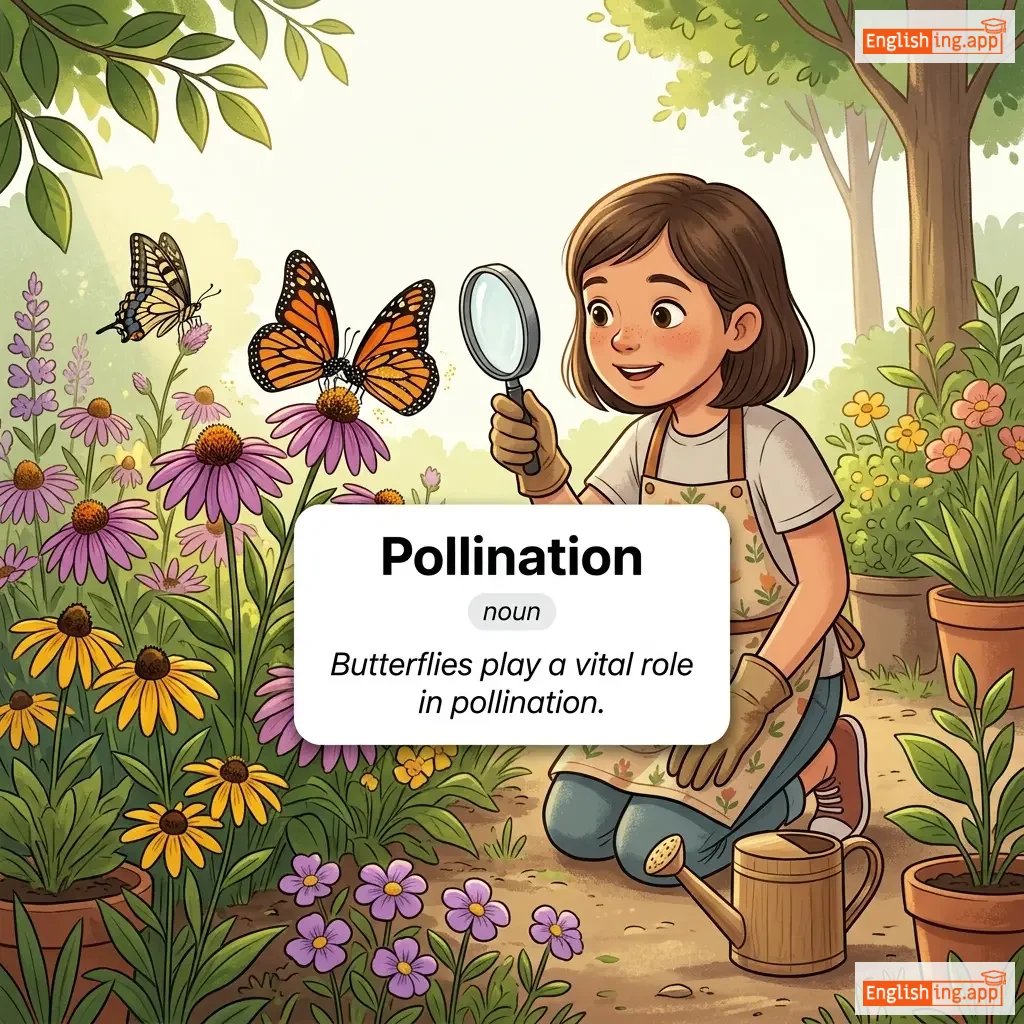
Pollination definition card — visual illustration of the meaning
noun
ˌpɒlɪˈneɪʃən
授粉 (shòu fěn)

The process by which pollen is transferred from flowers, enabling plant reproduction.

"Butterflies play a vital role in pollination."

"蝴蝶在授粉过程中起着至关重要的作用。" (Húdié zài shòufěn guòchéng zhōng qǐzhe zhìguān zhòngyào de zuòyòng.)
noun
/ˈpoʊlstər/
民意调查员 (mínyì diàochá yuán)

a person or organization that conducts surveys to gauge public opinion

"The pollster predicted a close election outcome."
"民意调查员预测了一个接近的选举结果。" (Mínyì diàochá yuán yùcè le yīgè jiējìn de xuǎnjǔ jiéguǒ.)
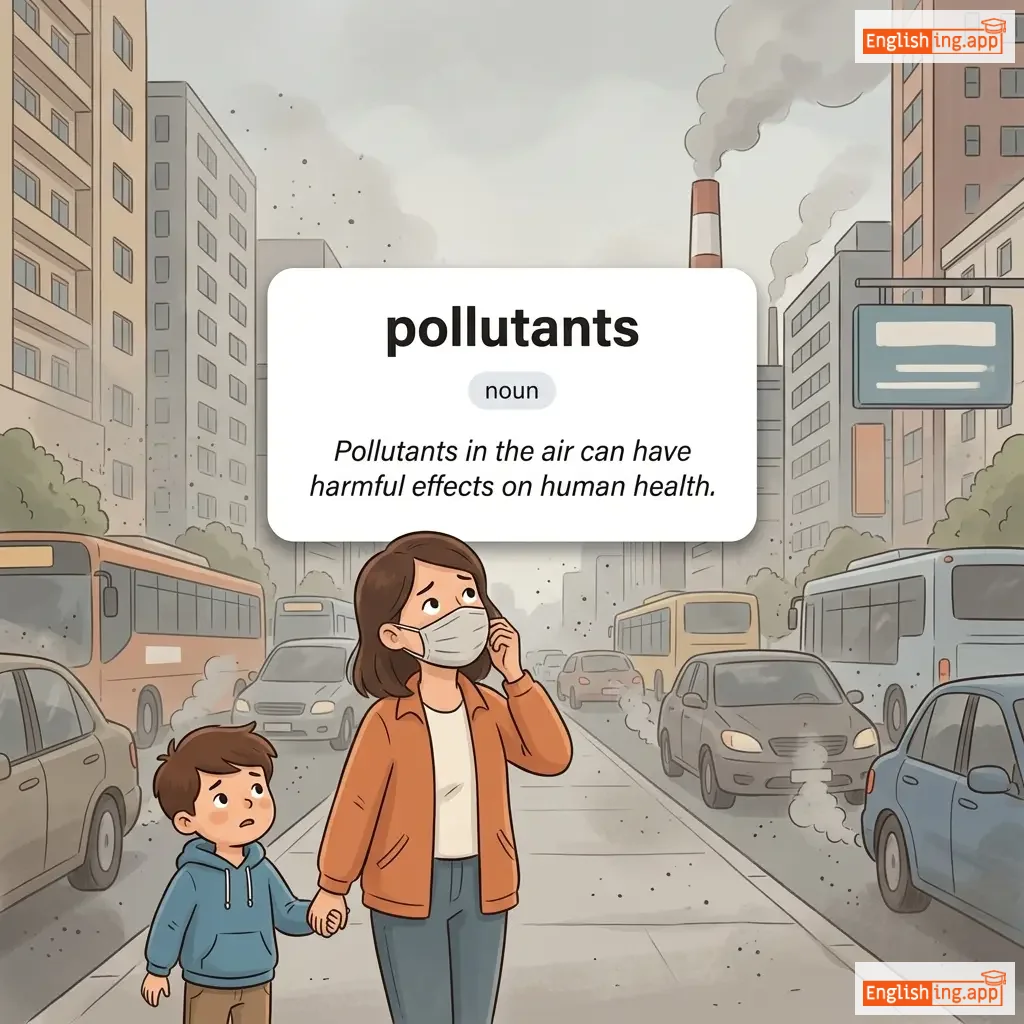
pollutants definition card — visual illustration of the meaning
noun
/pəˈluːtənts/
污染物 (wūrǎn wù)

Harmful substances that contaminate the environment, including air, water, and soil, potentially causing damage to living organisms and ecosystems.

"Pollutants in the air can have harmful effects on human health."
"空气中的污染物可能对人类健康产生有害影响。" (Kōngqì zhōng de wūrǎn wù kěnéng duì rénlèi jiànkāng chǎnshēng yǒuhài yǐngxiǎng.)
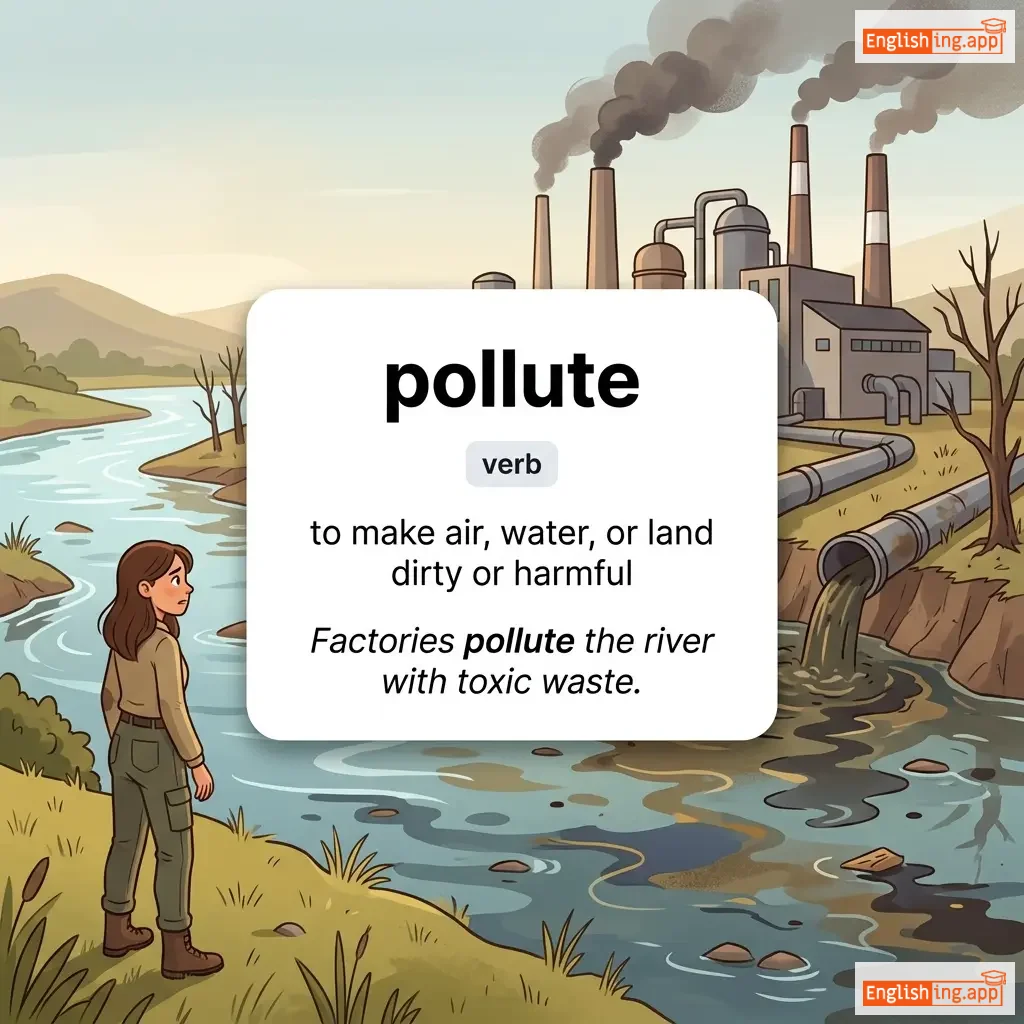
pollute definition card — visual illustration of the meaning
verb
/pəˈluːt/
污染 (wūrǎn)

to make air, water, or land dirty or harmful

"Factories pollute the river with toxic waste."
"工厂用有毒废料污染了河流。" (Gōngchǎng yòng yǒudú fèiliào wūrǎnle héliú.)
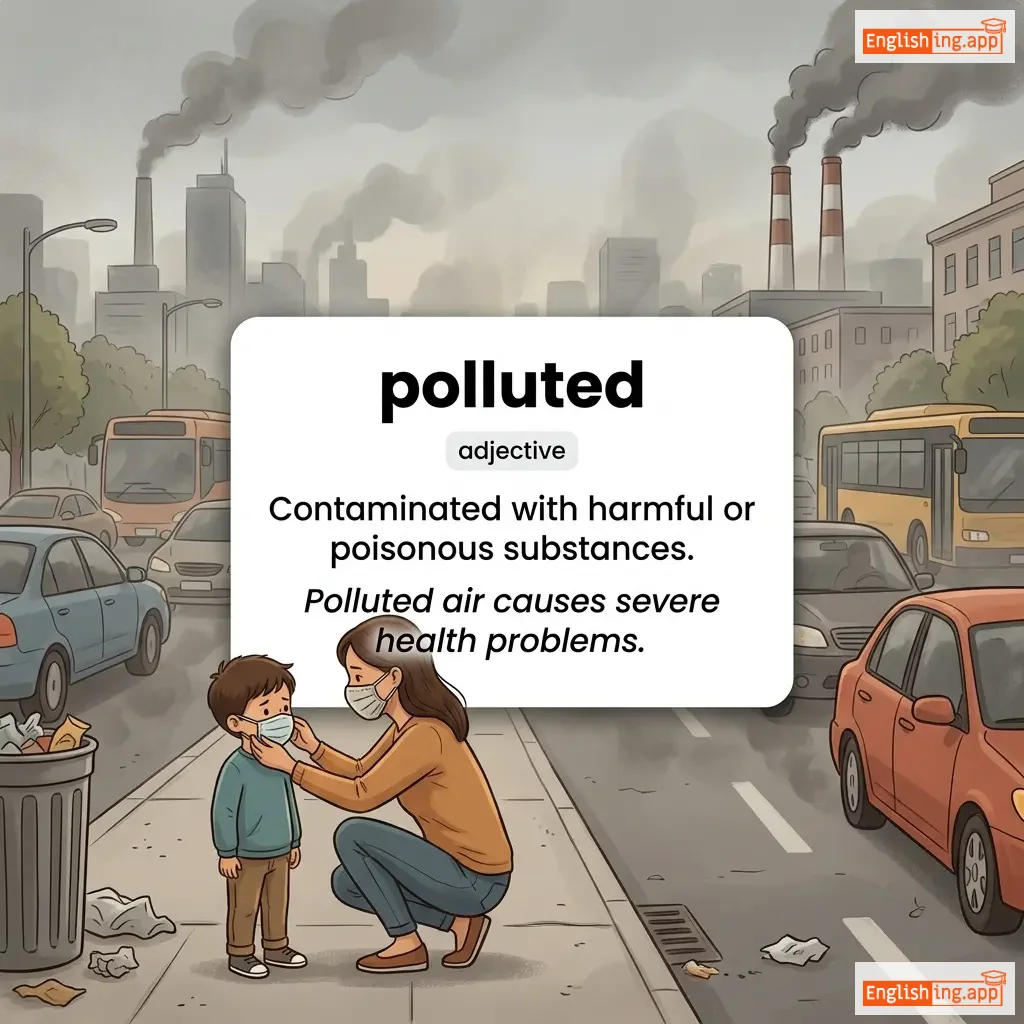
polluted definition card — visual illustration of the meaning
adjective
/pəˈluː.tɪd/
污染的 (wūrǎn de)

Contaminated with harmful or poisonous substances.

"Polluted air causes severe health problems."
"污染的空气导致严重的健康问题。" (Wūrǎn de kōngqì dǎozhì yánzhòng de jiànkāng wèntí.)
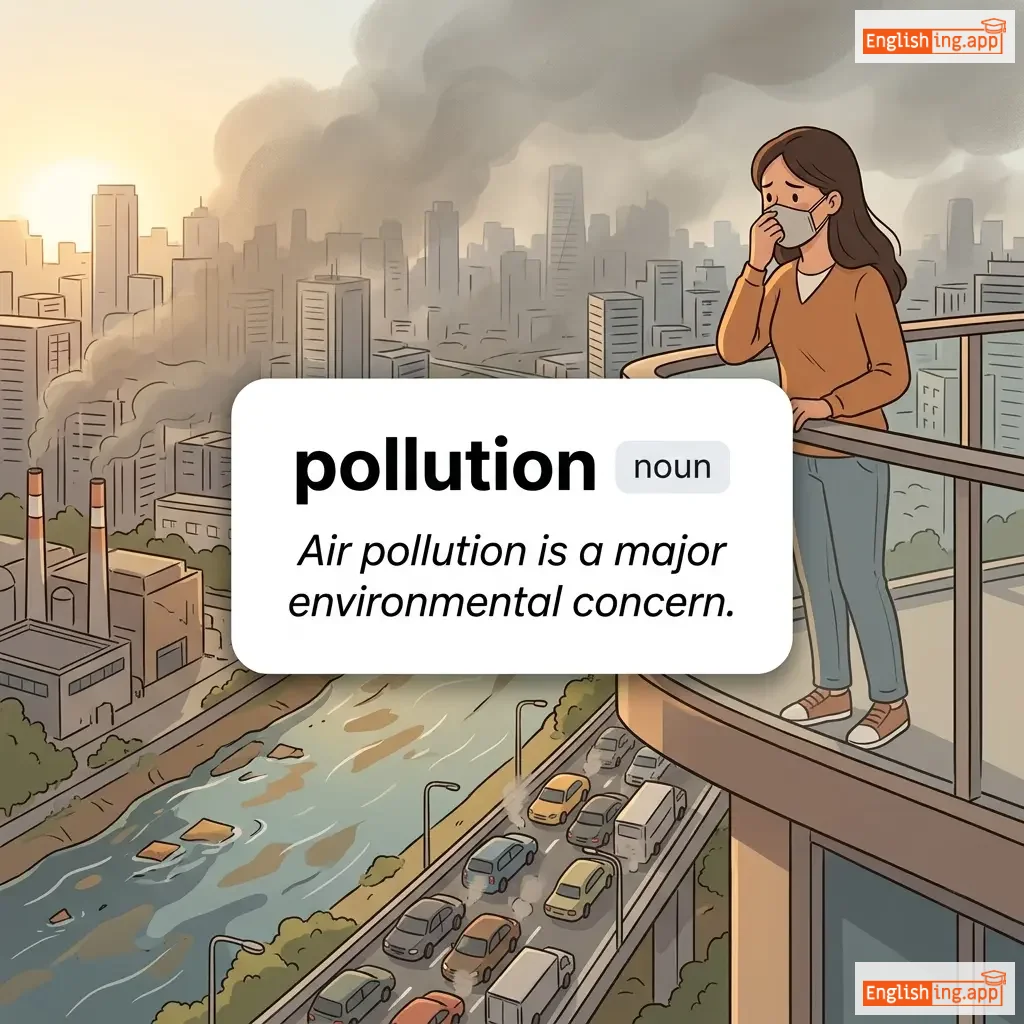
pollution definition card — visual illustration of the meaning
noun
/pəˈlʊʃən/
污染 (wuran)

the presence of harmful substances in the environment, especially the air, water, or soil

"Air pollution is a major environmental concern."

"空气污染是一个主要的环境问题。" (Kongqi wuran shi yige zhuyao de huanjing wenti.)
adjective
/ˌpɒliˈæn.ɪ.ɪʃ/
过于乐观 (guo yu le guan)

overly or blindly optimistic

"Her pollyannaish attitude ignored the obvious problems."

"她的过于乐观的态度忽略了明显的问题。" (Ta de guo yu le guan de tai du hu lue le ming xian de wen ti.)
noun
/pəˈtruːn/
懦夫 (nuofu)

a cowardly person

"He acted like a poltroon during the crisis."

"他在危机中像个懦夫一样表现。" (Tā zài wéijī zhōng xiàng gè nuòfū yīyàng biǎoxiàn.)
noun
/ˈpɒliˌɑːrki/
多元治理 (duōyuán zhìlǐ)

government by many people

"Polyarchy allows multiple parties to share power."

"多元治理允许多个党派共享权力。" (Duōyuán zhìlǐ yǔnxǔ duō gè dǎngpài gòngxiǎng quánlì.)
noun
/ˈpɒliˌkreɪsi/
多元统治 (duōyuán tǒngzhì)

rule by many; government by multiple authorities

"The nation experienced a polycracy after decentralization reforms."

"该国在去中心化改革后经历了多元统治。" (Gāi guó zài qù zhōngxīnhuà gǎigé hòu jīnglìle duōyuán tǒngzhì.)
👨‍👩‍👧‍👦

polygamist (多配偶者)

noun
/ˈpɒlɪɡæmɪst/
一夫多妻者 (yī fū duō qī zhě)

a person who has more than one spouse at the same time

"The polygamist had three wives living in different houses."

"这个多配偶者有三个妻子,他们住在不同的房子里。" (Zhè ge duō pèi'ǒu zhě yǒu sān ge qīzi, tāmen zhù zài bùtóng de fángzi lǐ.)
noun
/ˈpɒlɪɡəmi/
一夫多妻制 (yī fū duō qī zhì)

the practice of having more than one spouse at the same time

"Polygamy is legal in some countries but frowned upon in others."

"一夫多妻制在一些国家合法,但在其他国家被视为不道德。" (Yī fū duō qī zhì zài yīxiē guójiā héfǎ, dàn zài qítā guójiā bèi shì wéi bù dàodé.)
noun
/ˈpɒlɪɡlɒt/
多语者 (duō yǔ zhě)

a person who knows and can use several languages

"She is a polyglot, fluent in English, Spanish, and Bengali."

"她是一个多语者,精通英语、西班牙语和孟加拉语。" (Tā shì yí gè duō yǔ zhě, jīng tōng yīng yǔ, xī bān yá yǔ hé mèng jiā lā yǔ.)
noun
/ˈpɒlɪɡɒn/
多边形 (duōbiān xíng)

a flat shape with three or more straight sides

"The artist drew a colorful polygon on the canvas."

"艺术家在画布上画了一个五彩的多边形。" (Yìshùjiā zài huàbù shàng huàle yīgè wǔcǎi de duōbiānxíng.)
noun
/ˌpɒlɪˈhiːdrən/
具有平面多边形面的固体 (juyou pingmian duobianxing mian de gudi)

a solid object with flat polygonal faces, straight edges, and vertices

"The mathematician studied a complex polyhedron model."

"数学家研究了一个复杂的多面体模型。" (Shuxuejia yanjiule yige fuzade duomian ti moxing.)
noun
/ˈpɒl.i.mæθ/
博学者 (bóxué zhě)

a person with knowledge of many different subjects

"Leonardo da Vinci was a true polymath, excelling in art, science, and engineering."

"列奥纳多·达·芬奇是一个真正的博学者,擅长艺术、科学和工程。" (Liè ào nà duō · Dá · fēn qí shì yí gè zhēn zhèng de bóxué zhě, shàncháng yìshù, kēxué hé gōngchéng.)
noun
/ˌpɒl.iˈsɪl.ə.bəl/
多音节词 (duo yin jie ci)

a word with more than one syllable

"The word 'elephant' is a polysyllable because it has three syllables."

"‘大象’是一个多音节词,因为它有三个音节。" ('Da xiang' shi yi ge duo yin jie ci, yinwei ta you san ge yin jie.)
noun
/ˌpɒl.iˈtek.nɪk/
理工学院 (lìgōng xuéyuàn)

an educational institution offering practical and technical courses

"She studied engineering at a well-known polytechnic in her city."

"她在她所在城市的知名理工学院学习工程学。" (Ta zai ta suozai chengshi de zhiming ligong xueyuan xuexi gongchengxue.)
noun
/ˈpɒl.iˌθi.ɪz.əm/
多神教 (duō shén jiào)

the belief in or worship of multiple gods

"Ancient Greeks practiced polytheism, worshiping gods like Zeus and Athena."

"古希腊人实践多神教,崇拜像宙斯和雅典娜这样的神灵。" (Gǔ xīlà rén shíjiàn duōshénjiào, chóngbài xiàng Zhòusī hé Yǎtiǎnnà zhè yàng de shénlíng.)
noun
/ˈpɒm.ɪˌɡræn.ɪt/
石榴 (pomegranate)

a round fruit with thick red skin containing many small red seeds with juice

"The pomegranate seeds were sweet and refreshing."

"石榴籽又甜又清新。" (shi liu zi you tian you qing xin)
noun
/ˈpɒmfrɪt/
鲳鱼 (chang yu)

A deep-bodied marine fish with silvery scales, popular in Asian cuisine

"The restaurant serves delicious pomfret curry with rice."

"餐厅提供美味的鲳鱼咖喱配米饭。" (can ting ti gong mei wei de chang yu ka li pei mi fan)
noun
/ˈpɒm.əl/
剑柄或鞍座上的圆形按钮 (jiàn bǐng huò ān zuò shàng de yuán xíng àn niǔ)

the rounded knob on the handle of a sword or saddle

"He gripped the sword firmly by the pommel."

"他紧紧地抓住剑柄的波梅尔部分。" (Tā jǐn jǐn de zhuā zhù jiàn bǐng de bō méi ěr bù fèn.)
pomodoro definition card — visual illustration of the meaning
noun
/ˌpɒməˈdɔːrəʊ/
番茄工作法 (fānqié gōngzuò fǎ)

A time management technique that uses a timer to break down work into intervals.

"The Pomodoro technique improves productivity."

"番茄工作法提高了生产力。" (Fānqié gōngzuò fǎ tígāo le shēngchǎnlì.)
noun
/pɒmp/
盛大, 华丽 (shèngdà, huálì)

ceremonial display or splendor; grandeur

"The graduation ceremony was full of pomp and circumstance."

"毕业典礼充满了盛大和华丽。" (Bìyè diǎnlǐ chōngmǎnle shèngdà hé huálì.)
noun
/pɒmˈpɒsəti/
自大, 傲慢 (zì dà, ào màn)

self-important behavior or exaggerated dignity

"His speech was full of pomposity and arrogance."

"他的演讲充满了自大和傲慢。" (Tā de yǎnjiǎng chōngmǎnle zì dà hé ào màn.)
adjective
/ˈpɒmpəs/
傲慢的 (àomàn de)

exaggeratedly self-important; ostentatious

"The manager had a pompous attitude that annoyed his team."

"经理有一种傲慢的态度,惹恼了他的团队。" (Jīnglǐ yǒu yī zhǒng àomàn de tàidù, rěnǎo le tā de tuánduì.)
noun
/pɒnd/
池塘 (chí táng)

a small area of still water, smaller than a lake

"The children were feeding ducks at the pond."

"孩子们在池塘里喂鸭子。" (Háizimen zài chí táng lǐ wèi yāzi.)
verb
/ˈpɒndər/
深思 (shen si)

to think about something carefully

"She pondered over the meaning of the poem."

"她沉思着诗歌的含义。" (Tā chénsīzhe shīgē de hányì.)