词汇表

英语词汇词典 | 单词含义、定义和示例

adjective
/ˈplændʒənt/
悲伤或回响的声音 (bēi shāng huò huí xiǎng de shēng yīn)

having a loud, mournful sound; resonant

"The plangent toll of the church bell echoed through the village."

"教堂钟声的悲鸣回荡在村庄里。" (Jiàotáng zhōngshēng de bēi míng huídàng zài cūnzhuāng lǐ.)
noun
/ˈplænɪsfɪr/
星图仪 (xīng tú yí)

a rotating star chart used to display the visible stars for any time and date

"The astronomer used a planisphere to identify the constellations."

"天文学家使用星图仪来识别星座。" (Tiān wénxué jiā shǐyòng xīng tú yí lái shíbié xīngzuò.)
noun
/ˈplænər/
计划者 (jìhuà zhě)

a person who makes plans or a book used for organizing schedules and tasks

"She uses a daily planner to organize her meetings."

"她使用每日计划本来组织她的会议。" (Tā shǐyòng měi rì jìhuà běn lái zǔzhī tā de huìyì.)
planning definition card — visual illustration of the meaning
noun
/ˈplænɪŋ/
规划 (guīhuà)

the process of making plans for something

"The planning for the event took months."
"活动的规划花了几个月的时间。" (Huódòng de guīhuà huāle jǐ gè yuè de shíjiān.)
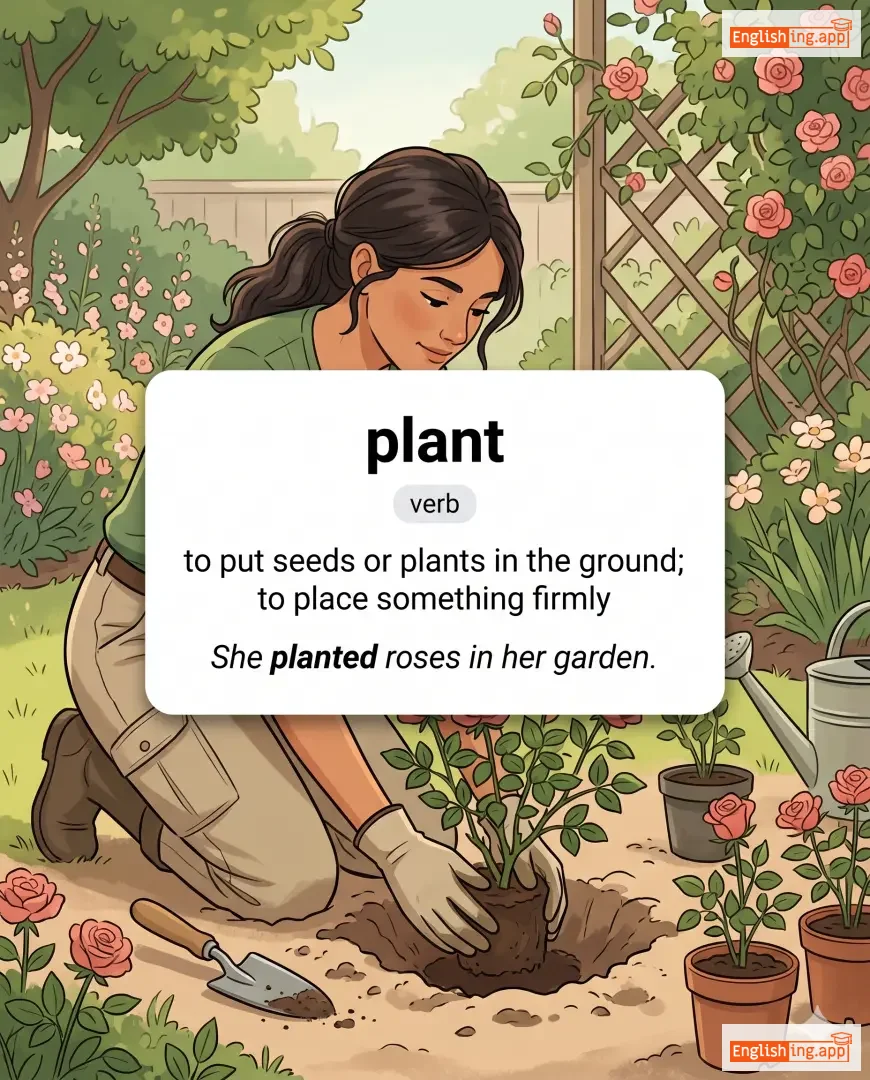
plant definition card — visual illustration of the meaning
noun
/plænt/
植物 (zhíwù)

a living organism that typically grows in the ground and absorbs nutrients from the soil

"She planted a tree in her garden."

"她在她的花园里种了一棵树。" (Tā zài tā de huāyuán lǐ zhòngle yī kē shù.)
noun
/ˈplæn.tɪn/
大蕉 (da jiao)

a large green banana-like fruit that is usually cooked before eating

"Plantain can be fried, boiled, or baked and is a staple food in many tropical countries."

"大蕉可以油炸、煮沸或烘烤,是许多热带国家的主食。" (Da jiao ke yi you zha, zhu fei huo hong kao, shi xu duo re dai guo jia de zhu shi)
noun
/ˈplæn.teɪn ˈflaʊ.ər/
芭蕉花 (bā jiāo huā)

The flower bud of a banana plant, used as a vegetable in cooking

"We cooked plantain flower curry for dinner."

"我们为晚餐做了芭蕉花咖喱。" (wǒmen wèi wǎncān zuòle bā jiāo huā gālí.)
noun
/plænˈteɪʃən/
种植园 (zhongzhiyuan)

a large area of land where crops are grown, often for commercial purposes

"The sugarcane plantation stretched for miles across the valley."

"甘蔗种植园沿着山谷延伸数英里。" (Gānzhè zhòngzhíyuán yánzhe shāngǔ yánshēn shù yīnglǐ.)
noun
/ˈplæz.mə/
血液的液体部分;电离气体;无凝血蛋白的血清 (plazima)

the liquid part of blood; ionized gas; blood serum without clotting proteins

"Blood plasma contains various proteins and nutrients."

"血浆含有各种蛋白质和营养物质。" (xuejiang han you gezhong danbaizhi he yingyang wuzhi.)
noun, verb
/ˈplɑːstər/
石膏,修补 (shígāo, xiūbǔ)

a soft mixture applied to walls or used to cover wounds; or to cover or coat with plaster

"The workers plastered the walls to make them smooth."

"工人们将墙壁涂上石膏,使其平滑。" (Gōngrénmen jiāng qiángbì tú shàng shígāo, shǐ qí pínghuá.)
adjective, noun
/ˈplæstɪk/
塑料 (suliao)

a synthetic material that can be molded; flexible or easily shaped

"These containers are made of durable plastic."
"这些容器由耐用的塑料制成。" (Zhexie rongqi you naiyong de suliao zhicheng.)
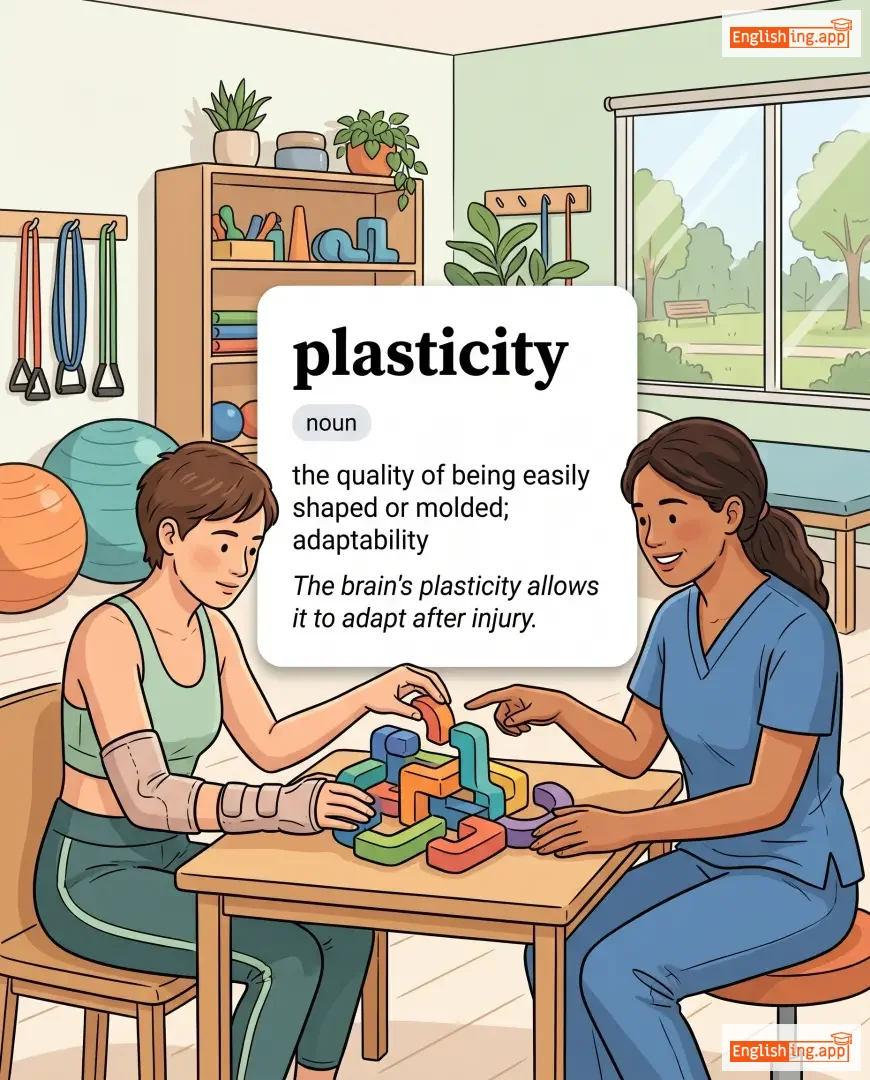
plasticity definition card — visual illustration of the meaning
noun
/plæsˈtɪsəti/
可塑性, 适应能力 (kesu xing, shiying nengli)

the quality of being easily shaped or molded; adaptability

"The brain's plasticity allows it to adapt after injury."

"大脑的可塑性使它在受伤后能够适应。" (Dainao de kesu xing shi ta zai shoushang hou nenggou shiying.)
noun
/pleɪt/
盘子 (pánzi)

a flat, typically round dish used for serving food

"She put the salad on the plate."

"她把沙拉放在盘子里。" (Tā bǎ shālā fàng zài pánzi lǐ.)
noun
/plæˈtoʊ/
高原,平坦的高地,变化不大的阶段 (gaoyuan, pingtan de gaodi, bianhua buda de jie duan)

an elevated flat area of land or a period of little change

"After months of growth, sales reached a plateau."

"经过几个月的增长,销售达到了一个平台。" (Jing guo ji ge yue de zengzhang, xiaoshou daduo le yi ge pingtai.)
platform definition card — visual illustration of the meaning
noun
/ˈplætfɔːrm/
平台 (pingtai)

a raised level surface on which people or things can stand

"The train arrived on platform five."

"火车到达了五号平台。" (Huǒchē dàodále wǔ hào píngtái.)
platforms definition card — visual illustration of the meaning
noun
ˈplæt.fɔːrmz
平台,软件或硬件环境 (pingtai, ruanjian huo yingjian huanjing)

Computing environments where software applications can be developed and run.

"Different platforms offer diverse digital solutions."

"不同的平台提供多种数字解决方案。" (Butong de pingtai tigong duozhong shuzi jiejue fang'an.)
platitude definition card — visual illustration of the meaning
noun
/ˈplætɪtjuːd/
陈词滥调,空话 (chéncí làndiào, kōnghuà)

a remark or statement that is overused and unoriginal

"He kept repeating the same platitudes during the speech."

"他在演讲中不断重复相同的陈词滥调。" (Tā zài yǎnjiǎng zhōng bùduàn chóngfù xiāngtóng de chéncí làndiào.)
adjective
/pləˈtɒnɪk/
柏拉图式 (bǎi lātú shì)

relating to a close relationship that is not romantic or sexual

"They have a platonic friendship that has lasted for years."

"他们有一段柏拉图式的友谊,已经持续了多年。" (Tāmen yǒu yí duàn bǎi lātú shì de yǒuyì, yǐjīng chíxùle duō nián.)
noun
/ˈplɔːdɪt/
赞扬 (zanyang)

an expression of praise or approval

"The actor received plaudit for his outstanding performance."

"演员因其出色的表现获得了赞扬。" (Yǎnyuán yīn qí chū sè de biǎoxiàn huò dé le zànyáng.)
noun
/ˈplɔːdɪts/
赞扬 (zànyáng)

expressions of praise or approval

"The scientist received plaudits from the international community."

"这位科学家得到了国际社会的赞扬。" (Zhè wèi kēxuéjiā dédàole guójì shèhuì de zànyáng.)
plausibility definition card — visual illustration of the meaning
noun
/ˌplɔː.zəˈbɪl.ə.ti/
可信度 (kěxìndù)

The quality of being reasonable or probable.

"The plausibility of his explanation convinced the jury."

"他解释的可信度说服了陪审团。" (Tā jiěshì de kěxìndù shuōfúle péishěntuán.)
plausible definition card — visual illustration of the meaning
adjective
/ˈplɔːzəbl/
合理的 (heli de)

seeming reasonable or probable

"Her explanation of the event sounded plausible."

"她对事件的解释听起来很合理。" (Ta dui shijian de jiexia ting qilai hen heli.)
play definition card — visual illustration of the meaning
verb
/pleɪ/
(wán)

to engage in activity for enjoyment or recreation

"The children love to play outside."

"孩子们喜欢在外面玩。" (Háizimen xǐhuān zài wàimiàn wán.)
noun
/ˈpleɪər/
球员 (qiúyuán)

a person who participates in a game or sport

"The player scored the winning goal."

"球员打入了制胜球。" (Qiúyuán dǎ rù le zhìshèng qiú.)
adjective
/ˈpleɪfəl/
顽皮的, 活泼的 (wanpi de, huopo de)

full of fun and high spirits; lively

"The puppy was very playful, running around the garden."

"小狗很顽皮,在花园里跑来跑去。" (Xiao gou hen wanpi, zai huayuan li pao lai pao qu.)
noun
/ˈpleɪˌɔːf/
决胜赛 (juesheng sai)

a series of games played to determine a champion among top teams

"The team qualified for the playoffs after a strong season."

"该队在强劲的赛季后晋级季后赛。" (Gai dui zai qiangjing de saiji hou jinji jihou sai.)
noun
/ˈpleɪˌraɪt/
剧作家 (jùzuòjiā)

a person who writes plays

"Shakespeare is considered the greatest playwright of all time."

"莎士比亚被认为是历史上最伟大的剧作家。" (Shāshìbǐyǎ bèi rènwéi shì lìshǐ shàng zuì wěidà de jùzuòjiā.)
noun
/pliː/
请求,申诉 (qǐngqiú, shēnsù)

a request or appeal, especially in a legal context

"The defendant entered a guilty plea in court."

"被告在法庭上提交了认罪的请求。" (Bìgào zài fǎtíng shàng tíjiāo le rènzuì de qǐngqiú.)
plead definition card — visual illustration of the meaning
verb
/pliːd/
恳求, 在法庭上陈述 (kěnqiú, zài fǎtíng shàng chénshù)

to make an emotional or earnest request; to state in court

"She pleaded with him to stay."

"她恳求他留下。" (Tā kěnqiú tā liúxià.)
adjective
/ˈplɛzənt/
愉快的,令人愉悦的 (yúkuài de, lìng rén yúyuè de)

giving a sense of happiness, enjoyment, or satisfaction

"We had a pleasant evening at the park."

"我们在公园度过了一个愉快的晚上。" (Wǒmen zài gōngyuán dùguòle yīgè yúkuài de wǎnshàng.)
noun
/ˈplez.ən.tri/
客套话 (kètàohuà)

a remark made in order to be polite or friendly; light conversation or jokes

"They exchanged pleasantries before the meeting began."

"他们在会议开始前交换了客套话。" (Tāmen zài huìyì kāishǐ qián jiāohuànle kètàohuà.)
verb
/pliːz/
取悦 (qǔyuè)

to make someone happy or satisfied

"She will do anything to please her parents."

"她愿意做任何事情来取悦她的父母。" (Tā yuànyì zuò rènhé shìqíng lái qǔyuè tā de fùmǔ.)
adjective
/pliːzd/
满意 (mǎnyì)

feeling happy or satisfied with something

"She was pleased with her exam results."

"她对自己的考试结果感到满意。" (Tā duì zìjǐ de kǎoshì jiéguǒ gǎndào mǎnyì.)
adjective
/ˈplɛʒərəbl/
令人愉快的, 令人高兴的 (lìng rén yú kuài de, lìng rén gāo xìng de)

giving pleasure or enjoyment

"Reading a good book is a pleasurable activity."

"读一本好书是一项令人愉快的活动。" (Dú yī běn hǎo shū shì yī xiàng lìng rén yú kuài de huó dòng.)
noun
/ˈplɛʒər/
愉快 (yúkuài)

a feeling of happiness or enjoyment

"It was a pleasure to meet you."

"很高兴见到你。" (Hěn gāoxìng jiàn dào nǐ.)
noun, verb
/pliːt/
褶子 (zhezi)

a fold in fabric made by doubling the material back upon itself

"She added a pleat to the skirt for extra volume."

"她在裙子上加了一个褶子,以增加更多的体积。" (Ta zai qunzi shang jia le yige zhezi, yi zengjia geng duo de tizhi.)
adjective, noun
/pləˈbiːən/
平民 (pingmin)

common, ordinary, or belonging to the lower social classes

"The festival was enjoyed by both plebeian and noble citizens."

"这个节日被平民和贵族市民共同享受。" (Zhe ge jie ri bei pingmin he guizu shimin gongtong xiangshou.)
adjective, noun
/pləˈbiːən/
普通的,平民的 (putong de, pingmin de)

alternate spelling of 'plebeian'; common or ordinary

"His tastes were rather plebian, favoring simple food and clothes."

"他的口味相当普通,喜欢简单的食物和衣服。" (Tā de kǒuwèi xiāngdāng pǔtōng, xǐhuān jiǎndān de shíwù hé yīfú.)
noun
/ˈplɛbɪsaɪt/
公民投票 (gongmin toupiao)

a direct vote by the electorate on an important public question

"The government held a plebiscite to decide on the new constitution."

"政府举行了公民投票,决定新的宪法。" (Zhengfu juxing le gongmin toupiao, jueding xin de xianfa.)
noun
/plɛdʒ/
承诺 (chengnuo)

a solemn promise or agreement to do or refrain from doing something

"He gave a pledge to support the cause."

"他承诺支持这个事业。" (Tā chéngnuò zhīchí zhège shìyè.)
noun
/ˈplɛdʒiː/
被作为担保而给与某物的人 (bei zuòwéi dānbǎo ér gěi yǔ mǒu wù de rén)

a person to whom something is pledged or given as security

"The bank is the pledgee of the collateral until the loan is repaid."

"银行是担保品的债权人,直到贷款偿还为止。" (Yínháng shì dānbǎopǐn de zhàiquánrén, zhídào dàikuǎn chánghuán wéizhǐ.)
noun
/ˈplɛdʒɔːr/
担保人 (danbaoren)

a person who gives or offers a pledge or security

"The bank accepted the jewelry from the pledgeor as collateral for the loan."

"银行接受了担保人提供的珠宝作为贷款的担保。" (Yinhang jieshou le danbaoren tigong de zhubao zuo wei daikuan de danbao.)
adjective
/ˈpliːnəri/
全体的 (quántǐ de)

complete in every way; fully attended or absolute

"The committee held a plenary session to discuss all matters of importance."

"委员会召开了一个全体会议,讨论所有重要事项。" (Wěiyuánhuì zhàokāile yīgè quántǐ huìyì, tǎolùn suǒyǒu zhòngyào shìxiàng.)
noun
/ˌpliːnɪpəˈtɛnʃəri/
全权代表 (quánquán dàibiǎo)

a person invested with full power to act on behalf of another, especially in diplomacy

"The ambassador was a plenipotentiary sent to negotiate the treaty."

"大使是被派往谈判条约的全权代表。" (Dàshǐ shì bèi pài wǎng tánpàn tiáoyuē de quánquán dàibiǎo.)
noun
/ˈplɛnɪtjuːd/
丰富 (fēngfù)

the condition of being full or abundant; a great quantity

"The garden was a plenitude of flowers in spring."

"春天的花园充满了花卉的丰富性。" (Chūntiān de huāyuán chōngmǎnle huāhuì de fēngfùxìng.)
adjective
/ˈplɛntɪəs/
丰富 (fengfu)

existing in great quantity; abundant

"The harvest was plenteous, providing enough food for the entire village."

"收成丰富,为整个村庄提供了足够的食物。" (Shou cheng fengfu, wei zheng ge cun zhuang ti gong le zu gou de shi wu.)
adjective
/ˈplɛntɪfəl/
丰富的 (fēngfù de)

Existing in great quantity; abundant.

"Food and water were plentiful in the village."

"村里食物和水源丰富。" (Cūn lǐ shíwù hé shuǐyuán fēngfù.)
noun
/ˈplɛntɪtjuːd/
丰富 (fengfu)

the condition of being full or abundant

"The garden offered a plentitude of flowers in spring."

"花园在春天提供了丰富的花卉。" (Huayuan zai chuntian tigong le fengfu de huahui.)
noun
/ˈplɛnti/
丰富 (fengfu)

a large or sufficient amount or quantity

"We have plenty of time before the meeting."

"我们在会议前有很多时间。" (Wǒmen zài huìyì qián yǒu hěn duō shíjiān.)
plethora definition card — visual illustration of the meaning
noun
/ˈplɛθərə/
过多的数量 (guo duo de shu liang)

an excessive amount of something

"She has a plethora of books on her shelf."

"她的书架上有过多的书籍。" (Ta de shujia shang you guo duo de shuju.)