词汇表

英语词汇词典 | 单词含义、定义和示例

noun
/ˈfɪzɪks/
物理学 (wùlǐxué)

the natural science that studies matter, energy, and the interactions between them

"She decided to major in physics at the university."

"她决定在大学主修物理学。" (Ta jueding zai daxue zhuxiu wulixue.)
noun
/ˌfɪzɪˈɑːkrəsi/
地权主义 (dì quán zhǔ yì)

an economic theory that land and its natural products are the source of wealth

"Physiocracy emphasized the importance of agriculture in national wealth."

"地权主义强调农业在国家财富中的重要性。" (Dì quán zhǔ yì qiángdiào nóngyè zài guójiā cáifù zhōng de zhòngyào xìng.)
noun
/ˌfɪziˈɒnəmi/
面部特征分析 (miànbù tèzhēng fēnxī)

the study of facial features to judge character or personality

"He believed in physiognomy and tried to read people's personalities from their faces."

"他相信面相学,并试图通过人的面部来解读他们的个性。" (Tā xiāngxìn miànxìang xué, bìng shìtú tōngguò rén de miànbù lái jiědú tāmen de gèxìng.)
noun
/ˌfɪziˈɑːɡrəfi/
地貌学 (dimàoxué)

the study of the physical features of the earth's surface

"He specialized in physiography to understand the landscape of the region."

"他专攻地貌学,以了解该地区的景观。" (Tā zhuān gōng dimàoxué, yǐ liǎojiě gāi dìqū de jǐngguān.)
physiological definition card — visual illustration of the meaning
adjective
/ˌfɪziəˈlɑːdʒɪkəl/
生理学的 (shenglixuede)

relating to the functions and processes of living organisms

"The study focused on the physiological responses to stress."

"研究集中于应对压力的生理反应。" (Yanjiu jizhong yu yingdui yali de shengli fanying.)
noun
/ˌfɪziˈɑːlədʒi/
生理学 (shenglixue)

the scientific study of the functions and mechanisms in a living system

"She is majoring in human physiology at the university."

"她在大学主修人体生理学。" (Ta zai daxue zhuxiu ren ti sheng li xue.)
noun
/fɪˈziːk/
体型 (tǐ xíng)

the form, size, and development of a person's body

"He has an athletic physique due to years of training."

"他通过多年的训练有着运动员般的体型。" (Tā tōngguò duōnián de xùnliàn yǒuzhe yùndòngyuán bān de tǐxíng.)
phytochemicals definition card — visual illustration of the meaning
noun
/ˌfaɪ.təʊˈkem.ɪ.kəlz/
植物化学物质 (zhíwù huàxué wùzhì)

Natural chemical compounds produced by plants that provide health benefits beyond basic nutrition, often having antioxidant properties.

"Phytochemicals in green tea help reduce inflammation."

"绿茶中的植物化学物质有助于减少炎症。" (Lǜchá zhōng de zhíwù huàxué wùzhì yǒu zhù yú jiǎnshǎo yánzhèng.)
phytonutrient definition card — visual illustration of the meaning
noun
ˈfaɪ.təʊˌnjuː.tri.ənt
植物营养素 (zhíwù yíngyǎngsù)

Chemical compounds produced by plants that are beneficial to human health but not essential nutrients.

"Broccoli is rich in phytonutrients that enhance immunity."
"西兰花富含植物营养素,有助于增强免疫力。" (Xīlánhuā fùhán zhíwù yíngyǎngsù, yǒu zhù yú zēngqiáng miǎnyìlì.)
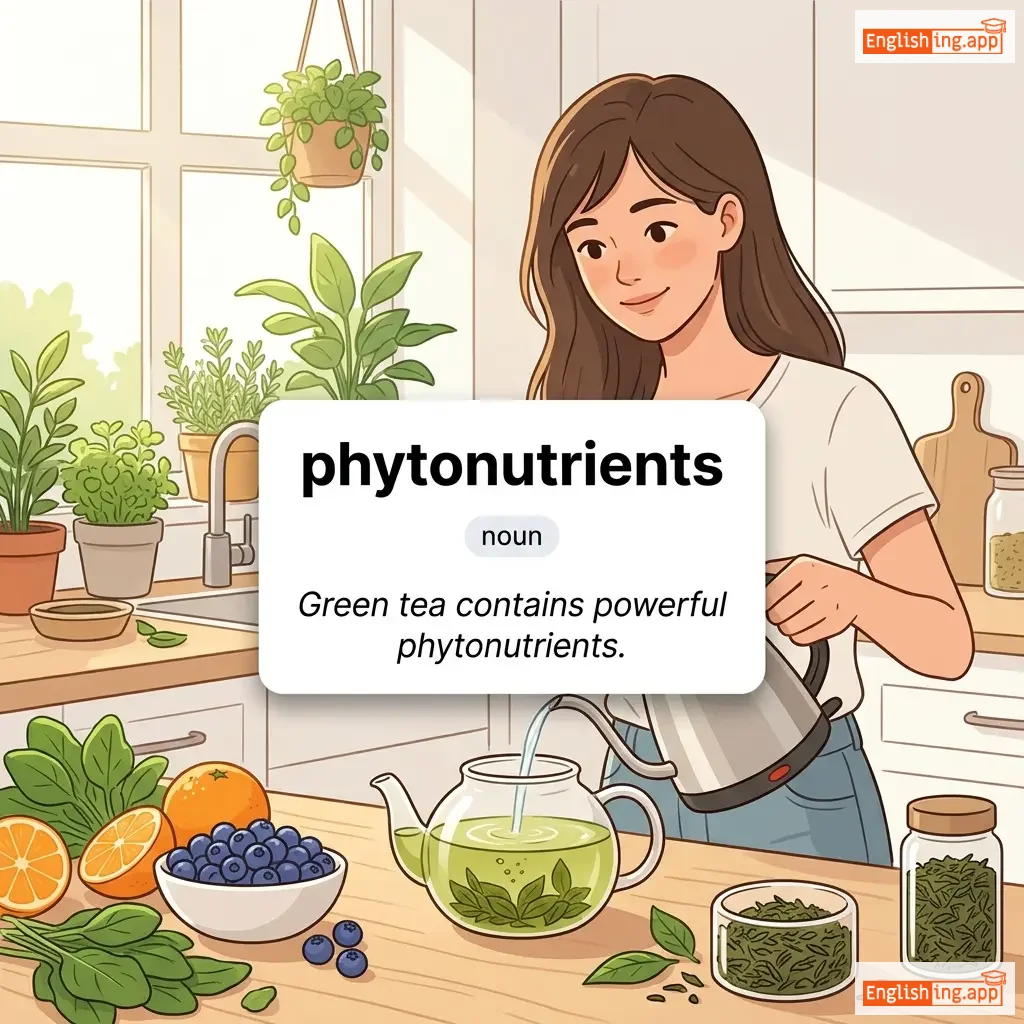
phytonutrients definition card — visual illustration of the meaning
noun
ˈfaɪ.təʊˌnjuː.tri.ənts
植物营养素 (zhíwù yíngyǎngsù)

Bioactive compounds found in plants that have health benefits beyond basic nutrition.

"Green tea contains powerful phytonutrients."

"绿茶含有强大的植物营养素。" (Lǜchá hányǒu qiángdà de zhíwù yíngyǎngsù.)
🎹

Piano

noun
/piˈænoʊ/

a large musical instrument with a keyboard, played by pressing keys that cause hammers to strike strings

"She played a beautiful tune on the piano during the concert."

adjective
/ˌpɪkəˈrɛsk/
流氓英雄的故事 (liumang yingxiong de gushi)

relating to a style of fiction depicting the adventures of a roguish hero

"The novel is a picaresque tale of a clever vagabond."

"这本小说是一个聪明流浪汉的皮卡雷斯克故事。" (Zhe ben xiaoshuo shi yige congming liulanghan de picaresque gushi.)
adjective
/ˌpɪkəˈjuːn/
微不足道的, 琐碎的 (wēi bù zú dào de, suǒ suì de)

of little value or importance; trivial

"He complained about the picayune details of the contract."

"他抱怨合同中的琐碎细节。" (Tā bàoyuàn hé tong zhōng de suǒ suì xìjié.)
noun
/ˈpɪkəloʊ/
小长笛 (xiao changdi)

a small flute, higher in pitch than the regular flute

"She played a lively tune on the piccolo during the concert."

"她在音乐会期间吹奏了生动的皮科洛旋律。" (Ta zai yinyuehui qijian chuizou le shengdong de pikkolo xuanlü.)
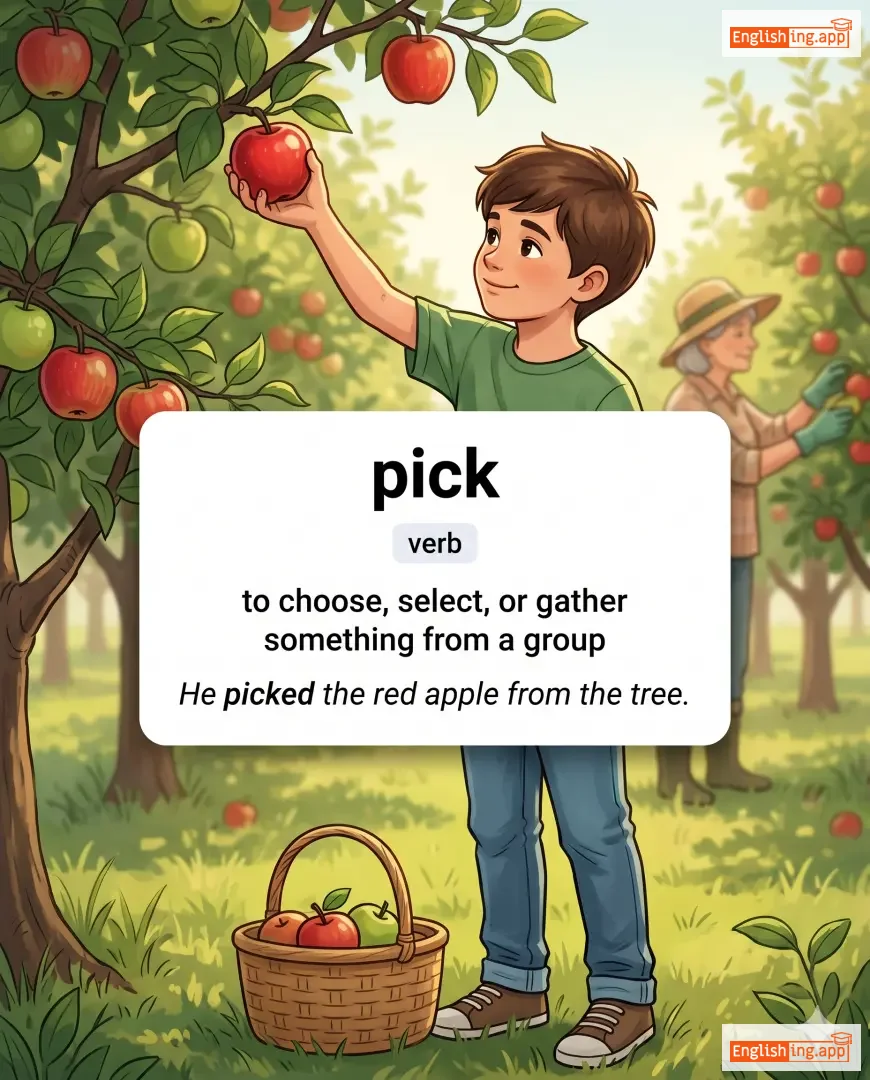
pick definition card — visual illustration of the meaning
verb
/pɪk/
选择 (xuanze)

to choose, select, or gather something from a group

"He picked the red apple from the tree."

"他从树上摘下了红色的苹果。" (Ta cong shu shang zhai xia le hongse de pingguo.)
phrasal verb
/pɪk ʌp/
捡起; 接载; 学会 (jian qi; jie zai; xue hui)

to lift something; to collect or receive someone or something; to learn or acquire gradually; to improve or increase

"She picked up the book from the floor."

"她从地板上捡起了那本书。" (Ta cong diban shang jianqi le na ben shu)
noun
/ˈpɪk.æks/
鹤嘴锄 (he zui chu)

a tool with a heavy metal head and long handle used for breaking up hard ground or rock

"The miner used a pick-axe to break through the rocky surface."

"矿工用鹤嘴锄打破了岩石表面。" (Kuànggōng yòng hèzuǐchú dǎpòle yánshí biǎomiàn.)
noun
/ˈpɪkʌp/
有开放式车厢的小卡车; 收集或改进某物的行为 (yǒu kāifàng shì chēxiāng de xiǎo kǎchē; shōují huò gǎijìn mǒu wù de xíngwéi)

a small truck with an open back; the act of collecting or improving something

"The company scheduled a pickup for the returned goods."

"公司为退还的货物安排了取货。" (Gōngsī wèi tuìhuán de huòwù ānpái le qǔhuò.)
noun
/ˈpɪktʃər/
画面 (huàmiàn)

a visual representation made by painting, drawing, or photography

"The picture on the wall was painted by a famous artist."

"墙上的画面是由一位著名艺术家绘制的。" (Qiáng shàng de huàmiàn shì yóu yī wèi zhùmíng yìshùjiā huìzhì de.)
adjective
/ˈpɪdlɪŋ/
微不足道, 琐碎 (wēi bù zú dào, suǒ suì)

trivial or insignificant; very small

"He made a piddling amount of money from that deal."

"他从那笔交易中赚了一笔微不足道的金额。" (Tā cóng nà bǐ jiāoyì zhōng zhuànle yī bǐ wēi bù zú dào de jīn'é.)
noun
/paɪ/
(pai)

a baked dish typically consisting of a pastry crust and filling

"She baked an apple pie for dessert."

"她烤了一个苹果派作为甜点。" (Ta kao le yi ge pingguo pai zuo wei tiandian.)
adjective
/ˈpaɪbɔːld/
双色斑点 (shuāngsè bāndiǎn)

having irregular patches of two colors, especially black and white

"The farmer owns a piebald horse with black and white spots."

"农夫有一匹带有黑白斑点的双色马。" (Nóngfū yǒu yī pī dài yǒu hēi bái bāndiǎn de shuāngsè mǎ.)
noun
/piːs/
一片 (yī piàn)

a portion or part of something

"He gave me a piece of cake."

"他给了我一块蛋糕。" (Tā gěi le wǒ yī kuài dàngāo.)
noun
/ˈpiːs ɡʊdz/
布料 (bù liào)

textiles or fabrics sold by the yard or meter; cloth materials

"The tailor bought piece-goods from the wholesale market to make custom dresses."

"裁缝从批发市场购买了布料来制作定制的衣服。" (cáiféng cóng pīfā shìchǎng gòumǎi le bù liào lái zhìzuò dìngzhì de yīfú.)
adjective
/ˈpiːsmiːl/
分阶段进行 (fen jie duan jin xing)

done or made in separate stages rather than all at once

"The construction of the new building was carried out piecemeal over several years."

"新建筑的建设是分阶段进行的,持续了几年。" (Xin jianzhu de jianshe shi fen jie duan jin xing de, chixu le ji nian.)
adjective
/paɪd/
花色的 (huā sè de)

having two or more different colors, typically in blotches

"The pied cat had black and white patches all over its body."

"这只斑猫身上有黑白色的斑点。" (Zhè zhī bān māo shēn shang yǒu hēi bái sè de bāndiǎn.)
pierce definition card — visual illustration of the meaning
verb
/pɪəs/
刺穿 (cì chuān)

to make a hole through something; to penetrate with a sharp object

"The arrow will pierce through the target."

"箭矢将穿透目标。" (Jiànshǐ jiāng chuāntòu mùbiāo.)
Piety definition card — visual illustration of the meaning
noun
/ˈpaɪəti/
虔诚 (qiánchéng)

the quality of being religious or showing reverence for God

"Her piety was evident in the way she prayed every morning."

"她的虔诚在她每天早晨的祈祷中显而易见。" (Tā de qiánchéng zài tā měitiān zǎochén de qídǎo zhōng xiǎn'ér yìjiàn.)
noun
/pɪɡ/
(zhu)

a farm animal with a snout used for digging and a curly tail; kept for meat such as pork or bacon

"The pig rolled happily in the mud."

"猪开心地在泥巴里打滚。" (Zhū kāixīn de zài níbā lǐ dǎgǔn.)
noun
/ˈpɪdʒ.ən/
鸽子 (gezi)

a grey and white bird with a fat body that is common in cities

"The pigeon pecked at breadcrumbs on the sidewalk."

"鸽子在人行道上啄食面包屑。" (Gezi zai renxingdao shang zhuoshi mianbaoxie.)
noun
/ˈpɪɡmənt/
颜料 (yanliao)

a natural or artificial substance used to give color to something

"The artist mixed different pigments to create the perfect shade of blue."
"艺术家混合了不同的颜料,以创造出完美的蓝色阴影。" (Yìshùjiā hùnhéle bùtóng de yánliào, yǐ chuàngzàochū wánměi de lán sè yīnyǐng.)
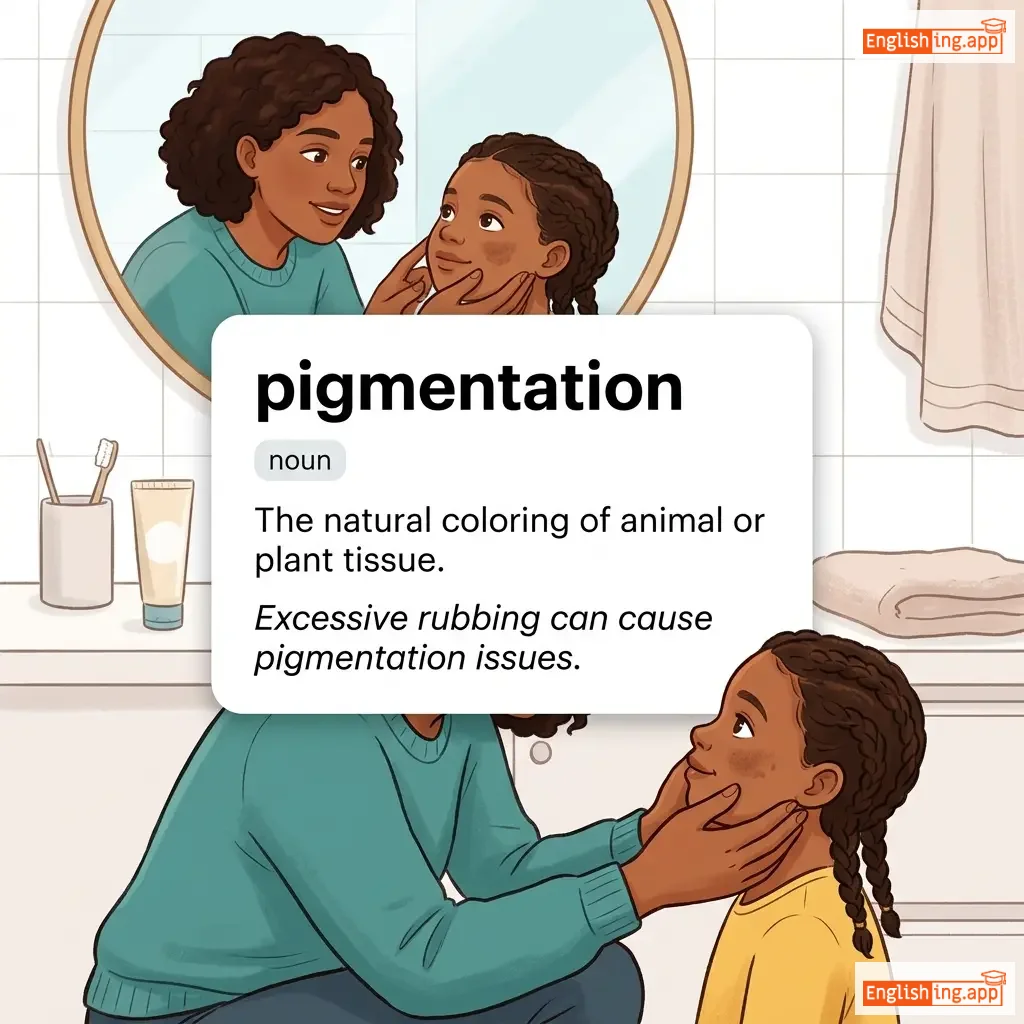
pigmentation definition card — visual illustration of the meaning
noun
/ˌpɪɡ.menˈteɪ.ʃən/
色素沉着 (sesu chen zhuo)

The natural coloring of animal or plant tissue.

"Excessive rubbing can cause pigmentation issues."

"过度摩擦可能会导致色素沉着问题。" (Guo du mocha keneng hui dao zhi sesu chen zhuo wenti.)
noun
/paɪl/
(dui)

a large amount of something stacked or placed in a heap

"He placed the books in a pile on the table."

"他把书堆放在桌子上。" (Tā bǎ shū duī fàng zài zhuōzi shàng.)
🕵️‍♂️

pilfer (皮尔弗)

verb
/ˈpɪlfər/
偷窃 (tōuqiè)

to steal things of small value or in small quantities

"The employee was caught pilfering office supplies."

"员工在偷窃办公室用品时被抓住。" (Yuángōng zài tōuqiè bàngōngshì yòngpǐn shí bèi zhuāzhù.)
noun
/ˈpɪl.fər.ɪdʒ/
窃盗(小额盗窃) (pilfuhrij)

the theft of small amounts or items, especially from one's workplace

"The company installed cameras to prevent pilferage."

"公司安装了监控摄像头以防止盗窃。" (gongsianzhuanglejiankongshexiangtouyifangzhidaoqie)
🚶‍♂️

Pilgrim (朝圣者)

noun
/ˈpɪl.ɡrɪm/
朝圣者; 旅行者 (chaoshengzhe; lvxingzhe)

a person who journeys to a sacred place for religious reasons; a traveler

"The pilgrim walked for days to reach the holy shrine."

"朝圣者走了好几天才到达圣地。" (Chaoshengzhe zoule haojidian cai daoda shengdi.)
noun
/pɪl/
药丸 (yao wan)

a small round piece of medicine to be swallowed

"He took a pill to relieve his headache."

"他吃了一颗药丸来缓解头痛。" (Ta chi le yi ke yaowan lai huanjie toutong.)
🏴‍☠️

pillage (pílèjí)

verb
/ˈpɪlɪdʒ/
洗劫 (xǐjié)

to rob or plunder a place, especially during war

"The invading army pillaged the village and took all valuables."

"入侵军队洗劫了村庄,拿走了所有贵重物品。" (Rùqīn jūnduì xǐjié le cūnzhuāng, ná zǒu le suǒyǒu guìzhòng wùpǐn.)
noun
/ˈpɪlər/
支柱 (zhīzhù)

a strong vertical support or mainstay of a structure or system

"The ancient temple was supported by massive stone pillars."

"古老的庙宇由巨大的石柱支撑。" (gǔlǎo de miàoyǔ yóu jùdà de shízhù zhīchēng.)
noun
/pɪˈlɑːf/
皮拉夫 (pilaf)

a dish of rice cooked in seasoned broth, often with meat and vegetables

"We enjoyed a delicious chicken pillaw for dinner."

"我们享用了美味的鸡肉皮拉夫作为晚餐。" (wǒmen xiǎngyòngle měiwèi de jīròu pílāf zuòwéi wǎncān.)
noun/verb
/ˈpɪləri/
公开惩罚装置 (gōngkāi chéngfá zhuāngzhì)

a device for publicly punishing someone / to expose to public ridicule

"The corrupt official was placed in the pillory for the town to jeer at."

"腐败的官员被放在皮洛里里让市民嘲笑。" (fǔbài de guānyuán bèi fàng zài pílùlǐ lǐ ràng shìmín cháoxiào.)
noun
/ˈpɪloʊ/
枕头 (zhěntou)

a soft cushion filled with material used to support the head while sleeping or resting

"She placed her head on the soft pillow and fell asleep quickly."

"她把头放在柔软的枕头上,快速入睡。" (Tā bǎ tóu fàng zài róuruǎn de zhěntou shàng, kuàisù rùshuì.)
noun/verb
/ˈpaɪlət/
飞行员 (feixingyuan)

a person who operates an aircraft / to guide or lead through a trial

"She piloted the plane safely through the storm."

"她安全地驾驶飞机穿过风暴。" (Ta anquan de jiashi feiji chuanguo fengbao.)
noun
/ˈpɪm.pəl/
痘痘 (dòu dòu)

a small, inflamed elevation of the skin; a spot on the skin, especially on the face

"She was embarrassed about the pimple on her forehead."

"她因额头上的痘痘而感到尴尬。" (Tā yīn é tóu shàng de dòu dòu ér gǎndào gāngà.)
noun
/pɪn/
别针 (biezhen)

a small thin piece of metal used to fasten or hold things together

"She used a pin to attach the note to the board."

"她用别针把纸条固定在黑板上。" (Ta yong biezhen ba zhitiaoguding zai heiban shang.)
noun
/ˈpɪnsərz/
钳子 (qianzi)

a gripping tool with two arms used for holding or pulling objects

"He used pincers to remove the hot nail from the wood."

"他用钳子从木头中取出热钉。" (Tā yòng qiánzi cóng mùtou zhōng qǔchū rè dīng.)
verb
/pɪntʃ/
(nie)

to squeeze tightly between the fingers; to take a small amount

"She pinched a bit of salt into the soup."

"她在汤里放了一点盐。" (Ta zai tang li fang le yi dian yan.)
noun
/ˈpɪntʃərz/
钳子 (qiánzi)

a tool used for gripping or squeezing objects

"Use the pinchers to remove the hot coal safely."

"使用拼钳安全地取下热煤。" (Shǐyòng pīnqián ānquán de qǔxià rè méi.)
verb
/paɪn/
渴望 (kewang)

to long intensely for something or someone; to suffer from longing

"He pined for his hometown after moving abroad."

"他搬到国外后,非常想念他的家乡。" (Ta ban dao guowai hou, feichang xiangnian tade jiaxiang.)
noun
/ˈpaɪn.æp.əl/
菠萝 (boluo)

a large tropical fruit with a tough skin and sweet yellow flesh

"The pineapple has a crown of spiky leaves on top."

"菠萝顶部有一冠刺叶。" (Bōluó dǐngbù yǒu yī guān cì yè)