
词汇表

英语词汇词典 | 单词含义、定义和示例

persuasiveness definition card — visual illustration of the meaning
noun
/pərˈsweɪ.sɪv.nəs/
说服力 (shuōfú lì)

The quality of being able to persuade someone to do or believe something.

"His persuasiveness helped secure the deal."

"他的说服力帮助确保了交易的达成。" (Tā de shuōfúlì bāngzhù quèbǎo le jiāoyì de dáchéng.)
adjective
/pɜːrt/
俏皮但迷人 (qiàopí dàn mírén)

attractively lively or cheeky in manner or style

"She gave a pert reply that made everyone laugh."

"她给了一个俏皮的回答,让所有人都笑了。" (Tā gěi le yīgè qiàopí de huídá, ràng suǒyǒu rén dōu xiàole.)
verb
/pərˈteɪn/
涉及 (shèjí)

to relate or have reference to something

"The rules pertain to all students in the school."

"这些规则适用于学校的所有学生。" (Zhèxiē guīzé shìyòng yú xuéxiào de suǒyǒu xuéshēng.)
adjective
/ˌpɜːrtɪˈneɪʃəs/
固执 (gùzhí)

holding firmly to an opinion, purpose, or course of action; stubbornly persistent

"The pertinacious lawyer refused to give up the case."
"固执的律师拒绝放弃案件。" (Gùzhí de lǜshī jùjué fàngqì ànjiàn.)
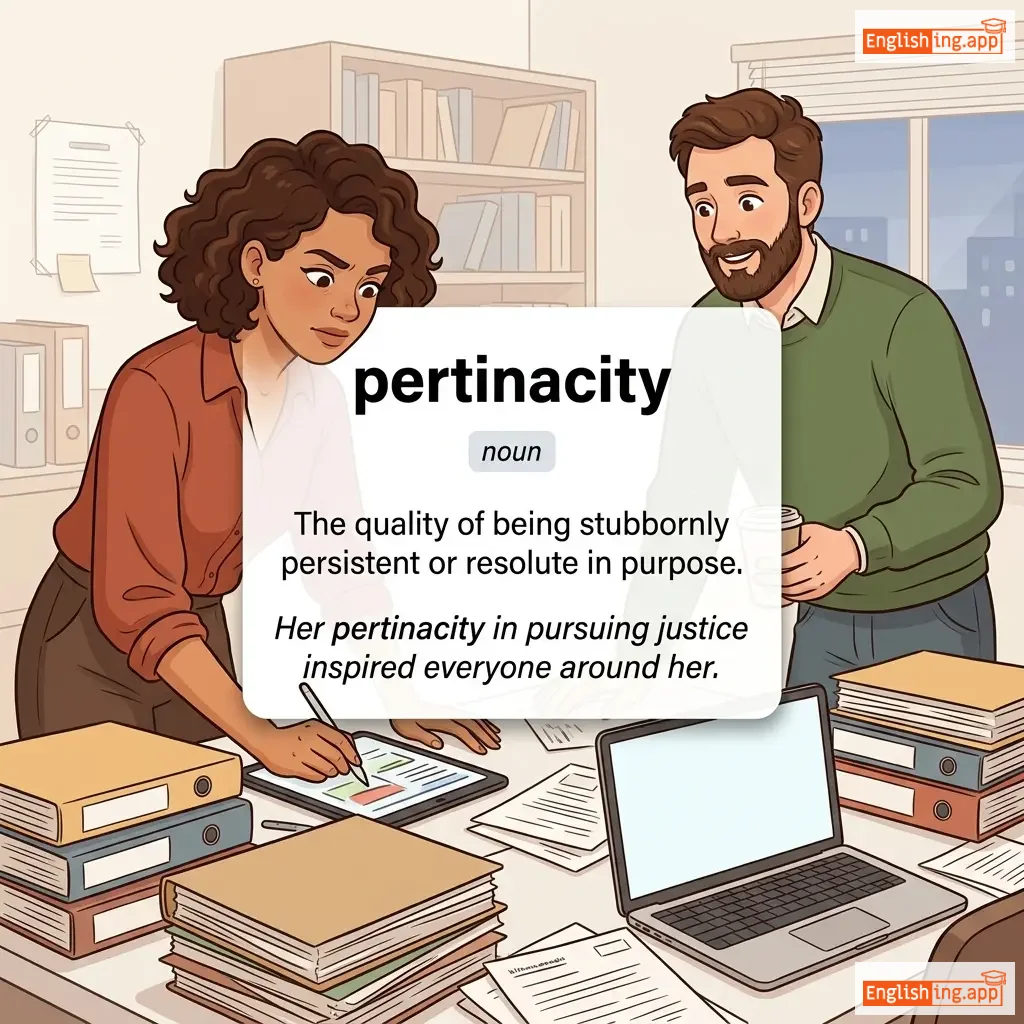
pertinacity definition card — visual illustration of the meaning
noun
/ˌpɜːrtɪˈnæsɪti/
执着 (zhizhuo)

The quality of being stubbornly persistent or resolute in purpose.

"Her pertinacity in pursuing justice inspired everyone around her."

"她在追求正义上的执着鼓舞了周围的每一个人。" (ta zai zhuiqiu zhengyi shang de zhizhuo guwu le zhouwei de mei yi ge ren)
adjective
/ˈpɜːrtɪnənt/
相关的 (xiāngguān de)

Relevant or applicable to a particular matter.

"She asked a pertinent question during the meeting."

"她在会议中提出了一个相关的问题。" (Tā zài huìyì zhōng tíchūle yīgè xiāngguān de wèntí.)
noun
/ˈpɜːrtnəs/
厚颜无耻 (hòu yán wú chǐ)

boldness or forwardness in speech or behavior; sauciness

"Her pertness during the meeting surprised everyone."

"她在会议中的厚颜无耻让所有人都惊讶。" (Tā zài huì yì zhōng de hòu yán wú chǐ ràng suǒ yǒu rén dōu jīng yà.)
verb
/pərˈtɜːrb/
扰乱 (raoluan)

To disturb or unsettle greatly in mind.

"The sudden noise perturbed the students during the exam."

"突如其来的噪音在考试期间干扰了学生。" (Tūrú qí lái de zàoyīn zài kǎoshì qījiān gānrǎo le xuéshēng.)
noun
/ˌpɜːrtərˈbeɪʃn/
扰动 (raodong)

A state of anxiety, disturbance, or disorder.

"The announcement caused a perturbation in the financial markets."

"公告导致了金融市场的扰动。" (Gōnggào dǎozhìle jīnróng shìchǎng de raodong.)
adjective
/pərˈtɜːrbd/
不安的 (bù'ān de)

feeling anxious, unsettled, or disturbed

"He looked perturbed after hearing the bad news."

"他听到坏消息后看起来很不安。" (Tā tīngdào huài xiāoxī hòu kàn qǐlái hěn bù'ān.)
noun
/pəˈruːzl/
仔细阅读 (zǐxì yuèdú)

The action of reading or examining something carefully.

"The contract was given to the lawyer for perusal."

"合同已交给律师以供仔细阅读。" (Hétóng yǐ jiāo gěi lǜshī yǐ gòng zǐxì yuèdú.)
verb
/pəˈruːz/
幸福 (xingfu)

to read something carefully and thoroughly; sometimes used to mean to browse casually

"She sat down to peruse the contract before signing it."

"当她获得奖项时,她无法掩饰自己的幸福。" (Dāng tā huòqǔ jiǎngxiàng shí, tā wúfǎ yǎnshì zìjǐ de xìngfú.)
verb
/pəˈveɪd/
弥漫 (mímàn)

to spread through and be present in every part of something

"The smell of fresh flowers pervaded the entire room."

"新鲜花香弥漫整个房间。" (Xīnxiān huāxiāng mímàn zhěnggè fángjiān.)
noun
/pəˈveɪʒən/
传播 (chuanbo)

the act of spreading through or being present everywhere in something

"There was a pervasion of hope throughout the community."

"整个社区充满了希望的传播。" (Zhěnggè shèqū chōngmǎnle xīwàng de chuánbò.)
pervasive definition card — visual illustration of the meaning
adjective
/pərˈveɪsɪv/
普遍 (pǔbiàn)

spreading widely throughout an area or a group of people

"The pervasive influence of technology is seen in every aspect of life."

"技术的普遍影响在生活的各个方面都能看到。" (Jìshù de pǔbiàn yǐngxiǎng zài shēnghuó de gè ge fāngmiàn dōu néng kàn dào.)
adjective
/pərˈvɜːrs/
变态 (biàntài)

showing a deliberate desire to behave in a way that is unreasonable, contrary, or unacceptable

"He took a perverse pleasure in upsetting his colleagues."

"他从使同事不安中获得变态的快乐。" (Tā cóng shǐ tóngshì bù'ān zhōng huòdé biàntài de kuàilè.)
noun
/pərˈvɜːrʒən/
扭曲 (niǔqū)

The act of distorting or corrupting the original meaning, purpose, or state of something.

"The regime’s censorship was seen as a perversion of free speech."

"该政权的审查制度被视为对言论自由的扭曲。" (Gāi zhèngquán de shěnchá zhìdù bèi shì wéi duì yánlùn zìyóu de niǔqū.)
noun
/pərˈvɜːrsəti/
恶性 (èxìng)

A deliberate and obstinate desire to behave in an unreasonable or unacceptable way.

"Out of sheer perversity, he refused to follow the simple instructions."

"出于纯粹的恶性,他拒绝按照简单的指示行事。" (Chūyú chúncuì de èxìng, tā jùjué ànzhào jiǎndān de zhǐshì xíngshì.)
verb/noun
/pərˈvɜːrt/

As a verb: to distort the meaning or purpose of something; as a noun: a person with abnormal or immoral sexual behavior.

"He tried to pervert the truth to escape punishment."

adjective
/ˈpɜːrviəs/
透水的 (tòu shuǐ de)

Allowing water, air, or other substances to pass through; permeable.

"The soil here is pervious to rainwater."

"这里的土壤允许雨水通过。" (Zhèlǐ de tǔrǎng yǔnxǔ yǔshuǐ tōngguò.)
noun
/ˈpesɪˌmɪzəm/
悲观主义 (bēiguān zhǔyì)

A tendency to see the worst aspect of things or believe the worst will happen.

"Her constant pessimism made it hard to stay optimistic."

"她的悲观主义让保持乐观变得很困难。" (Tā de bēiguān zhǔyì ràng bǎochí lèguān biàn dé hěn kùnnán.)
noun
/ˈpes.ə.mɪst/
悲观主义者 (biguān zhǔyì zhě)

a person who tends to see the worst aspect of things or believes that the worst will happen; someone who lacks hope or confidence in the future

"Being a pessimist, he always expected the worst outcome."
"作为一个悲观主义者,他总是预期最坏的结果。" (zuòwéi yīgè bēiguān zhǔyì zhě, tā zǒng shì yùqī zuì huài de jiéguǒ)
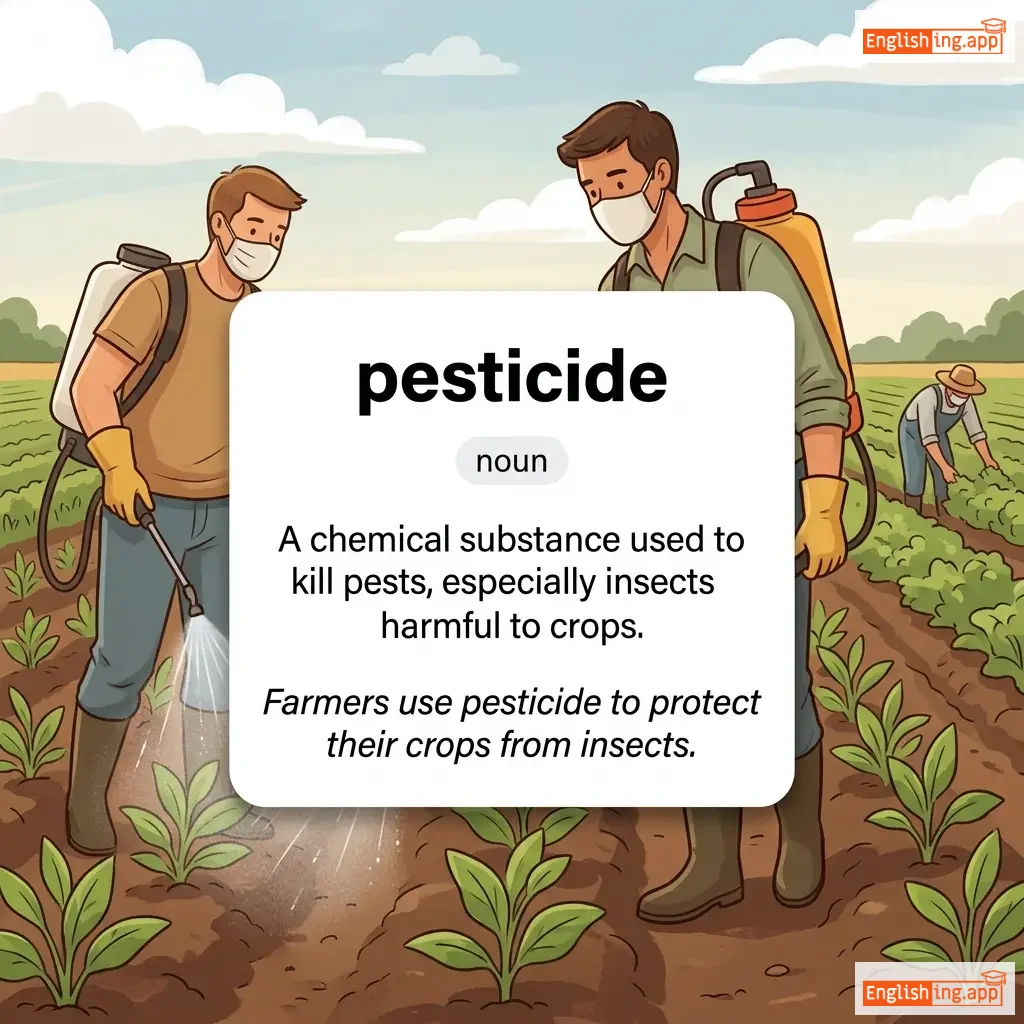
pesticide definition card — visual illustration of the meaning
noun
/ˈpɛstɪsaɪd/
杀虫剂 (shāchóngjì)

A chemical substance used to kill pests, especially insects harmful to crops.

"Farmers use pesticide to protect their crops from insects."
"农民使用杀虫剂来保护他们的作物免受昆虫的侵害。" (Nóngmín shǐyòng shāchóngjì lái bǎohù tāmen de zuòwù miǎn shòu kūnchóng de qīnhài.)
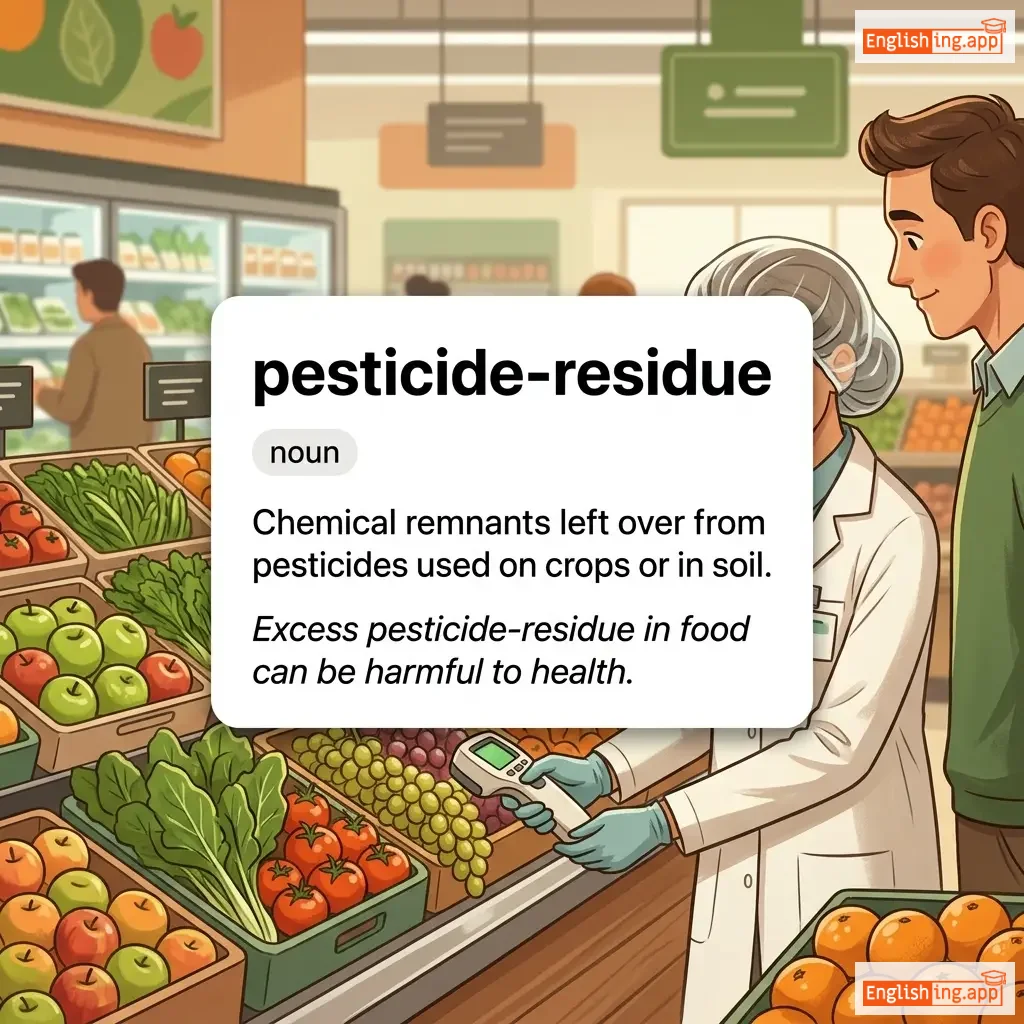
pesticide-residue definition card — visual illustration of the meaning
noun
/ˈpɛs.tɪ.saɪd ˈrɛz.ɪ.djuː/
农药残留 (nongyao canliu)

Chemical remnants left over from pesticides used on crops or in soil.

"Excess pesticide-residue in food can be harmful to health."
"食物中的农药残留过多可能对健康有害。" (Shiwuchong de nongyao canliu guoduo keneng dui jiankang youhai.)
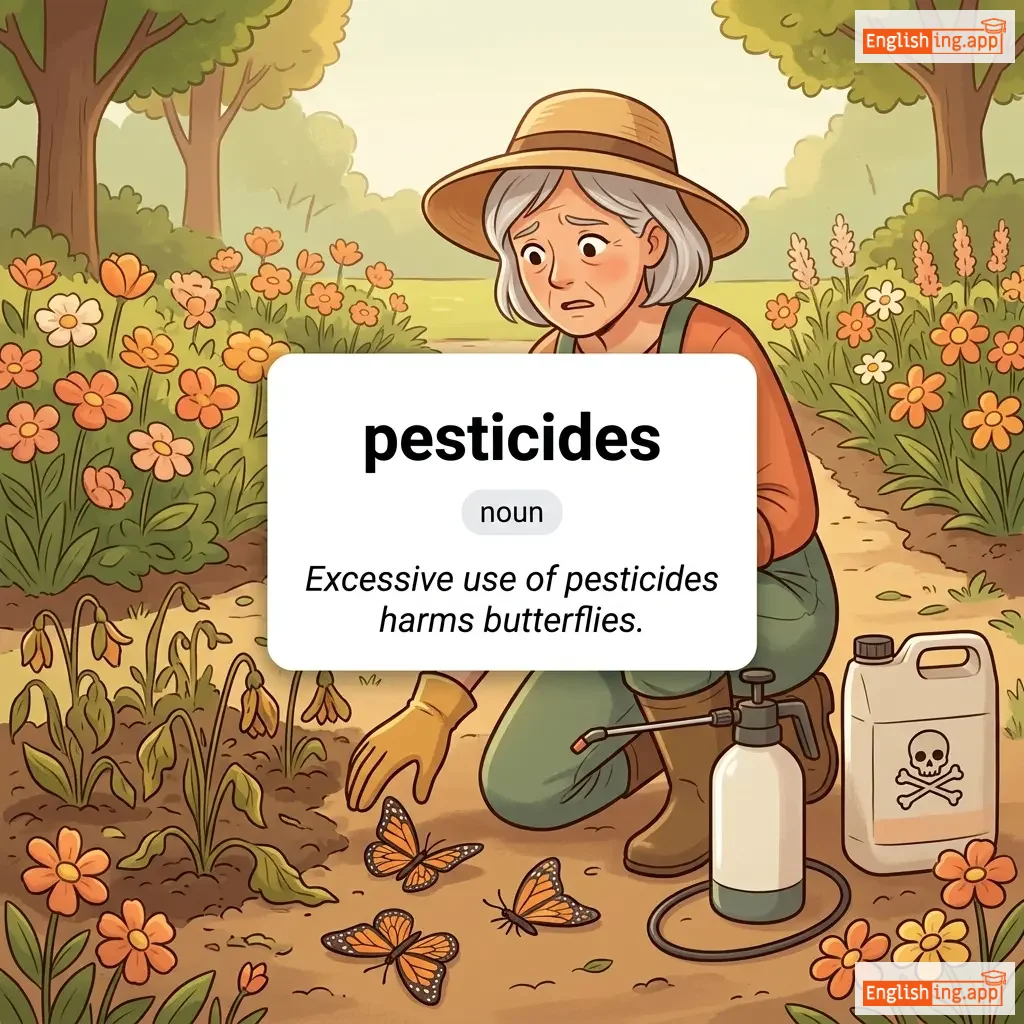
pesticides definition card — visual illustration of the meaning
noun
ˈpɛstɪsaɪdz
杀虫剂 (shāchóngjì)

Chemical substances used to kill pests, but harmful to beneficial insects like butterflies.

"Excessive use of pesticides harms butterflies."

"过度使用杀虫剂会伤害蝴蝶。" (Guòdù shǐyòng shāchóngjì huì shānghài húdié.)
noun
/ˈpɛstɪləns/
瘟疫 (wēn yì)

A deadly or virulent epidemic disease that spreads rapidly.

"The medieval city was devastated by a pestilence."

"中世纪的城市被瘟疫摧毁。" (zhōng shìjì de chéngshì bèi wēn yì cuīhuǐ.)
adjective
/ˈpɛstɪlənt/
致命的 (zhìmìng de)

Causing or tending to cause death or destruction; harmful or pernicious.

"The pestilent atmosphere of the swamp made people sick."

"沼泽的致命气氛让人们生病。" (Zhǎozé de zhìmìng qìfēn ràng rénmen shēngbìng.)
adjective
/ˌpɛstɪˈlɛnʃəl/
瘟疫的 (wēn yì de)

Relating to or causing pestilence; very harmful, troublesome, or dangerous.

"The pestilential smell of the garbage filled the street."

"垃圾的瘟疫气味充满了街道。" (Lājī de wēn yì qì wèi chōng mǎn le jiē dào.)
noun
/ˈpɛsəl/
(chǔ)

A heavy tool with a rounded end used for crushing or grinding substances in a mortar.

"She used a pestle to grind the spices."
"她使用杵来研磨香料。" (Tā shǐyòng chǔ lái yánmó xiāngliào.)
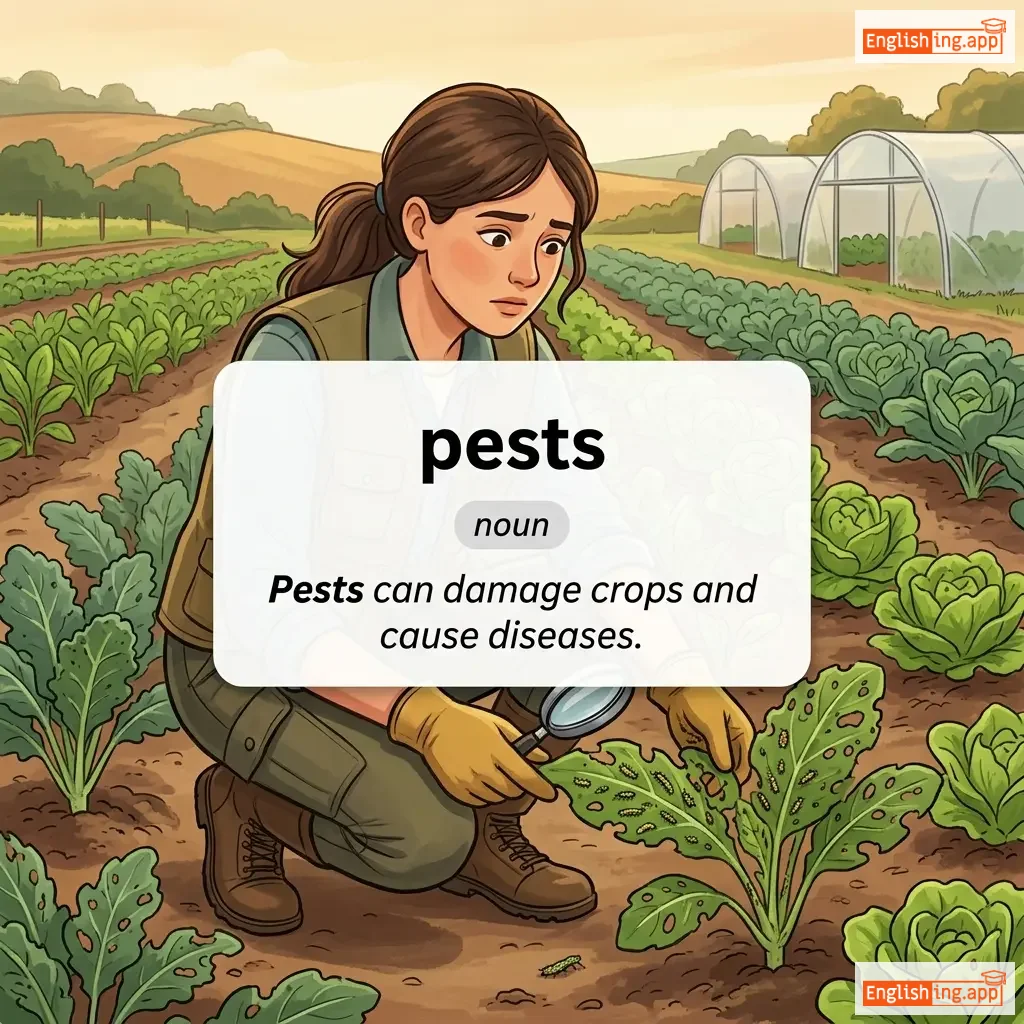
pests definition card — visual illustration of the meaning
noun
pɛsts
害虫, 害动物 (haichong, haidongwu)

Harmful or troublesome creatures, especially insects or small animals that damage crops, food, or living spaces.

"Pests can damage crops and cause diseases."

"害虫可能损害作物并引发疾病。" (Haichong keneng sunhai zuowu bing yinfa jibing.)
noun
/pɛt/
宠物 (chǒngwù)

a domesticated animal kept for companionship or pleasure

"My dog is my favorite pet."

"我的狗是我最喜欢的宠物。" (Wǒ de gǒu shì wǒ zuì xǐhuān de chǒngwù.)
noun
/ˈpetəl/
花瓣 (huaban)

One of the colored segments of a flower that forms the corolla

"Each petal of the daisy was white with a yellow center."

"雏菊的每一片花瓣都是白色的,中央是黄色的。" (chujus de mei yi pian huaban doushi baise de, zhongyang shi huangse de)
verb
/ˈpiːtər/
逐渐减弱 (zhújiàn jiǎnruò)

to diminish gradually and come to an end; to fade or dwindle away

"The excitement of the event began to peter out after a few hours."

"事件的兴奋感在几个小时后开始逐渐消退。" (Shìjiàn de xīngfèn gǎn zài jǐ gè xiǎoshí hòu kāishǐ zhújiàn xiāotuì.)
noun
/pəˈtɪʃən/
请愿书 (qǐngyuàn shū)

a formal written request, typically signed by many people, appealing to authority about a cause

"They signed a petition to improve road safety in the area."

"他们签署了一份请愿书,要求改善该地区的道路安全。" (Tāmen qiānshǔle yī fèn qǐngyuàn shū, yāoqiú gǎishàn gāi dìqū de dàolù ānquán.)
verb
/ˈpɛtrɪfaɪ/
石化 (shí huà)

to make someone so frightened that they are unable to move or think; to turn into stone

"The loud noise petrified the little child."

"大声的噪音让孩子石化了。" (Dà shēng de zàoyīn ràng háizi shí huà le.)
noun
/ˈpɛtrəˌɡræf/
岩石描述 (yan shi miao shu)

a description or representation of rocks, especially in detailed scientific writing

"The scientist studied the petrograph to understand the rock composition."

"科学家研究了岩石图,以了解岩石的组成。" (Ke xue jia yan jiu le yan shi tu, yi liao jie yan shi de zu cheng.)
noun
/ˈpetɪkoʊt/
裙子内衬 (qunzi neichen)

an undergarment worn by women under a dress or skirt

"She wore a white petticoat under her dress."

"她穿着一条白色的衬裙在她的裙子下面。" (Tā chuānzhuó yītiáo báisè de chènqún zài tā de qúnzi xiàmiàn.)
verb
/ˈpɛtɪˌfɒɡ/
争论琐碎的事情 (zhēnglùn suǒsuì de shìqíng)

to argue or quibble over trivial matters; to engage in petty, dishonest practices

"The lawyer was accused of trying to pettifog instead of addressing the real issue."

"律师被指控试图争论琐碎的事情,而不是解决真正的问题。" (Lǚshī bèi zhǐkòng shìtú zhēnglùn suǒsuì de shìqíng, ér bùshì jiějué zhēnzhèng de wèntí.)
adjective
/ˈpɛti/
琐碎 (suǒsuì)

Of little importance or trivial; also describes a person overly concerned with small or unimportant matters.

"She often gets upset over the most petty things."

"她经常为最琐碎的事情感到不安。" (Tā jīngcháng wèi zuì suǒsuì de shìqíng gǎndào bù'ān.)
noun
/ˈpɛtjʊləns/
暴躁 (bàozào)

The quality of being childishly sulky or bad-tempered.

"His petulance during the meeting annoyed everyone."

"他在会议中的佩图兰斯让所有人都烦恼。" (Tā zài huìyì zhōng de pèi tú lán sī ràng suǒyǒu rén dōu fánnǎo.)
adjective
/ˈpɛtjʊlənt/
脾气坏 (píqì huài)

Childishly sulky or bad-tempered.

"The child became petulant when denied more candy."

"孩子因为没得到更多糖果而变得脾气坏。" (Háizi yīnwèi méi dédào gèng duō tángguǒ ér biàn dé píqì huài.)
noun
/ˈfeɪlæŋks/
方阵 (fāngzhèn)

A group of people or things arranged in a compact, close formation; also an ancient Greek military formation.

"A phalanx of reporters waited outside the courthouse."

"一群记者在法院外等候。" (Yī qún jìzhě zài fǎyuàn wài děnghòu.)
noun
/ˈfænˌtæzəm/
幽灵 (youling)

an illusion, ghost, or figment of the imagination

"The child claimed to see a phantasm in the old house."

"孩子声称在旧房子里看见了幽灵。" (Haizi shengcheng zai jiu fangzi li kanjianle youling.)
adjective
/ˌfæntæzməˈɡɒrɪkəl/
幻想的 (huànxiǎng de)

Having a fantastic, dreamlike, or surreal appearance, often shifting or illusory.

"The movie created a phantasmagorical vision of another world."

"这部电影创造了另一个世界的幻想。" (Zhè bù diànyǐng chuàngzàole lìng yīgè shìjiè de huànxiǎng.)
adjective
/ˌfærɪˈseɪɪkəl/
伪善的 (wěishàn de)

Excessively concerned with formal rules or outward show of morality, often in a hypocritical way.

"His pharisaical behavior made people doubt his sincerity."

"他的伪善行为让人怀疑他的真诚。" (Tā de wěishàn xíngwéi ràng rén huáiyí tā de zhēnchéng.)
noun
/ˈfærɪsiː/
伪君子 (wěi jūn zǐ)

A member of an ancient Jewish sect; by extension, a self-righteous or hypocritical person.

"He acted like a pharisee, judging others while ignoring his own faults."

"他像个法利赛人一样行事,批评别人却忽视自己的错误。" (Tā xiàng gè fǎ lì sài rén yīyàng xíngshì, pīpíng biérén què hūshì zìjǐ de cuòwù.)
noun
/ˌfɑːrməkəˈpiːə/
药典 (yaodian)

An official book listing medicinal drugs, their effects, and directions for use.

"The doctor referred to the pharmacopoeia to check the drug's proper dosage."

"医生查阅了药典,以核对药物的正确剂量。" (Yisheng chayuele yaodian, yi hedui yaowu de zhengque jiliao.)
noun
/ˈfɑːrməsi/
药店 (yaodian)

A place where medicinal drugs are prepared and sold.

"I went to the pharmacy to buy antibiotics."

"我去药店买抗生素。" (Wo qu yaodian mai kangshengsu.)
noun
/feɪz/
阶段 (jieduan)

a distinct period or stage in a process of development

"We are in the final phase of the project."
"我们处于项目的最后阶段。" (Wo men chuyu xiangmu de zuihou jieduan.)
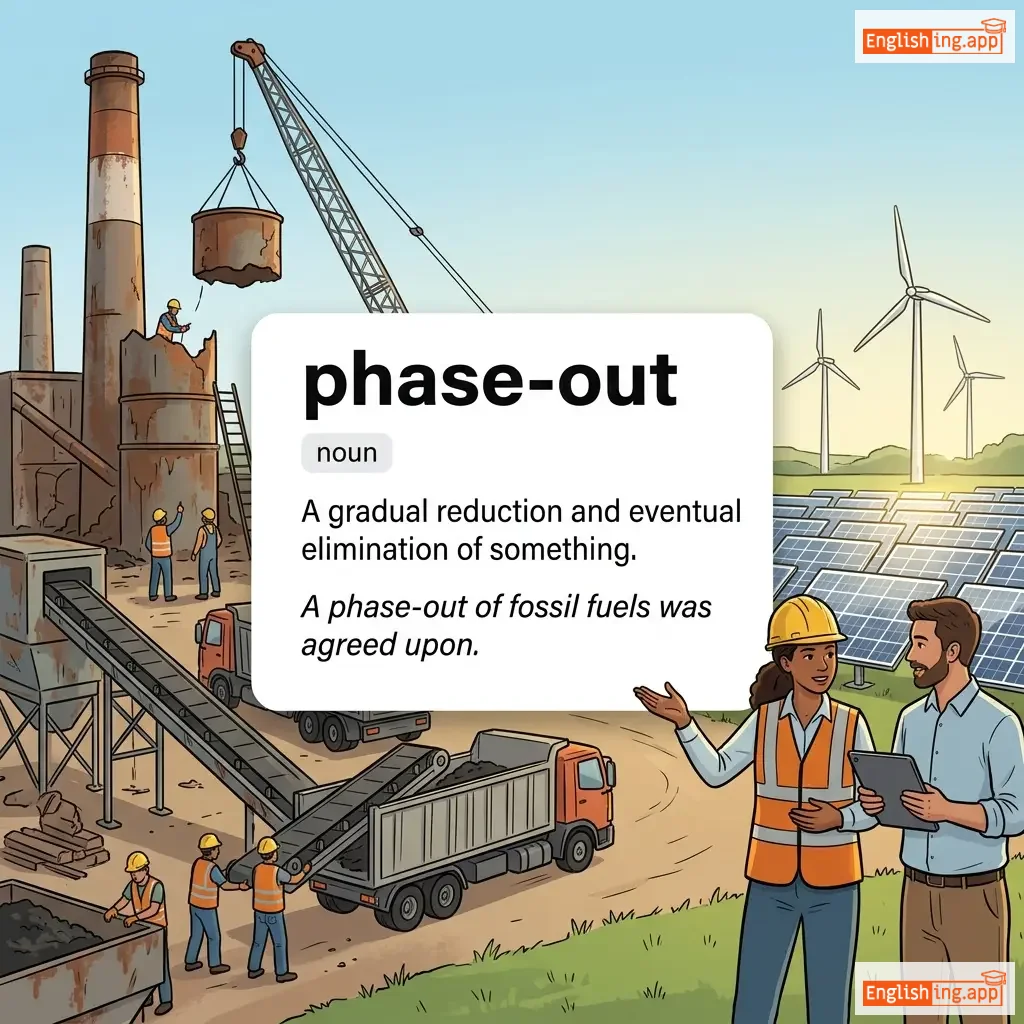
phase-out definition card — visual illustration of the meaning
noun
ˈfeɪz.aʊt
逐步淘汰 (zhú bù táo tài)

A gradual reduction and eventual elimination of something.

"A phase-out of fossil fuels was agreed upon."

"达成了逐步淘汰化石燃料的协议。" (Dá chéng le zhú bù táo tài huà shí rán liào de xié yì.)