词汇表

英语词汇词典 | 单词含义、定义和示例

verb
/aʊtˈlɪv/
比…活得长 (bǐ… huó de cháng)

to live longer than someone or something else

"She outlived all her siblings."

"她活过了所有的兄弟姐妹。" (Tā huóguò le suǒyǒu de xiōngdì jiěmèi.)
noun
/ˈaʊtlʊk/
前景, 预测 (qianjing, yuce)

a person's general attitude or view; a forecast or prospect

"The economic outlook for the year is positive."

"今年的经济前景是积极的。" (Jinen de jingji qianjing shi jiji de.)
verb
/ˌaʊtməˈnuːvər/
巧妙地战胜 (qiǎo miào de zhàn shèng)

to gain an advantage over an opponent by skillful or clever action

"The smaller company managed to outmaneuver its larger rival."

"小公司成功地战胜了它的大对手。" (Xiǎo gōngsī chénggōng de zhànshèngle tā de dà duìshǒu.)
adjective
/aʊtˈmoʊdɪd/
过时的 (guòshí de)

No longer in fashion or useful; outdated.

"That old computer is completely outmoded."

"那台旧电脑完全过时了。" (nà tái jiù diànnǎo wánquán guòshí le.)
noun
/ˈaʊtpoʊst/
前哨站 (qiánshàozhàn)

A small military camp or position at some distance from the main force, used especially as a guard.

"The soldiers were stationed at a remote outpost."
"士兵们被驻扎在一个偏远的前哨站。" (Shìbīngmen bèi zhùzhā zài yīgè piānyuǎn de qiánshàozhàn.)
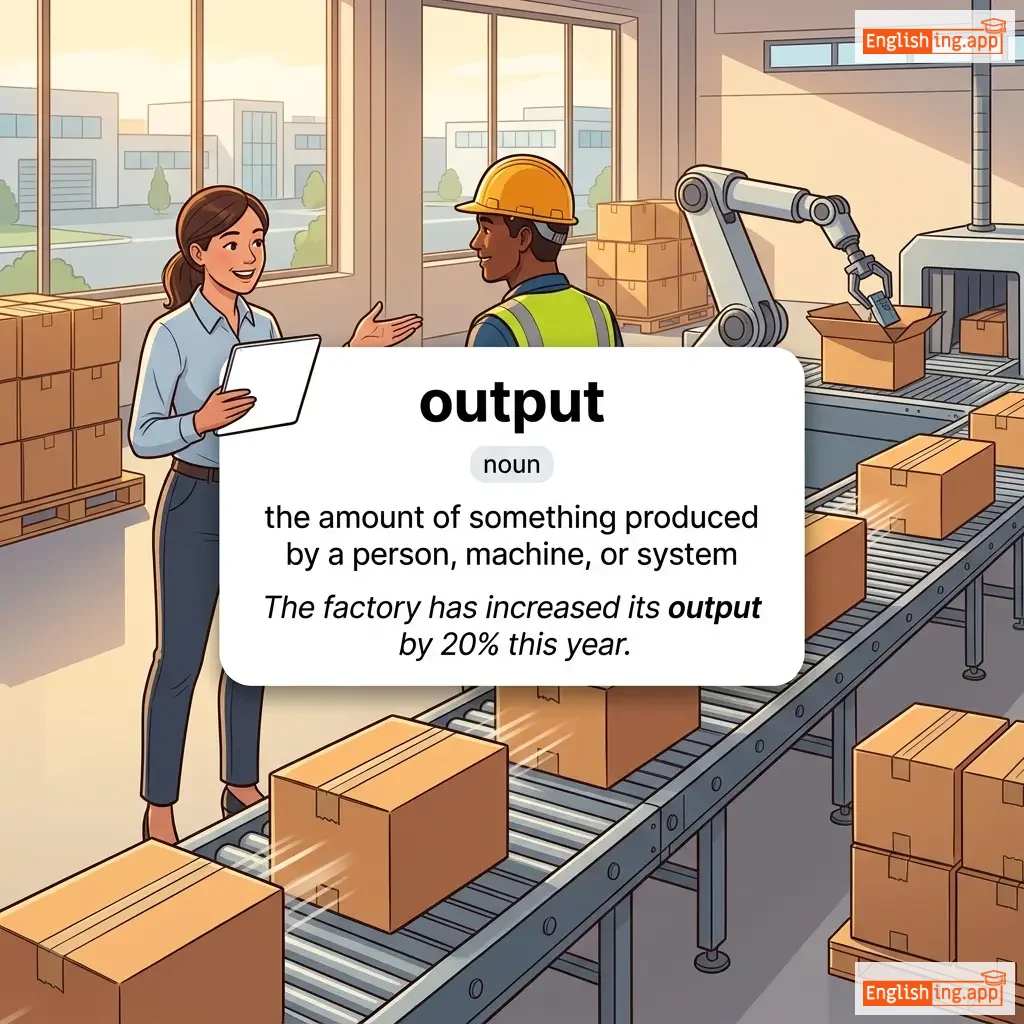
output definition card — visual illustration of the meaning
noun
/ˈaʊtpʊt/
产出 (chanchu)

the amount of something produced by a person, machine, or system

"The factory has increased its output by 20% this year."

"工厂今年增加了20%的产出。" (Gongchang jinian zengjia le 20% de chanchu.)
noun/verb
/ˈaʊtreɪdʒ/
愤怒 (fennu)

A strong feeling of anger and shock; to arouse anger or shock.

"The unfair decision caused public outrage."

"不公正的决定引起了公众的愤怒。" (Bugongzheng de jueding yinqile gongzhong de fennu.)
adjective
/aʊtˈreɪdʒəs/
骇人听闻 (hàiréntīngwén)

Shockingly bad or excessive; very unusual or amusing.

"The comedian told an outrageous joke."

"这位喜剧演员讲了一个骇人听闻的笑话。" (Zhè wèi xǐjù yǎnyuán jiǎngle yīgè hàiréntīngwén de xiàohuà.)
noun
/ˈaʊtriːtʃ/
援助扩展 (yuánzhù kuòzhǎn)

The act of providing services or support to people who might not otherwise have access to them.

"The charity launched a new outreach program for the homeless."

"慈善机构为无家可归的人推出了一个新的援助扩展计划。" (Císhàn jīgòu wèi wújiā kěguī de rén tuīchūle yīgè xīn de yuánzhù kuòzhǎn jìhuà.)
verb
/aʊtˈraɪd/
超越 (chaoyue)

to ride faster, farther, or better than someone else

"The young rider managed to outride his competitors in the race."

"年轻的骑手在比赛中成功超越了他的竞争对手。" (Nianqing de qishe zai bisai zhong chenggong chaoyue le tade jingzheng duishou.)
noun
/ˈaʊtˌrɪɡər/
稳定结构 (wěndìng jiégòu)

a projecting structure on a boat, used for stability, or a boat fitted with such support

"The fisherman paddled his outrigger canoe across the lagoon."

"渔民划着带有支撑的独木舟穿过泻湖。" (Yúmín huázhe dàiyǒu zhīchēng de dúmùzhōu chuānguò xiè hú.)
adverb/adjective
/ˌaʊtˈraɪt/
彻底 (chèdǐ)

completely, instantly, or without reservation

"She rejected the offer outright without any hesitation."

"她毫不犹豫地拒绝了这个提议。" (Tā háo bù yóuyù de jùjuéle zhège tíyì.)
noun
/ˈaʊtˌsɛt/
开始 (kaishi)

the beginning or start of something

"From the outset, the project seemed ambitious but achievable."

"从一开始,项目看起来雄心勃勃但可以实现。" (Cóng yī kāishǐ, xiàngmù kàn qǐlái xióngxīn bóbó dàn kěyǐ shíxiàn.)
noun/adjective/adverb
/ˌaʊtˈsaɪd/
外面 (wàimiàn)

the external part or surface of something; beyond the boundary

"Children were playing outside in the yard."

"孩子们在院子外面玩。" (Háizimen zài yuànzi wàimiàn wán.)
noun
/ˌaʊtˈsaɪdə(r)/
局外人 (juwai ren)

a person who is not accepted as a member of a particular group or community

"As a new student, she often felt like an outsider at school."

"作为新生,她常常觉得自己在学校是个局外人。" (zuòwéi xīnshēng, tā chángcháng juéde zìjǐ zài xuéxiào shì ge juwairén.)
noun
/ˈaʊtˌskɜːrt/
城市郊区 (chengshi jiaoqu)

the outer edge or border of a town or city

"They built a new factory on the outskirts of the city."

"他们在城市郊区建了一家新工厂。" (Tāmen zài chéngshì jiāoqū jiànle yījiā xīn gōngchǎng.)
noun
/ˈaʊtskɜːrts/
城市边缘 (cheng shi bian yuan)

The outer parts of a town or city, away from the center.

"They moved to the outskirts of the city for a quieter life."
"他们为了更安静的生活搬到了城市的边缘。" (Tāmen wèile gèng ānjìng de shēnghuó bān dào le chéngshì de biānyuán.)
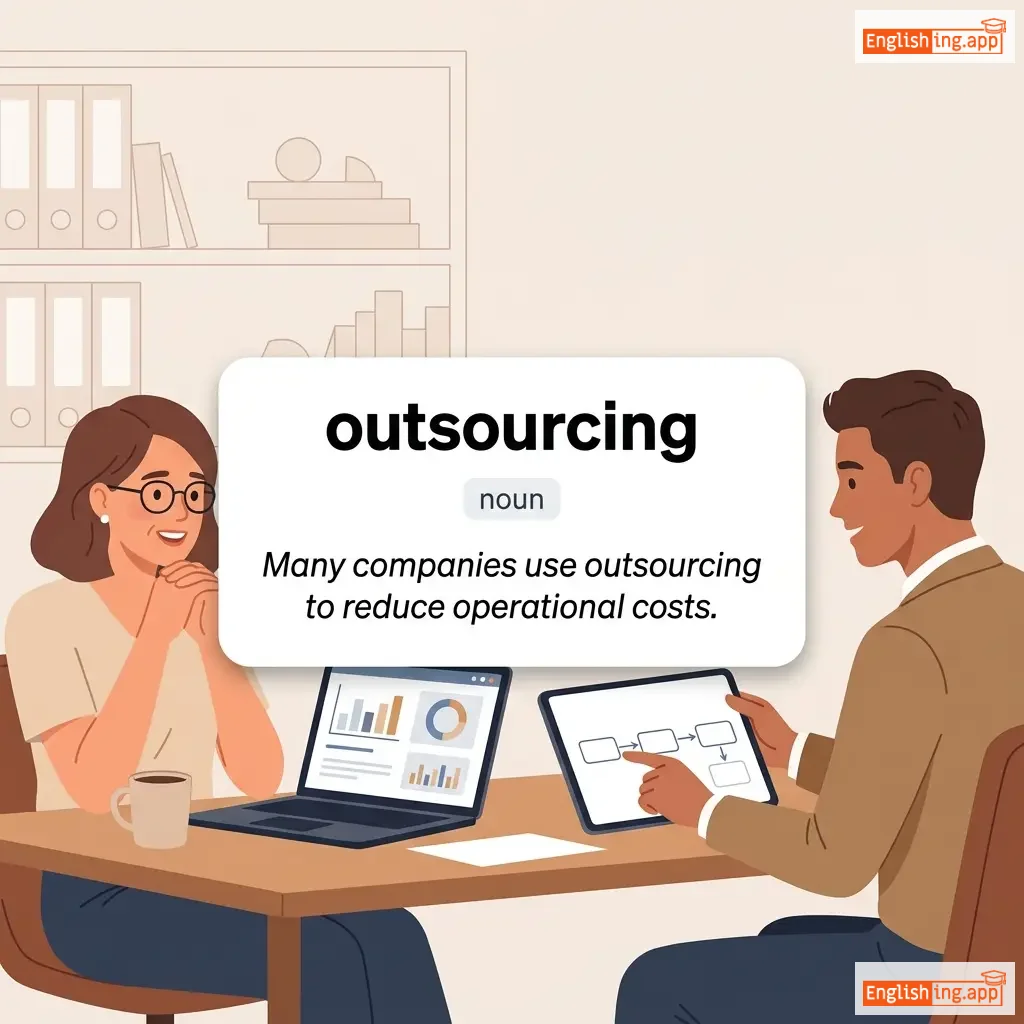
outsourcing definition card — visual illustration of the meaning
noun
ˈaʊt.sɔː.sɪŋ
外包 (waibao)

The practice of having certain job functions done outside a company instead of having an in-house department or employee handle them.

"Many companies use outsourcing to reduce operational costs."

"许多公司通过外包来减少运营成本。" (Xǔduō gōngsī tōngguò wàibāo lái jiǎnshǎo yùnyíng chéngběn.)
adjective
/ˌaʊtˈspoʊkən/
直言不讳 (zhí yán bù huì)

Expressing opinions or feelings freely and openly.

"She is known for being outspoken about social issues."

"她以公开表达对社会问题的看法而闻名。" (Tā yǐ gōngkāi biǎodá duì shèhuì wèntí de kànfǎ ér wénmíng.)
adjective
/aʊtˈstændɪŋ/
杰出 (jie chu)

extremely good or impressive; not yet resolved or paid

"She received an award for her outstanding performance."

"她因出色的表现获得了奖项。" (Ta yin chuse de biaoxian huode le jiangxiang.)
verb
/ˌaʊtˈstrɛtʃ/
伸展 (shen zhan)

To extend or stretch something outward.

"He outstretched his hand to help her up."

"他伸出手来帮助她站起来。" (Ta shenchu shou lai bangzhu ta zhan qilai.)
verb
/ˌaʊtˈstrɪp/
超越 (chaoyue)

To go faster or do better than someone or something; to surpass.

"The company outstripped its competitors in sales last year."

"公司在去年超越了它的竞争对手。" (Gongsi zai qunian chaoyue le ta de jingzheng duishou.)
adverb
/ˈaʊtwədli/
表面上; 外观上; (biaomian shang; waiguan shang;)

on the surface; externally; in appearance

"Outwardly, he seemed calm, but inside he was nervous."

"表面上,他看起来很冷静,但内心却很紧张。" (Biaomian shang, ta kanqilai hen lengjing, dan neixin que hen jinzhang.)
verb
/ˌaʊtˈweɪ/
比...更重要 (bi... geng zhongyao)

To be more important, valuable, or significant than something else.

"The benefits of the new policy outweigh the risks."

"新政策的好处超过了风险。" (Xin zhengce de haochu chao guo le fengxian.)
verb
/aʊtˈwɪt/
智胜 (zhì shèng)

to defeat or gain an advantage over someone by being more clever or cunning

"The fox managed to outwit the hunters."

"狐狸成功地智胜了猎人。" (Húlí chénggōng de zhì shèng le lièrén.)
noun
/oʊˈveɪʃən/
掌声 (zhǎngshēng)

an enthusiastic show of approval, especially by clapping hands

"The actor received a standing ovation after his performance."

"演员在表演后收到了站立的掌声。" (Yǎnyuán zài biǎoyǎn hòu shōudào le zhànlì de zhǎngshēng.)
noun
/ˈʌvən/
烤箱 (kaoxiang)

a chamber used for baking, roasting, or heating food

"I put the pizza in the oven to bake."

"我把披萨放进烤箱里烤。" (Wǒ bǎ pīsà fàng jìn kǎo xiāng lǐ kǎo.)
preposition, adverb
/ˈoʊvər/
在…上面 (zai…shangmian)

across, on top of, or beyond

"The book is lying over the table."

"书在桌子上面。" (Shu zai zhuozi shangmian.)
noun
/ˈoʊ.vər ɡroʊθ/
过度生长 (overgrowth)

excessive growth beyond normal size; too much development or expansion

"The overgrowth of weeds made the garden look untidy."

"杂草的过度生长让花园显得不整洁。" (the overgrowth of weeds made the garden look untidy)
noun
/ˈoʊ.vər spɪl/
溢出 (yī chū)

the overflow of liquid from a container; excess that cannot be contained

"The overspill from the river flooded nearby farms."

"河水溢出导致附近的农田被淹没。" (He shui yi chu da zhi fu jin de nong tian bei yan mo.)
adjective, adverb
/ˈoʊvərɔːl/
总体上 (zǒngtǐ shàng)

in general or as a whole

"Overall, the project has been successful."
"总体上,项目已成功。" (Zǒngtǐ shàng, xiàngmù yǐ chénggōng.)
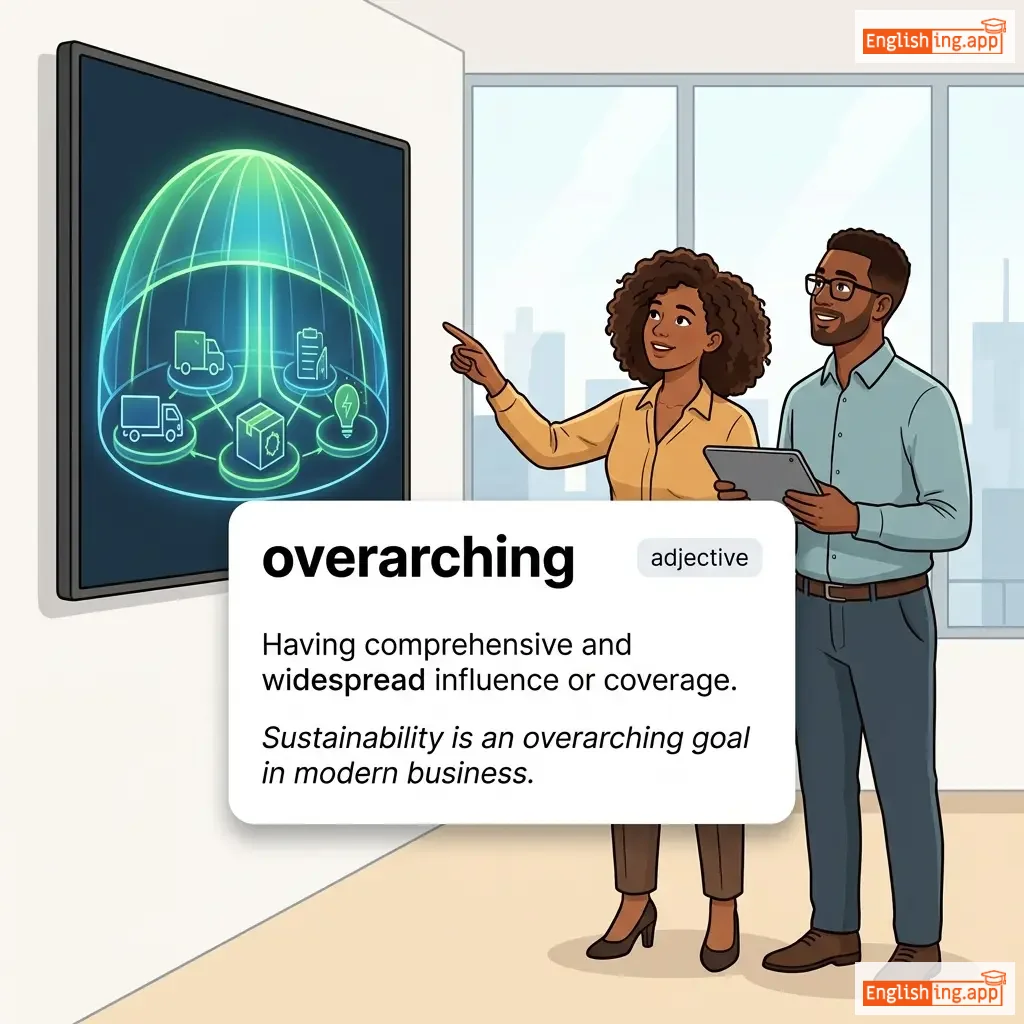
overarching definition card — visual illustration of the meaning
adjective
/ˌoʊ.vɚˈɑːr.tʃɪŋ/
全面或广泛 (quánmiàn huò guǎngfàn)

Having comprehensive and widespread influence or coverage.

"Sustainability is an overarching goal in modern business."

"可持续性是现代商业中的一个全面目标。" (Kěchíxùxìng shì xiàndài shāngyè zhōng de yīgè quánmiàn mùbiāo.)
adjective
/ˌoʊvərˈbɛrɪŋ/
专横 (zhuānhéng)

unpleasantly or arrogantly domineering

"His overbearing attitude made everyone uncomfortable."

"他的专横态度让所有人都感到不舒服。" (Tā de zhuānhéng tàidù ràng suǒyǒu rén dōu gǎndào bù shūfu.)
adjective
/ˌoʊvərˈbloʊn/
夸张 (kuazhang)

excessively exaggerated or inflated

"The controversy was overblown by the media."

"媒体过度夸大了争议。" (Měitǐ guòdù kuādàle zhēngyì.)
overcome definition card — visual illustration of the meaning
verb
/ˌoʊvərˈkʌm/
克服 (kèfú)

to succeed in dealing with a problem or difficulty; to defeat

"She managed to overcome all the challenges in her career."
"她成功地克服了职业生涯中的所有挑战。" (Tā chénggōng de kèfú le zhíyè shēngyá zhōng de suǒyǒu tiǎozhàn.)
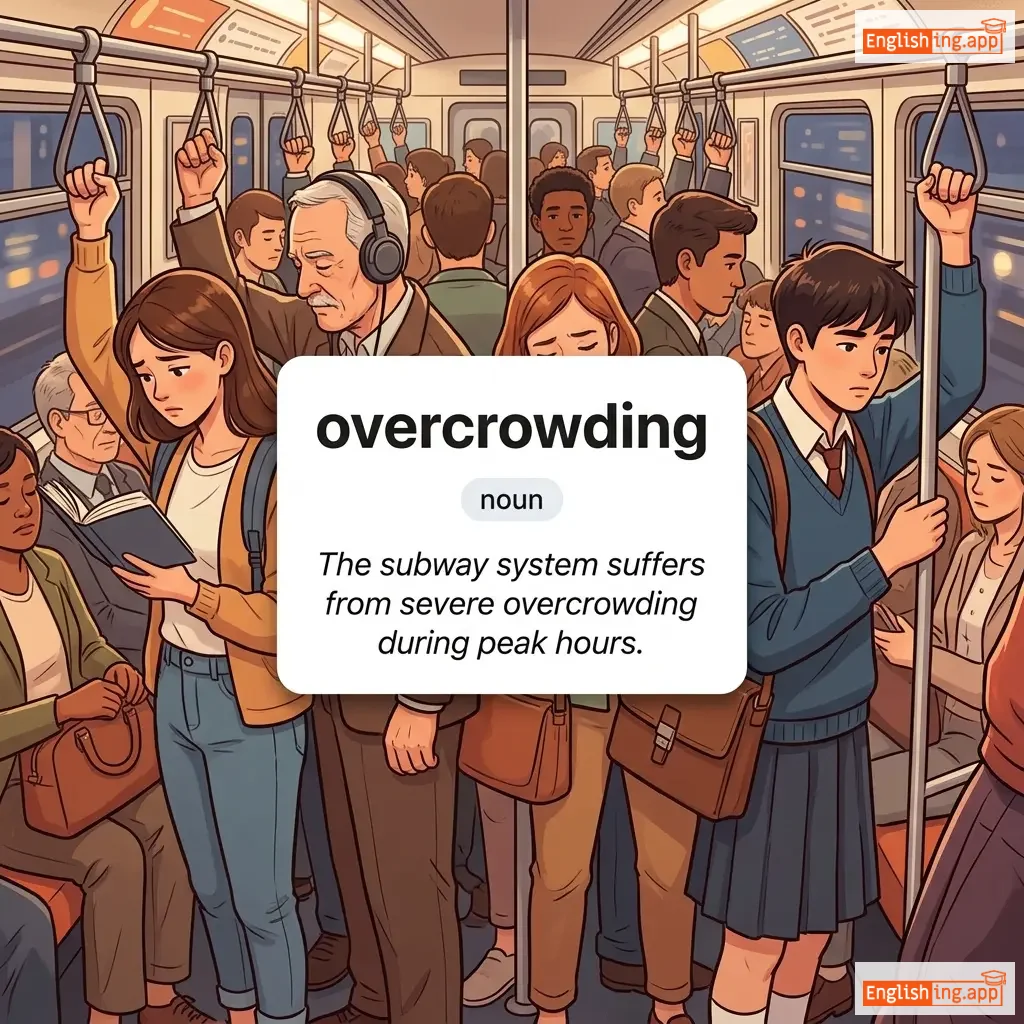
overcrowding definition card — visual illustration of the meaning
noun
/ˌoʊ.vɚˈkraʊ.dɪŋ/
过度拥挤 (guò dù yōng jǐ)

Excessive crowd or packed condition, having more people or vehicles in a place than the approved capacity.

"The subway system suffers from severe overcrowding during peak hours."

"地铁系统在高峰时段面临严重的过度拥挤。" (Dìtiě xìtǒng zài gāofēng shíduàn miànlín yánzhòng de guòdù yōngjǐ.)
overdo definition card — visual illustration of the meaning
verb
/ˌoʊvərˈduː/
过度 (guò dù)

to do something to an excessive degree

"She overdid it at the gym and felt sore the next day."

"她在健身房做得过头了,第二天感到酸痛。" (Tā zài jiànshēn fáng zuò dé guòtóu le, dì èr tiān gǎndào suāntòng.)
noun/verb
/ˈoʊvərˌdoʊs/
过量服药 (guòliàng fúyào)

An excessive and dangerous amount of a drug; to take too much of a substance.

"He was rushed to the hospital after a drug overdose."

"他因毒品过量被送进了医院。" (Tā yīn dúpǐn guòliàng bèi sòng jìnle yīyuàn.)
verb
/ˌoʊvərˈiːt/
幸福 (xìng fú)

To eat more food than the body needs.

"She tends to overeat when she is stressed."
"她在收到奖项时无法掩饰自己的幸福。" (Tā zài shōu dào jiǎng xiàng shí wú fǎ yǎn shì zì jǐ de xìng fú.)
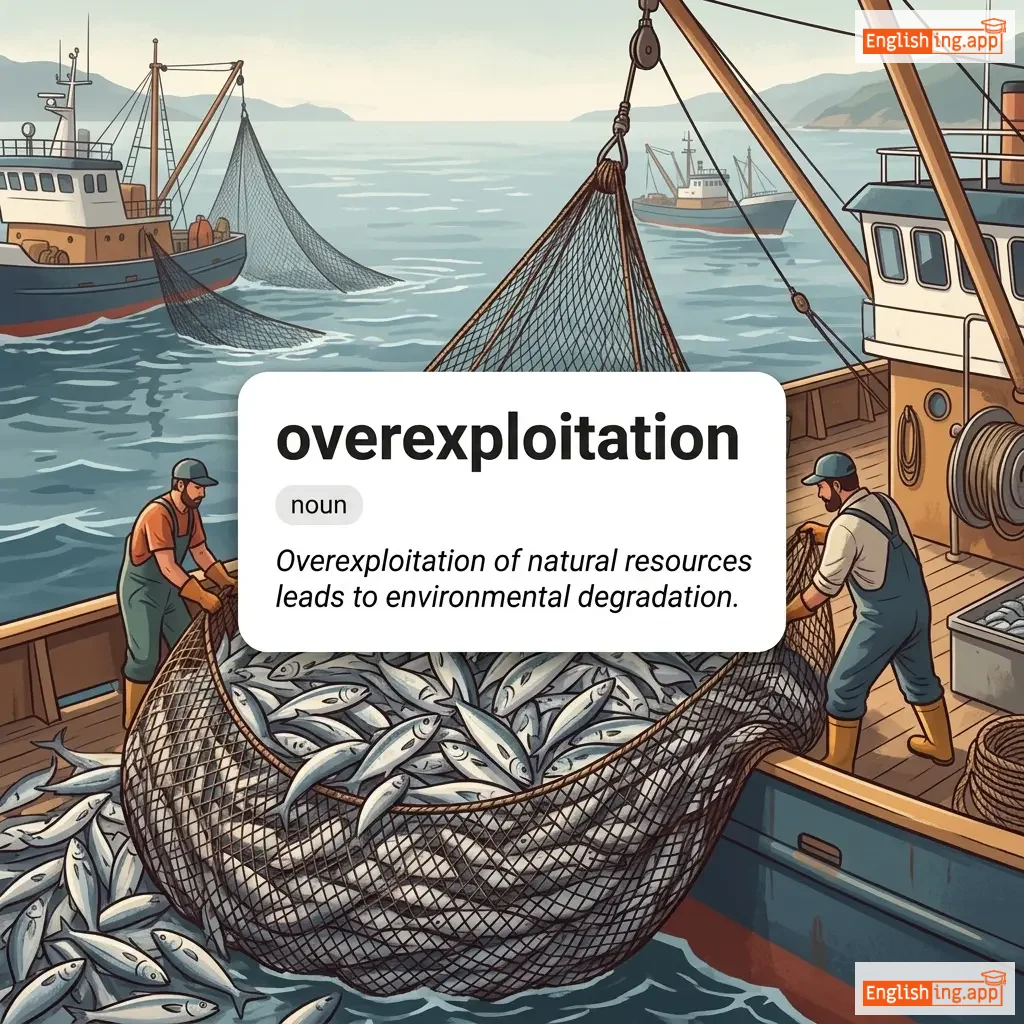
overexploitation definition card — visual illustration of the meaning
noun
/ˌəʊvərɪksˌplɔɪˈteɪʃən/
过度开发 (guòdù kāifā)

The unsustainable use of natural resources at a rate that exceeds their ability to regenerate, leading to depletion and environmental degradation.

"Overexploitation of natural resources leads to environmental degradation."
"过度开发自然资源会导致环境退化。" (Guòdù kāifā zìrán zīyuán huì dǎozhì huánjìng tuìhuà.)
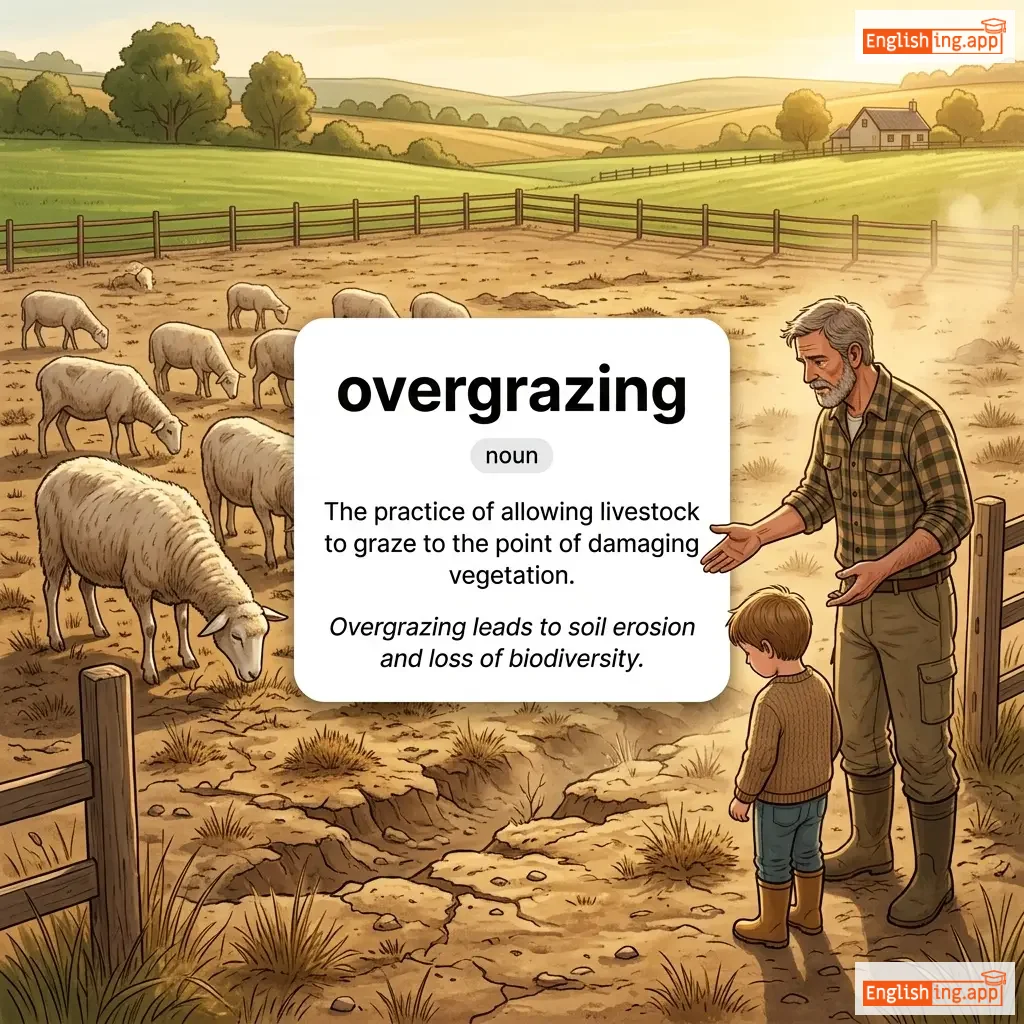
overgrazing definition card — visual illustration of the meaning
noun
ˌoʊ.vɚˈɡreɪ.zɪŋ
过度放牧 (guòdù fàngmù)

The practice of allowing livestock to graze to the point of damaging vegetation.

"Overgrazing leads to soil erosion and loss of biodiversity."

"过度放牧导致土壤侵蚀和生物多样性的丧失。" (Guòdù fàngmù dǎozhì tǔrǎng qīnshí hé shēngwù duōyàngxìng de sàngshī.)
noun/verb
/ˈoʊvərˌhæŋ/
悬垂 (xuán chuí)

To extend outward and hang over something; a projecting part.

"The roof overhang provides shade in the summer."

"屋顶的悬垂部分在夏天提供阴凉。" (Wūdǐng de xuánchuí bùfen zài xiàtiān tígōng yīnliáng.)
verb
/ˈoʊvərˌhɔːl/
全面改革 (quánmiàn gǎigé)

to examine thoroughly and repair or improve something that is worn or ineffective

"The company decided to overhaul its outdated computer system."

"公司决定彻底改革其过时的计算机系统。" (Gōngsī juédìng chèdǐ gǎigé qí guòshí de jìsuànjī xìtǒng.)
overhead definition card — visual illustration of the meaning
noun
ˈəʊ.və.hed
持续的商业费用,与产品或服务的创造无直接关系 (chíxù de shāngyè fèiyòng, yǔ chǎnpǐn huò fúwù de chuàngzào wú zhíjiē guānxì)

Ongoing business expenses not directly attributable to creating a product or service.

"High overhead costs reduce overall profits."

"高昂的间接费用降低了总体利润。" (Gāo'áng de jiànjiē fèiyòng jiàngdīle zǒngtǐ lìrùn.)
noun/verb
/ˌoʊvərˈlæp/

To extend over and cover partly; an area where things coincide.

"The two meetings overlap by an hour."

verb
/ˌoʊvərˈliːp/
跳过 (tiaoguo)

To jump over something; to omit or disregard something.

"He managed to overleap the fence easily."

"他轻松地越过了栅栏。" (Ta qingsong de yueguo le zhalan.)
noun
/ˈoʊ.vər.let/
床垫 (chuángdiàn)

a thin mattress or pad placed over a bed for additional comfort

"The overlet makes the bed more comfortable to sleep on."
"欧弗雷特使床铺更适合睡觉。" (Ōufúlèitè shǐ chuáng pù gèng shìhé shuìjiào.)
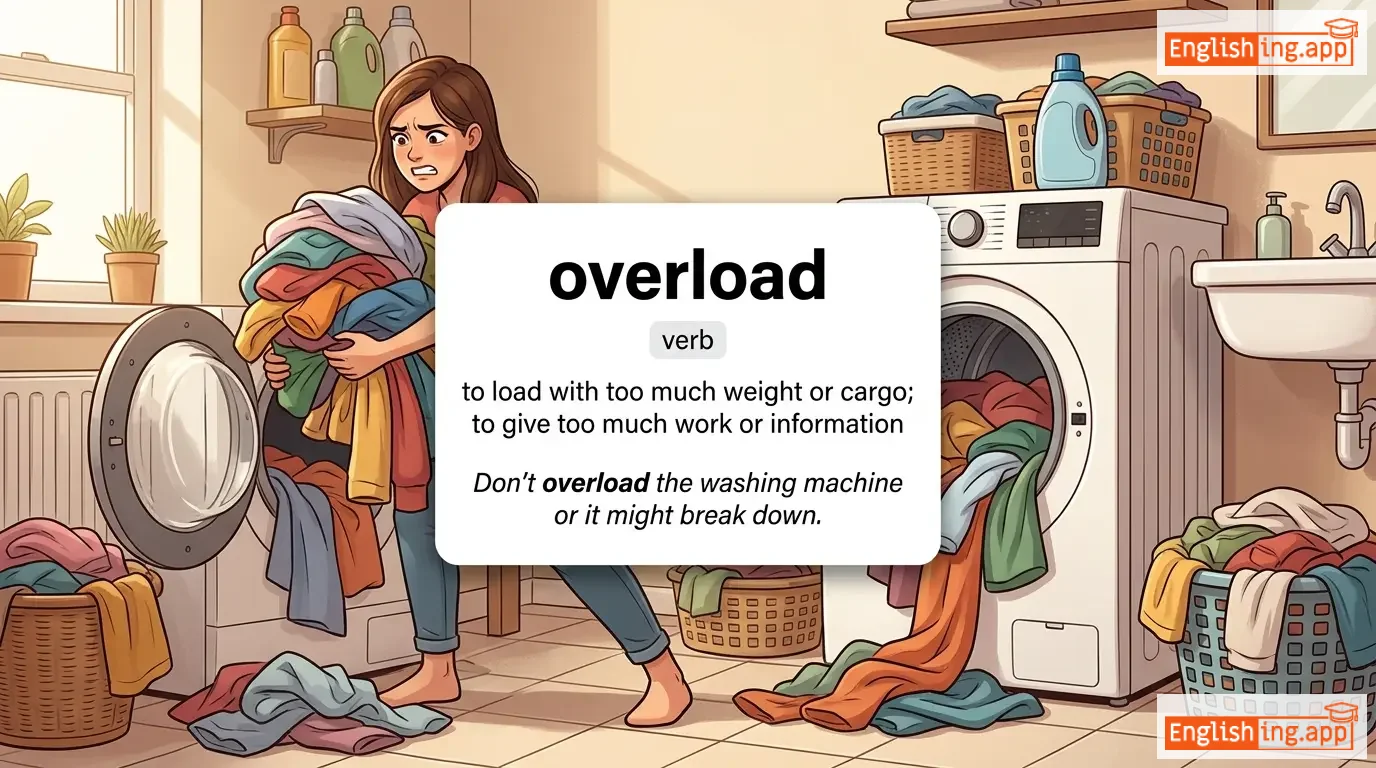
overload definition card — visual illustration of the meaning
verb
/ˌoʊvərˈloʊd/
过载 (guò zài)

to load with too much weight or cargo; to give too much work or information

"Don't overload the washing machine or it might break down."

"不要过载洗衣机,否则它可能会坏掉。" (Bù yào guò zài xǐ yī jī, bù rán tā kě néng huì huài diào.)
overlook definition card — visual illustration of the meaning
verb
/ˌoʊvərˈlʊk/
忽视 (hūshì)

to fail to notice something; to have a view from above

"She overlooked an important detail in the contract."

"她忽略了合同中的一个重要细节。" (Tā hūlüè le hétóng zhōng de yīgè zhòngyào xìjié.)
noun
/ˈoʊvərlɔːrd/
领主 (lingzhu)

A ruler, master, or person of great power and authority over others.

"The peasants were forced to pay taxes to their overlord."

"农民被迫向他们的领主交税。" (Nongmin bei po xiang tamen de lingzhu jiao shui.)